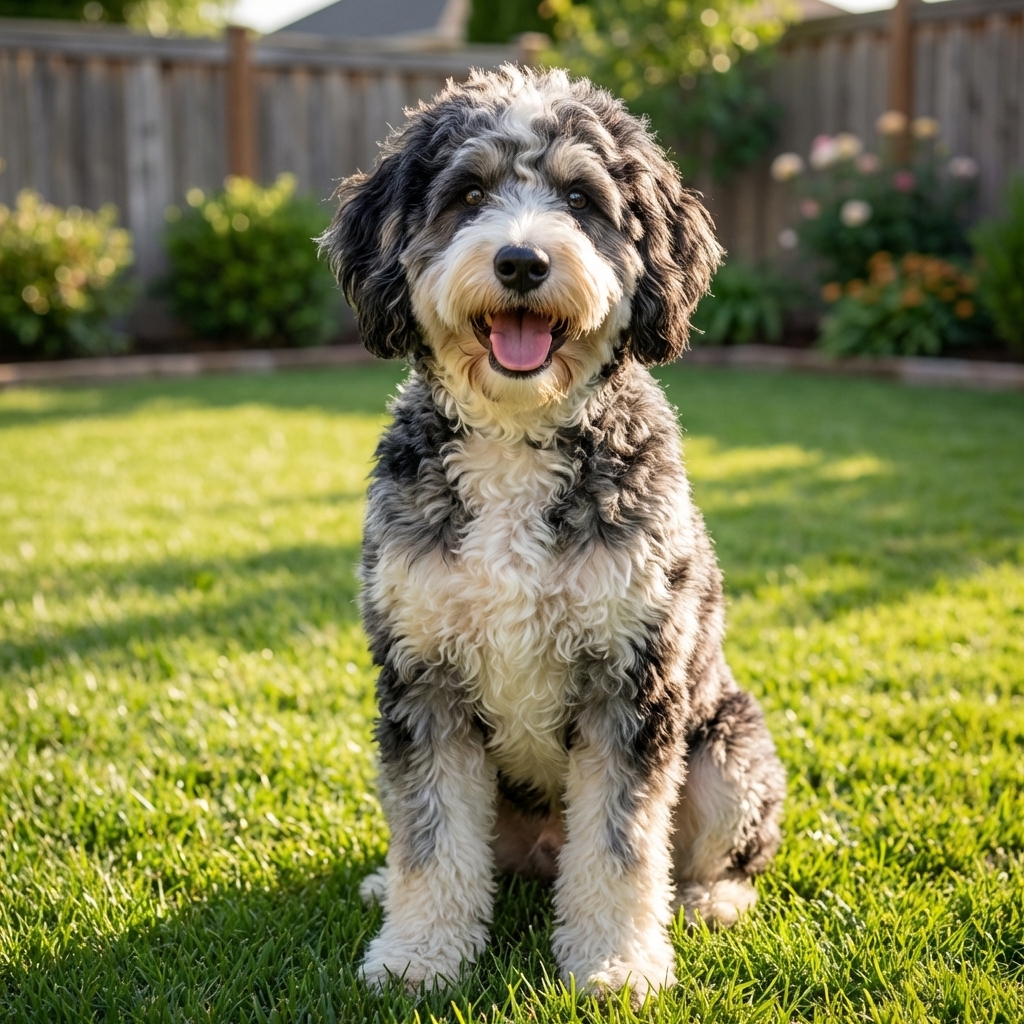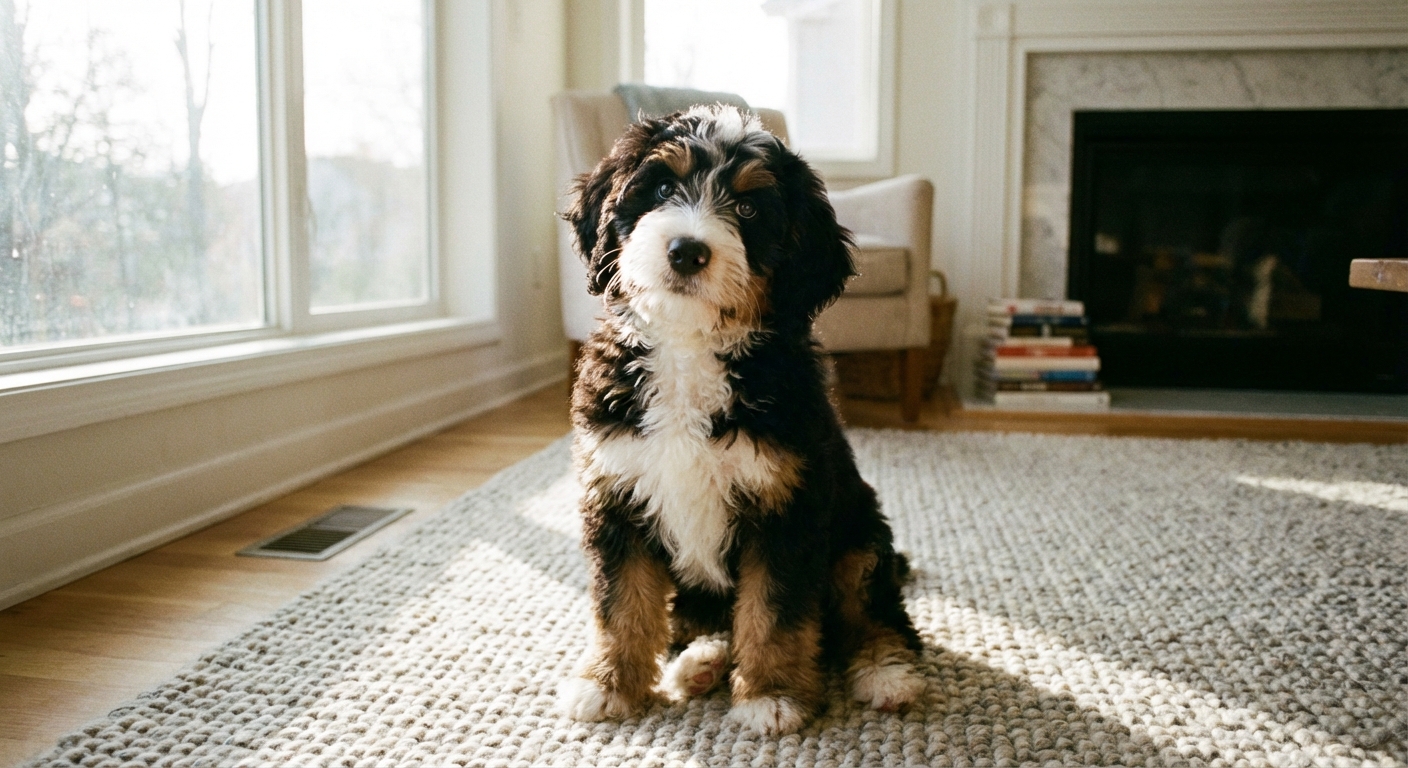
Choosing between a Bernedoodle and a Goldendoodle? Compare size ranges (mini to standard), temperament, exercise needs, grooming, health concerns, lifespan, ...
Article
•
Designer Mixes
Goldendoodle vs Labradoodle: Which Is Better for Families?

Shari Shidate
Designer Mixes contributor
If you are researching a doodle for family life, you are already doing the most important thing: slowing down and looking past the cute curls. Both Goldendoodles and Labradoodles can be wonderful with kids, but the “better” choice usually comes down to predictability, energy match, and coat reality. As a veterinary assistant, I also like to remind families that a doodle is not a guarantee of low shedding or perfect health. The individual dog and the breeder’s practices matter a lot.
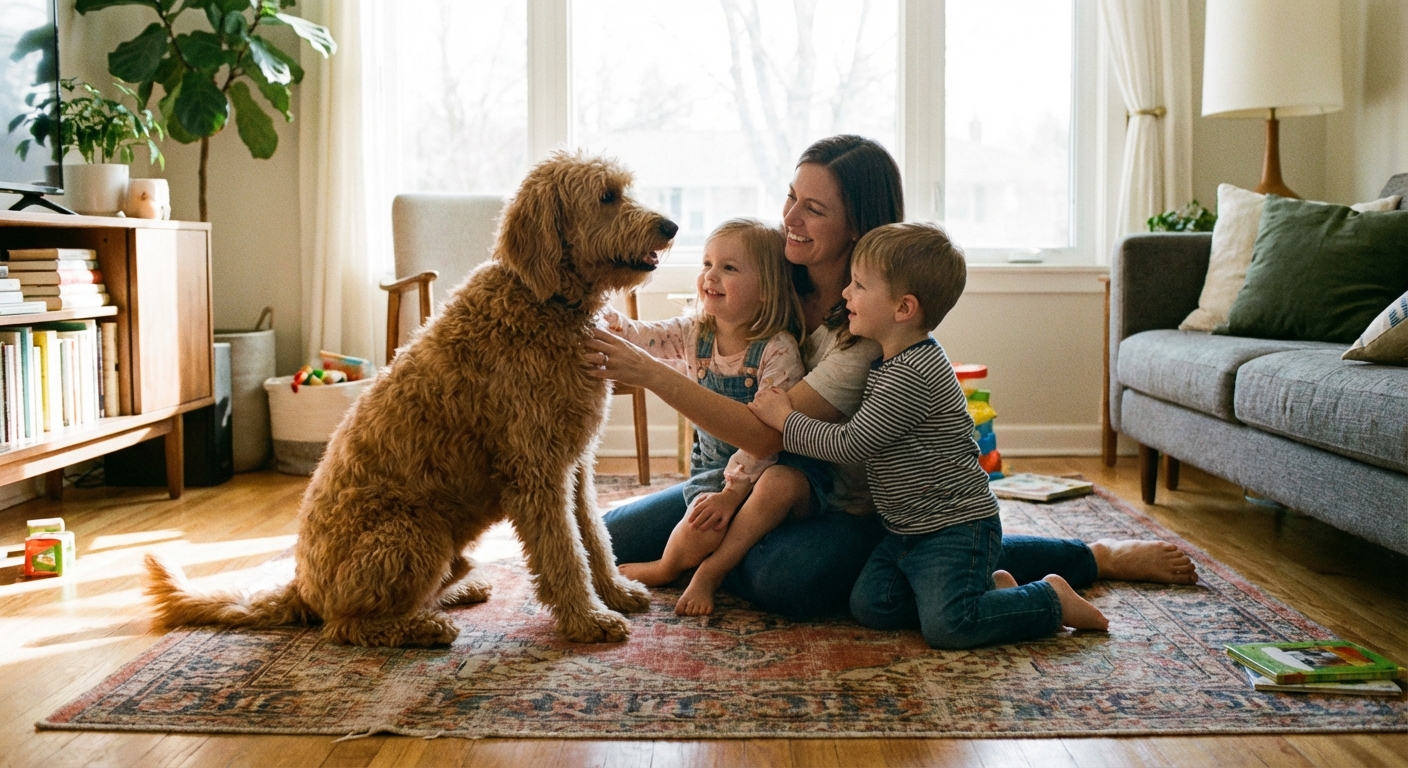
Below is a practical, experience-informed comparison to help you choose the doodle that truly fits your home. (This article is educational and not a substitute for veterinary advice for your individual dog.)
Quick snapshot
- Goldendoodle (Golden Retriever + Poodle): Often very social and eager to please, with a reputation for being affectionate and people-focused.
- Labradoodle (Labrador Retriever + Poodle): Often athletic, playful, and driven, with many lines leaning a bit more high-octane.
Family takeaway: If your household wants a calmer, cuddly companion, many families lean Goldendoodle. If you want a sporty buddy for an active lifestyle, many families lean Labradoodle. But either can be a great family dog with the right temperament, training, and grooming plan.
Size and build
Both mixes can come in similar size categories because Poodles come in multiple sizes. The biggest mistake I see is assuming you can predict adult size just from puppy photos or a breeder label like “mini” or “medium.” Definitions vary widely, and some puppies mature larger than expected.
- Standard: often roughly 45 to 75+ pounds depending on the parents
- Medium: often roughly 30 to 50 pounds
- Mini (varies by breeder): often roughly 15 to 35 pounds
Goldendoodles may carry a slightly fluffier, broader look if they take after the Golden Retriever. Labradoodles may look a bit more athletic and streamlined if they take after the Labrador.
What to ask a breeder: adult weights and heights of both parents, plus adult sizes from at least 2 to 3 previous litters with the same pairing (or closely related pairings). Seeing adult relatives in person is even better.
Energy and daily needs
Both are typically active dogs that thrive with structure. In general:
- Goldendoodles: often energetic but may be a touch more “family lounge-friendly” once exercise and mental needs are met.
- Labradoodles: often consistently high-drive, especially in lines that take strongly after working Labradors.
For many healthy adolescent and adult doodles, a reasonable target is about 60 to 120 minutes of combined daily activity (walks, training, play, enrichment). Adjust for the dog in front of you:
- Puppies: shorter, more frequent sessions; avoid long repetitive runs and forced high-impact exercise while joints are growing.
- Seniors or dogs with arthritis: more gentle movement and brain games, less pounding mileage.
- High-drive dogs: often do best with both exercise and skill-building training (impulse control, leash manners, retrieve rules).
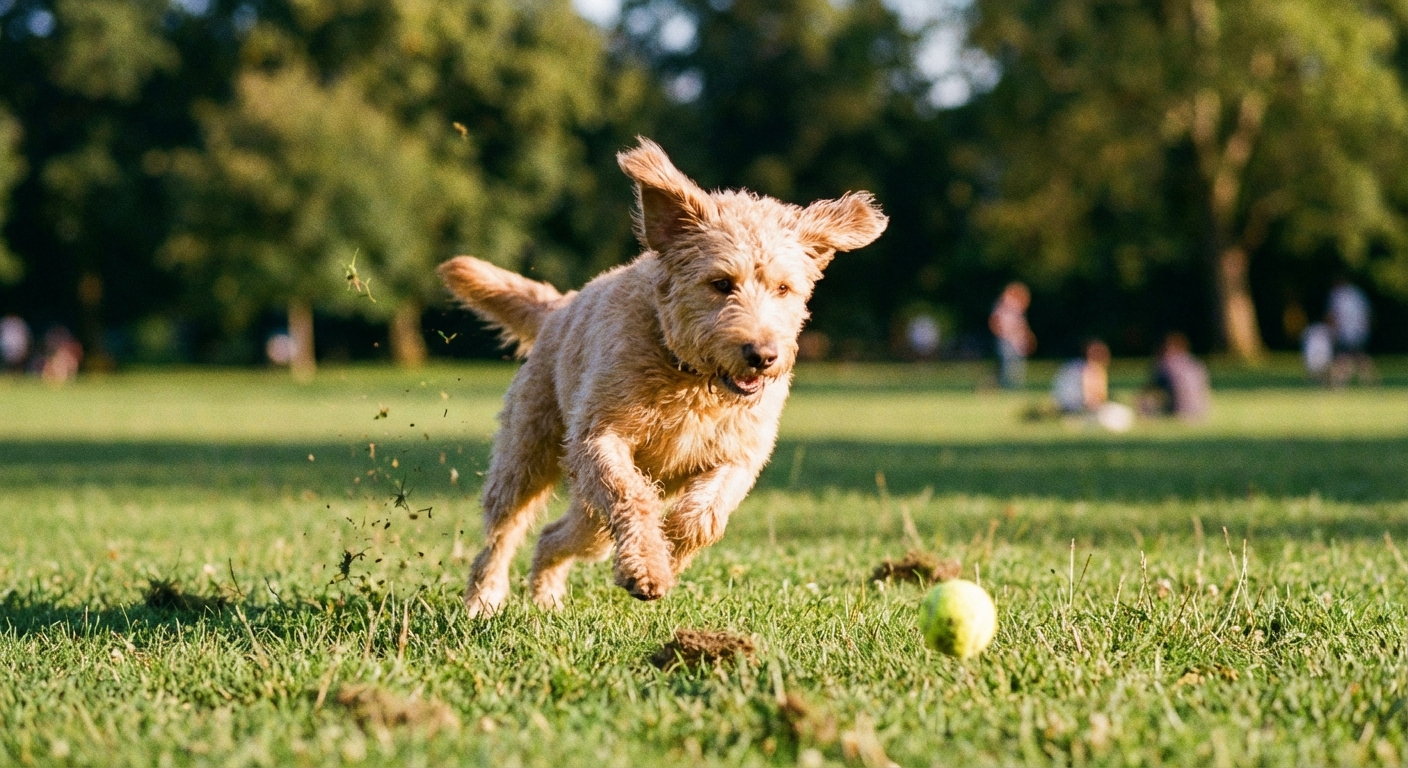
Family tip: Doodles are famous for being “good” when they are tired, but exercise alone does not fix everything. Pair activity with teaching an “off switch” like mat work, settle training, and calm greetings.
Temperament and training
Poodles, Goldens, and Labs are all known for trainability, which is why these mixes became popular. That said, doodles are not automatically easy. You can see:
- High intelligence plus high arousal (smart dogs who get overstimulated easily)
- Mouthiness, especially in adolescence
- Social sensitivity if under-socialized during critical puppy stages
Goldendoodles are often described as people-oriented and affectionate. That can be a sweet match for families, but it can also mean they are more prone to separation distress if left alone without gradual training.
Labradoodles frequently inherit the Lab’s enthusiastic friendliness. In some lines, that enthusiasm shows up as bouncing and pulling unless training starts early.
Best family strategy: Start reward-based training right away, teach calm greetings, and prioritize loose-leash walking before your puppy hits the “teen” stage.
Best with kids
Most family problems are not “bad dog” problems. They are management and skill-building problems, especially with young kids. When you are choosing a puppy or adult dog, look for:
- Stable recovery: startles, then settles quickly
- People-friendly: seeks attention without frantic jumping
- Low reactivity: not constantly barking at normal household movement
At home, set everyone up to win:
- Supervise all kid and dog interactions, especially under age 6.
- Teach kids “hands low, voices calm” and no hugging, riding, or face-to-face contact.
- Use gates and pens so the dog can rest undisturbed.
- Plan for chewing and nipping: redirect to chew toys, use naps, and practice short training games.
If your children are very small or nervous around dogs, adopting a known adult from a reputable rescue or rehome situation can offer more predictability than an 8-week-old puppy.
Shedding and allergies
Let’s clear up one of the biggest misconceptions: no doodle is guaranteed hypoallergenic. Allergies are complicated, and people can react to dander, saliva proteins, and environmental allergens carried in the coat. While Poodles often shed less, mixing breeds makes coat outcomes less predictable.
Common coat types
- Straight to wavy coat (often more shedding, sometimes easier to brush)
- Loose curls (often less shedding, can mat if not maintained)
- Tight curls (often lowest shedding, typically highest grooming needs)
Reality check: “Low shedding” often comes with a tradeoff: more grooming. Mats can form close to the skin and become painful, leading to shaving at the groomer.
Family-friendly grooming plan:
- Brush thoroughly at least 3 to 5 times per week using a slicker brush and metal comb.
- Plan for professional grooming on a regular schedule (often every 6 to 8 weeks, but it depends on coat and haircut).
- Learn common mat zones: behind ears, collar area, armpits, groin, and tail base.
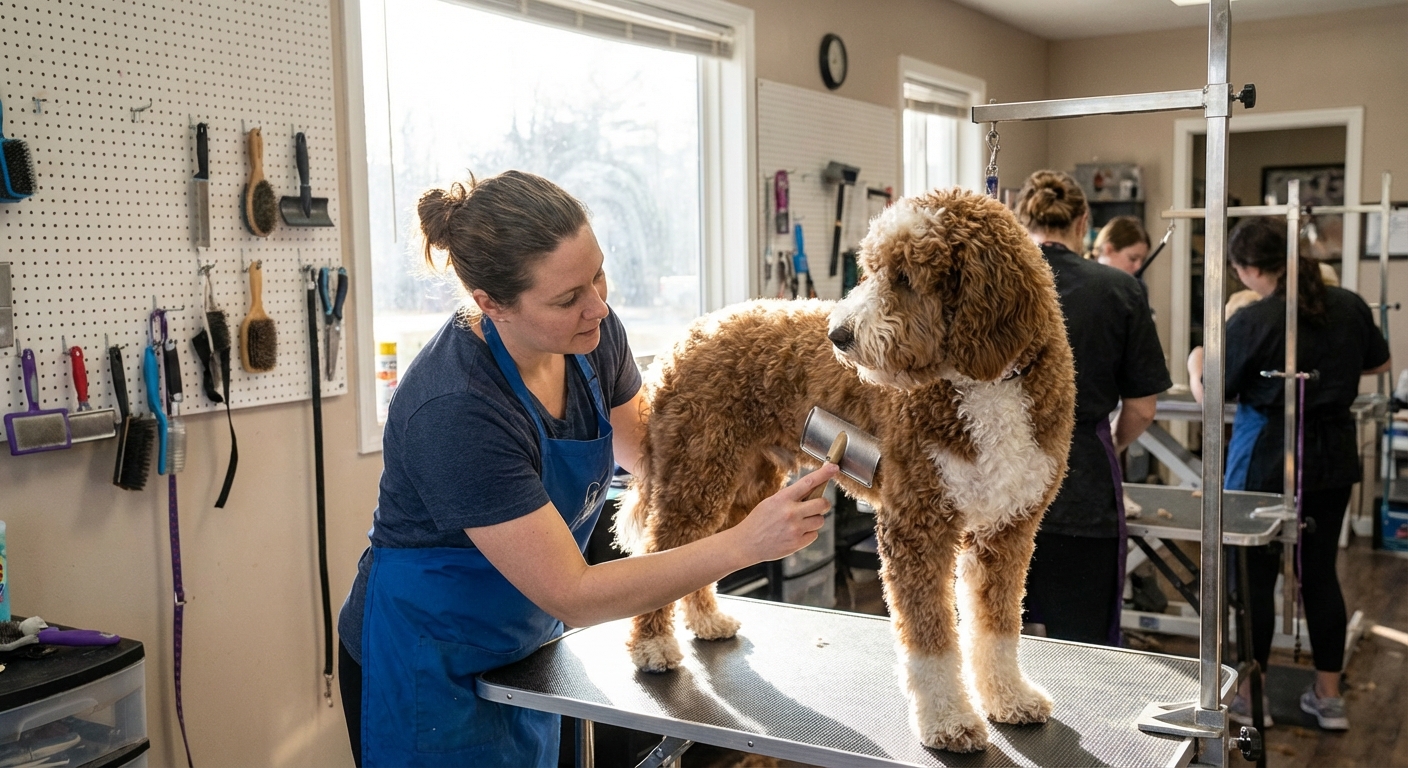
If allergies are a concern: spend time in a home with adult dogs from the same breeder line if possible, and consider guidance from your physician or allergist. There is no perfect shortcut here.
Health issues
Mixed-breed does not automatically mean healthier. Health depends heavily on genetics, screening, body condition, and lifestyle. Both Goldendoodles and Labradoodles can be prone to issues seen in their parent breeds.
Concerns in both mixes
- Hip and elbow dysplasia
- Cranial cruciate ligament (CCL) injury (risk is influenced by genetics, structure, conditioning, and especially weight)
- Ear infections (can be more common in dogs with floppy ears and chronic allergies; moisture from swimming and hair in ear canals may contribute for some dogs)
- Skin allergies and itchiness
- Eye disorders (varies by lines)
Notes by breed background
- Golden background: Golden Retrievers, as a breed, have higher cancer rates than many breeds. It is reasonable to ask breeders about longevity and common causes of death in their dogs, and whether they are tracking related dogs over time.
- Labrador background: Labrador lines can be prone to obesity and joint stress. Some lines may also carry exercise-induced collapse (EIC), which responsible breeding programs screen for.
What responsible breeders typically provide: OFA or PennHIP results for hips (and ideally elbows), eye clearances (CAER/ACVO), and relevant DNA testing based on the parents. If a breeder cannot show documentation, consider it a serious red flag.
Helpful references: Orthopedic Foundation for Animals (OFA), PennHIP, ACVO and CAER eye exams, Exercise-Induced Collapse (EIC) information.
Lifespan
Lifespan varies with size, genetics, and overall care. Many doodles fall in the 10 to 15 year range, with smaller dogs often living longer than standards.
You can improve your odds of a longer, healthier life by keeping your doodle lean, protecting joints during growth, staying consistent with dental care, and addressing chronic ear or skin issues early.
Cost to own
The purchase price can be high for both, especially from breeders who invest in health testing and excellent puppy raising practices. But the bigger surprise for many families is the ongoing cost.
Typical expenses
- Grooming: often one of the biggest costs over the dog’s life
- Training: group classes or private sessions are worth budgeting for
- Preventive care: vaccines, parasite prevention, dental cleanings
- Food: varies by size and activity, plus possible sensitive-skin or GI diets
- Pet insurance: can be helpful for joint injuries, allergies, and emergencies
Family tip: If you are choosing between Goldendoodle vs Labradoodle based on price alone, pause and price out grooming for a year. A “cheap” puppy can become expensive quickly if coat care is neglected and skin and ear problems develop.
F1 vs F1B
Doodle generation labels describe the breeding mix, and they can influence coat type and predictability, although nothing is guaranteed.
- F1: first generation, typically 50% Poodle and 50% Golden or Labrador. Coat can be very variable, including higher shedding.
- F1B: F1 doodle bred back to a Poodle, often around 75% Poodle. Frequently marketed as lower shedding, but still not guaranteed hypoallergenic.
- Multigen: doodle to doodle over multiple generations. Can increase predictability if the breeder selects carefully, but quality varies widely by program.
What this means for families: If shedding is your top concern, many people look at F1B or multigen. If you love a more retriever-like look and do not mind some shedding, an F1 may fit. In all cases, ask to see adult relatives from the same lines, not just one impressive stud photo.
Which is better?
Here is a simple way to decide without overthinking it.
Goldendoodle fit
- You want a dog that often leans extra affectionate and people-focused.
- Your household prefers a playful dog that can also settle with training and routine.
- You are committed to grooming, brushing, and professional trims.
Labradoodle fit
- You have an active lifestyle and want a dog that loves games, training, and daily movement.
- You enjoy structured training and want a dog that thrives with a “job.”
- You are prepared for enthusiasm, especially in adolescence.
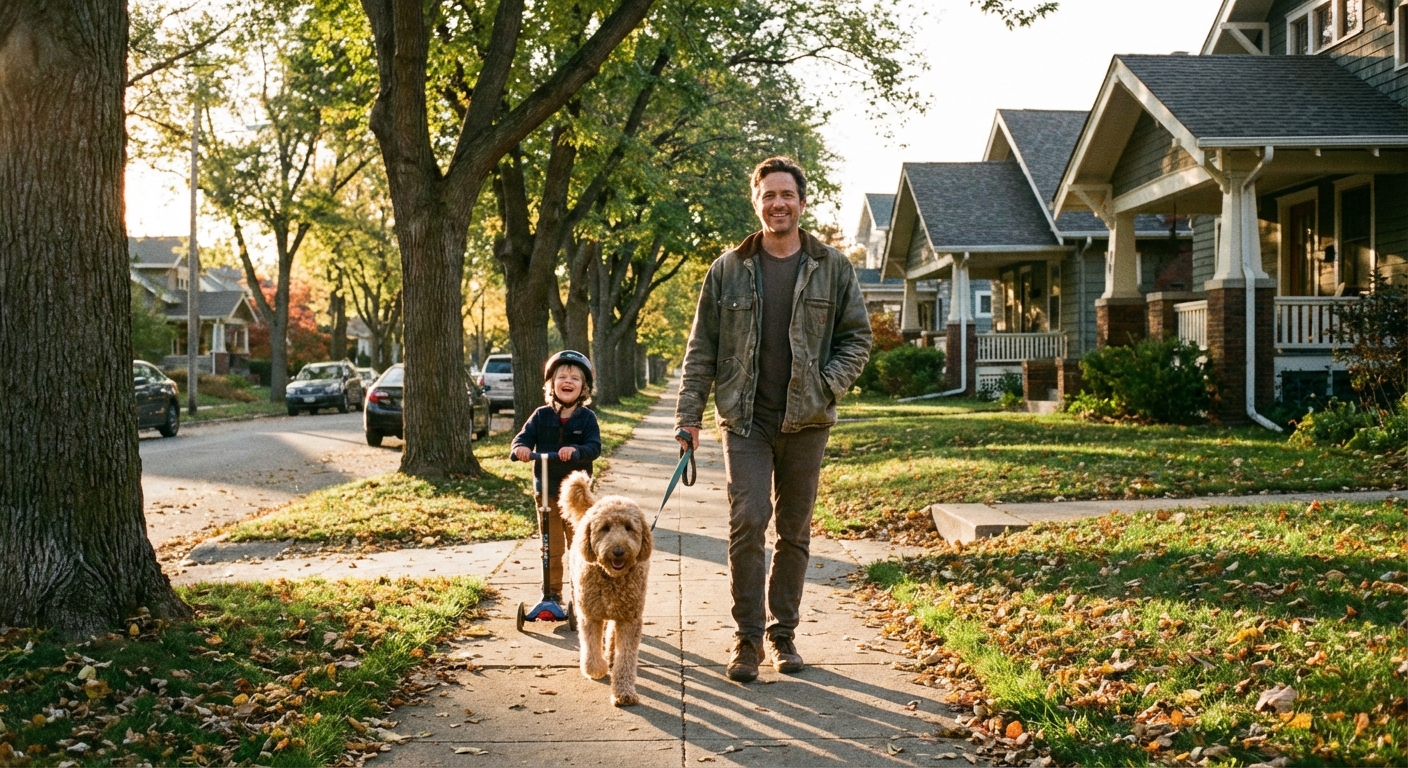
My honest bottom line: For most families, the best doodle is the one with the right temperament from a breeder (or rescue) that can show verifiable health testing, raises puppies with thoughtful early socialization, and matches you to a dog based on your home life. Breed mix matters, but it is not the whole story.
Questions to ask
- Can I see OFA or PennHIP results for hips and elbows, plus CAER eye clearances?
- What genetic tests were performed on both parents, and can I see the results?
- What is the coat type of the parents, and can I meet adult dogs from previous litters?
- How are puppies socialized in the first 8 weeks?
- Do you provide a written contract, health guarantee, and take-back policy?
- What support do you offer after adoption for training and feeding questions?
Breeder red flags
- No documentation for health testing, or they ask you to “trust them.”
- No questions for you about lifestyle, kids, schedule, or dog experience.
- Many litters always available, no waitlist, or unclear where dogs are raised.
- No contract, no return policy, or pressure tactics to send a deposit immediately.
- Puppies raised with little household exposure, handling, or enrichment.
If you want, I can also help you build a simple first-month checklist for training, grooming tools, alone-time practice, and a family schedule for exercise and quiet time. That part is often what makes doodle ownership feel easy instead of chaotic.