
Turn chicken and rice into a more balanced homemade dog meal with veggies, calcium carbonate, and omega-3s. Includes gram weights, portion guidance, swaps, a...
Article
•
Designer Mixes
Goldendoodle Health Issues

Shari Shidate
Designer Mixes contributor
Goldendoodles are known for their friendly temperament, intelligence, and that teddy-bear look so many families love. But like any dog, they can be prone to certain health issues, especially because they are a mix of two breeds with their own genetic risks (Golden Retriever and Poodle).
As a veterinary assistant, I always tell families this: the goal is not to worry. The goal is to watch smart, act early, and invest in prevention. By “watch smart,” I mean notice patterns, track flare seasons, and bring small changes up before they become big problems.

Goldendoodle lifespan
Goldendoodles typically live around 10 to 15 years, with plenty of variation based on size, genetics, and overall care. Smaller Goldendoodles (often mini Goldendoodles) may trend a bit longer, while larger dogs sometimes trend a bit shorter. Weight, dental health, joint care, and consistent preventive veterinary care all influence longevity.
The best lifespan booster is not a trendy supplement or a fancy gadget. It is the basics done consistently: healthy weight, parasite prevention, dental care, appropriate exercise, and early evaluation when something seems off.
One quick dental note from the clinic side: periodontal disease is not “just mouth stuff.” Chronic inflammation and infection in the gums can affect comfort and overall health, which is why dental care matters more than most people expect.
Hip dysplasia
Hip dysplasia is a developmental condition where the hip joint does not fit together as smoothly as it should. Over time, that poor fit can lead to inflammation, pain, and arthritis. Goldendoodles can be at risk because both parent breeds can carry hip issues.
Common signs to watch for
- Stiffness when getting up, especially after resting
- Reluctance to jump, climb stairs, or go on longer walks
- Bunny-hopping gait when running
- Decreased activity or lagging behind on walks
- Soreness after exercise
Prevention and risk reduction
- Keep your Goldendoodle lean. Extra weight increases joint stress and speeds arthritis changes.
- Avoid repetitive high-impact exercise during fast growth phases in puppies (ask your vet what is appropriate for your dog’s age and size).
- Choose a breeder who screens hips (commonly via OFA or PennHIP for parent dogs).
- Ask your veterinarian about joint-support strategies if your dog is high risk or showing early stiffness.
If you notice limping, pain, or a sudden change in mobility, schedule an exam. Early management can make a big difference in comfort long-term.
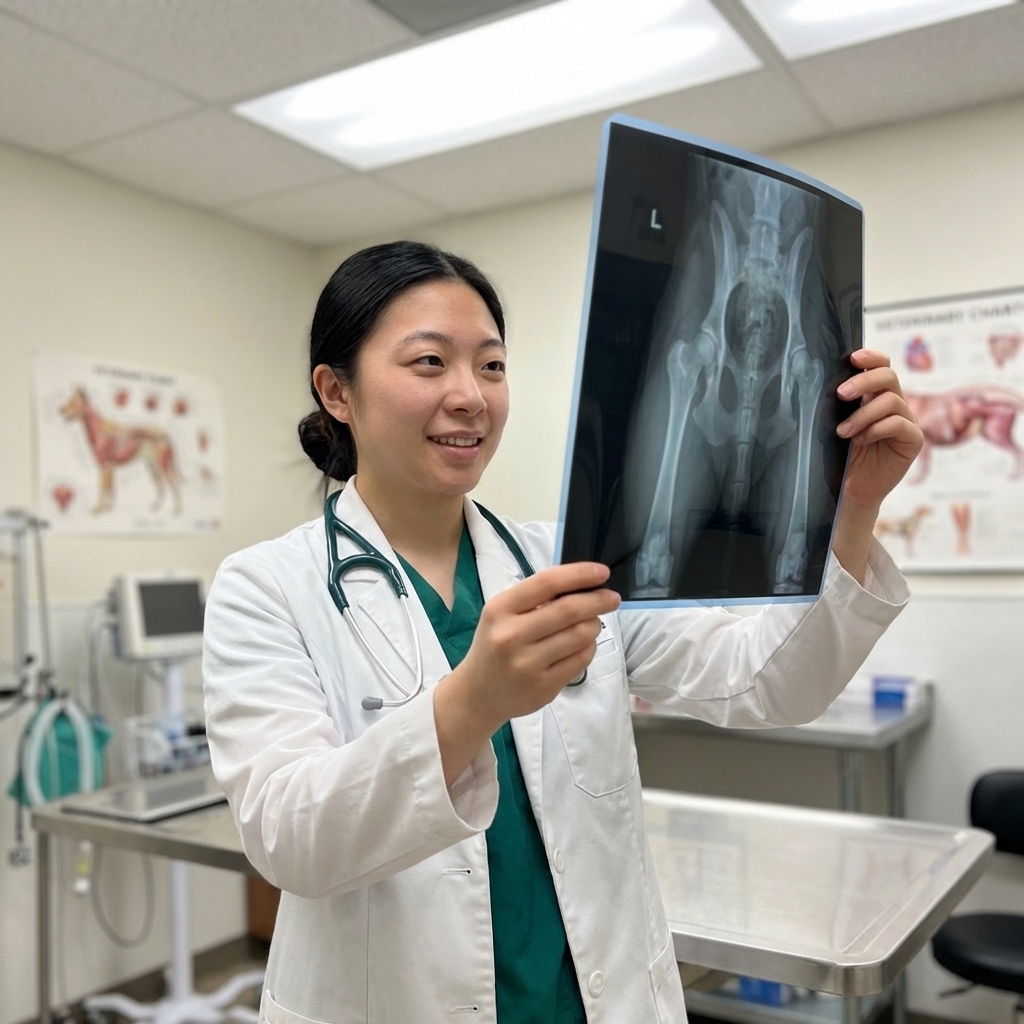
Ear infections
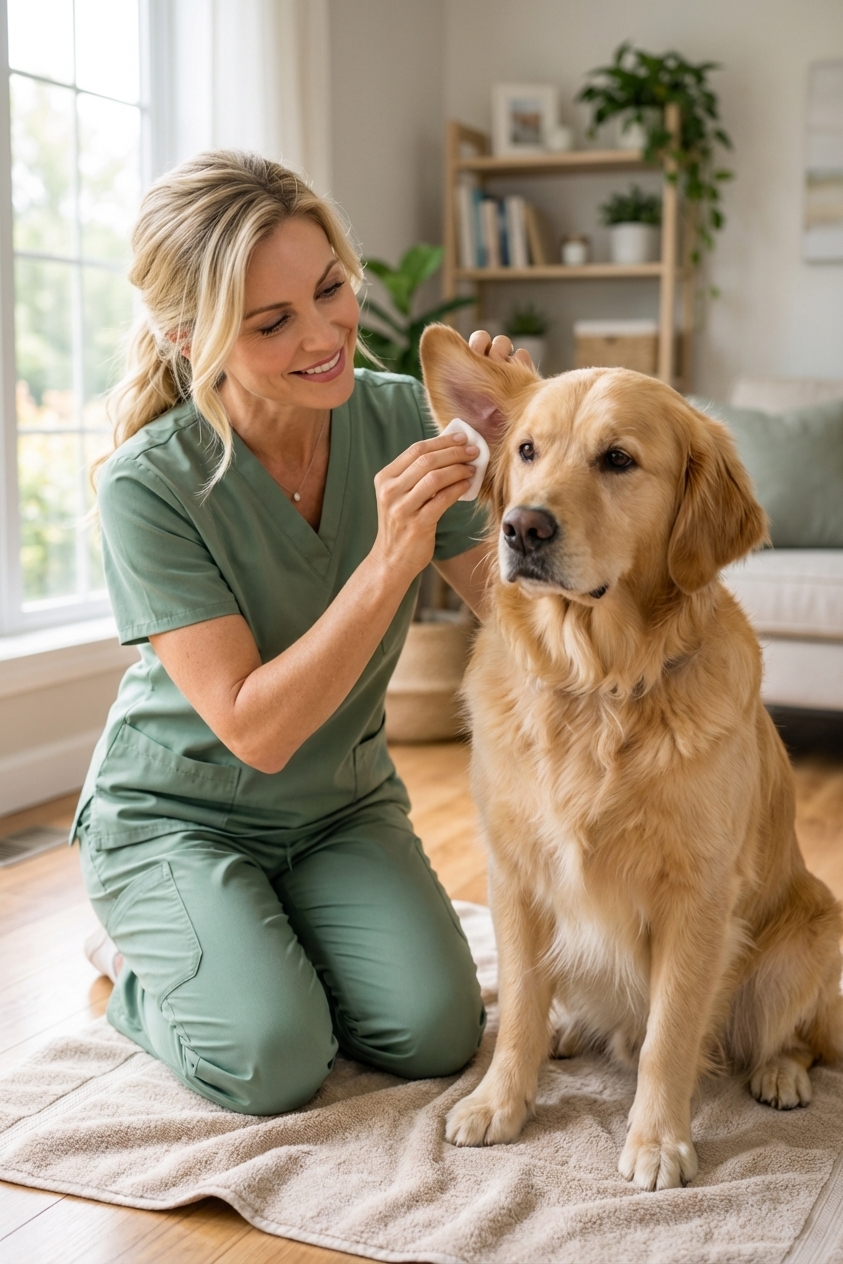
Ear infections are one of the most common reasons Goldendoodles end up at the vet. Many Goldendoodles have floppy ears and hair in or around the ear canal, which can trap moisture and reduce airflow. Allergies also commonly contribute. In the clinic, we see repeat issues most often in swimmers and in dogs with itchy skin.
Common signs to watch for
- Head shaking or frequent ear scratching
- Redness, swelling, or strong odor from the ear
- Brown, yellow, or waxy discharge
- Sensitivity when you touch the ears
- One ear seems worse than the other
Prevention and home care tips
- Dry ears well after baths and swimming.
- Ask your vet to recommend a safe routine ear cleaner and show you how to use it.
- Talk with your groomer or vet team about whether ear hair management is appropriate for your individual dog. Routine plucking is not automatically recommended, and for some dogs it can worsen irritation.
- If infections keep coming back, ask about underlying allergies, resistant organisms, or anatomy issues. Chronic infections often need a deeper plan, not just repeated drops.
Important note: avoid putting medication or cleaner into an extremely painful ear without veterinary guidance. A ruptured eardrum is not the most common outcome, but it is possible, and it is one reason we take painful ears seriously.
Allergies
Allergies are another big one for Goldendoodles. These can be environmental (like pollen, dust mites, grasses), flea-related, or food-related. Many dogs are not truly “food allergic,” but food sensitivities and environmental allergies are common and can look very similar.
Common signs to watch for
- Itchy paws, face rubbing, or frequent licking
- Recurring ear infections
- Red skin, hot spots, rashes, or hives
- Chronic anal gland irritation in some dogs
- Digestive upset in some cases (vomiting, soft stool)
Prevention and practical steps
- Use consistent flea prevention recommended by your veterinarian. Flea allergy dermatitis can cause intense itching from only a few bites.
- Wipe paws and belly after outdoor time during heavy pollen seasons.
- Ask your vet about a structured plan: medicated shampoos, skin-support diets, omega-3s, and prescription itch control when needed.
- If food allergy is suspected, do a true veterinary elimination diet trial. Treating “by guesswork” often drags the problem out for months.
Allergy management is usually not one magic fix. It is a combination of small, consistent actions that calm the skin barrier and reduce flare-ups. If your dog has chronic ears or allergies, it can also be worth discussing budgeting or pet insurance early, since maintenance care adds up over time.

Eye disease (PRA)
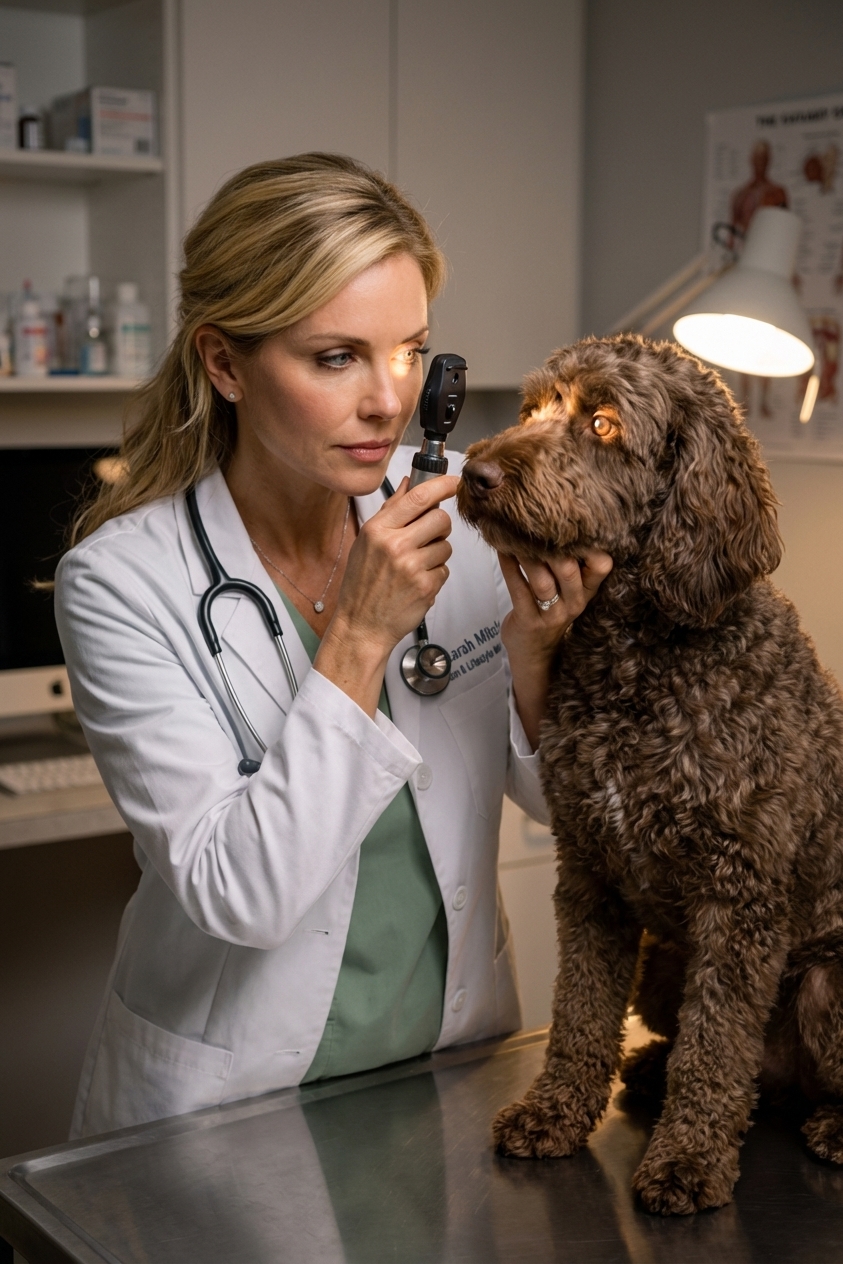
Progressive retinal atrophy (PRA) is an inherited eye disease that causes gradual degeneration of the retina, leading to vision loss and eventually blindness. Inherited retinal diseases can be seen in Poodles and Golden Retrievers, and Goldendoodles may inherit risk variants from either side.
Signs to watch for
- Night blindness (hesitation in dim lighting)
- Bumping into furniture in darker rooms
- Wider pupils or eyes that look more reflective in photos
- Increasing anxiety in new environments
What you can do
- Ask breeders about genetic testing for retinal disease variants used in their lines, plus routine eye screening when available.
- Schedule regular wellness exams and bring up vision changes promptly.
- If your vet suspects a retinal issue, they may recommend evaluation by a veterinary ophthalmologist.
There is no cure that reverses PRA, but dogs can adapt very well to vision loss with predictable routines, safe spaces, and a little patience.
Von Willebrand’s disease
Von Willebrand’s disease (vWD) is an inherited bleeding disorder that affects the body’s ability to clot normally. It is associated with several breeds and can occur in Poodles (and therefore in mixes). Not every Goldendoodle will be affected, but it is important to be aware because bleeding disorders can become obvious during surgery or after an injury.
Signs to watch for
- Easy bruising
- Bleeding gums or frequent nosebleeds
- Prolonged bleeding from a cut
- Heavy bleeding during heat cycles (in intact females) or after surgery
Prevention and planning
- Ask breeders about vWD testing in parent dogs when possible.
- Tell your veterinarian if there is any family history of unusual bleeding.
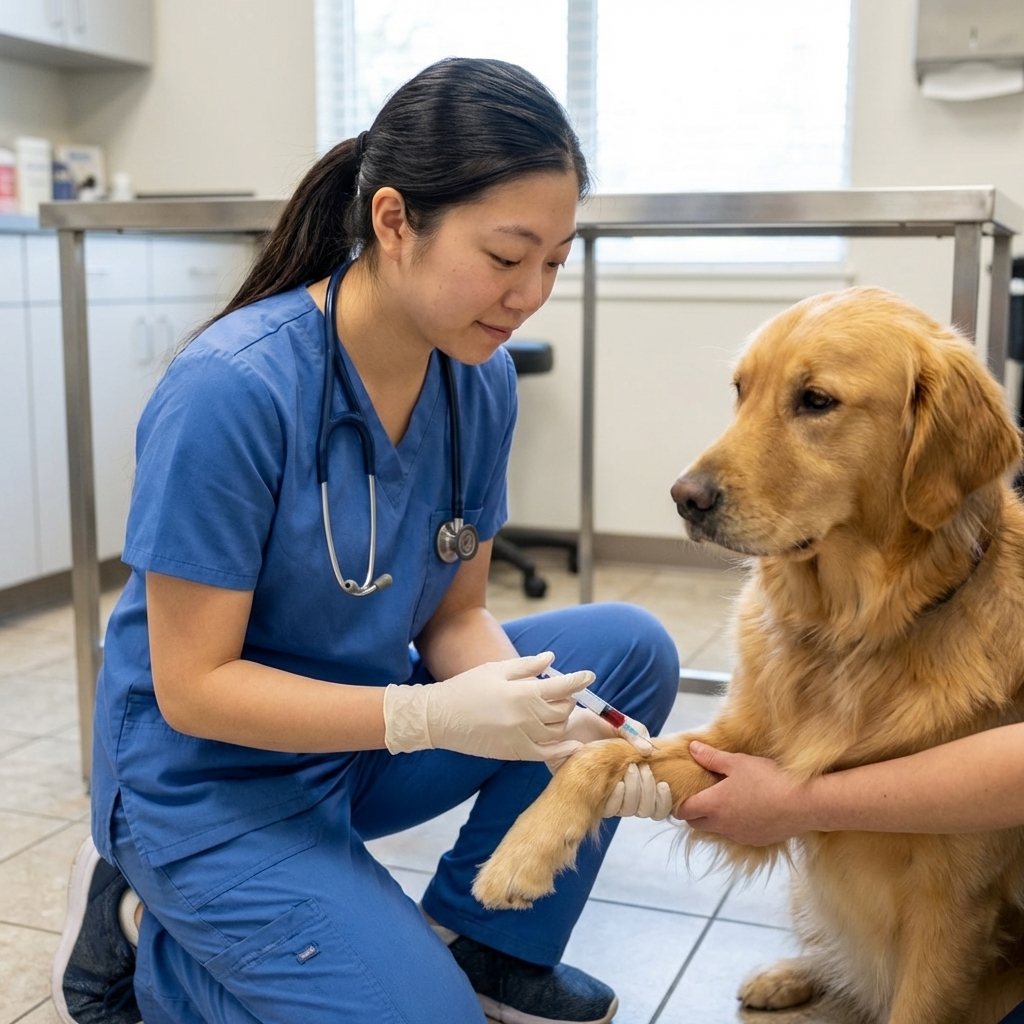
- Before spay or neuter, your vet may recommend bloodwork. In higher-risk situations, clotting evaluation may be discussed.
If you ever notice unexplained bleeding, this is a “call your vet now” situation.
Cancer awareness
Because of the Golden Retriever side, some Goldendoodles may inherit an increased risk for certain cancers. This does not mean you should live on high alert. It means routine screening and quick check-ins matter.
Signs to bring up promptly
- New lumps or bumps (especially those that grow quickly)
- Unexplained weight loss or reduced appetite
- Sudden weakness, collapse, or pale gums
- Persistent coughing, belly swelling, or exercise intolerance
- Ongoing fatigue that is not typical for your dog
Most lumps are not emergencies, but they do deserve a plan. In our clinic we often say, “Do not guess. Test.” A simple needle sample (FNA) can give helpful answers quickly.
Other issues to know
No single article can cover everything, but these are also worth knowing about, especially in medium to larger Goldendoodles.
- Cruciate ligament (CCL/ACL) tears: sudden limping in a back leg, trouble rising, or a “toe-touching” gait can be a clue.
- Bloat (GDV): higher risk in larger, deeper-chested dogs. This is an emergency.
- Elbow dysplasia and arthritis: can show up as front-end stiffness or lameness.
- Endocrine issues: conditions like hypothyroidism can occur in many breeds, and Addison’s disease is notable in Standard Poodle lines. Signs can be vague, so bring up recurring GI upset, low energy, or “off” days.
Preventive care that pays off
Most Goldendoodles thrive with steady, sensible care. Here are the big-ticket habits I love to see in Goldendoodle families.
1) Keep a healthy weight
Joint health, heart health, and even allergy control are easier when your dog is lean. If you are not sure about body condition score, ask your veterinary team to show you what to look for.
2) Stay consistent with ears, teeth, and parasites
- Ears: keep them clean and dry, especially after swimming.
- Teeth: brush when possible and ask about professional cleanings based on your dog’s mouth.
- Parasite prevention: keep flea, tick, and heartworm prevention up to date year-round, especially in warm, humid climates.
3) Use routine screening and act early
Annual or twice-yearly wellness visits can catch subtle issues before they become expensive or painful problems. Changes in energy, appetite, stool quality, itching, lumps, or mobility are worth mentioning even if they seem “small.” Those little clues often matter.
4) Smart breeding and good records
If you are choosing a puppy, look for breeders who health test and who are transparent about what is common in their lines. Beyond hips, ask what they do for eyes (often CAER or similar exams), elbows, and cardiac screening when appropriate for the line.
Once you have your Goldendoodle, keep a simple health log: ear infection dates, allergy flare seasons, medications that worked, and any reactions. That history helps your vet tailor care faster.
When to call your vet
Reach out sooner rather than later if you notice any of the following:
- Persistent limping, difficulty getting up, or pain with stairs
- Head shaking, ear odor, discharge, or painful ears
- Itching that interrupts sleep or causes skin sores
- New vision issues, especially at night
- Unexplained bruising or bleeding
- Possible bloat signs: a swollen belly, unproductive retching, pacing, drooling, or sudden distress
- Collapse, pale gums, or sudden weakness
Your Goldendoodle does not need to be “miserable” to deserve help. Early care is often the gentlest and most affordable route.