Learn why lean turkey is a smart protein for dogs, plus an easy base recipe, mix-and-match bowl ideas, transition steps, calcium guidance, and food-safety tips.
Article
•
Designer Mixes
Golden Retriever Sleeping Guide

Shari Shidate
Designer Mixes contributor
Golden Retrievers are famously affectionate, active, and people-focused. That combination is wonderful during the day, but it can also mean restless nights if their bodies and brains are not getting what they need. As a veterinary assistant, I see it all the time: a loving Golden who is “being difficult” is often just overtired, under-stimulated, uncomfortable, or stuck in a routine that does not support quality sleep.
This guide walks you through how to help your Golden Retriever sleep better, from ideal schedules and sleep setups to red flags that deserve a call to your veterinarian.
Medical note: This article is educational and not a substitute for veterinary diagnosis. If sleep changes are sudden, severe, or persistent, your veterinarian is your best next step.
How much sleep does a Golden Retriever need?
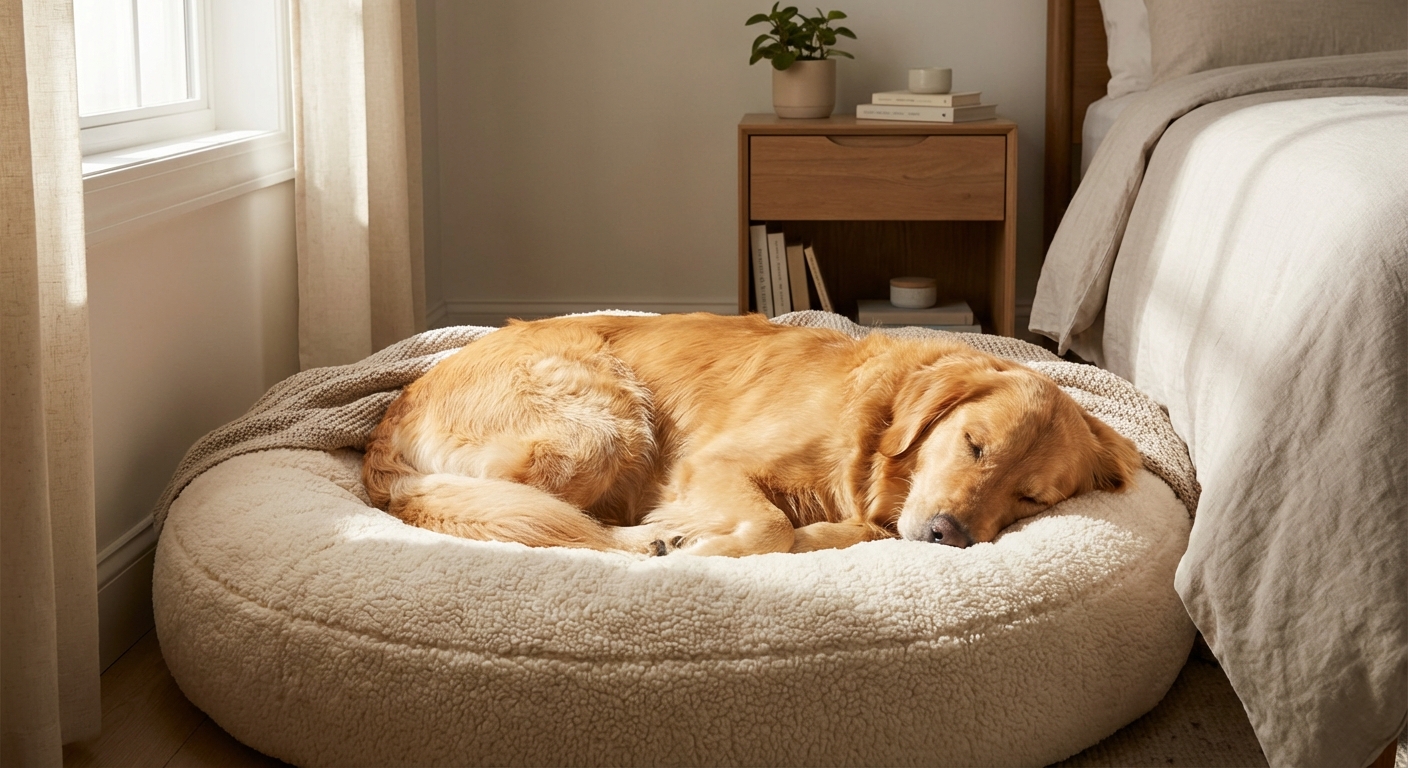
Most healthy adult dogs sleep about 12 to 14 hours total per day, but there is a wide normal range. Sleep needs vary with activity level, age, health, medications, household noise, and even the season.
- Puppies: commonly 18 to 20 hours per day, with frequent naps.
- Adults: often 12 to 14 hours per day.
- Seniors: may sleep 14 to 18 hours, sometimes with more nighttime waking due to pain, anxiety, cognitive changes, or needing to potty.
If your Golden is suddenly sleeping much more or much less than usual, treat that change as meaningful. Sleep is a health indicator.
What good sleep looks like
It is normal to see twitching paws, little woofs, and rapid eye movement during deeper sleep. What you want overall is a dog who can settle without a long struggle, stays asleep for decent stretches, and wakes up with a “ready to go” attitude.
Rule of thumb: many dogs can settle within 10 to 20 minutes after a calm bedtime routine. If your dog regularly takes much longer, it is a clue to look for a missing piece (too much stimulation, discomfort, anxiety, needing to potty, and so on).
Signs your Golden is sleeping well
- Falls asleep after evening routine without prolonged pacing
- Does not repeatedly get up to roam the house
- Minimal nighttime whining, panting, or licking
- Wakes up bright, interested, and comfortable
Signs sleep is not restorative
- Frequent waking, restlessness, circling, changing spots constantly
- Nighttime panting when the room is cool
- Excessive licking or chewing paws at night
- Needing to go outside multiple times without a clear reason
- Daytime crankiness, hyperactivity, or “wired but tired” behavior
For many healthy adult, house-trained dogs, “reasonable stretches” often means sleeping several hours at a time overnight with maybe one brief repositioning.
Set up the sleep space
Many dogs, including many Golden Retrievers, sleep best when they can rest near their people. Your goal is a space that is safe, cool, quiet, and consistent.
Pick the right location
- Quiet but not isolated: a bedroom corner or nearby hallway is often ideal.
- Low traffic: avoid areas where people are up late snacking, gaming, or coming and going.
- Stable temperature: Goldens can run warm due to their dense coat, so cooler sleeping is often better.
Bed choices that work well
- Orthopedic foam: great for adults and especially seniors with joint stiffness.
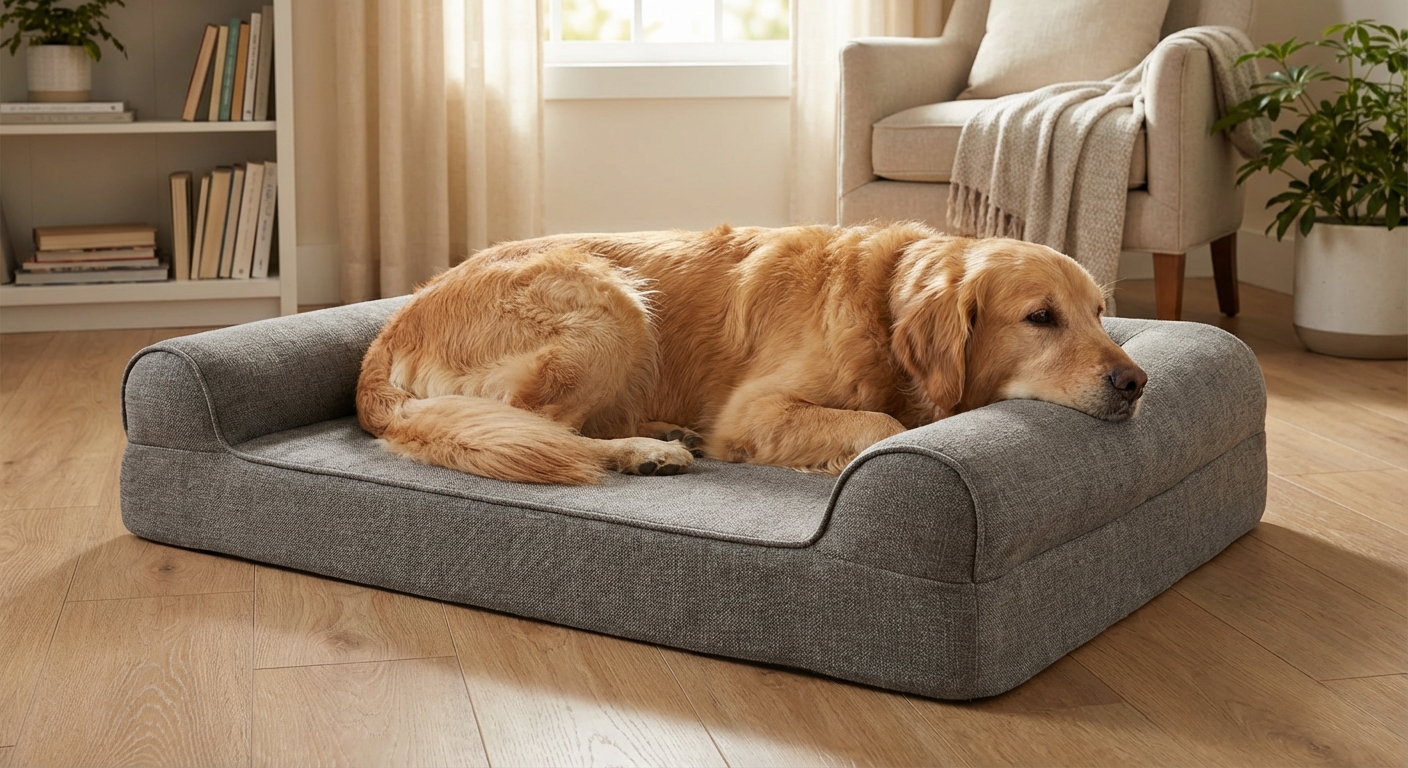
- Bolster beds: many Goldens love resting their head up on a raised edge.
- Cooling mat or cooling cover: helpful for heavy-coated dogs who pant at night.
Pro tip: if your dog keeps choosing the tile or bathroom floor, they are probably telling you they are too warm.
Crate or no crate?
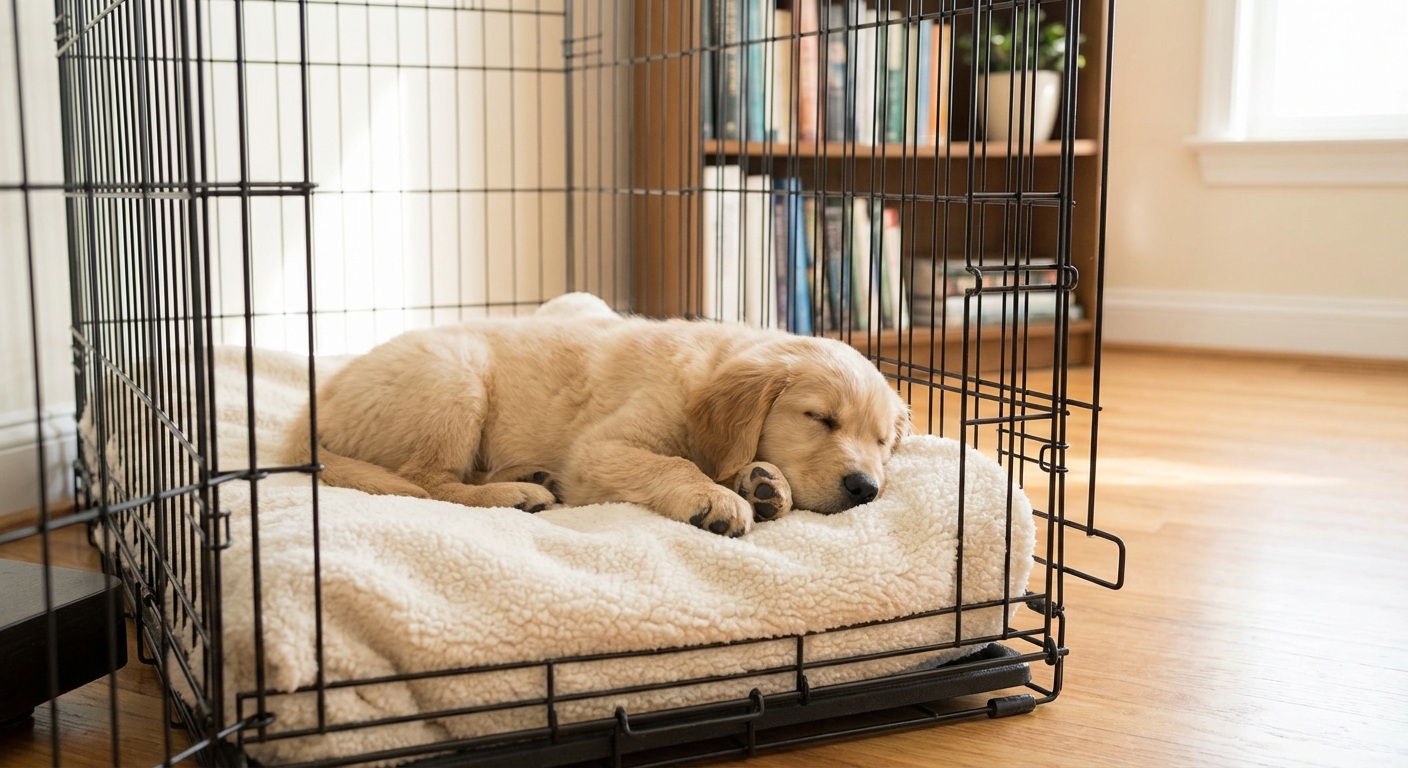
Both can be healthy. A crate can support sleep for puppies and dogs who struggle to settle, as long as it is introduced positively and never used as punishment.
- Crate helps when: potty training, chewing, nighttime wandering, or anxiety about the household.
- No crate helps when: your dog sleeps calmly on a bed and does not get into trouble.
If using a crate, aim for: comfortable bedding, a light cover for a den-like feel, and enough room to stand up, turn around, and stretch out.
Light and noise tips
- White noise: a fan or white-noise machine can help in busy households.
- Dim lights: keep bedtime lighting low. For seniors, a small night light can reduce disorientation.
- Blackout curtains: can help early-rising dogs in bright rooms.
Bedtime routine
Dogs thrive on pattern. A predictable wind-down routine teaches the nervous system that sleep is coming. The best routines are boring in the best way.
A simple nightly routine (30 to 60 minutes)
- Last potty break (calmly, on leash if your yard triggers zoomies).
- Water check (keep water accessible, as always. If your dog is suddenly drinking a lot at night, that is a veterinary red flag rather than something to restrict at home).
- Settle activity such as a stuffed frozen Kong, lick mat, or gentle chew.
- Lights dim and voices softer to reduce stimulation.
- Bed cue (same phrase each night like “bedtime”).
Try to keep bedtime and wake-up within the same 1 to 2 hour window daily, even on weekends.
Daily schedule matters most
Most “sleep problems” start earlier in the day. Goldens are sporting dogs. They were built to work with people, use their nose, and move their bodies. When those needs are met, sleep usually follows.
Exercise that supports sleep
Aim for a blend of physical exercise and mental enrichment. For many adult Goldens, 60 to 120 minutes of total activity per day is common, but it should be tailored to the individual. Adjust down for puppies, seniors, overweight dogs, dogs with arthritis, and dogs with heat sensitivity. When in doubt, ask your veterinarian what is safe for your dog.
- Morning: brisk walk plus a few short training reps (sit, down, stay, leash manners).
- Midday: sniff walk, puzzle toy, or short play session.
- Late afternoon or early evening: the more active outing (fetch with rules, swim, hike).
- Night: calming enrichment only.
Watch the timing. Very intense play right before bed can create a second wind. If your Golden gets zoomy at 9 pm, move the big exercise earlier. Also keep heat in mind, especially for thick-coated dogs. Choose cooler hours, offer water, and stop if your dog is struggling.
Mental enrichment ideas
- Sniffing games like “find it” with treats hidden around one room
- Food puzzles and slow feeders
- Short, upbeat training sessions (2 to 5 minutes)
- Novel but low-stress experiences like a new walking route
Food, water, and sleep
What and when your Golden eats can affect sleep quality, potty needs, and nighttime restlessness.
Meal timing
- Most adult Goldens do well with dinner 3 to 4 hours before bedtime.
- Puppies may need a later small meal depending on their schedule, but keep it consistent.
Nighttime potty needs
If your dog wakes you to go out, take it seriously. Frequent nighttime urination can be training related, but it can also signal a medical issue or a shift in drinking habits.
- Puppies: need more frequent potty breaks. Plan for this during training.
- Adults: should typically make it through the night once house-trained.
- Seniors: may need more breaks due to weaker bladder control or underlying disease.
For adult dogs, common considerations include urinary tract infection, diabetes, kidney disease, Cushing’s disease, medication side effects, increased water intake (polydipsia), incontinence, and prostate disease in intact males.
Helpful calming snacks
Some dogs settle better with a small bedtime snack, especially if they vomit bile early morning from an empty stomach. Good options include a few bites of their regular food or a small portion of a veterinarian-approved treat.
If you are exploring supplements like melatonin or calming chews, check with your veterinarian first, especially if your dog is on any medications.
Common sleep issues
1) Nighttime panting
Goldens pant when they are hot, stressed, in pain, or sometimes after intense activity. Try cooling the room, offering a cooling mat, and moving evening exercise earlier.
Call your veterinarian promptly if panting is new, intense, or paired with coughing, weakness, pale gums, or collapse.
2) Itching and licking at night
Allergies are very common in this breed. Nighttime licking can interrupt sleep for everyone.
- Check paws and ears for redness, odor, or discharge.
- Ask your veterinarian about allergy management options and parasite prevention.
- Keep bedding clean and washed with fragrance-free detergent.
3) Restlessness or pacing
This is often a mix of unmet needs and learned patterns. Start with daytime structure, consistent bedtime, and calming enrichment. If anxiety is suspected, behavior support and veterinary guidance can be life-changing.
4) Waking up to potty
If your adult Golden suddenly needs to urinate overnight, consider a medical check. Causes can include urinary tract infections, diabetes, kidney disease, Cushing’s disease, prostate disease (intact males), incontinence, increased thirst, or medication side effects.
5) Snoring or noisy breathing
Some snoring can be normal, especially in certain sleep positions. Golden Retrievers are not a classic flat-faced (brachycephalic) breed, so persistent snoring or noisy breathing can also be linked to issues such as obesity, nasal disease, airway inflammation, or laryngeal paralysis in older large-breed dogs. If you notice loud, persistent stertor, gagging, struggling to breathe, or reduced exercise tolerance, schedule a veterinary exam.
6) Upset stomach or GI discomfort
Reflux, nausea, diarrhea, constipation, and gas can make dogs pace, swallow frequently, or repeatedly change sleeping spots. If you see vomiting, diarrhea, straining, decreased appetite, or a painful belly, contact your veterinarian.
7) Ear infections or parasites
Ear infections can be itchier at night and may cause head shaking or pawing at the ears. Fleas, mites, and intestinal parasites can also disrupt sleep. Stay consistent with veterinarian-recommended prevention and ask for an exam if symptoms are new.
8) Cognitive changes and medication effects
Senior dogs can develop canine cognitive dysfunction, which may show up as nighttime waking, wandering, or vocalizing. Some medications can also affect sleep or thirst. If the timing lines up with a new prescription or dose change, call your veterinarian for guidance.
Puppy sleep
Golden Retriever puppies are adorable, and they are also famous little land sharks with big feelings and tiny bladders. Good news: sleep training is very doable.
Crate tips for nighttime
- Place the crate near your bed at first so your puppy feels secure.
- Take them out for a quick potty break if they wake and cry, then back to the crate without play.
- Keep nighttime boring: low light, minimal talking, no long cuddling sessions.
Enforced naps help
Many puppies do not self-regulate. If your puppy gets bitey, wild, or frantic, they are often overtired. A calm crate nap in a dim room can help them reset.
Typical puppy wake-ups
Some puppies need 1 to 2 overnight potty breaks early on. This usually improves quickly with consistency and a good daytime schedule.
Senior Goldens
Older Golden Retrievers may wake more due to stiffness, arthritis, needing to potty, or cognitive changes. Gentle adjustments can make a huge difference.
- Upgrade the bed: orthopedic foam is a gift for aging joints.
- Warm-up and cool-down: gentle walks help. If you do “stretching,” keep it gentle and voluntary (think slow, comfortable movement, not forcing positions).
- Night lights: a dim hallway light can help seniors who feel disoriented.
- Discuss pain control: never give human pain meds. Ask your veterinarian about safe options.
Teach go to bed
This cue is simple, kind, and very effective for dogs who hover and cannot settle.
Step-by-step
- Choose the bed you want them to use.
- Toss a treat onto the bed and say “bed.”
- When they step onto it, calmly praise and give another treat.
- Repeat 5 times, then stop. Short sessions work best.
- Gradually ask for a down on the bed before rewarding.
Once your Golden understands, use the cue during calm times first, then add it to your bedtime routine.
Multi-dog households
If you have more than one dog, sleep can get messy fast. A few small changes can prevent nighttime squabbles and constant wake-ups.
- Separate sleep spots: give each dog their own bed or crate, ideally with a little space between.
- Manage chews: avoid high-value chews at bedtime if resource guarding is a risk.
- Stagger settling: if one dog triggers play, put that dog in a crate or gated area first so everyone can actually wind down.
Troubleshooting quick fixes
- Wakes at 3 am every night: do a boring potty break, then straight back to bed. Review dinner timing, late naps, and whether they are waking due to thirst, itching, pain, or GI upset. If it persists, schedule a vet check.
- Panting only after evening fetch: move intense play earlier, shorten the session, and add cool-down time. Consider a cooling mat and a cooler room.
- Pacing and clinginess at night: add more daytime enrichment, keep bedtime predictable, and consider anxiety support with your veterinarian and a qualified trainer.
- Sudden new accidents overnight: treat as medical until proven otherwise and call your veterinarian.
What not to do
- Do not punish nighttime waking, whining, or accidents. It increases anxiety and often worsens sleep.
- Do not suddenly crate a dog who has not been crate-trained and expect it to calm them. Introduce the crate gradually and positively.
- Do not restrict water to “fix” nighttime potty issues. Water should remain available. Increased thirst needs veterinary attention.
- Do not ignore pain signs like stiffness, difficulty getting up, or reluctance to jump.
When to call your veterinarian
Sleep disruptions can be behavioral, but they can also be the first hint of a health problem. Please reach out to your veterinarian if you notice any of the following:
- Sudden change in sleep duration or sleep behavior
- Nighttime panting, pacing, or apparent discomfort
- Frequent nighttime urination or accidents after being reliably house-trained
- Increased thirst or a noticeable change in water intake
- Persistent itching, ear issues, or skin infections interrupting sleep
- New coughing, exercise intolerance, noisy breathing, or fainting episodes
- Signs of pain: stiffness, difficulty getting up, reluctance to jump, yelping
Your Golden is not giving you a hard time. They are having a hard time. Sleep struggles are often solvable once we identify the root cause.
Quick checklist
- Cool, quiet sleep space with supportive bedding
- Last potty break and calm wind-down
- Water available (note excessive drinking as a vet flag)
- Calming enrichment (lick mat or stuffed toy)
- Lights down, consistent cue, consistent bedtime
- Tomorrow: more sniffing and a balanced activity plan
With a little structure and a lot of patience, most Golden Retrievers learn to sleep soundly and wake up ready for their next happy adventure.