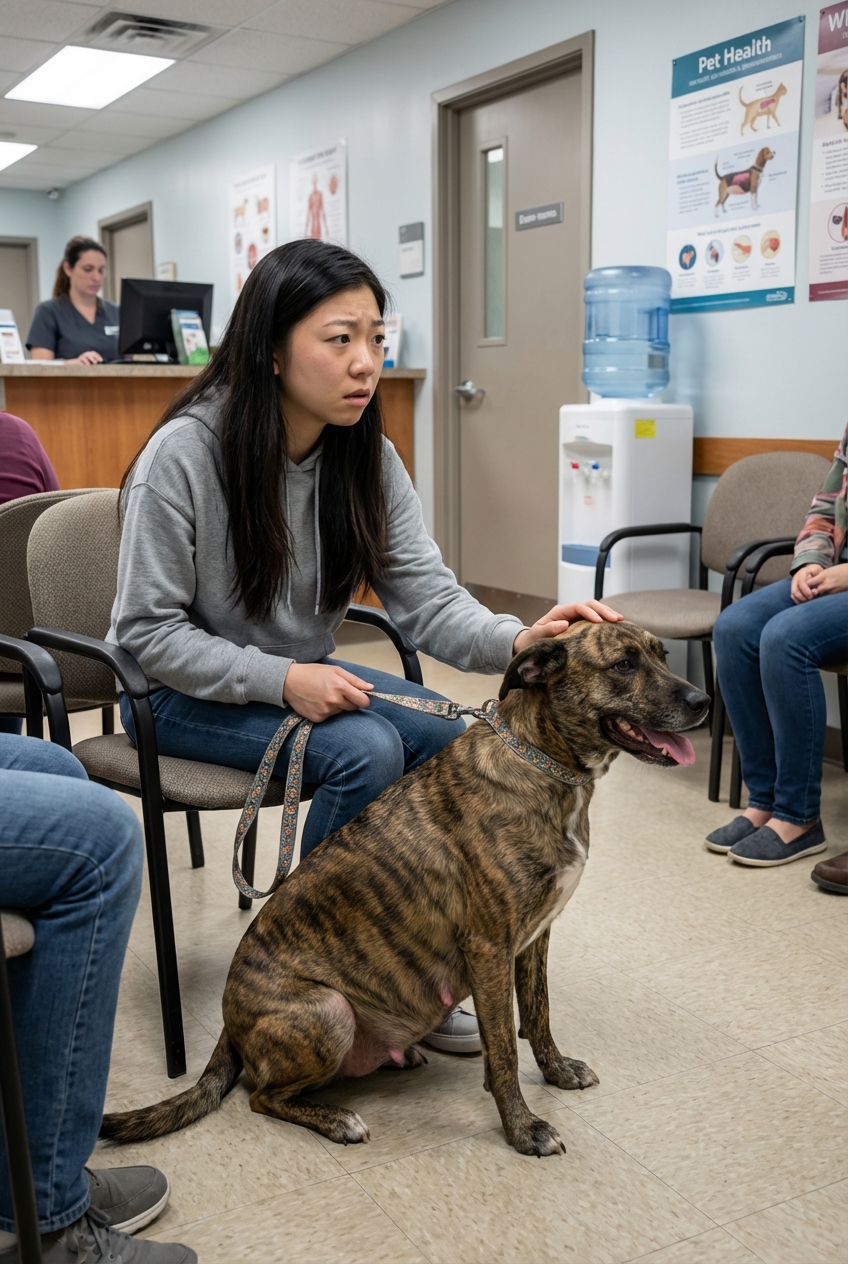
A practical, vet-informed FAQ for your dog’s first heat: stages and timing, fertility myths, normal vs concerning bleeding, cleaning/diaper tips, walk safe...
Article
•
Designer Mixes
Golden Retriever Heat Cycle Care Tips

Shari Shidate
Designer Mixes contributor
If you have a female Golden Retriever who is not spayed, her heat cycle can feel like a whole new chapter of dog parenting. The good news is that with a few practical steps, you can keep her comfortable, keep your home cleaner, and most importantly, prevent an accidental pregnancy.
In my experience as a veterinary assistant, I always remind families that a heat cycle is normal, but it does require extra supervision. Golden Retrievers are friendly, active dogs, and that combination can make heat-cycle management tricky if you do not have a plan.
Quick note: This guide is for general education and is not a substitute for veterinary advice for your individual dog.
Heat cycle basics
A dog’s “heat” refers to the reproductive cycle surrounding estrus, when she can become pregnant. Many dogs cycle roughly every 6 to 8 months, but variation is normal. Some Goldens are very consistent, and others are not, especially early on.
When do Golden Retrievers go into heat?
Many medium to large breeds, including Golden Retrievers, have their first heat somewhere in the 6 to 18 month range. Larger dogs often start later than small dogs, and the first cycle can be subtle or irregular.
How long does a heat cycle last?
Many heat cycles last about 2 to 4 weeks, but some are shorter or longer. The fertile window is not the entire time, but you should treat the whole cycle as “high risk” because timing can be unpredictable, especially if you missed the first day of discharge.
Stages of the heat cycle (simple version)
- Proestrus (often about 7 to 10 days): swelling of the vulva and bloody discharge. Most females are not receptive yet, but male dogs will show strong interest.
- Estrus (often about 5 to 10 days): discharge may become lighter or straw-colored. This is typically the most fertile time, but ovulation timing can vary.
- Diestrus (about 2 months): her body shifts out of fertility whether or not she was bred.
- Anestrus (months): resting period between cycles.
Signs your Golden is in heat
Every dog is a little different, but these are common signs families notice at home:
- Bloody or pink-tinged discharge (sometimes very light)
- Swollen vulva
- Increased licking of the genital area
- More clingy, more restless, or moodier than usual
- Frequent urination or marking behavior on walks
- Male dogs suddenly showing intense interest
- “Flagging” behavior, meaning she moves her tail to the side when touched near the back end (often during estrus)
Some females keep themselves very clean, so owners may miss the start date and only notice swelling or behavior changes. A light cycle can still be fertile.
Once you suspect she is in heat, it is time to shift into management mode and assume pregnancy risk until you are confident the cycle is over.
Preventing pregnancy
During a heat cycle, your Golden Retriever needs a higher level of management than usual. Accidental breeding happens fast, and it can happen through surprising “oops” moments.
Non-negotiables
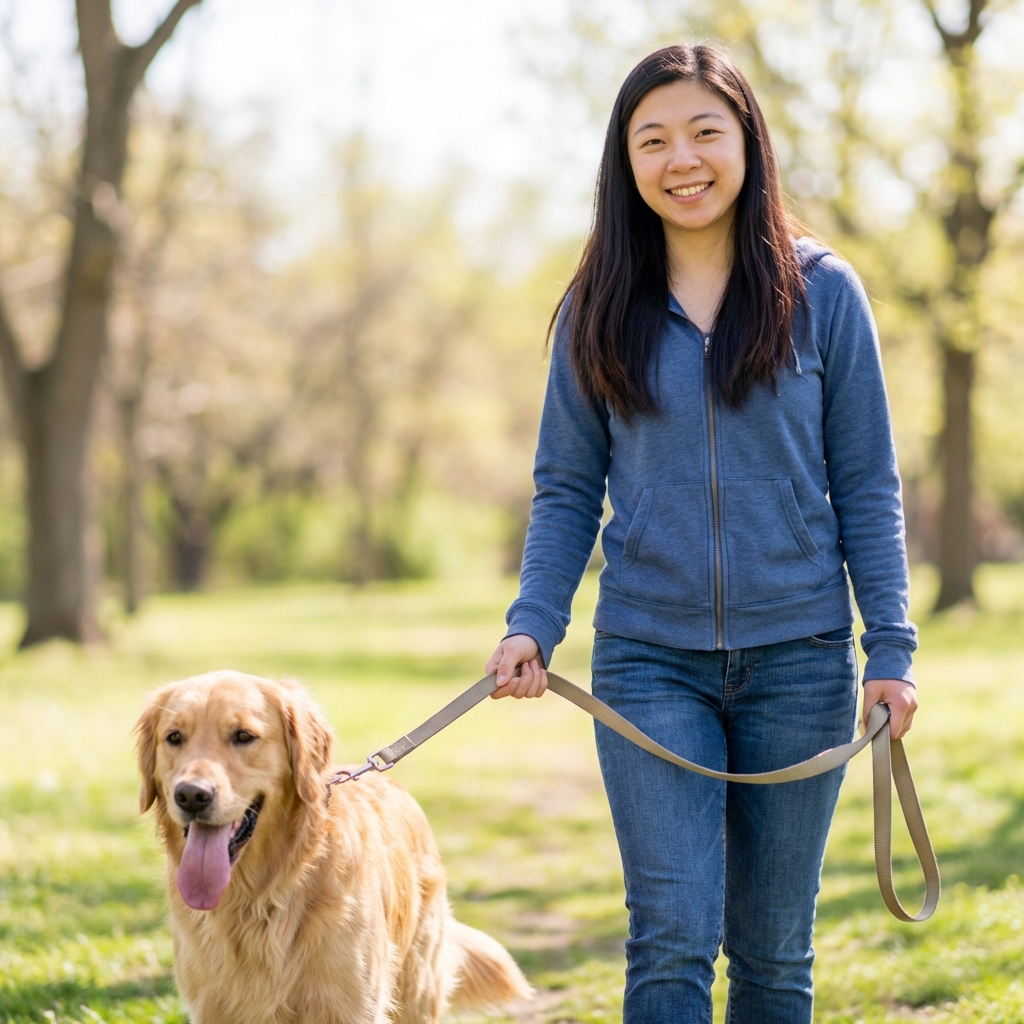
- No off-leash time, even in areas she normally recalls well.
- No dog parks. They increase the chance of persistent intact males and accidental mating.
- Supervised backyard time only. Many males can jump fences or dig under them.
- Keep her separated from intact males in the home with two barriers when possible (for example, a closed door plus a crate).
- Do not rely on diapers to prevent mating. They help with mess, not pregnancy prevention.
If you are unsure when she is truly “done,” continue strict supervision for about 3 to 4 weeks from the first day you noticed bleeding. If you did not catch the first day, it is safest to extend that window. Pregnancy can occur even when discharge looks lighter, seems to stop, or returns briefly.
Walk safety when other dogs approach
- Create distance early by turning around, crossing the street, or stepping behind a parked car or hedge.
- Keep the leash short and secure and avoid greeting unknown dogs.
- Choose quieter routes and off-peak times.
- If you have repeated issues with off-leash dogs in your area, talk with your trainer or veterinarian about safe deterrent options that are legal where you live.
Comfort and cleanup
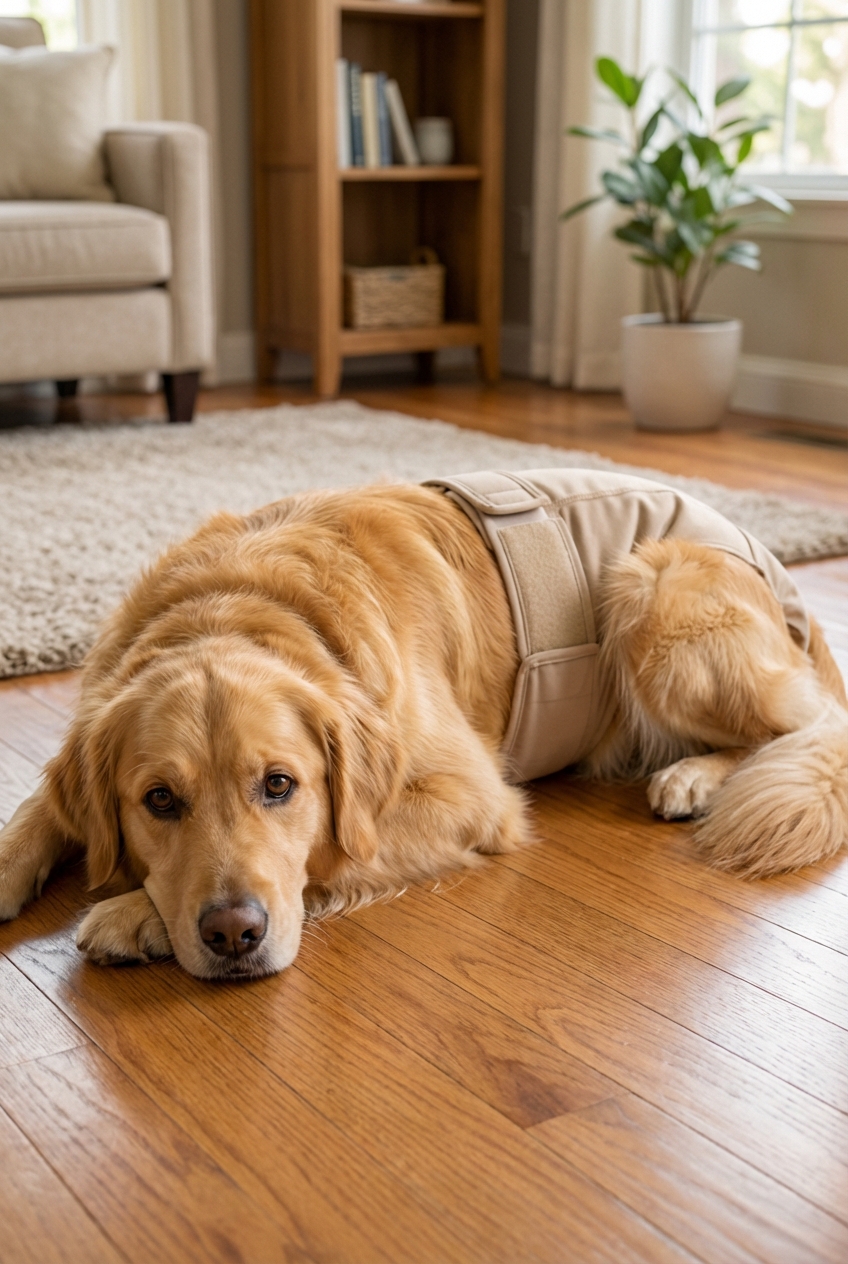
Golden Retrievers have a thick coat, and discharge can collect in feathering around the back legs and tail. Comfort and hygiene go hand in hand here.
Use heat diapers the right way
- Choose a diaper that fits snugly but does not rub her groin.
- Change frequently to prevent skin irritation and moisture buildup.
- Add an unscented liner if needed for easier changes.
- Give her diaper breaks in a controlled, easy-to-clean area.
Protect surfaces
- Washable blankets or towels on her favorite spots
- Pet-safe wipes near the door for quick cleanups
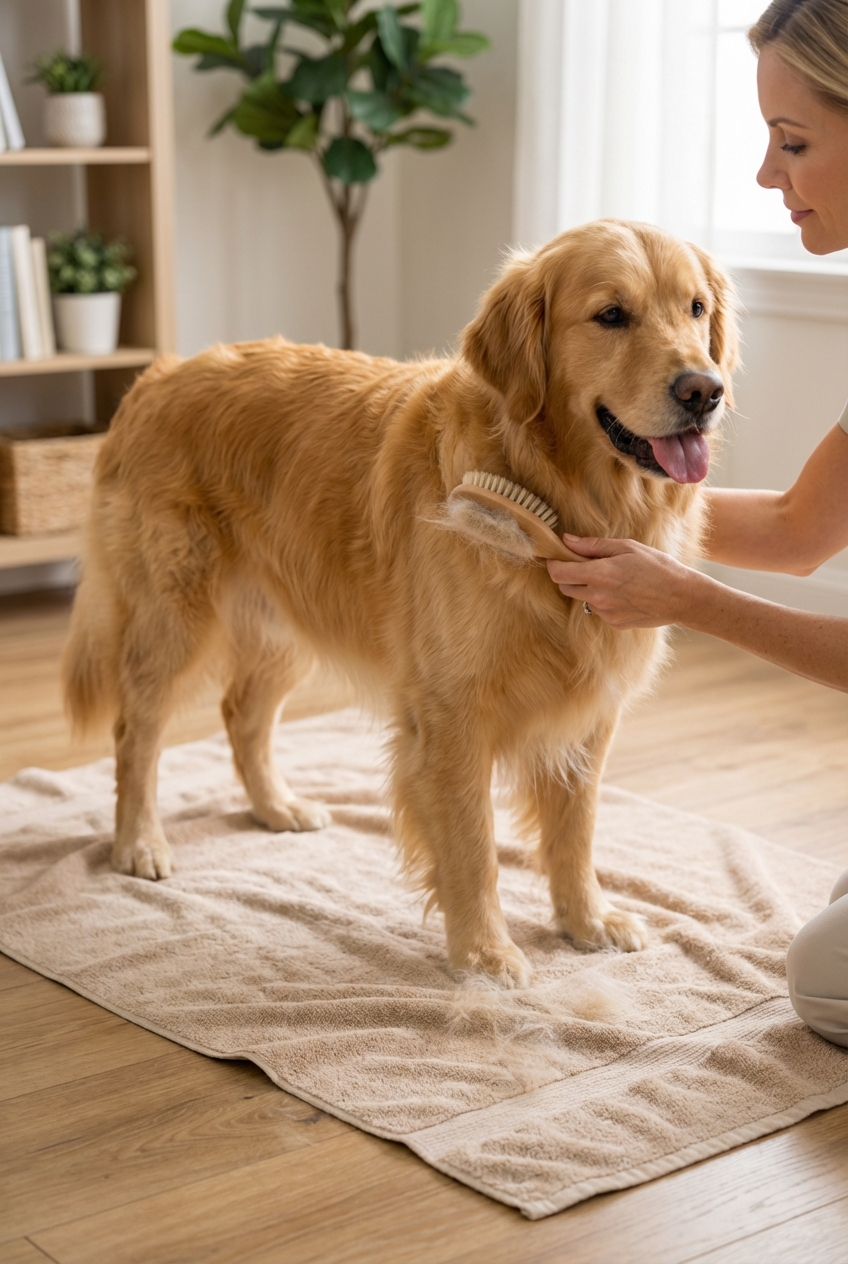
- Vacuum and brush more often to reduce matting around the rear
Bathing and grooming
It is usually fine to bathe her during a cycle if she tolerates it well. Keep it gentle and simple. Use a mild dog shampoo, rinse thoroughly, and dry the feathering well so moisture does not sit against the skin. If needed, a light trim of the feathering around the rear can make cleanup easier.
Watch for skin irritation
Redness, bumps, a strong odor, or excessive licking can signal irritation or infection. Call your veterinarian if you notice these signs.
Exercise and enrichment
Your Golden still needs movement and mental stimulation, but the goal is lower-risk activities that do not attract a crowd of dogs.
Safe exercise ideas
- Leashed walks at quieter times of day
- Sniff walks where she can explore at a calm pace
- Backyard training sessions with close supervision
- Indoor fetch down a hallway if she is not too revved up
Mental enrichment that helps
- Food puzzles and frozen Kongs
- Scatter feeding in a snuffle mat
- Short training sessions focusing on calm behaviors like “place”
If she seems restless, it is not “bad behavior.” Her hormones are shifting, and many females need extra structure and reassurance during this time.
Nutrition and hydration
Most Golden Retrievers can stay on their regular balanced diet during a cycle. Some dogs have a slightly reduced appetite, while others act hungrier than usual.
- Keep meals consistent to avoid stomach upset.
- Prioritize hydration, especially if she is panting more or urinating more frequently.
- Go easy on rich treats. A sudden increase in fatty snacks can trigger diarrhea or pancreatitis in sensitive dogs.
If you cook at home for your dog, make sure her diet is still complete and balanced for her life stage. Heat cycles do not require special supplements in most healthy dogs, and it is always worth checking with your veterinarian before adding anything new.
When to call the vet
Most heat cycles are uncomplicated, but these symptoms deserve a call:
- Heavy bleeding (soaking through diapers quickly) or bleeding that continues longer than about 3 to 4 weeks
- Lethargy, vomiting, or loss of appetite that lasts more than a day
- Fever, weakness, or seeming painful in the abdomen
- Foul-smelling discharge, pus-like discharge, or discharge after the heat seems finished
- Excessive drinking and urination combined with low energy
One serious condition we worry about in unspayed females is pyometra, a uterine infection that can occur in the weeks after heat. It can be open (discharge may be visible) or closed (no discharge). That is why lethargy and illness after a cycle still matters even if you do not see discharge. It can become life-threatening quickly, so do not wait and see if your gut says something is off.
False pregnancy
Some females develop a false pregnancy (pseudopregnancy) during diestrus. You might notice nesting behavior, clinginess, guarding toys, mammary swelling, or even milk production. Mild cases often pass, but call your vet if she seems painful, has significant mammary swelling, develops discharge, or her behavior changes sharply.
Spay planning
Spaying prevents pregnancy and significantly reduces the risk of pyometra. It can also reduce the risk of mammary tumors when done early, but the best timing is not one-size-fits-all. For Golden Retrievers, timing is often individualized based on growth, orthopedic considerations, cancer risk factors, and your dog’s overall health.
Many veterinarians recommend waiting until a dog is fully out of heat before spaying, because tissues can be more vascular during the cycle. If you are considering spay surgery for your Golden Retriever, ask your vet:
- When they recommend scheduling based on her age and size
- How they weigh breed-specific benefits and tradeoffs
- What pre-op bloodwork and aftercare will look like
Daily checklist
- Leash only, no exceptions
- Change diapers often and check skin
- Supervise backyard time and secure gates
- Offer calm enrichment and predictable routines
- Watch appetite, energy, and discharge patterns
- Call your veterinarian if anything seems abnormal
One of the kindest things you can do during your Golden’s heat cycle is simply slow life down a bit. Lower-stress walks, extra supervision, and a clean, cozy setup go a long way.