Make pill time stress-free with daily routines, high-value “pill hiders,” the three-treat trick, safe direct pilling steps, tools like pill guns, and vet...
Article
•
Designer Mixes
Giving a Dog a Pill

Shari Shidate
Designer Mixes contributor
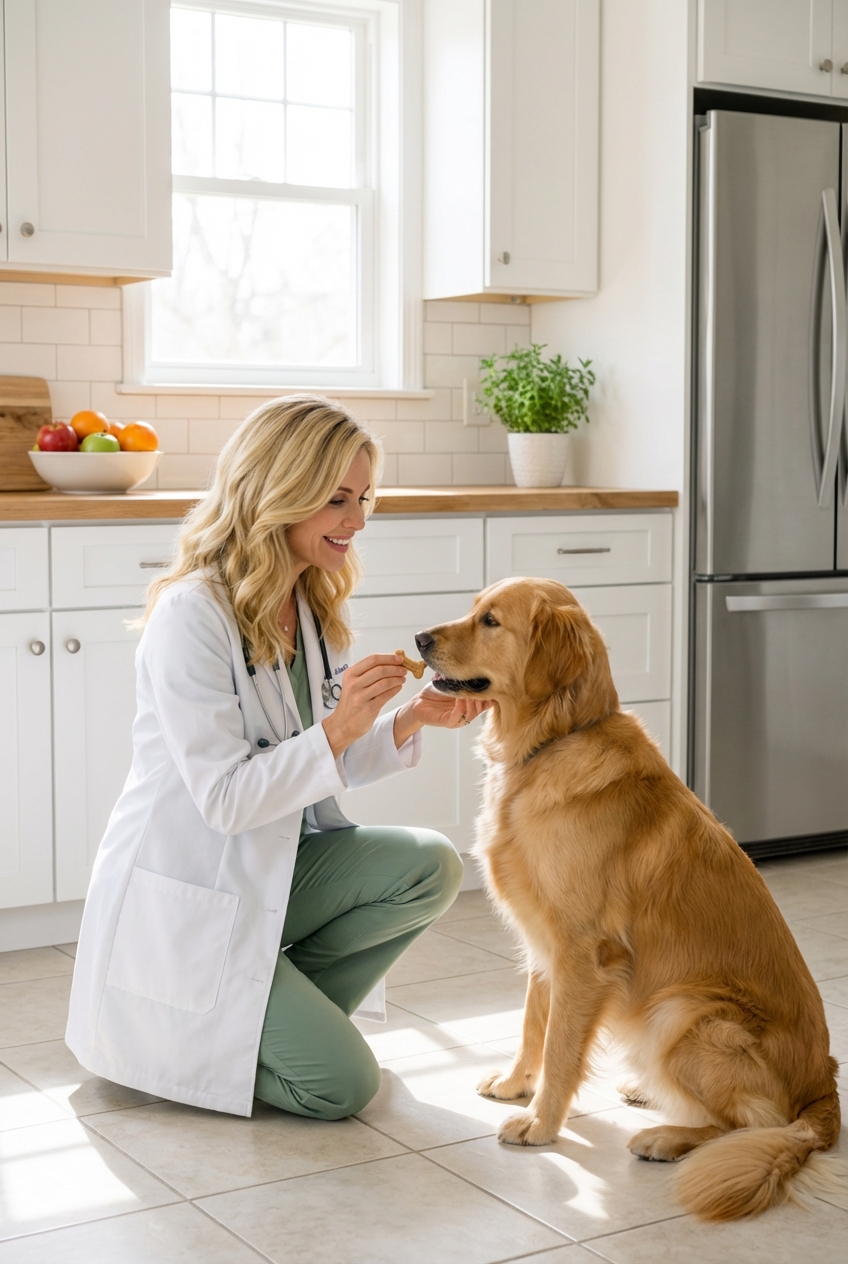
As a veterinary assistant in Frisco, Texas, I can tell you this: giving a dog a pill is one of the most common pet parent struggles, and it is also one of the most solvable. The key is to keep your dog calm, protect their airway, and choose a method that fits your dog’s personality.
This handbook walks you through safe, evidence-based ways to give tablets and capsules, plus what to do if things get tricky. If your dog has a medical condition, is very small, brachycephalic (like a Frenchie), or you have concerns about swallowing, call your veterinarian for technique guidance before you try at home.
Before you start
Confirm the basics
- Right pet, right medication, right dose. Double-check the label and your dog’s name.
- Food or empty stomach? Some meds must be given with food to reduce nausea. Others work best on an empty stomach. If you are not sure, call your clinic or pharmacist.
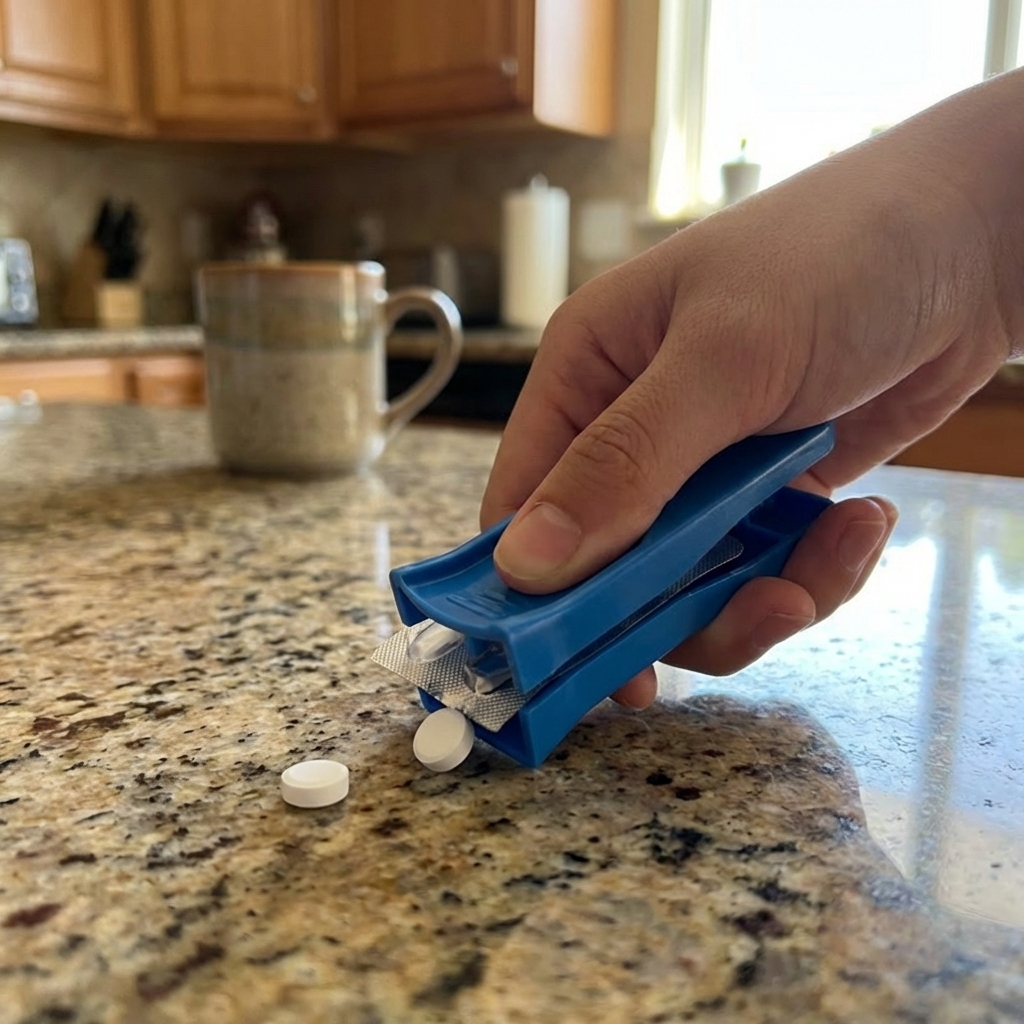
- Do not crush or split unless told. Extended-release or enteric-coated meds may be less effective, absorbed too quickly, irritate the stomach, or be unsafe to handle if altered. If a medication is bitter, crushing can also make it harder to give because the taste spreads.
- Ask about interactions. Supplements, antacids, dairy, and certain foods can interfere with some medications.
- Handle meds safely. Keep human medications and pet prescriptions out of reach, wash your hands after dosing, and ask your pharmacist if a drug should not be touched, crushed, or opened.
Set yourself up for success
- Pick a quiet spot with good lighting and minimal distractions.
- Have a chaser ready: a few high-value treats, a spoon of canned food, or a small syringe of water (only if your vet says it is appropriate for your dog).
- Keep it positive. One calm, confident attempt beats multiple anxious tries.
Safety note: If you think your dog may bite when stressed, use a muzzle that allows panting, or call your veterinary team for help. A bite can happen fast, even with very sweet dogs.
Method 1: Hide the pill in food
This is the gentlest method and often the best starting point, especially for anxious dogs. The goal is to prevent your dog from realizing there is a pill at all.
Good pill hiders
- Pill pockets (commercial soft treats designed to wrap pills)
- Canned dog food formed into a small meatball
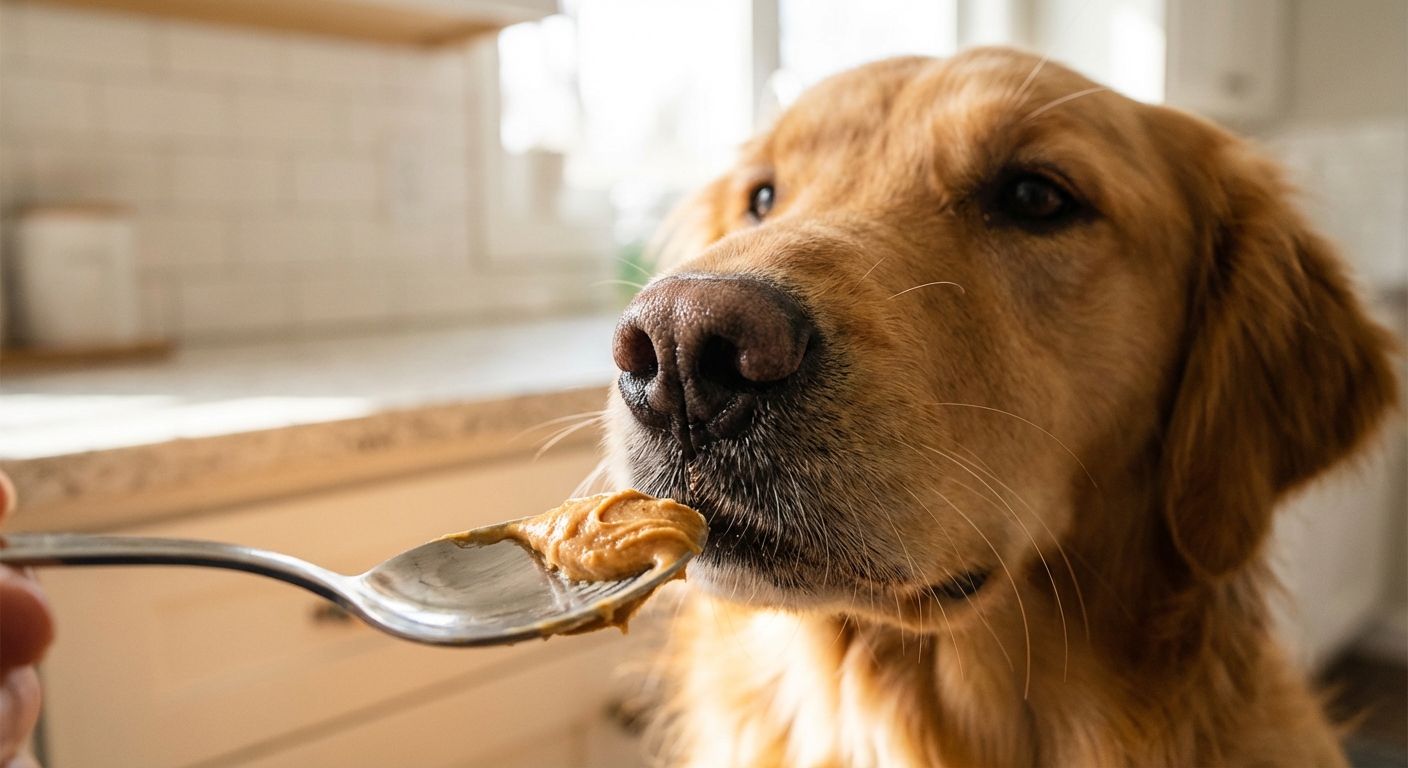
- Peanut butter (xylitol-free only) for tablets, not ideal for very large capsules
- Cream cheese or a small piece of cheese (if your dog tolerates dairy)
- Cooked lean meat like chicken or turkey
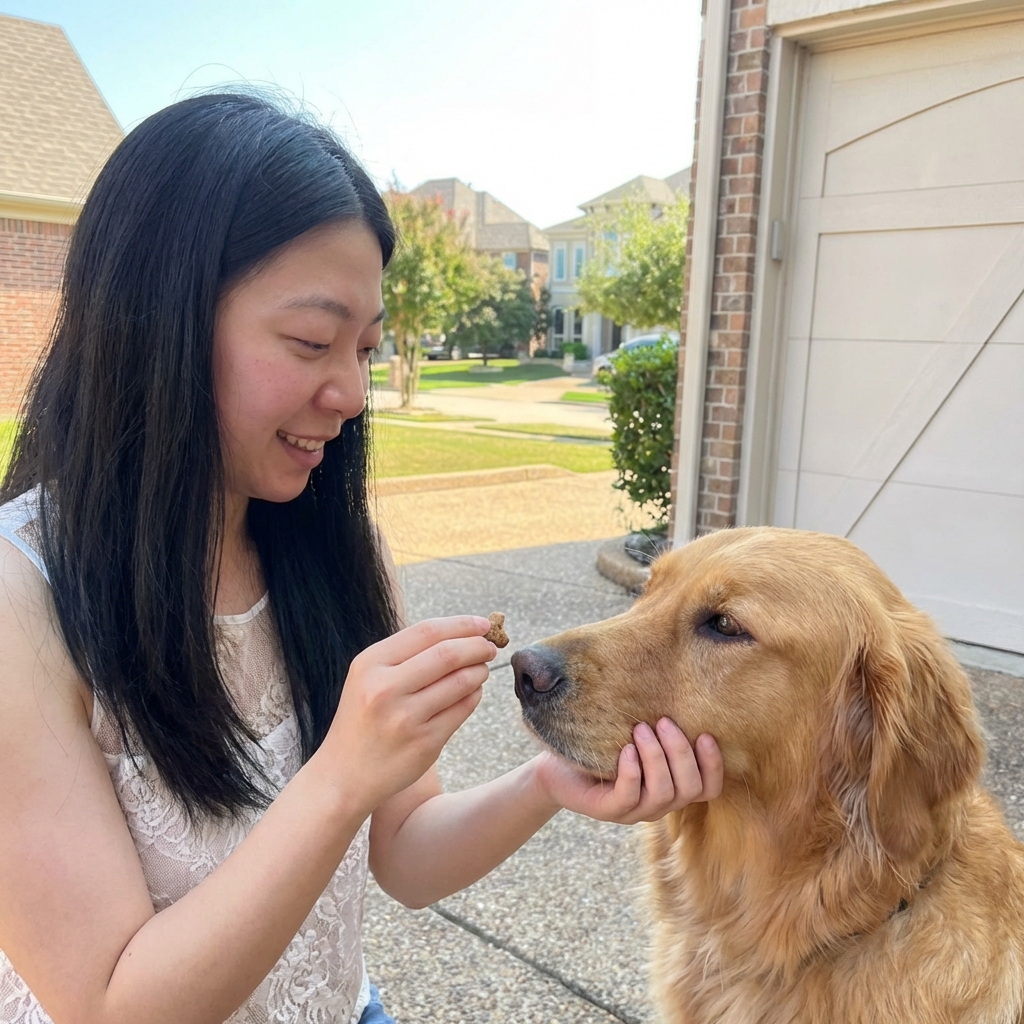
The three treat trick
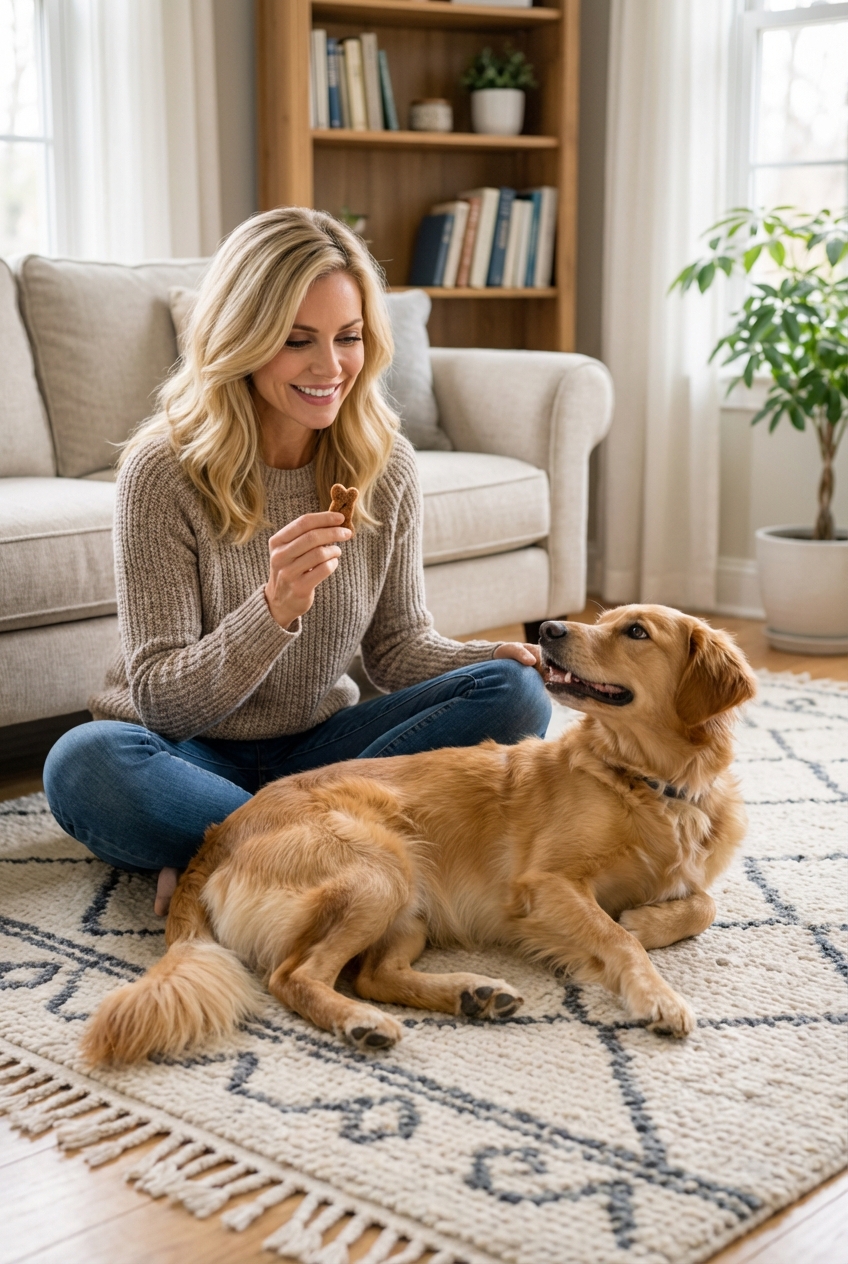
- Give a plain treat.
- Immediately give the treat with the pill.
- Quickly follow with another plain treat so they swallow fast to get the next bite.
Tip: Use small bites. Big bites invite chewing, and chewing is where pills get discovered.
When to skip food hiding: If your dog is on a restricted diet, has pancreatitis history, must take the medication on an empty stomach, or you have been told food affects absorption. Also skip high-fat “wrappers” like peanut butter and cheese for dogs who are prone to pancreatitis or have sensitive stomachs.
When to move on: If your dog starts chewing every bite, “pill checks” you, or spits it out more than once, switching to direct pilling (or a pill popper) is often faster and less stressful overall.
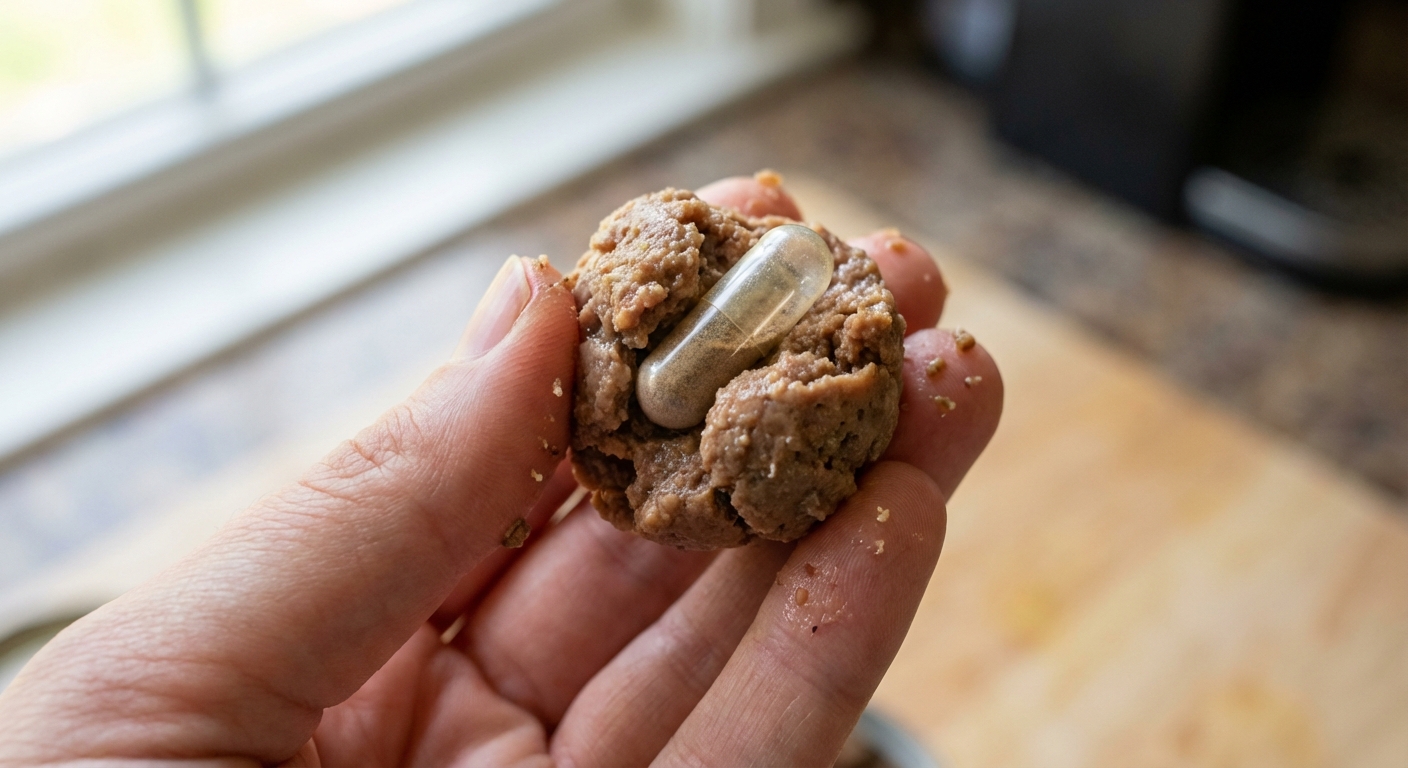
Method 2: Direct pilling by hand
If your dog reliably finds pills in food, a quick, gentle hand-pilling technique can be easier in the long run. Your goal is to place the pill far enough back on the tongue that swallowing happens naturally.
Step by step
- Position your dog with their rear against your body or a wall so they cannot back away. Smaller dogs can be placed on a non-slip surface like a bathmat on a table.
- Hold the pill ready between your thumb and index finger. Have a treat within reach.
- Stabilize the head by placing one hand over the top of the muzzle. Gently tilt the head back slightly so the nose points a bit up. This helps the lower jaw drop open naturally. (This head position is helpful for pills, but it is not the technique you use for liquids.)
- Open the mouth by using your other hand to gently push down on the lower incisors, or by lowering the lower jaw. Keep your fingers out of the back of the mouth.
- Place the pill on the back third of the tongue. Avoid placing it in the front where it is easy to spit out.
- Close the mouth and hold it closed gently for a moment. Stroke the throat to encourage a swallow. If your dog does well with it, offering a treat chaser right away is often the simplest way to get a clean swallow.
- Reward immediately with a high-value treat and calm praise.
How to tell if they swallowed
- A visible lick of the nose often follows a swallow.
- They stop moving the tongue around the lips.
- You do not see the pill in the cheeks, under the tongue, or dropped nearby.
Cheek-check: Some dogs “pocket” pills in the cheek and spit them out later. If your dog is calm and safe to handle, you can gently check the cheek pouch right after dosing. If your dog is stressed or bitey, do not put your fingers in their mouth. Instead, ask your veterinary team for a safer plan (pill popper, flavored chew, compounding, or an in-clinic demo).
If it seems stuck: If your dog gags once, then swallows and settles, a small treat or a sip of water (only if your vet okays it) can help. If gagging, coughing, drooling, or distress continues, call your vet promptly.
Method 3: Pill gun or pill popper
A pill popper can help you place a pill quickly without putting fingers deep in the mouth. It can be especially helpful for large dogs, strong dogs, or dogs who clamp down.
- Use the correct size for your dog and medication.
- Load the pill securely so it does not fall out early.
- Aim toward the back of the tongue, then release.
- Follow with a treat or a small amount of food to encourage swallowing (as long as the medication is allowed with food).
Important: Do not force the device if your dog is twisting away. You can accidentally scrape the palate or create stress that makes future dosing harder. If you need hands-on coaching, your vet team can demonstrate.
Method 4: Liquid medication
Liquids can be great for tiny dogs or very small doses, but they can also cause drooling, foaming, and resistance if they taste unpleasant.
Safer technique
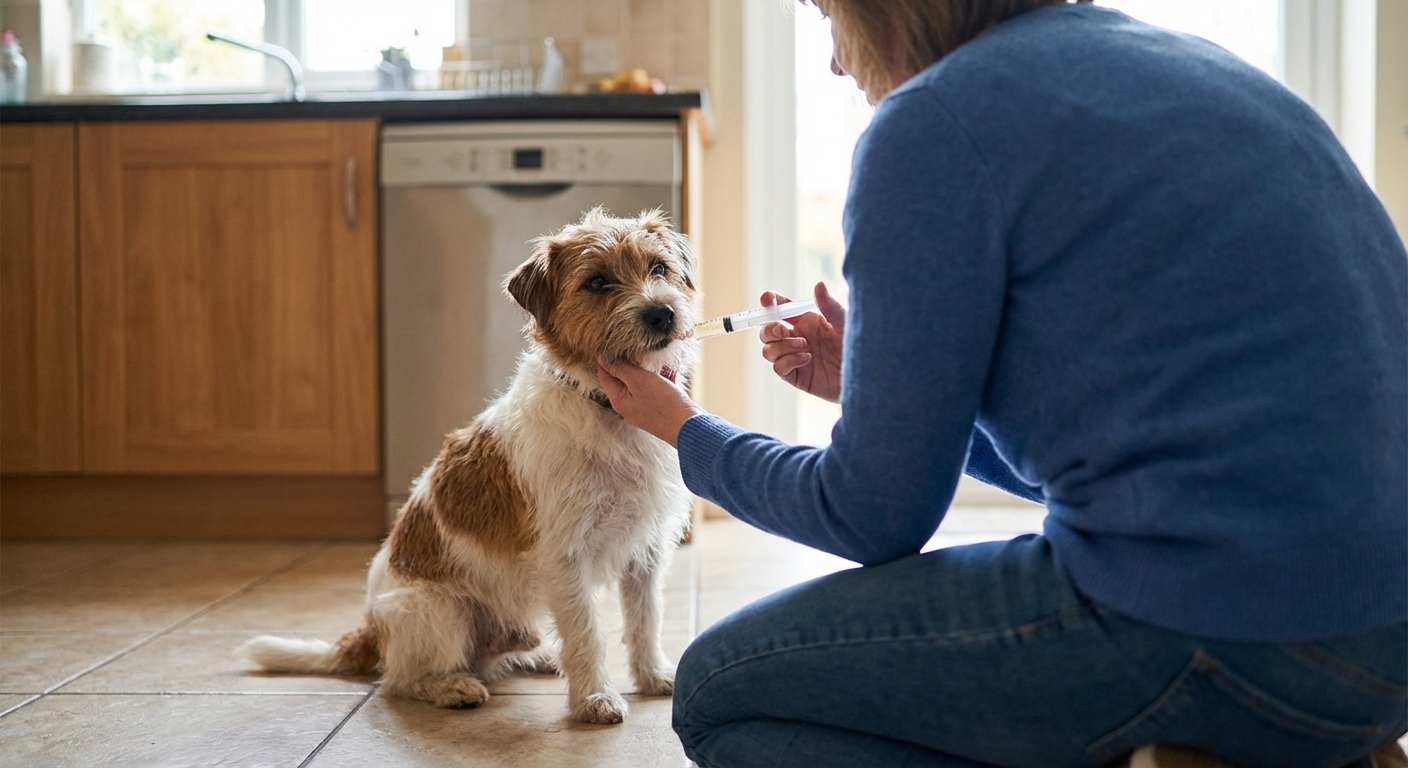
- Use a dosing syringe provided by your pharmacy or clinic.
- Insert the syringe into the side of the mouth, behind the canine tooth.
- Aim across the tongue, not straight down the throat.
- Give small squirts and allow swallowing between each.
Call your vet promptly if your dog coughs repeatedly, struggles to breathe, or seems distressed during dosing. Aspiration is uncommon but serious.
If your dog spits the pill out
It happens. Dogs are smart, and many have impressive pill detection skills.
What to do next
- Stay neutral. Frustration can make your dog more resistant.
- Do not immediately repeat without checking whether the pill was partially swallowed. If you are unsure, call your vet to avoid double-dosing.
- Check the pill itself. If it is cracked, sticky, or has started to dissolve, it may taste much more bitter and be harder to re-administer. In some cases you may need a fresh pill. Ask your clinic before giving another dose.
- Switch strategies: try the three treat trick, try a different wrapper food, move to direct pilling, or use a pill popper.
- Ask about alternatives: some medications come as flavored chews, smaller tablets, liquids, or can be compounded. In some cases, other forms (including transdermal options) may be available, but effectiveness depends on the drug, so ask your veterinarian if it is appropriate.
Special situations
Multiple pills
- Ask your veterinarian if they can be given together.
- If allowed, space them out with a treat between each.
- Avoid creating a huge pill wad that encourages chewing.
Large capsules or bitter tablets
- Bitter pills are often best given quickly (by hand or with a pill popper) and followed immediately with a small treat chaser, as long as food is allowed.
- If the label says empty stomach or you were warned food affects absorption, confirm the best plan with your vet before using food as a chaser.
- Ask your pharmacist if the medication can be compounded into a flavored form.
Nausea or low appetite
- Confirm whether the medication might cause nausea and whether it should be given with food.
- Use very small, very tempting bites, but keep them low-fat if your dog has a sensitive stomach.
Short-nosed breeds
These dogs can be more prone to airway issues. Be gentle, avoid forcing the head far back, and ask your vet for a tailored technique if your dog struggles.
What not to do
- Do not pry hard on the jaw or forcefully push pills down the throat.
- Do not tilt the head straight up and pour liquid medication in. This increases choking risk.
- Do not crush or split medication unless your veterinarian or pharmacist confirms it is safe.
- Do not hide pills in toxic foods like grapes, raisins, or anything containing xylitol.
When to call the vet
Reach out to your veterinary team right away if:
- Your dog may have received two doses or an unknown amount.
- You see vomiting, facial swelling, hives, extreme lethargy, collapse, or any breathing changes.
- Your dog repeatedly chokes, coughs, gags, or seems to have a pill stuck.
- The medication is time-sensitive (like seizure meds or heart meds) and your dog cannot take it.
Most medication problems are fixable with a simple adjustment: a different wrapper food, a faster technique, a better-tasting compounded option, or a quick demo from your clinic.
Make it easier long-term
Practice when they are well
One of my favorite tips is to practice with “fake pills” (tiny treats) so your dog learns that mouth handling and swallowing are no big deal.
- Practice gentle mouth touches for 5 to 10 seconds.
- Reward calm behavior.
- Occasionally give a pill pocket with no pill so your dog does not assume every soft treat is suspicious.
Bottom line: You do not have to wrestle your dog to give a pill. With the right method, most dogs can take medication quickly, safely, and with much less stress for both of you.