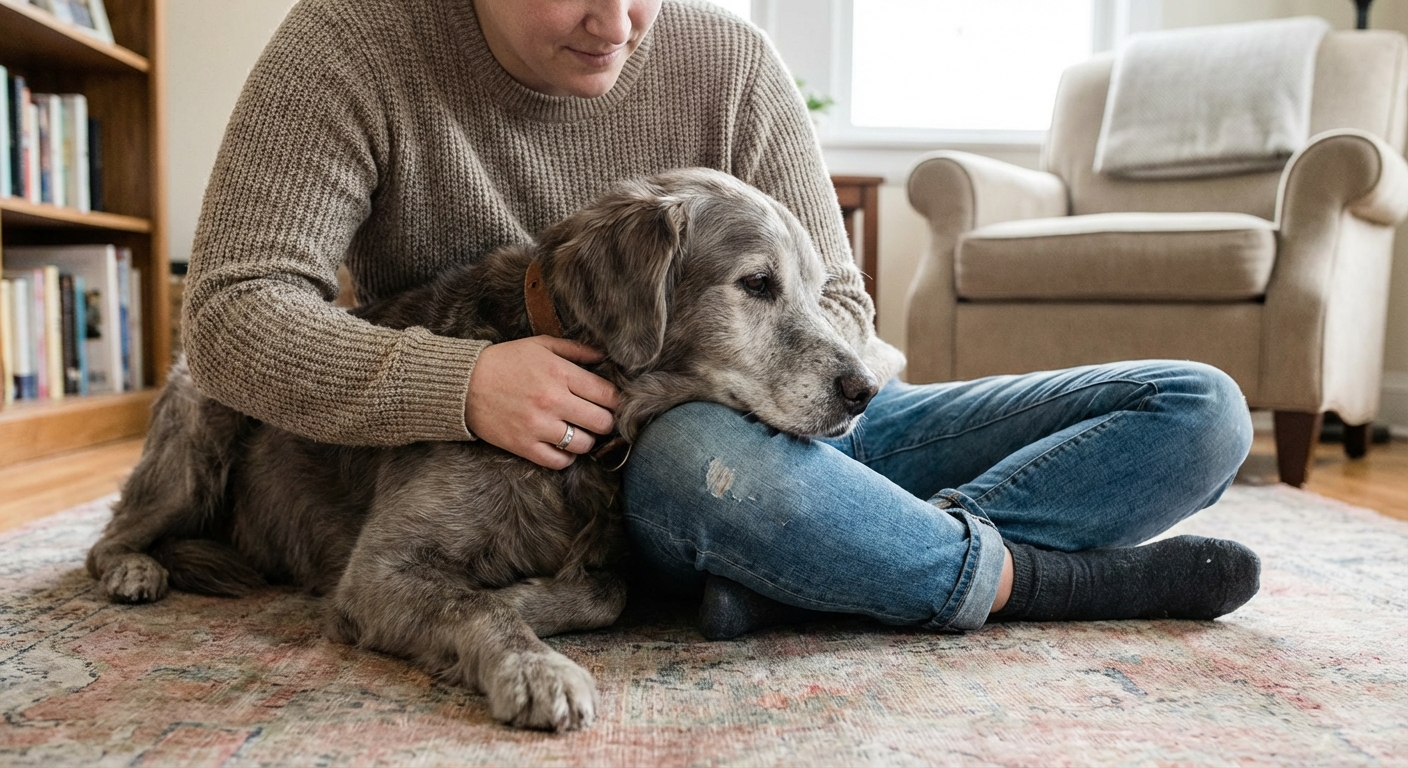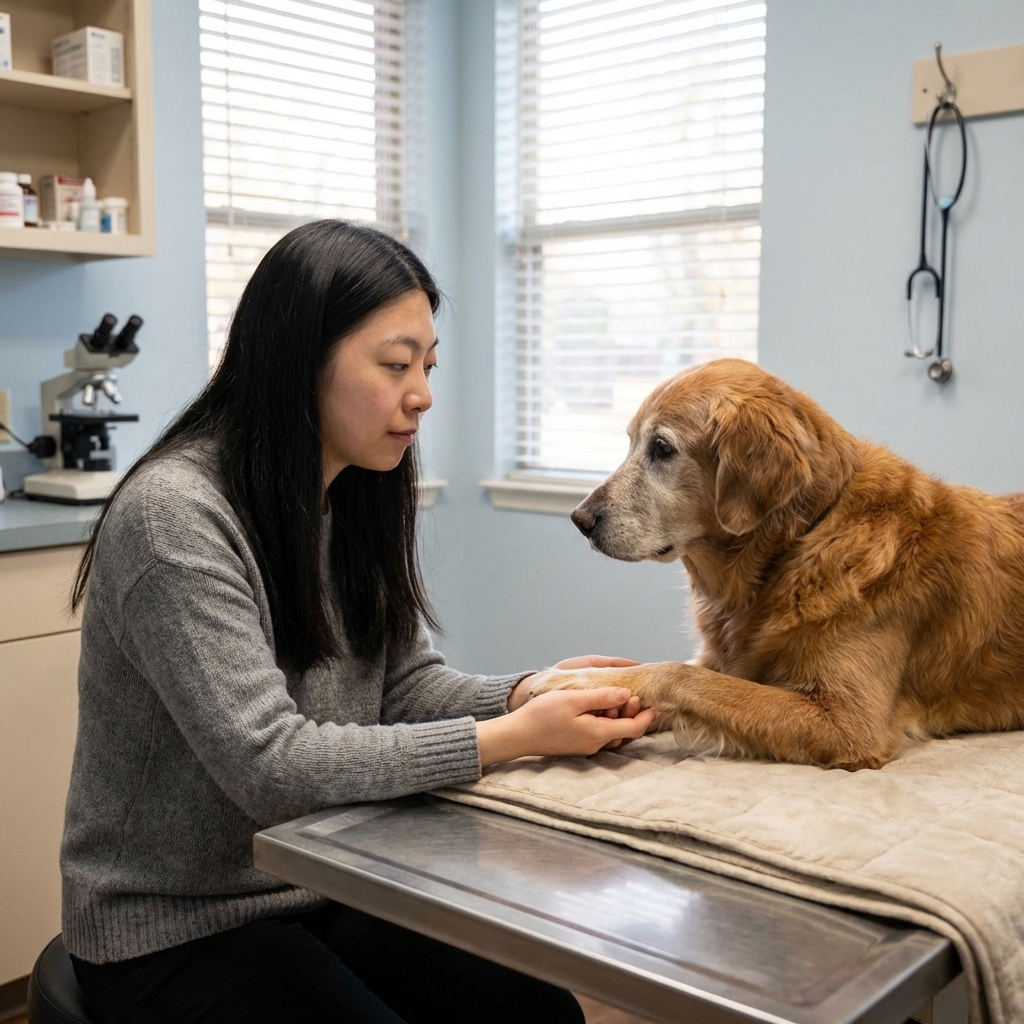
Pet loss can be devastating. This guide shares what helps most: healthy ways to express grief, goodbye rituals, easing guilt after euthanasia, steady routine...
Article
•
Designer Mixes
Getting Over the Loss of a Dog

Shari Shidate
Designer Mixes contributor
Losing a dog can feel like the floor drops out from under you. One day you are keeping up with walks, meals, and little routines, and the next there is a quiet space where your best friend used to be. As a veterinary assistant, I have sat with families in exam rooms and on the phone after hours, and I can tell you this: the depth of your grief reflects the depth of your bond.
This article offers practical, research-informed ways to move through dog loss with a little more steadiness. Not to “get over it” overnight, but to learn how to carry the love forward without drowning in the pain.
Why dog loss hurts so much
Grief is not only sadness. It is your brain and body reacting to a real attachment being broken. Dogs are woven into our days in a uniquely intimate way: morning greetings, companionship at home, exercise, touch, and constant nonverbal connection. When that stops, your nervous system can feel unsettled.
Why it can feel intense
- Attachment and routine: Pets are part of how we regulate stress and structure our day.
- Unconditional companionship: Many people feel less judged and more understood by their dog than by other humans.
- Caregiving identity: Feeding, medicating, grooming, and protecting your dog is a role. When it ends, it can leave a painful void.
- Disenfranchised grief: Some people around you may minimize pet loss, which can make you feel isolated or “silly” for hurting. Your grief is still valid.
Grief is not a problem to solve. It is a process to move through, at your pace.
What grief can look like
People often worry they are “doing it wrong” because their reactions are stronger or stranger than expected. Here are patterns that are common after losing a dog.
Emotional and mental signs
- Crying spells that come in waves
- Irritability, numbness, or feeling emotionally flat
- Guilt, especially after euthanasia or sudden illness
- Intrusive memories of the final day or last moments
- Difficulty concentrating, forgetfulness, or brain fog
Physical signs
- Tight chest, stomach upset, appetite changes
- Sleep disruption, vivid dreams
- Fatigue that feels heavy
- Restlessness and the urge to keep busy
Hearing tags or paw steps
Many people report briefly hearing collar tags, paw steps, or expecting their dog to be in their usual spot. This can be a normal grief response when routines and sensory cues abruptly change.
If it is persistent, escalating, or feels out of your control, or if it scares you, that is a good reason to seek extra support from a clinician or grief counselor.

Coping in the first weeks
Early grief is often about basic stabilization: sleep, hydration, meals, and support. You do not have to “process everything” immediately to be doing okay.
One small example I see a lot: a person tells me they keep reaching for the leash at 6 p.m., then they feel foolish and spiral. You are not foolish. Your body learned a rhythm with your dog, and it takes time to unlearn it.
1) Keep the basics going
- Eat regularly if you can: small, gentle meals are enough. Soup, toast, yogurt, a sandwich, anything that goes down.
- Hydrate: keep water somewhere visible, like the spot you used to keep treats.
- Sleep support: aim for a consistent bedtime, reduce late-night scrolling, and consider a calming routine like a shower and quiet music.
2) Grieve in small doses
Try grieving in small, timed doses. Set a timer for 10 minutes and let yourself feel it on purpose. Look at photos, write, cry, pray, sit outside. When the timer ends, do a grounding activity for 10 minutes: a short walk, a shower, a simple chore. This helps your nervous system learn that grief is survivable in small pieces.
3) Pick a grief buddy
Choose one person who takes your loss seriously and can handle hearing about your dog more than once. Tell them what helps: listening, checking in, going on walks with you, or helping you pack away items if and when you are ready.
4) Try a simple ritual
Rituals give the mind a container. You might light a candle at the time of day you used to do dinner, take a short walk on your dog’s route, or play a song and say your dog’s name out loud.
Guilt and second guessing
Guilt is one of the most common and most painful parts of pet loss. It can show up as:
- “I should have noticed sooner.”
- “I waited too long.”
- “I didn’t do enough.”
- “I did too much.”
From the veterinary side, I can share a gentle truth: families almost always make the best decision they can with the information, money, timing, and emotional capacity they have in that moment. Perfect is not available in real life medicine.
A grounding exercise
- Write the facts: your dog’s diagnosis, age, symptoms, and what your vet advised.
- Write the care you gave: medications, special foods, late-night wake-ups, vet visits, comfort measures.
- Write your intention: “I was trying to reduce suffering and protect them.”
If euthanasia was part of your story, many people find peace in reframing it as a final act of love: choosing comfort when your dog could not choose it for themselves.
Helping kids cope
Children often take their cues from the adults around them. You do not have to be perfectly okay to help them. You just have to be honest, calm, and present.
What to say
- Use clear words like died rather than “went to sleep,” which can create fear around bedtime.
- Explain in age-appropriate terms: “Her body stopped working and she could not get better.”
- Invite questions and expect repeats. Repetition is how kids process.
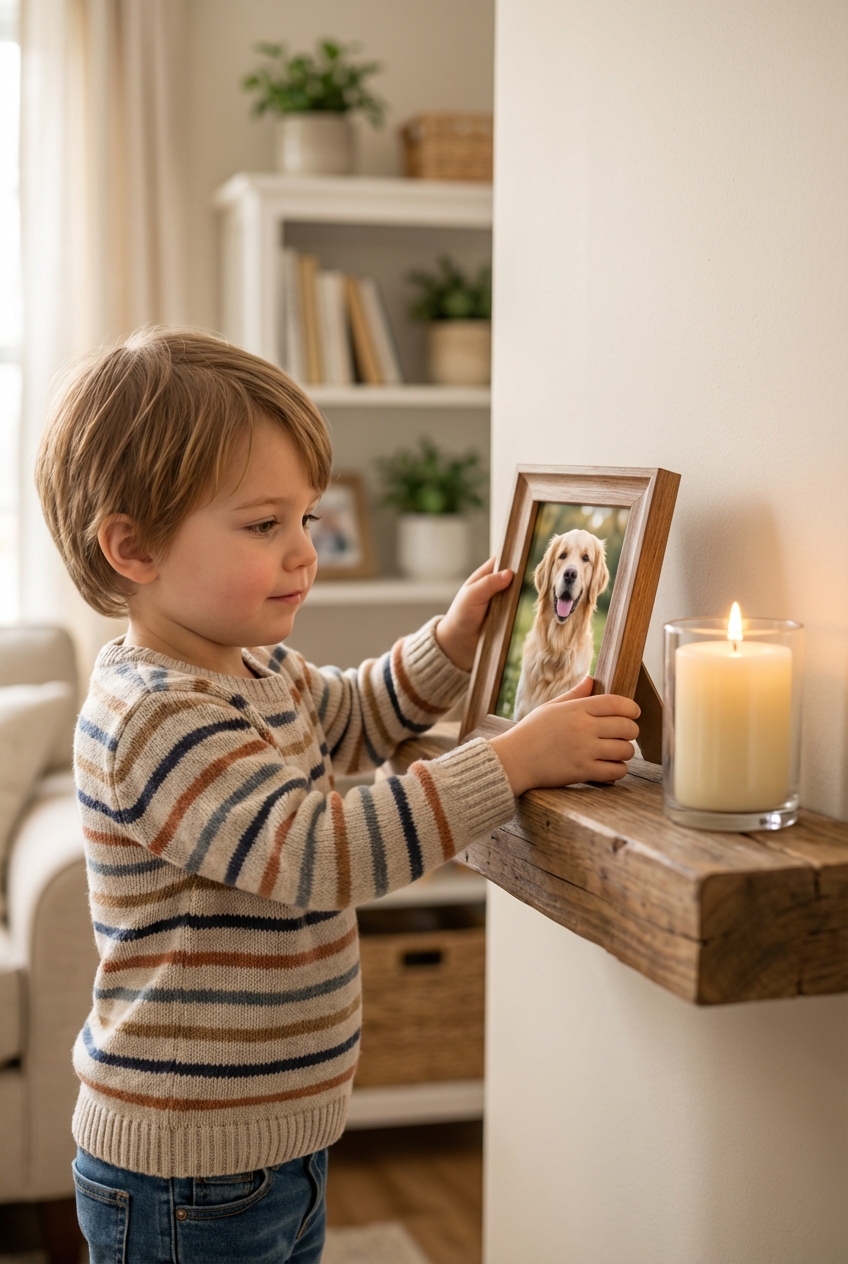
Kid-friendly outlets
- Draw pictures or write a letter to the dog
- Make a small memory box with a photo and favorite toy
- Share “top three funny moments” at dinner
Supporting other pets
Pets can show behavior changes after the loss of a companion animal or the disruption of household routine. You might see pacing, searching, vocalizing, clinginess, reduced appetite, or changes in sleep.
How to help
- Keep routines steady: meals and walks at the usual times.
- Add gentle enrichment: sniff walks, food puzzles, a new chew, or short training sessions.
- Increase calm connection: quiet petting, brushing, sitting together.
- Watch appetite closely: if your pet skips meals or seems unwell, call your veterinarian. If they refuse food for about 24 hours, call right away, and call sooner for cats, seniors, puppies, or pets with medical conditions.
If your surviving pet seems persistently distressed, your vet can rule out medical causes and discuss behavior support or short-term medication when appropriate.
Handling reminders
Reminders can hit hard: the empty bed, the water bowl, the route you always walked. There is no correct approach here. You get to choose what supports you.
Options that can help
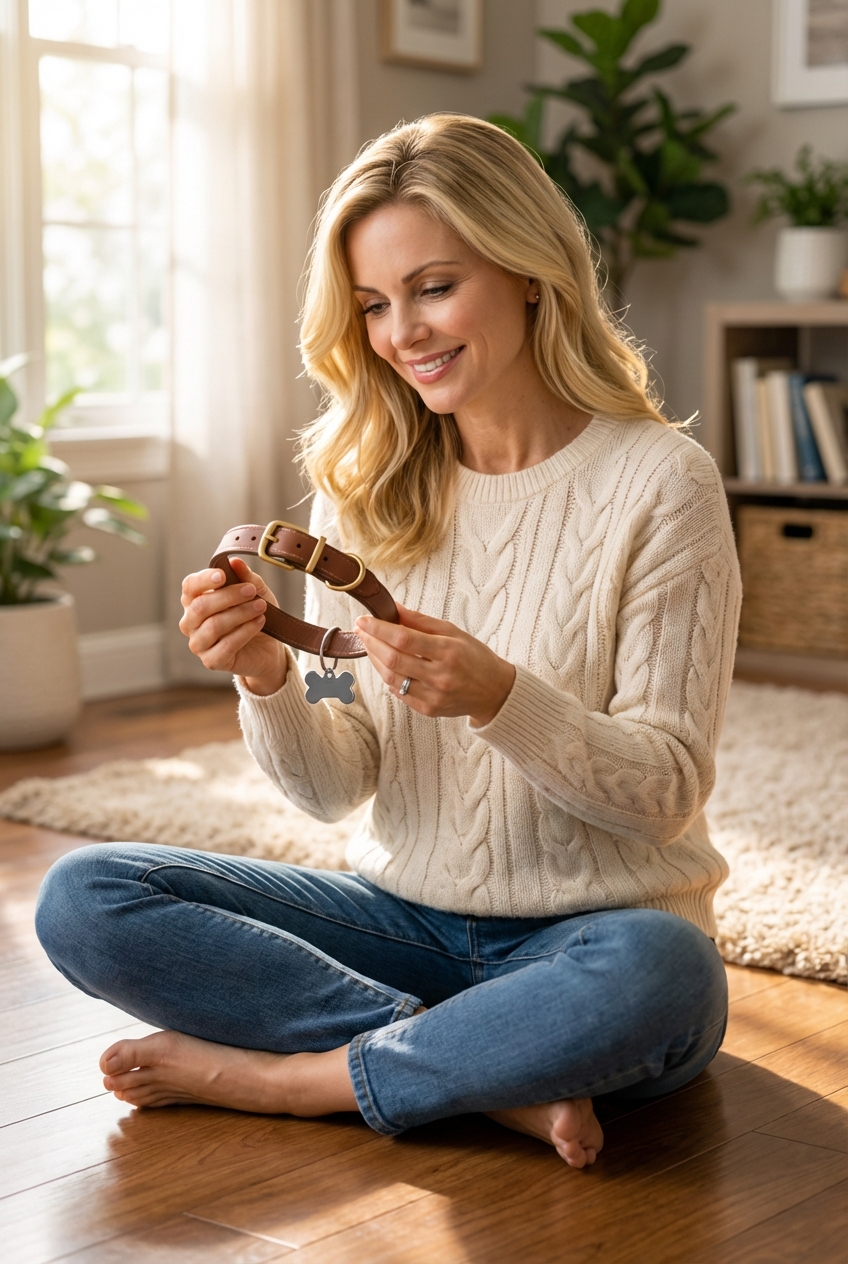
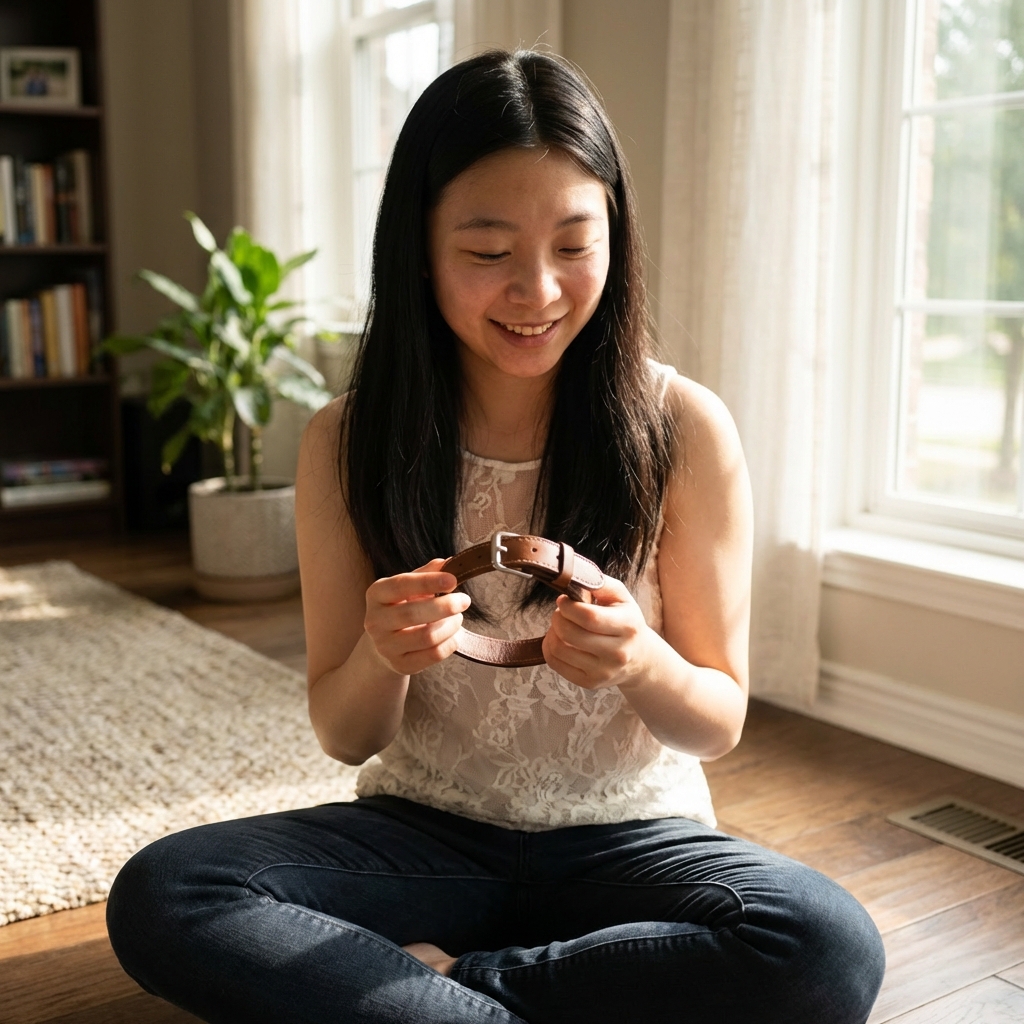
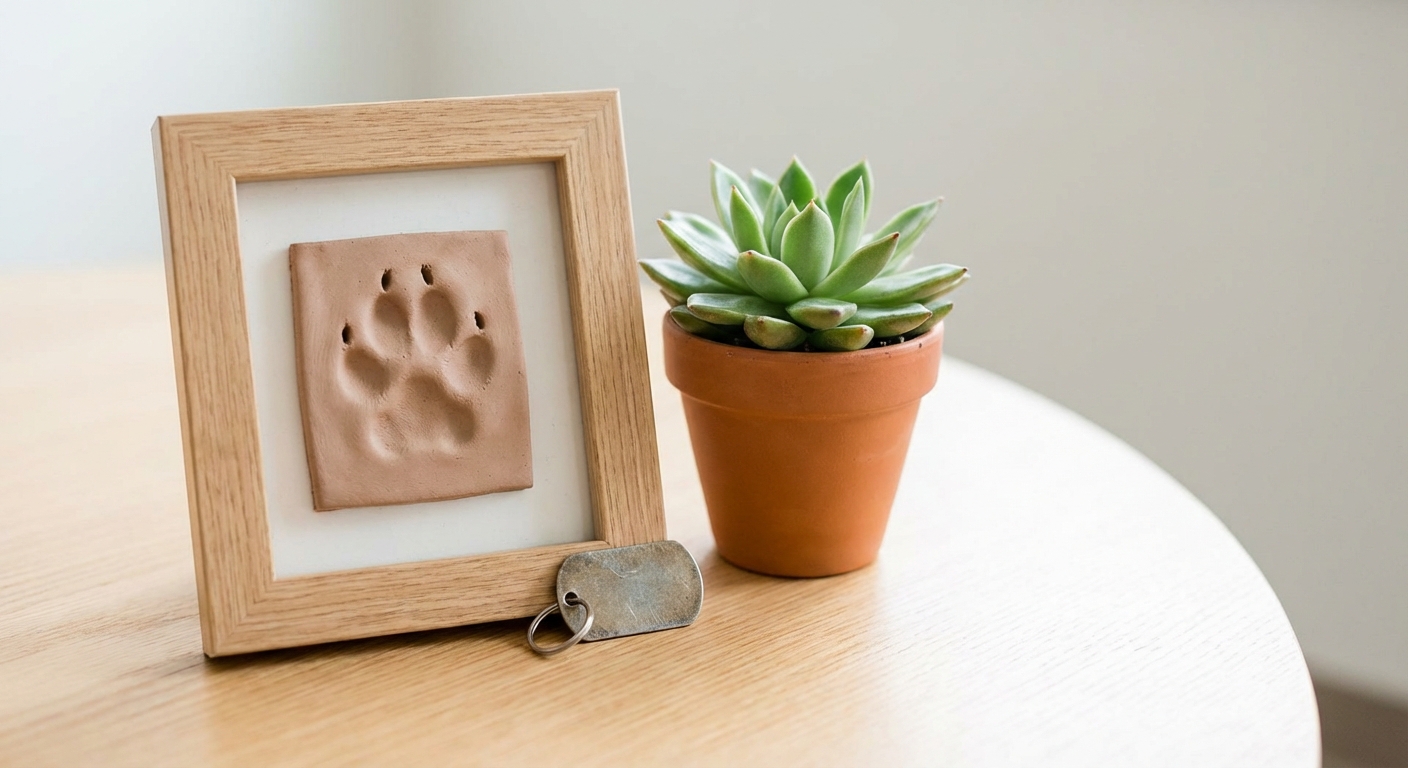
- Keep a few items out: collar, tag, or a favorite toy in one designated place, like a shelf or small box.
- Pack away the rest: if seeing everything is too painful, ask a friend to help you box items and store them. You can revisit later.
- Change one routine: take a different walking route for a week, or move the dog bed to a quieter corner if the empty spot feels loud.
- Manage social media memories: mute “On This Day” reminders temporarily if they are too much.
Memorial ideas
Memorials are not about holding on too long. They are about giving love a place to go.
- Create a photo book and write a short caption under each picture.
- Plant something living in your yard or a pot by the window.
- Frame a paw print near your dog’s leash or collar.
- Donate in their name to a rescue, veterinary hardship fund, or service dog organization.
- Volunteer one day at a shelter when you feel ready, even if it is just laundry and dishes.
Practical next steps
If you feel up to it, a few logistics can reduce stress later. Do only what feels manageable.
Gentle to-do list
- Belongings: decide whether you want items returned from the clinic (collar, blanket). If you are not sure, ask the clinic to hold them briefly.
- Cremation or burial: if you are deciding, ask your veterinary team to explain options plainly, including communal vs private cremation and how ashes are returned.
- Notifications: cancel pet insurance, update microchip registries, and notify your dog walker, daycare, or trainer when you can.
When it starts to ease
Most people notice the intensity shifts over time. You may not stop missing your dog, but you start functioning again. The goal is not to erase the bond. The goal is to make room for life alongside the bond.
Signs you are healing
- You can talk about your dog without collapsing every time
- You have moments of laughter or calm
- Your sleep and appetite begin to stabilize
- You can remember the whole life, not only the final day
Anniversaries, holidays, and certain routes on walks can trigger a fresh wave. That does not mean you are back at the beginning. It means love has echoes.
When to get more help
Sometimes grief gets complicated, especially if there was trauma, a sudden death, or little support from family or friends.
Reach out if you notice
- Persistent inability to function at work or at home for weeks
- Severe sleep disruption that is not improving
- Panic symptoms, constant replay of distressing images, or feeling stuck
- Using alcohol or substances to numb grief
- Thoughts of self-harm or hopelessness
Pet loss support groups and therapists familiar with grief can be incredibly helpful. If you are in the U.S. and you are in immediate danger or considering self-harm, call or text 988 for the Suicide and Crisis Lifeline. If you are outside the U.S., contact your local emergency number or a local crisis line in your country.
Another dog someday
One question I hear often is, “When should I get another dog?” There is no universal timeline. Some people need a long pause. Others feel steadier with a new companion sooner. A new dog is not a replacement. It is a new relationship.
Questions to ask
- Can I think clearly enough to choose a dog’s needs over my grief urges?
- Do I have the time and patience for training and adjustment?
- Am I hoping the new dog will act like my old dog?
If you decide to adopt, consider starting with fostering. It can be a gentle bridge: you help a dog in need while learning what your heart can handle.
Your dog’s life mattered. Your grief is love with nowhere to land, and with time, you will find a place for it.