Vet-informed, practical tips to help puppies sleep 6–8 hours: daytime rhythm, crate setup, bedtime routine, potty timing, and how to respond to crying with...
Article
•
Designer Mixes
Getting a Puppy to Sleep Through the Night

Shari Shidate
Designer Mixes contributor
Those first puppy nights can feel like having a newborn in the house. One minute you are in love, the next minute you are staring at the clock at 2:17 a.m. wondering if you will ever sleep again. The good news is that most puppies can learn to sleep through the night with a consistent routine, realistic expectations, and a setup that meets their basic needs.
As a veterinary assistant, I always tell families this: nighttime crying is not “bad behavior.” It is communication. Your puppy has just left their mom, littermates, and familiar smells, and they may also have a tiny bladder. When we respond with structure and kindness, sleep usually improves quickly.
Quick note: This is general guidance, not a substitute for advice from your veterinarian or a qualified trainer, especially if your puppy seems ill or panicked.
What sleeping through the night means
For an adult dog, sleeping through the night might mean 7 to 9 hours. For a puppy, it is usually a gradual milestone, and it depends on age, size, breed, prior housing, and individual temperament.
- 8 to 10 weeks: many puppies need 1 to 2 potty trips overnight.
- 10 to 12 weeks: some can go about 5 to 7 hours overnight with the right routine.
- 3 to 4 months: many can make it through the night, but some still need 1 trip.
Bladder capacity varies. A common rule of thumb is that puppies can often hold it about one hour per month of age during the day (sometimes a bit longer at night because they are asleep). It is least reliable for very young puppies, and it is not a promise. Many puppies also top out around 8 hours as they get older, but again, individuals vary.
Set up success before bed
1) Pick a safe sleep spot
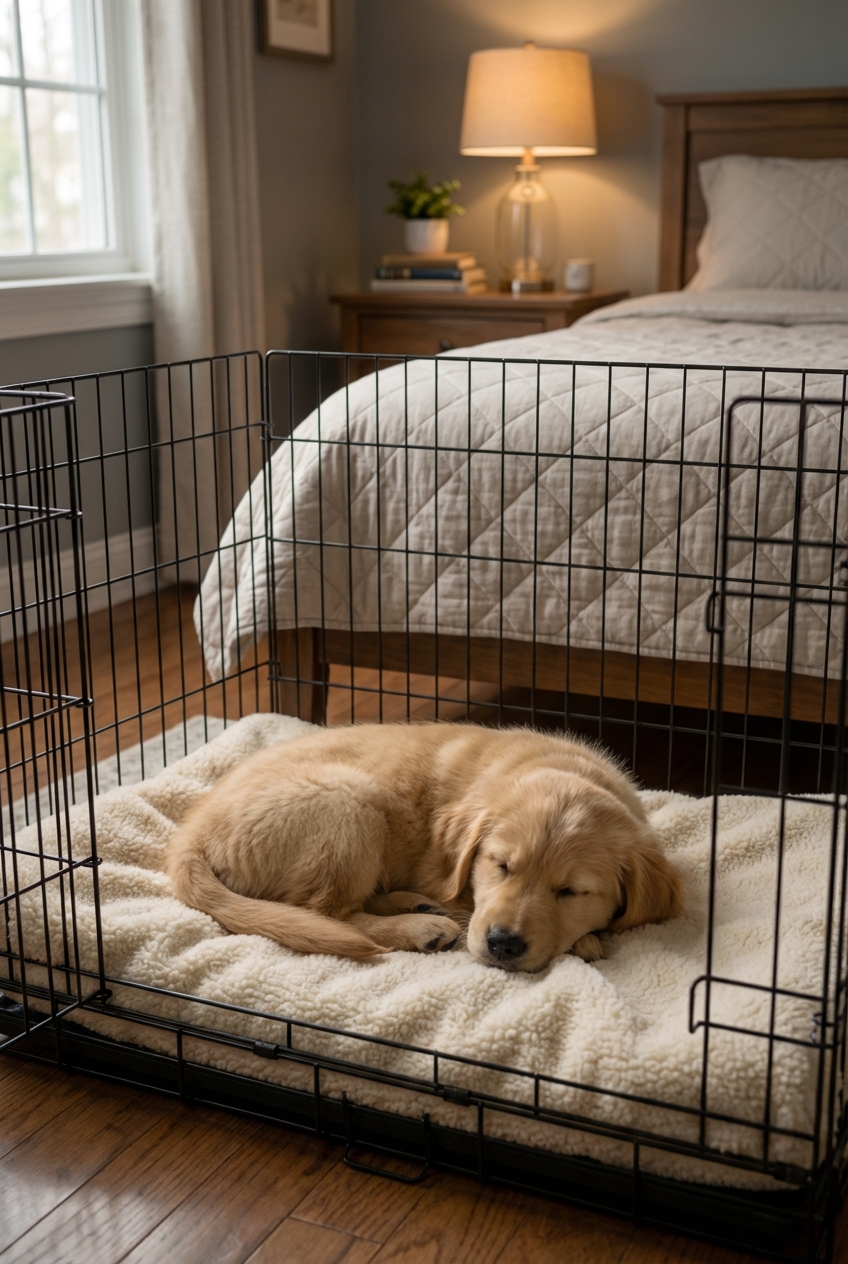
Most families do best with a crate or a small puppy-proof pen. Crates can work especially well because they provide a small, secure space when introduced positively, and they help reduce accidents when the crate is the right size.
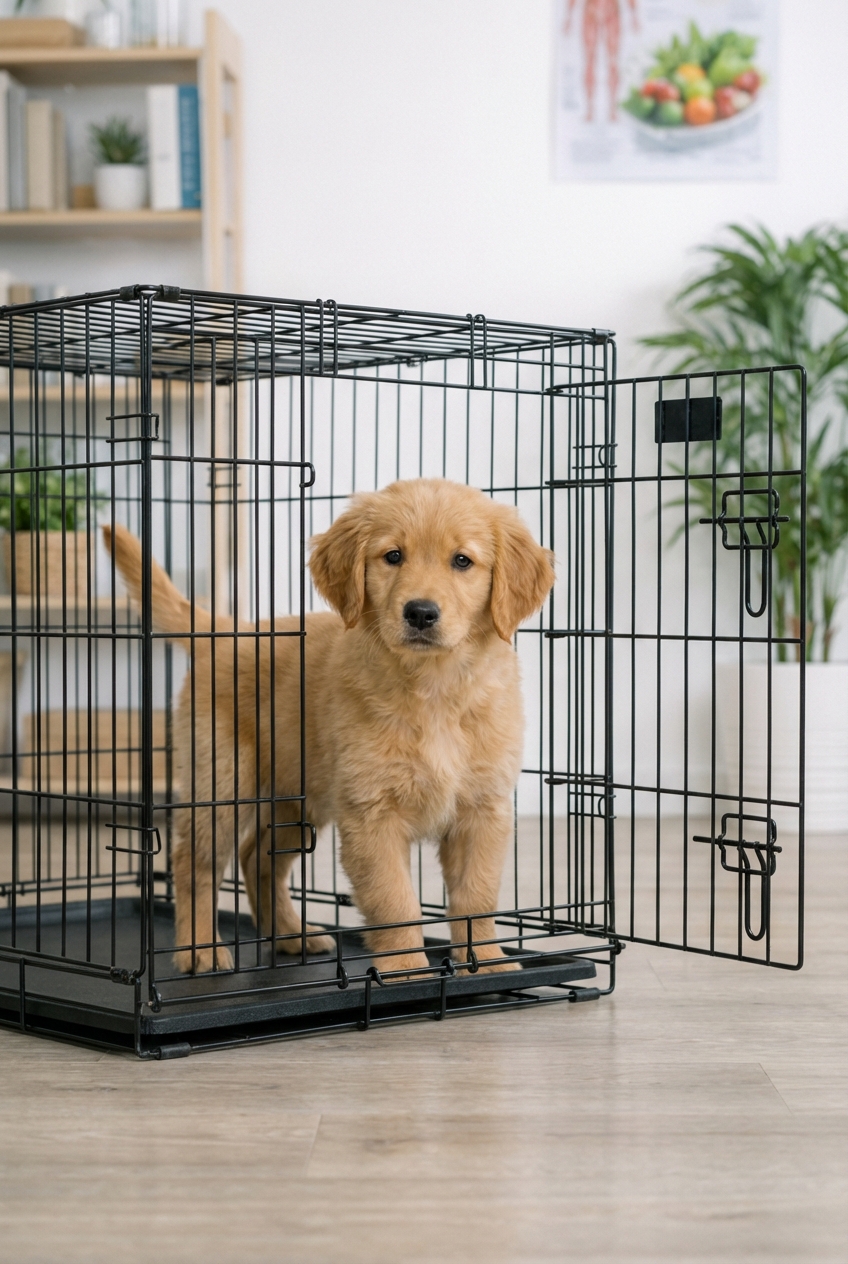
- Crate should be big enough to stand up, turn around, and lie down comfortably.
- If it is too large, some puppies will potty on one side and sleep on the other.
- Use a washable crate pad or blanket. Avoid anything your puppy can shred and swallow.
- Safety: remove collars and anything with dangling tags before crating to reduce snag risks.
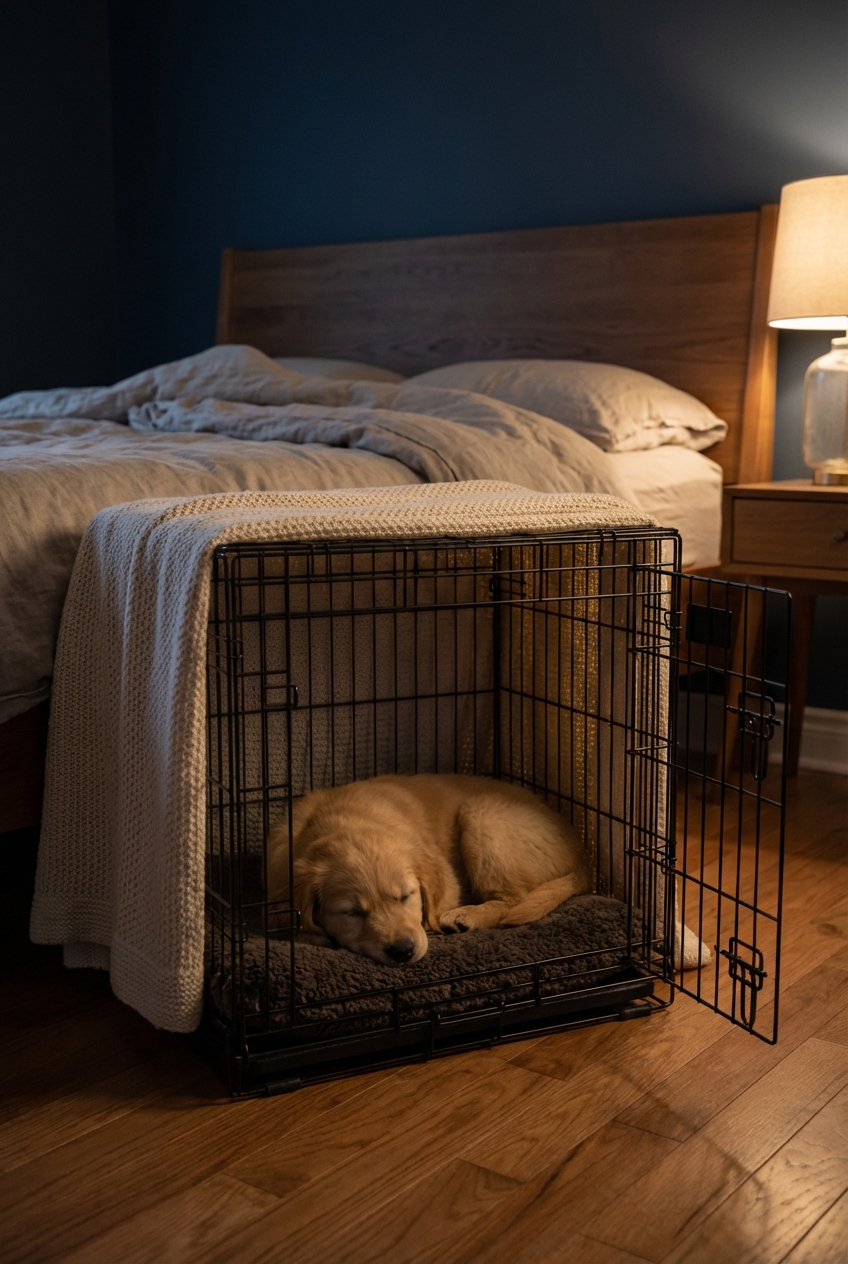
2) Keep the crate near you at first
For the first week or two, consider placing the crate next to your bed. Being able to smell and hear you can dramatically reduce distress crying. If your goal is for the dog to sleep elsewhere long-term, you can gradually move the crate farther away every few nights.
3) Keep the last hour calm
Puppies thrive on pattern. Try a simple wind-down routine:
- Gentle play or a short sniff-walk
- Potty break
- Small training session (2 to 3 minutes) or cuddles
- Offer a small drink, then another potty break
- Into the crate with a calm cue like “bedtime”
4) Be thoughtful with food and water
I am not a fan of restricting water all day. Hydration matters. For some healthy puppies, a limited, strategic adjustment in the evening can help reduce overnight potty urgency.
- Offer normal access to water throughout the day.
- About 1.5 to 2 hours before bed, some families reduce free access, then offer a small drink after the final play session.
- Always do a last potty trip right before crating.
Important: do not restrict water in hot weather, after heavy exercise, or if your puppy is very young, very small, or seems extra thirsty. If you are unsure, ask your veterinarian what is appropriate for your puppy.
If your puppy seems very thirsty, is urinating excessively, or has accidents despite a solid routine, talk with your veterinarian to rule out medical issues.
Overnight potty without a party
Many puppies need a short potty break overnight at first. The trick is to keep it boring and brief so they learn that nighttime is for sleeping.
- Use a leash and go to the same potty spot.
- Keep lights low and your voice quiet.
- No play, no exploring, no extra attention.
- Brief quiet praise when they go, then straight back to bed.
A helpful approach is to set an alarm for the first few nights (for example, 3 to 4 hours after bedtime), take them out proactively, then gradually push the alarm later by 15 to 30 minutes every few nights.
What to do when they cry
Night crying is the hardest part for most families. Here is a trainer- and vet-aligned way to handle it that keeps your puppy’s needs and learning in mind.
Step 1: Pause and check needs
If your puppy suddenly cries after being quiet, ask yourself:
- Do they likely need to potty?
- Are they too hot or too cold?
- Could a new sound or change in routine be throwing them off?
- Is something bothering them physically (itching, tummy upset, pain)?
- Are collar tags clinking or could anything be snagging? (This is one reason to crate without a collar.)
Step 2: If you go out, keep it neutral
If you suspect they need to potty, take them out calmly. If they do not go within a few minutes, back to the crate. This prevents accidentally teaching “crying gets me a fun midnight hangout.”
Step 3: Comfort, then settle
It is okay to offer gentle reassurance. Try:
- Resting your hand near the crate for a moment
- Soft “shhh” sounds
- A brief calm phrase like “goodnight”
Avoid excited talking, repeated in-and-out of the crate, or letting them out “just because” once you are confident potty needs are met.
Safe sleep helpers
- White noise or a fan to mask household sounds
- A covered crate on three sides (make sure airflow is good)
- A comfort item that smells like you (a worn T-shirt can help, as long as your puppy will not chew and ingest it)
If crying escalates
If your puppy’s crying ramps up into intense panic (drooling, frantic scratching, throwing their body at the crate), do not try to “power through” it. That is a sign you may need a slower plan that builds comfort with short, positive alone-time during the day. A fear-free trainer or your veterinary team can help you tailor this, especially if you suspect separation-related distress.
Day habits that help sleep
Protect nap time
Overtired puppies often sleep worse, not better. Many puppies sleep 18 to 20 hours total per day, especially in the early months. If your puppy becomes mouthy, hyper, or unable to settle, that is often a sign they need a nap in their crate or pen.
Make the crate positive
Nighttime is easier when the crate already feels safe. Practice short sessions:
- Toss treats in the crate and let your puppy go in and out.
- Feed meals in the crate with the door open at first.
- Give a food-stuffed toy for a few minutes, then end before they get upset.
Meet enrichment needs
A puppy who has had appropriate activity and mental enrichment is more likely to settle. Think in terms of quality, not exhaustion:
- Short training sessions (sit, touch, leash skills)
- Sniff walks
- Food puzzles
- Gentle play
Common mistakes and fixes
- Too much freedom at night: Use a crate or pen to prevent accidents and roaming.
- Inconsistent response to crying: Decide your plan as a family and stick to it.
- Bedtime after chaos: Add a 20 to 30 minute wind-down routine.
- Crate used only for time out: Make the crate a treat zone during the day.
- Expecting adult behavior from a baby: Progress is usually measured in nights, not hours.
When to call your vet
Sometimes sleep issues are not training issues. Contact your veterinarian if you notice:
- Diarrhea, vomiting, or loss of appetite
- Straining to urinate, frequent small urinations, or accidents that suddenly worsen
- Excessive thirst
- Coughing, nasal discharge, or signs of pain
- Persistent itching that keeps them awake
- Intense panic that does not improve with gradual training
Urinary tract infections, parasites, itching from skin issues, diet changes that upset the stomach, and GI bugs are all common in puppies and can disrupt sleep.
A simple 7-night plan
If you want something easy to follow, here is a family-friendly plan you can start tonight.
Nights 1 to 2
- Crate next to your bed
- Last potty right before bed
- Set an alarm for one overnight potty trip (more for very young puppies if needed)
Nights 3 to 5
- Keep the routine identical
- Push the alarm 15 to 30 minutes later if your puppy stayed dry
- Add a short daytime crate session with a treat toy
Nights 6 to 7
- If accidents are not happening, try removing the alarm and let your puppy wake you if needed
- Begin moving the crate a small distance away if that is your long-term goal
Consistency is what teaches your puppy that nighttime is safe, predictable, and boring. That is exactly what we want.
Bottom line
Getting a puppy to sleep through the night is not about “winning” against whining. It is about meeting their needs, creating a predictable routine, and gradually building independence. Most families see major improvement within a couple of weeks, and many much sooner.
You are not failing if your puppy needs time. You are building a lifelong foundation of trust, and the sleep will come.