Vet-informed, practical tips to help puppies sleep 6–8 hours: daytime rhythm, crate setup, bedtime routine, potty timing, and how to respond to crying with...
Article
•
Designer Mixes
Get Your Puppy Sleeping Through the Night

Shari Shidate
Designer Mixes contributor
Few things feel as exhausting as a brand-new puppy who thinks 2:00 a.m. is playtime. The encouraging news is that most puppies can learn to sleep through the night with a consistent routine, a realistic schedule, and a little patience while their tiny bladders mature.
As a veterinary assistant in Frisco, Texas, I always tell families this: night waking is usually a training and biology issue, not a “bad puppy” issue. Your job is to set up the environment so your puppy can succeed.
This article is general guidance. Your veterinarian may recommend a different plan based on your puppy’s age, breed, and medical history.
What “sleep through the night” means
For adult dogs, sleeping through the night might mean 7 to 9 hours with no potty break. For puppies, it is more gradual and very individual.
- 8 to 10 weeks: Often needs 1 to 2 potty trips overnight (some need more in a new home).
- 10 to 12 weeks: Many can do a 4 to 6 hour stretch with the right routine, but some still wake more often.
- 3 to 4 months: Many can reach 6 to 7 hours, though some still need a quick potty break.
- 4 to 6 months: Many can sleep a full night, depending on size, health, and daytime schedule.
Reality check: Smaller breeds and mixes often need nighttime potty breaks longer than large breeds because their bladders are physically smaller. Rescue pups and pups who had less early structure may also take a little longer.
Set up the sleep space
Use a crate or safe pen
Crates are not about punishment. They are about safety and supporting a puppy’s natural desire to keep their sleeping area clean. A crate can also prevent midnight chewing, accidents under the bed, and unsafe wandering.
- Choose a crate that is just big enough for your puppy to stand, turn around, and lie down.
- If the crate is oversized, use a divider so they cannot potty on one end and sleep on the other.
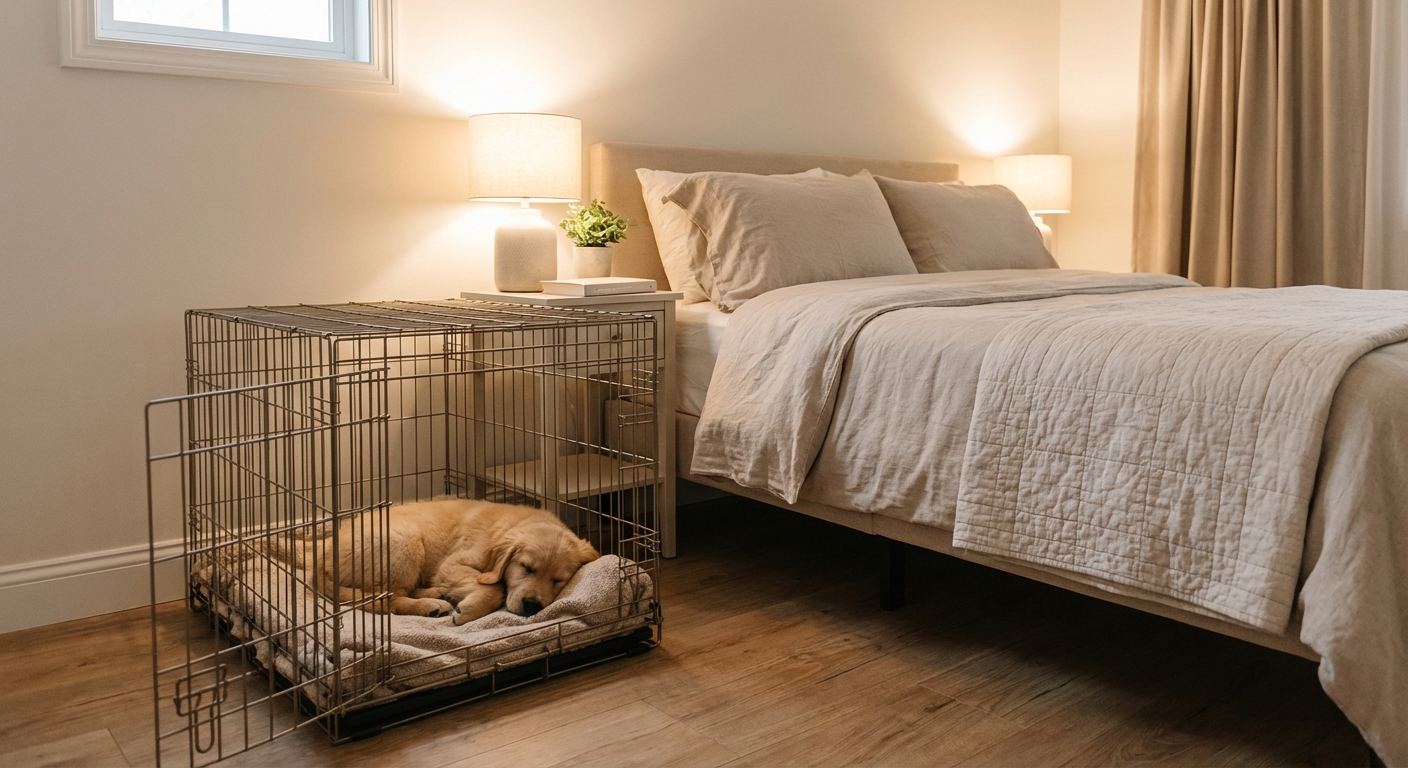
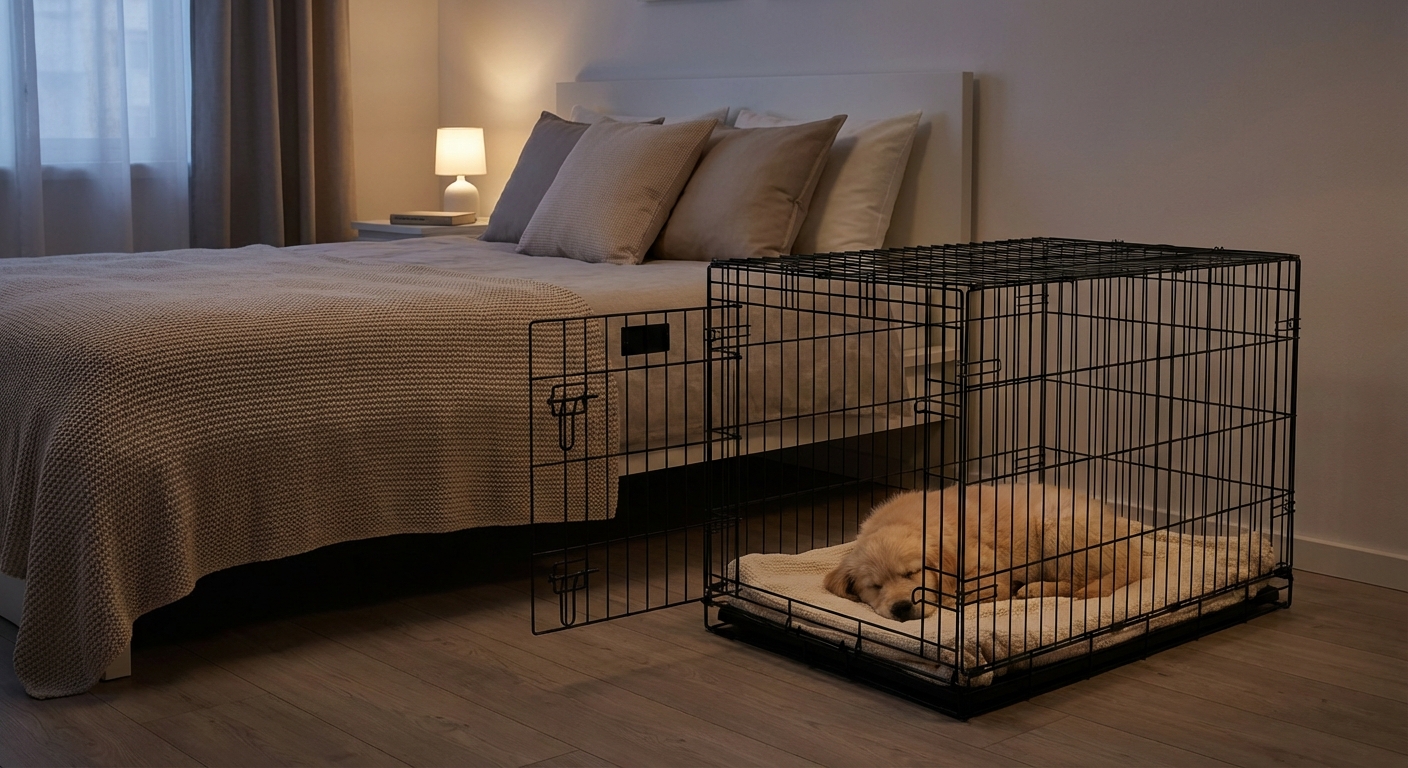
- Place the crate near your bed for the first couple of weeks. Being close reduces anxiety and helps you hear true potty signals, not just “I want out” complaints.
What are true potty signals? Restlessness, sudden wake-ups, circling, sniffing, or a short urgent whine are more likely potty. Rhythmic barking, escalating yelling, or settling the second you approach can be attention.
Keep nights low-stimulation
Nighttime should feel different from daytime. That means:
- Lights low or off
- No chatting beyond a simple cue like “potty”
- No play during overnight potty breaks
- Return to the crate right after potty
This is one of the fastest ways to teach your puppy that waking up does not lead to fun.
Day routine that helps nights
Puppies sleep better at night when their day has structure. Think of it like setting a toddler up for a good bedtime.
Exercise and enrichment
A young puppy does not need long runs. They need age-appropriate activity and brain work:
- Short training sessions (1 to 3 minutes at a time)
- Sniff walks in safe areas
- Food puzzles or a stuffed Kong (supervised)
- Gentle play, then a calm-down period
Quick safety note on “safe areas”: If your puppy is not fully vaccinated, ask your veterinarian what is safe in your region. In many places, low dog traffic areas and avoiding unknown dog poop are key due to parvo risk.
Overtired puppies can actually sleep worse. If your puppy gets bitey and wild in the evening, it may be a sign they need a nap earlier, not more stimulation.
Feeding and water
Most puppies do best on a consistent feeding schedule, not free-feeding. A predictable schedule helps you predict potty needs.
- Offer dinner at a consistent time.
- Pick up food after 15 to 20 minutes.
- Discuss the right meal frequency with your veterinarian, especially for toy breeds or puppies at risk for low blood sugar.
Water: Do not restrict water all day. Many families do remove the water bowl 1 to 2 hours before bedtime to reduce accidents, while making sure the puppy drinks normally earlier in the evening. If your puppy seems excessively thirsty, talk to your veterinarian.
Bedtime plan (step-by-step)
If you want a simple plan you can follow starting tonight, use this.
1 to 2 hours before bed
- Calm play or a short walk
- Last meal if you feed late (many families do dinner earlier)
- Low-key bonding time
30 minutes before bed
- Final potty trip (give it time, do not rush)
- Quiet crate treat (something safe and not too exciting)
- White noise if your home is loud
Lights out
Use a consistent phrase like “Bedtime.” Then stop interacting. If you keep negotiating, your puppy learns that crying brings conversation.
Night potty without a habit
When your puppy wakes, your goal is to meet the biological need (potty) without accidentally training a “midnight party.”
How to do it
- Go straight outside on leash.
- Use one cue: “Go potty.”
- Stand still and all business.
- When they go, quietly praise once, then return inside.
- Back in the crate immediately.
If your puppy does not potty within 5 minutes, bring them back in and try again in 10 to 15 minutes. If they are escalating or getting more worked up, end the attempt and reassess your schedule. Sometimes the best move is a calm return to the crate and an earlier planned break next time.
How many potty breaks to expect
A common guideline is that puppies can hold it about one hour per month of age plus one. It is a rough training rule of thumb, not a hard physiological limit, and it is less reliable for very young puppies and toy breeds. Nighttime can be different from daytime, especially during the first week in a new home.
Stop the cycle: crying and barking
It is normal for puppies to protest separation, especially in the first week. The key is to respond to needs without rewarding noise.
Troubleshooting ladder
- Did they potty recently? If not, take a quick low-stimulation potty trip.
- Are they too hot or too cold? Adjust bedding and room temperature.
- Is the crate comfortable and safe? A firm mat can help. Choose chew items carefully and avoid anything your puppy can shred and swallow.
- Are you accidentally reinforcing crying? If you talk, pet, or let them out for attention, the behavior can increase.
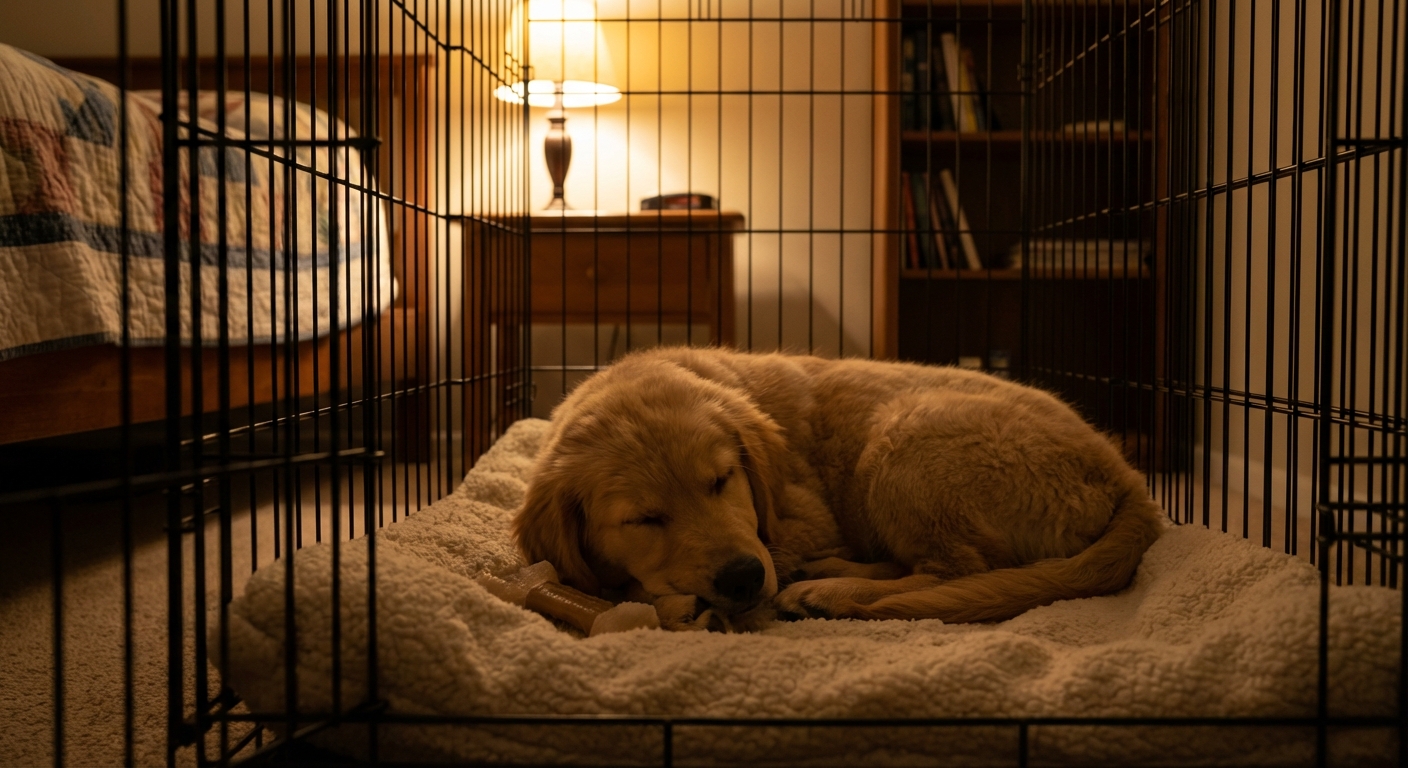
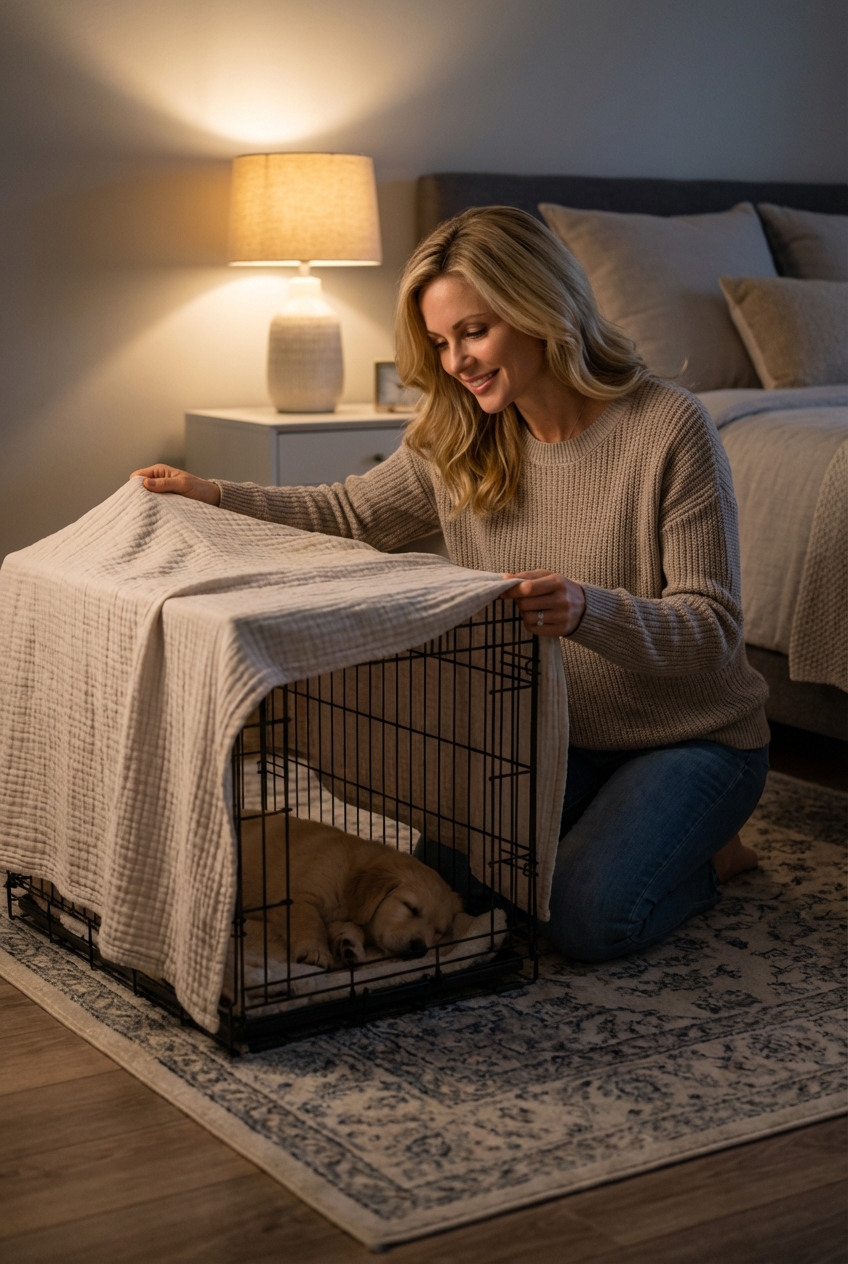
Many puppies settle faster with a partly covered crate (leave airflow) and white noise. Some also benefit from a snuggle puppy style heartbeat toy, especially in the first month.
If they cry right after a confirmed potty trip: Give a short pause to see if they resettle. If you need to reassure them, keep it brief and calm (a quiet “shh” or “good night”) without opening the crate or starting another potty loop.
Age-by-age tips
8 to 10 weeks
- Expect multiple wake-ups.
- Keep the crate next to your bed.
- Prioritize comfort and security, but keep nights boring.
10 to 16 weeks
- Start gradually extending the time between potty breaks.
- Build a consistent “last potty, then crate” habit.
- Increase daytime training and enrichment so the brain is satisfied.
4 to 6 months
- If accidents are still frequent, reassess the schedule and rule out medical issues.
- Begin moving the crate farther from your bed if that is your goal.
- Work on calm independence during the day, not just at night.
Older puppies (6 to 18 months)
If an older puppy suddenly stops sleeping through the night, think in three buckets:
- Training: inconsistent bedtime, too much evening stimulation, reward for barking
- Environment: new noises, a move, different sleeping spot
- Medical: urinary tract infection, GI upset, pain, parasites
Common mistakes
- Mistake: Letting your puppy roam at night.
Do instead: Use a crate or pen for safety and faster house training. - Mistake: A big play session at 10 p.m.
Do instead: Enrichment earlier, then a wind-down routine. - Mistake: Punishing accidents.
Do instead: Clean thoroughly with an enzymatic cleaner and tighten your schedule. - Mistake: Talking, petting, or feeding during night wake-ups.
Do instead: Quick potty, quiet return to bed.
Crate safety notes
I love cozy setups, but safety comes first, especially overnight when you cannot supervise.
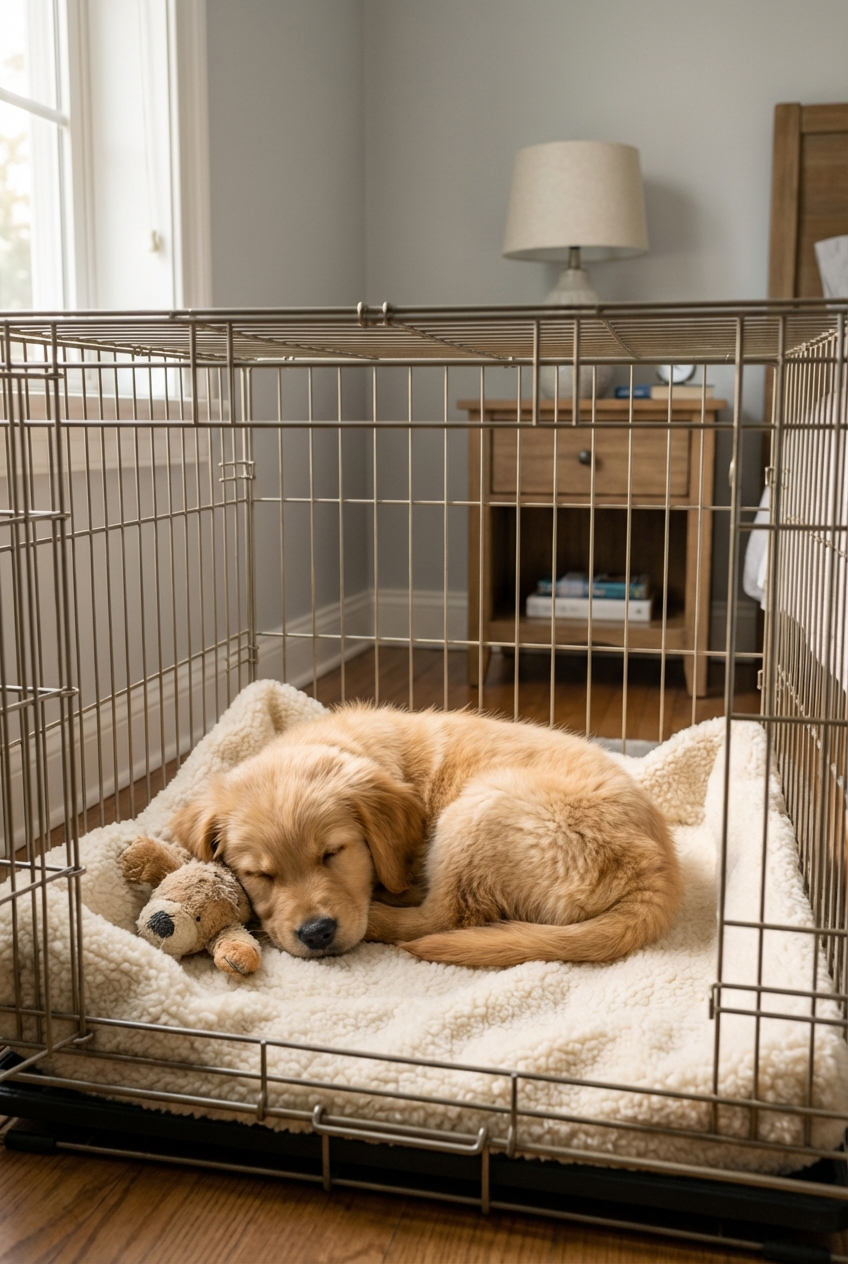
- If your puppy is a heavy chewer, skip loose blankets and stuffed toys in the crate until you trust their habits.
- Avoid chews that splinter, break into sharp pieces, or are small enough to swallow. When in doubt, ask your veterinarian what is safest for your puppy’s age and chewing style.
- Check that collars, tags, and harnesses cannot get caught on crate bars. Many families crate puppies “naked” for this reason.
Apartment and no-yard tips
- Pick a single nighttime potty spot and use it every time.
- Carry very young puppies to the potty area so they do not pee on the way.
- Keep the trip short and boring. Potty, praise once, back inside.
When to call your vet
Sleep disruption is often normal, but some signs should be checked out, especially in young puppies.
- Straining to urinate, frequent tiny pees, or blood in urine
- Vomiting, diarrhea, or sudden appetite changes
- Excessive thirst or sudden increase in urination
- Crying that sounds painful rather than anxious
- Accidents that continue despite a consistent schedule and appropriate potty breaks
If something feels “off,” trust that instinct and reach out. It is always better to ask early than to wait.
A simple 7-night reset
If you want a clear starting point, try this for one week:
- Night 1 to 2: Set an alarm for one planned potty break (often 3 to 4 hours after bedtime for young pups). Do not wait for crying.
- Night 3 to 4: Move the alarm 15 to 30 minutes later if accidents are not happening.
- Night 5 to 7: Keep stretching slowly until your puppy is sleeping through.
Slow progress is still progress. Consistency is what changes everything.
Good sleep is built, not wished for. A calm routine, low-stimulation potty breaks, and a safe sleep space are the three biggest tools you have.