Skunked dog? Skip tomato juice. Use the proven peroxide-baking soda-dish soap mix, protect eyes, avoid common mistakes, clean gear and home odor, and know wh...
Article
•
Designer Mixes
Get Skunk Spray Off Your Dog

Shari Shidate
Designer Mixes contributor
If your dog just got skunked, I know that panicky feeling. The smell is intense. It clings to fur, and if you do the wrong thing first, you can accidentally lock that odor in even longer. The good news is that skunk spray is often treatable at home when you move quickly and use the right chemistry.
Before you start: quick safety check
Before you focus on the smell, take 30 seconds to make sure everyone is safe.
- Check for bites or scratches. If your dog and the skunk fought or you see punctures, bleeding, or swelling, call your vet right away. Skunks can carry rabies, and bite wounds can get infected fast. Your local animal control may also need to be involved.
- Watch for eye exposure. If your dog is squinting, pawing at the face, or has red, watery eyes, skip the DIY face scrub and call your veterinarian.
- Remove the collar and harness. Skunk oils love hiding under gear. Take it off now, and plan to wash or replace it.
First things first: what not to do
Before we jump into the best de-skunk method, let’s save you time and frustration. These common “fixes” often make the smell worse or spread it around your home.
- Do not use tomato juice. It might mask odor briefly, but it does not neutralize skunk thiols (the sulfur compounds that stink).
- Avoid soaking or rinsing with plain water first. Skunk spray is oily, and water can spread it over more of the coat and into the undercoat. If you need to do something immediately, blot with paper towels or a dry cloth, then go straight to the de-skunk solution.
- Do not use vinegar alone. It can reduce odor a bit, but it is usually not enough for skunk spray.
- Do not bring your dog inside “just for a second.” Skunk oils transfer to carpets, couches, and car seats fast.
- Do not use essential oils on your dog. Many are irritating or toxic, and strong scents often combine with skunk odor in a truly unforgettable way.
Why skunk smell is so hard to remove
Skunk spray contains oily sulfur-based compounds, including thiols. It also contains thioacetates that can break down into thiols over time, which is one reason a dog can smell “skunky again” days later, especially after getting wet. These compounds stick to fur, skin oils, and porous surfaces.
The reason the classic de-skunk recipe works is because it oxidizes those smelly sulfur compounds into ones that do not stink nearly as much.
That is also why speed matters. The longer the oils sit, the deeper they penetrate and the more likely your dog will smell again later.
The best home remedy
This is the tried-and-true peroxide, baking soda, and dish soap method often attributed to Paul Krebaum and commonly recommended by vets. When mixed correctly and used immediately, it is one of the most effective at-home approaches.
What you need
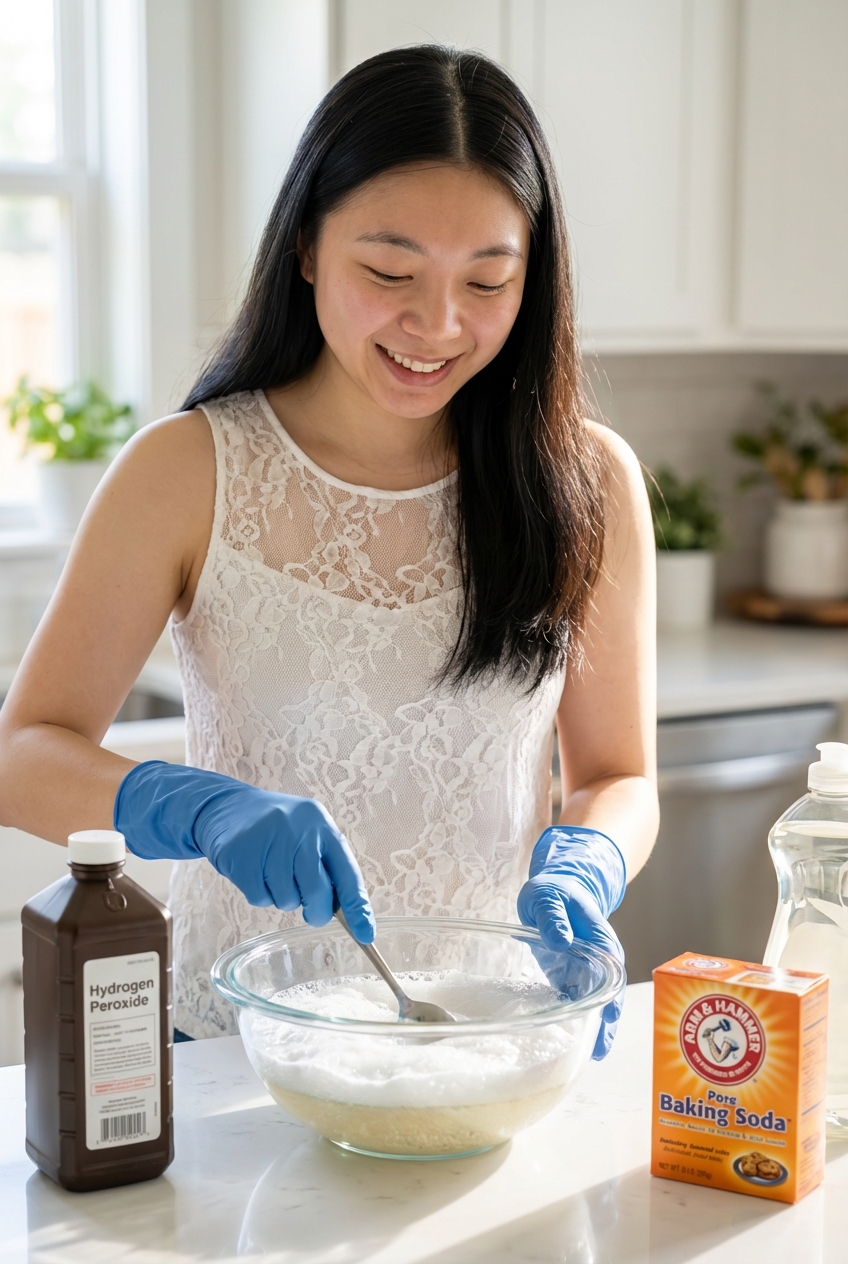
- 3% hydrogen peroxide: 1 quart (4 cups)
- Baking soda (sodium bicarbonate): 1/4 cup
- Liquid dish soap: 1 to 2 teaspoons (original blue Dawn is commonly used)
- Rubber gloves, old towels, and a sponge or washcloth
How to do it safely
- Keep your dog outside or in an easy-to-clean area like a garage or laundry room.
- Remove collars and harnesses. Oil collects underneath, so treat the fur under the gear too.
- Protect eyes and mouth. Skunk spray often hits the face. Avoid getting any mixture into eyes, nose, ears, or mouth.
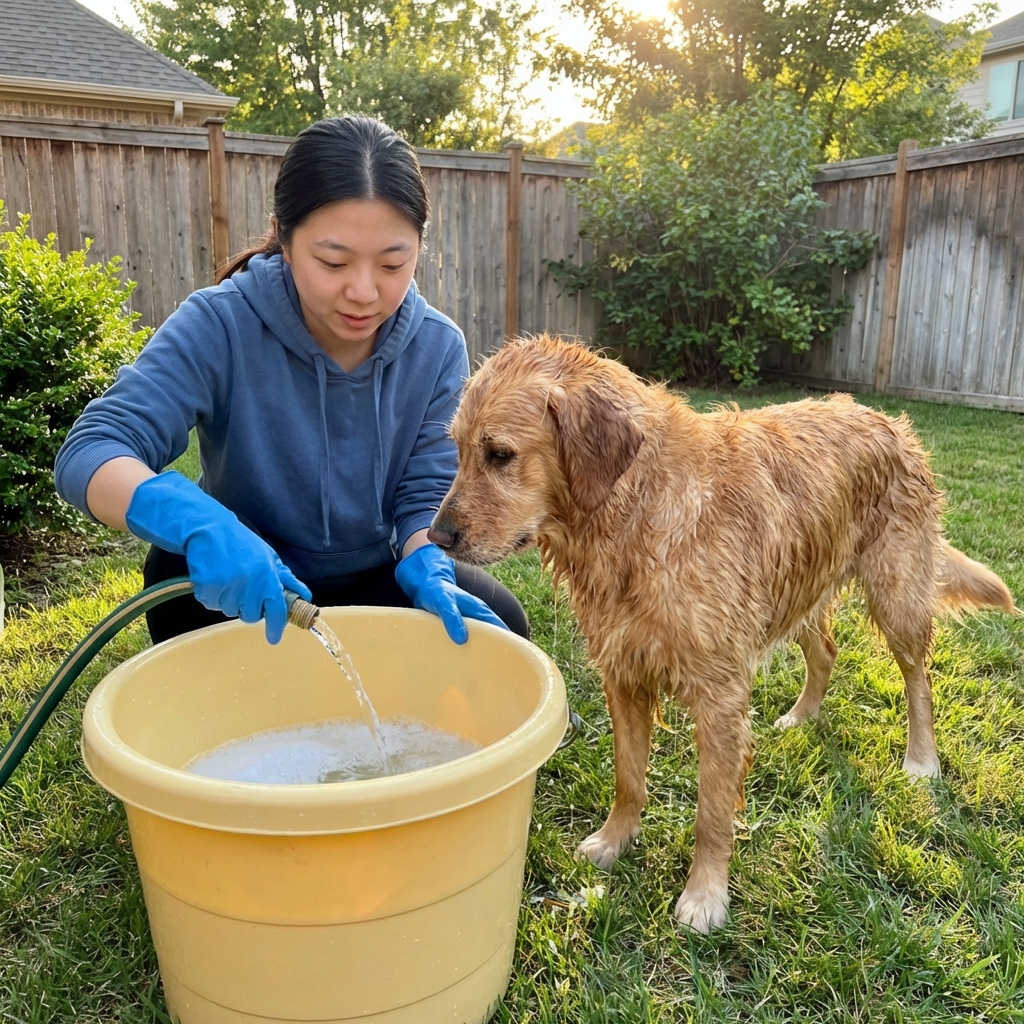
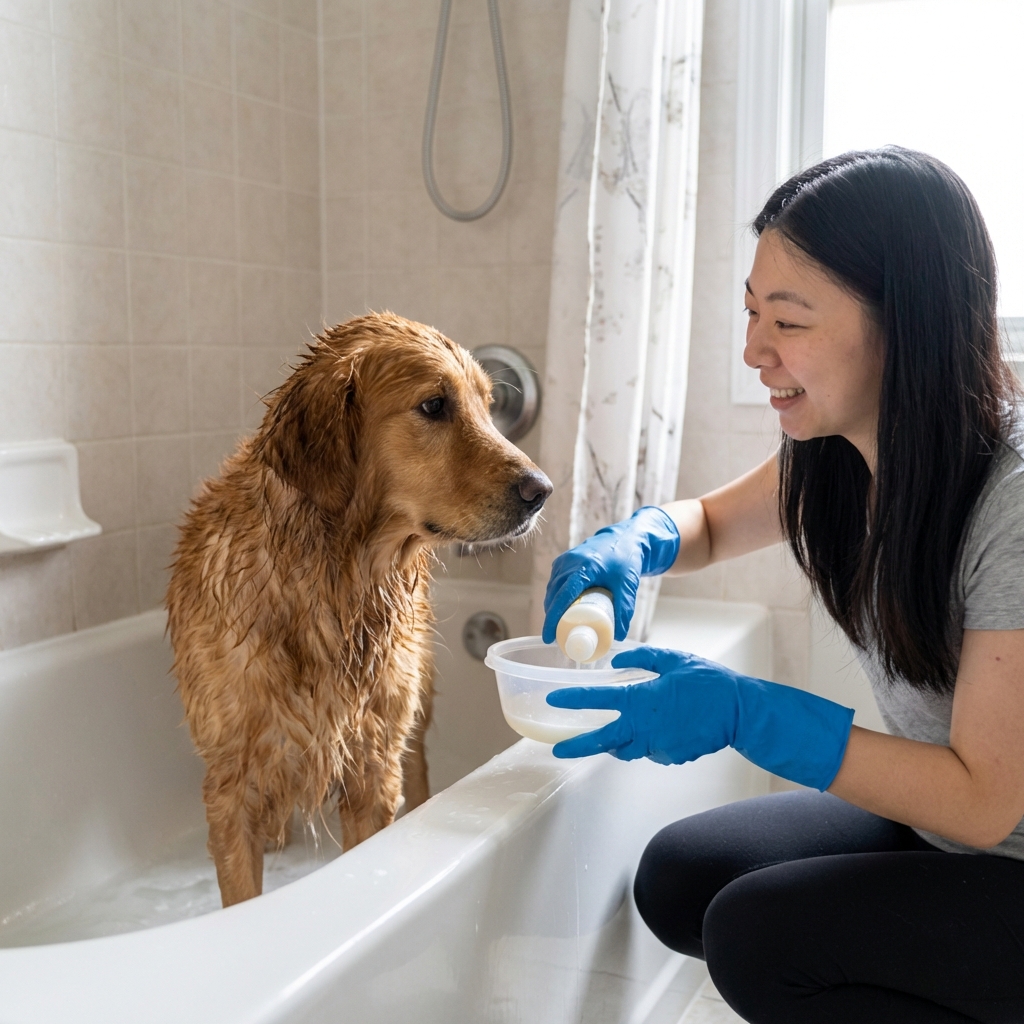
- Mix fresh, right before use. Combine peroxide + baking soda + dish soap in an open container.
- Apply to DRY fur. Work it in thoroughly, especially the sprayed areas.
- Let sit for 5 minutes (up to 10 if needed), but do not let it dry on the coat.
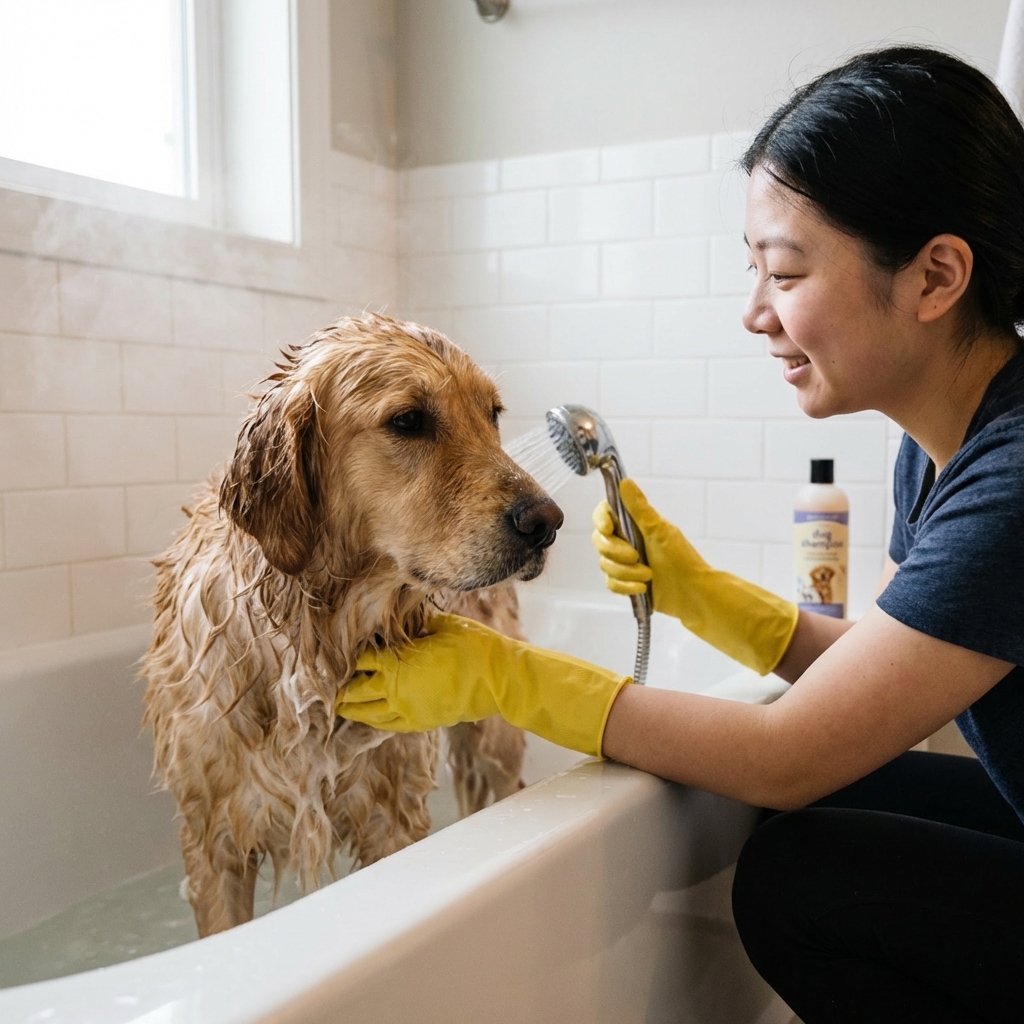
- Rinse extremely well until the coat feels clean and squeaky, then rinse once more for good measure.
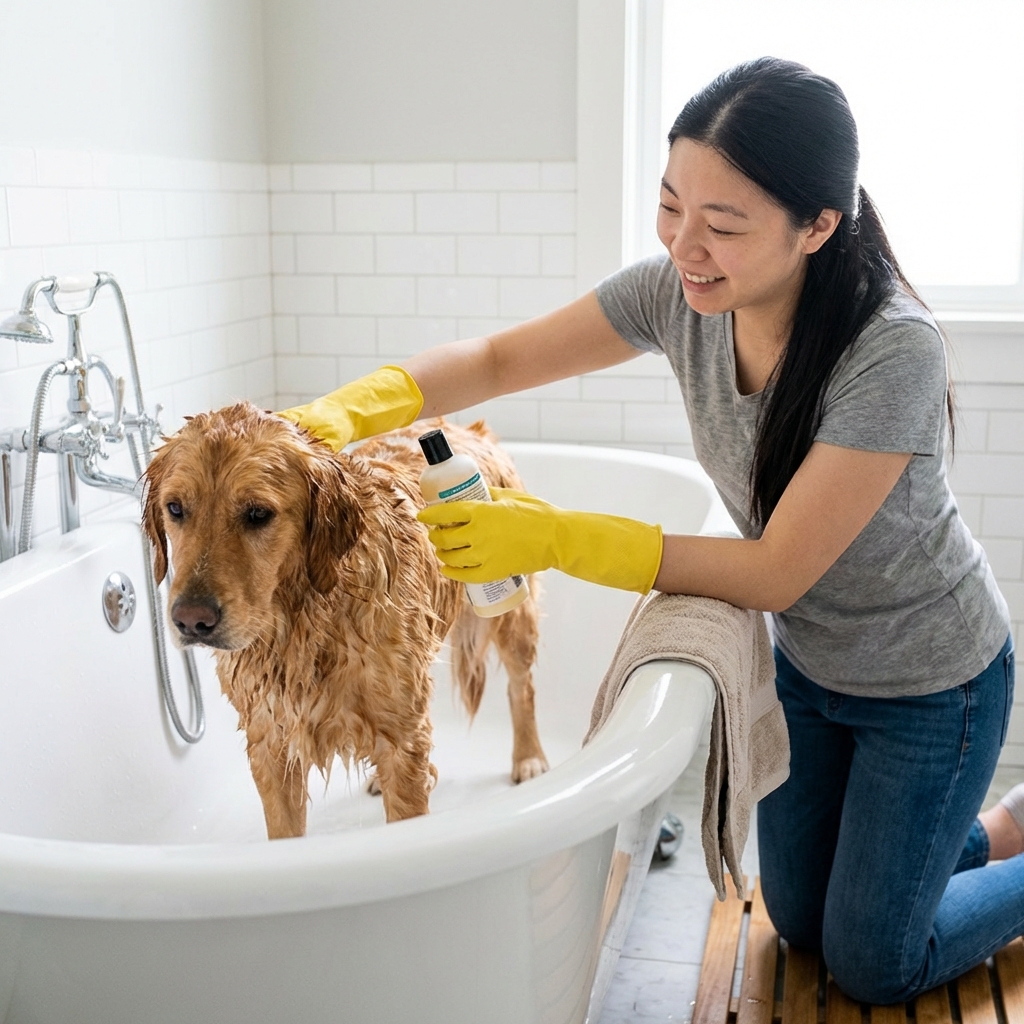
- Follow with a gentle pet shampoo if needed, then rinse again.
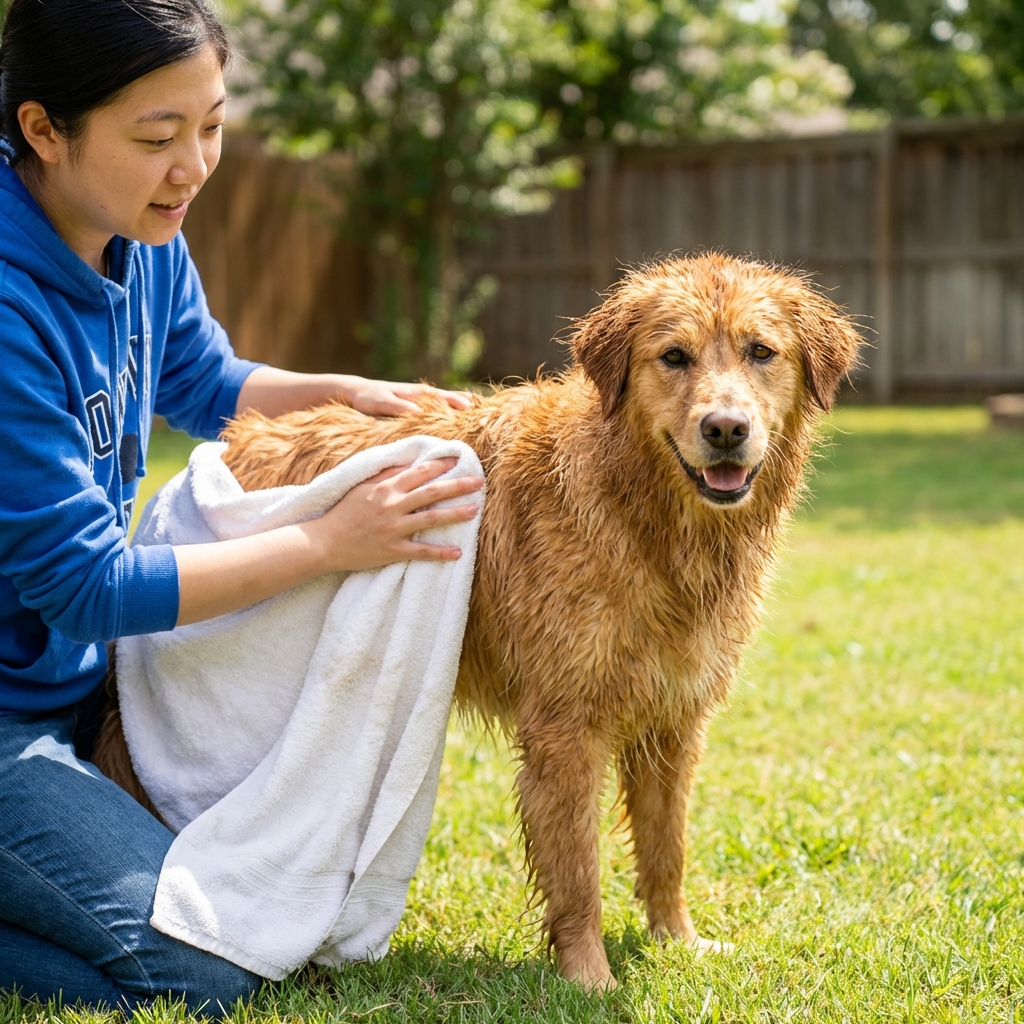
- Towel dry and keep your dog warm.
Important safety notes
- Do not store the mixture. It can build pressure and potentially burst a closed container. Mix and use immediately, then discard leftovers.
- Use 3% peroxide only. Higher concentrations can burn skin.
- Use carefully on dark coats. Peroxide can slightly lighten fur, especially with repeated use.
- Skip this method on open wounds or very irritated skin. If your dog has raw spots, dermatitis, or a bite wound, call your vet for guidance on a safer approach.
- Be cautious with very young puppies, seniors, and medically fragile dogs. They can get chilled or stressed during a long bath. When in doubt, ask your veterinarian or a groomer for help.
- Do not use in or near the eyes or inside ears. For facial skunking, use a gentler approach (next section).
If your dog was sprayed in the face
Face skunking is common and tricky because the most effective solution is not eye-safe.
Safer face approach
- Use a warm, damp washcloth with a tiny drop of dish soap to gently wipe the cheeks, chin, and top of the head.
- Avoid the eyes, nostrils, and lips. Use plain warm water around those areas.
- Rinse the washcloth often so you are not spreading oils.
When to call the vet
Skunk spray can cause eye irritation (squinting, redness, pawing at the face, watery discharge). If you see that, it is worth calling your veterinarian. Eyes can develop painful inflammation, and prompt treatment helps.
What if the smell is still there?
It is normal to notice some lingering odor for a few days, especially if the spray was heavy or your dog has a thick undercoat (hello, doodles and double-coated breeds). Here’s how to troubleshoot.
- Repeat once after 24 hours if needed. Multiple back-to-back treatments can irritate skin.
- Focus on the “hot spots” where oil collected: collar area, chest ruff, legs, and tail base.
- Wash collars, harnesses, and leashes immediately. Fabric holds skunk odor stubbornly if you do not treat it.
- Dry thoroughly. Wet fur can make leftover odor more noticeable again.
If your dog continues to smell strongly after 2 to 3 solid attempts, a commercial skunk shampoo can be a great next step. Many are formulated to neutralize odor while being gentler on skin than repeat peroxide treatments.
De-skunking your home and car
Even one quick shake inside can transfer skunk oils to surfaces. Here are practical, low-drama steps that actually help.
For fabrics
- Wash with your usual detergent.
- Add 1/2 cup baking soda to the wash if the fabric allows.
- Air dry if possible. Heat may make some odors harder to remove, so avoid the dryer until you are sure it is clean.
For hard surfaces
- Use hot, soapy water first.
- Follow with a diluted vinegar wipe (vinegar + water) for extra odor control.
For your car
- Remove and wash seat covers if possible.
- Sprinkle baking soda on carpets and upholstery, let sit overnight, then vacuum.
- Ventilate: windows down, park in the sun when safe.
Pro tip: If the skunk smell is in your dog’s collar or harness, replace it. Sometimes it is cheaper and kinder to your nose.
When skunk spray is an emergency
Most skunkings are messy, not dangerous. But there are a few scenarios where you should get veterinary help right away.
- Any bite wound or direct contact with a skunk (rabies risk)
- Eye exposure with significant redness, squinting, or swelling
- Repeated vomiting or drooling (dogs sometimes lick spray off their coat)
- Breathing trouble or severe stress
- Very young, senior, or medically fragile dogs who cannot handle prolonged bathing or chill
Skunk spray can also trigger nausea and irritation. If your dog seems “off” beyond normal embarrassment, call your veterinarian for advice.
Preventing the next skunk encounter
We cannot control wildlife, but we can reduce the odds.
- Leash walks at dawn and dusk: skunks are most active then.
- Use a bright flashlight before letting your dog into the yard at night.
- Secure trash and outdoor food sources. Pet food, bird seed, and open compost attract skunks.
- Block access under decks and sheds where skunks may den.
And if you live in skunk country, keep supplies on hand. Having peroxide, baking soda, and dish soap ready can turn a miserable night into a manageable one.
Quick reminder from a vet assistant’s point of view: the sooner you treat skunk spray and the less you spread it with water, the easier your cleanup will be.