Stop fleas for good with a behavior-based, vet-informed plan: treat every pet, wash and heat-dry fabrics, vacuum to break the life cycle, consider an IGR, an...
Article
•
Designer Mixes
Get Rid of Fleas in the House: Key Facts

Shari Shidate
Designer Mixes contributor
Fleas in the house can feel like a never-ending battle, especially when you are doing “all the things” and still seeing bites or flea dirt. As a veterinary assistant here in Frisco, Texas, I want you to know two reassuring truths: fleas are incredibly common, and they are beatable when you treat the pet and the home at the same time.
This article breaks down the most important, evidence-based facts about household fleas, plus a step-by-step plan you can actually follow.
Most fleas are not on your pet
When you spot fleas on your dog or cat, it is tempting to focus only on bathing, combing, or a quick spray. But adult fleas are just the tip of the iceberg.
In a typical infestation, most of the flea population is in your environment as eggs, larvae, and pupae (a commonly cited estimate is around 95% off the pet, depending on the home and season). Those immature stages hide in carpeting, baseboards, couch cushions, pet bedding, and floor cracks.
Why it matters
- Fleas can seem to “come back” even after you kill the adults you see.
- You need time for pupae to emerge and become exposed to ongoing control.
- Consistency beats intensity. One deep clean rarely solves it by itself.
Know the flea life cycle
Understanding the life cycle helps you stop wasting effort on solutions that only work for a day or two.
- Eggs: Laid on your pet, then fall off into the home.
- Larvae: Avoid light and burrow into carpet fibers or debris, feeding on organic matter like flea dirt.
- Pupae: The toughest stage. They can stay protected in a cocoon and “wait” for the right conditions.
- Adults: Emerge and look for a host quickly.
Depending on temperature, humidity, and access to a host, fleas can complete this cycle surprisingly fast. That is why warm homes and mild winters can lead to year-round issues, including in Texas.
One important expectation: even with great products, you may still see fleas for a bit because pupae can keep emerging. That does not always mean you are failing. It often means the life cycle is still unfolding.
Signs owners often miss
Not everyone sees fleas hopping. Many homes have fleas for weeks before anyone spots one.
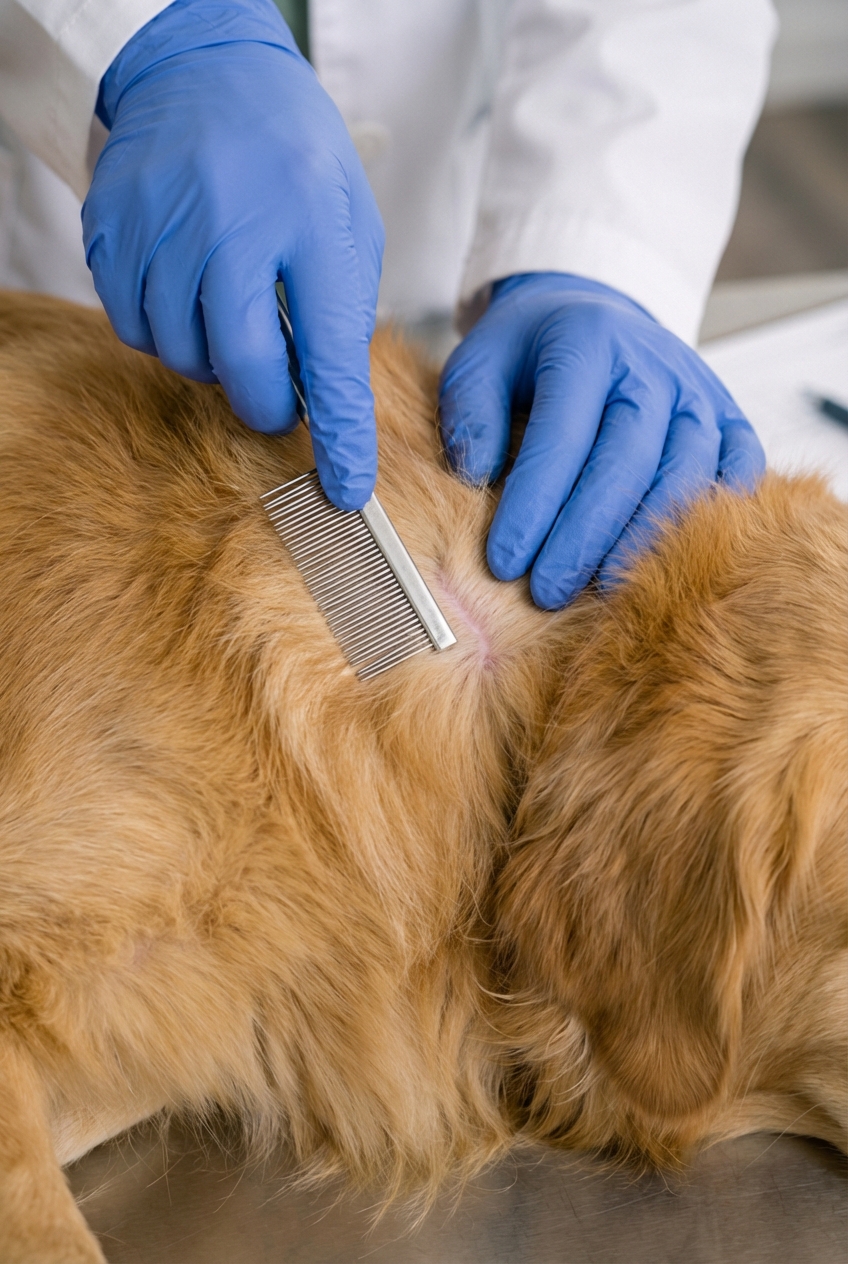
- “Pepper” specks on bedding: Flea dirt looks like black crumbs. If you place it on a damp paper towel, it can smear reddish-brown (digested blood).
- Pets suddenly itchy at the back, tail base, belly, or thighs.
- Small bites on human ankles, especially when you first sit on a couch or walk onto a rug.
- Restlessness at night for pets that normally settle easily.
If your pet is extremely itchy but you cannot find fleas, do not assume there are none. Fleas are fast, and cats especially can swallow evidence while grooming.
Quick note: itchiness and bites can also come from allergies, mites, or even bed bugs. If you are uncertain, your veterinarian can help confirm what you are dealing with so you do not chase the wrong problem.
Start with your pet
This is the step many families skip, and it is the number one reason infestations linger. If fleas can keep feeding and reproducing on your pet, you are trying to empty a bathtub while the faucet is still running.
Use vet-recommended prevention
Modern flea preventives (oral or topical) are designed to kill adult fleas efficiently and reduce the number of new eggs added to the environment. They do not instantly eliminate every life stage already living in your carpet or furniture, so continued emergence for a few weeks can be normal.
Ask your veterinarian which option is appropriate for your pet’s age, species, weight, and health history.
- Do not use dog products on cats. Some ingredients that are safe for dogs can be dangerous for cats.
- Stick with the schedule. Missed doses can allow the population to rebound.
- Treat all pets in the home, including indoor-only pets. Fleas do not care about your house rules.
- Plan for visitors. If friends or family bring pets over, that can reintroduce fleas. Consistent prevention helps protect your home.
If you are seeing fleas, it is usually time to commit to consistent prevention for several months, not just one dose.
Treat the house
You do not need to panic-buy every spray on the shelf. The best home plan is simple, repeated, and targeted at the places fleas develop.
1) Vacuum thoroughly
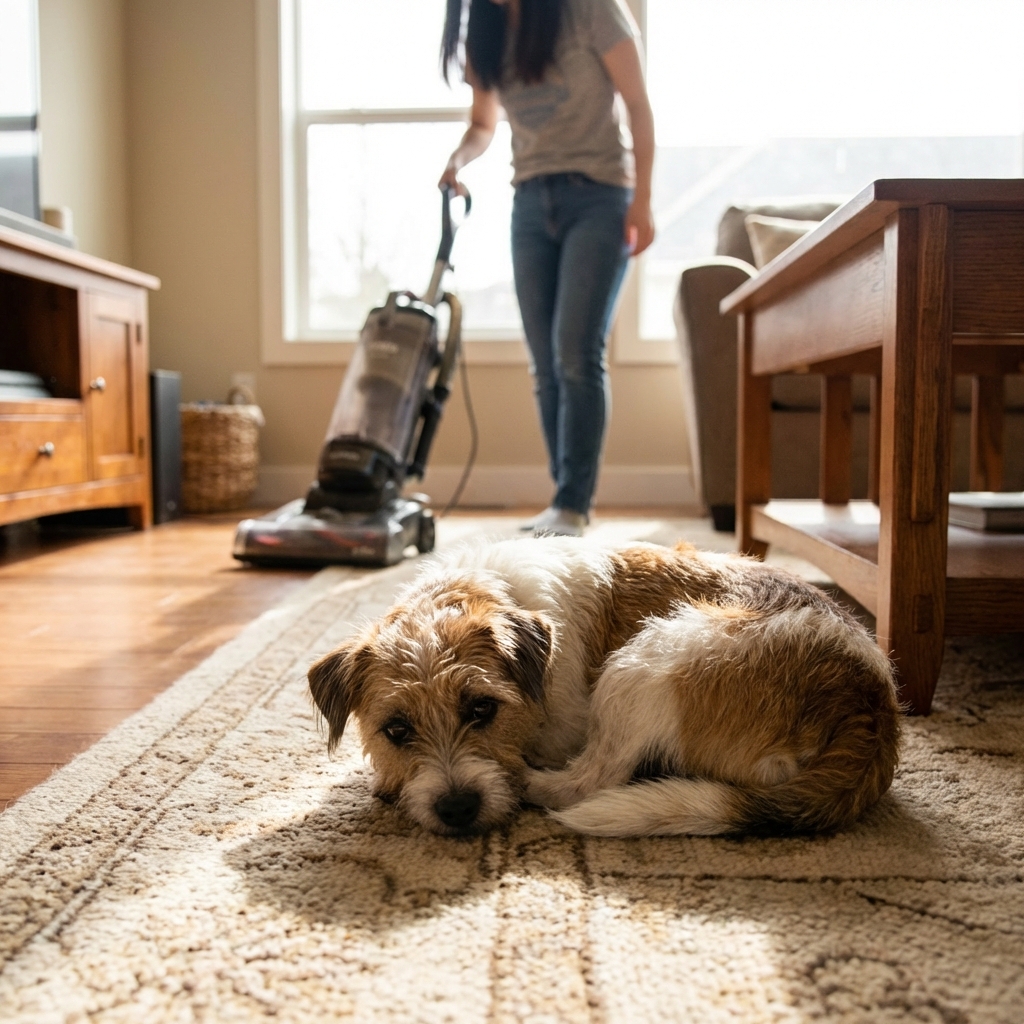
Vacuuming removes eggs and larvae and can help encourage pupae to emerge by disturbing the environment. That makes adult fleas more likely to contact your pet’s prevention and any home treatment you use.
Focus on:
- Carpets and rugs, especially along edges
- Under furniture cushions
- Pet sleeping spots
- Cracks between floorboards
- Closets where pets nap
- Pet carriers and crates
- Car upholstery if pets ride in the car
After vacuuming: empty the canister outdoors or seal the bag in a trash bag and dispose of it. Fleas can survive inside the vacuum.
2) Wash and heat-dry fabrics
Wash pet bedding, couch covers, and throw blankets using hot water if the fabric allows, then dry on high heat. Heat is your friend here.
3) Use an EPA-registered indoor product (if needed)
If you are dealing with a moderate to heavy infestation, you may want an indoor flea product labeled for home use. Look for:
- An adulticide to kill adult fleas
- An insect growth regulator (IGR) to stop eggs and larvae from developing
Follow the label exactly, keep pets and kids away as directed, and ventilate the space.
- Aquariums: Cover fish tanks and turn off air pumps during application if the label instructs. Some aerosols can be harmful to fish and aquatic life.
- Cats: Cats can be sensitive to certain ingredients. Use only products labeled for indoor flea control and always follow directions closely.
- Local rules: Use pesticides in line with label directions and local regulations.
If you prefer not to use chemicals indoors, vacuuming and laundering can still work, but it typically takes longer and requires very steady follow-through.
4) Do not forget the yard
Outdoor flea pressure can keep re-seeding the home. Fleas tend to concentrate in shady, humid areas where pets rest. Keep grass trimmed, remove leaf litter, and focus on shaded resting areas near patios, fences, and under shrubs. Some infestations need a targeted yard treatment, especially in warm climates. If you treat outdoors, follow the product label and local requirements.
Myths that keep fleas going
Myth: “My pet is indoors, so we cannot have fleas.”
Fleas can come in on people, other pets, rodents, or wildlife near entry points. Indoor-only pets can absolutely get fleas.
Myth: “One bath will fix it.”
A bath may reduce adult fleas temporarily, but it does not touch the eggs, larvae, and pupae living in your home. Baths also do not provide lasting protection.
Myth: “If I do not see fleas, they are gone.”
Pupae can be hidden and protected. It is common to see a “new wave” of adults even after initial success. That does not always mean the treatment failed.
Myth: “Natural sprays are always safer.”
“Natural” does not automatically mean safe for pets, especially cats. Essential oils, for example, can be irritating or toxic depending on the oil, concentration, and species. Always verify safety with your veterinarian.
How long it takes
With proper pet treatment plus consistent home cleaning, many households see major improvement within a few weeks. Full resolution can take longer, especially with heavy carpeted areas or if prevention lapses.
A realistic expectation is often 4 to 12 weeks of consistent effort. The key is staying the course through the pupal stage.
When to call for help
Sometimes fleas are more than “just itchy.” Get extra help if:
- Your pet has hair loss, hot spots, scabs, or skin infections
- You see tapeworm segments (often Dipylidium caninum) or your pet is scooting. Pets may need deworming in addition to flea control.
- Your pet is very young, elderly, or has chronic disease
- You have tried prevention and cleaning for several weeks with little or no improvement
- Someone in the home has strong reactions to bites
Professional pest control can be helpful for severe household infestations, especially when combined with veterinary-grade flea prevention for all pets.
A simple 7-day reset
If you are overwhelmed, start here. This is a practical plan you can repeat weekly until things are calm.
- Day 1: Treat all pets with veterinarian-recommended flea prevention.
- Day 1: Wash and heat-dry all pet bedding and the blankets your pet uses.
- Day 1 to 7: Vacuum carpets, rugs, and furniture daily if possible, especially pet areas.
- Day 3: Rewash high-use blankets and rotate clean bedding.
- Day 7: Evaluate. If you are still seeing fleas regularly, consider an indoor product with an IGR or call a pro.
After week one: many homes can move to vacuuming several times per week, plus continued laundry and strict monthly prevention. Keep up prevention even after you stop seeing fleas. The goal is not just relief today, but preventing the next hatch.