Get rid of cat urine smell permanently with step-by-step cleaning for carpet, padding, hardwood, tile, and bedding. Learn why odor returns, what to avoid, an...
Article
•
Designer Mixes
Get Rid of Cat Urine Smell

Shari Shidate
Designer Mixes contributor
Cat urine smell can feel impossible to remove, especially once it has soaked into carpet, padding, or wood. The good news is that you can fix it, and you usually do not need harsh, fragranced products that simply cover the odor. The key is understanding what you are fighting and using the right kind of cleaner for the job.
As a veterinary assistant in Frisco, Texas, I have talked with many loving pet parents who feel embarrassed or overwhelmed by lingering urine odor. Please know this is common and solvable. Let’s walk through a calm, evidence-based plan that works.
Why the smell lingers
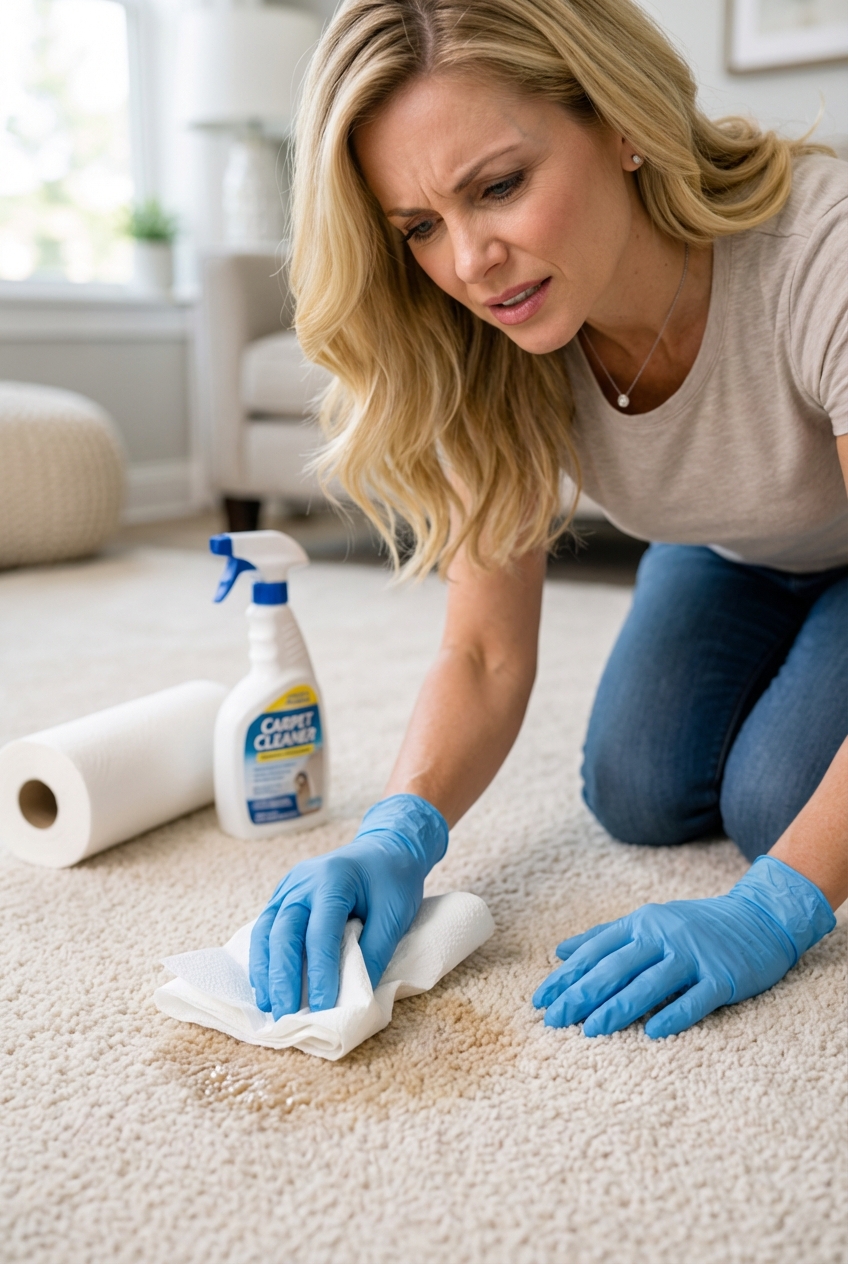
Cat urine is not just “pee smell.” It contains urea, uric acid, and other compounds that can absorb into porous surfaces. Over time, bacteria break urea down and create that sharp ammonia odor. The uric acid piece is the real troublemaker because it can form crystals that cling to fibers and porous materials.
This is why many all-purpose cleaners and soaps fail. They can remove surface grime, but they do not reliably break down uric acid crystals. When humidity rises or you re-wet the area, the smell can come right back.
First steps: find every spot
If you only clean the spot you can smell, you may miss the places your cat can smell. Cats have a much stronger sense of smell than we do, and leftover odor is one of the biggest reasons they return to the same area.
How to find hidden urine
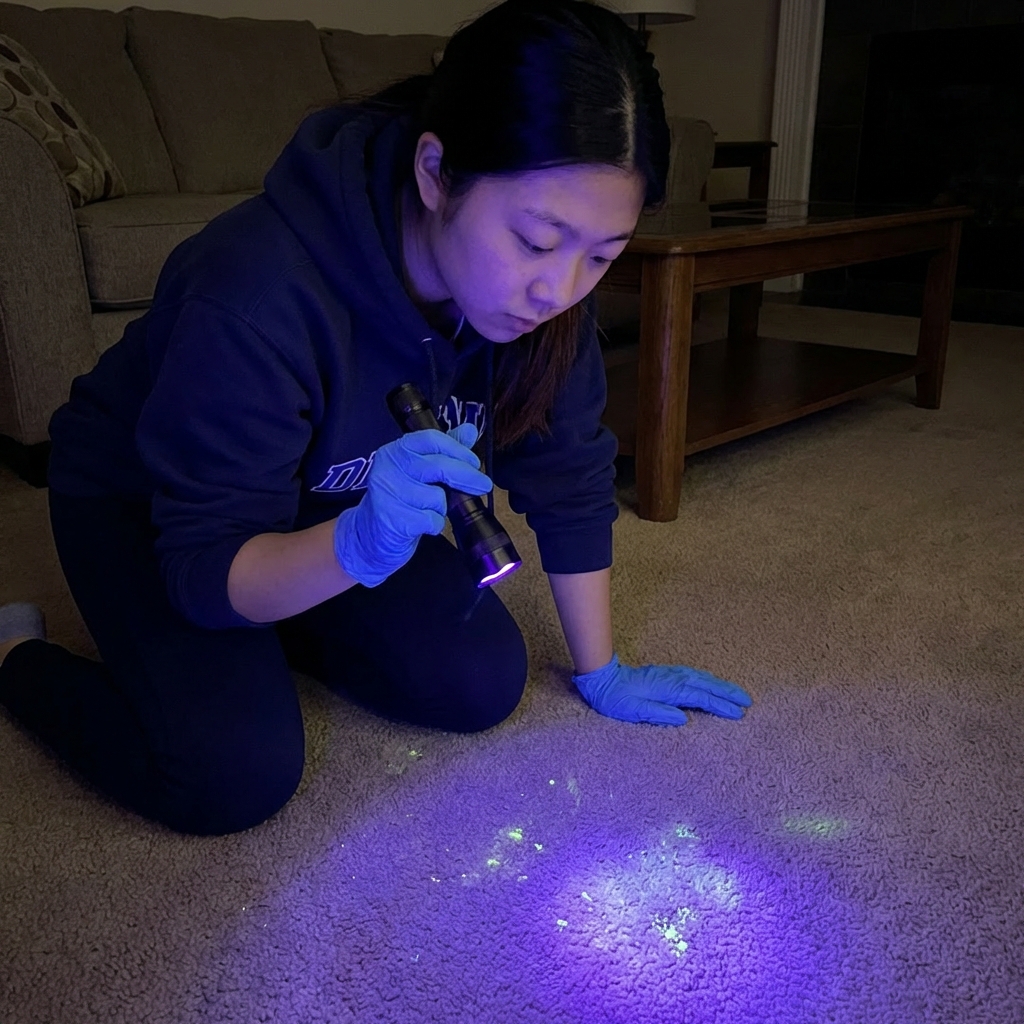
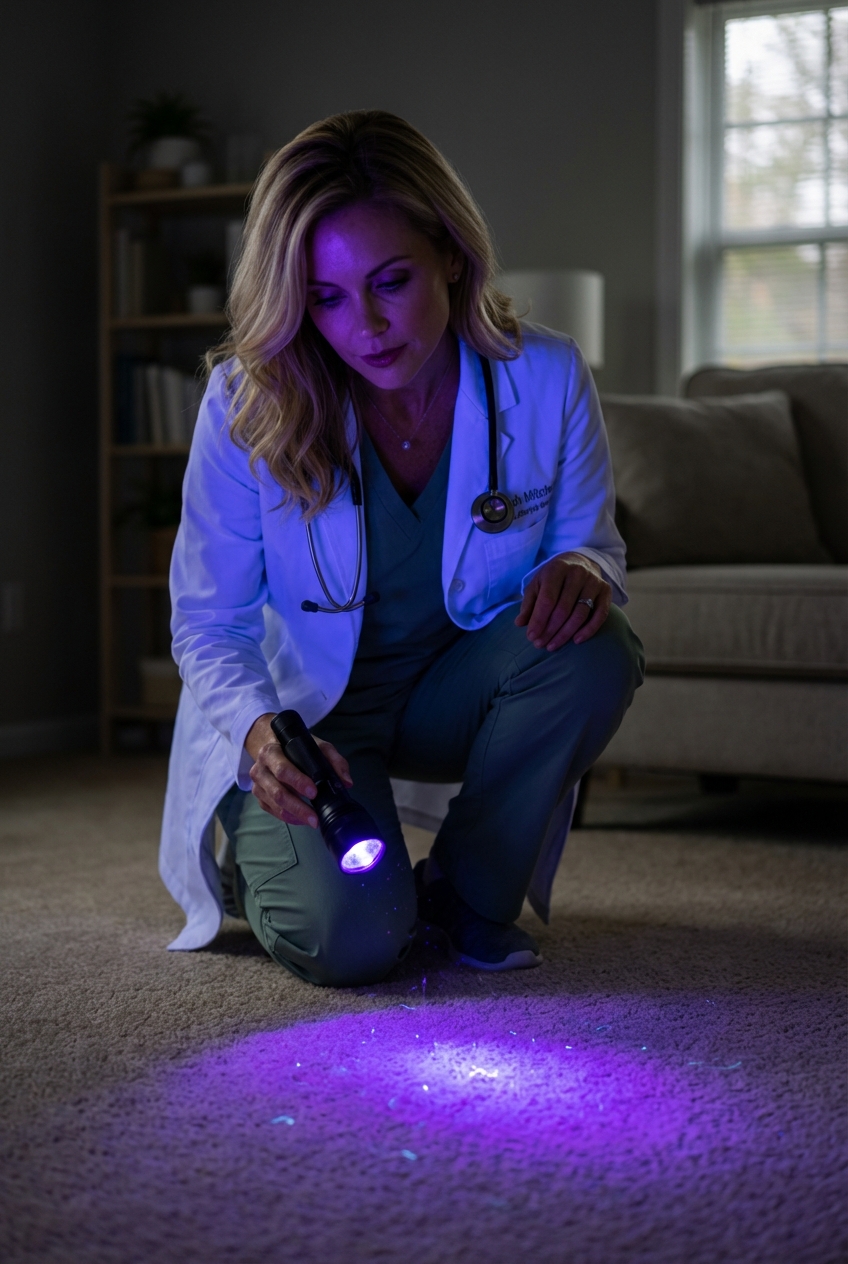
- Use a UV (black) light at night. Turn off room lights and slowly scan carpet edges, corners, baseboards, and furniture legs.
- Know the limits of UV. Urine does not always fluoresce, and some detergents and cleaners do. Use UV as a helpful guide, then confirm with location clues and your nose, and treat any “likely” areas.
- Follow patterns. Common targets include laundry piles, bath mats, kids’ rooms, and any area near a door or window.
- Check soft items. Cushions, throws, pet beds, and even backpacks can hold odor.
Best cleaner: enzymes
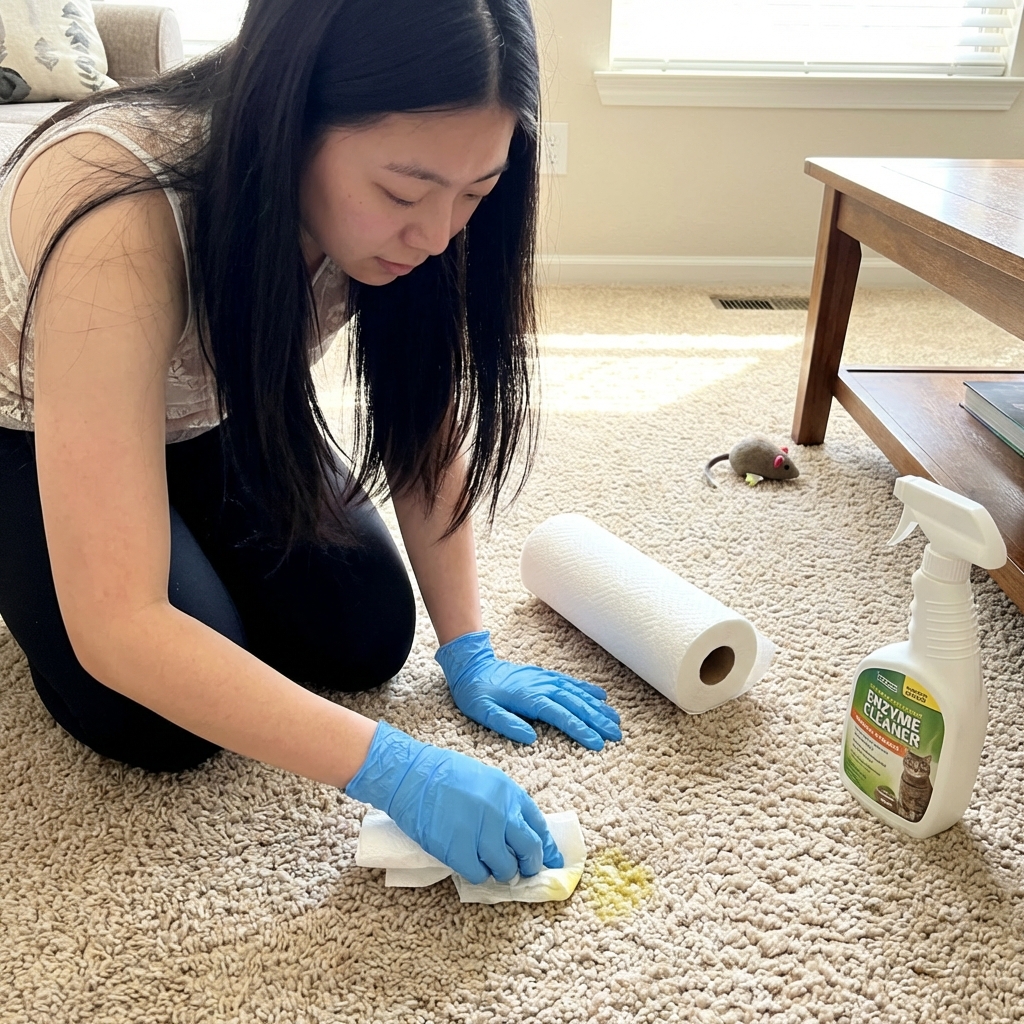
For true removal on porous materials, the most reliable option is an enzymatic cleaner labeled for cat urine. Enzymes help break down the organic components that cause lingering odor. You want a product that is meant to soak in, not just wipe the surface.
In some situations, an oxidizing cleaner (often hydrogen peroxide-based, made for pet stains and odors) can also help, especially for stubborn odors or staining. Always follow the label, test fabrics first, and never mix products.
How to use enzyme cleaner
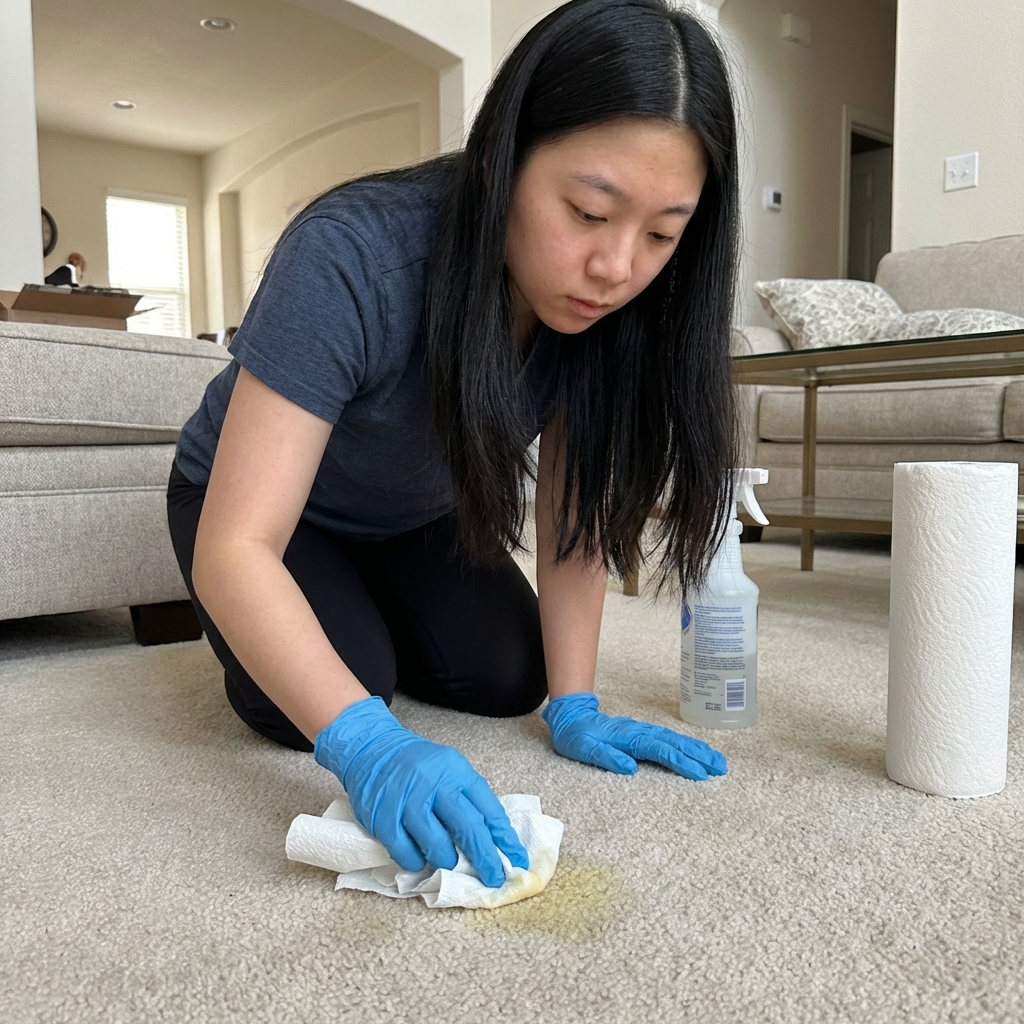
- Blot first. If the urine is fresh, press paper towels into the area to pull up as much liquid as possible. Do not rub. A helpful method is to layer towels and gently stand or kneel on them to increase pressure.
- Use enough product. A good rule is to apply roughly the same volume of cleaner as the urine you think soaked in. If you under-apply, the cleaner may not reach the full depth.
- Soak the area. Enzyme cleaners need to reach the full depth of contamination. On carpet, that often means saturating down to the pad.
- Give it time. Many products require the surface to stay wet for 10 to 30 minutes, sometimes longer. Follow the label.
- Air dry fully. Avoid steam cleaning or heat until the enzyme process is done. Heat can set odors and stains.
- Repeat if needed. Older spots often take 2 to 3 rounds.
A practical tip: place a clean towel over the treated area and set something heavy on top for 10 to 15 minutes. This helps push the cleaner deeper and pull residue back up as it dries.
Safety note: keep kids and pets off the treated area until it is fully dry, and ventilate the room if possible.
What to avoid
Some common household products can make the odor problem worse or create unsafe fumes.
- Ammonia-based cleaners: urine already has ammonia compounds. This can attract repeat marking.
- Bleach mixed with urine: can release dangerous chloramine gases. Never combine bleach with urine or other cleaners.
- Vinegar alone: vinegar can help with mild odors, but it often does not fully eliminate uric acid crystals by itself, especially in carpet and wood.
- Fragrance-only sprays: these usually mask odor temporarily and may encourage a cat to “refresh” the spot later.
- Mixing cleaners: even “natural” products can react unpredictably. Use one method at a time and rinse between approaches if the labels allow it.
By surface
Carpet and rugs
- Blot, then saturate with enzymatic cleaner.
- If the urine reached the pad, consider lifting a corner of carpet to treat the pad directly. If the pad is heavily soaked, replacement is sometimes the only real fix.
- For washable rugs, pre-treat with enzyme cleaner, then launder according to the rug label.
Hardwood, laminate, and vinyl
These surfaces can look fine on top while urine seeps between seams or into the subfloor.
- Wipe up urine immediately.
- Apply enzyme cleaner and keep it in contact long enough to work, but avoid over-wetting real wood. Use a damp, not dripping, approach and dry thoroughly with fans.
- If odor persists, the urine may be underneath planks or in the subfloor. At that point, targeted repairs may be needed. In some cases, an odor-blocking sealer (often shellac- or oil-based) is used after the area is fully dry and cleaned.
Upholstery and mattresses
- Blot thoroughly.
- Use an enzymatic cleaner labeled safe for upholstery.
- Test an inconspicuous area first for colorfastness.
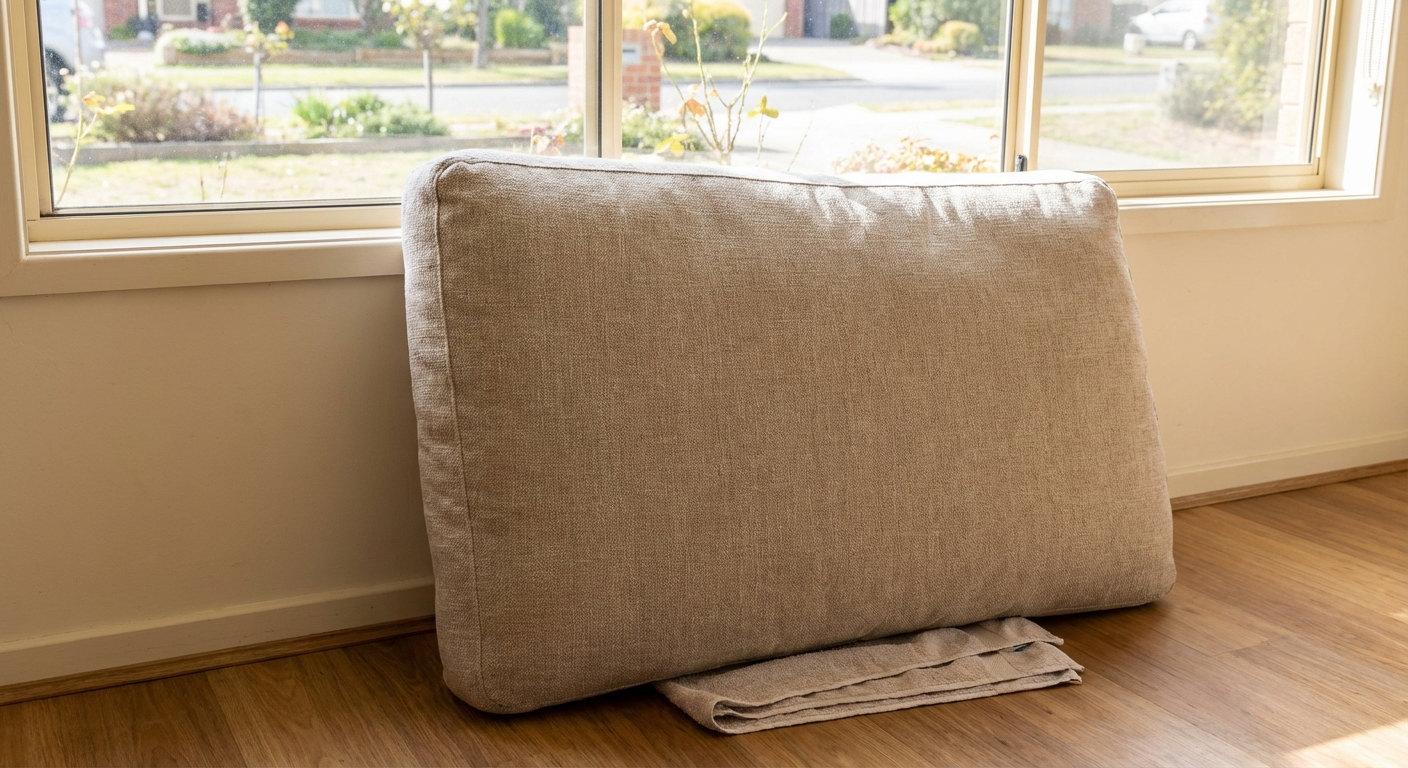
- Allow full drying with fans. Soft items can hold moisture longer than you expect.
When to call a pro
If you are dealing with a large area, repeated soaking into carpet pad or subfloor, or odor that persists after multiple careful treatments, it may be time to bring in a professional. Look for a company experienced with pet urine remediation (not just fragrance deodorizing), and ask what methods they use for deep extraction and odor sealing when needed.
If the cat keeps peeing there
Odor is only one piece of the puzzle. If your cat continues to urinate outside the litter box, please treat it as a health and behavior issue, not a “bad cat” issue.
Health causes to rule out
In vet clinics, some of the most common medical causes include urinary tract infection, bladder inflammation, crystals or stones, kidney disease, diabetes, arthritis pain (trouble climbing into a box), and stress-related urinary issues. If accidents are new or increasing, schedule a veterinary visit promptly.
Litter box basics
- Number of boxes: aim for one box per cat, plus one extra.
- Location: quiet, easy-to-reach areas. Avoid placing all boxes in one spot.
- Cleanliness: scoop daily and wash boxes regularly.
- Box style: many cats prefer large, open boxes. Seniors may need low-entry boxes.
- Litter: unscented, fine-grain litter is often best tolerated.
Helpful prevention: once a spot is clean, block access temporarily (an upside-down laundry basket works well), and add an appropriate scratching post or cozy bed nearby to reset the area’s purpose.
Freshen the whole room
Even after stain cleanup, the room may hold odor in the air and in soft surfaces.
- Ventilation: open windows and run fans when weather allows.
- Launder fabrics: wash curtains, throws, pet bedding, and removable covers.
- Vacuuming: a HEPA vacuum helps reduce dander and debris that can make a room feel stale, even if it does not “remove” urine compounds from deep surfaces.
- Air purifier: a true HEPA unit with activated carbon can help with lingering smells in the air.
Quick checklist
- Find all spots using a UV light (and confirm with context and smell).
- Blot fresh urine, do not scrub.
- Saturate with an enzymatic cat urine cleaner (use enough to reach the depth of the urine).
- Keep it wet for the full dwell time, then air dry.
- Repeat for older stains.
- Clean or replace contaminated padding or deeply soaked materials if needed.
- If accidents continue, schedule a vet visit and optimize litter box setup.
Bottom line: removing cat urine smell is less about working harder and more about using the right product, giving it enough contact time, and addressing the “why” behind the accidents.