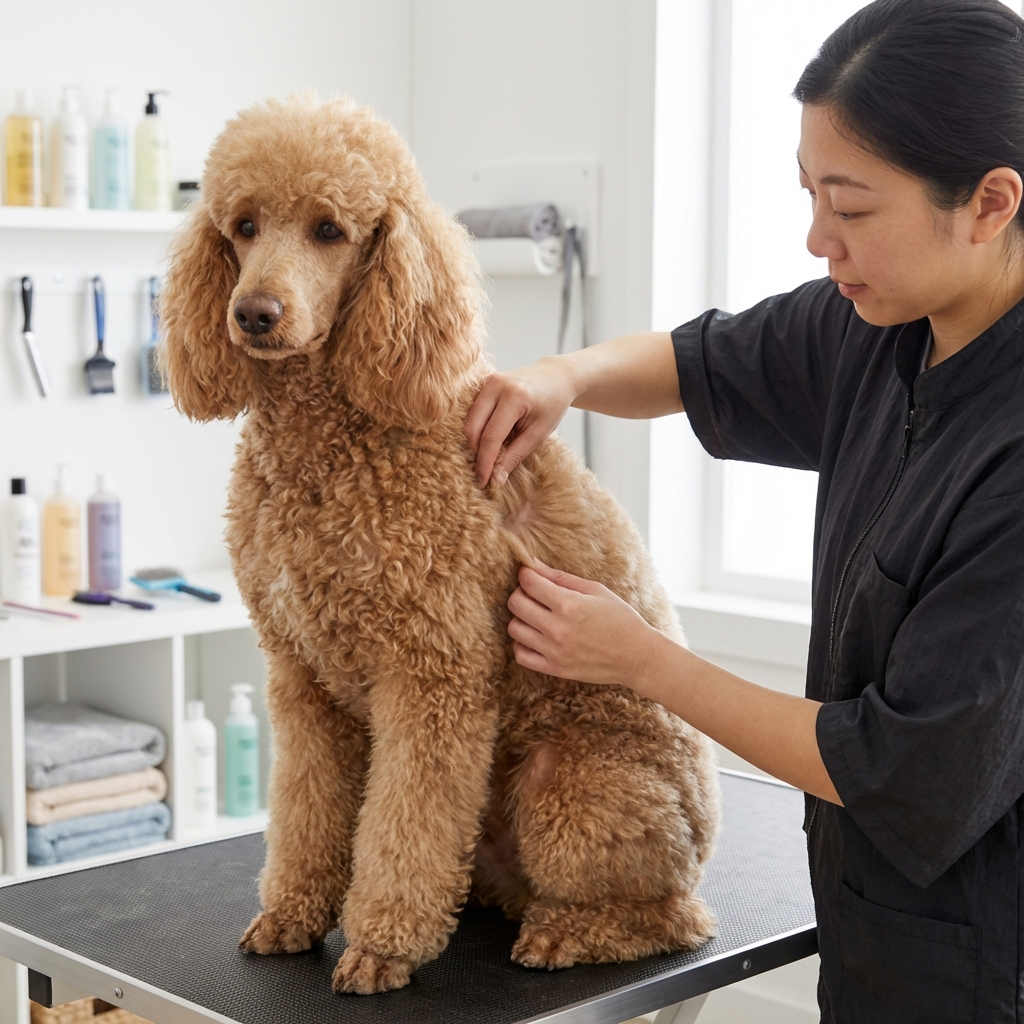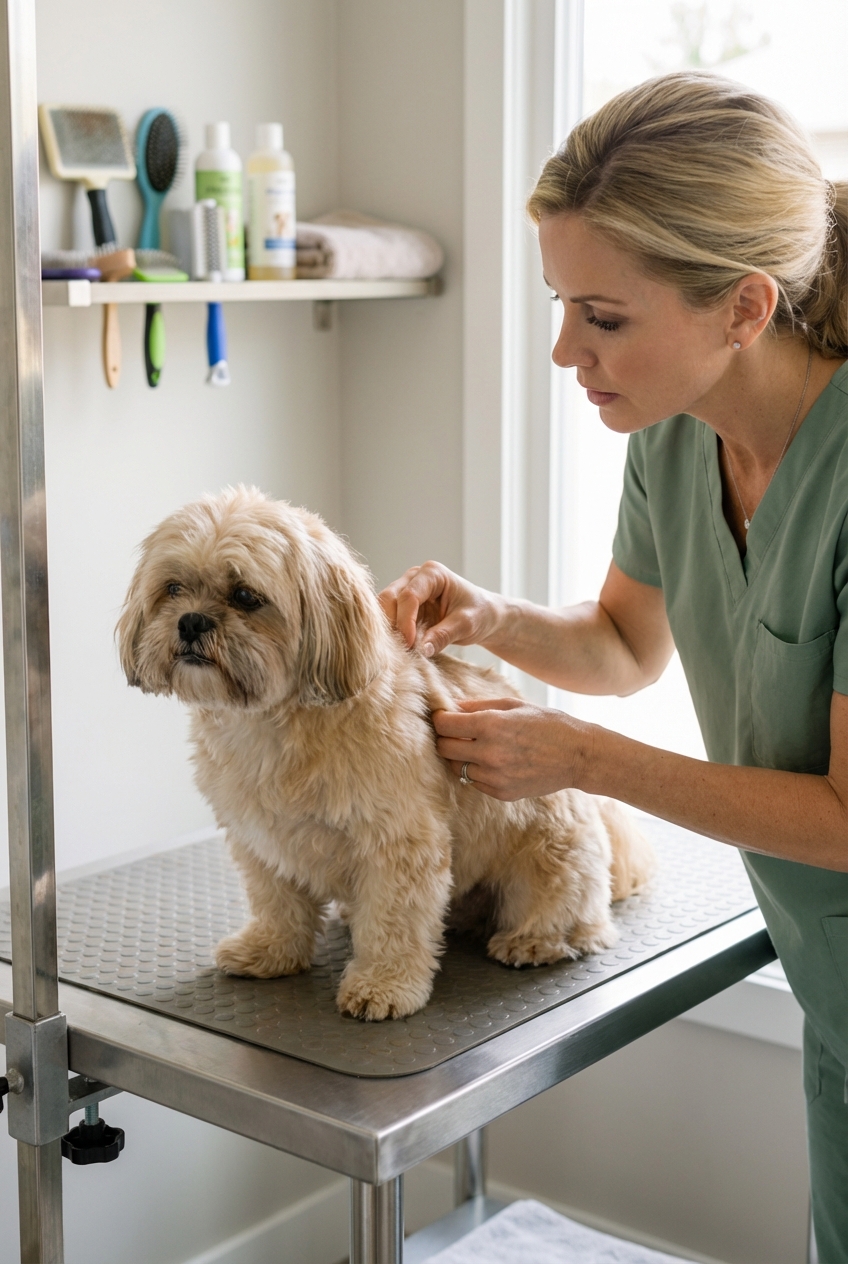
Matted coats can hurt and hide infection. Learn a vet-informed, safety-first method to detangle small mats at home, plus when clipping or a groomer/vet is th...
Article
•
Designer Mixes
Get Mats Out of Dog Hair Fast

Shari Shidate
Designer Mixes contributor
Mats can show up fast, especially on fluffy “designer mixes” and other long-haired pups. One day your dog feels silky, and the next you find a tight knot behind the ears or under the collar. As a veterinary assistant, I see this all the time: matting is not just a cosmetic issue. It can pull on the skin, trap moisture, hide parasites, and in severe cases even cause sores or infection.
The good news is that many small to medium mats can be removed safely at home if you use the right approach and you know when to stop and call a professional.
Why mats happen
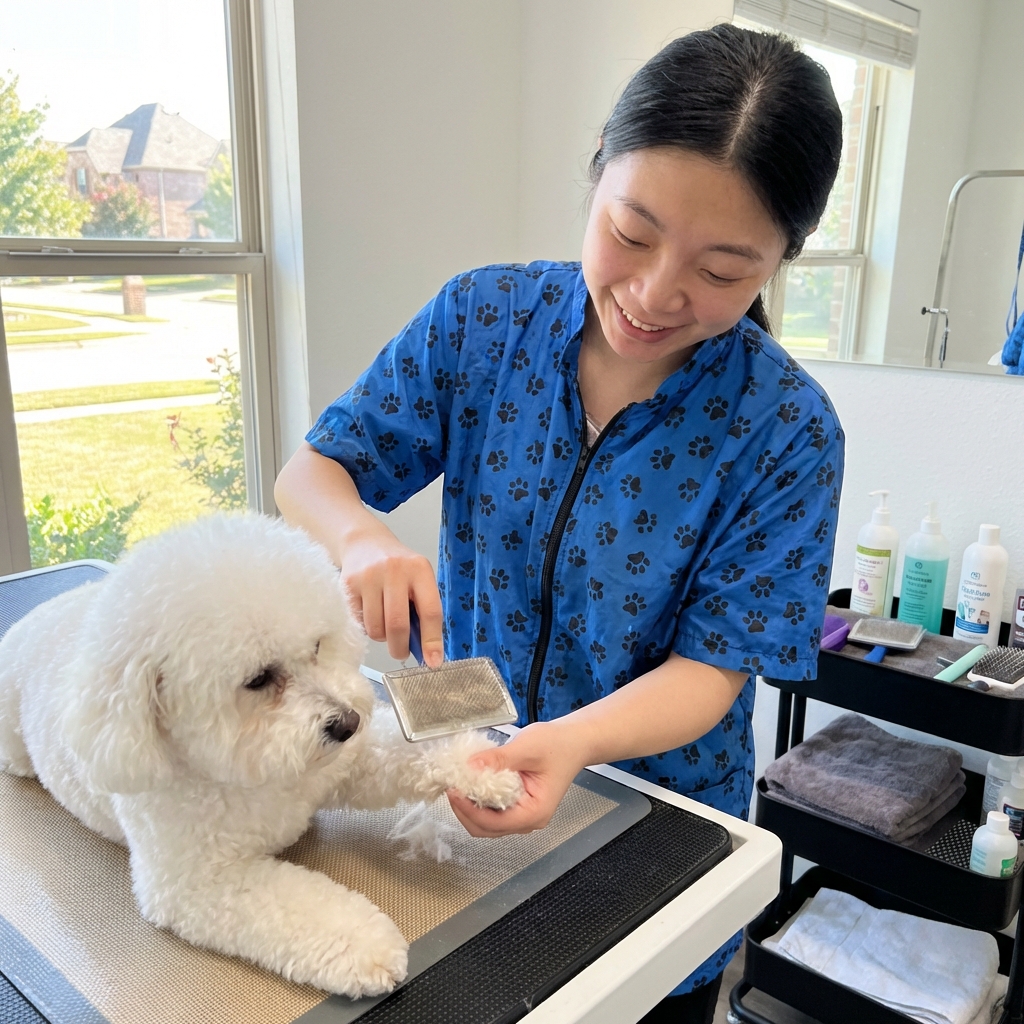
A mat is tangled hair that clumps together and tightens over time. It often starts as a little knot from friction, moisture, or shedding undercoat, then turns into a dense wad that grips the skin.
- High-friction areas: behind ears, armpits, groin, under collars and harnesses, base of tail, between legs.
- Moisture: swimming, rain, drool, wet grass, and air-drying after baths.
- Undercoat shed: seasonal shedding can tangle into the topcoat quickly.
- Coat type: doodle-type coats, curly coats, and many double coats mat without regular brushing down to the skin.
Why it matters: Tight mats can cause constant skin tension and pain. They can also trap heat and moisture, leading to hot spots (moist dermatitis), yeast overgrowth, and a strong odor. Matted coats can hide fleas and ticks, and they make routine skin checks harder.
Before you start
Set yourself up for success. Rushing is when accidents happen.
- Do not bathe first if your dog has significant mats. Water can tighten mats like felt and make them harder and more painful to remove. (Very light tangles may be manageable with plenty of conditioner and thorough drying, but tight mats are a different story.)
- Choose a calm time when your dog is relaxed, not right after a high-energy walk or when guests are over.
- Use good lighting so you can see the skin clearly.
- Work in short sessions (5 to 10 minutes) with breaks. Reward often.
- Stop immediately if you see redness, bleeding, swelling, a foul smell, or your dog yelps or tries to bite.
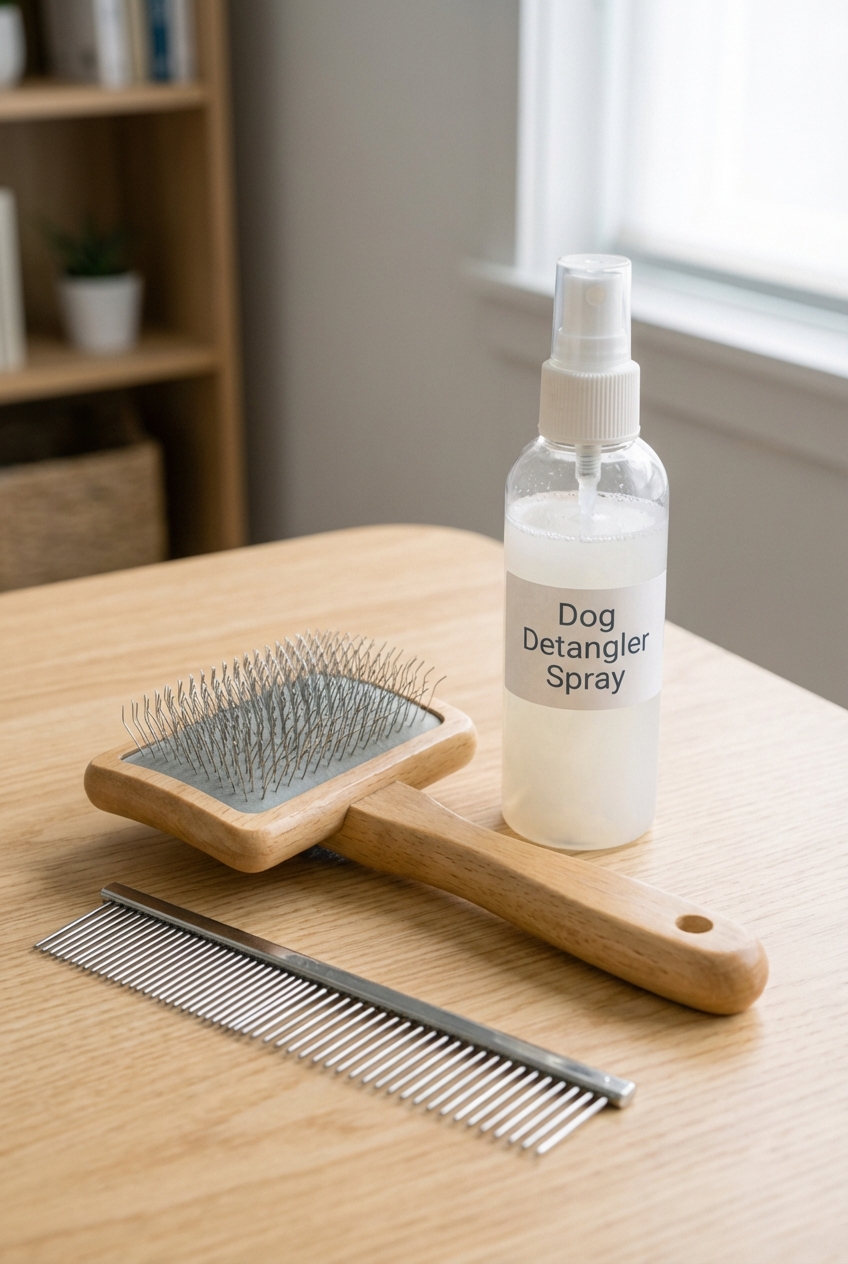
Tools that help: a slicker brush, a metal greyhound comb, detangling spray made for dogs, a mat splitter or dematting tool, and clippers if you have experience using them safely. If you are unsure about clippers, skip them and call a groomer.
Do not try at home
Some matting is not a DIY situation. It is safer and kinder to get professional help if:
- The coat is pelted (a dense sheet of matting over a large area).
- A mat is tight to the skin and you cannot lift it at all.
- You see or smell signs of skin trouble underneath (sores, scabs, oozing, dampness, strong odor).
- Mats are on ears, face, between toes, or in the armpits or groin, where skin is thin and easy to injure.
In these cases, a humane shave-down is often safer than prolonged dematting.
At-home method
Step 1: Find the edges
Use your fingers to feel where the mat starts and ends. Gently lift the mat away from the body, but do not pull hard. Your goal is to protect the skin underneath.
Step 2: Add slip
Mist a dog-safe detangling spray on the mat and surrounding coat. Let it sit for 30 to 60 seconds. This helps the hairs slide apart and reduces breakage.
Step 3: Hold the base
With one hand, pinch the hair closest to the skin at the base of the mat. This simple trick can dramatically reduce pain because you are not pulling directly on the skin.
Step 4: Split the mat
Use your fingers first. If needed, use a mat splitter or dematting tool to gently split the mat into smaller sections, working from the outside of the mat inward.
Safety tip: Keep tools as parallel to the coat as possible and angled away from the skin. If you cannot clearly see where the skin is, stop and call a pro.
Step 5: Brush ends first
Start brushing at the tip of the hair, not at the skin. Take tiny strokes. Once the ends loosen, you can move a little closer to the base. Finish by running a metal comb through the area. If the comb does not pass through smoothly, there is still tangling.
Step 6: Check the skin
Part the hair and look at the skin where the mat was. You want to see normal skin color and no broken skin. A little pinkness can happen from friction, but it should settle quickly.
Common mat spots
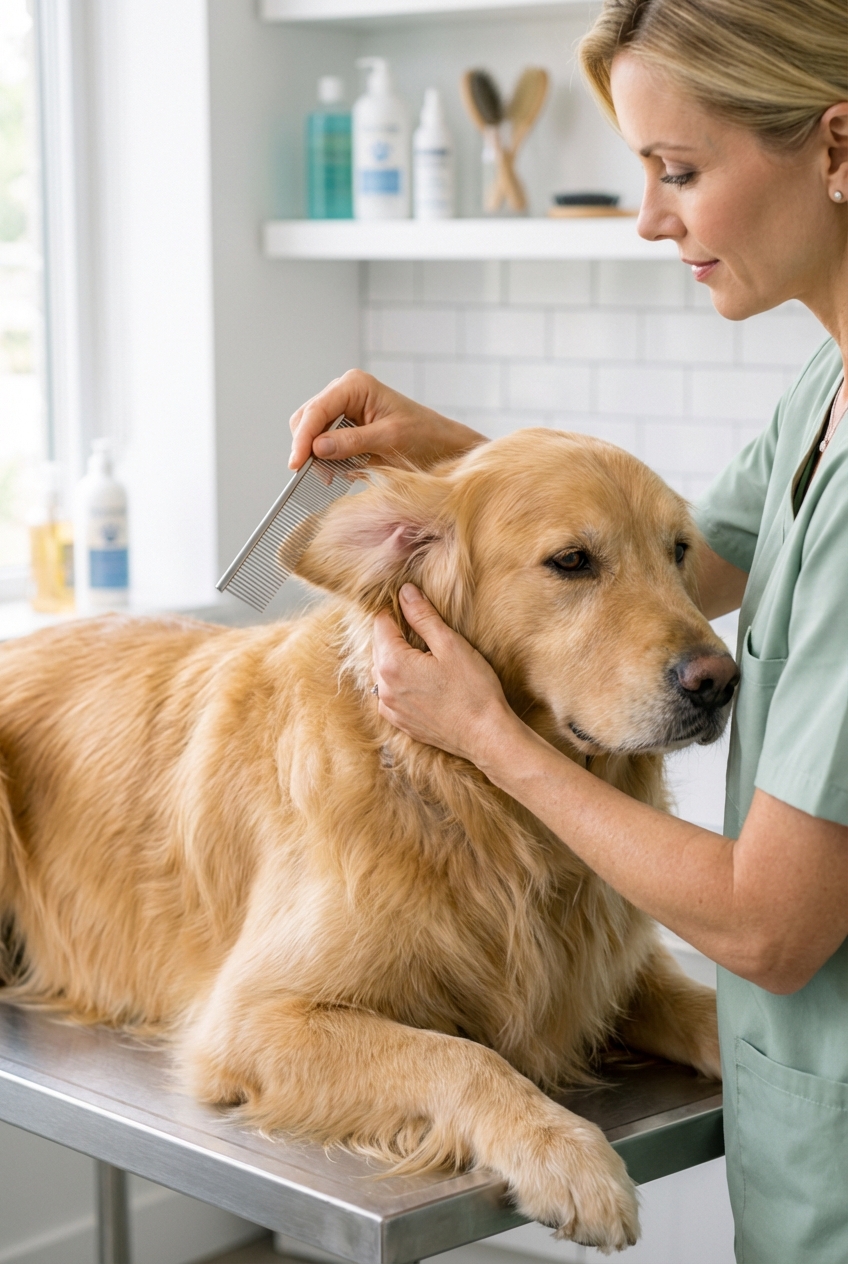
Behind the ears
These mats can be tender. Use extra detangler and go slowly. If the mat is tight and close to the skin, it is often kinder to have a groomer clip it out.
Under collars and harnesses
Remove the collar first. Then brush the coat flat and check for a band of matting. This is a classic spot where owners miss tangles until they are severe.
Armpits and inner thighs
These areas are high-risk for skin pinching, especially if you use scissors. If your dog has tight mats here, choose professional grooming or veterinary help rather than attempting a fast home fix.
Tail and feathering
Hold the tail hair at the base and work outward. Tails can be sensitive, and some dogs hate having them handled.
No scissors for mats
I know scissors seem like the fastest answer. But in vet clinics and grooming shops, we see too many mat cuts from well-meaning owners. Skin can fold into a mat, and it is surprisingly easy to cut skin without realizing it until you see blood.
If you must cut: only snip the very outermost hairs of a loose mat, and never cut near the skin. When in doubt, do not cut. Clippers used by a professional are much safer than scissors for tight mats.
Clippers: extra caution
If you attempt clipper work at home, be careful. It is easy to cause clipper burn or nicks, especially in thin-skin areas.
- Do not use a human razor on your dog.
- Avoid shaving tight mats with home clippers unless you truly know what you are doing.
- Use a guard comb when possible and never dig the blade into the coat.
- Check blade heat often. If it feels warm on your inner wrist, stop and let it cool.
- Blade lengths: very short blades (like a #10) are typically used by professionals for severe matting and are not beginner-friendly.
When to call a pro
Home dematting is best for light to moderate tangles. Get professional help if you notice any of the following:
- Mats are tight, large, or close to the skin (especially pelted coat).
- Your dog shows pain, growls, snaps, or cannot settle.
- You see sores, scabs, oozing, strong odor, or a damp area under the mat.
- Mats are in armpits, groin, face, ears, or between toes.
- Your dog is elderly, has arthritis, or cannot tolerate handling.
Veterinary note: Severe mat removal sometimes requires sedation for safety and to prevent suffering. That decision is made case by case by a veterinarian.
Prevent mats
Once mats are gone, prevention is where you win.
- Line brush 3 to 5 times per week for curly or doodle-type coats. Line brushing means brushing in small layers so you reach all the way down to the skin, not just the top fluff.
- Comb check in 60 seconds: behind ears, collar line, armpits, and tail base. If the comb catches, brush that spot right away.
- Dry thoroughly after baths and swims. Use a towel and a pet-safe dryer on low heat if your dog tolerates it.
- Schedule regular grooming based on coat type, often every 4 to 8 weeks.
- Use the right products: a light conditioning spray can reduce friction, especially for long coats.
If you remember one thing: mats are easier to prevent than to remove. A few minutes of brushing now can save a painful shave-down later.
FAQ
Can I use human conditioner or detangler?
It is better to use dog-formulated products. Dogs groom themselves, and their skin chemistry differs from ours. Choose a pet detangler labeled for dogs and avoid heavy fragrances if your dog has sensitive skin.
Should I brush my dog when the coat is wet?
Brushing a wet coat can increase breakage and tighten tangles. If you need to brush after bathing, use a dog conditioner and dry the coat most of the way first.
My dog hates brushing. What can I do?
Try shorter sessions, higher-value treats, and a gentler brush (some slickers are too sharp). If your dog is truly panicking, work with a groomer or your veterinary team to create a low-stress plan.