Deciding between a Belgian Malinois and a German Shepherd? Compare energy, temperament, exercise needs, trainability, shedding, health risks, and family fit�...
Article
•
Designer Mixes
German Shepherd Temperament, Training, and Health

Shari Shidate
Designer Mixes contributor
German Shepherd Dogs, often called GSDs, are famous for their intelligence, loyalty, and work ethic. They are also one of the most misunderstood breeds. A well-bred, well-socialized German Shepherd is typically steady, confident, and deeply devoted to their people. A bored, under-exercised, or poorly socialized Shepherd can become anxious, reactive, or destructive.
In this guide, I will walk you through temperament, training, exercise, grooming, and the big health concerns I see discussed most often in clinics, including hip dysplasia, degenerative myelopathy, and bloat. My goal is to help you decide if a German Shepherd truly fits your lifestyle, and if you already have one, to help you set them up for a long, healthy life.
At a glance
- Group: Herding
- Size: Large, athletic
- Life expectancy: Often around 9 to 12 years, with some living longer depending on genetics, lifestyle, and medical care
- Energy level: High
- Best for: Active households who enjoy training and structured routines
- Not ideal for: Low-activity homes, long workdays with little enrichment, or owners who want a “low maintenance” dog
Temperament: what German Shepherds are really like
German Shepherds are known for being:
- Highly intelligent: They learn patterns fast, including habits you did not mean to teach.
- People-focused: Many bond tightly to their family and prefer being near you.
- Protective and watchful: Protection behaviors can be an asset when guided, but a challenge when fear or over-arousal takes over.
- Driven to work: GSDs thrive when they have a job, whether that is training, nose work, hiking, or structured play.
Are they good family dogs?
Often, yes, especially when you prioritize socialization and clear rules. Many German Shepherds are gentle and affectionate with their “inner circle.” With children, I recommend supervision and training on both sides: teaching the dog to settle and teaching kids respectful handling. Because Shepherds are big and fast, they can accidentally knock over toddlers during excited play.
How do they do with other pets?
It depends on the individual dog, their genetics, and early exposure. Many do well with other dogs and cats when introduced properly. Some Shepherds can be selective with unfamiliar dogs, especially same-sex dogs, and some have a chase instinct with small animals.
Common behavior challenges
- Reactivity on leash: Often driven by frustration, fear, or lack of early exposure.
- Separation-related stress: Especially in dogs that are very bonded and under-enriched.
- Mouthiness as teens: Adolescence can be intense. Chewing and nipping need redirection, structure, and appropriate outlets.
- Alert barking: Manage with training, enrichment, and teaching a cue like “thank you” or “quiet.”
My favorite way to think about German Shepherd temperament is this: they are sensitive athletes with a strong sense of duty. When their body and brain needs are met, they are incredible companions.

Training: how to get the best from a German Shepherd
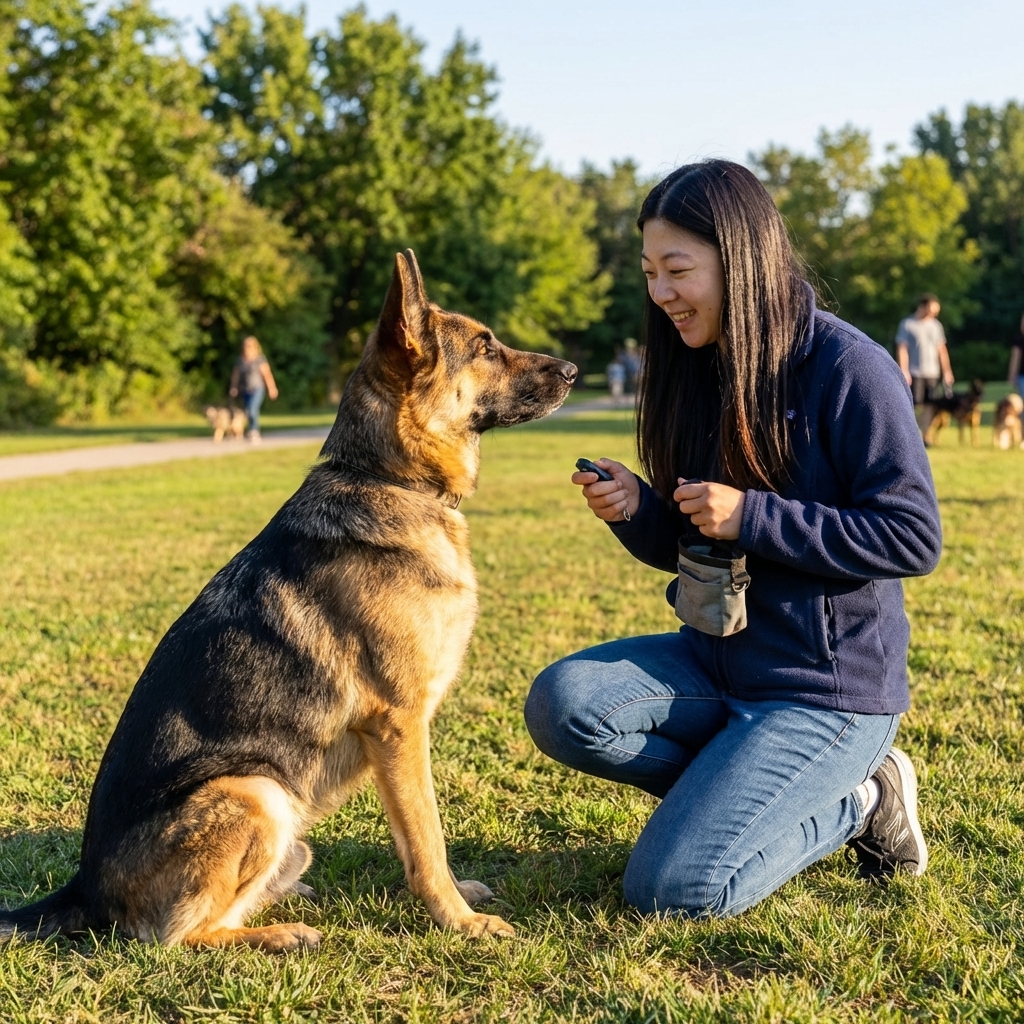
German Shepherds are usually eager learners, but they are not robots. They do best with kind, consistent, evidence-based training that uses rewards, structure, and clear communication. Heavy-handed methods can increase anxiety and defensive behavior, which is the opposite of what most families want.
Start with these foundations
- Socialization: From puppyhood through adolescence, aim for calm, positive exposures to people, dogs, sounds, surfaces, and environments. Socialization is not forcing greetings. It is teaching neutral, confident behavior.
- Marker training: A clicker or a consistent “yes” helps your Shepherd understand exactly what you are rewarding.
- Impulse control: Practice “sit to say please,” waiting at doors, “leave it,” and relaxed leash walking.
- Settle training: Teach a mat or bed cue so your dog can truly relax in a busy house.
Puppy timeline to know
- 8 to 16 weeks: Prime socialization window. Focus on gentle exposure and recovery after surprises, not endless greetings.
- 6 to 14 months: Adolescence. Expect testing boundaries, stronger reactions, and more intensity. Keep routines tight and rewards generous.
- Fear periods: Many puppies go through at least one stage where they startle more easily. If that happens, reduce pressure and build confidence with distance, treats, and repetition.
A simple weekly training plan
- Daily: 5 to 10 minutes of focused training, 1 to 2 times per day
- 3 times a week: A skill-building session like recall games, leash skills, or nose work
- 1 time a week: A new environment visit for calm exposure, like a quiet park or pet-friendly store
Great “jobs” for German Shepherds
- Nose work and scent games
- Obedience and rally
- Tracking
- Agility (with joint-friendly training and appropriate surfaces)
- Hiking with a well-fitted harness
- Therapy work for the right temperament
A quick enrichment example: the “find it” game
- Start in one room with your dog on leash or in a sit.
- Toss 3 to 5 pieces of kibble a few feet away and say “find it.”
- As they understand the game, hide food behind chair legs or under the edge of a mat.
- Keep it easy and end while they still want more.
If you are seeing growling, snapping, or escalating reactivity, reach out early to a qualified trainer who uses humane methods. Early support can prevent a small issue from becoming a serious one.
Exercise and enrichment: meeting their real needs
German Shepherds need both physical exercise and mental enrichment. A long run can still leave a Shepherd restless if their brain is under-stimulated.
Typical adult needs
- Physical: Many adults do well with about 60 to 120 minutes per day total, split into sessions. Working lines, young adults, and high-drive individuals may need more. Seniors and dogs with arthritis may need less but still benefit from daily movement.
- Mental: Short training sessions, puzzle feeding, sniff walks, and problem-solving games
Joint-friendly ideas
- Sniff walks where your dog can investigate at their pace
- Nose work searches at home using treats or kibble
- Low-impact fetch on soft ground with a “drop” cue and short reps
- Swimming, if your dog enjoys it and safety is managed
Puppy note: Avoid repetitive high-impact exercise while your puppy is growing. Your veterinarian can help you choose age-appropriate activity levels.
Heat and safety
Shepherds are tough, but heat illness can sneak up fast. In warm weather, prioritize early-morning or evening activity, offer shade and water, and watch for heavy panting, glassy eyes, or slowing down. When in doubt, stop and cool them down.
Grooming: shedding, coats, and skin care
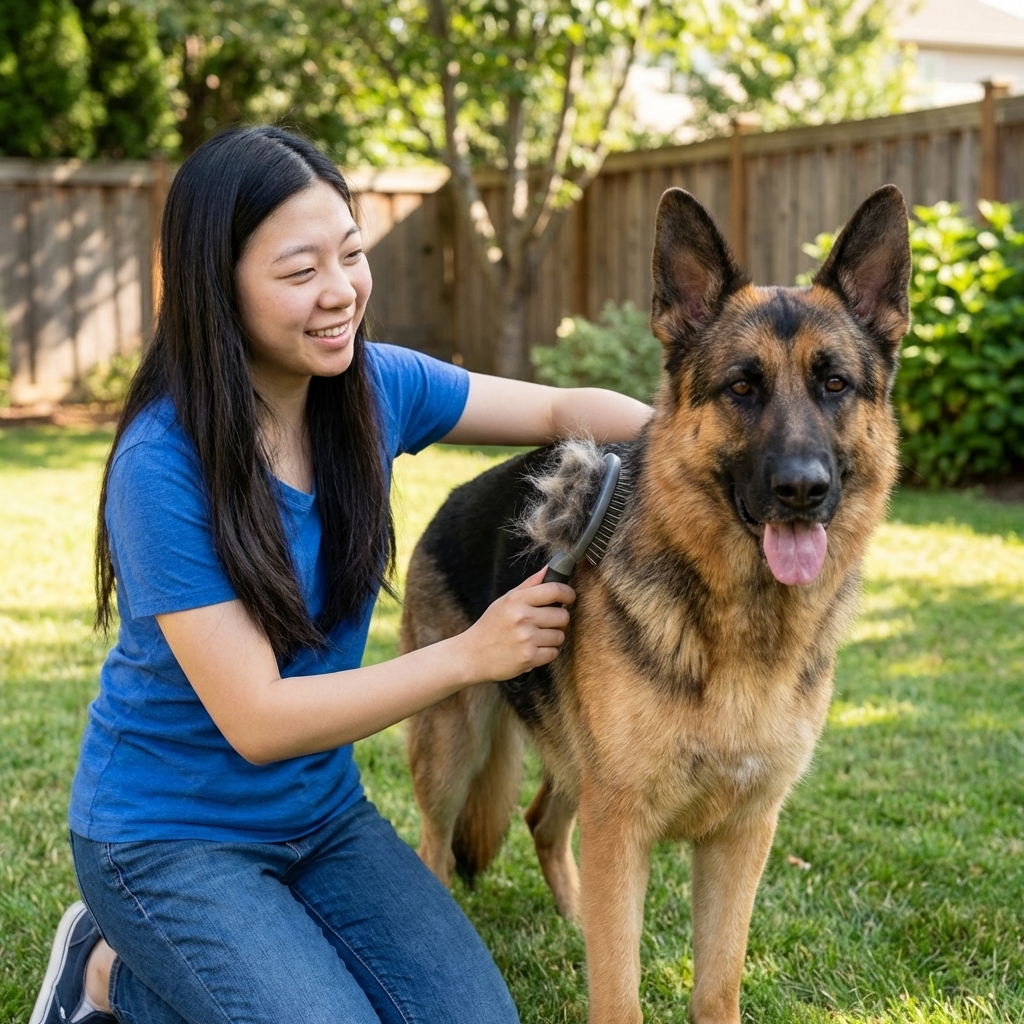
German Shepherds have a double coat and shed year-round, with heavier seasonal “blowouts.” Grooming is not just cosmetic. It helps with skin health and lets you catch lumps, hot spots, parasites, or ear issues early.
Grooming routine
- Brushing: 2 to 4 times per week, daily during heavy shedding
- Bathing: Every 4 to 8 weeks, or as needed using a dog-safe shampoo
- Nails: Trim every 2 to 4 weeks
- Ears: Check weekly and clean if recommended by your vet
- Teeth: Brush several times a week if possible, daily is ideal
Health guide: key issues to know
No breed is “guaranteed” to be healthy, but German Shepherds do have known risk areas. Smart prevention starts with responsible breeding, maintaining a lean body condition, appropriate exercise, and prompt veterinary care when something feels off.
Hip and elbow dysplasia
Hip dysplasia is a developmental condition where the hip joint does not fit together as well as it should. Over time, it can lead to arthritis and pain. Elbow dysplasia is another common orthopedic issue in large breeds and can cause chronic front-limb lameness.
- Signs to watch for: stiffness after rest, difficulty rising, bunny-hopping gait, reluctance to jump or climb stairs, decreased activity, limping (especially after exercise)
- Risk reducers: keep your dog lean, use joint-friendly exercise, avoid overdoing high-impact activity in growing dogs, and discuss joint supplements with your veterinarian
- What breeders should do: screen breeding dogs with orthopedic evaluations such as OFA or PennHIP and share results
Degenerative myelopathy (DM)
Degenerative myelopathy is a progressive neurologic disease that affects the spinal cord, typically in older dogs. It often begins with hind-end weakness and coordination changes.
- Signs to watch for: dragging toes, scuffing nails, wobbliness in the back legs, difficulty standing, worsening weakness over time
- Testing and diagnosis: The common DNA test looks for a SOD1 mutation associated with increased risk, but it does not confirm DM. In practice, DM is often a diagnosis of exclusion because other spinal conditions can look similar.
- Support: physical therapy, mobility support devices, and home modifications can improve quality of life
Bloat and gastric dilatation-volvulus (GDV)
Bloat is often used to describe a distended, gas-filled stomach, which can range from mild to serious. GDV is the life-threatening emergency where the stomach dilates and twists, cutting off blood supply. Deep-chested breeds like German Shepherds are at higher risk.
- Emergency signs: repeated unproductive retching, a tight or enlarged abdomen, sudden restlessness, drooling, rapid breathing, collapse
- What to do: go to an emergency vet immediately. This is not a “wait and see” situation.
- Prevention discussion: Ask your veterinarian about feeding routines and whether a prophylactic gastropexy makes sense, especially if your dog is already having surgery for something else.
Other concerns seen in Shepherds
- Allergies and skin issues: ear infections, itching, hot spots, chronic otitis
- Digestive sensitivity: stress colitis, food sensitivity in some individuals
- Exocrine pancreatic insufficiency (EPI): less common, but a known breed risk; causes weight loss and chronic loose stool despite a good appetite
- Pannus (chronic superficial keratitis): an eye condition seen in the breed that can worsen with UV exposure; early vet care helps protect vision
- Perianal fistulas: a painful chronic condition more common in GSDs than many breeds; early intervention matters
Evidence-based tip: Keeping your German Shepherd at a healthy, lean weight is one of the most powerful things you can do for joints, endurance, and long-term comfort.
Nutrition basics for a healthy Shepherd
German Shepherds do best on a complete and balanced diet that supports lean muscle and joint health. The “best” food depends on your dog’s age, activity, medical history, and gut tolerance. If you want to explore fresh or homemade options, do it with guidance so the diet stays nutritionally complete.
Helpful nutrition habits
- Prioritize leanness: You should be able to feel ribs easily with a thin layer of fat.
- Choose appropriate calories: Overfeeding is one of the quickest paths to joint strain.
- Use enrichment feeding: Puzzle toys and scatter feeding add mental work without extra calories.
- Talk supplements with your vet: Fish oil and joint supplements can be helpful for some dogs, but dosing matters.
If your Shepherd has chronic loose stool, recurring ear infections, or itching, ask your veterinarian about a structured diet trial rather than switching foods repeatedly. That is usually faster and more reliable.
Lines and drive: what to expect
Not all German Shepherds are built the same. Line and breeding goals can strongly influence energy level, intensity, and sensitivity.
- Working lines: Often higher drive, more stamina, and more need for daily training plus a real outlet (sport, tracking, structured work).
- Show lines: Often a bit more moderate, though still active and trainable. Temperament varies widely by breeder.
- What matters most: A breeder (or rescue) who can describe the parents, typical off switch, environmental stability, and how the dogs do in real homes.
German Shepherd vs similar working breeds
If you are considering a German Shepherd, it helps to compare them to a few other popular working breeds. Individual temperament varies, but these are common patterns owners notice.
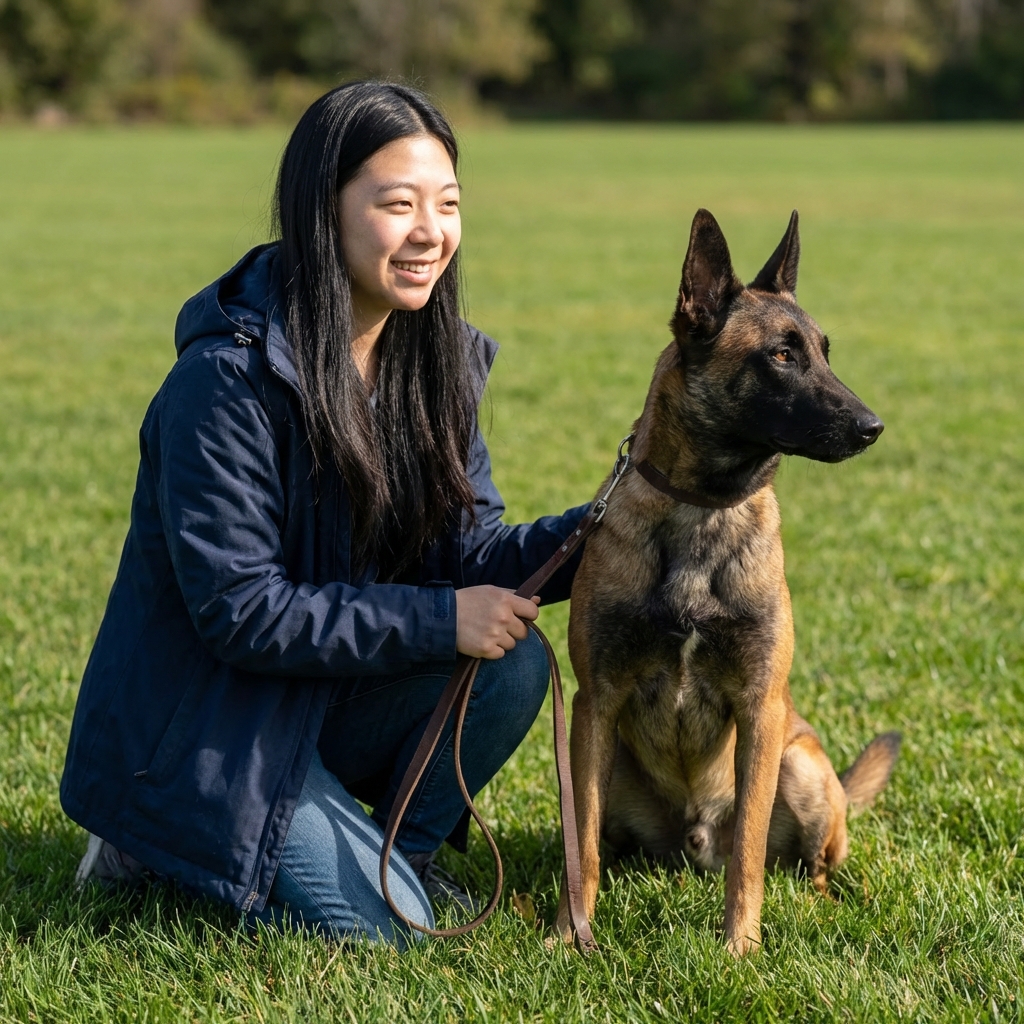
German Shepherd vs Belgian Malinois
- Drive and intensity: Malinois are often higher drive and more intense. Many need a serious “job” and experienced handling.
- Off switch: A well-bred, well-trained GSD often settles more easily in a family home.
- Best fit: GSDs are commonly a better match for active families who want a trainable companion, while Malinois often fit sport, protection, or professional working homes.
German Shepherd vs Doberman Pinscher
- Temperament: Both can be loyal and protective. Dobermans are often more sleek and fast-paced in movement, with a strong velcro-dog tendency.
- Grooming: Dobermans typically have lower grooming needs than GSDs, though they still shed.
- Health notes: Dobermans have notable risks like dilated cardiomyopathy, while GSDs are known more for joints, GI sensitivity, and DM risk.
German Shepherd vs Labrador Retriever
- Sociability: Labs are often more universally social with strangers and dogs.
- Protectiveness: GSDs tend to be more naturally watchful.
- Training style: Both are trainable, but GSDs can be more environmentally sensitive and may need more careful socialization.
Is a German Shepherd right for you?
A German Shepherd may be a great fit if you want a dog who:
- enjoys training and thrives on routine
- wants to be close to the family
- can join you for daily exercise and weekend adventures
- benefits from structure and clear expectations
You may want to choose a different breed or an older, calmer individual if you:
- prefer a low-shedding, low-grooming dog
- cannot commit to daily mental and physical exercise
- have frequent visitors and do not want to manage alert barking and guarding tendencies
- are not prepared to invest in training and socialization
If you adopt or buy, look for these green flags
- Breeder: health testing, stable temperaments, and transparency about lines and outcomes
- Rescue: foster-based insights, behavioral notes, and support after adoption
- In the dog: curiosity, recovery after surprises, willingness to engage with people, and comfort with handling
When you meet a German Shepherd that is mentally fulfilled and well-guided, you can feel it. They are present, tuned in, and ready to partner with you. That is the magic of this breed.
Quick safety checklist
- Schedule regular wellness visits and keep vaccines and parasite prevention current.
- Keep your Shepherd lean and strong with controlled exercise.
- Learn the emergency signs of GDV and know your nearest 24-hour ER.
- Prioritize early socialization and ongoing training through adolescence.
- Use secure fencing and a sturdy leash setup. Shepherds are fast and powerful.
- Adjust exercise for heat and humidity, and plan cool-down breaks.