Dog gagging can be harmless or urgent. Learn key signs of choking vs gagging, common causes like reverse sneezing and cough, and when to call your vet or go ...
Article
•
Designer Mixes
Gagging in Dogs: Causes, When to Worry, and Treatment

Shari Shidate
Designer Mixes contributor
Hearing your dog gag can be unsettling, especially when it seems to come out of nowhere. In many cases, gagging is caused by something minor like eating too fast or a tickle in the throat. Other times, it can be an early sign of an issue that needs prompt veterinary care.
In this guide, I will walk you through the most common causes of gagging in dogs, the red flags that deserve urgent attention, and practical steps you can take at home to support your dog safely.

What gagging looks like
Owners often describe gagging as retching, hacking, choking, or trying to vomit without bringing anything up. It can be brief and occasional, or frequent and distressing.
Gagging vs vomiting
- Gagging or retching: Your dog may extend the neck, make repeated throat movements, and cough or heave, often with little or no material produced.
- Vomiting: Usually includes stronger abdominal contractions and the expulsion of food, fluid, or foam.
Gagging vs coughing
- Gagging: Often seems to originate in the throat and may look like your dog is trying to clear something.
- Coughing: More chest-based, may be dry and repetitive, and can sometimes end in a gag.
Gagging vs regurgitation
Regurgitation is another common look-alike. It is more passive than vomiting and often happens soon after eating or drinking. Food or water may come back up with minimal effort, sometimes in a tube shape. If you are seeing repeated “easy” bring-ups along with gagging, your vet may want to evaluate the esophagus.
If you are unsure which it is, a short video of the episode can be extremely helpful for your veterinarian.
Common causes
Gagging is a symptom, not a diagnosis. The right next step depends on the pattern, your dog’s overall behavior, and any accompanying symptoms.
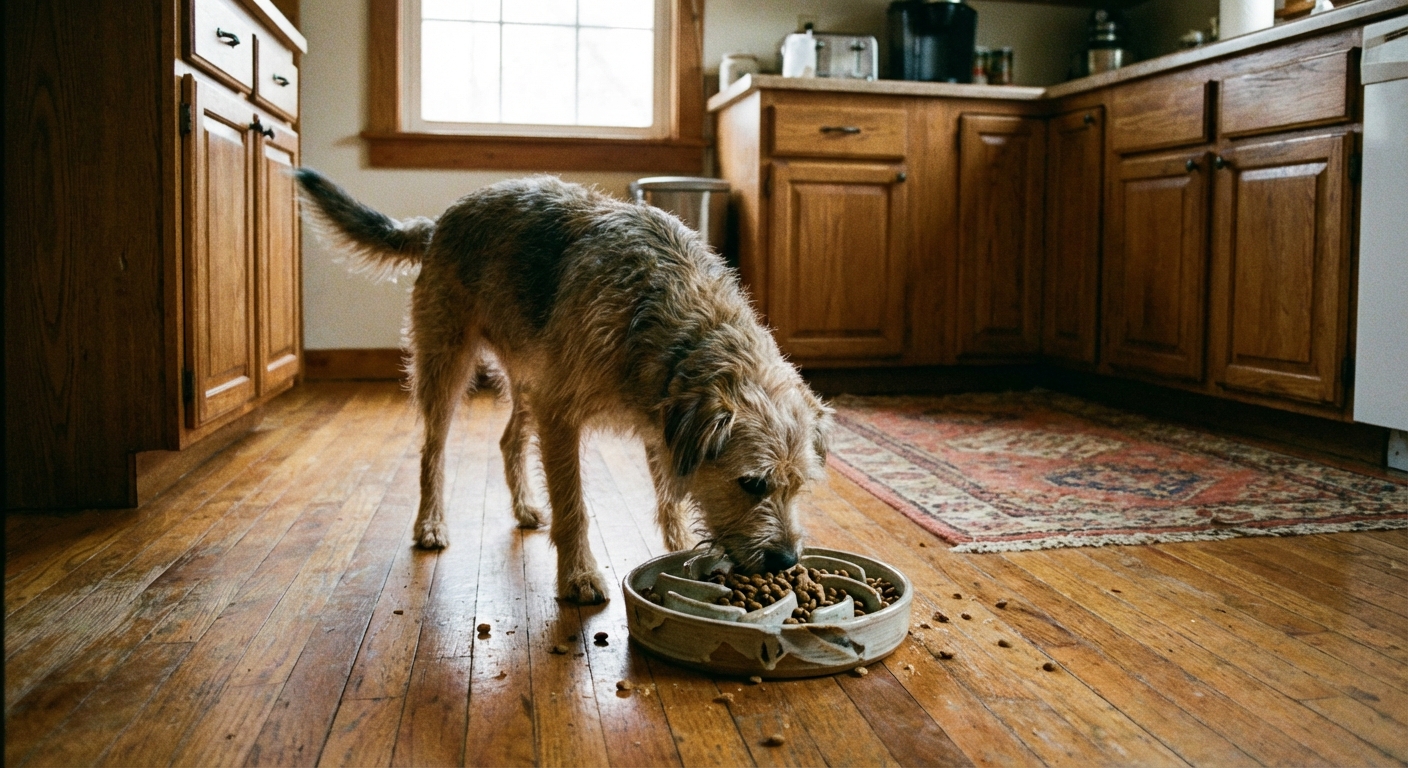
Eating too fast
Dogs that gulp meals may gag during or shortly after eating. This can happen from swallowing large pieces of food, taking in excess air, or mild irritation of the throat.
- Clues: Happens around mealtimes, improves quickly, dog otherwise acts normal.
- Helpful tip: A slow-feeder bowl or puzzle feeder often reduces episodes.
Reverse sneezing
Reverse sneezing can look dramatic and is commonly mistaken for choking. Dogs suddenly inhale forcefully, extend their neck, and make snorting sounds. Some dogs will gag at the end of the episode.
- Clues: Episodes last seconds to a minute, dog recovers quickly, often triggered by excitement, pulling on the leash, or irritants.
- Good to know: It is often benign, but if it is new, frequent, or getting worse, schedule an exam to rule out nasal irritation, infection, or other airway issues.
Throat irritation
Dust, smoke, strong fragrances, grass, and seasonal allergies can irritate the throat. Some dogs gag after drinking water too quickly or after barking a lot.
- Clues: Mild throat clearing, occasional gagging, sneezing or watery eyes if allergies are involved.
Respiratory infections
Infectious tracheobronchitis, often called kennel cough, can cause a dry, honking cough that may end with gagging or retching. Other respiratory infections can behave similarly.
- Clues: Recent boarding, grooming, daycare, or dog park exposure; persistent cough; possible nasal discharge.
Something stuck
Sticks, bones, rawhide pieces, toys, and even plant material can become lodged. This is one of the situations where you should be especially alert.
- Clues: Sudden onset; pawing at the mouth; drooling; repeated swallowing; distress; refusal to eat.
Reflux or nausea
Just like people, dogs can experience reflux or nausea that leads to lip licking, swallowing, and gagging. This may happen first thing in the morning, after certain medications, or after eating foods that do not agree with them. Rich or fatty foods may worsen stomach upset in some dogs.
- Clues: Gagging with lip licking, drooling, grass eating, or burping; sometimes yellow foam vomit.
Dental or oral pain
Severe tartar, gingivitis, abscesses, broken teeth, or oral sores can cause drooling, reluctance to chew, and gagging, especially when eating.
- Clues: Bad breath, pawing at the face, dropping food, chewing on one side.
Tonsils and throat disease
Tonsillitis, pharyngitis, and other throat inflammation can cause gagging, repeated swallowing, and discomfort, sometimes along with coughing.
- Clues: Frequent swallowing, reluctance to eat hard kibble, bad breath, sensitivity when the throat area is touched.
Collapsed trachea
Small breeds are more prone to tracheal collapse, which can cause a characteristic honking cough that may end with gagging.
- Clues: Small breed, worse with excitement, heat, or pulling on a collar.
Heart-related cough
Coughing that sometimes ends in gagging can be associated with heart enlargement or congestive heart failure in some dogs. That said, many coughing dogs have airway or lung disease instead of a heart problem. A veterinary exam is the best way to sort this out.
- Clues: Coughing at night or after exercise, reduced stamina, fainting episodes, belly swelling, fast or labored breathing.
Laryngeal paralysis
Older, large-breed dogs can develop laryngeal paralysis, where the airway does not open properly during breathing. This can cause gagging, noisy breathing, and exercise intolerance, especially in warm weather.
- Clues: Noisy breathing (often worse with exercise or heat), voice change, struggling on walks, episodes of distress.
Mouth or throat masses
Growths in the mouth, throat, or upper airway can cause chronic gagging or worsening symptoms over time.
- Clues: Progressive gagging, weight loss, bad breath, drooling, visible swelling, difficulty eating or swallowing.
When to worry
Occasional mild gagging can be normal. But certain signs suggest choking, serious respiratory disease, bloat, toxicity, or another emergency.
Go to emergency care now if you see:
- Trouble breathing, blue or gray gums, or severe wheezing
- Repeated gagging with distress and inability to settle
- Unproductive retching (repeated heaving with little or nothing coming up), especially with a swollen or painful abdomen (possible bloat)
- Restlessness, pacing, severe drooling, or signs of abdominal pain along with retching (possible bloat)
- Collapse, extreme weakness, or confusion
- Suspected foreign object or choking after chewing bones, sticks, toys, or rawhide
- Vomiting blood, coughing blood, or black tarry stool
- Severe drooling or pawing at the mouth with sudden onset
If your dog cannot breathe comfortably, treat it as an emergency. Time matters with choking and bloat.
If you suspect choking and your dog is in distress, go to an emergency clinic. Do not attempt deep throat sweeps.
What you can do at home
These steps can help when your dog is stable, breathing comfortably, and the gagging is mild or occasional. If you see any red flags above, skip home care and contact a veterinarian immediately.
1) Check the environment
- Move your dog away from smoke, dust, aerosols, and strong cleaning products.
- Offer fresh water, but do not force drinking.
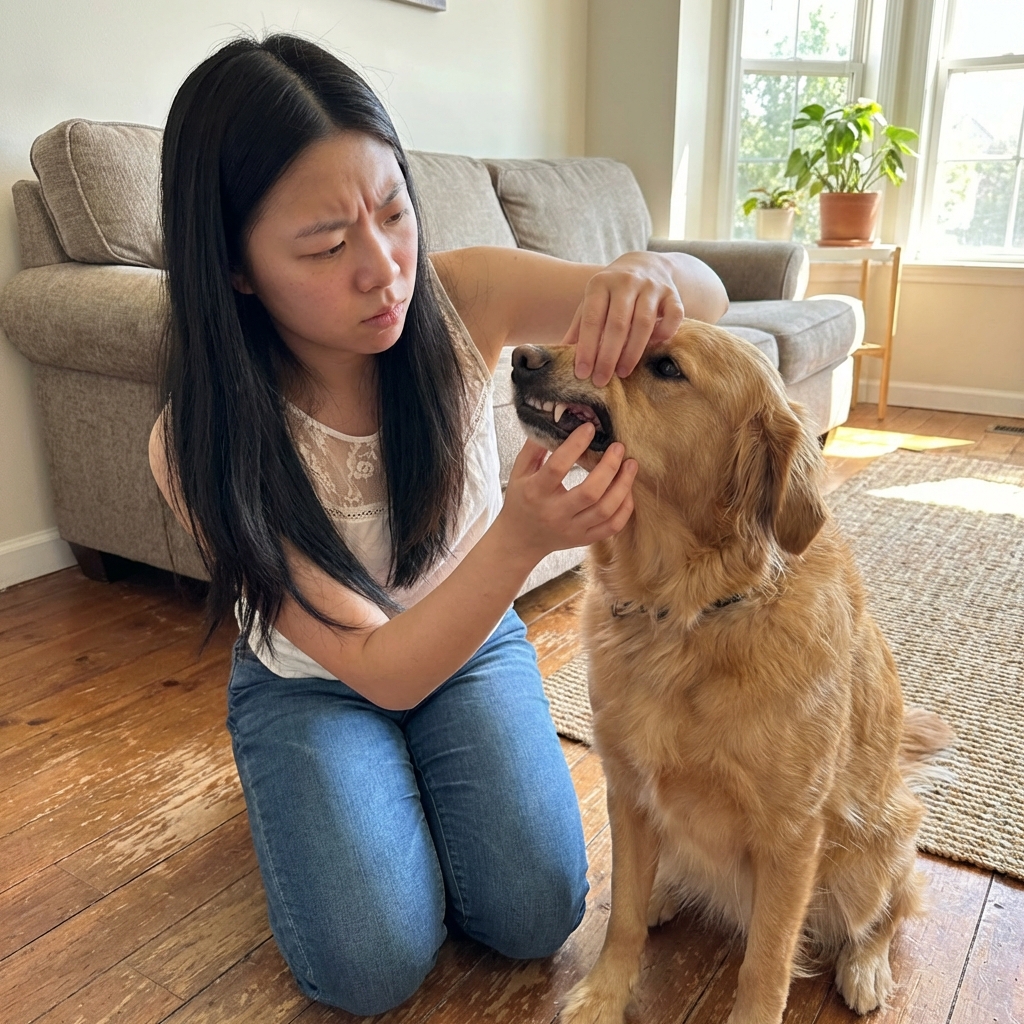
2) Look in the mouth only if safe
If your dog is calm and allows handling, you can gently lift the lips and look for obvious objects. Do not put your fingers deep into the throat. A frightened dog can bite, and pushing an object further down can make things worse.
3) Support calm breathing
- Keep activity low.
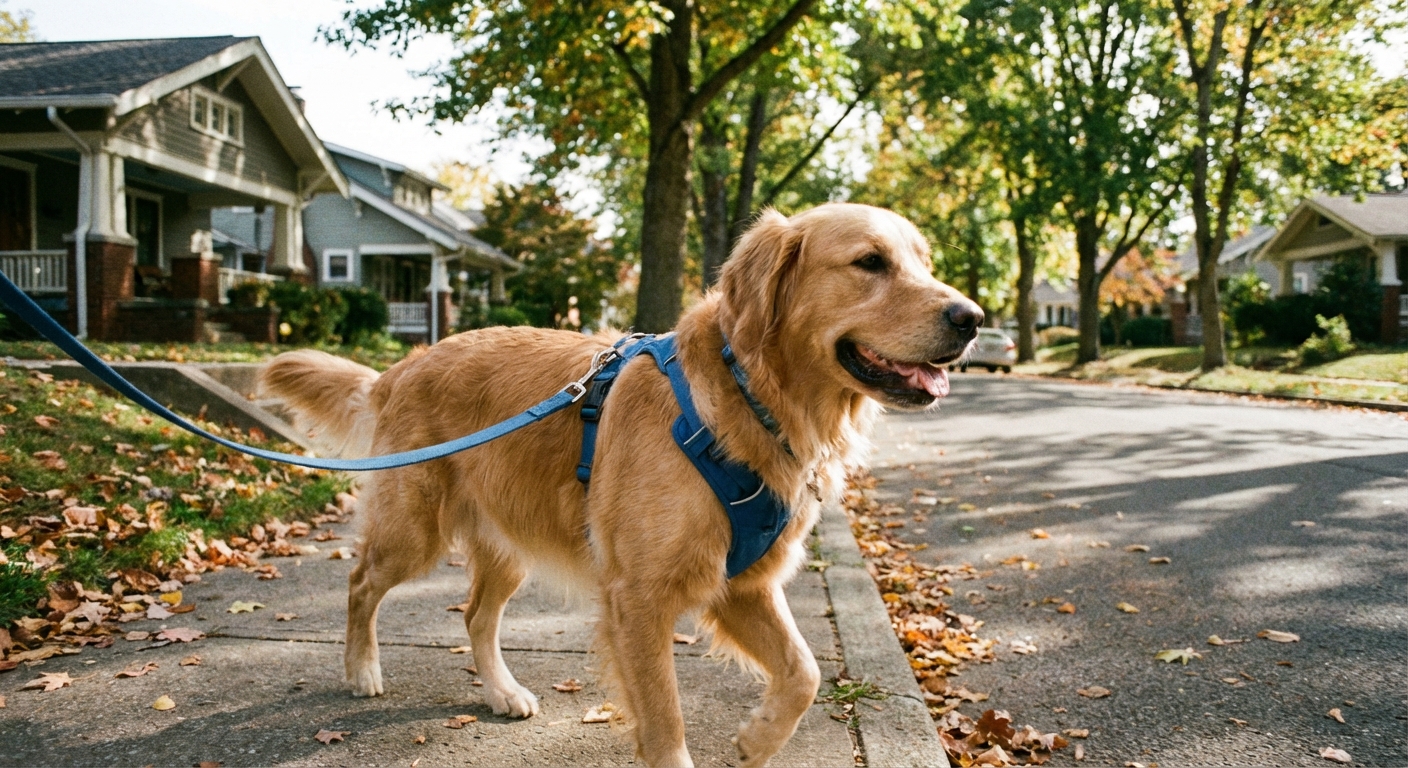
- Use a harness instead of a collar if coughing or gagging seems worse on walks.
4) Adjust feeding habits
- Try smaller, more frequent meals.
- Use a slow-feeder bowl if gulping is the trigger.
- Avoid rich table scraps if nausea seems involved.
5) Track the pattern
Write down: time of day, relation to eating, drinking, or exercise, exposure to other dogs, and whether there is coughing, vomiting, regurgitation, nasal discharge, or appetite changes. This information helps your vet narrow the cause quickly.
6) Know when to monitor vs book a visit
If gagging happens after drinking water, eating too fast, or excitement and your dog returns to normal quickly, video it and monitor. If it is new, happening more often, or paired with coughing, low energy, appetite changes, or noisy breathing, schedule an exam.
Medication note: Do not give human antacids, cough meds, or other over-the-counter medications unless your veterinarian tells you exactly what to use and how to dose it.
What your vet may check
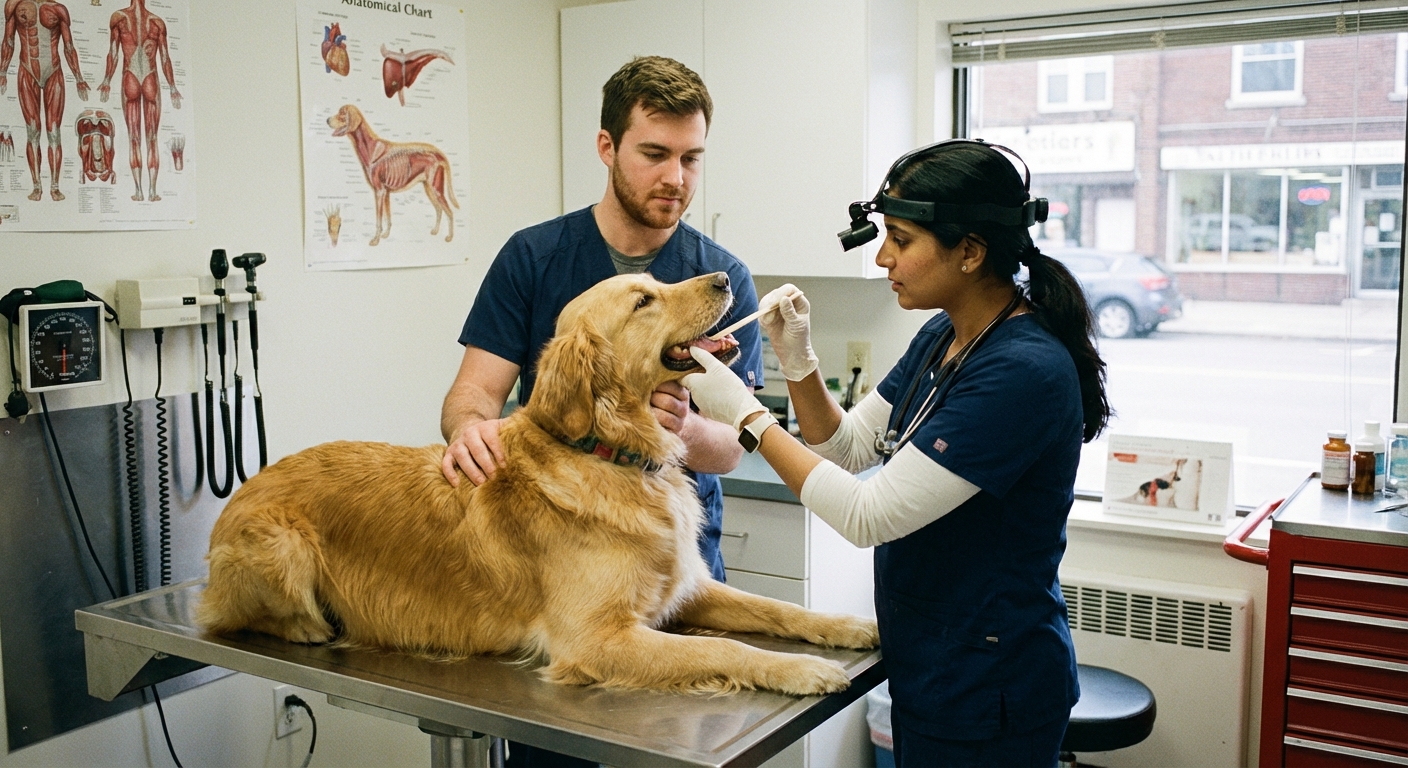
Because gagging can come from the throat, lungs, heart, mouth, esophagus, or stomach, your veterinarian may recommend a step-by-step approach based on your dog’s exam.
- Physical exam: listening to heart and lungs, throat palpation, gum color, hydration.
- Oral exam: checking teeth and looking for foreign material or masses.
- Chest X-rays: helpful for pneumonia, heart size, tracheal issues, and some foreign objects.
- Neck X-rays: can show tracheal problems or some lodged items.
- Bloodwork: evaluates infection, inflammation, and organ function.
- Fecal testing: may be recommended when lungworms or other respiratory parasites are a concern (regionally relevant).
- Endoscopy or sedation: may be recommended if a foreign body is suspected or deeper inspection is needed.
Treatment options
The best treatment is targeted. Here are common veterinary approaches, depending on what is found.
Foreign object
- Removal with tools, endoscopy, or surgery depending on location.
- Pain control and medications to reduce inflammation or prevent infection.
Respiratory infection
- Rest and isolation from other dogs.
- Cough suppressants in select cases.
- Antibiotics if bacterial infection is suspected, especially with fever or pneumonia risk.
Reflux or nausea
- Diet changes and meal timing adjustments.
- Anti-nausea medications or acid reducers when appropriate.
- Review of treats and medications that may trigger symptoms.
Collapsed trachea
- Weight management and harness use.
- Medications to reduce cough and airway inflammation.
- In severe cases, specialist procedures may be discussed.
Dental disease
- Professional dental cleaning and treatment of painful teeth.
- At-home dental care plan for long-term prevention.
Prevention tips
In preventive care, small, consistent habits can add up over time. The same idea applies to keeping your dog’s mouth, throat, and airway as irritation-free as possible.
- Feed safely: choose appropriately sized kibble, supervise chews, and avoid brittle cooked bones.
- Slow down fast eaters: slow feeders and puzzle toys reduce gagging from gulping.
- Use a harness: especially for small breeds prone to tracheal irritation.
- Keep vaccines current: ask your vet about Bordetella and other respiratory protection based on your dog’s lifestyle.
- Protect the airway: limit smoke exposure and strong household sprays.
- Prioritize dental care: regular brushing and vet dental exams help prevent oral pain and gagging.
Call the vet today?
Consider contacting your veterinarian within 24 hours if:
- Gagging happens more than once a day or is worsening
- There is ongoing coughing, nasal discharge, or fever
- Your dog is eating less, seems nauseated, is regurgitating, or is unusually tired
- Symptoms started after chewing toys, sticks, bones, or rawhide
- Your dog is older or has known heart or airway issues
If you are ever on the fence, it is worth calling. A quick conversation can help you decide whether to monitor, schedule a visit, or head to urgent care.
Final thoughts
Gagging in dogs is common, and many causes are mild and manageable. The key is recognizing patterns and acting quickly when there are warning signs. Trust your instincts. You know your dog’s normal best, and prompt care can prevent small issues from becoming big ones.
Medical disclaimer: This article is for general informational purposes and is not a substitute for veterinary diagnosis or treatment.