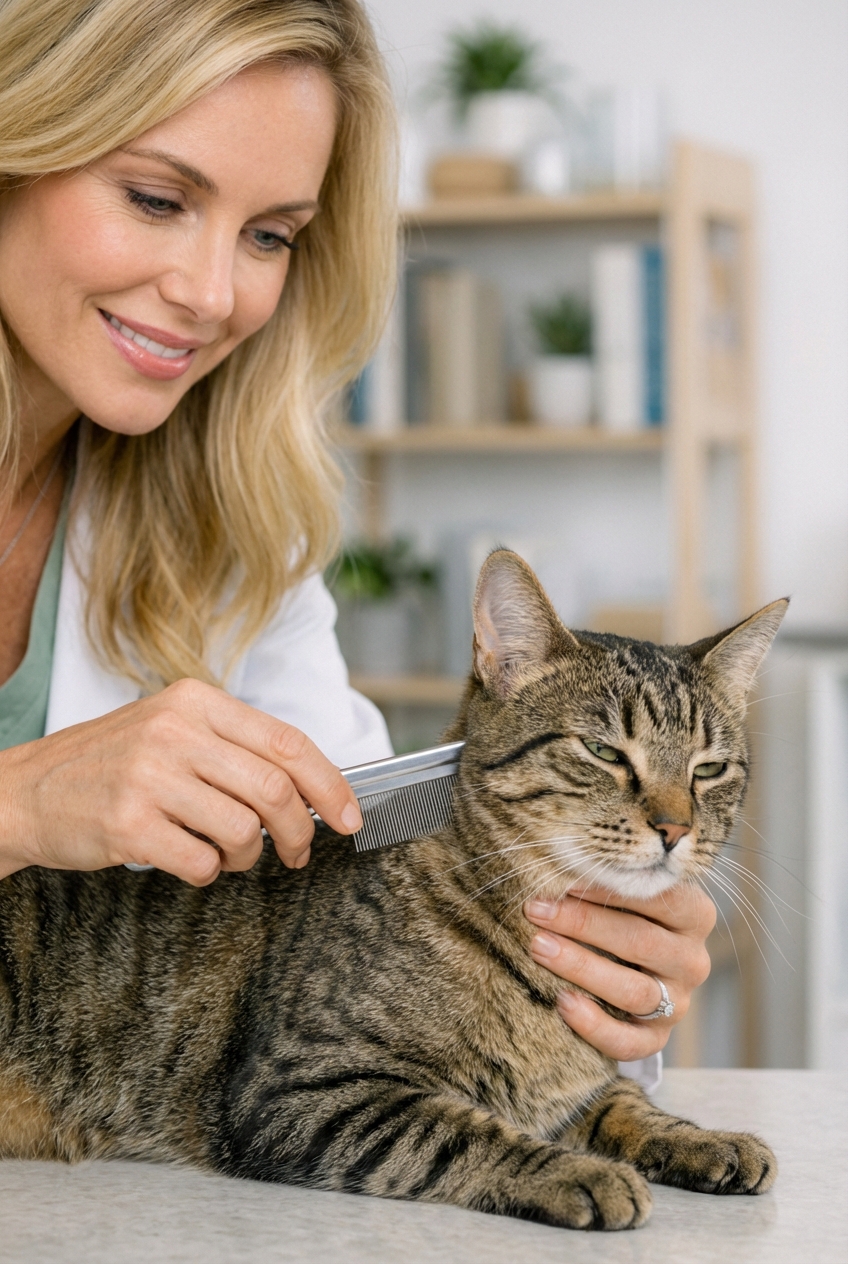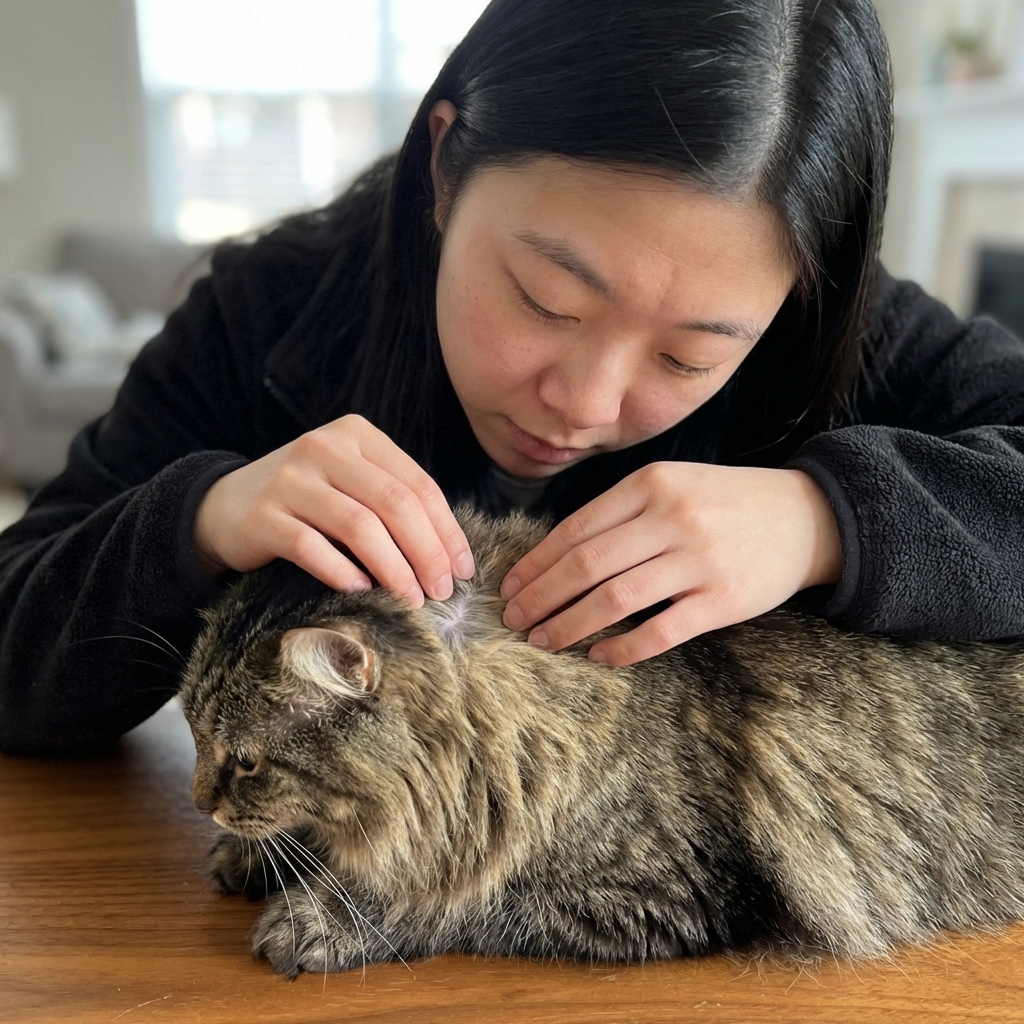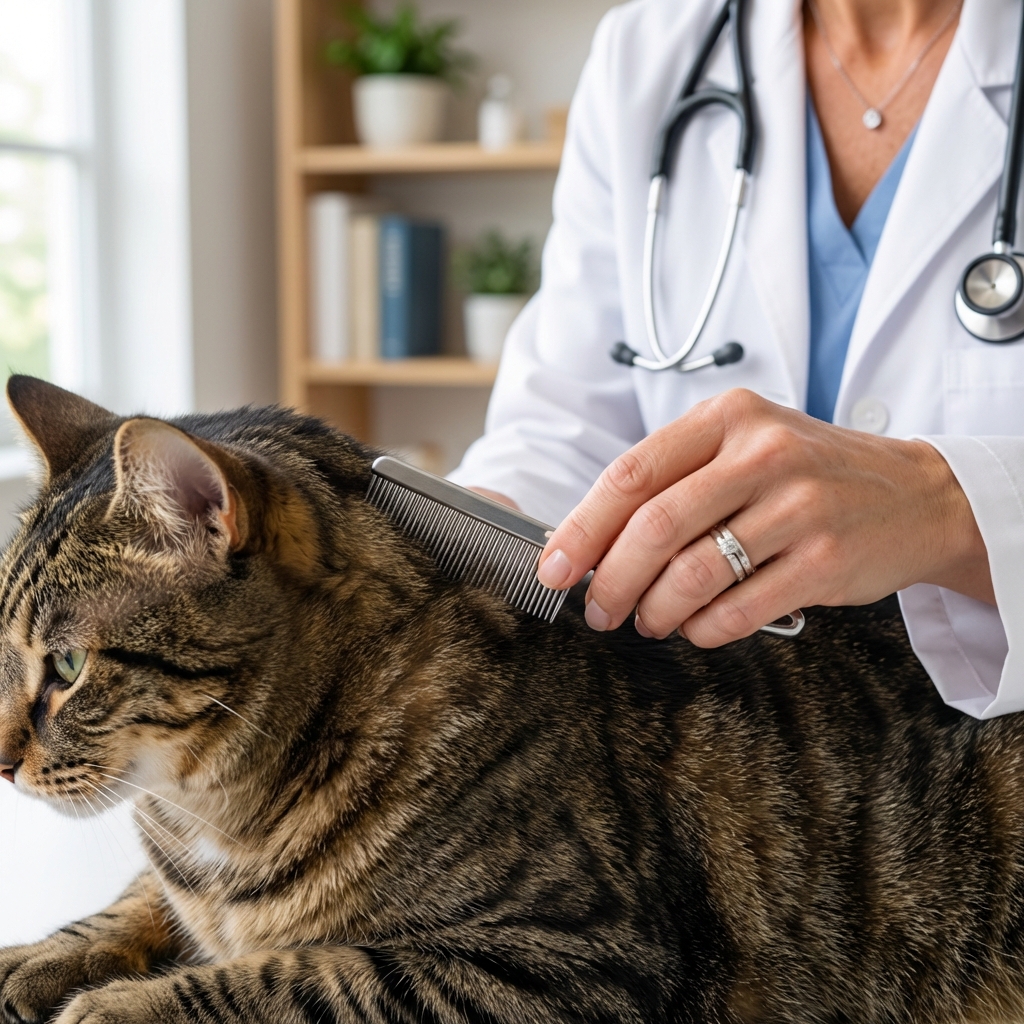
Think your cat has fleas? Learn the top signs, how to confirm with a flea-comb and wet paper towel test, plus safe treatment steps, home cleanup, and prevent...
Article
•
Designer Mixes
Fun Ways to Check Your Cat for Fleas

Shari Shidate
Designer Mixes contributor
Fleas are tiny, fast, and frustrating, but checking your cat does not have to be a battle. With the right timing, a calm setup, and a few simple tools, you can spot fleas early and keep your home and your cat comfortable. I am a veterinary assistant in Frisco, Texas, and I can tell you this: the best flea plan is the one you can actually do consistently.
Quick note: This article is for general education and does not replace veterinary advice. If you are unsure what you are seeing, call your veterinarian.

Quick flea facts
Adult fleas live on your pet and are the ones that bite, but much of the flea population often lives off your pet as eggs, larvae, and pupae in carpet, bedding, and furniture. That is why prevention and cleanup both matter.
- Fleas can cause more than itching. They can trigger skin infections from overgrooming and scratching, and some cats develop flea allergy dermatitis where even a few bites cause intense irritation.
- Fleas can contribute to tapeworms. Cats can get tapeworms (often Dipylidium caninum) if they swallow an infected flea during grooming.
- Indoor cats can still get fleas. Fleas usually come from other animals or an infested environment, but they can also be carried indoors on people or items.
Prevention products and flea life cycles vary, but the big takeaway is simple: if you are late with prevention or skip doses, fleas can rebound quickly.
Keep it low-stress
The goal is a calm cat, a short check, and a positive ending. Think of it like a quick, gentle grooming session.
Set the scene
- Pick a time when your cat is naturally relaxed, like after a meal or a play session.
- Use a non-slip surface like a towel on your lap or a table.
- Keep the session short. Even 60 to 90 seconds is useful.
Reward well
- Offer lickable treats, a favorite toy, or gentle cheek scratches.
- End with something your cat loves so the routine becomes predictable and positive.
What you need
You do not need a ton of equipment. These basics help you find evidence quickly.
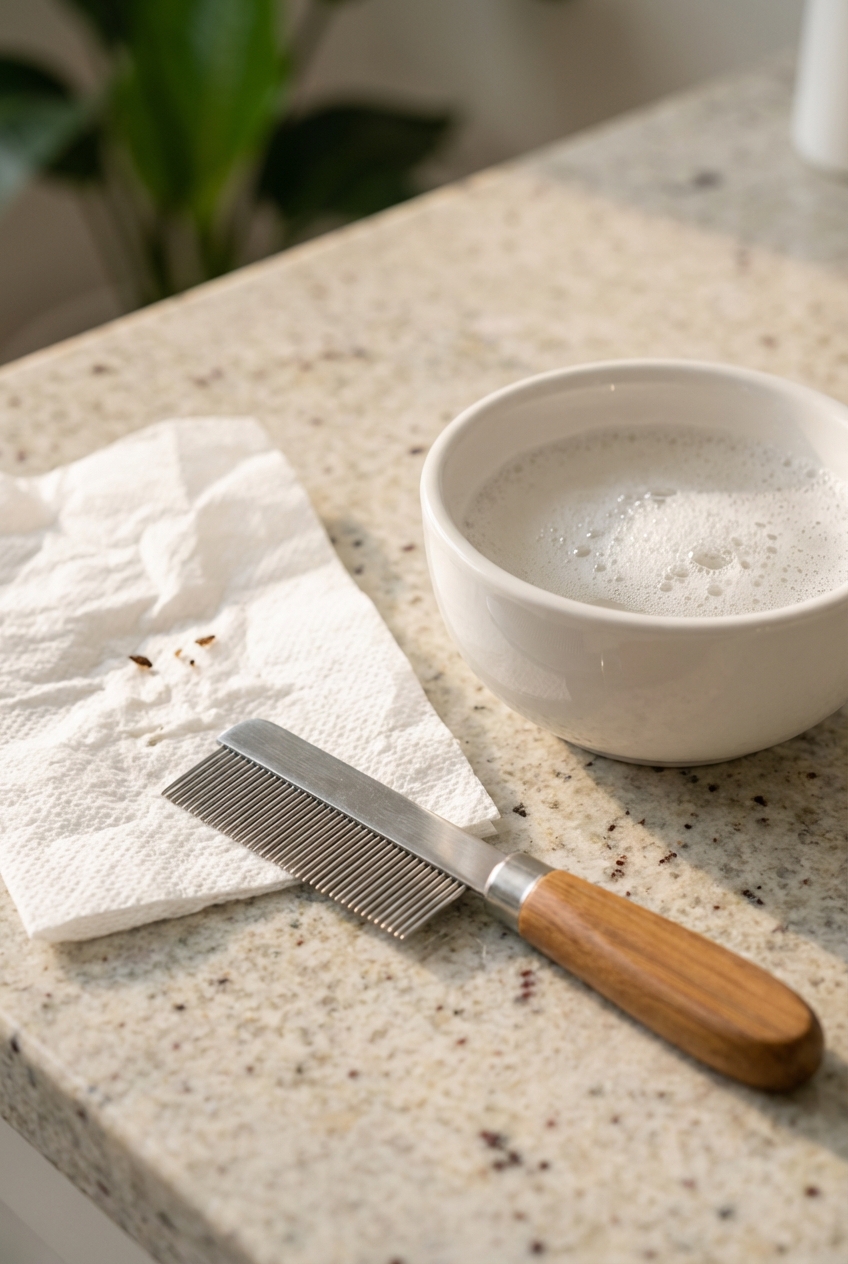
- Flea comb with tight teeth spacing
- Bright light or sunlight near a window
- White paper towel or white tissue
- Small bowl with warm water and a drop of dish soap (to trap fleas you comb out)
Where to check first
Fleas do not always spread evenly. Start where they like to hide and where cats may not groom as thoroughly. In the clinic, I see a lot of flea dirt and irritation show up at the base of the tail first.
- Base of the tail and lower back
- Neck and under the collar (if your cat wears one)
- Belly and inner thighs
- Armpits
- Behind the ears
Treat, comb, praise
This is my favorite approach because it keeps things simple and repeatable.
- Start with two to three gentle comb strokes at the base of the tail.
- Wipe the comb onto a damp white paper towel between areas (or after every few passes).
- Look for moving fleas or dark specks.
- Repeat on the back, neck, and belly areas if your cat allows.
- Drop any live fleas you find into the soapy water.
- End with a reward and stop before your cat gets annoyed.
Consistency matters more than perfection. A quick check once or twice a week can help you catch problems early, especially during peak flea season. In North Texas, many pets still need year-round prevention, so ask your veterinarian what makes sense for your household.
Spot flea dirt
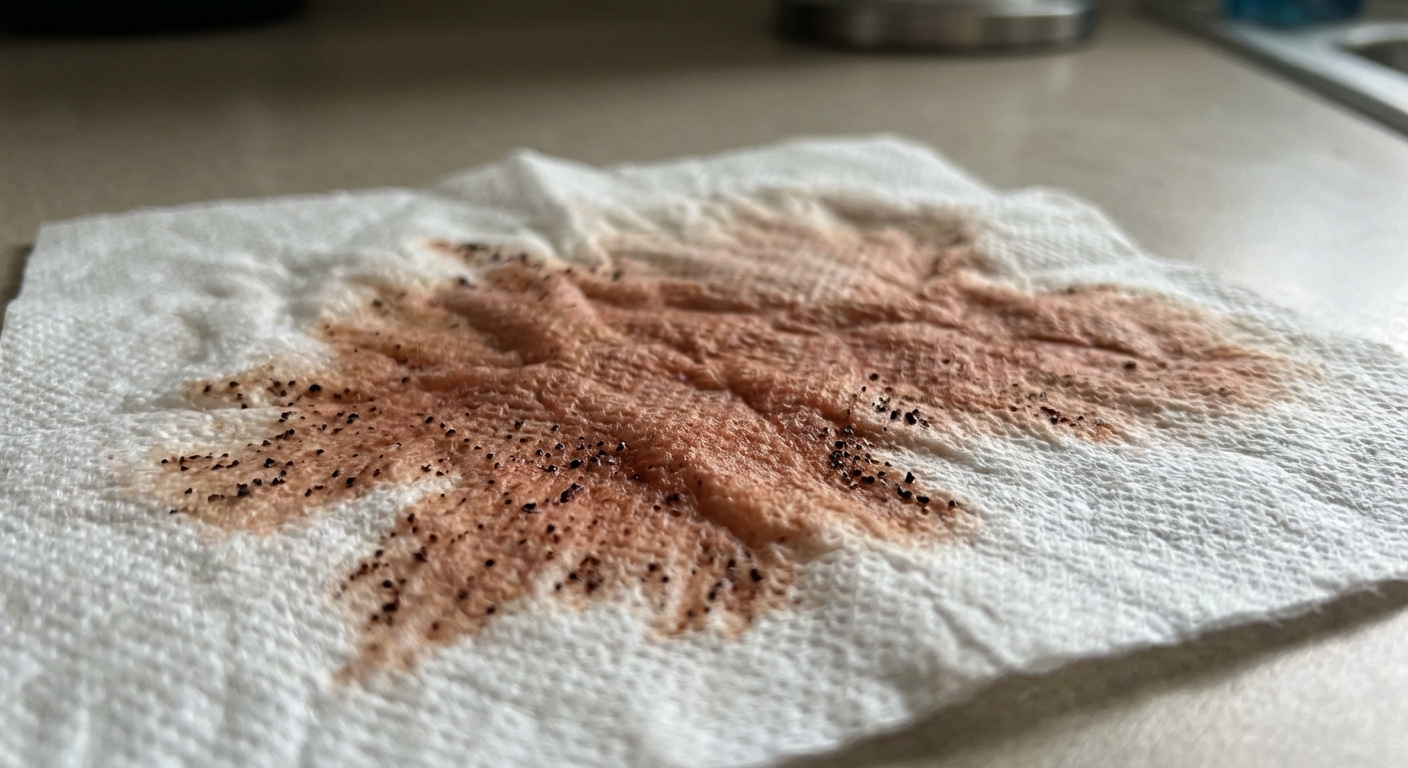
Often you will see flea dirt before you see a flea. Flea dirt looks like black pepper or tiny dark crumbs in the coat.
Wet paper towel test
- Put the specks on a damp white paper towel.
- If the specks turn reddish-brown, that strongly suggests flea dirt because it contains digested blood.
Signs even if you do not see fleas
Cats are excellent groomers, so the evidence can disappear fast. Keep an eye out for these clues:
- Increased scratching, especially around the neck and ears
- Overgrooming, thinning hair, or bald patches
- Small scabs, bumps, or crusts along the back (a classic pattern with flea allergy)
- Restlessness or sudden sensitivity when you touch the lower back
- Tapeworm segments that look like tiny rice grains near the rear or in bedding
What to do if you find fleas
Finding even one flea is a sign to take action. Fleas reproduce quickly, and the goal is to break the life cycle on your pet and in your home.
1) Treat every pet
If you have a dog and a cat, treat both, even if only one is itching. Fleas do not respect species boundaries. In multi-cat homes, plan to treat everyone on the same schedule.
2) Use vet-recommended prevention
Many of the most effective options are topical or oral products prescribed or recommended by your veterinarian. The best product depends on your cat’s age, weight, health history, and lifestyle. Always use a product labeled for cats and dose by the correct weight.
Important safety note: Never use dog flea products on cats. Some dog spot-ons contain permethrin (a pyrethroid) that can be toxic to cats.
Also skip essential oils and DIY blends unless your veterinarian specifically approves them. Several common oils can be toxic to cats.
3) Clean the environment
- Wash bedding in hot water, then dry on high heat (include shared pet blankets and your cat’s favorite nap spots).
- Vacuum carpets, rugs, baseboards, and furniture. Empty the canister or dispose of the bag right away.
- If you have multiple pets, consider separating freshly treated pets until products dry, and wash shared bedding more often during the first couple weeks.
Set expectations: because pupae can “wait” before hatching, it can take several weeks (and sometimes longer) of consistent prevention and cleaning to fully calm a household flea problem.
4) Call your vet if your cat is very uncomfortable
Severe itching, skin infections, scabs, or hair loss may need prescription help. Kittens, small cats, and medically fragile seniors can become anemic with heavy flea burdens, so do not wait if you are seeing lots of fleas or your cat seems weak.
When it is urgent
Most flea issues are not emergencies, but get urgent veterinary guidance if you notice:
- Pale gums, weakness, or rapid breathing (possible anemia, especially in kittens)
- Facial swelling, hives, vomiting, or trouble breathing after any new product
- Open sores or oozing skin from intense scratching
A routine that sticks
If you want a realistic plan, start here:
- Weekly: 2-minute flea comb check plus the wet paper towel test if you see specks.
- Monthly: Give flea prevention on schedule. In many areas (including parts of Texas), year-round prevention is often recommended.
- Seasonal: Deep clean favorite bedding and vacuum more often during peak flea seasons.
Small steps done regularly are what keep fleas from turning into a full-house headache.