Learn what’s normal after a cat spay and how to help her heal: first-day setup, feeding and water, vet-safe pain control, incision checks, cone/suit use, a...
Article
•
Designer Mixes
Fun Tips for Cat Spay Recovery

Shari Shidate
Designer Mixes contributor
Spaying is a very common surgery, but for your cat it is still a big day. The good news is that most healthy cats bounce back quickly with a little planning, a calm setup, and some creative ways to keep them comfortable and entertained while they heal.
As a veterinary assistant, I like to remind families that recovery is not just about “doing nothing.” It is about doing the right things on purpose: protecting the incision, preventing jumps, supporting appetite and hydration, and knowing what is normal versus what needs a call to your vet.
Quick note: This is general guidance, not a replacement for your veterinarian’s instructions. If your clinic’s plan differs, follow your clinic.
What to expect
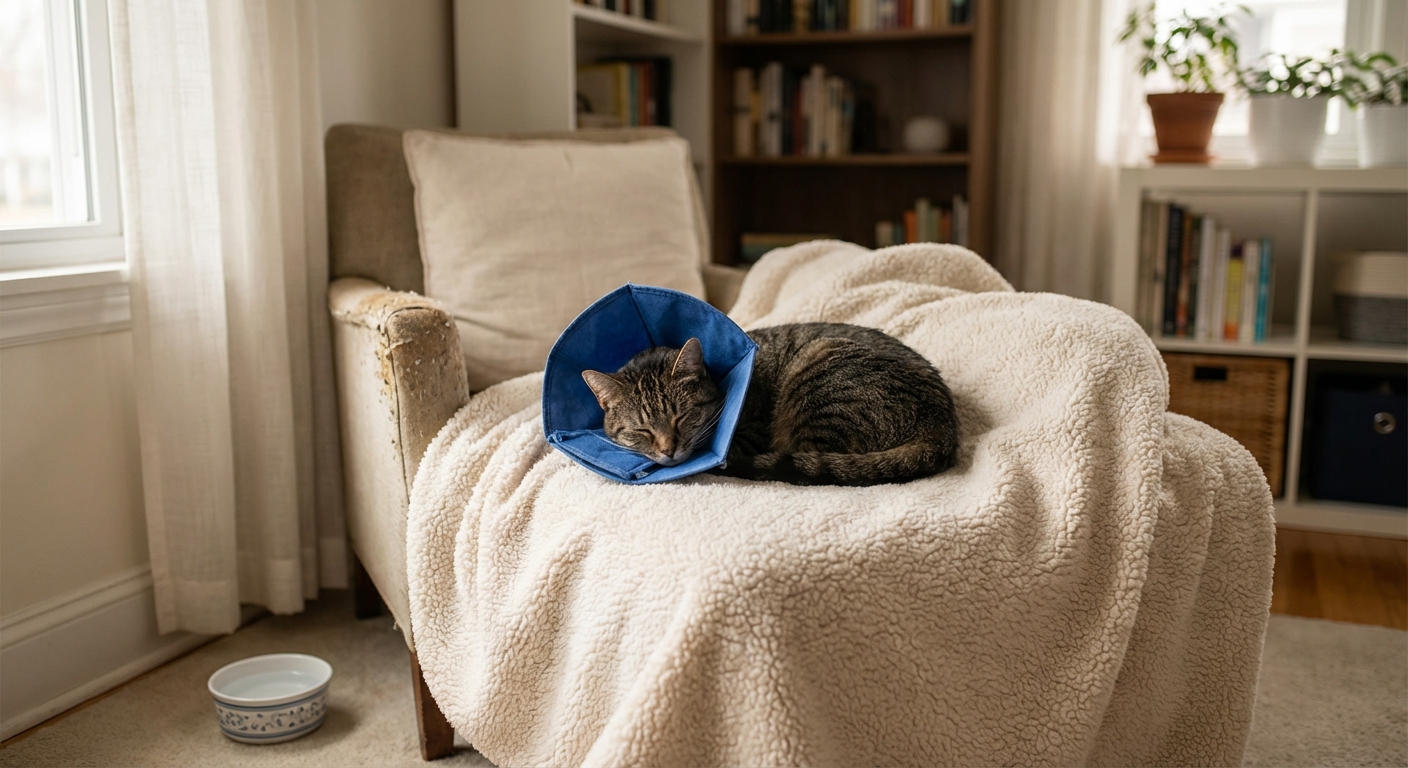
A spay is an abdominal surgery, which means your cat needs true rest even if she seems ready to sprint around the house by day two. Many cats are a little sleepy the first day, then feel surprisingly normal, and that is exactly when they are most likely to overdo it.
- Typical restricted-activity period: many veterinarians recommend about 10 to 14 days, depending on your cat and your clinic’s protocols.
- Common in the first 24 hours: mild grogginess, lower appetite, and being a bit quiet or clingy.
- Activity restriction matters: no jumping on beds, couches, cat trees, or window perches, and no zoomies if you can help it.
If your cat was sent home with pain medication, give it exactly as directed. Comfort is not a luxury. Good pain control helps cats rest, eat, and heal.
Incision location note: Most spays are done on the belly, but in some regions a flank spay is used (incision on the side). Aftercare principles are the same, but the spot you monitor may differ.
Set up a recovery space
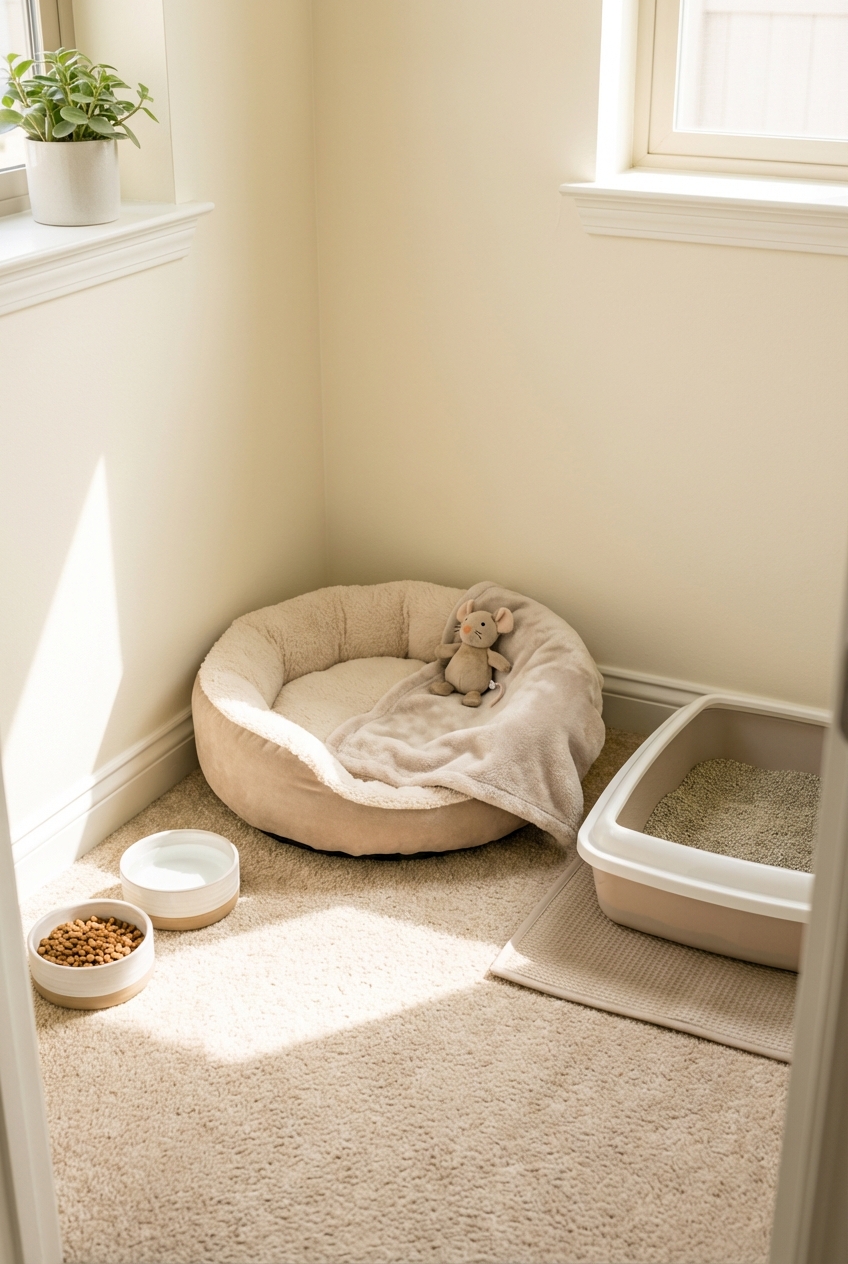
Think of this like setting up a cozy mini vacation spot. You are aiming for a small, safe area where your cat can rest without climbing and without being bothered by other pets or kids.
Easy setup checklist
- Choose a small space: a bedroom, large bathroom, or a roomy playpen works well.
- Soft bedding: washable blankets or towels, with a second layer in case of nausea the first night.
- Low-entry litter box: especially helpful if your cat is stiff or wobbly. A shallow storage bin can work temporarily.
- Food and water close by: no need to travel far or jump to reach bowls.
- Dim and quiet: reduce stress and help sleep.
- Indoors only: keep your cat strictly indoors during recovery, even if she normally goes outside.
Incision care
Your main job is to protect the incision so the skin edges can seal and the deeper tissues can heal. Many complications come from licking, chewing, running, or jumping.
Do
- Look once or twice daily: a quick check is enough.
- Know what can be normal: a closed incision, mild swelling, mild redness at the edges, and a little bruising are all common early on.
- Keep it clean and dry: no baths, no wipes on the incision unless your vet specifically tells you to.
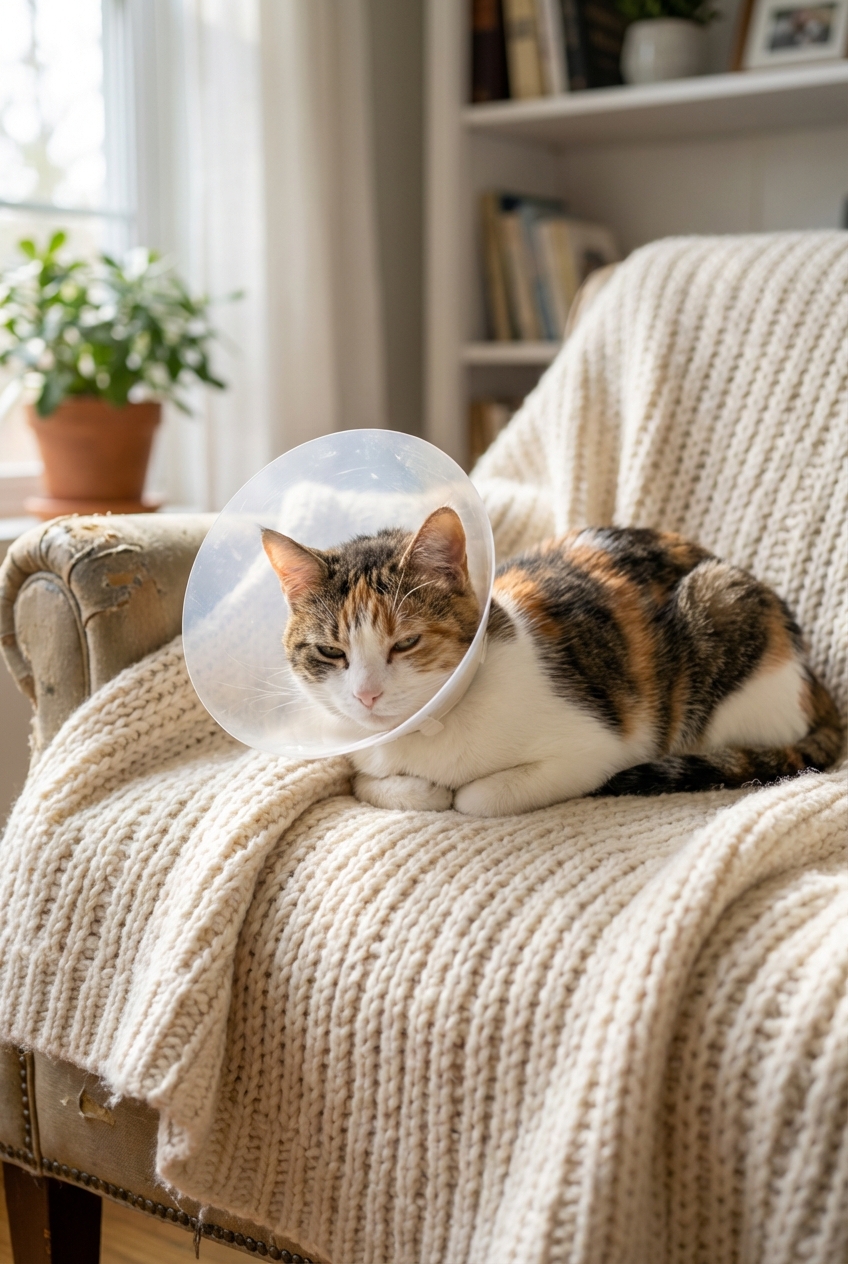
- Use the e-collar (cone): if your cat can reach the incision, assume she will.
Do not
- Do not apply ointments or peroxide: these can irritate tissue and slow healing unless prescribed.
- Do not let her lick “just a little”: even short licking sessions can open the incision.
- Do not allow rough play: wrestling with another pet counts as exercise.
Make the cone easier
Many cats hate an e-collar (cone) at first. A few small adjustments can make a big difference without sacrificing safety.
- Check the fit: you should be able to slip 1 to 2 fingers under the collar. Too tight is uncomfortable. Too loose is ineffective.
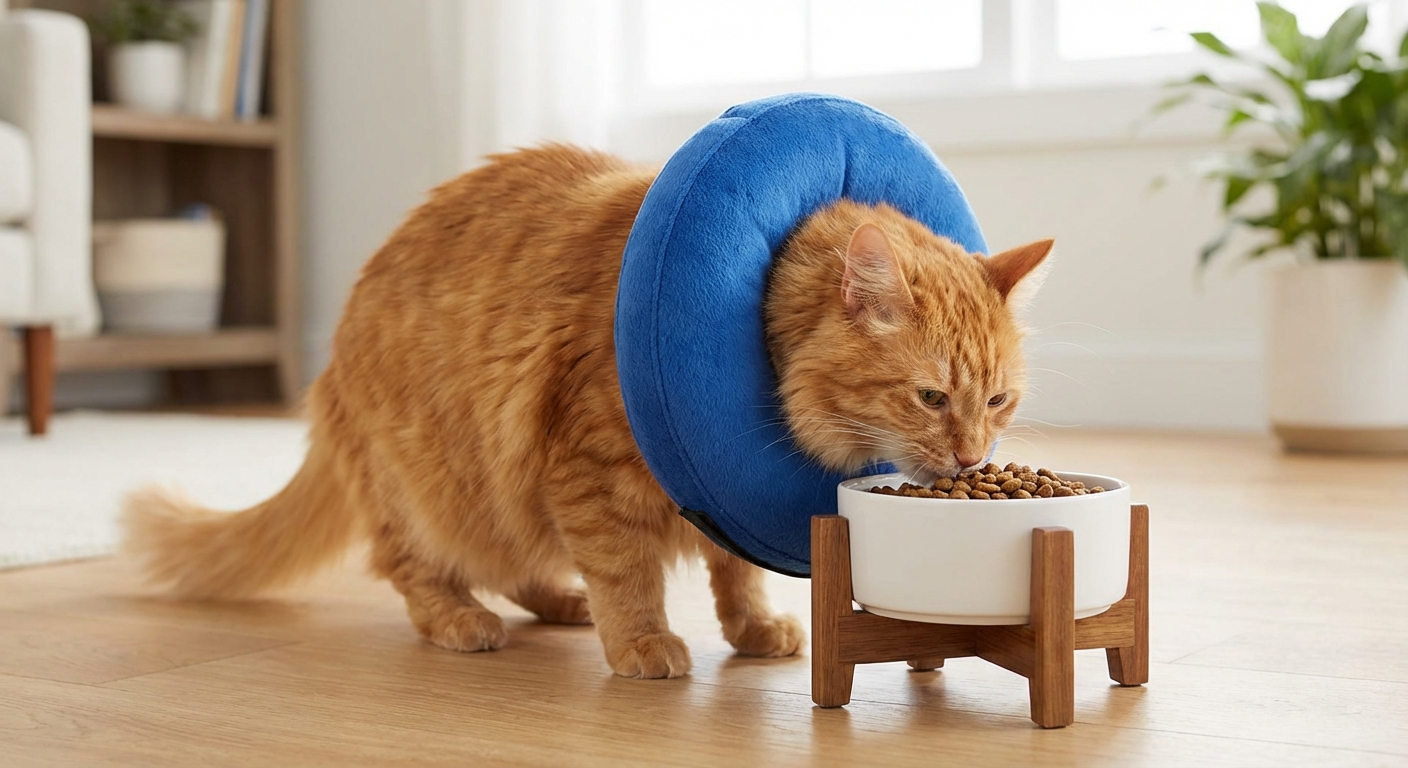
- Raise bowls slightly: use a small box or a stable stand so the cone does not bump the floor.
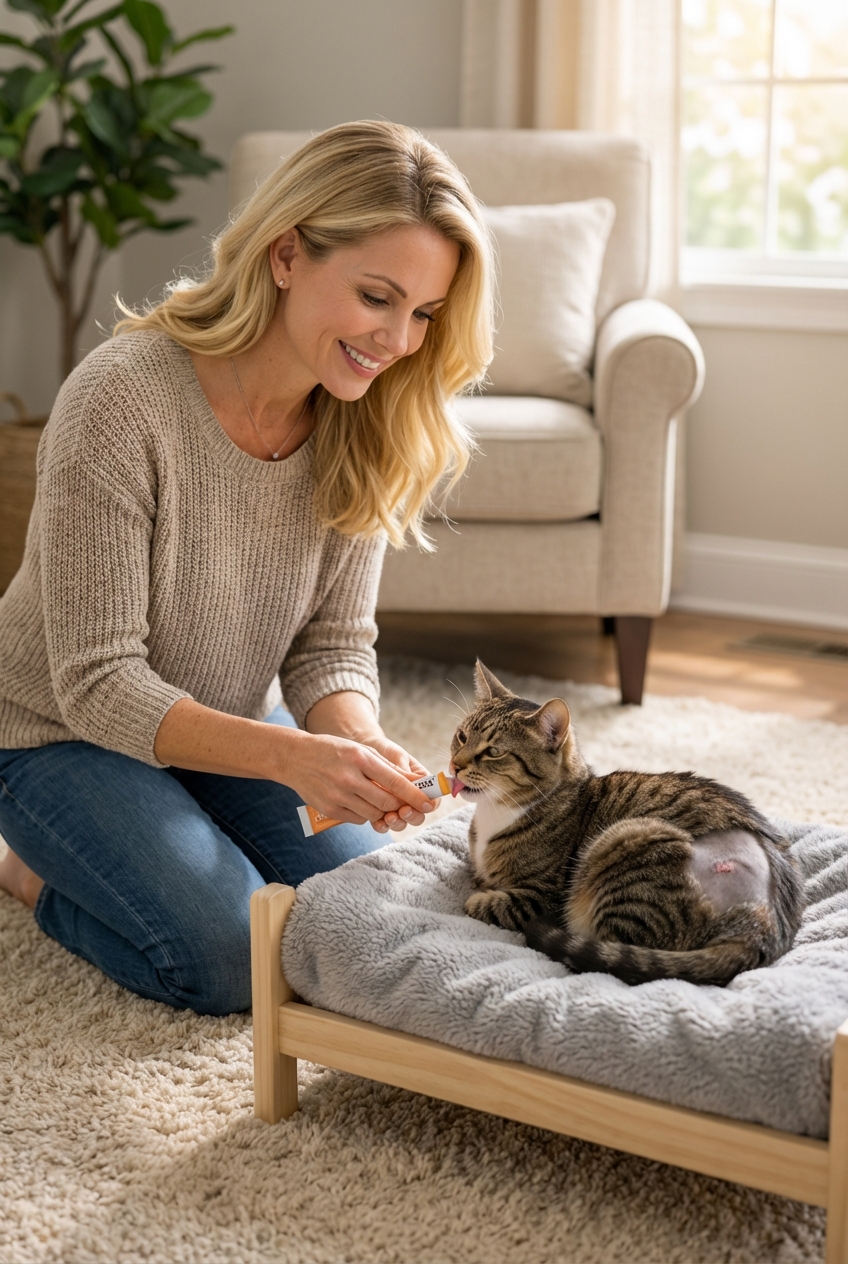
- Offer cone-friendly treats: lickable treats on a spoon can be easier than chasing kibble.
- Ask about a recovery suit if approved: some cats do better in a snug surgical onesie, but it must fully cover the incision and stay dry.
Safe entertainment
Spay recovery often fails because bored cats become athletic cats. The trick is to provide enrichment that uses the brain more than the body.
Low-movement ideas
- Stationary food puzzles: lick mats, slow feeders, or a puzzle tray that stays in place.
- Easy sniffing games: sprinkle a few treats in a towel fold or a very small snuffle mat setup that does not encourage running.
- Window time at floor level: a perch is tempting, so instead set a soft bed near a window at floor level.
- Calm clicker training: simple nose-touch or “look” cues can mentally tire a cat out in minutes.
- Gentle wand play: keep it slow and close to the ground, no leaping. Think stalking, not sprinting.
- Rotate toys: put out 2 or 3, then swap the next day so they feel new again.
If your cat is naturally high-energy, ask your veterinarian about safe calming options. Some clinics recommend pheromone diffusers or short-term anxiety support for specific cats.
Food, water, and litter box
It is common for appetite to be a little off the first day. What I watch most closely is hydration and whether the cat returns to normal eating within 24 hours.
Helpful, vet-friendly tips
- Offer a small meal first: too much food too soon can trigger vomiting after anesthesia.
- Encourage drinking: fresh water, a fountain, or adding a small amount of water to canned food can help.
- It is not unusual to have a delayed poop: it can take a day or two to have a bowel movement after surgery, especially if appetite was lower. Call your vet if there is straining, or if there is no stool by about 48 to 72 hours.
- Monitor urination: your cat should pee normally. If you do not see urination within about 24 hours of coming home, or your cat is repeatedly straining with little output, call your vet.
Never give human pain medications. Products like ibuprofen, naproxen, and acetaminophen can be dangerous for cats.
Call your vet
Trust your instincts. If something feels off, it is always okay to call.
- Incision changes: bleeding, gaping, thick discharge, a bad odor, heat at the incision, or swelling or redness that is increasing instead of improving.
- Behavior: extreme lethargy beyond the first day, hiding and not responding normally, or signs of significant pain.
- Digestive issues: repeated vomiting, refusal to eat for more than 24 hours, or diarrhea that is persistent.
- Breathing or gum color: labored breathing, pale gums, or collapse are emergency signs.
- Possible fever: some cats feel warmer than usual when they are unwell, but warm ears are not a reliable fever check. A rectal thermometer is the only way to confirm a fever, so call your vet if your cat seems feverish plus low energy.
Your vet would much rather answer a “just checking” question than treat an incision that got infected because a problem was missed early.
Recovery timeline
Day 0 to 1
- Quiet room setup, small meals, monitor for nausea and sleepiness.
- Start the e-collar (cone) or recovery suit right away, before licking becomes a habit.
Day 2 to 5
- Your cat may feel normal. This is a high-risk time for jumping.
- Stick with calm enrichment and strict indoor rest.
Day 6 to 10+
- Incision should look dry and closed with minimal redness, and it should be improving each day.
- Continue restrictions until your veterinarian clears her, even if she acts completely fine.
If your cat has skin staples, sutures that need removal, or any special instructions, follow your clinic’s timeline over any general advice.
Final encouragement
You are doing something wonderful for your cat’s long-term health and for your household. Spay recovery is usually short, and with a cozy setup, incision protection, and a few boredom-busters, most cats heal beautifully.
If you want to make recovery even smoother, take a quick photo of the incision each day in the same lighting. It is an easy way to notice subtle changes, and it can be very helpful if you need to call your vet.