Follow your puppy’s growth from neonatal to young adult with a clear timeline, what’s normal at each age, training and socialization tips, teething help,...
Article
•
Designer Mixes
Fun Puppy Stages By Month

Shari Shidate
Designer Mixes contributor
Puppies grow fast, but their development is not random. Each month brings predictable changes in sleep, teething, confidence, fear periods, and learning. When you know what is normal for the stage your puppy is in, you can train smarter, prevent common behavior problems, and enjoy the sweet moments without wondering, “Am I doing this right?”
As a veterinary assistant in Frisco, Texas, I see a pattern: most puppy frustrations are not “bad dogs.” They are normal puppy development meeting unclear expectations. Let’s break down what’s happening month by month, plus what you can do today to support a healthy, happy puppy.
Month 1 (0 to 4 weeks): Newborn basics
Most puppies are still with their mom and littermates. They cannot regulate body temperature well, they sleep almost constantly, and they are learning the earliest social skills through nursing and cuddling.
What you might notice
- Eyes and ears begin opening around 2 to 3 weeks
- Wobbly standing and first steps
- Early play and mouthing with littermates
How to help
- If you are a breeder or foster, keep the environment warm, calm, and clean.
- Gentle, brief handling helps puppies become comfortable with people.
- Veterinary guidance is important if any pup is not gaining weight steadily.
- Ask your veterinarian about deworming and parasite prevention protocols. Early puppies are commonly affected by intestinal parasites.
Month 2 (5 to 8 weeks): Social learning takes off
This is when puppies become curious little sponges. They learn bite inhibition and dog-to-dog manners from littermates, and they start building positive associations with humans and everyday sounds.
What you might notice
- More confident walking and playful wrestling
- Lots of mouthing, chewing, and grabbing
- Short attention span, frequent naps
How to help
- Start gentle exposure to normal household life: vacuum sound at a distance, doorbells, TV, different floor textures.
- Begin a predictable potty routine right away once your puppy comes home: outside after waking, after meals or drinks, after play, and at least every 30 to 60 minutes at first.
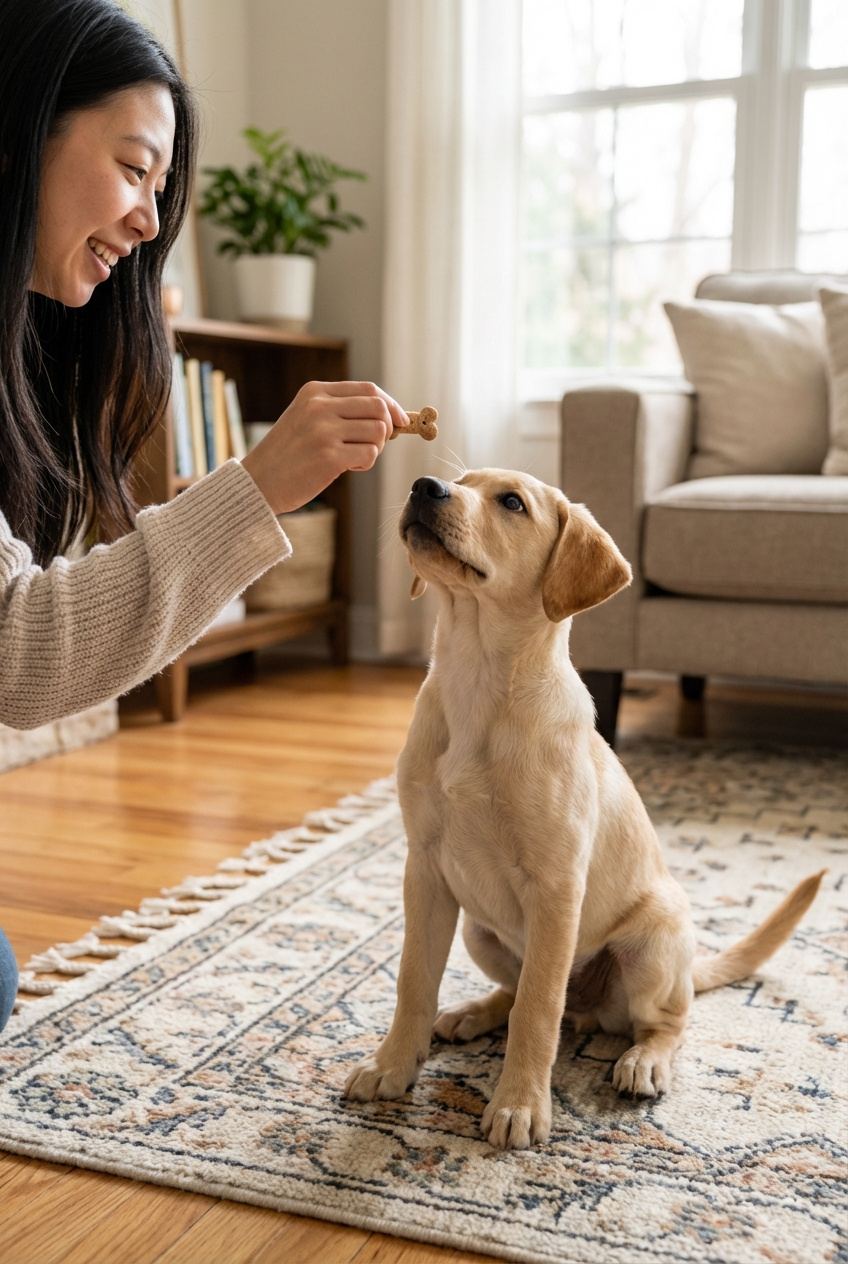
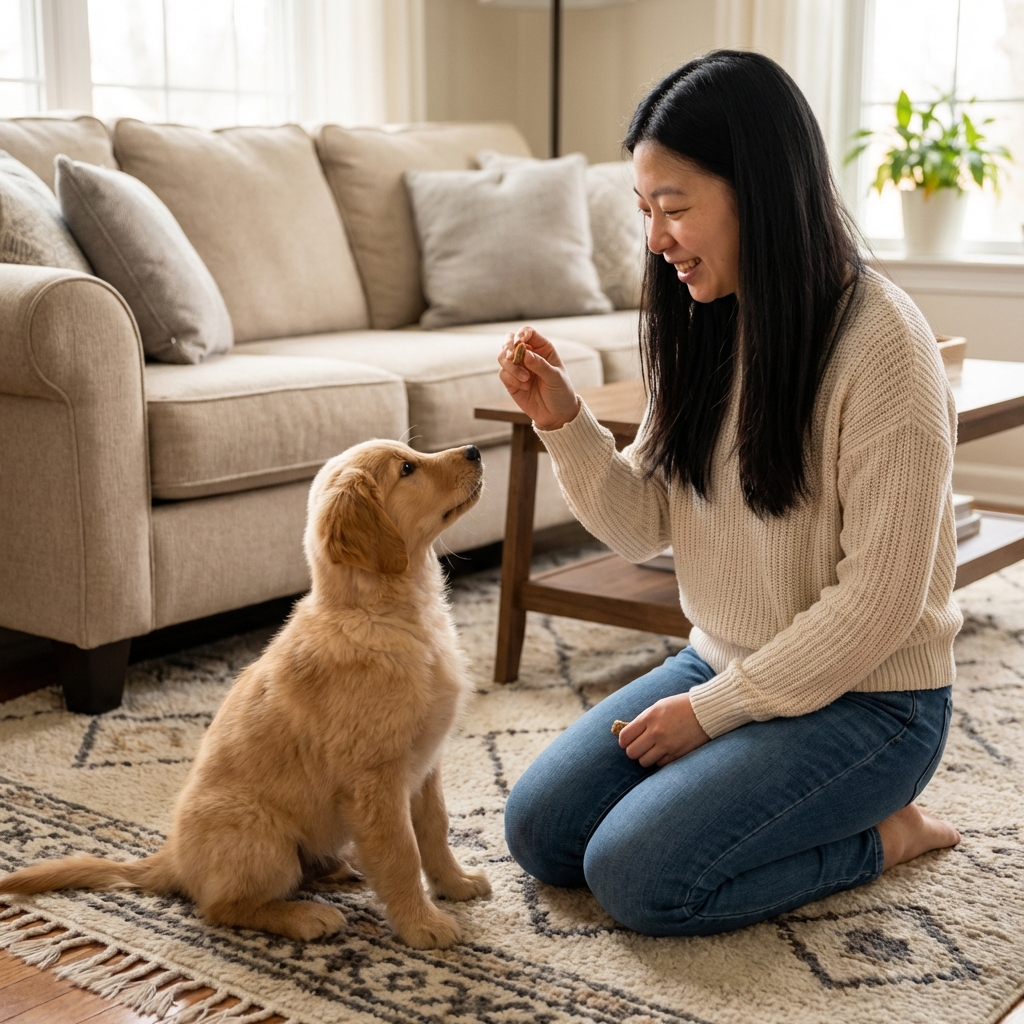
- Use soft treats and praise to mark calm behaviors like sitting before being picked up.
- Begin kind “alone time” practice with a crate or playpen: short, safe sessions with a chew or food toy so independence feels normal.
Vet note: Core vaccinations often begin around 6 to 8 weeks. Talk with your veterinarian about a safe socialization plan that fits your local risk and your puppy’s vaccine schedule. In many cases, puppy classes and meeting healthy, vaccinated, friendly dogs is encouraged. Avoid high-risk areas like dog parks and unknown-dog traffic until your vet says it is safe.
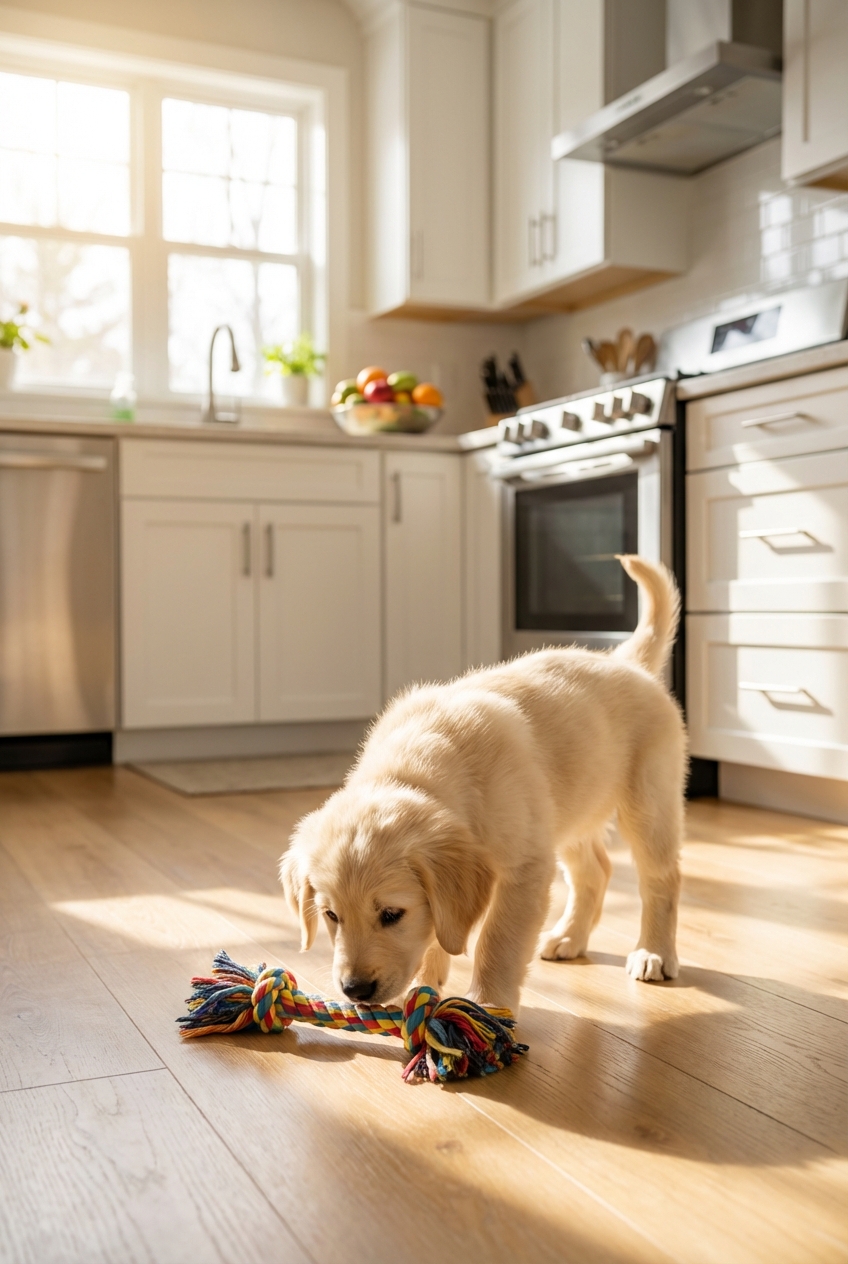
Month 3 (9 to 12 weeks): Home life and training basics
This is the classic “tiny shark” month. Your puppy’s mouth is busy, their curiosity is huge, and learning happens quickly when you keep it simple and consistent. While true tooth loss usually starts a little later, the nipping and chewing behavior often ramps up here as puppies explore the world with their mouths.
What you might notice
- Increased nipping and chewing, especially during excitement
- More awareness of the world, including strangers and other dogs
- Early confidence changes: brave one day, uncertain the next
How to help
- Bitey puppy plan: redirect to a chew, then reward calm. If your puppy is overstimulated, do a short break with a safe chew in a crate or playpen.
- Teach 3 life skills: name response, sit, and touch (hand target). These help in almost every real-life moment.
- Practice gentle handling: touch paws, look at ears, lift lips for a “fake tooth check,” then reward. Make it a game.
- Socialization reminder: This is part of the prime socialization window (roughly 3 to 14 to 16 weeks). Focus on quality and choice. Let your puppy observe, sniff, and opt out. You are aiming for calm confidence, not forced “meet everyone” moments.
Month 4 (13 to 16 weeks): Teething and independence
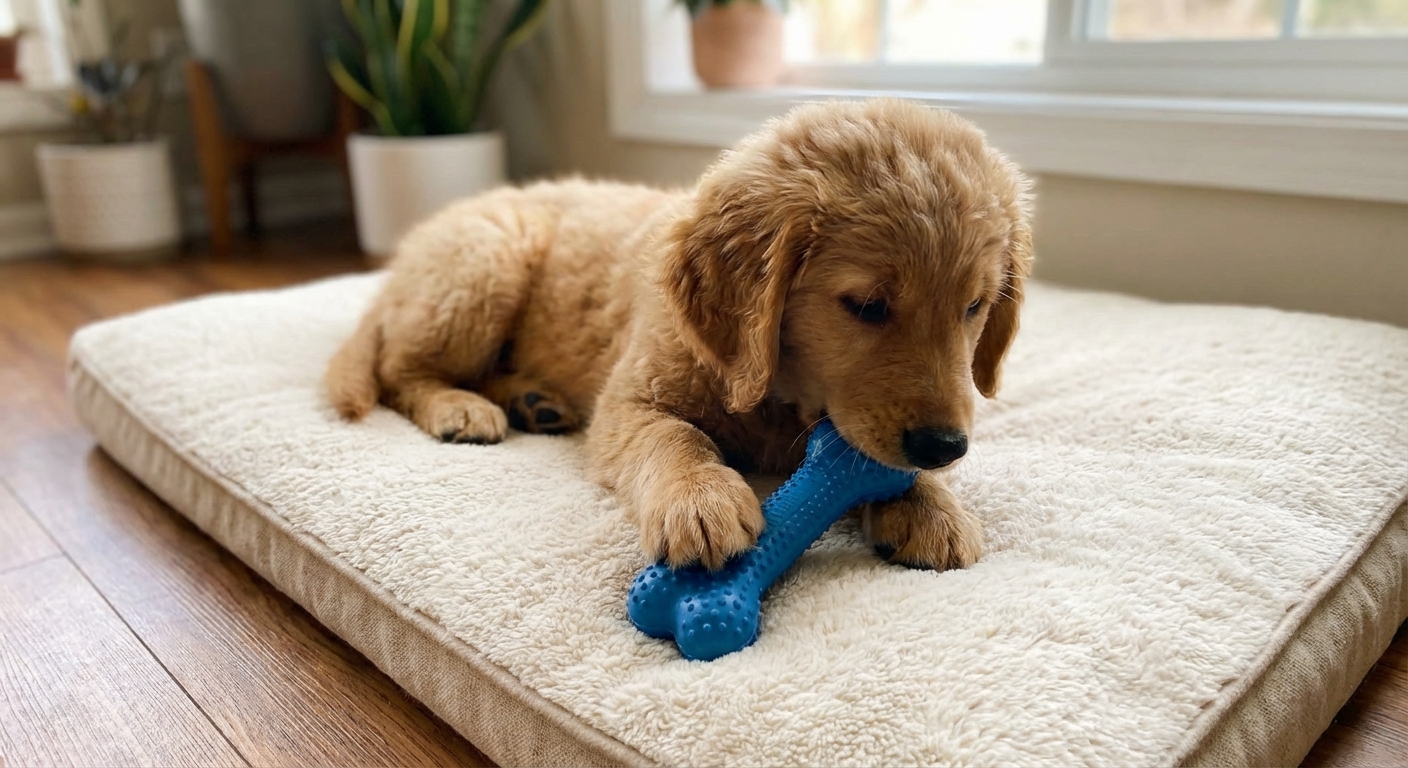
Many puppies start losing baby teeth around this time. Gums can be sore, and chewing becomes a full-time hobby. This is also when many owners accidentally teach bad habits by giving too much freedom too soon.
What you might notice
- Loose teeth, lots of chewing, and sometimes mild gum bleeding
- Jumping up and grabbing clothes during play
- Potty training improves but is not perfect yet
How to help
- Use “management” like baby gates and an exercise pen to prevent rehearsal of chewing furniture or stealing socks.
- Offer appropriate chews (ask your vet what is safe for your puppy’s size and chewing style). Avoid chews that are so hard they risk tooth fractures.
- Small amounts of gum spotting can be normal during tooth loss. Heavy bleeding, swelling, or signs of pain that do not ease warrants a vet call.
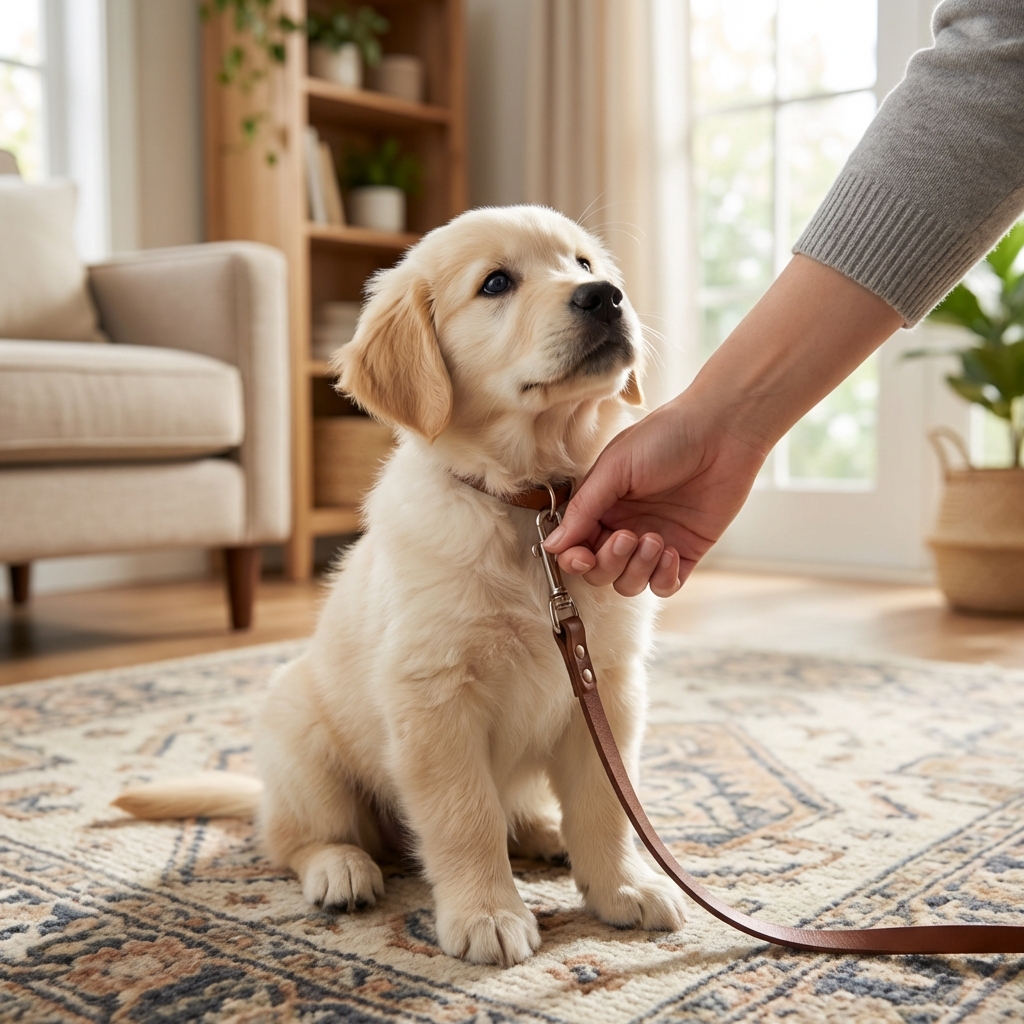
- Begin leash manners indoors: reward your puppy for walking near you for 3 to 5 steps, then take a break.
Month 5 (17 to 20 weeks): Confidence building
You may see a boost in stamina and boldness. Training can feel easier one day and harder the next because your puppy is learning and experimenting with what works. This is normal.
What you might notice
- More energy and stronger play drive
- Selective listening, especially outside
- Early adolescent behaviors in some pups
How to help
- Keep training sessions short and fun. Think 2 to 5 minutes, a few times a day.
- Start “real world rewards”: sit politely to get the leash clipped, calm behavior earns access to the yard.
- Continue safe socialization: friendly people, well-run puppy classes, and calm dogs you trust.
Month 6 (21 to 24 weeks): Adolescence starts
Many puppies begin adolescence somewhere around 6 to 9 months, sometimes a bit earlier or later depending on size and breed. Hormones, confidence, and curiosity can surge. You may feel like you have a teenager in a puppy body.
What you might notice
- Pushing boundaries, impulse control struggles
- More interest in scents, distractions, and exploring
- Possible increase in alert barking
How to help
- Double down on basics: reward eye contact, practice “leave it,” and keep recall games upbeat.
- Use enrichment to prevent boredom: snuffle mats, food puzzles, short scent games.
- Talk with your veterinarian about spay and neuter timing for your dog’s size, breed type, and lifestyle.
Month 7 to 9: Teen phase
Many puppies are in their lanky stage now. Some days they act grown up, and the next day they are zooming like a toddler. During adolescence, some dogs go through a fear period, where they suddenly act wary of things that were previously fine. This can show up anywhere from roughly 6 to 14 months.
What you might notice
- Confidence swings or new fears
- More intensity around other dogs or people if early exposure was limited
- Testing recall and leash manners
How to help
- If a fear pops up, avoid forcing your puppy to “face it.” Create distance, pair the trigger with treats, and go slowly.
- Skip punishment or “flooding” during fear phases. If your puppy’s fear is escalating or you feel stuck, loop in a qualified trainer who uses reward-based methods.
- Practice calm greetings: approach a friend, ask for a sit, reward, then greet.
- Protect growing joints by avoiding repetitive high-impact jumping, especially in larger dogs. Controlled exercise is still important. Ask your vet what is appropriate for your puppy’s size and structure.
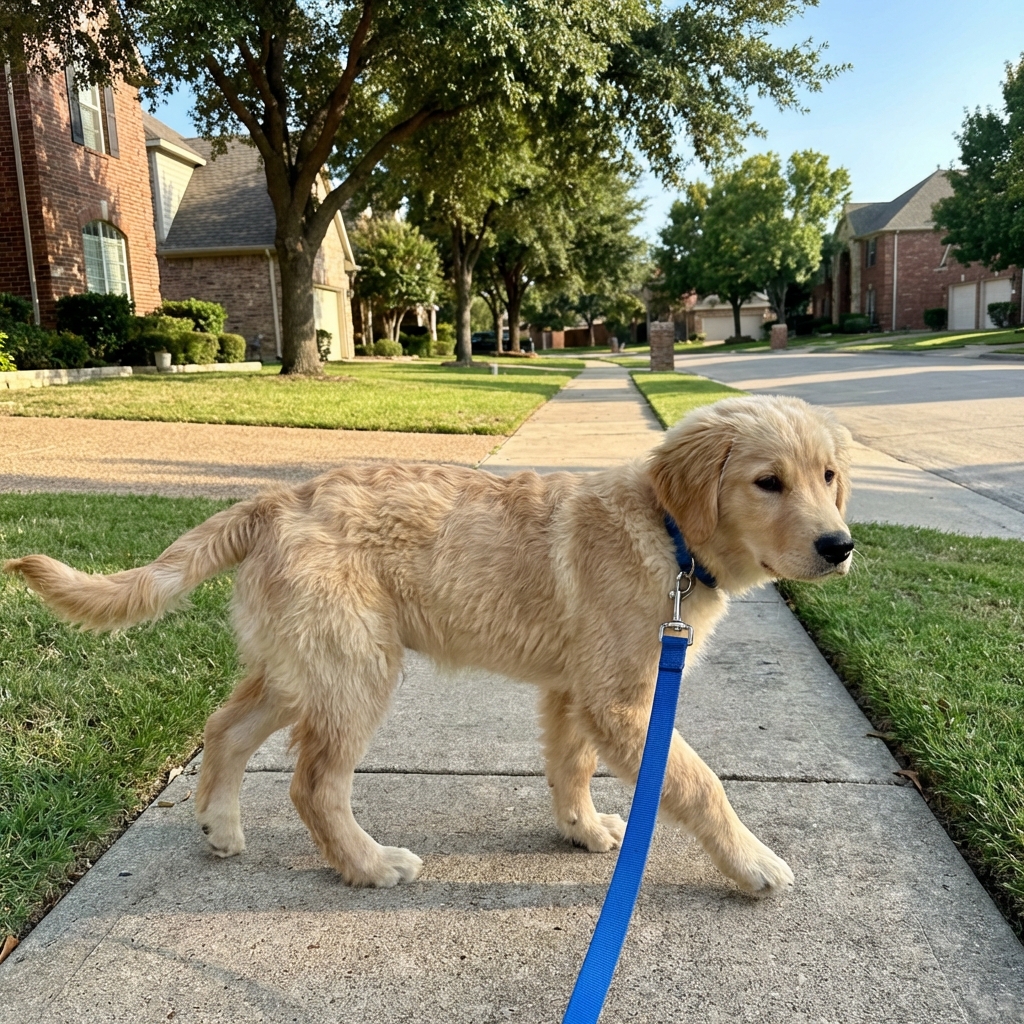
Month 10 to 12: Young adult habits
Your puppy is starting to look more like a dog, but mentally they are still learning. The habits practiced now often become the adult default.
What you might notice
- Improved ability to settle, especially with routine
- More endurance and a stronger need for daily activity
- Clearer preferences: favorite games, people, and training rewards
How to help
- Build a simple daily rhythm: potty, breakfast, short training, nap, play, nap, evening walk, settle.
- Strengthen “place” or mat training to encourage calm in busy households.
- Schedule a wellness visit and discuss adult diet transition timing, dental care, parasite prevention, and healthy weight targets. For larger dogs, your vet may recommend a large-breed puppy diet and a steady growth plan.
Quick help: Common questions
How much sleep is normal?
A lot. Many puppies sleep 16 to 20 hours a day. If your puppy is wild and bitey, they often need a nap, not more play.
When does teething stop?
Most puppies finish getting adult teeth around 6 months, but chewing habits can continue. Keep offering appropriate chews and rotate them to stay interesting.
When can my puppy meet other dogs?
Talk with your veterinarian for local guidance. In many cases, controlled puppy classes and meeting healthy, vaccinated, friendly dogs is encouraged because early socialization is so important. The key is doing it safely and thoughtfully, and avoiding high-risk areas until your vet clears your puppy.
What are red flags that need a vet call?
- Vomiting or diarrhea that is persistent, severe, or includes blood
- Not eating for more than a meal or two in a young puppy
- Lethargy, weakness, or collapse
- Coughing, trouble breathing, or a swollen belly
- Straining to urinate or no urine output
Puppyhood is not about perfection. It is about building trust, routines, and skills a few minutes at a time.
Monthly checklist (save this)
- Health: keep vaccines and parasite prevention on schedule, ask about dental development, track weight.
- Training: focus on name response, sit, recall games, leash skills, and calm settling.
- Socialization: new surfaces, sounds, friendly people, safe dog interactions, car rides.
- Enrichment: daily sniff time, food puzzles, short play sessions, chew rotation.
- Management: gates, pens, and crates prevent bad habits while your puppy learns.
If you want, tell me your puppy’s age, approximate adult size, and breed mix, and I can suggest a simple routine that fits your month and energy level.