
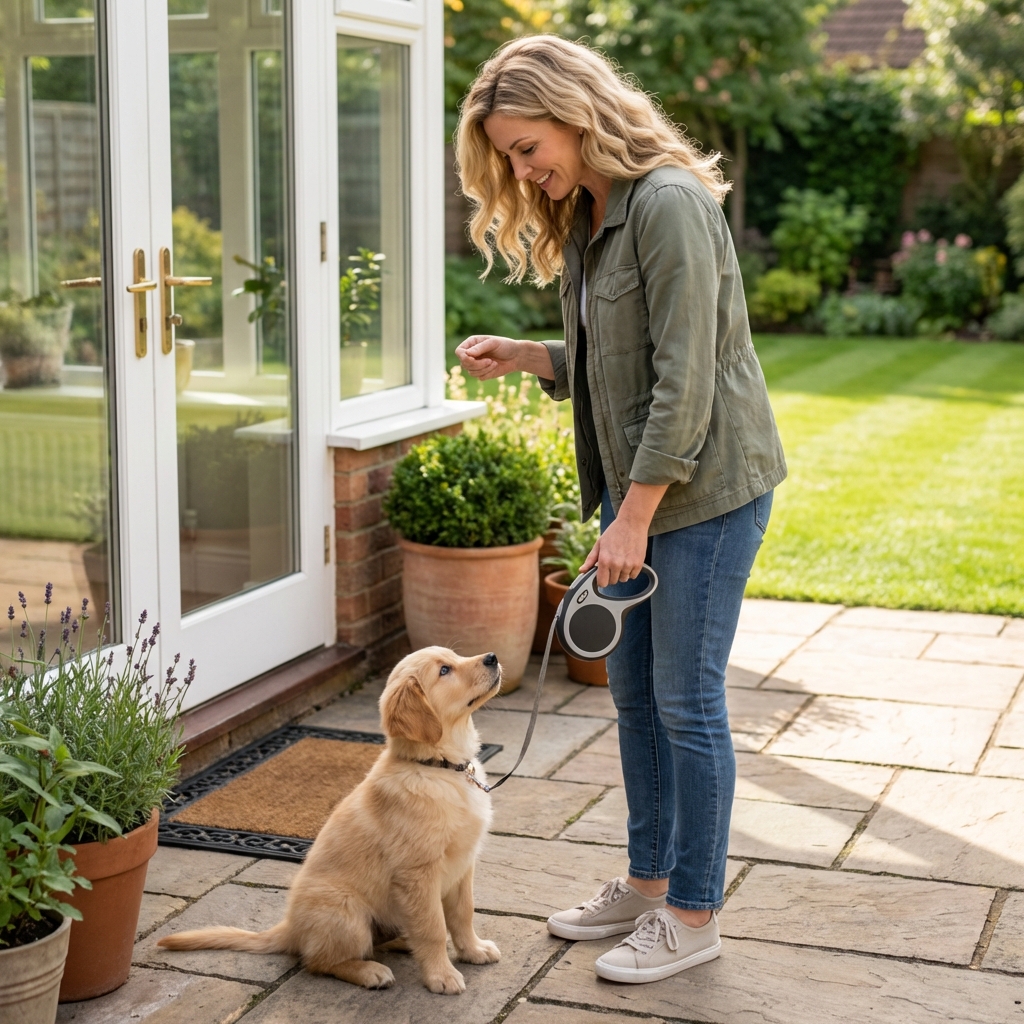
Learn a proven, kind puppy house-training plan with a simple schedule, crate and supervision tips, a repeatable potty routine, cleaning methods, and nighttim...
Article
•
Designer Mixes
Fun Potty Training Puppies: Facts & Tips

Shari Shidate
Designer Mixes contributor
Potty training a puppy can feel like a full-time job, but it is also one of the best ways to build trust, communication, and confidence with your new best friend. As a veterinary assistant here in Frisco, Texas, I see the same truth play out again and again: puppies are not being “stubborn” when accidents happen. They are learning a brand-new skill with a tiny bladder and a developing brain.
The good news is that when you combine a simple schedule with positive reinforcement, most puppies catch on faster than you expect. Let’s make this fun, doable, and evidence-based.
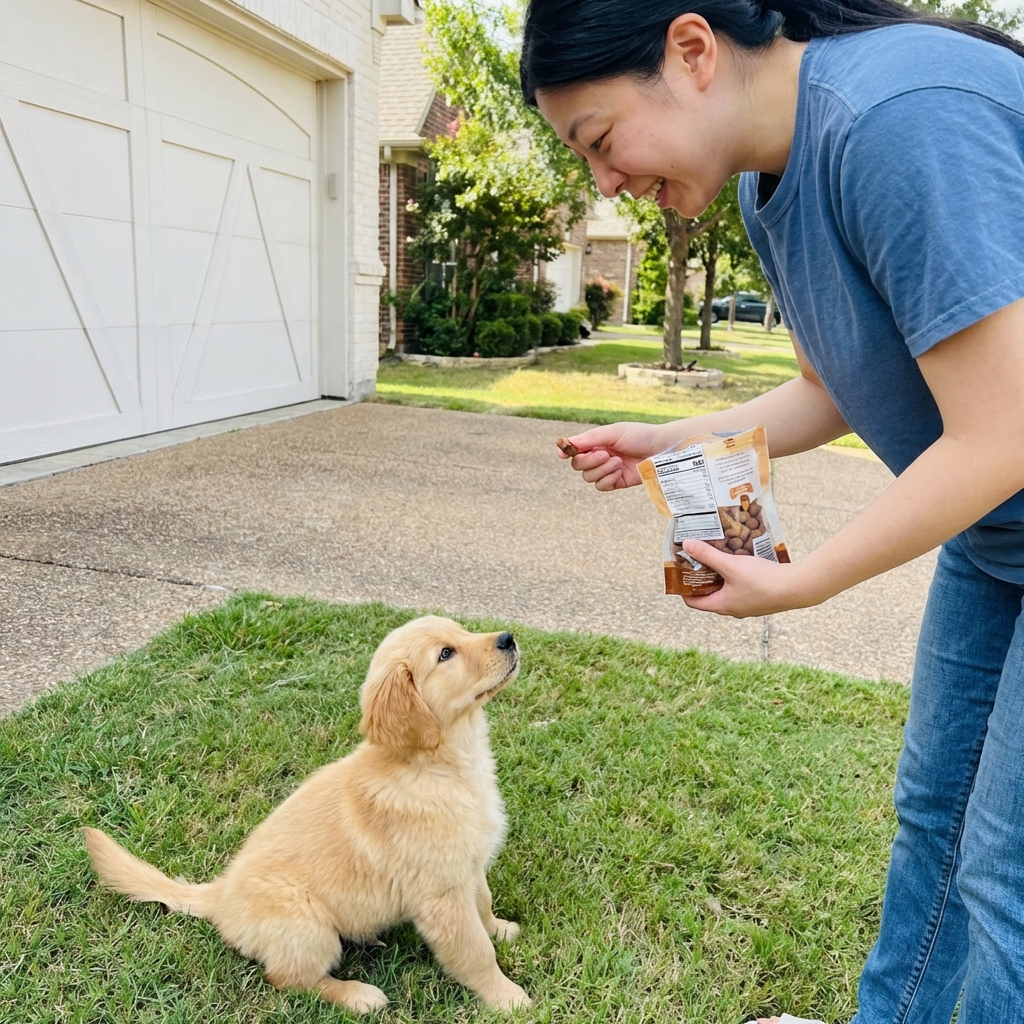
Fun facts that help
1) Puppies do not generalize well
Your puppy may understand “go potty” in your backyard, but feel totally confused at Grandma’s house or on a hotel lawn. Dogs learn in context, so plan to “re-teach” in new places with the same steady routine.
2) Sniffing is their pre-potty checklist
That intense sniffing is not just them being cute. It is information-gathering. If your puppy suddenly starts circling and sniffing the ground like they are on a mission, that is your cue to head outside.
3) Timing beats scolding
Dogs learn by association fast. For rewards to click, they need to happen right away, ideally within 1 to 2 seconds of the behavior. If you find a puddle minutes later, your puppy cannot connect your reaction to the earlier behavior. Instead, focus on catching the right moment and reinforcing it.
4) Small breeds may take longer
Tiny dogs have tiny bladders. Some small breeds need more frequent potty trips and fewer opportunities to make mistakes indoors, especially early on. Temperament and consistency matter a lot too, so do not assume your puppy is “behind.”
Set up for success
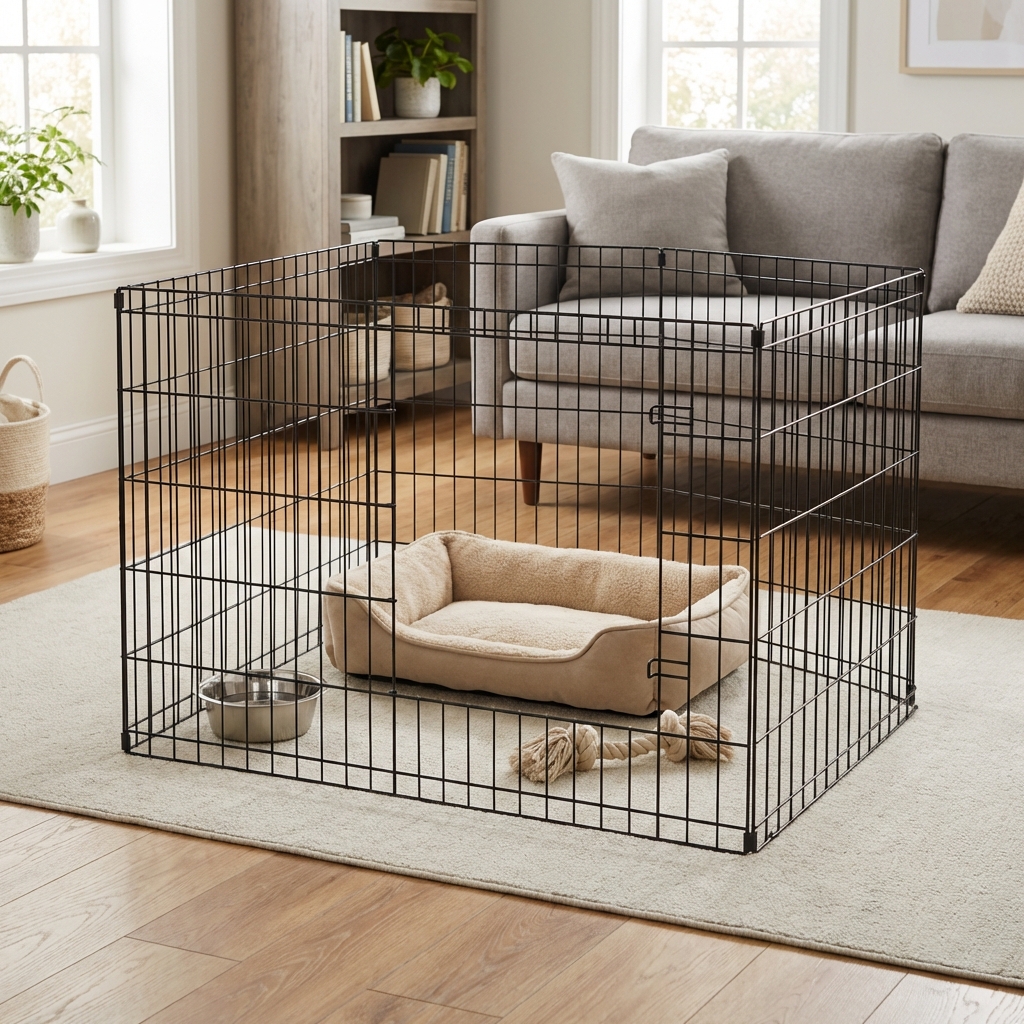
Potty training is mainly about management. The less freedom your puppy has at first, the fewer accidents you will have to clean up.
- Use a crate or puppy pen for short periods when you cannot actively supervise.
- Keep your puppy on a leash indoors (a “house line”) so you can guide them outside quickly.
- Block off carpeted rooms early on. Carpet is absorbent and holds odor, even when you cannot smell it.
- Choose one potty spot outside so the scent and routine become familiar.
- Buy an enzymatic cleaner made for pet accidents. Regular soap can leave behind scent traces that invite repeat accidents.
Potty training safety
One quick health note for young puppies: until your veterinarian says your pup is fully protected, be careful about public potty areas. Parvo and other contagious diseases can live in soil where many dogs have been. When in doubt, use a private yard or a low-traffic spot and follow your vet’s guidance.
A simple potty schedule
If you only take one thing from this article, let it be this: go out on a schedule, not just when you think they need it.
Go outside...
- First thing in the morning
- After every meal (many puppies go within 15 to 30 minutes, sometimes sooner)
- After drinking a lot of water
- After playtime
- After naps (they often need to go right away)
- Before bedtime
- Every 1 to 2 hours for young puppies, especially at the start
A common guideline is that a puppy can hold it about one hour per month of age (sometimes plus one extra hour) when resting. This is not a promise, especially for 8 to 10 week puppies, small breeds, or active pups. If your puppy is awake and excited, plan on more frequent breaks.
What about poop?
Many puppies need to poop shortly after meals and often after waking up. The cues can look different than pee cues, like sudden stopping, squatting, or a quick “search and circle.” When in doubt, take them out.
The potty routine
Consistency turns potty training into a game your puppy can win.
- Leash up and go to the same spot.
- Stand still and be boring. (This is not playtime yet.)
- Say your cue once, like “Go potty.”
- Wait 3 to 5 minutes. Let sniffing happen.
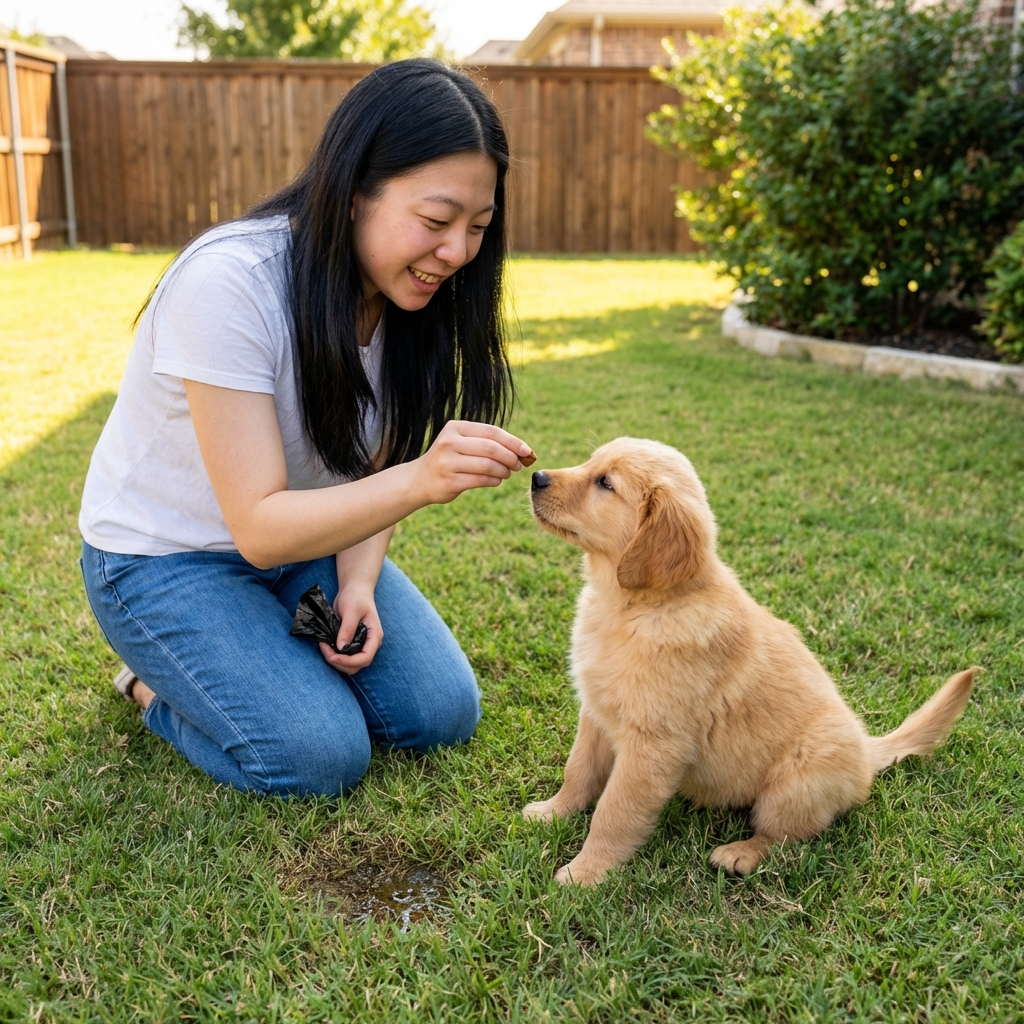
- The moment they finish, say “Yes!” and give a high-value treat.
- Then celebrate with freedom: a short walk, a sniff session, or a minute of play.
High-value treats are the special, extra-tasty stuff your puppy does not get at meals, like tiny pieces of cooked chicken or a soft training treat. The treat matters because you are reinforcing the behavior you want at the exact right time.
Make it fun
Try a “potty jackpot”
Pick one treat your puppy only gets for pottying outside. Keep it special. When they go outside, give 3 to 5 small treats in a row.
Use a celebration phrase
Dogs love patterns. Try a consistent happy phrase like “Good potty!” in a warm voice. It becomes a verbal high-five your puppy recognizes.
Track wins
Put a sticky note on the fridge and mark every successful outdoor potty. Seeing progress keeps you motivated, which helps your puppy succeed.
Accidents without setbacks
Accidents are information. They tell you the schedule is too loose, supervision is too relaxed, or your puppy had too much freedom too soon.
If you catch them in the act
- Stay calm.
- Interrupt gently with a quick “Outside!”
- Pick them up or leash them and go straight to the potty spot.
- If they finish outside, reward like it was the plan all along.
If you find it later
- Do not punish.
- Clean thoroughly with an enzymatic cleaner.
- Tighten management: more frequent trips, closer supervision, smaller area.
Kindness is not permissive. Kindness is effective. Puppies learn faster when they feel safe and can predict what earns rewards.
Pee pads vs. outside
Pee pads can be helpful for high-rise living, bad weather, medical recovery, or owners who cannot get outside quickly. The trade-off is that pads can teach “it is okay to pee indoors,” which may slow outdoor training.
If you use pads
- Place pads in one consistent location, not all over the house.
- Gradually move the pad closer to the door over days or weeks.
- Transition to outside by moving the pad just outside the door (if practical), or by calmly interrupting as your puppy heads to the pad and taking them out right away. Then reward the outdoor potty heavily.
Nighttime training
Nighttime is often the toughest part, especially with young puppies. A few tweaks can help everyone rest.
- Crate near your bed so you hear early whining and can respond quickly.
- Last call potty right before lights out.
- Keep nighttime trips quiet: no play, no bright lights, no long cuddles.
- Ask your vet about water timing if you are considering limiting water. In most cases, puppies should have access to water, and scheduling is a better solution than restriction.
Most puppies grow out of overnight potty breaks as their bladder capacity and routine improve. If a puppy suddenly starts waking more often than before, that is worth a vet check.
How long it takes
Most families see real progress in a few weeks, but full reliability can take a couple of months (and sometimes longer). Age, size, routine, and your home setup all matter. Accidents along the way are normal.
When it is not training
Sometimes accidents are a medical or stress signal, not a behavior problem. Talk to your veterinarian if you notice:
- Straining, crying, or frequent attempts with little output
- Blood in urine
- Foul or changed urine odor, especially along with other signs
- Sudden house-soiling after doing well
- Excessive thirst or very large volumes of urine
- Diarrhea or soft stool that creates urgency
Urinary tract infections, intestinal parasites, stress, and dietary changes can all interfere with potty success. It is always okay to ask questions early.
Quick fixes
“My puppy pees right after coming inside.”
Stay outside a little longer, stand still, and save play for after they potty. Reward immediately when they go.
“My puppy only pees on walks, not in the yard.”
Start with a short walk to get things moving, then return to your chosen potty spot and wait quietly. Reward big when they finally go there.
“My puppy potties in the crate.”
The crate may be too large, the schedule may be too long, or the puppy may have digestive upset. Ensure proper crate sizing and talk to your vet if it continues.
“We are doing everything, but progress is slow.”
Reduce indoor freedom, increase frequency, and make outside rewards more exciting. Potty training improves fastest when your puppy has very few chances to practice the wrong behavior.
Fading treats
Once your puppy is consistently going outside, start mixing it up. Praise every time, but give treats intermittently, like every other potty, then randomly. This keeps the habit strong without needing a treat forever.
The bottom line
Potty training is not about perfection. It is about repetition, good timing, and helping your puppy succeed more often than they fail. Start with a schedule, reinforce the exact moment your puppy does it right, and manage the environment so accidents become rare.
You’ve got this. And your puppy is learning, every single day.
