Worried about fast breathing in your cat? Learn normal resting rates, how to count breaths, common causes (stress, heat, asthma, infection, heart disease), a...
Article
•
Designer Mixes
Fun First Aid for Cats Explained

Shari Shidate
Designer Mixes contributor
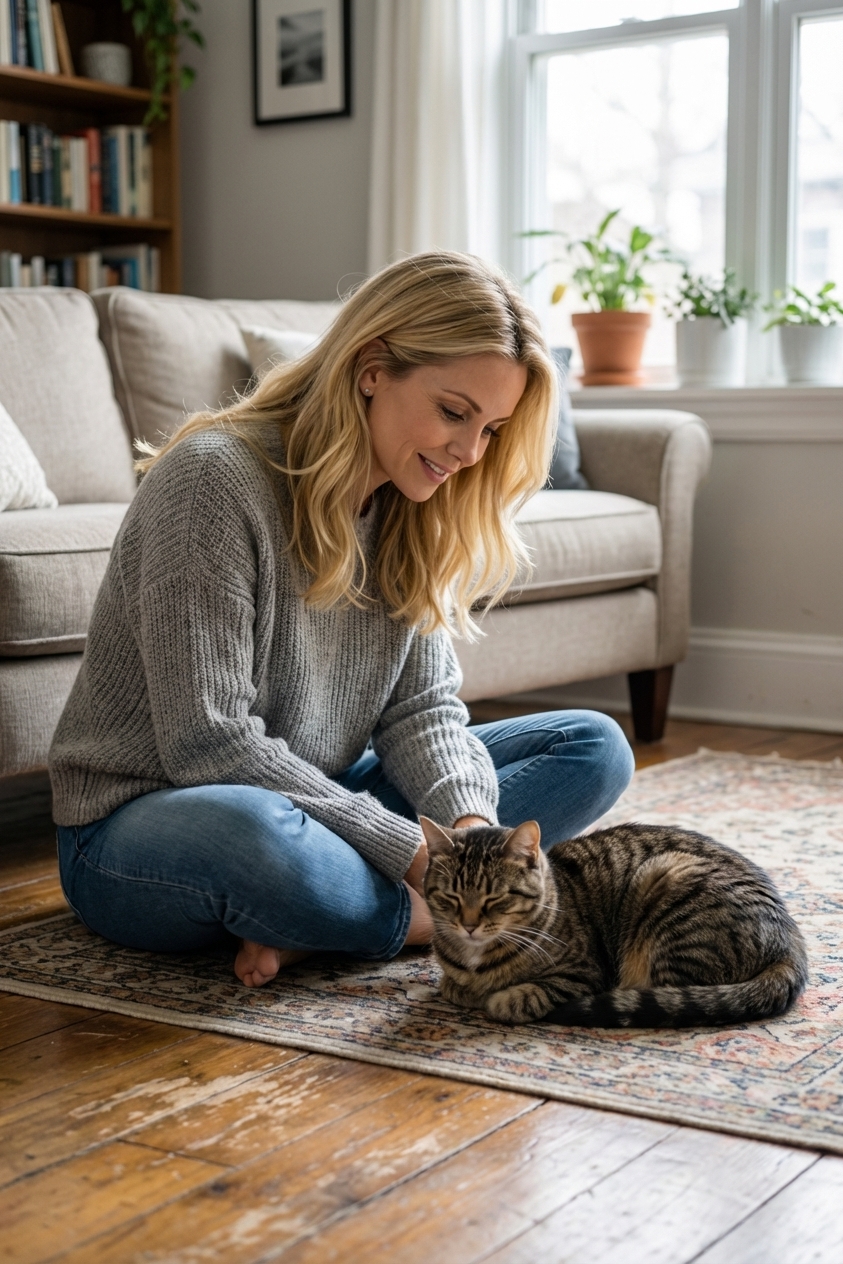
As a veterinary assistant here in Frisco, Texas, I have a soft spot for cat parents who want to be prepared without panicking. “Fun first aid” for cats is really about building calm, confident habits before you ever have an emergency. Think of it like a fire drill, but with treats, gentle handling, and a well-stocked kit.
Important note: first aid is not a substitute for veterinary care. It helps you stabilize your cat and get safely to a clinic faster. If your cat is struggling to breathe, bleeding heavily, has eaten a toxin, has seizures, cannot stand, or you are simply unsure, call your veterinarian or an emergency hospital right away.
What “fun first aid” means
Cats notice your energy. When you practice skills in a low-stress moment, you teach your cat that touch, restraint, and basic care are not scary. That makes real emergencies safer for everyone, including the person doing the helping.
Goals of cat first aid
- Prevent accidents and exposures when you can.
- Assess quickly: breathing, bleeding, responsiveness, and pain.
- Stabilize with basic steps that reduce risk.
- Transport safely to veterinary care.
Start with calm routines
Before you learn any technique, set yourself up for success.
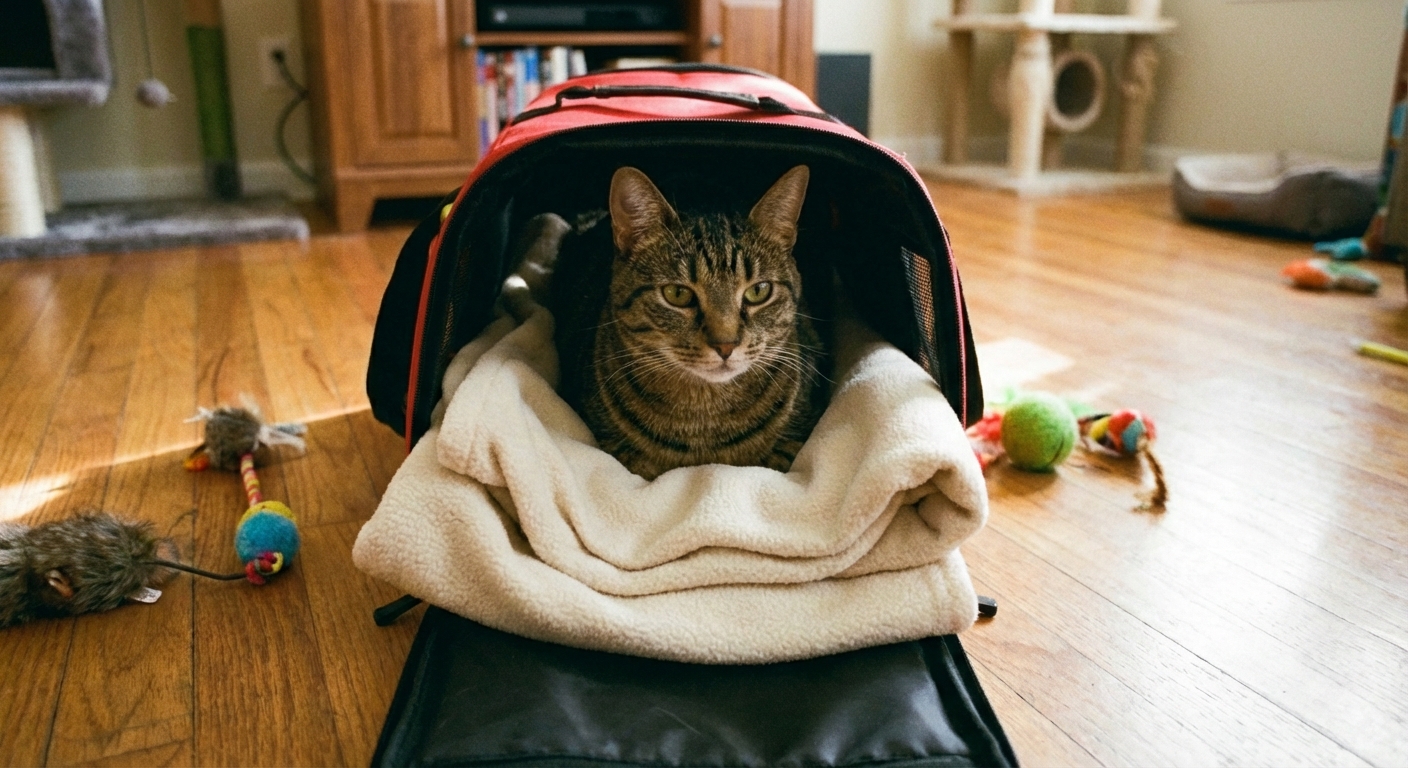
Make the carrier normal
Leave the carrier out with a soft blanket and a few treats inside. A carrier that only appears on scary days is a carrier cats learn to fear.
- Feed occasional treats or a small meal near the carrier.
- Toss a treat inside, let your cat walk in and out freely.
- Practice closing the door for 2 to 5 seconds, then reward and release.
Quick at-home cat check
When something seems off, a simple, repeatable “nose to tail” check can tell you if you need urgent care.
1) Breathing
- Watch, do not chase. Count breaths while your cat is truly resting or asleep. One rise and fall of the chest equals one breath. Normal resting respiratory rate is typically around 16 to 30 breaths per minute, but stress and even purring can bump it up.
- Red flags: open-mouth breathing, belly heaving, wheezing, blue or pale gums, or a sustained rate consistently above 40 while truly at rest.
2) Gums and hydration
- Healthy gums are usually pink and moist.
- Red flags: very pale, white, blue, or tacky gums.
3) Bleeding, swelling, limping, pain
- Look for blood on fur, swelling, heat, or obvious wounds.
- If your cat growls, hisses, or suddenly hides, treat that as a pain signal.
If your cat seems painful, avoid excessive handling. Pain can make even the sweetest cat bite out of fear.
Fun practice: gentle handling
These are “mini-drills” you can do in 30 to 60 seconds a few times a week, always paired with something your cat loves.
Paw and nail check
- Touch a paw, give a treat, stop.
- Next session, gently press a toe pad to extend a claw, treat, stop.
- Work up to a quick nail trim if your cat tolerates it.
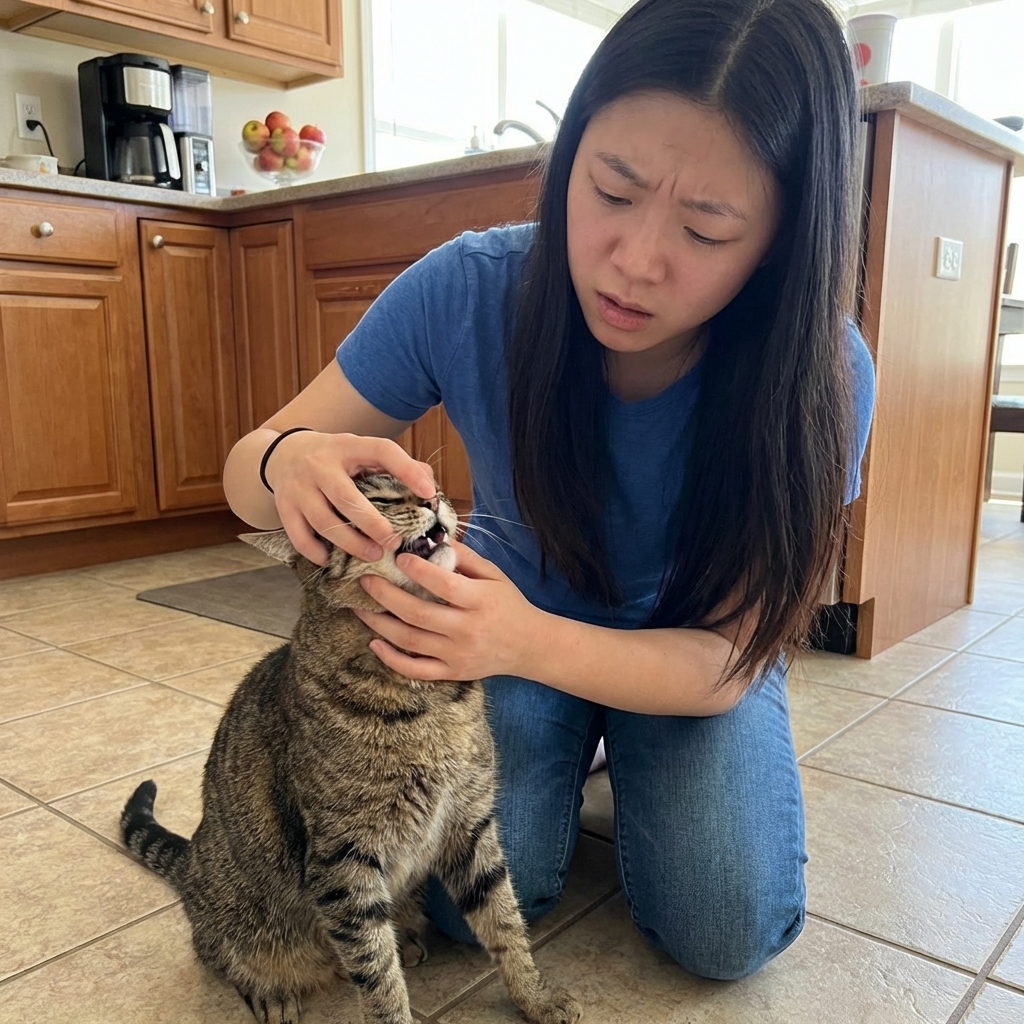
Ear and mouth peek
- Lift an ear flap briefly, treat.
- Touch the lips gently to see gums for one second, treat.
The towel wrap (the “purrito”)
A towel wrap can reduce stress and prevent scratches during basic care, but it should never restrict breathing.
- Lay a towel flat.
- Guide your cat onto the towel, then wrap snugly around shoulders and body, leaving the head out.
- Reward and unwrap within a few seconds at first.

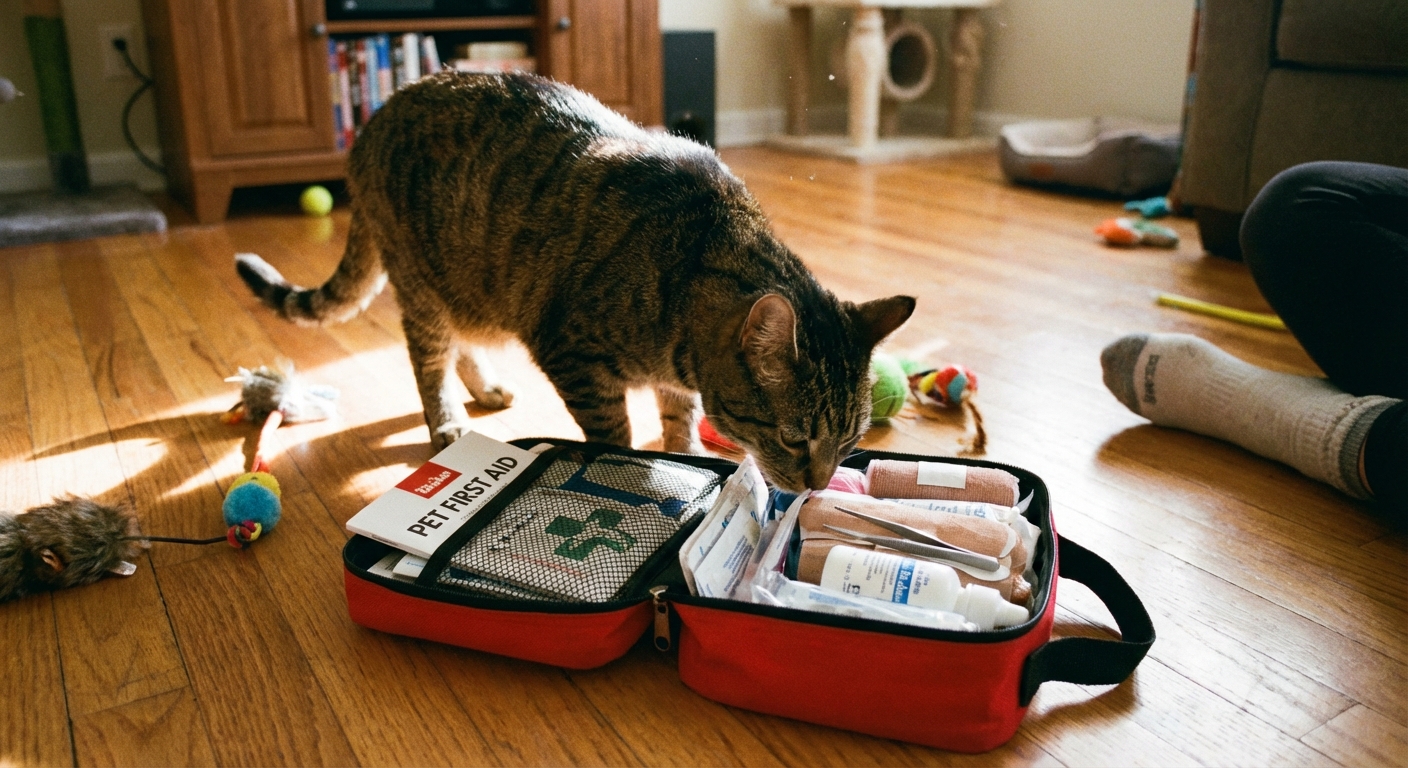
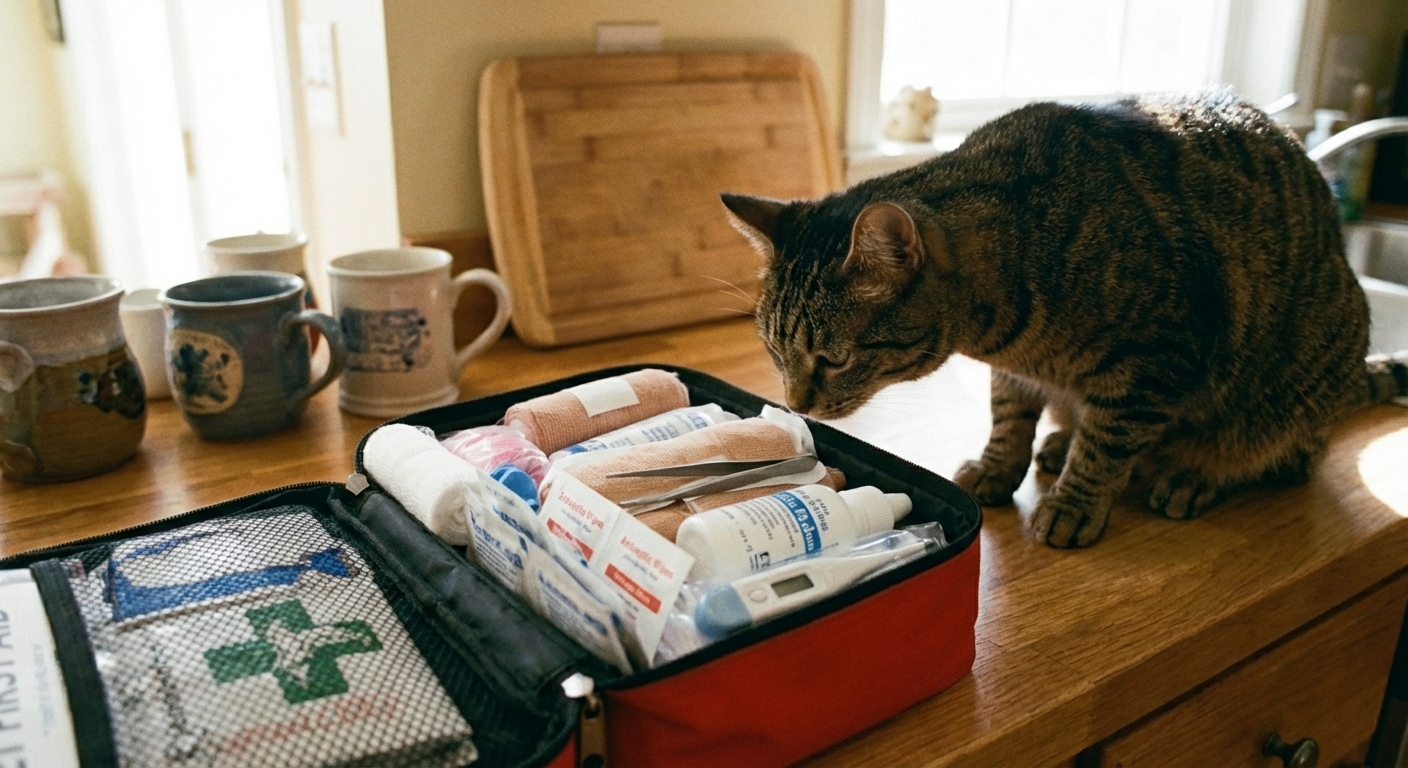
Cat first aid kit basics
You do not need a giant kit. You need the right items, stored together, and you need to know where they are.
Quick safety note: Ask your veterinarian before using any antiseptic, ointment, or medication at home. When in doubt, clean with saline and get seen.
At-home essentials
- Gauze pads and non-stick wound pads for covering wounds.
- Roll gauze and self-adherent wrap to secure dressings (do not wrap tightly).
- Medical tape to hold gauze in place.
- Saline wound wash for gentle flushing.
- Chlorhexidine solution (properly diluted) for cleaning around minor wounds, only if your veterinarian has OK’d it for your home kit.
- Digital thermometer and lubricant (rectal temps are most accurate, but many cats find it stressful).
- Disposable gloves.
- Blunt-tip scissors.
- Tweezers for visible splinters or debris.
- Instant cold pack for short, wrapped cooling on bruises or stings.
- Towels (restraint, warmth, traction).
- Small flashlight for quick checks.
- Emergency numbers (your vet, nearest ER, animal poison control) printed and taped inside the kit.
Helpful add-ons
- Soft muzzle alternative: a towel or blanket is usually safer for cats than a traditional muzzle.
- Elizabethan collar or inflatable collar to prevent licking if advised by a vet.
- Spare carrier towel for traction and warmth during transport.
Avoid: hydrogen peroxide on wounds (can damage tissue), human pain medications (many are toxic to cats), and essential oils. Many oils can be irritating or toxic to cats, so avoid diffusing them around cats and call your vet or poison control if exposure is possible.
Common situations: what to do
Minor cuts and scrapes
- Keep your cat calm and prevent licking.
- Gently flush with saline.
- Skip creams and ointments unless your veterinarian tells you to use one.
- Apply a non-stick pad and light wrap only if your cat tolerates it and the wrap will not slip or tighten.
- Contact your veterinarian if the wound is deep, gaping, puncture-like, or from a bite (cat bites often get infected).
Bleeding
- Apply firm, steady pressure with gauze or a clean towel for 5 to 10 minutes without constantly peeking.
- If blood soaks through, add more layers on top, do not remove the original pad.
- Seek emergency care for heavy bleeding, bleeding that will not stop, or any signs of weakness or pale gums.
Bandage safety (quick check)
- Wraps should be snug, not tight. If you can safely check, toes should stay warm and normal color.
- Red flags: swelling above or below the wrap, cold toes, toes that look dusky, sudden limping, or crying. Remove the wrap and get veterinary help.
Suspected poisoning
This one is urgent and common. Call your veterinarian, an emergency hospital, or animal poison control immediately.
- Do not induce vomiting unless a professional instructs you to.
- If a substance is on the fur, prevent grooming and ask your vet about safe bathing.
- Bring the packaging or a photo of the ingredient list to the clinic.
- If you need a reputable poison resource, ask your clinic about ASPCA Animal Poison Control or the Pet Poison Helpline (fees may apply).
Heat stress
- Move your cat to a cool, shaded area.
- Offer small amounts of water if they are alert.
- Use cool (not ice-cold) damp towels on paws, belly, and ears while you arrange urgent veterinary care.
- Avoid ice baths and ice water. Overcooling can be dangerous, and heat stress can worsen quickly, so get evaluated right away.
Choking or trouble breathing
- If your cat is open-mouth breathing, breathing rapidly at rest, or collapsing, go to an emergency hospital immediately.
- Do not put your fingers deep in the mouth. Frightened cats can bite hard, and you can push an object farther back.
Seizures
- Keep the area safe: move furniture, dim lights, reduce noise.
- Do not restrain the mouth or try to hold the tongue.
- Time the seizure and call your vet. Emergency care is recommended for seizures lasting more than 5 minutes or repeated seizures.
Safe transport tips
- Use a carrier when possible. A towel “purrito” can help you move an injured cat safely into the carrier.
- Keep things dark and quiet. Warmth helps, but avoid overheating. A towel over the carrier can reduce stress.
- Bring any medication bottles, chewed packaging, plant samples, or photos of what your cat got into.
Go now: emergency signs
If any of the following are happening, treat it as an emergency:
- Difficulty breathing, open-mouth breathing, or blue or pale gums
- Uncontrolled bleeding
- Suspected toxin exposure (lilies, rodenticide, antifreeze, human meds, etc.)
- Inability to urinate or repeated trips to the litter box with little output
- Collapse, extreme weakness, or unresponsiveness
- Eye injuries, especially squinting with a cloudy or swollen eye
- Deep puncture wounds or bite wounds
- Persistent vomiting, bloated belly, or signs of severe pain
Trust your instincts. If your cat looks “not right,” it is always okay to call and ask. Early help is often simpler and less expensive than waiting.
Make it fun: weekly plan
Here is a low-effort routine that builds real first aid readiness.
Week-by-week ideas
- Week 1: Carrier treat toss, 5 treats total.
- Week 2: Paw touch plus treat, 30 seconds.
- Week 3: Towel wrap practice, 10 seconds, then big reward.
- Week 4: Calm exam on a non-slip mat: ears, gums peek, and a quick body scan.
Keep sessions short. Stop before your cat gets annoyed. Success is ending on a calm note.
Prevention tips
- Skip lilies completely in cat homes. Many lilies are dangerously toxic.
- Lock up human medications, including gummies and flavored liquids.
- Use cat-safe pest control and store products securely.
- Secure windows and balconies with sturdy screens.
- Microchip and collar (breakaway collar for safety) for faster reunions.
Bottom line
Fun first aid is a mindset: prepare calmly, practice gently, and keep your kit stocked so you can focus on your cat, not the chaos. The best first aid skill is the one you can do confidently while your cat still feels safe with you.
If you would like, tell me your cat’s age, temperament, and whether they are indoor-only or indoor-outdoor, and I can suggest a realistic first aid kit and practice plan for your home.