Vet-assistant tips to help a new cat adjust: set up a quiet home base room, prevent litter box issues, build trust with food and play, and introduce other pe...
Article
•
Designer Mixes
Fun Cat Adoption Checklist Care Tips

Shari Shidate
Designer Mixes contributor
Bringing home a new cat is exciting, a little nerve-wracking, and completely worth it. As a veterinary assistant (and someone who has seen both smooth transitions and the stressful ones), I can tell you this: a few simple preparations make the first week calmer for you and kinder for your cat.
This checklist is designed to be practical, budget-friendly, and fun. You can start small, then build routines that support long-term health.
Quick note: This article is educational and not a substitute for veterinary care. If something feels off, call your clinic.
Before you adopt: quick reality check
Every cat is an individual, but most adoption challenges come down to a few predictable needs: safety, privacy, consistent routines, and veterinary care. Before you sign the paperwork, confirm these basics.
- Time: Plan for a quiet first 3 to 7 days with minimal guests and lots of calm observation.
- Budget: Food, litter, routine vet care, and an emergency fund. Preventive care is almost always cheaper than crisis care.
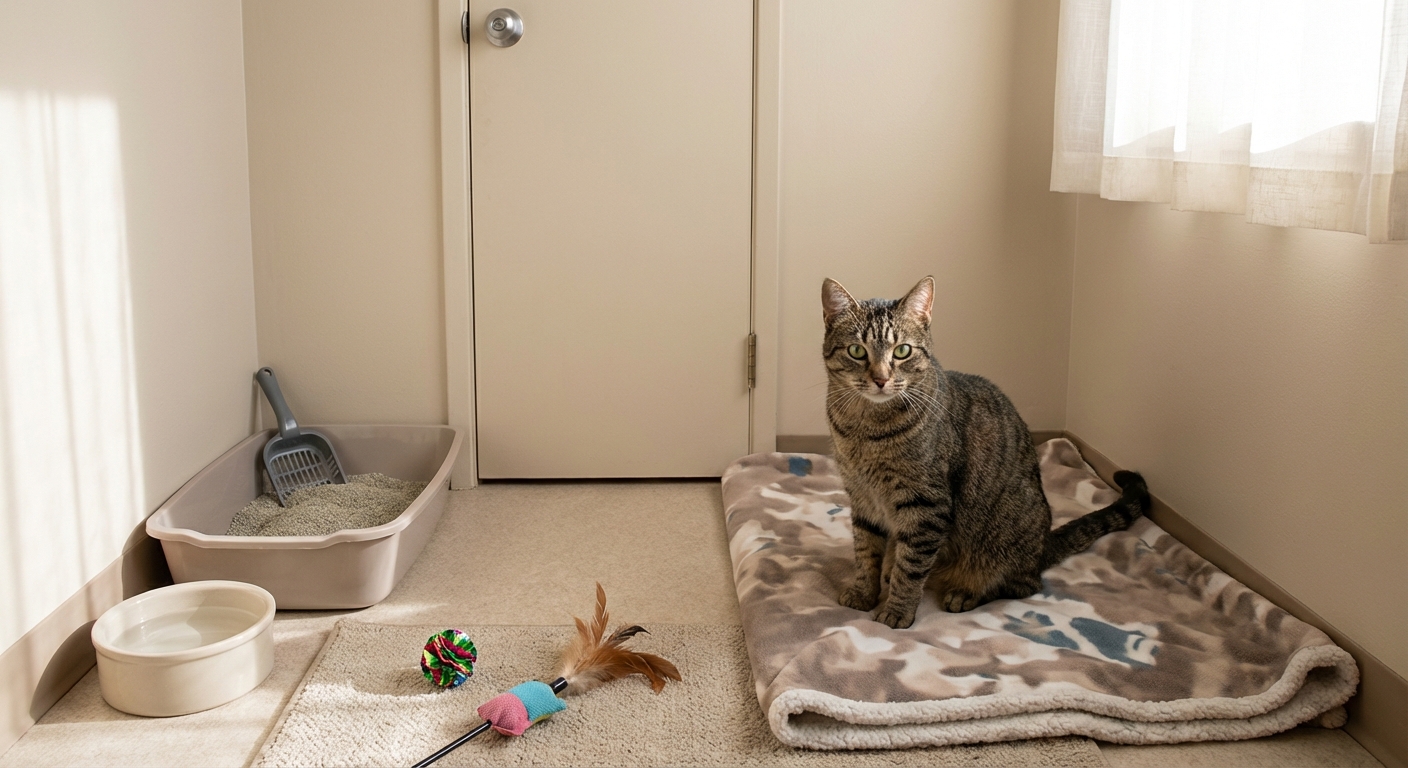
- Home setup: A small safe room beats free roaming on day one. Think spare bedroom or bathroom with a door.
- Family agreement: Decide who feeds, who cleans the litter box, and who schedules vet visits so the cat gets consistency.
Adoption day checklist
Adoption day can feel like a party to us, but it can be sensory overload for cats. Your goal is a quiet, predictable ride home and an easy first landing.
Must-haves for pickup
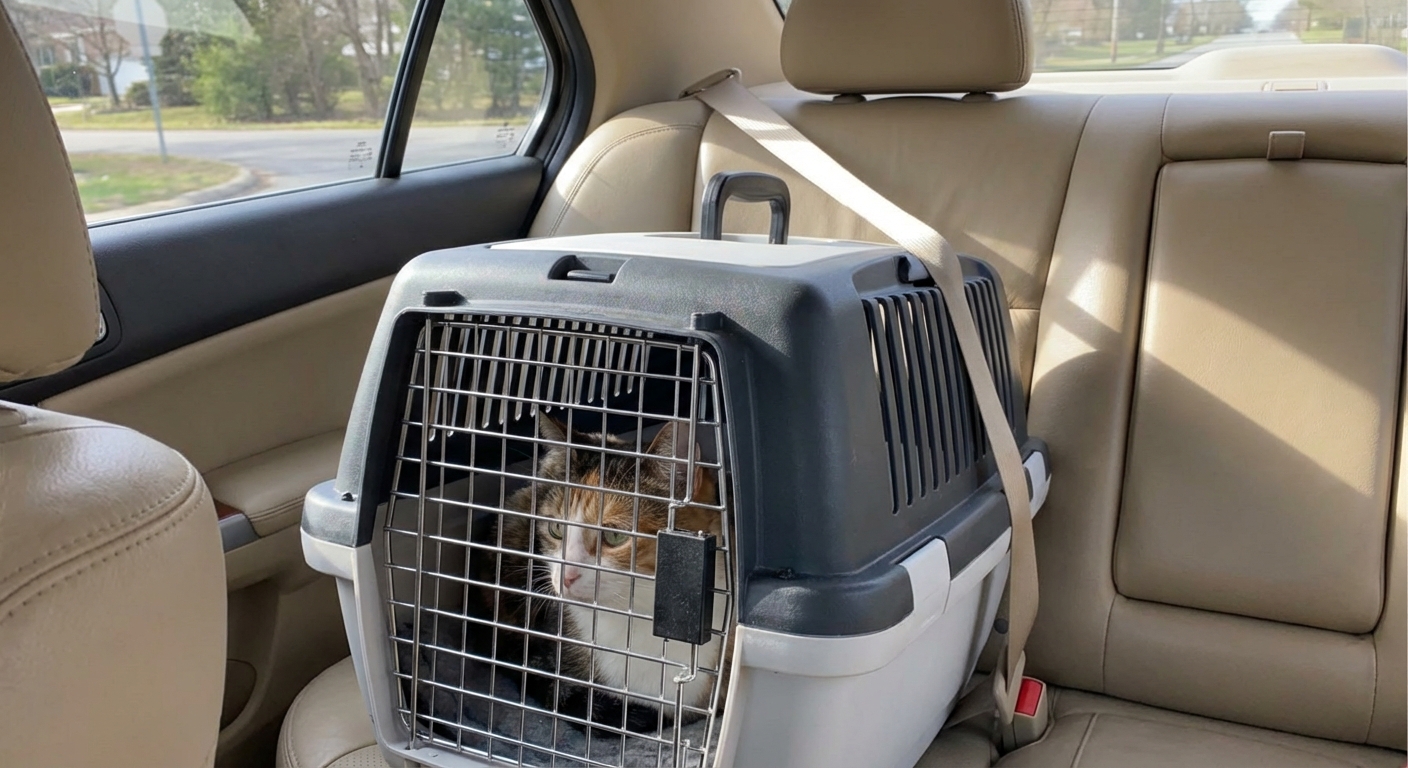
- Secure carrier that opens easily and latches well. A hard-sided carrier is often easiest for safe transfers.
- Soft towel or blanket to reduce sliding and provide a hiding cave.
- Folder or envelope for medical notes, microchip info, and vaccine dates.
- High-value treats if the shelter says it is okay, especially for confident cats who enjoy snacking.
Car ride tips
- Keep the carrier on a flat surface and buckle it in if possible.
- Skip loud music. Calm voices and steady driving help a lot.
- Do not open the carrier in the car unless absolutely necessary and all doors and windows are fully closed. Even friendly cats can bolt when scared.
Safe room setup
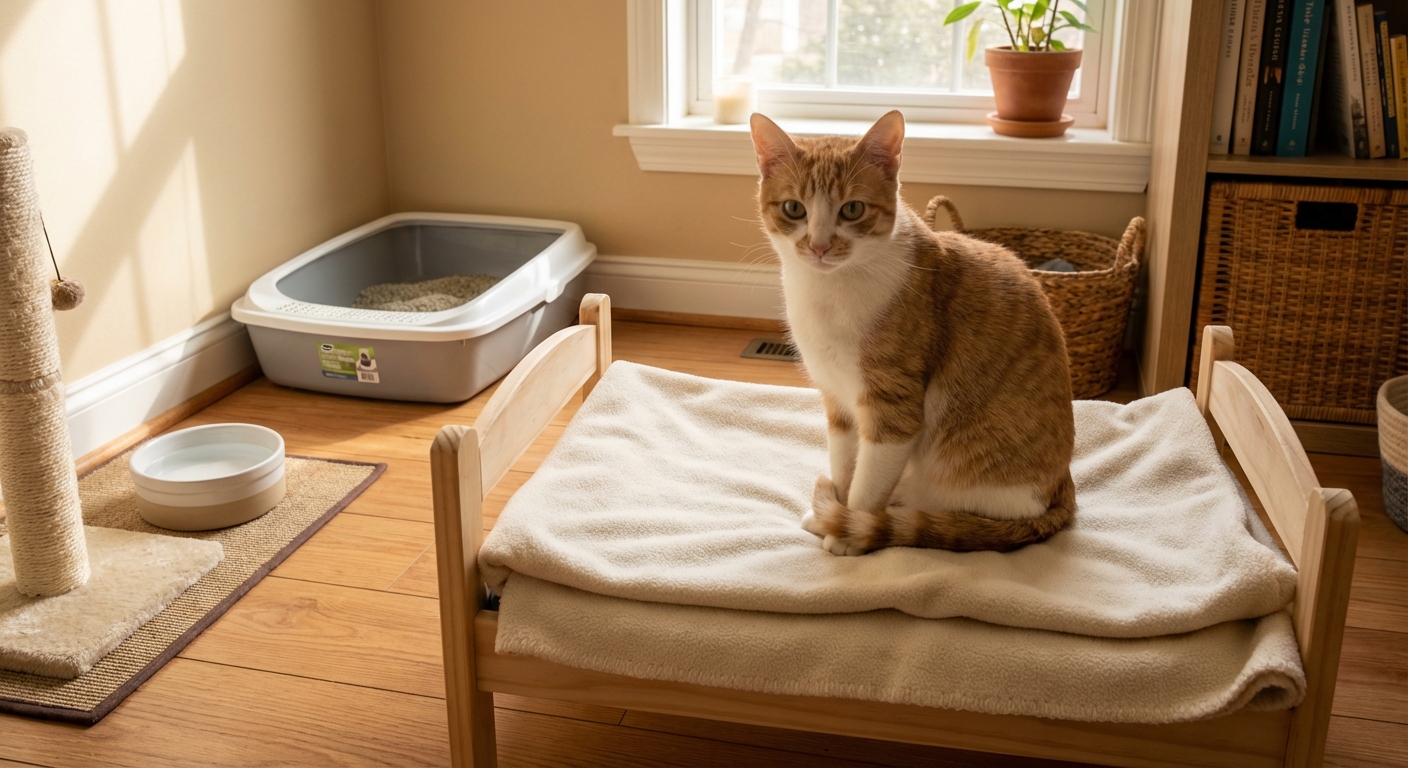
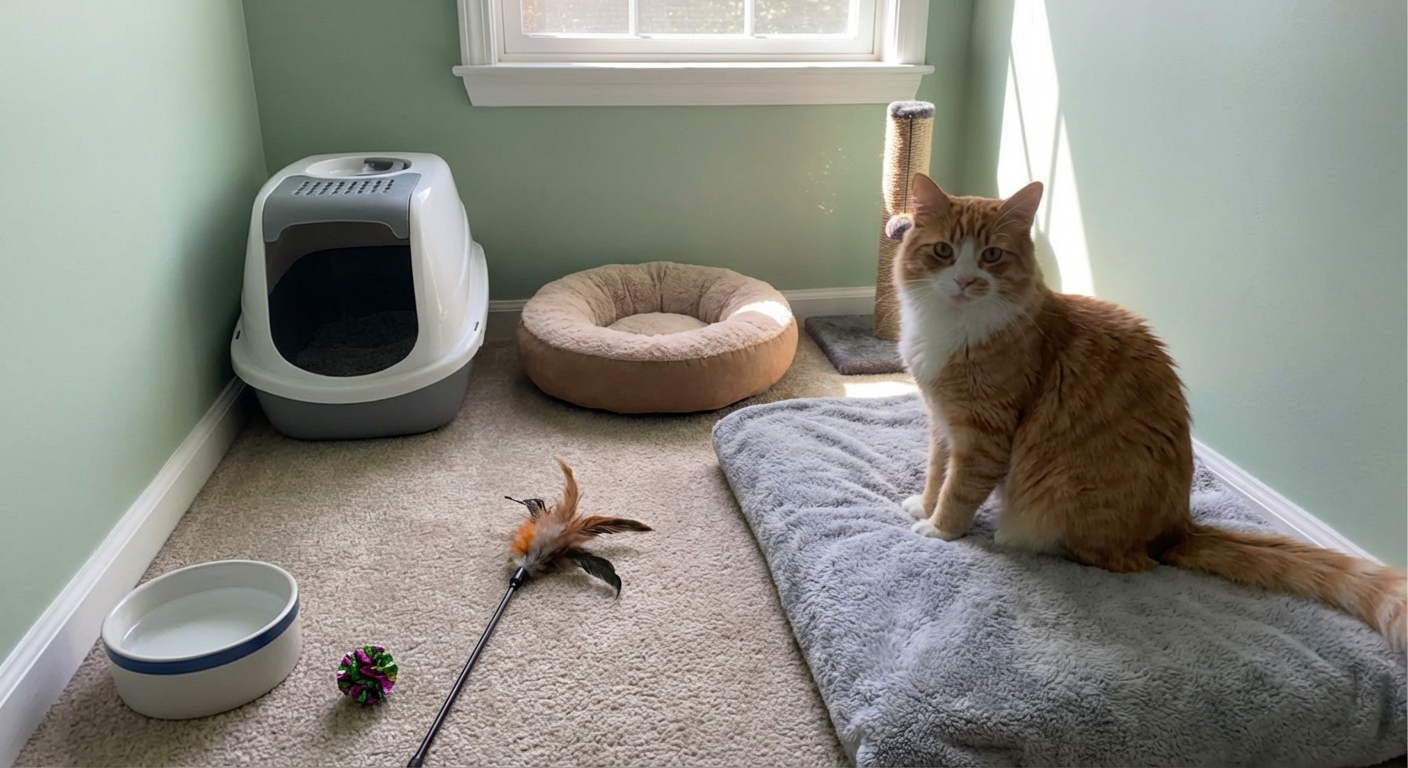
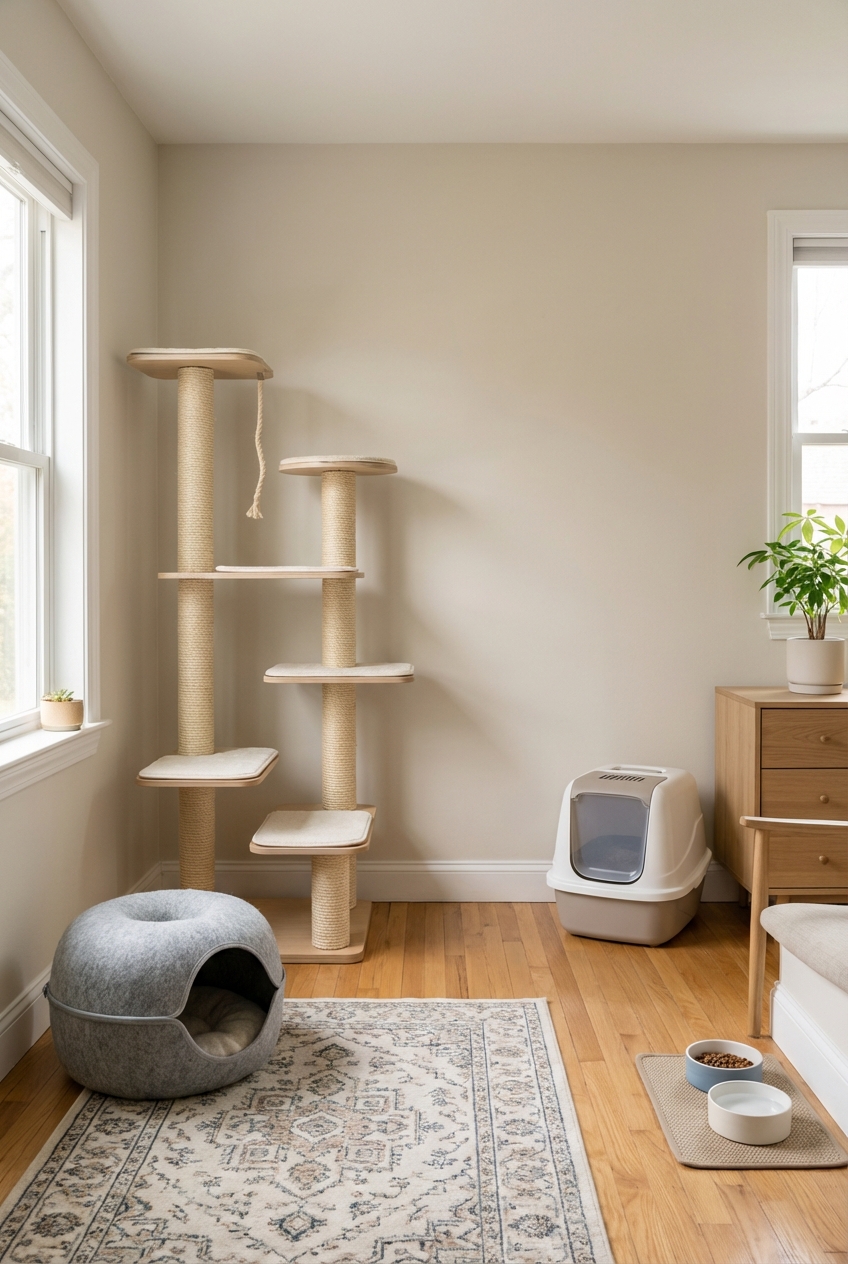
A safe room helps your new cat decompress. It also prevents hiding in hard-to-reach places, reduces accidents outside the litter box, and makes it easier to monitor eating, drinking, and bathroom habits.
Set up these zones
- Litter zone: Litter box in a quiet corner, away from food and water. Scoop daily.
- Food and water zone: Separate bowls. Many cats drink more from a water fountain.
- Sleep and hide zone: A covered bed, a box on its side, or a cat cave. Choose at least one hide option that is easy for you to access so you can check on your cat without dragging them out.
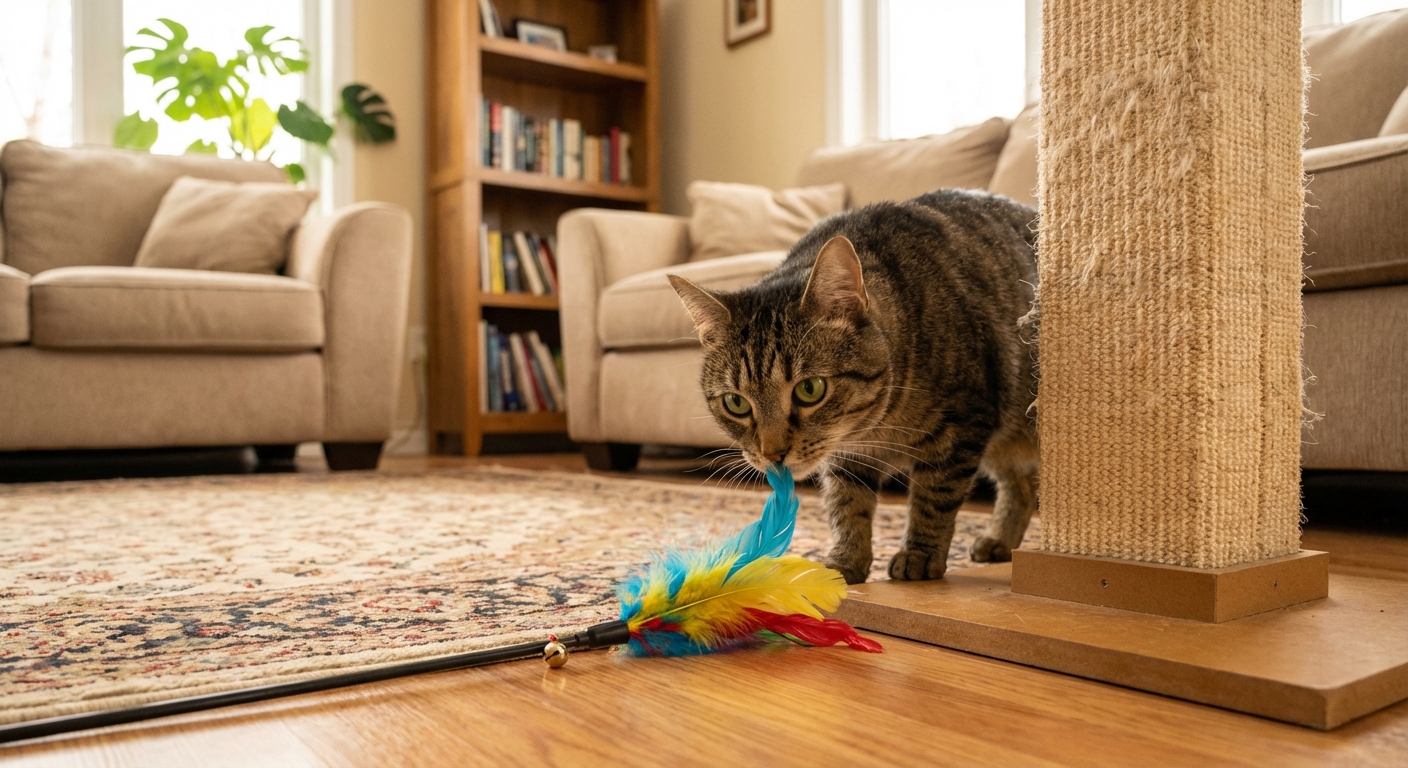
- Scratch zone: One vertical scratching post and one horizontal scratcher if possible.
- Play zone: A wand toy, a few small toys, and something to climb like a sturdy cat tree.
Safety sweep
- Remove string, yarn, rubber bands, hair ties, and anything that can be swallowed.
- Secure cords and blind strings, and block tight gaps behind toilets or appliances if possible.
- Check for toxic plants and open windows. Make sure screens are secure.
Comfort boosters
- Plug-in feline pheromone diffuser can help some cats relax during transitions.
- Night light for the first few nights if the room is very dark, which can reduce startle and help them find the litter box.
- White noise outside the door if your household is busy or loud, which can soften sudden sounds.
First 72 hours: what is normal
Some cats strut out immediately. Others hide for a day or two. Both can be normal. What matters is gentle progress and basic health signs.
Common behaviors you might see
- Hiding under a bed or behind the toilet.
- Low appetite for the first day. Stress can reduce eating.
- Quiet exploring at night when the house is calmer.
- Meowing, especially at night, as they adjust.
- Mild sneezing or watery eyes can happen with stress or common shelter upper respiratory infections. Monitor closely and call your vet if it worsens, your cat stops eating, or you see thick discharge.
Red flags: call a vet
- Not eating for 24 hours, or a major drop in appetite that lasts longer than a day. Call sooner for kittens, seniors, or cats with known medical conditions.
- No urination within 24 hours, or repeated trips to the litter box with little or no output.
- Straining to urinate, crying in the litter box, blood in urine, or frequent attempts with little output. These can be an emergency, especially in male cats.
- Labored breathing, open-mouth breathing, or extreme lethargy.
- Vomiting repeatedly or watery diarrhea that persists.
If you are unsure, it is always okay to call your veterinary clinic and ask what to do next. Early guidance prevents bigger problems.
Your cat adoption shopping list
You do not have to buy everything at once. Start with the essentials, then add enrichment items as you learn your cat’s preferences.
Essentials
- Carrier
- Litter box (one per cat, plus one extra is ideal in multi-cat homes)
- Unscented litter (many cats prefer it)
- Food and water bowls, or a water fountain
- Quality cat food your shelter used (transition slowly if changing)
- Scratching post or scratch pad
- Cat-safe nail trimmers
- Enzymatic cleaner for accidents
Nice-to-have items
- Wand toys and puzzle feeders
- Cat tree or window perch
- Soft brush or grooming glove
- Breakaway collar (only if your cat tolerates it) plus an ID tag
- Clicker for training simple cues like touch or come
Vet care: first appointment
Even if your cat was just seen at the shelter, schedule a new-patient exam soon after adoption. As a general goal, aim for within 7 to 14 days, and sooner if you notice any red flags, your cat is a kitten or senior, or the shelter advised a quicker recheck. This creates a baseline and helps catch common issues early.
What to bring
- All shelter medical records and vaccine history
- Any notes about sneezing, coughing, diarrhea, appetite changes, or hiding
- A fresh stool sample if your clinic requests it
What to ask your veterinarian
- When are boosters due, and which vaccines make sense for indoor versus indoor-outdoor lifestyle?
- What parasite prevention do you recommend in our region?
- Is microchip registration complete, and can we confirm the chip is registered to my current contact information?
- Spay or neuter status and any follow-up needs
- Dental check expectations and home dental care options
Helpful note: Many veterinary and animal welfare organizations support keeping cats indoors as a safer baseline because it reduces risks like trauma, parasites, and infectious disease. If you want outdoor time, consider a catio or harness training for supervised adventures.
Feeding tips
Nutrition is one of the most powerful tools you have. The best food is one your cat tolerates well, meets nutritional standards, and fits your budget consistently.
Transition slowly
If you switch foods, aim for a gradual transition over about 7 to 10 days to reduce stomach upset.
- Days 1 to 3: 75% old food, 25% new
- Days 4 to 6: 50% old, 50% new
- Days 7 to 9: 25% old, 75% new
- Day 10 onward: 100% new food
Hydration matters
- Offer fresh water daily.
- Many cats drink more from moving water, so consider a fountain.
- Wet food can be helpful for hydration. Ask your vet what is best for your cat’s age and health.
Litter box success
Litter box issues are a commonly cited reason cats struggle after adoption, and most are preventable with setup and routine.
Quick litter box rules
- Location: Quiet, easy to access, not near loud appliances.
- Cleanliness: Scoop daily, wash the box regularly.
- Size and style: Many cats prefer a large box (often about 1.5 times your cat’s body length) and unscented litter. Some cats dislike covered boxes, especially if smells build up.
- Count: One box per cat, plus one extra if possible.
If your cat suddenly stops using the litter box, treat it like a medical problem first. Urinary issues can become emergencies quickly.
Bonding and enrichment
Healthy cats need opportunities to hunt, climb, scratch, and rest. Enrichment is not extra. It is how you prevent boredom, stress, and some behavior problems.
Try a simple daily routine
- 5 to 10 minutes of interactive play twice a day (wand toys work well).
- Food puzzles a few times per week to encourage natural foraging.
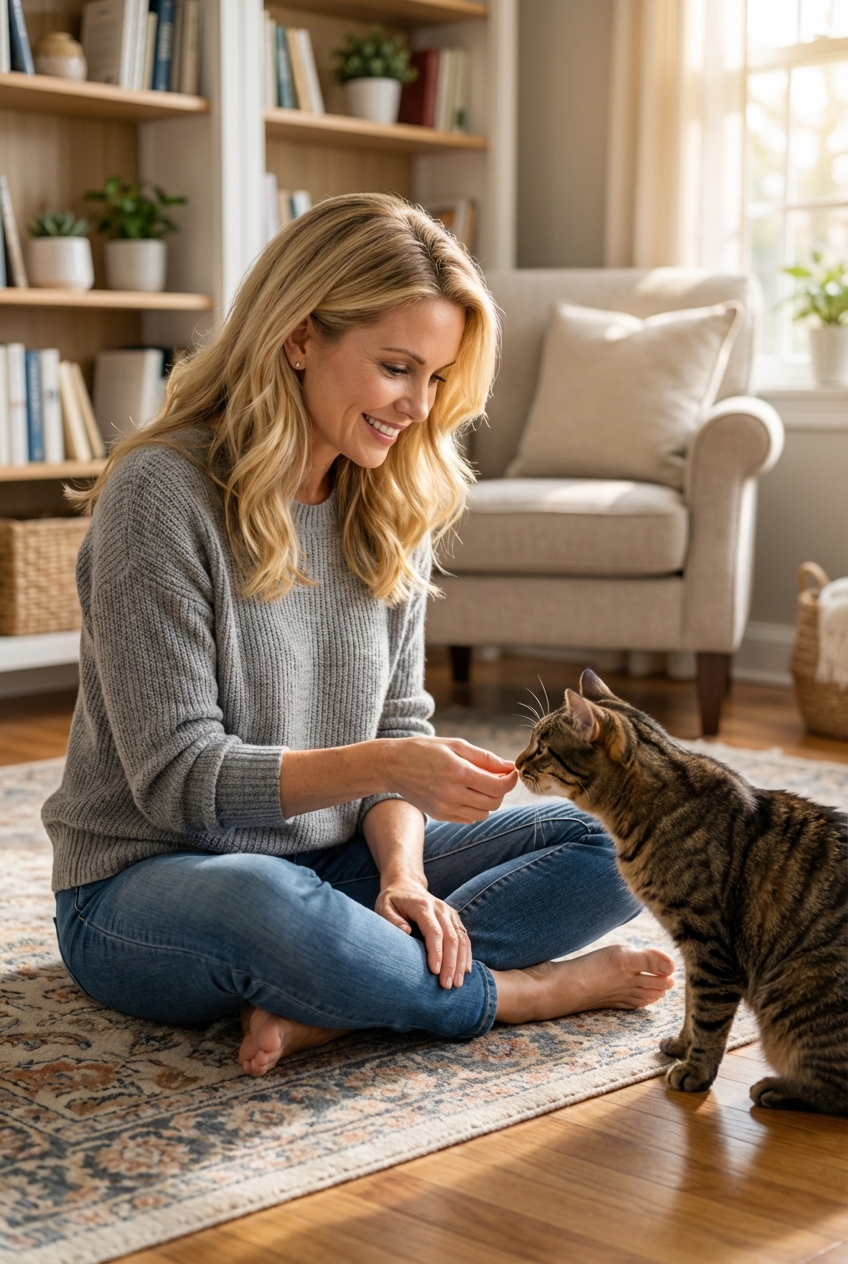
- Training with treats for confidence building. Cats can learn cues and it is fun.
Respect consent
Let your cat choose the pace. Slow blinking, offering your hand to sniff, and letting them approach first builds trust faster than forced cuddles.
If you already have pets
Slow introductions reduce stress and help prevent long-term tension, especially with cats who have never lived with other animals.
Typical baseline: Plan to keep your new cat separated for 7 to 14 days in many homes, and longer if either pet is stressed. Go at the pace of the most cautious animal.
Cat to cat
- Start with scent swapping (blankets, bedding).
- Feed on opposite sides of a closed door.
- Use a baby gate or cracked door for short visual sessions.
- Only allow full access when body language is relaxed on both sides.
Cat to dog
- Keep the dog leashed at first.
- Give the cat vertical escape routes like a cat tree.
- Reward calm behavior. Do not allow chasing.
Printable checklist
- Before adoption: safe room ready, budget set, family roles decided
- Day of: secure carrier, towel, paperwork, calm ride home
- Safe room: litter box, food, water, hide spot, scratcher, toys, hazards removed
- First 72 hours: monitor eating, drinking, urination, stool, energy
- Vet visit: schedule exam (often within 7 to 14 days), bring records, ask about parasites and vaccines
- Routine: play sessions, slow food transitions, daily litter scooping
- Enrichment: climbing, scratching, foraging, quiet rest zones
- Introductions: separate pets at first, slow scent-based steps
If you do just one thing today, set up that safe room. It is the easiest way to reduce stress, support good litter box habits, and help your new cat feel secure.