Cats don’t need carbs, so fruit should be a tiny, occasional treat. See cat-safe fruits with exact portions, sugar-risk tiers, serving tips, and fruits to ...
Article
•
Designer Mixes
Fruits Cats Can Eat Safely (And Which to Avoid)

Shari Shidate
Designer Mixes contributor
Starting your morning right sets the tone for the entire day. I tell pet parents something similar about nutrition. Small, consistent choices add up, especially when you are supporting your cat’s long-term health.
Cats are obligate carnivores, which means they require nutrients found in animal tissue (like taurine, arachidonic acid, and preformed vitamin A). Fruit is not a nutritional “need” for cats, but small tastes of certain fruits can be a safe, fun enrichment treat. The key is knowing which fruits are cat-safe, how much is too much, and which ones should never be offered.
Before you share fruit: a safety checklist
- Keep portions tiny. Think pea-sized pieces. For most cats, 1 to 2 pea-sized pieces is plenty.
- Fruit is a treat, not a meal. Many veterinarians recommend keeping all treats combined under about 10 percent of daily calories to help prevent weight gain and nutrient imbalance.
- Remove seeds, pits, stems, cores, and rinds. These are common choking hazards and may contain irritating or toxic compounds.
- Serve plain and fresh. Skip fruit packed in syrup, sweetened dried fruit, juices, and anything with xylitol or other sweeteners.
- Introduce one fruit at a time. Offer a tiny amount, then watch for vomiting, diarrhea, gas (gassiness), or itchiness.
- Extra caution for certain cats. If your cat has diabetes, obesity, chronic kidney disease, inflammatory bowel disease, is a kitten or senior, or is on a prescription diet, ask your veterinarian before offering fruit.
- Prevent choking. Round, slippery foods (like whole blueberries) can be gulped. Cut, mash, or offer a thin smear on a plate.
Quick rule: If you would not safely give it to a toddler without removing the hard parts, do not give it to your cat.
Fruits cats can eat safely
These fruits are generally considered safe for cats in small amounts, prepared properly. Remember, “safe” does not mean “necessary.” Also, cats cannot taste sweetness the way we do, so interest is often about texture, scent, or water content.
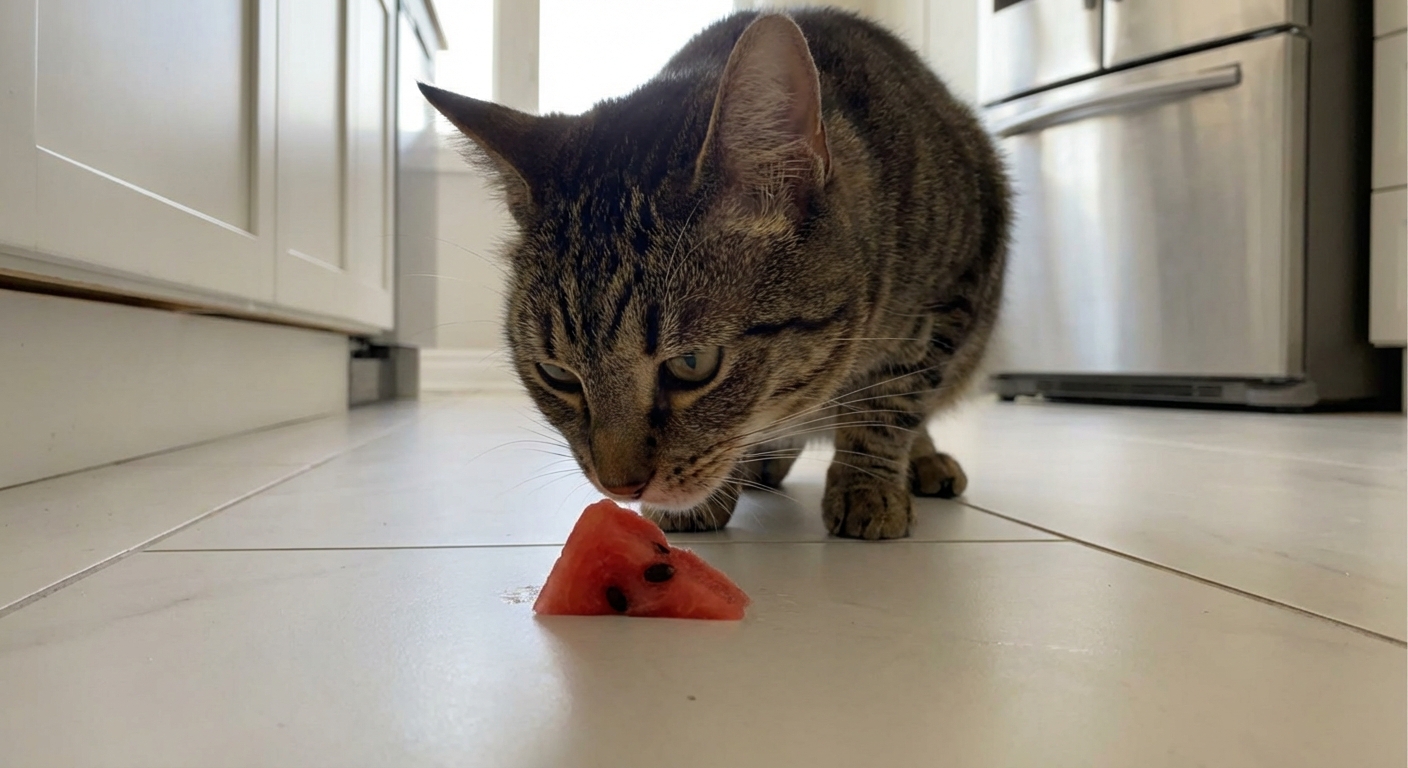
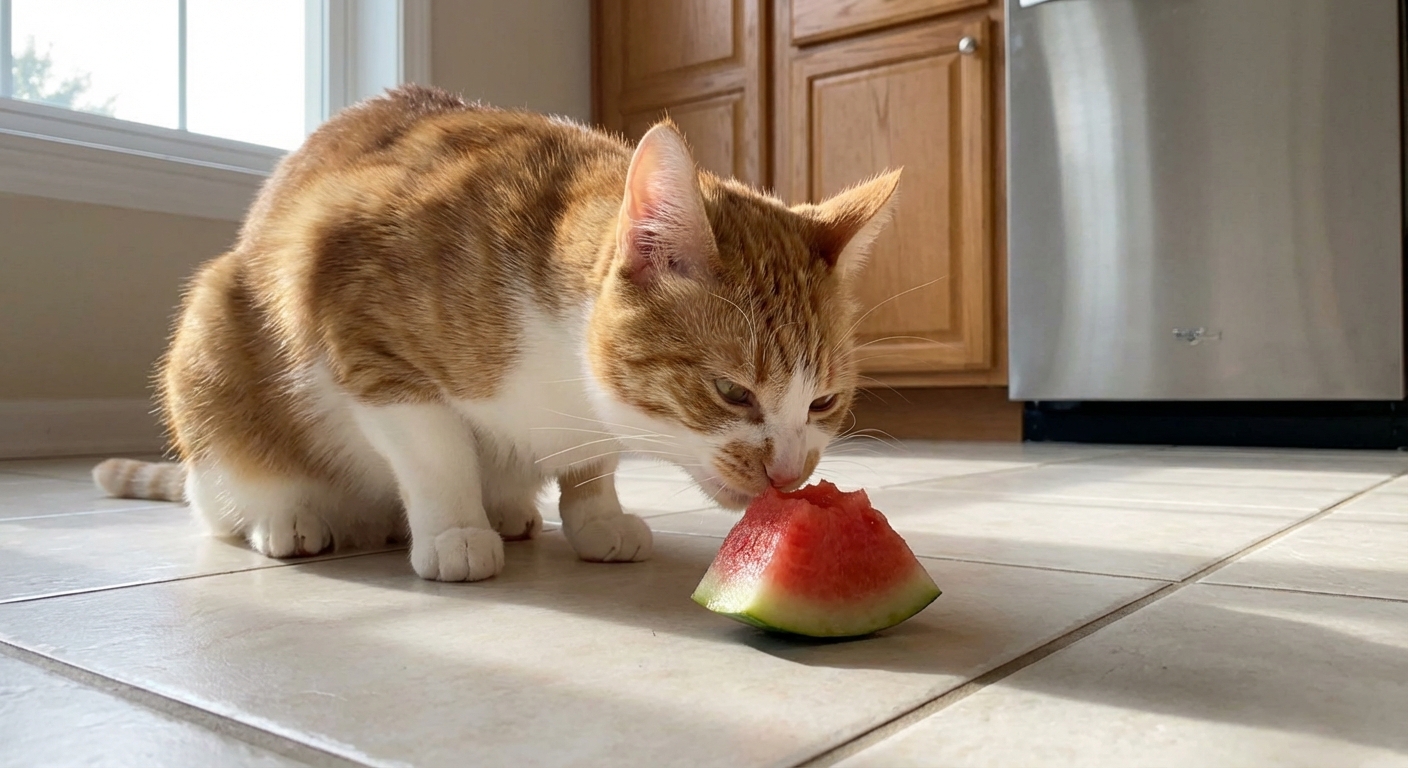
Watermelon (seedless, no rind)
Watermelon is mostly water, so it can be a refreshing treat. Serve 1 to 2 pea-sized pieces with seeds removed and no rind.
Cantaloupe (no rind or seeds)
Many cats are intrigued by cantaloupe’s aroma. Offer 1 to 2 pea-sized soft pieces and remove all seeds and rind.
Strawberries (small pieces)
Strawberries are safe in tiny amounts. Because they contain natural sugars and fiber, too much can trigger loose stools.
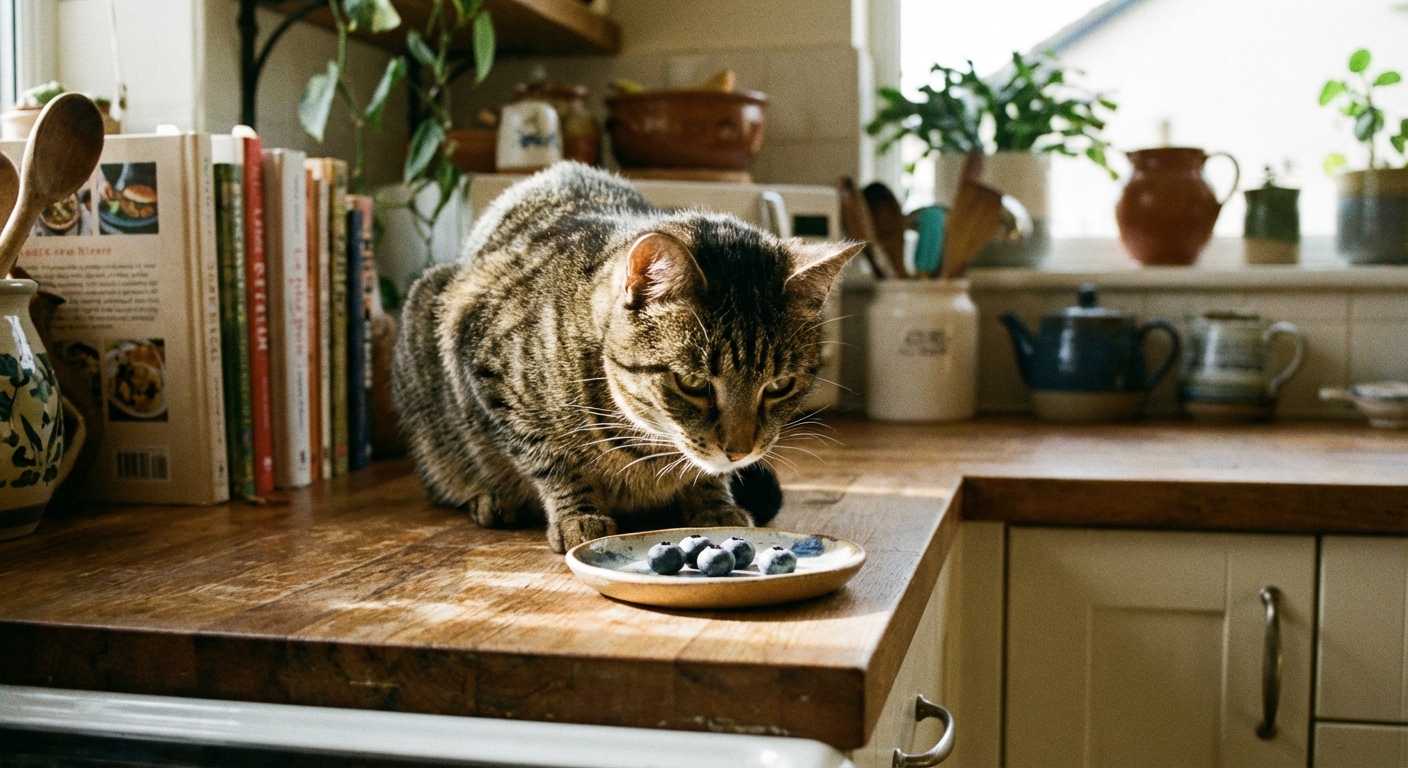
Blueberries (mashed or cut)
Blueberries are a popular option, but many cats swallow them whole. Mash one berry or cut it into smaller bits to reduce choking risk.
Apples (no seeds, no core)
Apple flesh is safe, but the seeds contain cyanogenic compounds and should never be offered. The core is mainly a choking or obstruction risk. Cut the flesh into very small pieces.
Pears (no seeds, no core)
Pear is similar to apple in safety. Soft, ripe pear is easiest to chew and digest.
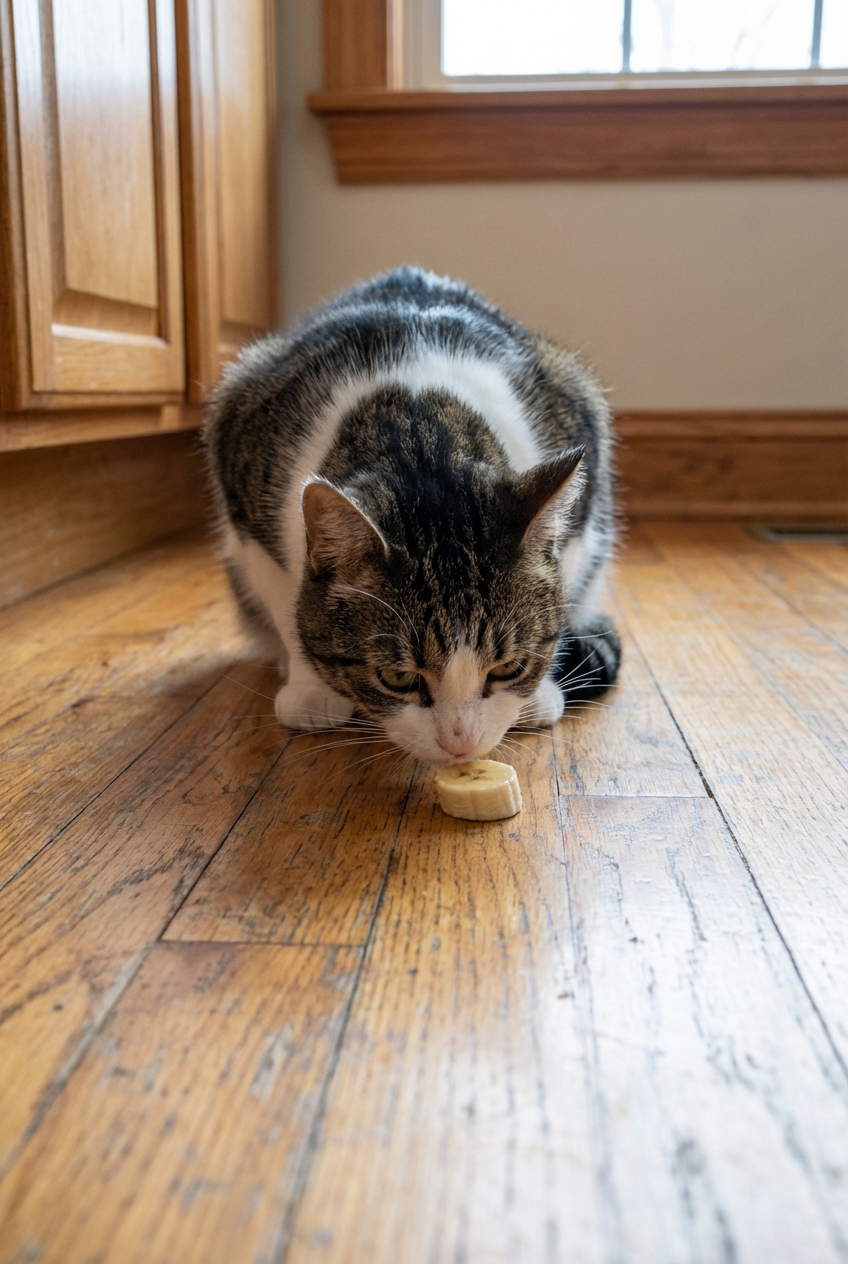
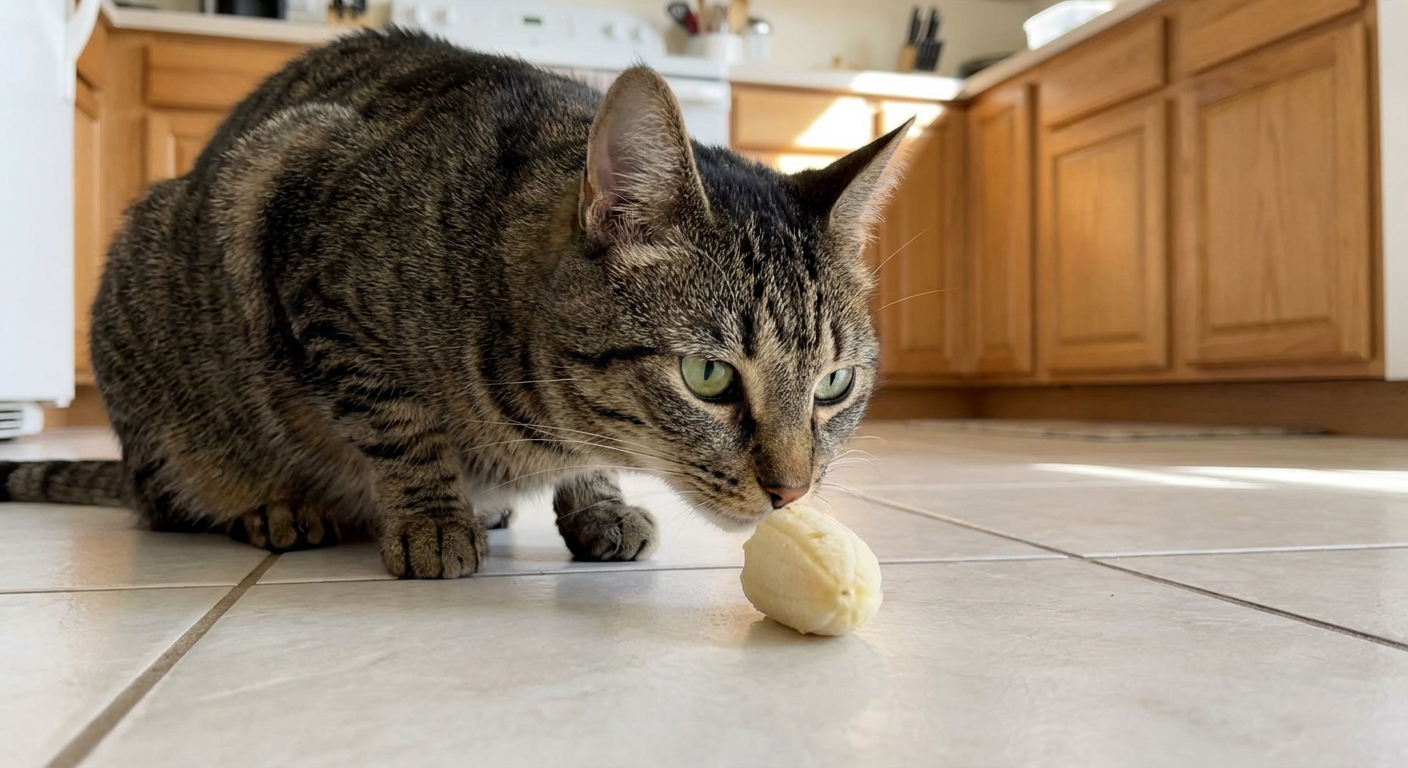
Banana (tiny amount)
Banana is not toxic, but it is starchy and more calorie-dense than many other fruits. Offer only a very small sliver.
Mango (no pit, no skin)
Mango flesh can be safe. Be meticulous about removing the pit and peel, and serve only a small bite due to sugar content.
Pineapple (small piece, no rind)
Fresh pineapple flesh is generally safe in tiny amounts, but it can be acidic and may upset sensitive stomachs. Avoid the tough rind and core.
Stone fruits (peach, plum, apricot: flesh only)
A small piece of ripe flesh is generally the low-risk part, but the pit and surrounding parts are dangerous due to choking risk and potentially toxic compounds. If you cannot remove the pit cleanly, skip it.
Fruits to avoid
Some fruits are best skipped due to toxicity concerns, choking risk, or significant gastrointestinal irritation. When in doubt, choose a cat-formulated treat instead.
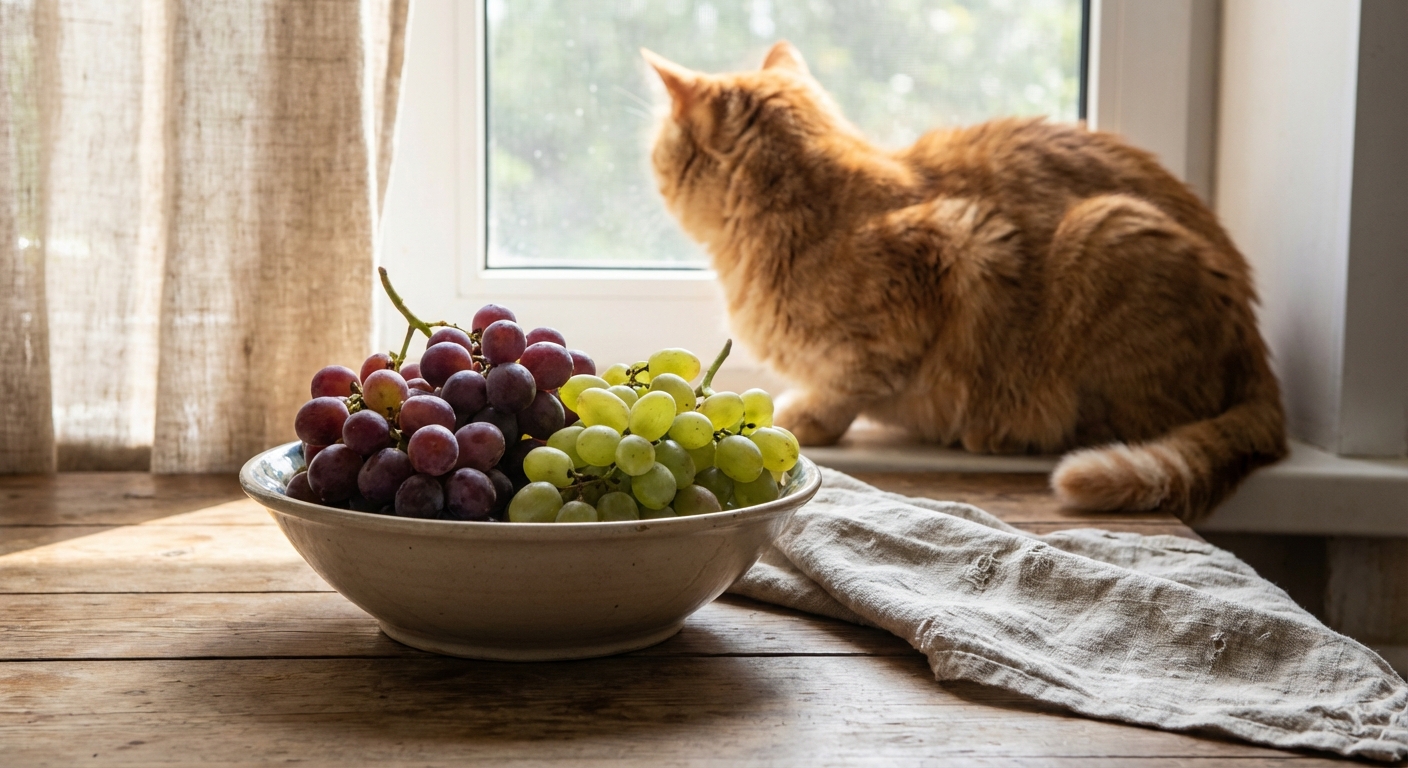
- Grapes and raisins: Toxicity has been reported in pets and can cause acute kidney injury. Evidence in cats is less clear than in dogs, but because the risk is serious and unpredictable, the safest choice is complete avoidance.
- Cherries: The pits, stems, and leaves contain cyanogenic compounds, and the pit is a choking and obstruction hazard.
- Avocado: Persin may cause vomiting and diarrhea in some pets, and the pit and skin are major choking or obstruction risks. Best to avoid.
- Citrus (orange, lemon, lime, grapefruit): Citrus peel and oils can be irritating and may be harmful in larger amounts, and many cats react poorly to the smell. Small tastes of peeled flesh are not typically “highly toxic,” but they can still cause stomach upset. For most cats, it is simplest to skip citrus.
Fruit parts that are often the real problem
Even with otherwise safe fruits, certain parts create unnecessary risk.
- Seeds and pits: Can be choking hazards and may contain toxic compounds (for example, apple seeds and stone fruit pits).
- Cores, rinds, and peels: Tough to digest and can cause vomiting or intestinal upset. Large pieces can contribute to blockage.
- Dried fruit: Concentrated sugar and calories, sticky texture, and often mixed with ingredients that are unsafe for pets.
- Canned fruit and fruit cups: Frequently packed in syrup and may include preservatives or sweeteners not appropriate for cats.
How to serve fruit safely
- Wash thoroughly to remove pesticide residue and surface contaminants.
- Remove seeds, pits, stems, cores, rinds, and tough peels.
- Cut very small or mash soft fruits to reduce choking risk.
- Offer plain with no yogurt coatings, chocolate, spices, or sweeteners.
- Start smaller than you think. A lick, a tiny crumble, or 1 pea-sized piece is a good first test.
- Keep it occasional. Fruit should be a once-in-a-while enrichment treat, not a daily staple.
If you want a simple routine, choose one safe fruit your cat tolerates well, offer 1 to 2 pea-sized pieces, and keep it as an occasional treat.
Signs your cat did not tolerate fruit
Stop the fruit and monitor your cat if you notice:
- Vomiting or repeated gagging
- Diarrhea or very soft stool
- Excess drooling or pawing at the mouth
- Loss of appetite
- Visible abdominal discomfort or unusual hiding
Seek urgent veterinary care if your cat eats grapes or raisins, shows significant lethargy, cannot keep water down, or you suspect they swallowed a pit, rind, peel, or other foreign material.
Frequently asked questions
Can cats eat fruit every day?
Most cats do best with fruit as an occasional treat. Daily fruit adds extra sugar and calories without providing the animal-based nutrients cats truly need.
Are fruit-flavored foods safe for cats?
Not necessarily. Many fruit-flavored products include added sugar, artificial sweeteners, dairy, or other ingredients that can upset a cat’s stomach. Stick to small amounts of real, prepared fruit if you want to share.
My cat loves fruit. Is that normal?
Yes, for some cats. They may like the smell, texture, or water content. As long as you choose cat-safe options, keep portions tiny, and your cat tolerates it well, it can be a harmless enrichment treat.
Does cooked vs raw fruit matter?
Plain raw fruit is usually simplest. Cooking can make fruit softer, but it often concentrates sugars and may include added ingredients. If it is cooked, keep it plain and still offer only tiny portions.
Bottom line
Cats do not need fruit, but a few well-chosen options can be safe in tiny portions. Stick with cat-safe fruits like small pieces of watermelon, cantaloupe, berries (mashed or cut), apple, pear, or a little pineapple, and avoid higher-risk choices like grapes, raisins, cherries, avocado, and most citrus. When you keep it simple and small, you protect your cat’s digestion and make treat time a positive experience.
Reminder: This article is for general education and does not replace veterinary advice. If you are ever unsure about a specific fruit or your cat’s health needs, your veterinarian is the best guide.