Add dog-safe veggies the right way with simple portion guidelines by dog size, gentle cooking and chopping tips, and a clear list of vegetables to avoid.
Article
•
Designer Mixes
Fruits and Vegetables Good for Dogs

Shari Shidate
Designer Mixes contributor
If you have ever wished you could do one simple thing to support your dog’s long-term health, adding the right fruits and vegetables is a great place to start. As a veterinary assistant here in Frisco, Texas, I have seen how small nutrition upgrades can add up to real wins like healthier weight, steadier energy, better digestion, and often a shinier coat.
The key is this: dogs can benefit from produce, but they do best with the right choices, the right portions, and the right prep. Let’s make it easy and safe.
Quick note: This article is general education and does not replace individualized guidance from your veterinarian or a board-certified veterinary nutritionist, especially if you are feeding homemade meals or your dog has medical conditions.
How much produce should dogs eat?
For most healthy dogs, fruits and vegetables are best used as “supporting players,” not the main course.
- Commercial complete diets (kibble, canned, fresh): keep all treats and toppers (including produce) to 10% or less of daily calories. This is the simplest, most reliable rule for most families.
- Homemade diets: produce amounts vary a lot. In many balanced homemade recipes, vegetables are used as up to about 10 to 20% and fruit as up to about 5 to 10%, but the right percentage depends on the full recipe and your dog’s needs. If you are cooking at home regularly, ask your veterinarian about working with a veterinary nutritionist to keep the diet complete and balanced.
If your dog has pancreatitis, diabetes, kidney disease, recurring bladder stones, or is on a prescription diet, ask your veterinarian before adding new foods. The “healthy” choice for one dog may not fit another.
Simple portion guide (start small)
When you are adding a new fruit or veggie, start with a small amount and increase only if your dog does well for a few days. Here is an easy starting point for a single produce item:
- Toy dogs: 1/2 to 1 teaspoon
- Small dogs: 1 to 2 teaspoons
- Medium dogs: 1 to 2 tablespoons
- Large dogs: 2 to 4 tablespoons
For fruit (higher sugar), aim for the lower end. If stools soften, reduce the portion or pause and retry later in smaller amounts.
Best vegetables for dogs
Most dogs do better with vegetables that are lightly cooked and chopped or mashed. Cooking helps break down plant cell walls, making nutrients easier to use and often gentler on the gut.
1) Carrots
Crunchy, low-calorie, and a favorite for many dogs. Carrots provide beta-carotene and fiber.
- Serve: raw sticks for supervised chewing, or lightly steamed slices for easier digestion.
- Tip: if your dog gulps treats, choose thin coins, shredded carrot, or steamed pieces to reduce choking risk.
2) Green beans
Green beans are one of my go-to options for dogs who need weight support, because they are filling with relatively few calories.
- Serve: plain steamed or canned no-salt-added green beans.
- Avoid: seasoned beans with garlic, onion, butter, or sauce.
3) Pumpkin (plain)
Plain pumpkin may help some dogs with stool consistency due to its fiber content. It is a common, gentle add-in we use for mild constipation or mild loose stool, but it does not work for every cause of diarrhea. If symptoms persist or your dog seems unwell, it is time to call your vet.
- Serve: plain canned pumpkin or cooked fresh pumpkin.
- Avoid: pumpkin pie filling, which often contains sugar and spices.
4) Sweet potato
Sweet potato is a nutritious carbohydrate, but it is still a starch, so portion matters.
- Serve: baked or steamed, plain, then mashed or cubed.
- Go slow: too much can loosen stools in some dogs.
5) Broccoli and cauliflower (small amounts)
These are nutrient-rich cruciferous veggies, but they can cause gas for some dogs.
- Serve: lightly steamed, chopped small.
- Keep portions small: think “a few bites,” not a bowl.
6) Leafy greens (spinach, kale, romaine)
Leafy greens bring micronutrients and phytonutrients. Most dogs do best with cooked greens, especially if they are new to them.
- Serve: lightly steamed, chopped finely.
- Note: dogs prone to certain urinary stones may need guidance on higher-oxalate foods like spinach.
7) Zucchini and cucumber
These are mild, hydrating options that work well as low-calorie add-ins.
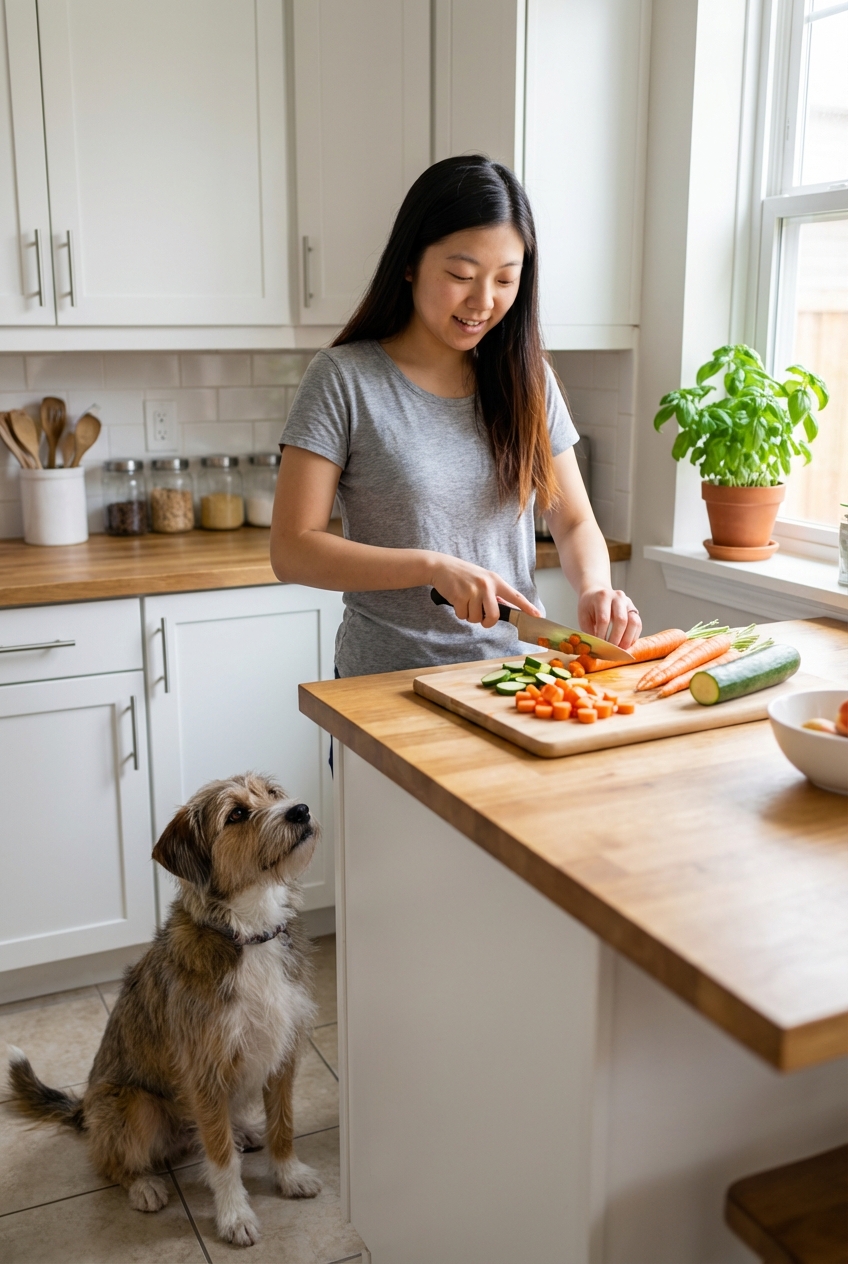
- Serve: chopped small, raw or lightly steamed.
- Bonus: helpful for dogs who love volume in their bowl.
8) Peas (in moderation)
Peas are fine for many dogs as an occasional topper. The bigger concern we discuss in clinic is diet patterns, especially foods where legumes (like peas, lentils, chickpeas) and potatoes are major ingredients in place of more traditional protein sources. These patterns have been investigated in connection with some cases of diet-associated heart disease (DCM).
- Serve: cooked peas, plain.
- Tip: use as a small add-in, not a main diet base, unless your veterinarian recommends otherwise.
- Avoid: seasoned pea side dishes.
9) Bell pepper
Bell peppers (especially red) are a crunchy, vitamin-rich option many dogs enjoy.
- Serve: raw or lightly cooked, seeds removed, diced small.
- Avoid: spicy peppers.
Best fruits for dogs
Fruit can be a wonderful training treat or topper, but it is easy to overdo. Think of fruit like nature’s candy: valuable, but best in small bites.
1) Blueberries
Blueberries are easy, low-mess, and packed with beneficial plant compounds.
- Serve: fresh or frozen.
- Portion idea: a few berries for small dogs, a small handful for large dogs.
- Choking note: for tiny dogs or fast eaters, lightly mash them.
2) Apples (no seeds, no core)
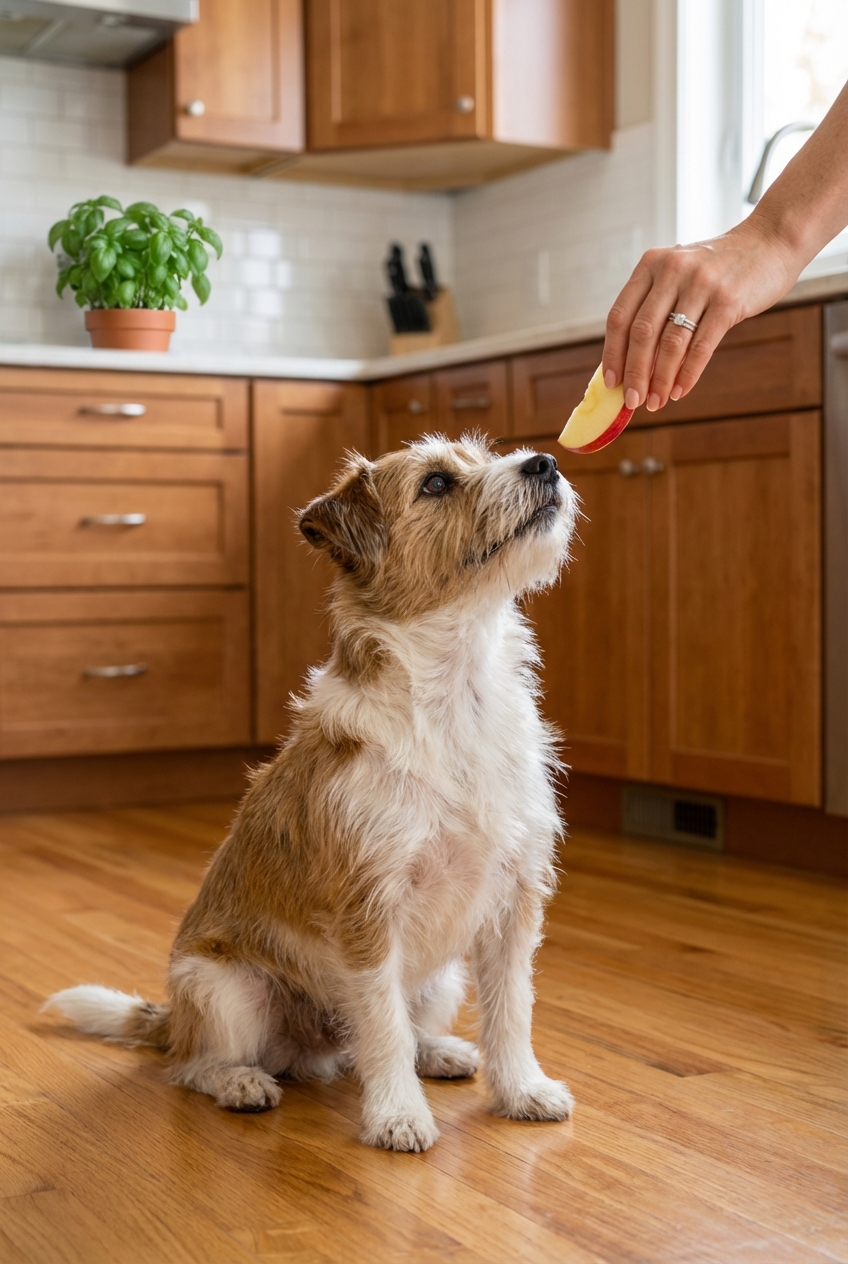
Apples provide crunch and fiber, but the seeds and core should be removed.
- Serve: thin slices or small cubes, core removed.
- Avoid: apple seeds and the tough core.
- Choking note: slice thin for seniors and small dogs.
3) Strawberries
Great sliced into small pieces. Some dogs love them frozen, but frozen foods can be a choking risk for dogs who gulp.
- Serve: fresh, washed, and sliced, or slightly thawed frozen pieces.
- Skip: strawberries in syrup or sweetened mixes.
4) Watermelon (seedless)
Watermelon is hydrating and refreshing in Texas heat.
- Serve: seedless chunks, no rind.
- Note: too much can cause diarrhea, so keep it to a few pieces.
5) Bananas (small amounts)
Bananas can be a handy high-value treat, but they are higher in sugar and starch.
- Serve: a few thin slices.
- Best for: active dogs who tolerate fruit well.
6) Pears (no seeds, no core)
Pears are similar to apples in how you serve them.
- Serve: small cubes with core removed.
Fruits and vegetables to avoid
This is the safety section I never skip. Some foods are dangerous, even in small amounts.
Never feed
- Grapes and raisins: can cause acute kidney failure in dogs.
- Onions, garlic, chives, leeks: can damage red blood cells and cause anemia.
- Unripe tomatoes and green potato parts: can contain problematic compounds. Ripe tomato flesh in small amounts is generally less concerning, but it is not a top pick.
Best avoided
- Avocado: small amounts of the flesh are not typically as dangerous as grapes or raisins, but it can cause stomach upset in some dogs and the pit and skin are major choking and obstruction hazards. The fat content can also be a problem for dogs prone to pancreatitis. It is easiest to skip it.
- Wild mushrooms: not worth the risk. Only feed food-grade mushrooms if you are confident in the source and preparation.
Use extra caution
- Corn cobs: not toxic, but a major obstruction risk.
- Fruit pits and seeds: peach, plum, cherry, and apricot pits can be toxic and are also a choking hazard.
If you think your dog ate something unsafe, contact your veterinarian right away. If it is after hours, call a pet poison hotline for urgent guidance.
Prep tips for safety
Most tummy troubles I see from “healthy” add-ons come from either too much too fast or the wrong preparation.
- Wash well: remove pesticides and dirt.
- Cook for digestibility: steaming or baking is often easiest on the gut.
- Keep fats minimal: if you use oil at all, use only a tiny amount of a simple option like olive oil, and skip it for dogs with pancreatitis risk.
- Chop small: reduce choking risk and improve digestion. Grate or mash produce for small dogs, seniors, and dogs who gulp.
- Skip seasonings: avoid salt, pepper, spicy seasonings, onion powder, and garlic powder. Use plain foods.
- Introduce slowly: add one new item at a time for 2 to 3 days so you can spot reactions.
- Watch the stool: soft stool usually means reduce portion or pause and retry later in smaller amounts.
Label tip: If you use yogurt or peanut butter in recipes, double-check ingredients. Avoid any product containing xylitol, which is dangerous for dogs.
Easy ways to add produce
Simple toppers
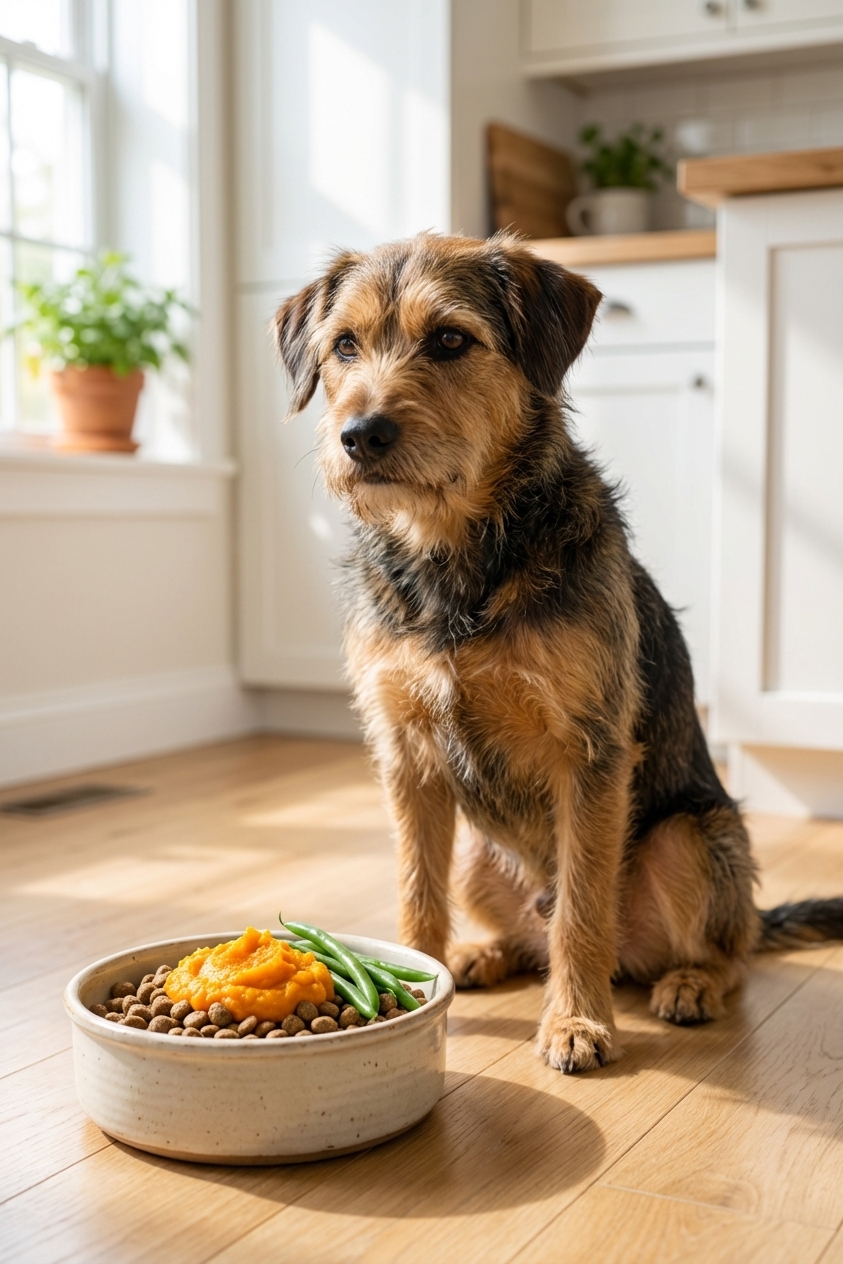
- 1 to 2 tablespoons of steamed green beans on top of dinner (adjust down for small dogs)
- A spoonful of plain pumpkin mixed into food
- A few bites of steamed carrots mixed with the protein
Snack swaps
- Swap a processed treat for blueberries or a few apple slices
- Fresh strawberry pieces as a summer treat (or slightly thawed frozen slices for safer chewing)
Quick “doggie ice treat”
Blend plain unsweetened yogurt with a few blueberries, then freeze in a silicone mold. Keep portions small, especially for dogs who are sensitive to dairy. Always check the label and avoid xylitol.
Warm reminder: produce can be powerful support, but it is not a complete diet by itself. Make sure your dog’s main food is balanced for their life stage, weight, and health needs.
When to call your vet
Please reach out to your veterinarian if you notice:
- Vomiting or diarrhea that lasts more than 24 hours
- Repeated straining, constipation, or blood in stool
- Facial swelling, hives, intense itching, or sudden ear redness after a new food
- Any chance your dog ate grapes, raisins, onion, garlic, or a fruit pit
You know your dog best. If something feels off, trust that instinct and call.