Vet-informed tips to store homemade cat food safely: cool fast, refrigerate 2–3 days, freeze meal portions, thaw correctly, avoid refreezing, and spot spoi...
Article
•
Designer Mixes
Freezer Meal Prep for Homemade Cat Food

Shari Shidate
Designer Mixes contributor
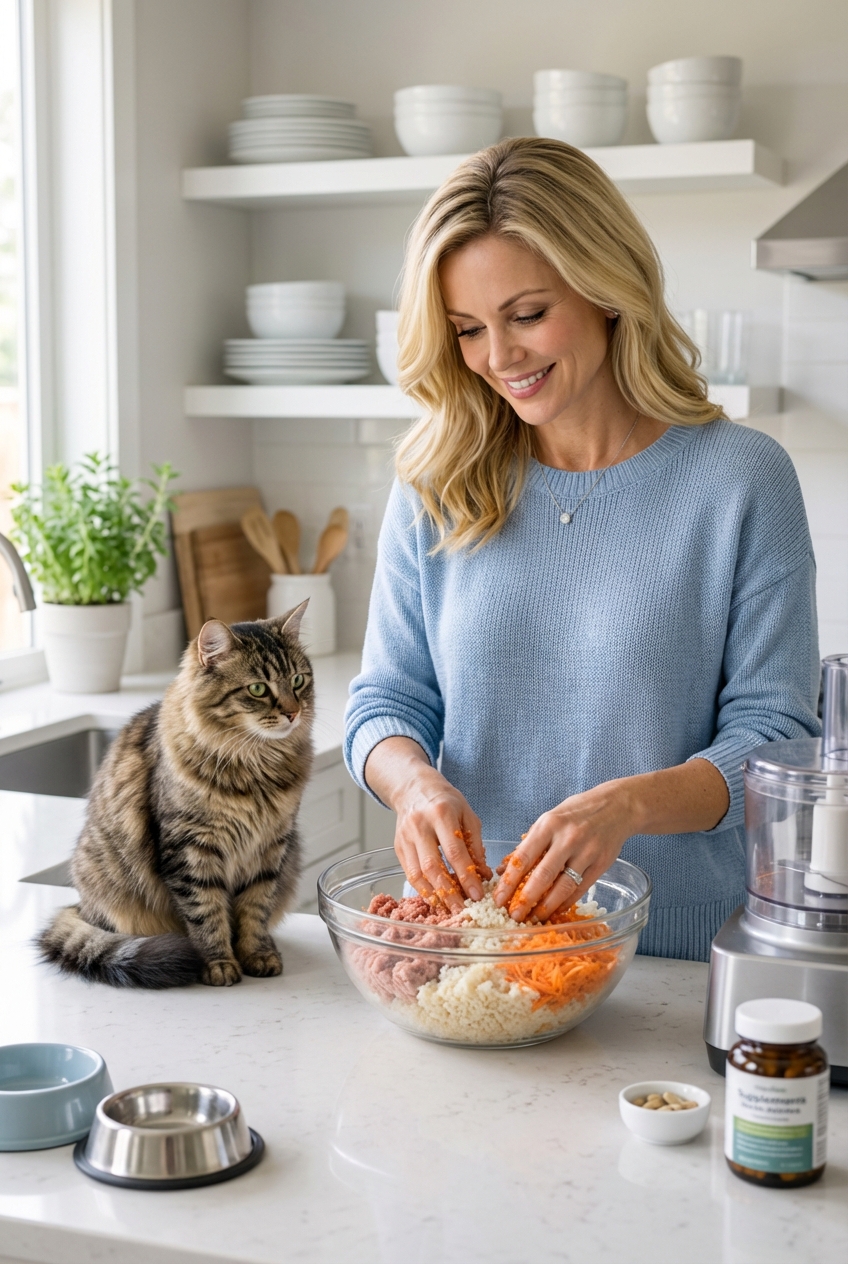
If you have ever looked at your cat’s bowl and thought, “I want to do better, but I do not have time to cook every day,” freezer meal prep can be your best friend. With a little planning, you can batch-cook nutritionally complete, cat-appropriate meals, portion them, and freeze them so feeding time stays simple.
As a veterinary assistant, I love anything that helps families follow through consistently. Cats thrive on routine, and freezer meal prep makes homemade feeding feel realistic, not overwhelming.
Quick note: This article is general guidance, not a substitute for veterinary nutrition advice. If you want a home-prepared diet to be truly complete (especially long-term), consider working with your veterinarian or a board-certified veterinary nutritionist.
Before you start: homemade cat food needs a plan
Cats are obligate carnivores. That means their bodies are built to get most nutrition from animal-based ingredients, and they have specific nutrient requirements that are not optional. Homemade can be wonderful, but “meat plus rice plus veggies” is not a complete feline diet.
Key nutrients that commonly need attention in homemade cat diets include:
- Taurine (essential for heart, vision, and reproduction)
- Calcium (balance with phosphorus, especially when feeding boneless meat)
- Vitamin A (cats cannot convert beta-carotene to vitamin A efficiently)
- Vitamin D (cats rely on diet for vitamin D)
- Arachidonic acid (a fatty acid cats need from animal sources)
- Iodine and trace minerals (easy to under-supply without a recipe and supplement plan)
The most reliable approach is to use a veterinary nutritionist formulated recipe, or a recipe from a trusted veterinary source that includes a complete supplement mix designed for cats. WSAVA’s Global Nutrition Guidelines are a helpful starting point for choosing credible nutrition information and emphasize involving qualified professionals when feeding home-prepared diets.
Calcium supplement safety: Only use the calcium source your recipe specifies, in the exact dose it specifies. If the plan calls for bone meal, use a pet-intended, properly tested product and do not swap in random “human bone meal” (mineral content can vary, and quality control matters). Ideally, recipes specify the amount of elemental calcium.
Cooked vs raw: decide up front
Freezer meal prep works for both cooked and raw styles, but safety expectations differ. This workflow assumes cooked food unless your recipe explicitly states it is for raw feeding.
- Cooked diets are generally lower risk for household food safety.
- Raw diets require extra care (sanitation, strict cold chain, higher risk for immune-compromised people or pets in the home). If you are considering raw, talk with your veterinarian first and follow a recipe designed for raw feeding.
What freezer meal prep looks like for cats
Think of this as setting up a mini system:
- Pick one complete recipe your cat tolerates well.
- Batch cook once every 2 to 4 weeks.
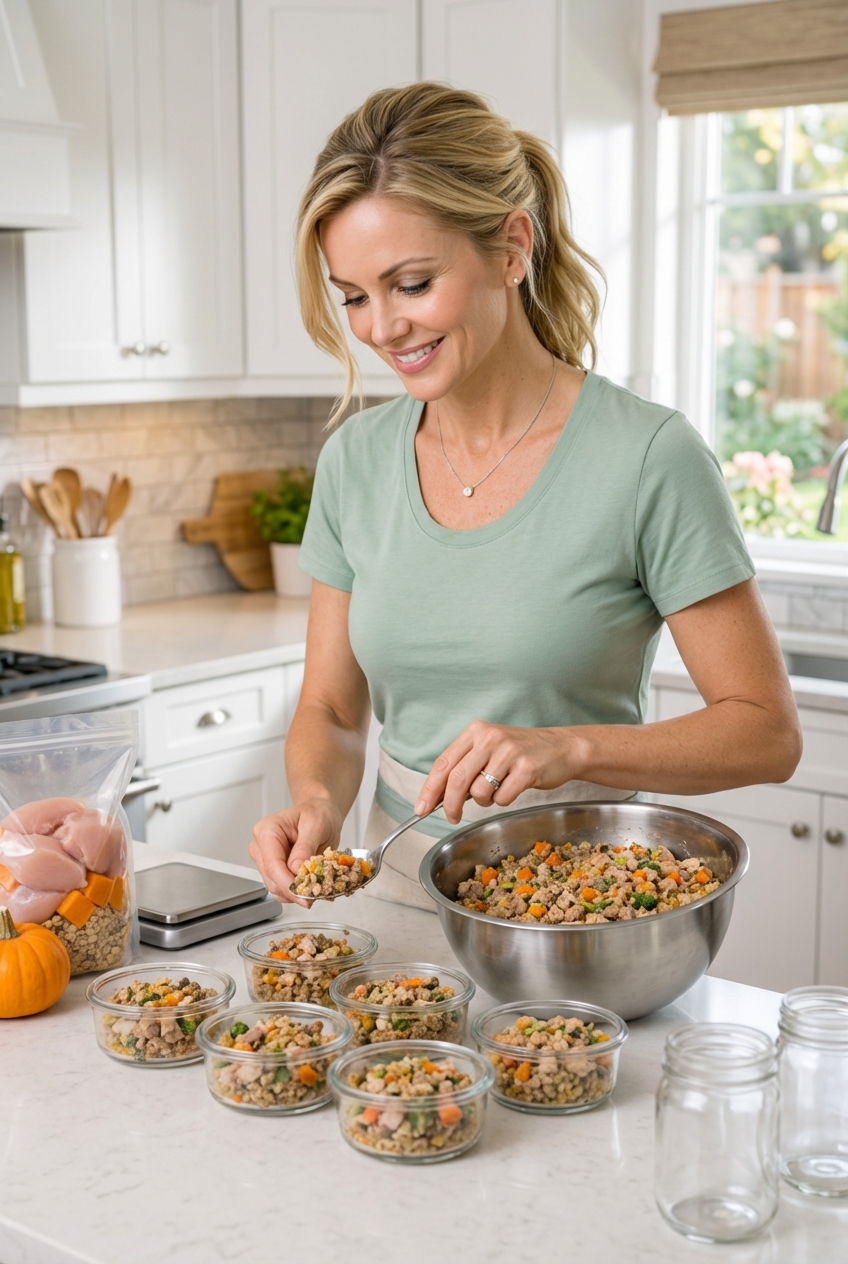
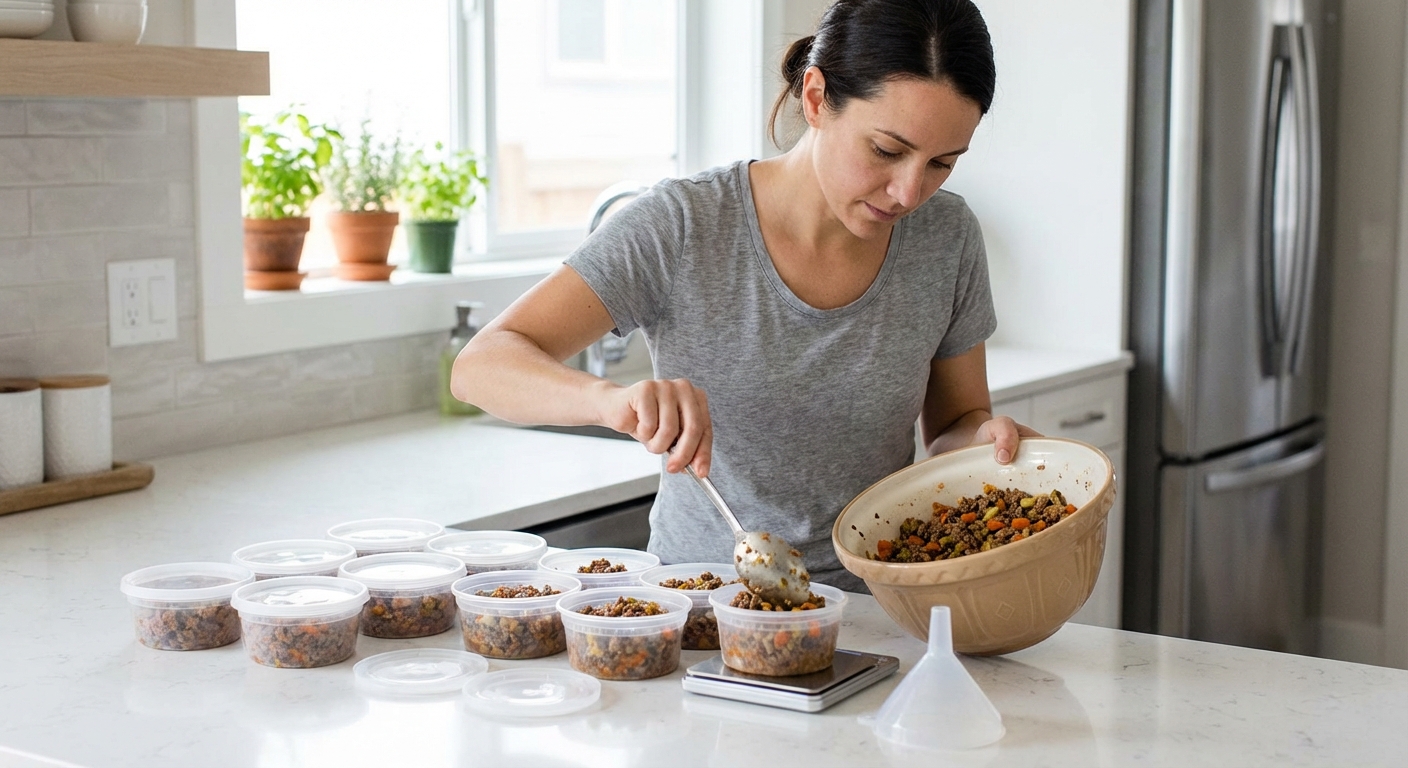
- Portion into daily or per-meal servings.
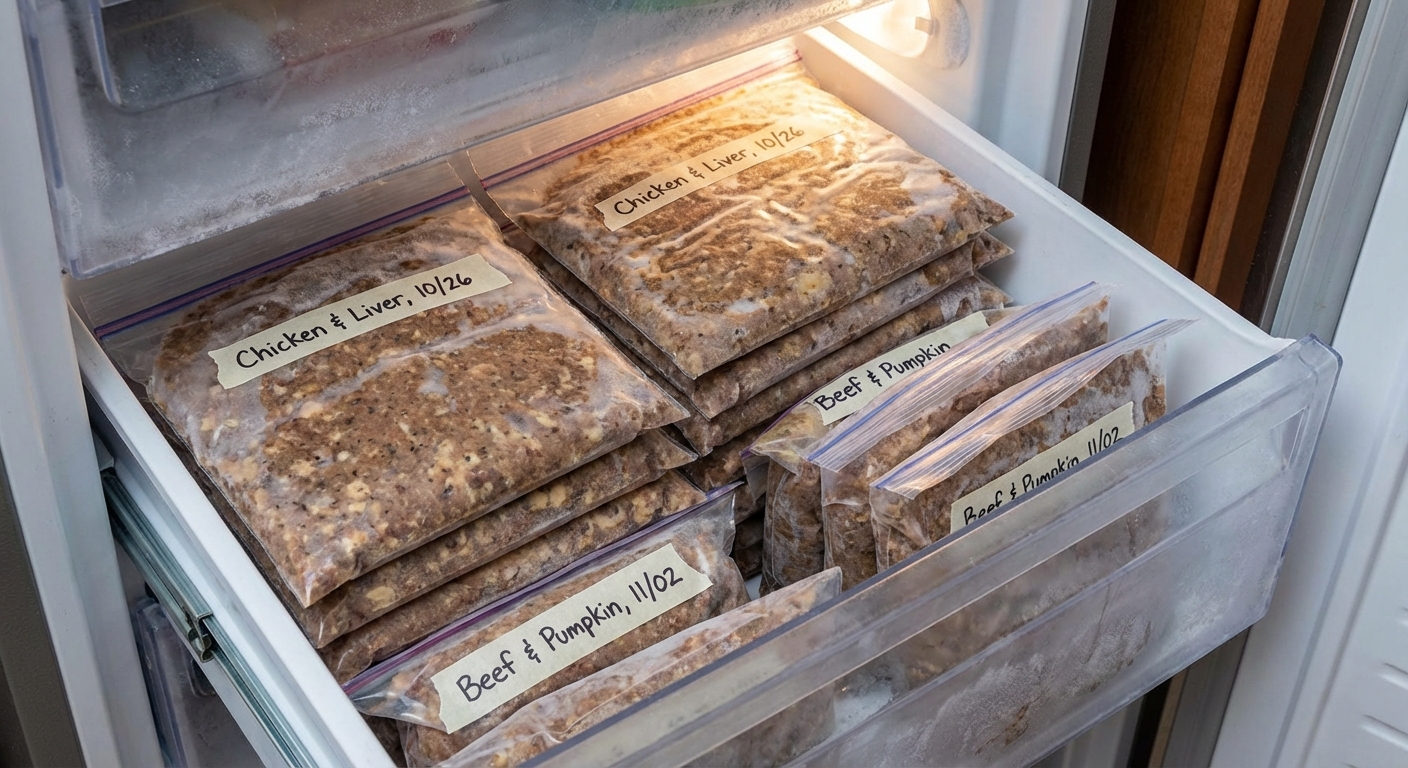
- Freeze flat for fast thawing and less freezer clutter.
This routine is especially helpful for multi-cat homes, cats who need weight management, and anyone juggling a busy schedule.
Equipment that makes this easy
You do not need a fancy kitchen. A few basics make a big difference:
- Kitchen scale for accurate batch measurements and portioning
- Large mixing bowl to combine ingredients evenly
- Freezer-safe containers or silicone molds for single portions
- Freezer bags (flattened portions thaw quickly)
- Permanent marker and labels for date and recipe name
- Instant-read thermometer if your recipe involves cooking meat and you want safety reassurance
Step-by-step freezer meal prep
1) Choose a recipe that is complete for cats
A properly formulated recipe will specify:
- Exact meat type and amount
- Whether organs are included, and how much
- Calcium source (for example, finely ground eggshell calcium or a pet-intended bone meal, used precisely as directed)
- Specific supplement mix and dose
- Calories per portion or guidance for daily intake
If a recipe does not mention taurine, calcium, and a complete vitamin and mineral plan, treat it as incomplete.
2) Batch cook and cool safely
Follow the recipe exactly. Once cooked, cool food promptly for safety. In general, aim to get it into the refrigerator or freezer within about 2 hours (sooner if your kitchen is warm). A simple method is placing the pot into a larger bowl with ice water and stirring until it is no longer hot, then portioning.
Supplement handling tip: Some supplements are sensitive to heat. If your recipe instructs you to mix supplements in after cooling, follow that step. Do not guess.
3) Portion like a pro
Most cats do well with consistent meal sizes. Portioning options:
- Per meal portions (best for scheduled feeding)
- Per day portions (easy if you feed multiple meals from one thawed container)
If your cat is on a weight plan, portion by grams using a scale so calories stay predictable.
4) Freeze in thin layers
Flattened bags or thin containers thaw faster and more evenly. Aim for portions that are no thicker than about an inch when possible.
Freezer burn prevention: Press out as much air as possible, seal well, and consider double-bagging. Keep your freezer at 0°F (minus 18°C) or colder for best quality.
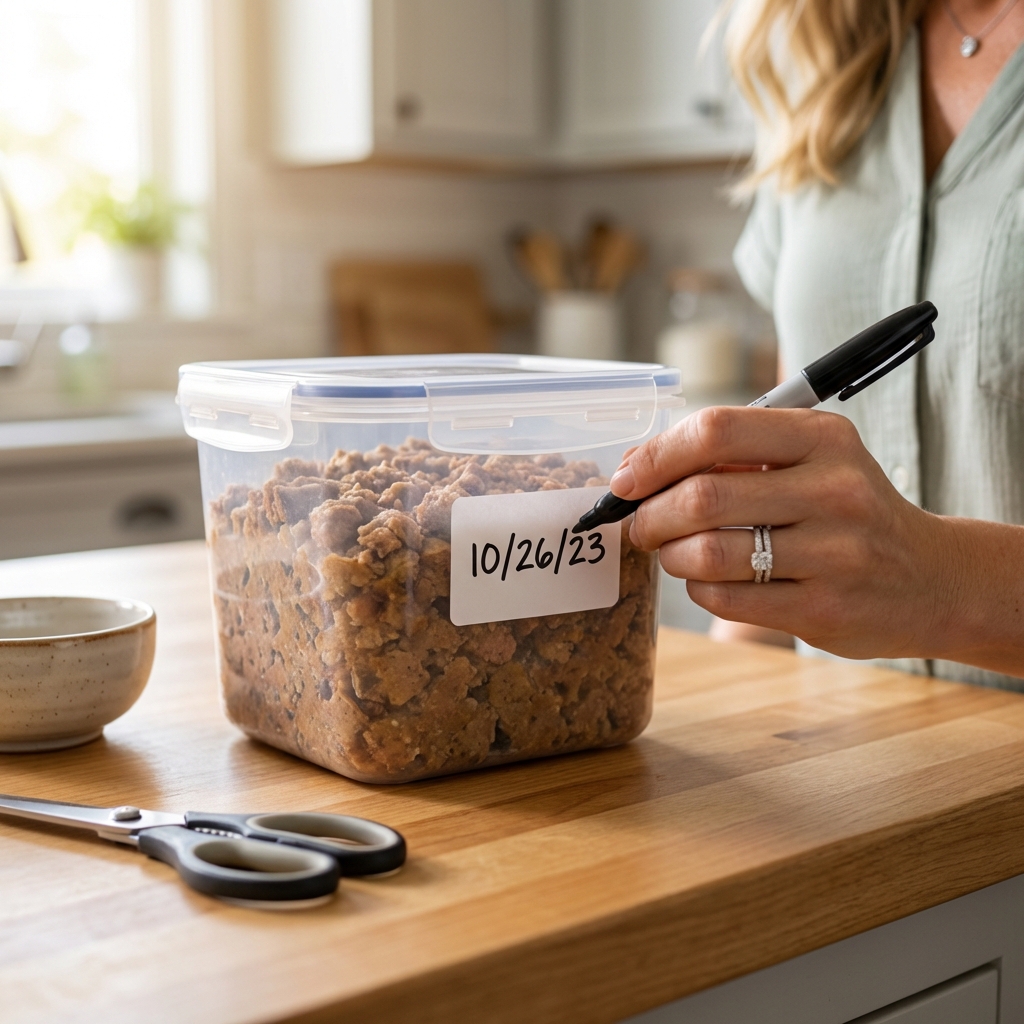
5) Label everything
Write the recipe name and the date you made it. If you rotate proteins, this also helps you track what your cat has been eating.
Safe thawing and serving
Best practice: thaw in the refrigerator overnight.
If you forgot, you can place a sealed portion in cold water and change the water every 30 minutes until thawed, then serve right away. Do not thaw on the counter.
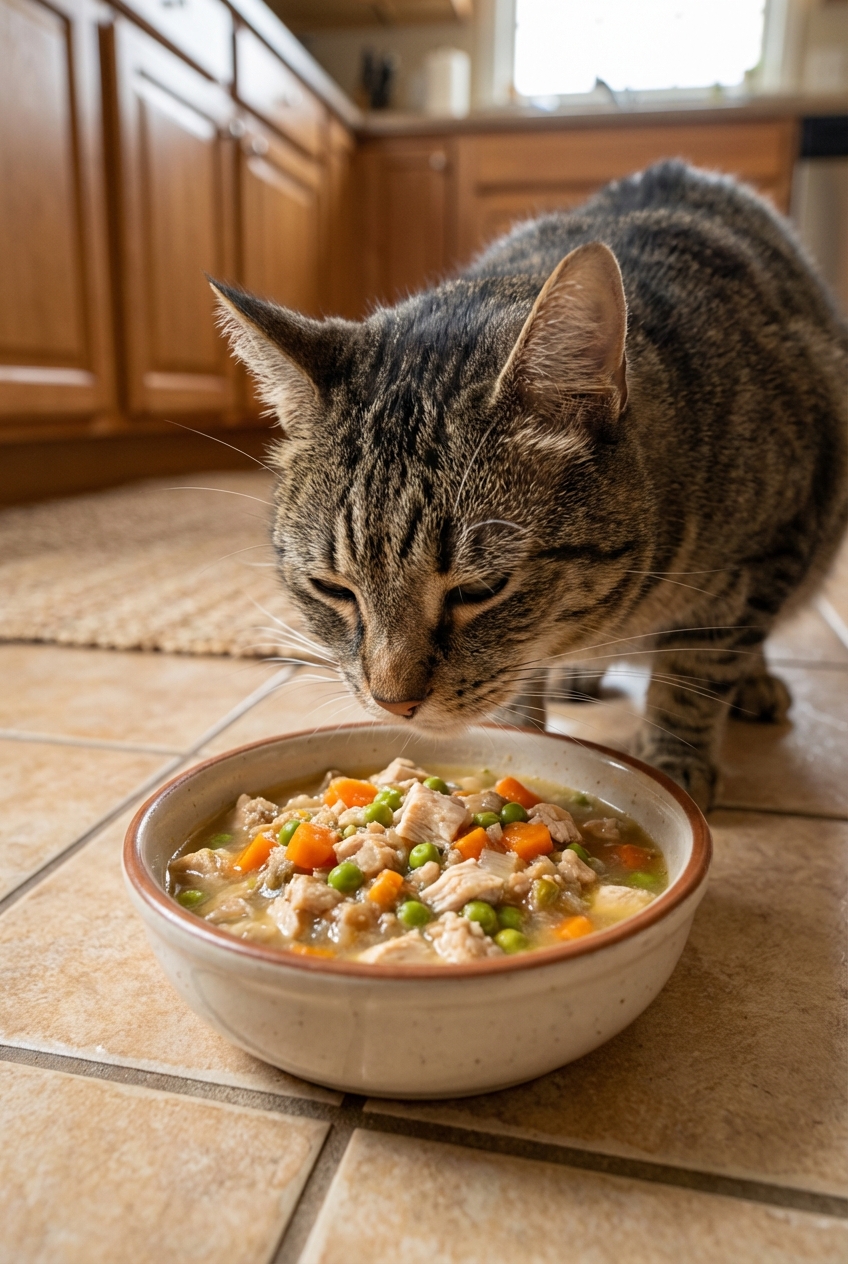
Most cats prefer food slightly warmed. You can warm by placing the container or bag in warm water for a few minutes. If you microwave, stir very well and check for hot spots. Cats can burn their mouths, and uneven heating is common.
Food safety note: Once thawed, use within 24 to 48 hours depending on the recipe and how it was prepared. For raw or minimally cooked recipes, many vets recommend treating 24 hours as the safer limit. When in doubt, follow your recipe source and your veterinarian’s guidance.
When to toss it: If it smells “off,” looks discolored, or your cat refuses it unexpectedly, discard and start fresh. Safety first.
How long can it stay frozen?
Freezer time depends on ingredients, packaging, and freezer temperature. Many home cooks aim to use frozen portions within 1 to 3 months for best quality. It may remain safe longer when continuously frozen, but nutrients and texture can decline over time. Rotating in first in, first out order helps.
Portioning: a simple estimate
Calorie needs vary by age, size, activity, and whether your cat is spayed or neutered. A rough ballpark for many adult cats is about 15 to 25 calories per pound of body weight per day, with plenty of individual variation.
If you want to do this safely, ask your veterinarian for a target daily calorie goal, especially if your cat needs to lose or gain weight. Then portion your freezer meals to match that goal.
Moisture matters: Many cats benefit from higher-moisture diets. If your recipe is thicker than your cat likes, ask your veterinarian or recipe source whether adding water is appropriate (and how to do it without throwing off the diet balance).
Common mistakes (and how to avoid them)
- Skipping supplements. Cats are not forgiving about missing key nutrients like taurine and calcium. Use the recipe’s supplement plan exactly.
- Eyeballing measurements. Small errors add up over weeks. Use a scale.
- Too many add-ins. Broth, treats, oils, and toppers can unbalance calories and nutrients. Keep extras limited unless your recipe includes them.
- Not transitioning slowly. Sudden changes can cause vomiting or diarrhea. Transition over 7 to 14 days for many cats, and slower for sensitive stomachs.
- Feeding a dog recipe to a cat. Cats have different requirements. Make sure the recipe is explicitly formulated for cats.
When not to DIY
Homemade feeding is not a great fit for every household. Consider pausing and getting professional help if:
- Your cat is very picky and will not eat consistently
- Your cat has multiple chronic conditions that require tight nutrition control
- You cannot measure ingredients and portions accurately
- Your schedule makes safe cooling, freezing, and thawing unrealistic
A gentle transition plan
Most cats do best with a gradual shift:
- Days 1 to 3: 25% new, 75% current food
- Days 4 to 6: 50% new, 50% current food
- Days 7 to 9: 75% new, 25% current food
- Days 10 to 14: 100% new food
Watch stool quality, appetite, and energy. If your cat stops eating, contact your veterinarian promptly. As a practical rule, if an adult cat has eaten little to nothing for 24 hours, call your vet (sooner for kittens, seniors, or cats with illness). Cats should not go without food for long because they are at risk for hepatic lipidosis.
Special situations to discuss with your vet
Homemade food can be adapted, but you want professional guidance if your cat has:
- Chronic kidney disease
- Urinary crystals or urinary tract disease
- Diabetes
- Food allergies or inflammatory bowel disease
- Hyperthyroidism
- Kittens, pregnant cats, or nursing queens (their requirements are different)
Freezer-prep checklist
- Pick a complete, feline-specific recipe
- Buy ingredients for one batch
- Cook and cool safely
- Mix thoroughly so supplements are evenly distributed
- Portion by weight
- Remove air, seal well, freeze flat, and label with date
- Thaw in the fridge, warm gently, and serve
If you want homemade cat food to be truly helpful, the goal is not perfection. It is consistency. Freezer meal prep gives you a routine that supports your cat’s health day after day.