Batch-cook homemade dog food with confidence. Follow simple food-safety rules for fast cooling, fridge storage (3–4 days), freezing (2–3 months), and saf...
Article
•
Designer Mixes
Freezer-Friendly Homemade Dog Food Meal Prep

Shari Shidate
Designer Mixes contributor
If you have ever looked at your dog’s bowl and thought, “I want to do better, but I do not have time,” freezer-friendly meal prep is your best friend. With one or two short cooking sessions a week, you can stock your freezer with wholesome, home-cooked meals made with human-edible ingredients you simply thaw and serve. It is one of the easiest ways to move toward a healthier routine without cooking every day.
As a veterinary assistant here in Frisco, Texas, I love this approach because it is realistic for busy families and it supports consistent nutrition. You do not have to be perfect to make a meaningful difference.
Quick safety note about percentages: If you have not added a vet-approved balancing supplement (especially calcium plus vitamins and trace minerals), keep homemade food to under 10% of the total diet as an occasional topper. Once you go above 10% (like the 25% to 50% range), balancing is no longer optional, it is required to avoid nutrient gaps.
Why meal prep works so well for dogs
Dogs thrive on routine, and meal prep helps you keep nutrition steady while still offering variety across the week. When you prep and freeze portions, you also gain control over ingredients, which can be helpful for dogs with sensitive stomachs or itchy skin.
- Consistency: same base recipe, portioned evenly.
- Convenience: thaw overnight, serve the next day.
- Budget-friendly: buying in bulk reduces cost per meal.
- Less waste: you use leftover veggies and proteins more intentionally.
Important note: Homemade diets can be wonderfully healthy, but they must be balanced over time. If your dog has a medical condition, is a puppy, is pregnant, or is a senior with special needs, check in with your veterinarian or a board-certified veterinary nutritionist before making big changes.
Safe building blocks for homemade meals
For most healthy adult dogs, a practical meal prep framework looks like this:
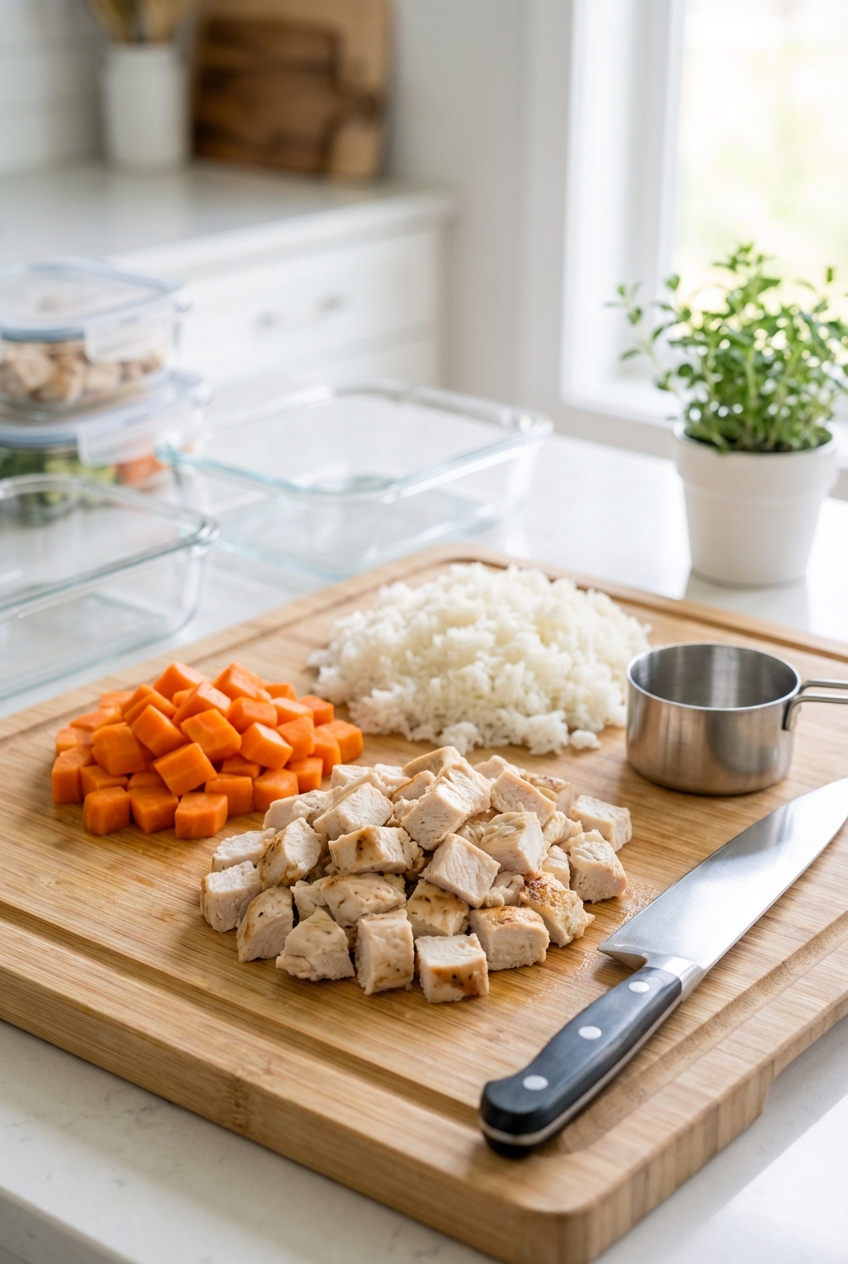
- Protein (the foundation): chicken, turkey, lean beef, sardines, salmon, eggs.
- Vegetables (about 10% to 20%): lightly cooked or steamed for easier digestion.
- Carbs (optional, often 0% to 20%): rice, oats, quinoa, sweet potato.
- Fat: comes naturally with many proteins, plus small amounts of fish oil or olive oil if needed.
- Calcium: a key balancing nutrient that is easy to miss in homemade food.
Vegetables can be a helpful source of fiber and plant nutrients, but many dogs do best when veggies are cooked, finely chopped, or pureed. Think of veggies as a support act, not the main event.
Balance goes beyond calcium
Calcium is the most common “big miss,” but it is not the only one. Muscle meat plus rice plus veggies can look healthy and still be incomplete.
- Iodine: often low without a reliable source (do not guess with kelp).
- Vitamins D and E: commonly short in home-cooked mixes.
- Trace minerals: zinc, copper, manganese, and others matter for skin, coat, and immune function.
- Essential fatty acids: omega-3 balance can be low without fish or a quality fish oil.
- Overall calories: “healthy” can still be too calorie-dense.
The simplest, safest path is to use either a recipe formulated by a board-certified veterinary nutritionist or a reputable canine vitamin and mineral mix designed for home-cooked diets, used exactly as directed.
The calcium issue (and how to fix it)
This is the most common homemade-diet mistake I see: meals that look “healthy” but are low in calcium. Dogs need a proper calcium-to-phosphorus balance for bone health and overall function. Most meats are high in phosphorus, so calcium often needs to be added deliberately.
Options to discuss with your vet include:
- Commercial canine vitamin and mineral mix formulated for homemade diets.
- Ground eggshell powder measured correctly for the amount of food you are making.
If you are not sure how to add calcium safely, it is better to use a reputable supplement designed for home-cooked feeding rather than guessing.
Your weekly freezer routine
At a glance
- Cook
- Cool fast
- Portion
- Label
- Freeze
- Thaw safely
Step 1: Pick a simple base
Choose one base you can repeat, then rotate proteins and veggies week to week. This helps with variety without turning into a complicated project.
Step 2: Cook, cool, portion
- Cook proteins thoroughly and drain excess fat if your dog is prone to pancreatitis or digestive upset.
- Steam or lightly cook veggies, then chop small or puree.
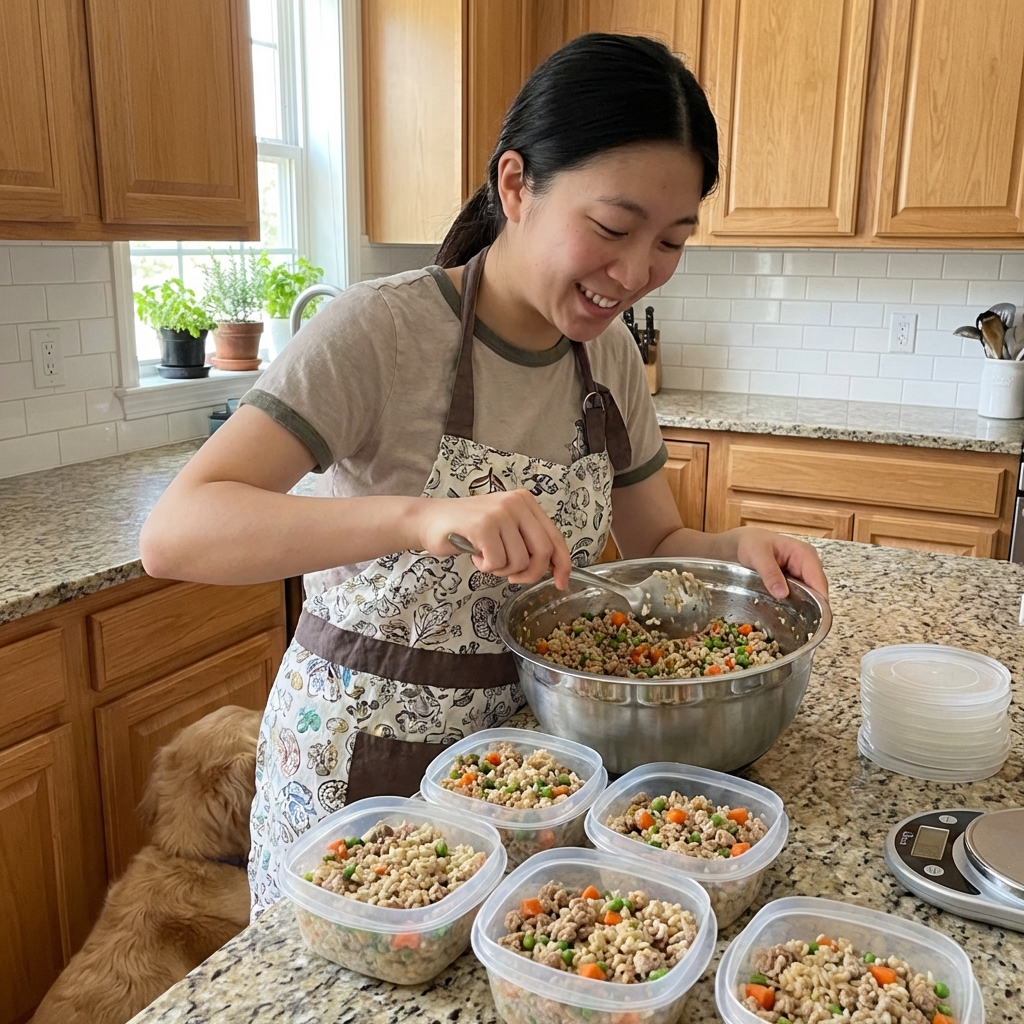
- Cool food quickly in shallow containers (or set the pot in an ice bath) before packing.
- Portion into daily servings so you only thaw what you need.
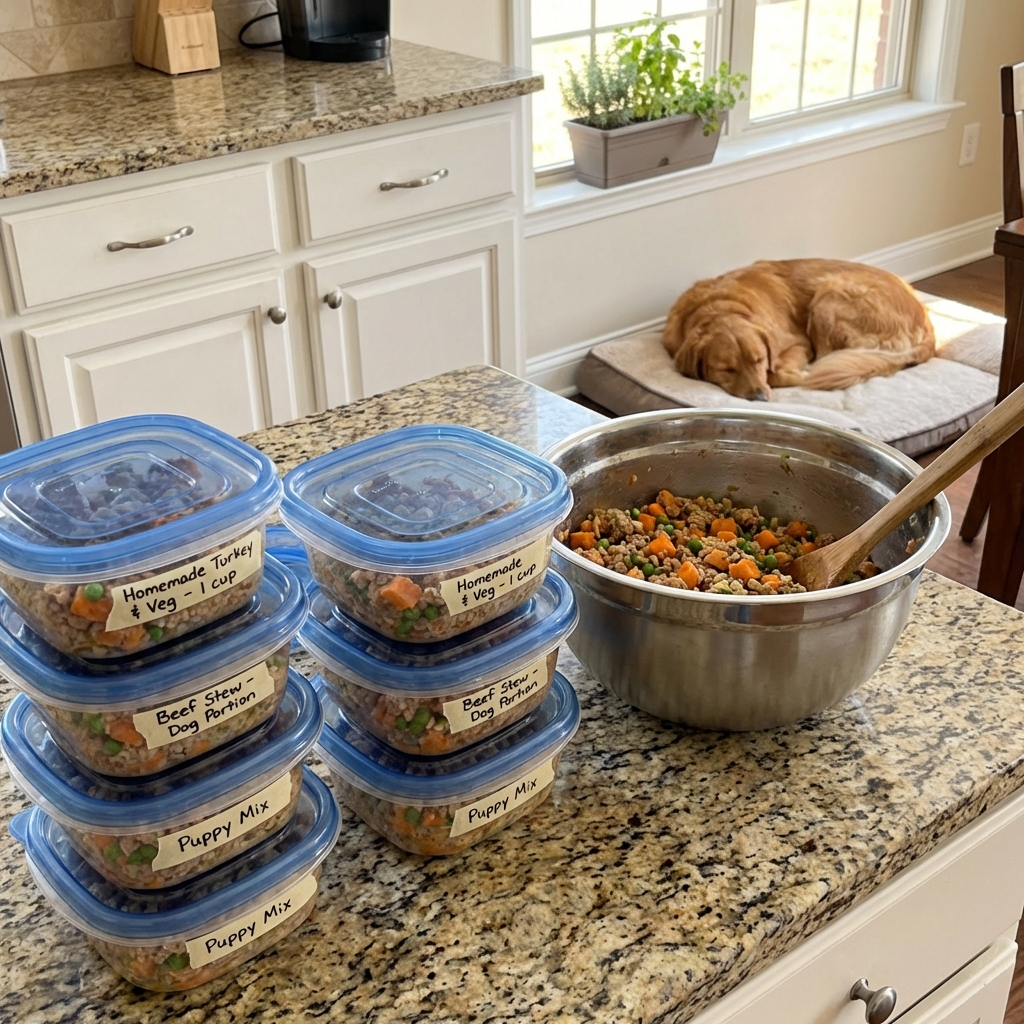
Step 3: Label like a pro
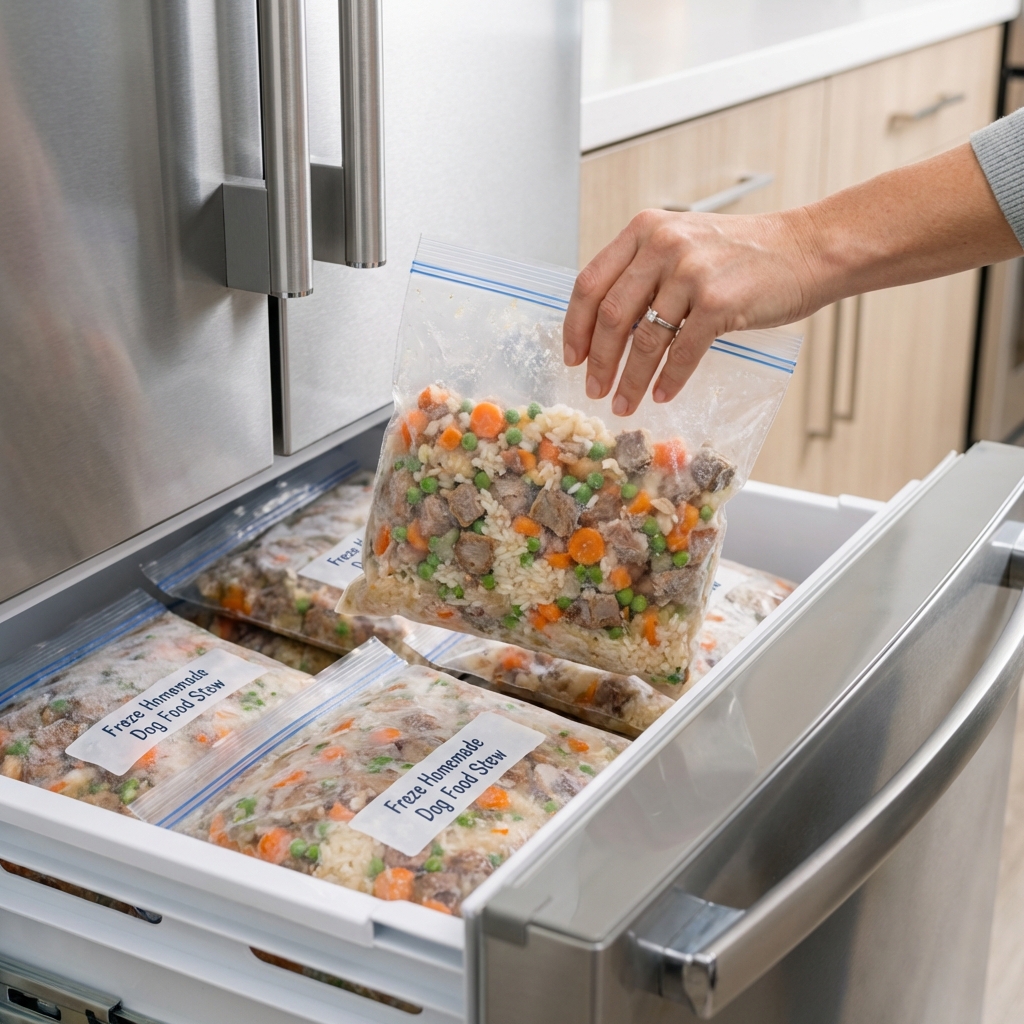
On each container or freezer bag, write:
- Protein (example: turkey)
- Date made
- Any add-ins to remember (example: “add supplement at serving”)
Step 4: Freeze quickly, store smart
- Flatten freezer bags so they stack and thaw faster.
- Use shallow containers for quicker chilling.
- Keep your freezer at 0°F or below (-18°C).
How long can it stay frozen?
Food safety depends on ingredients and freezer conditions. Properly frozen food can remain safe for longer, but quality drops over time. For best quality at home:
- Refrigerator: use thawed food within 2 to 3 days (store at 40°F or below, 4°C).
- Freezer: aim to use within 2 to 3 months for best quality (keep at 0°F or below, -18°C).
Always discard food that smells “off,” looks unusual, or was left at room temperature too long. As a general rule, do not leave perishable food out for more than 2 hours (or 1 hour in hot weather).
Thawing and serving safely
- Best method: thaw in the refrigerator overnight, then serve promptly.
- Quick method: place the sealed bag or container in cold water and change the water every 30 minutes. Once thawed, refrigerate and serve soon.
- Avoid: thawing on the counter for hours.
Do not refreeze thawed portions. Freeze in daily servings so you can thaw once and use what you open.
If you warm food, keep it just slightly warm. Dogs do not need hot food, and microwaves can create hot spots.
Freezer-friendly meal ideas
These are intentionally basic, because what you can repeat is what actually helps long term.
1) Chicken, rice, and veggie base
- Boiled or baked chicken (chopped)
- Cooked brown rice
- Steamed carrots and kale (chopped or pureed)
- Add your vet-approved balancing supplement at serving time, as directed
2) Turkey and sweet potato bowls
- Lean ground turkey (cooked, drained)
- Baked sweet potato (mashed)
- Steamed spinach or green beans
- Add your balancing supplement as directed
3) Sardine topper packs (for variety)
Freeze small toppers to add to regular meals a couple times a week:
- Mashed sardines in water (no salt added if possible). If salted, rinse well.
- A spoon of pumpkin
- A few blueberries
If your dog has a history of pancreatitis or a sensitive stomach, skip oil-packed fish and keep toppers small.
Topper reminder: If these mixes are not balanced with the right supplement, keep them under 10% of your dog’s total daily intake.
Portioning without weight gain
Home-cooked food can be more calorie-dense than you expect, especially with oils, fattier meats, or generous carb portions. A few simple habits help:
- Track your dog’s weight every 2 to 4 weeks during the transition.
- Keep treats consistent, and account for them in the daily total.
- If stools get loose, reduce richness and slow the transition.
Your dog’s body condition matters more than a perfect cup measurement. You want to be able to feel ribs easily with a light fat cover and see a waist from above.
Transition slowly for a happier gut
Even healthy foods can cause digestive upset if you change too fast. A gentle transition is kinder to your dog’s gut microbiome.
- Days 1 to 3: 25% new, 75% current food
- Days 4 to 6: 50% new, 50% current food
- Days 7 to 9: 75% new, 25% current food
- Days 10 to 14: 100% new
If your dog has a sensitive stomach, go even slower. Let your dog’s stool be your guide.
What to avoid
- Toxic foods: grapes, raisins, onions, garlic, xylitol (also called birch sugar), macadamia nuts, alcohol, chocolate.
- Cooked bones: they can splinter and cause serious injury.
- Seasonings: avoid onion or garlic powder, heavy salt, and spicy blends.
- Unbalanced all-meat meals: high risk for calcium deficiency and other nutrient gaps.
A simple freezer plan
If you want the easiest on-ramp, here is a low-stress plan:
- Choose one protein (like chicken) and one veggie mix (like carrots plus spinach).
- Make 7 to 14 portions.
- Freeze in daily servings.
- Start as a topper under 10% if you are not using a balancing supplement yet.
- When you are ready to go to 25% to 50%, use a vet-approved recipe or a complete supplement formulated for home-cooked diets.
Small steps count. When you prep once and serve all week, you are building a habit that supports your dog’s health for the long run.