
Foxtails and Grass Awns in Dogs

Here in Texas and across the U.S., foxtails and other grass awns can be a sneaky hazard for dogs, especially in the warmer months. (Timing varies by region, rainfall, and what grasses grow where.) These dry, barbed seed heads are shaped in a way that helps them move forward through fur and tissue. That is great for the plant, but it can be dangerous for your dog.
The tricky part is that some awns do not just poke and stop. They can embed, then migrate through tissue, causing pain, infection, and sometimes life-threatening complications if they move deeper into the body. Serious internal migration is uncommon, but it is high-risk when it happens. This guide will help you recognize the classic signs, do safe at-home checks, and know when it is time to go straight to the vet.
What are foxtails and grass awns?
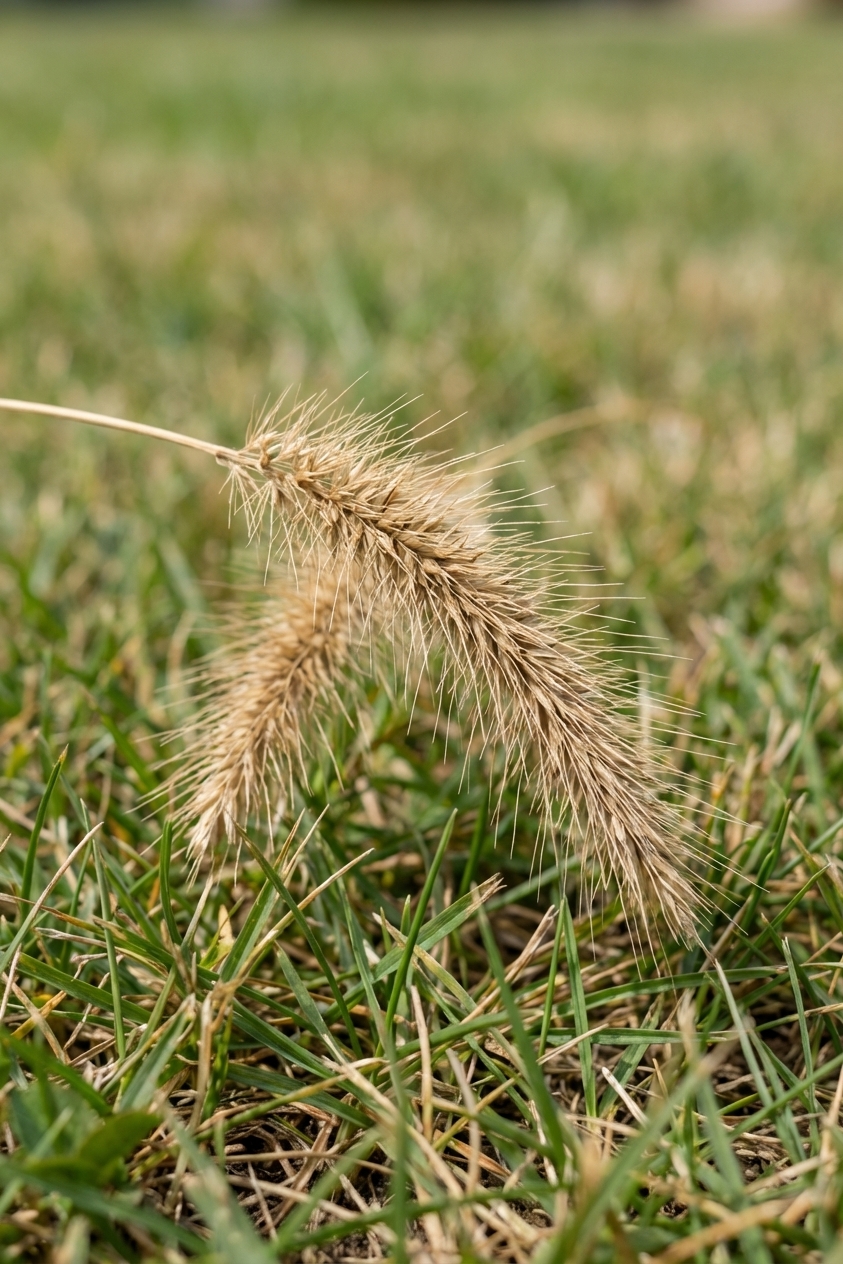
A grass awn is the bristly, spear-like seed head found on many grasses. “Foxtail” is a common name for several awned grasses, but the injury pattern is similar across many species.
What makes awns risky is their shape. Under magnification, they have tiny barbs that grab hair and tissue. With normal movement, sniffing, panting, or walking, an awn can keep working inward rather than falling out.
What they look like
Most grass awns look like a small, dry, tan to yellow “spike” with bristles. If you have ever pulled a sticker-like seed out of your sock, you already get the idea. In yards and trails, they often show up along field edges, vacant lots, and any spot where dry grasses have gone to seed.
Why they are more than just a splinter
- They are barbed, so they can be hard to pull out once lodged.
- They can migrate from the entry point to deeper tissues.
- They can introduce bacteria and plant material that trigger abscesses and draining tracts.
- They can hide in ears, between toes, under eyelids, or in thick coats.
Why symptoms can worsen over days
Many owners tell me the same story: “It started with a little sneeze or a small limp, and then it got dramatically worse.” That pattern fits foxtails perfectly.
Here is what is happening behind the scenes:
- Day 1: The awn irritates the entry site. Your dog sneezes, shakes their head, or licks a paw.
- Days 2 to 4: Swelling increases and the awn may move deeper. Pain often escalates.
- Days 4 to 7: Infection or an abscess can form. You might see a draining sore, foul odor, or pus.
- Later: In some cases, awns migrate into the chest or abdomen, leading to serious internal infection.
This is why “wait and see” can be risky if your dog has classic foxtail symptoms, especially after running in dry grass or brush.
Common presentations by body area
Nose and nasal passages
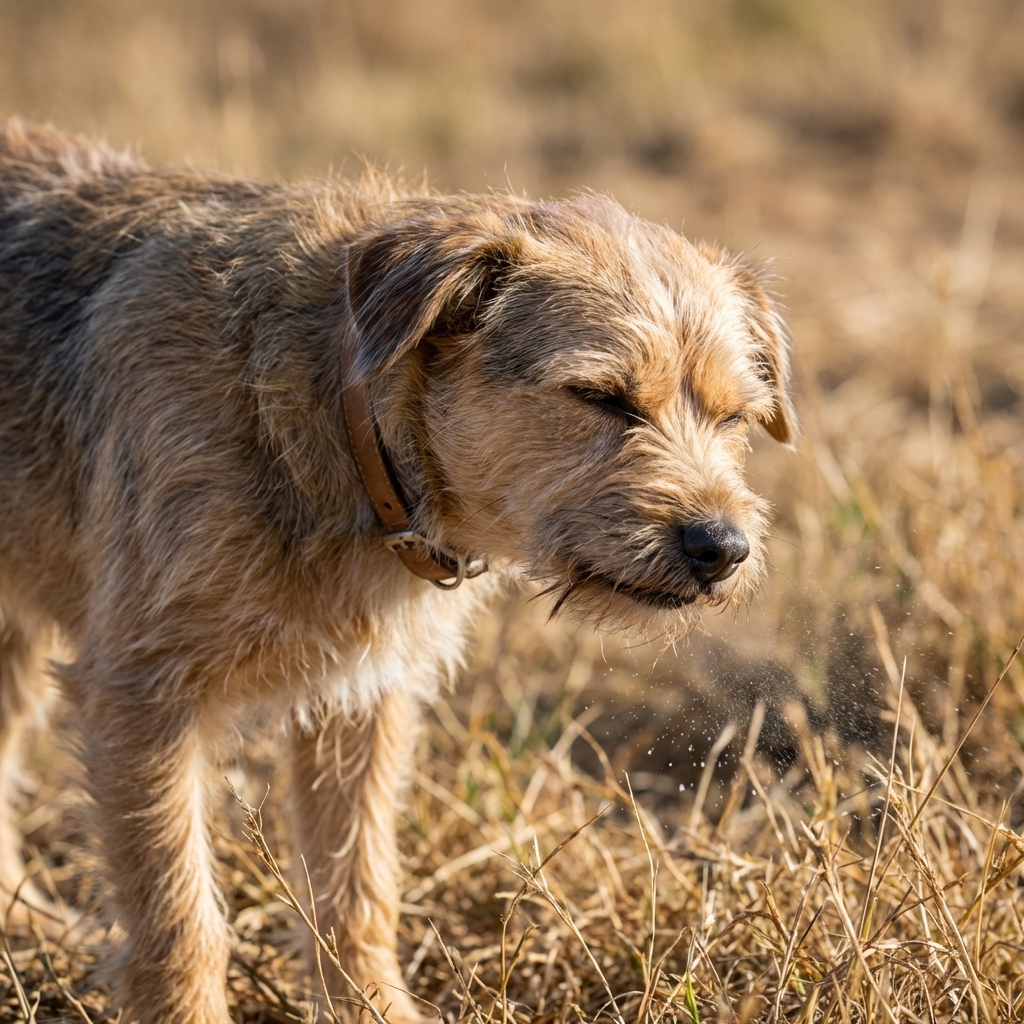
Foxtails can be inhaled during sniffing, especially in dry fields or weedy lots. Once inside the nose, they can lodge and cause intense irritation.
- Sudden, repetitive sneezing fits
- Reverse sneezing that is new or unusually intense
- Pawing at the nose
- Bloody or one-sided nasal discharge
- Snorting, facial discomfort, reluctance to eat
Helpful clue: your dog was fine, then after a walk in dry grass they start sneezing violently and cannot seem to stop.
Ears
Awns can drop into the ear canal and work their way down. This is painful and can lead to infection. In severe cases, it can contribute to trauma in the ear canal and damage to the eardrum.
- Sudden head shaking
- Head tilt or crying when the ear is touched
- Scratching one ear only
- Redness, swelling, or discharge
- Bad odor from one ear
Helpful clue: head shaking starts abruptly on a walk, and it is usually one ear.
Paws and between the toes
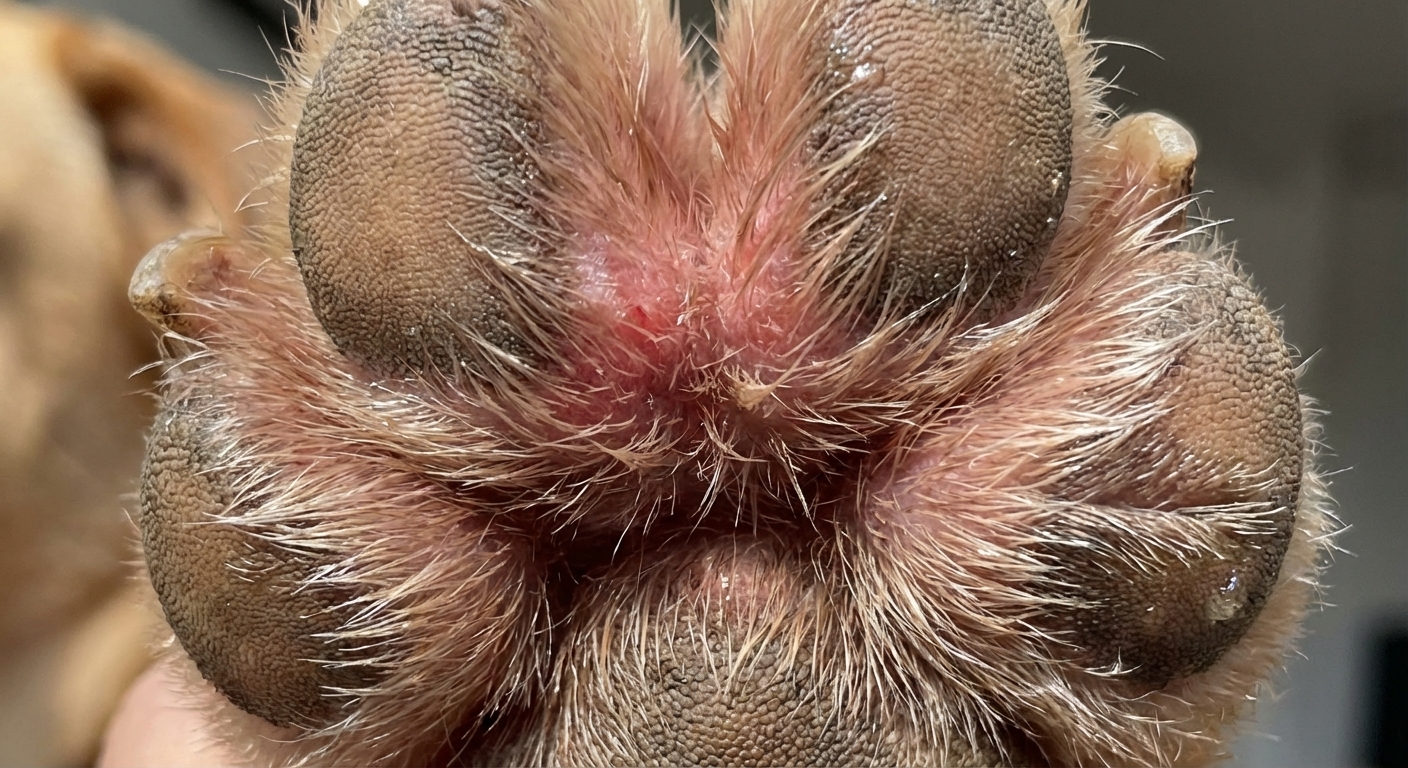
This is one of the most common foxtail locations. Awns can slide between toes, under paw pads, or into the webbing.
- Sudden limping that comes and goes
- Obsessive licking or chewing at one paw
- Red, swollen area between toes
- A small hole, scab, or draining tract
- A firm lump that feels like a “marble” under the skin
Helpful clue: your dog cannot stop licking one paw after being in tall grass, and the paw may look slightly puffy between toes.
Eyes and under the eyelids
Awns can lodge under an eyelid or scratch the cornea. Eye injuries are painful and time-sensitive.
- Sudden squinting or keeping one eye closed
- Excessive tearing
- Redness, light sensitivity
- Pawing at the face
- Cloudiness or visible scratch
Helpful clue: one eye suddenly looks painful after running through brush, even if you do not see anything obvious.
Skin, armpits, groin, and under the collar
Awns can stick to the coat and then penetrate skin in friction areas, especially armpits and groin. Collars and harnesses can hide the entry site.
- A tender lump that grows over days
- Warmth, redness, or swelling
- A sore that opens and drains pus or blood
- Fever, lethargy, decreased appetite in more serious infections
Helpful clue: you find a new lump after a hike, and it becomes more painful or starts draining.
Throat and mouth
Dogs can pick up awns when chewing grass or carrying sticks. Awns can lodge in gums, tonsil area, or the back of the throat.
- Gagging or repeated swallowing
- Pawing at the mouth
- Drooling
- Coughing that started suddenly after outdoor time
When it is urgent
Please treat these as same-day urgent situations, because delay can mean deeper migration or infection:
- Violent sneezing fits, one-sided bloody nasal discharge, or trouble breathing
- Sudden, intense ear pain with nonstop head shaking
- Eye squinting or suspected foreign body in the eye
- Limping with a rapidly swelling paw, visible draining tract, or severe pain
- Fever, lethargy, refusing food, or a rapidly enlarging painful lump
If you strongly suspect a foxtail and your dog’s symptoms are persistent, it is usually safer to get a vet exam sooner rather than later. Migration is what turns a “minor” issue into a complicated one.
On the way to the vet
- Keep your dog calm and prevent rubbing the face or eye.
- If your dog is licking or chewing a paw nonstop, an e-collar can help prevent more damage.
- Avoid giving human pain meds unless your veterinarian has specifically told you what is safe.
Safe home checks you can do
You can absolutely do a quick, calm check at home, especially right after a walk. The goal is to spot problems early, not to do deep removal that could make things worse.
Quick post-walk routine (3 to 5 minutes)
- Paws: Spread toes and check webbing. Look for redness, swelling, or a tiny puncture.
- Ears (outer only): Look at the ear flap and entrance to the canal. Do not insert tools.
- Eyes: Look for squinting, tearing, or sudden redness.
- Coat sweep: Run hands through the coat, especially armpits, groin, and around the collar.
- Behavior: Note sudden licking, head shaking, or sneezing that started outdoors.
What is safe to remove at home
Only remove an awn if it is clearly visible and sitting on the surface of the coat or caught in long fur, not embedded in skin or in a body opening.
- Use your fingers or blunt tweezers to pull it away from the coat.
- If you pull and it breaks, stop and call your vet. A retained piece can keep migrating and infecting.
- Do not dig into skin, ear canals, nostrils, or under eyelids.
- If your dog is painful, stop and schedule a vet visit.
What not to do
- Do not flush the nose or use cotton swabs in ears.
- Do not attempt to “pop” a foxtail lump or abscess at home.
- Do not force the eyelid open if your dog is resisting strongly.
- Do not ignore symptoms just because you cannot see the foxtail.
What the vet may do
Foxtail care is very location-dependent. Your veterinarian may recommend:
- Otoscope exam of the ear canal and removal with special instruments
- Sedation for safe removal, especially for ears, deep paw webbing, or painful dogs
- Rhinoscopy for nasal foxtails when sneezing and bleeding persist
- Fluorescein stain for eye scratches and removal under the lid
- Ultrasound, X-rays, CT, or MRI when a migrating awn is suspected internally (plant material is not always obvious on imaging)
- Antibiotics and pain control when infection is present, plus wound care
It is normal for vets to take foxtails seriously. The goal is to remove the awn intact and treat any infection before it spreads. Some cases require anesthesia or surgery, especially when the awn has migrated or a deep abscess has formed.
Prevention that actually works
Choose safer routes in peak season
During dry months, try to avoid areas with tall, brittle grasses and weedy field edges. Stick to mowed paths when you can.
Grooming and coat management
- Keep long fur trimmed around paws, between toes, and around the ear openings.
- Brush after hikes, especially in fluffy mixes that pick up seeds easily.
- Check under collars and harness straps.
Consider protective gear for high-risk dogs
- Dog boots for foxtail-heavy trails
- Snug-fitting hiking vests for brushy areas
These are not required for every walk, but they can reduce risk for dogs who live for off-trail adventures.
Foxtail symptoms checklist (save this)
- Nose: sudden repetitive sneezing, one-sided discharge, nosebleed
- Ear: abrupt head shaking, head tilt, pain on touch
- Paw: limping, nonstop licking, swelling between toes, draining sore
- Eye: squinting, tearing, redness, pawing at face
- Skin: new painful lump, warmth, drainage, fever
If you check one box and symptoms are persistent, it is a smart move to call your veterinarian and describe what you are seeing and when it started.
A note from a veterinary assistant
I love that so many families are outdoors with their pups. That outdoor time is wonderful for mental health, exercise, and bonding. Foxtails are just one of those seasonal hazards where a little awareness goes a long way.
Trust your gut. If your dog’s symptoms started suddenly after time in dry grass and they are not improving quickly, getting checked early can prevent a much bigger problem later.