Turn chicken and rice into a more balanced homemade dog meal with veggies, calcium carbonate, and omega-3s. Includes gram weights, portion guidance, swaps, a...
Article
•
Designer Mixes
Foods That Help Dogs With Diarrhea

Shari Shidate
Designer Mixes contributor
Diarrhea is one of the most common reasons dog parents call a vet clinic, and I get it. It is stressful, messy, and it can make you worry quickly. The good news is that many mild cases improve with simple diet steps and a little patience.
As a veterinary assistant in Frisco, Texas, I always start with two goals: protect hydration and give the gut a break while we watch for red flags. This is general education, not a diagnosis, because the “right” plan can change depending on the cause (diet change or garbage gut versus parasites versus pancreatitis). Below are the foods that can help, how to use them safely, and when to stop home care and call your veterinarian.
First, a quick safety check
Some diarrhea is mild and short-lived, but some is a sign of something more serious. Before you reach for the rice pot, do a quick check.
Call your veterinarian promptly if you notice:
- Blood in the stool (bright red or black, tarry stool)
- Repeated vomiting, refusal to drink, or signs of dehydration (tacky gums, sunken eyes, weakness)
- Severe lethargy or belly pain
- Distended abdomen, unproductive retching, or sudden restlessness (possible bloat, an emergency)
- Diarrhea lasting more than 24 to 48 hours (sooner for small dogs, seniors, and puppies)
- Puppies or unvaccinated dogs (parasites and viruses can escalate quickly)
- Known toxin exposure (human meds, xylitol, grapes or raisins, compost, etc.)
- Underlying conditions like pancreatitis, Addison’s disease, kidney disease, diabetes, or IBD
If your dog is stable, bright-eyed, and still interested in water, supportive feeding can be very helpful. If symptoms persist or keep coming back, your vet may recommend diagnostics like a fecal test (and sometimes bloodwork) to find the cause instead of treating blindly.
Hydration comes first
Diarrhea pulls water and electrolytes out of the body. Even if you use the perfect “tummy-friendly” food, dehydration is what can make dogs crash.
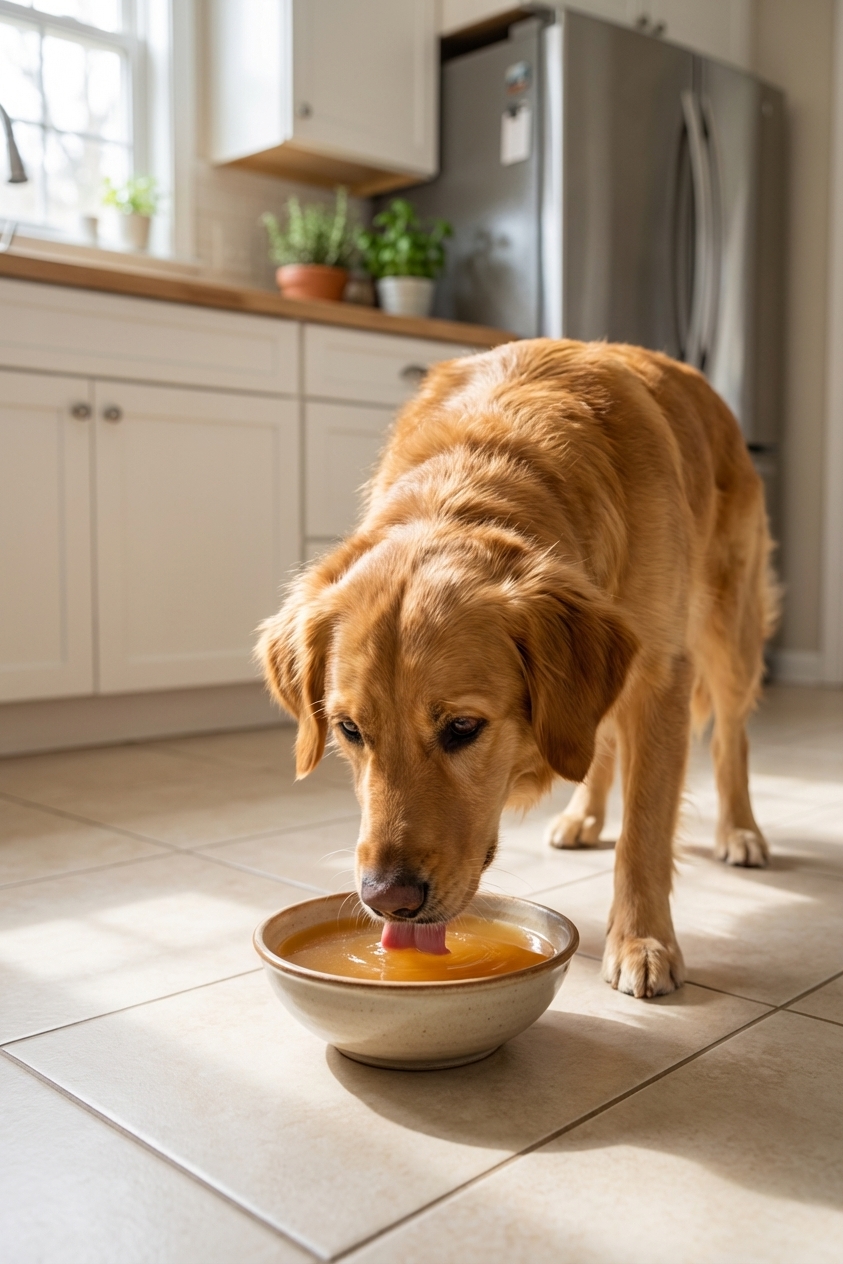
- Fresh water at all times. Offer small, frequent sips if your dog gulps and then vomits.
- Ice chips can help some dogs drink more slowly.
- Low-sodium broth (no onion or garlic) can encourage drinking.
Skip sports drinks and do not add electrolyte products unless your veterinarian tells you exactly what to use and how much. Many human options are too sugary or too salty for dogs.
If your dog will not drink, call your vet.
Best foods for diarrhea
For most uncomplicated cases, the most helpful approach is a bland, low-fat, easy-to-digest diet for a short time, then a gradual return to normal food. These home options are not complete and balanced long term, so think days, not weeks.
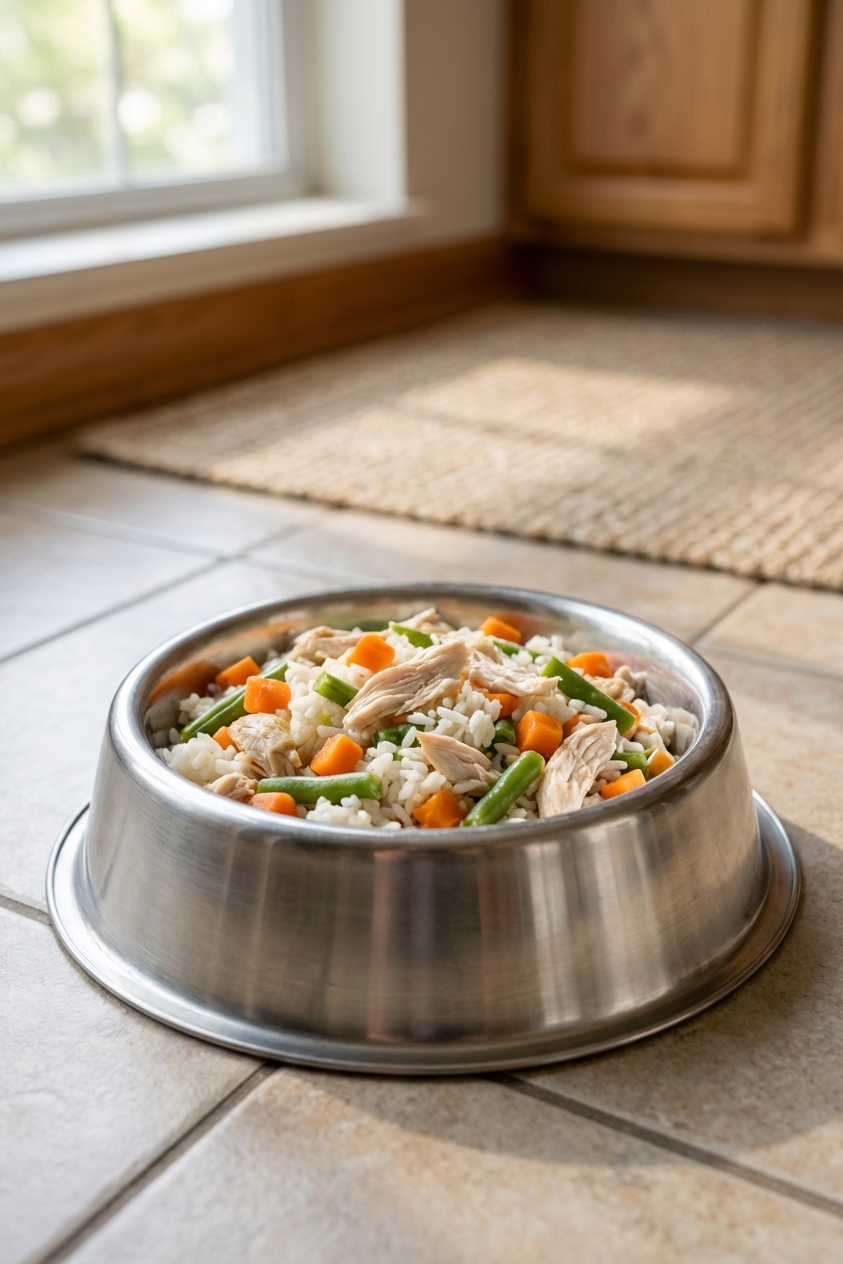
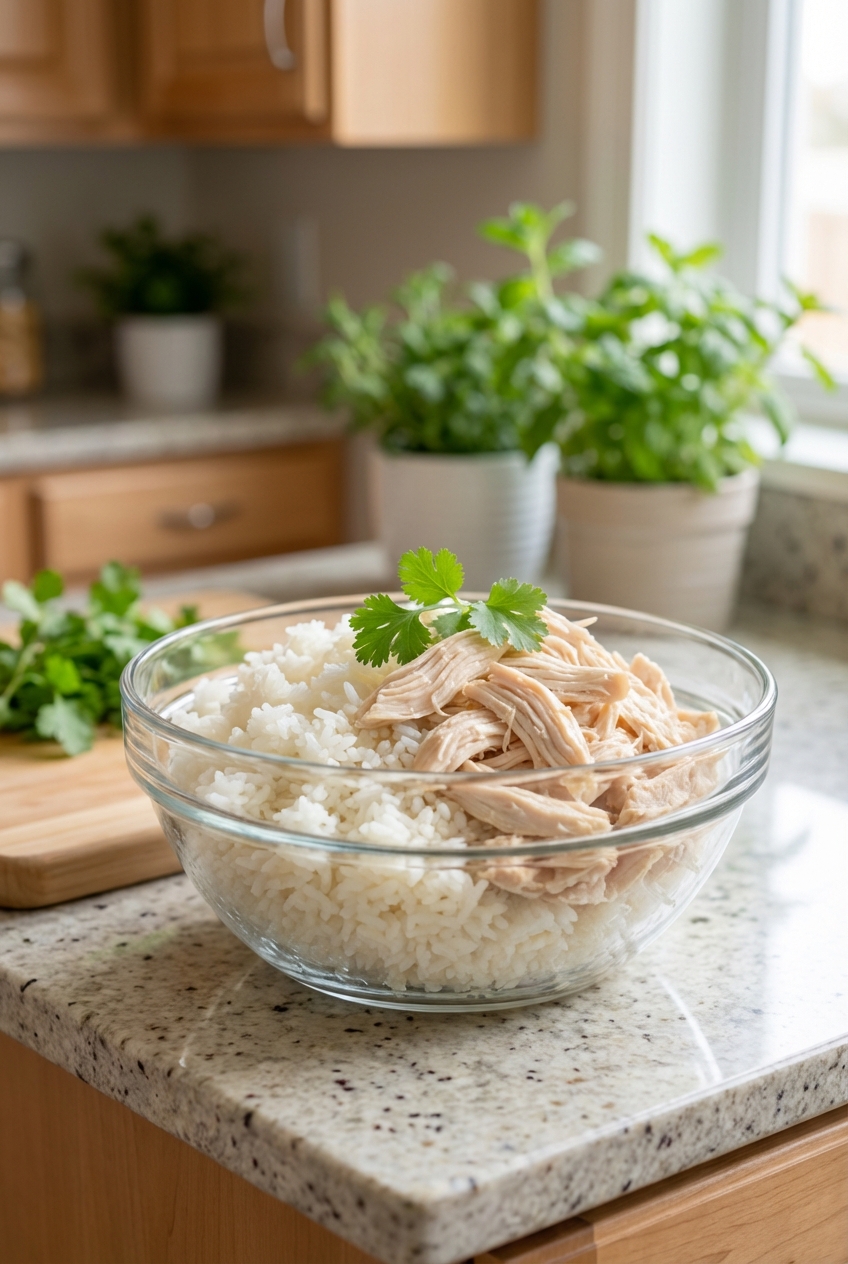
1) Boiled chicken (or turkey) and white rice
This classic combo works because it is gentle on the stomach, low in fat, and easy to digest. Use skinless, boneless chicken breast, boiled and shredded. Use plain white rice.
- Typical ratio: about 1 part protein to 2 parts rice (by volume) for short-term bland feeding.
- Keep it low fat: avoid dark meat, oils, butter, and rich add-ins.
- How much to feed: as a simple starting point, offer about 25 to 33 percent of your dog’s normal meal size, split into 3 to 6 small meals per day. If stools improve, you can slowly work back toward normal portions.
- How long: typically 1 to 3 days, then transition back to regular food once stools are formed for 24 to 48 hours.
2) Canned pumpkin
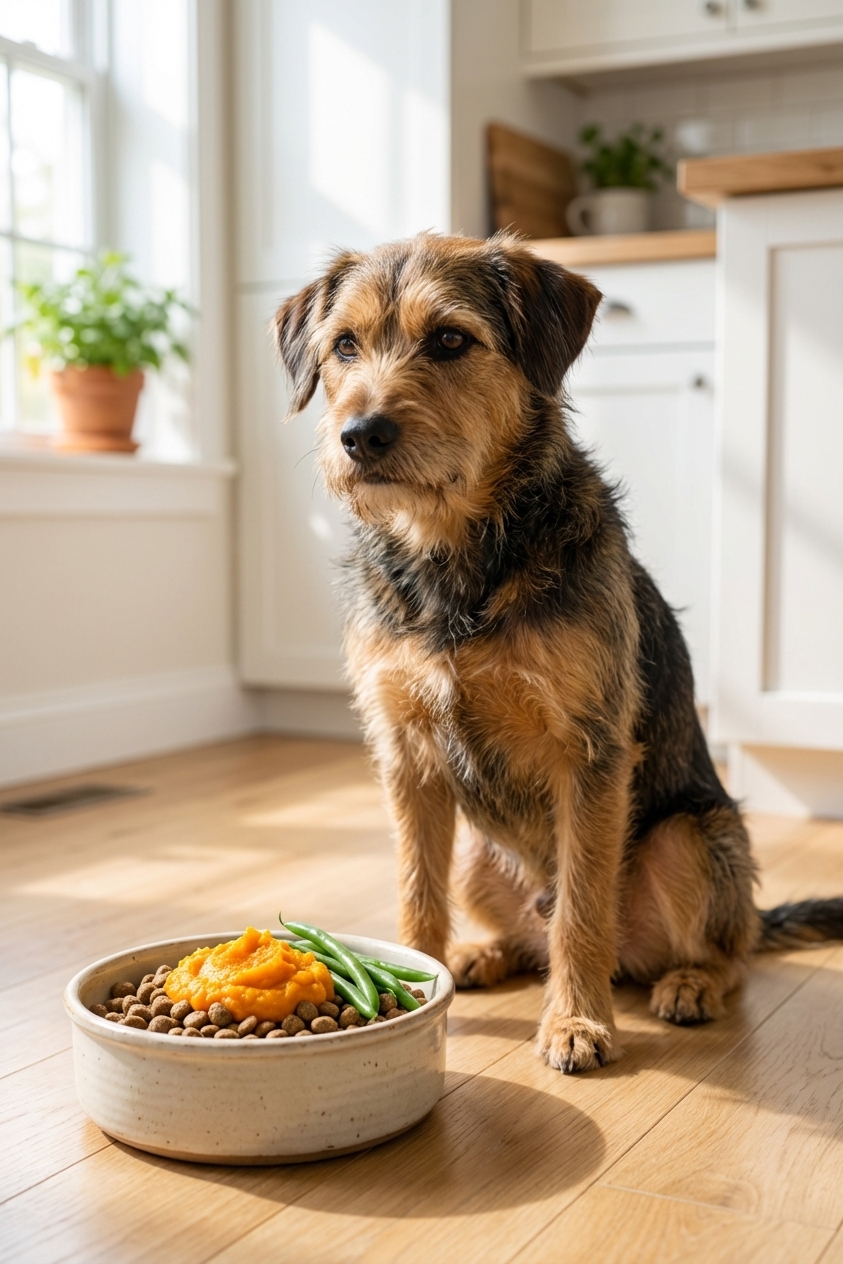
Pumpkin contains soluble fiber, which can help firm up stool by absorbing extra water and supporting healthy gut movement. It can also be too much fiber for some dogs, so start small.
- Choose: 100 percent pumpkin only, not pie filling.
- Starting amount: about 1 teaspoon per 10 pounds of body weight mixed into food, up to 1 to 2 tablespoons for large dogs.
- Stop if it worsens: if diarrhea increases, your dog gets gassy, or stools become more frequent, skip pumpkin and call your vet if signs do not improve.
3) Cooked sweet potato
Sweet potato is another gentle, fiber-friendly option. It can be a helpful alternative carb source for dogs who simply do better with something other than rice.
- Serve: baked or boiled, peeled, mashed, unseasoned.
- Avoid: butter, oils, spices, sugar, or anything seasoned.
- Portion tip: use it similarly to rice in a bland meal, and keep portions modest at first.
4) Low-fat cottage cheese (small amounts)
For some dogs, a little low-fat cottage cheese is easy on the stomach and adds protein. It is not for every dog, especially those with dairy sensitivity.
- Starting amount: about 1 teaspoon per 10 pounds of body weight mixed into food, up to 1 tablespoon for bigger dogs.
- Skip if: dairy has ever caused gas, itchiness, or loose stool.
5) Yogurt with live cultures (small amounts)
Some dogs do well with a small amount of yogurt with active cultures, which may support the gut microbiome. Choose plain, unsweetened yogurt only.
- Never use: yogurt sweetened with xylitol.
- Starting amount: about 1 teaspoon per 10 pounds of body weight, up to 1 tablespoon for bigger dogs.
- Note: many dogs are lactose-sensitive, so start tiny or skip.
6) Veterinary probiotics
If I could pick one add-on that is both gentle and commonly used in clinics, it is a dog-specific probiotic. Some veterinary probiotics have evidence for helping shorten the duration of acute diarrhea and improving stool quality.
Ask your veterinarian which product they trust for your dog’s situation. If your dog is immunocompromised or very ill, check with your vet before using probiotics.
Foods to avoid
When a dog’s gut is irritated, some foods make symptoms worse quickly.
- High-fat foods: bacon, sausage, greasy leftovers, skin-on poultry, fried foods (fat can trigger pancreatitis)
- Milk and rich dairy (often worsens loose stool)
- Raw diets during GI upset (higher bacterial risk and may be harder to tolerate during acute diarrhea)
- High-fiber raw vegetables (can be rough on an inflamed gut)
- Spicy or heavily seasoned foods
- Toxic ingredients: onions, chives, large amounts of garlic, grapes or raisins, chocolate, macadamia nuts, xylitol
How to feed bland food
Step 1: Fasting is not always needed
Some veterinarians may recommend a short food break for certain adult dogs, but many dogs do better with early, small bland meals instead. Do not fast puppies, toy breeds, seniors, or dogs with medical conditions without veterinary guidance.
Step 2: Small meals, more often
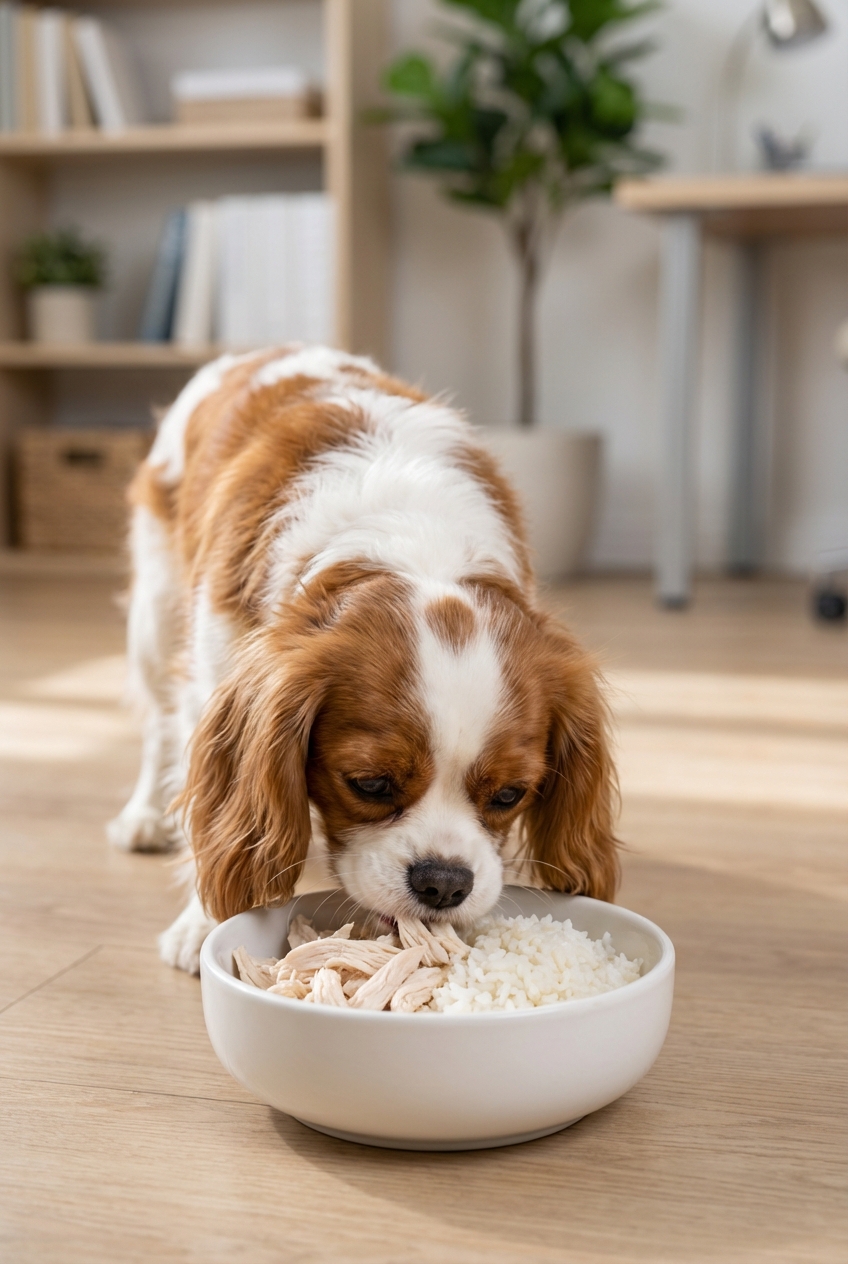
Offer small meals 3 to 6 times per day. Small, frequent portions are often easier for an irritated GI tract than one or two large meals.
Step 3: Keep it brief
Most mild diarrhea improves within 24 to 72 hours. If stools are not improving, or if they worsen, call your veterinarian. If you are seeing repeated episodes, that is also a reason to call and discuss testing.
Step 4: Transition back slowly
Once stools are formed for a day or two, mix your dog’s regular food back in gradually over 3 to 5 days (for example: 75 percent bland and 25 percent regular for a day, then 50 and 50, then 25 and 75).
Tips that matter
Watch stool and energy
Some dogs will still beg for food even when they are getting dehydrated. Pay attention to stool frequency and urgency, water intake, gum moisture, and energy level.
Know what “improving” looks like
- Fewer urgent trips outside
- More formed stool (even if it is still soft at first)
- Less mucus
- No blood
- Normal energy coming back
Keep simple notes
Write down when diarrhea started, how many times per day, whether there is vomiting, and any diet changes or potential “trash snacks.” This helps your veterinarian decide what testing is needed.
Parasites are common
Even well-loved, well-cared-for dogs can pick up parasites like Giardia. If diarrhea is persistent, recurrent, or associated with mucus, your vet may recommend a fecal test. If you can, bring a fresh stool sample to your appointment.
Skip random human medications
Some over-the-counter products can be dangerous for dogs or can mask symptoms that need treatment. Always ask your veterinarian before giving any medication.
When a prescription diet helps
If your dog has repeated episodes, a sensitive stomach, or a history of pancreatitis or IBD, a veterinary therapeutic GI diet can be a safer long-term plan than repeated chicken-and-rice cycles. These diets are formulated for digestibility, controlled fat, and balanced nutrients.
Home bland diets are meant for short-term support. If your dog needs more than a few days of GI support, it is time to loop your veterinarian in for a plan that protects nutrition and hydration.
Quick recap
- Best gentle foods: boiled skinless chicken or turkey, white rice, canned pumpkin (start small), cooked sweet potato
- Helpful extras: dog-specific probiotics, small amounts of plain yogurt or low-fat cottage cheese if tolerated
- Avoid: fatty foods, heavily seasoned foods, raw diets during active diarrhea, and all toxins like onions and xylitol
- Call your vet: blood, vomiting, lethargy, dehydration, distended abdomen or retching, puppies, or diarrhea lasting more than 24 to 48 hours
If you want, I can help you think through a gentle short-term feeding plan based on your dog’s size and what they normally eat. For anything ongoing or severe, your veterinarian should guide the plan and check for causes like parasites, pancreatitis, or other illness.