From cooked chicken and eggs to pumpkin and a few fruits, learn cat-safe human foods, what to avoid (onion, garlic, chocolate, grapes), and smart portion tips.
Article
•
Designer Mixes
Foods That Are Poisonous to Cats

Shari Shidate
Designer Mixes contributor
Cats are curious, fast, and surprisingly sneaky around food. As a veterinary assistant, I have seen how quickly a “tiny taste” can turn into an emergency, especially with cats who nibble while their people are cooking or setting out snacks.
This checklist covers common foods that are toxic or high-risk for cats, what to watch for, and what to do if you think your cat got into something dangerous.
When an exposure is an emergency
Call your veterinarian, an emergency clinic, or a pet poison hotline right away if your cat ate any known toxin, or if you notice any of the signs below. Cats can decline quickly, and early treatment is often much easier and more successful.
Red-flag symptoms
- Repeated vomiting or diarrhea
- Drooling, pawing at the mouth, mouth ulcers
- Weakness, collapse, trouble walking, tremors, seizures
- Labored breathing or rapid breathing
- Pale gums, yellow gums or skin (jaundice)
- Not eating for 24 hours, hiding, or sudden lethargy (sooner for kittens, seniors, and cats with diabetes, kidney disease, or other chronic illness)
- Increased thirst or urination, or not peeing
If your cat is showing neurological signs (tremors, wobbliness, seizures), difficulty breathing, or collapse, treat it as an emergency and go in now.
Full checklist: foods poisonous to cats
Below are the most important foods to keep out of reach. For many toxins, the dose matters, but some hazards can be severe even with small exposure. For example, true lilies are so dangerous to cats that any exposure should be treated as an emergency.
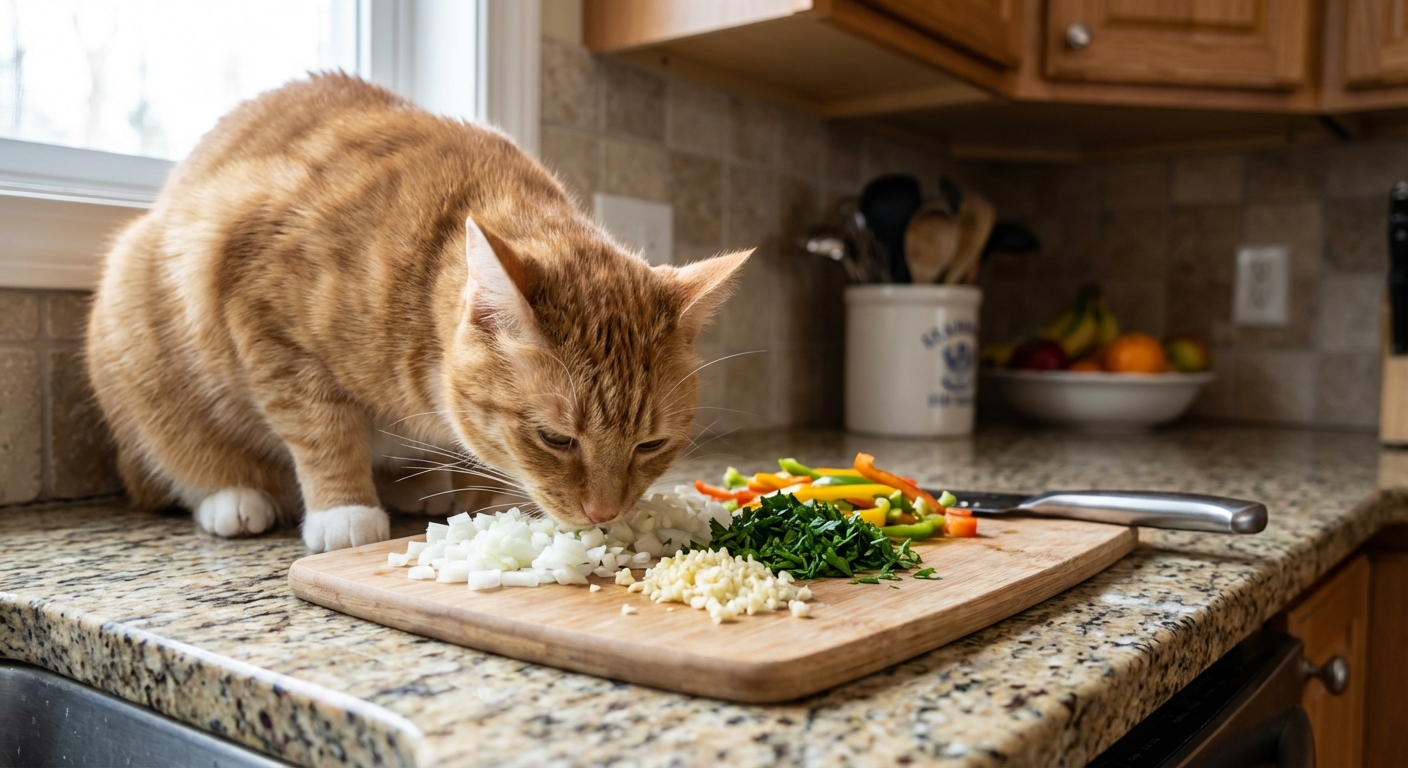
Allium family: onion, garlic, chives, leeks, shallots
Why it’s dangerous: These can damage red blood cells and lead to anemia. Cats are especially sensitive.
- Includes: raw, cooked, powdered, dehydrated, and “seasoning” blends
- Common sources: soups, gravies, baby food, meat marinades, pizza toppings
Watch for: lethargy, pale gums, rapid breathing, weakness, vomiting.
Chocolate and cocoa
Why it’s dangerous: Methylxanthines (theobromine and caffeine) can cause gastrointestinal upset, heart rhythm problems, and neurologic signs.
- Highest risk: baking chocolate, cocoa powder, dark chocolate
- Also avoid: chocolate desserts, protein bars with cocoa, chocolate-covered snacks
Watch for: vomiting, restlessness, elevated heart rate, tremors, seizures.
Caffeine: coffee, tea, energy drinks, espresso grounds
Why it’s dangerous: Caffeine is a stimulant that can be toxic even in small amounts for cats.
- Includes: brewed drinks, pods, grounds, tea bags, caffeinated medications and supplements
Watch for: hyperactivity, vomiting, tremors, elevated heart rate, seizures.
Alcohol and raw yeast dough
Why it’s dangerous: Alcohol depresses the nervous system. Yeast dough can expand in the stomach and also produce alcohol during fermentation.
- Includes: beer, wine, liquor, cocktails, alcohol-soaked desserts
Watch for: wobbliness, sleepiness, vomiting, low body temperature, collapse.
Grapes and raisins
Why it’s high-risk: In dogs, grapes and raisins are a well-known cause of acute kidney injury. In cats, the evidence is less defined and cases are less commonly reported. That said, kidney injury has been reported, and we still recommend treating any exposure seriously and getting urgent guidance.
- Includes: raisins in trail mix, granola, baked goods, “healthy” snacks
Watch for: vomiting, lethargy, loss of appetite, increased thirst, decreased urination, or not peeing.
Xylitol (and birch sugar)
Why it’s high-risk: In dogs, xylitol can cause dangerous low blood sugar and liver injury. In cats, that classic syndrome is not well proven at typical exposures, but we still treat xylitol products as urgent concerns because the dose and ingredient mix can be unpredictable, and many sugar-free items also include other substances that can be harmful.
- Common sources: sugar-free gum, mints, peanut butter, toothpaste, baked goods, some medications
Watch for: vomiting, weakness, lethargy, collapse.
Macadamia nuts
Why it’s high-risk: Macadamia nut toxicity is well documented in dogs. In cats, toxicity is not well documented, but we consider it a possible risk and recommend avoiding exposure.
- Includes: cookies, candy, snack mixes
Watch for: weakness, tremors, vomiting, trouble walking.
Milk and dairy (high-risk, not a classic “poison”)
Why it’s risky: Many adult cats are lactose intolerant. This is usually not life-threatening, but it can cause significant stomach upset and dehydration in some cats.
- Includes: milk, ice cream, soft cheeses, whipped cream
Watch for: diarrhea, gas, vomiting.
Raw meat, raw eggs, and raw fish (high-risk)
Why it’s risky: Risk of bacteria (Salmonella, Campylobacter) and parasites. Raw fish can also contain thiaminase, which can contribute to thiamine (vitamin B1) deficiency if fed regularly. With raw eggs, frequent raw egg whites can also interfere with biotin over time due to avidin.
- Includes: sushi, raw diet “treats,” raw egg batter
Watch for: vomiting, diarrhea, fever, lethargy. Chronic thiamine deficiency can cause neurologic signs.
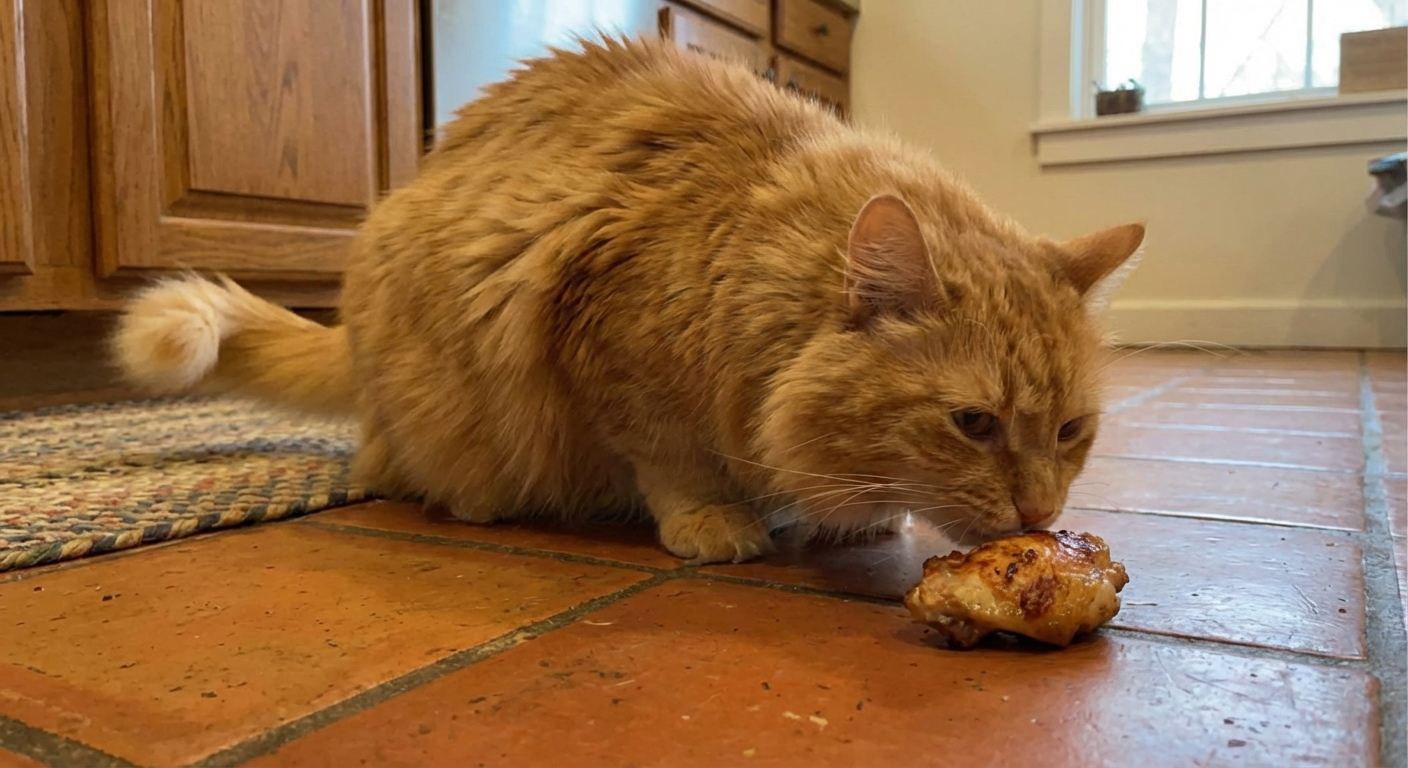
Cooked bones, especially poultry bones
Why it’s dangerous: They can splinter and cause choking, mouth injury, or intestinal obstruction or perforation.
- Includes: chicken wings, drumsticks, turkey carcass, rib bones
Watch for: gagging, drooling, repeated swallowing, vomiting, painful belly, no appetite.
High-fat foods and greasy scraps
Why it’s risky: Can trigger vomiting and diarrhea, and in some cases pancreatitis.
- Includes: bacon, sausage, fried foods, buttery sauces, meat drippings
Watch for: repeated vomiting, abdominal pain, hunched posture, lethargy.
Salt-heavy foods and salty licks
Why it’s risky: Excess sodium can contribute to dehydration and electrolyte problems.
- Includes: chips, pretzels, salted nuts, ramen seasoning, brines
Watch for: vomiting, diarrhea, increased thirst, weakness.
Pet-unfriendly produce: green potatoes, sprouts, and some pits
Why it’s risky: Green potatoes and sprouts can contain higher solanine. Fruit pits and seeds can be choking hazards, and some can irritate the GI tract.
- Includes: green potato skin, potato sprouts, fruit pits (peach, plum, apricot), apple seeds
Watch for: drooling, vomiting, abdominal pain, choking signs.
Wild mushrooms
Why it’s dangerous: Some mushrooms cause severe liver, kidney, or neurologic toxicity.
- Includes: any mushroom found outdoors or of unknown type
Watch for: vomiting, diarrhea, weakness, tremors, seizures, jaundice.
Lilies (not food, but a major table hazard)
Why it’s dangerous: True lilies (Lilium and Hemerocallis species, like Easter lily and daylily) can cause life-threatening kidney failure in cats. Pollen, leaves, petals, and even vase water can be toxic.
Watch for: vomiting, drooling, not eating, lethargy. Do not wait for symptoms.

Quick safety notes
“It’s just seasoning” still counts
Onion and garlic powder are concentrated and commonly hidden in foods like deli meats, broths, rotisserie chicken skin, and takeout. In clinic, these are some of the most common “I only gave a little” exposures I hear about. When in doubt, assume it may contain alliums unless you can confirm it does not.
Do not give human medicine
Over-the-counter medications like acetaminophen and ibuprofen can be extremely dangerous for cats. If your cat is vomiting or painful after a food exposure, call your veterinarian instead of trying home meds.
Not just food
Kitchens and garages often share hazards. A few non-food exposures we see far too often include:
- Antifreeze (ethylene glycol): a tiny amount can be fatal. Treat any lick as an emergency.
- Essential oils and concentrated flavorings: tea tree, wintergreen, and similar oils can be dangerous, especially if licked or applied.
- Human medications: NSAIDs, antidepressants, and ADHD medications are common accidental poisonings when dropped or left on counters.
Also keep trash secured, clean grease pans promptly, and rinse dishes that had garlic or onion heavy sauces before leaving them in the sink. Cats are surprisingly persistent when something smells “interesting.”
What to do if your cat ate something toxic
- Remove access to the food and keep any packaging.
- Estimate how much was eaten and when.
- Do not force vomiting unless a veterinarian specifically instructs you to. Cats can aspirate, and some substances cause more damage coming back up.
- Call for help: your veterinarian, an emergency clinic, or a pet poison hotline.
- Bring samples if asked: ingredient label, the plant, or photos of what was eaten.
If you are calling, it helps to have your cat’s weight, age, medical conditions, and current medications ready.
Poison hotlines (US): ASPCA Animal Poison Control Center (APCC) and Pet Poison Helpline. A consultation fee may apply, and they can coordinate with your veterinarian or ER.
Cat-safe treat swaps
If your cat loves to beg, you do not have to say “no” forever. You just need safer options.
- Freeze-dried single-ingredient treats (chicken or salmon made for cats)
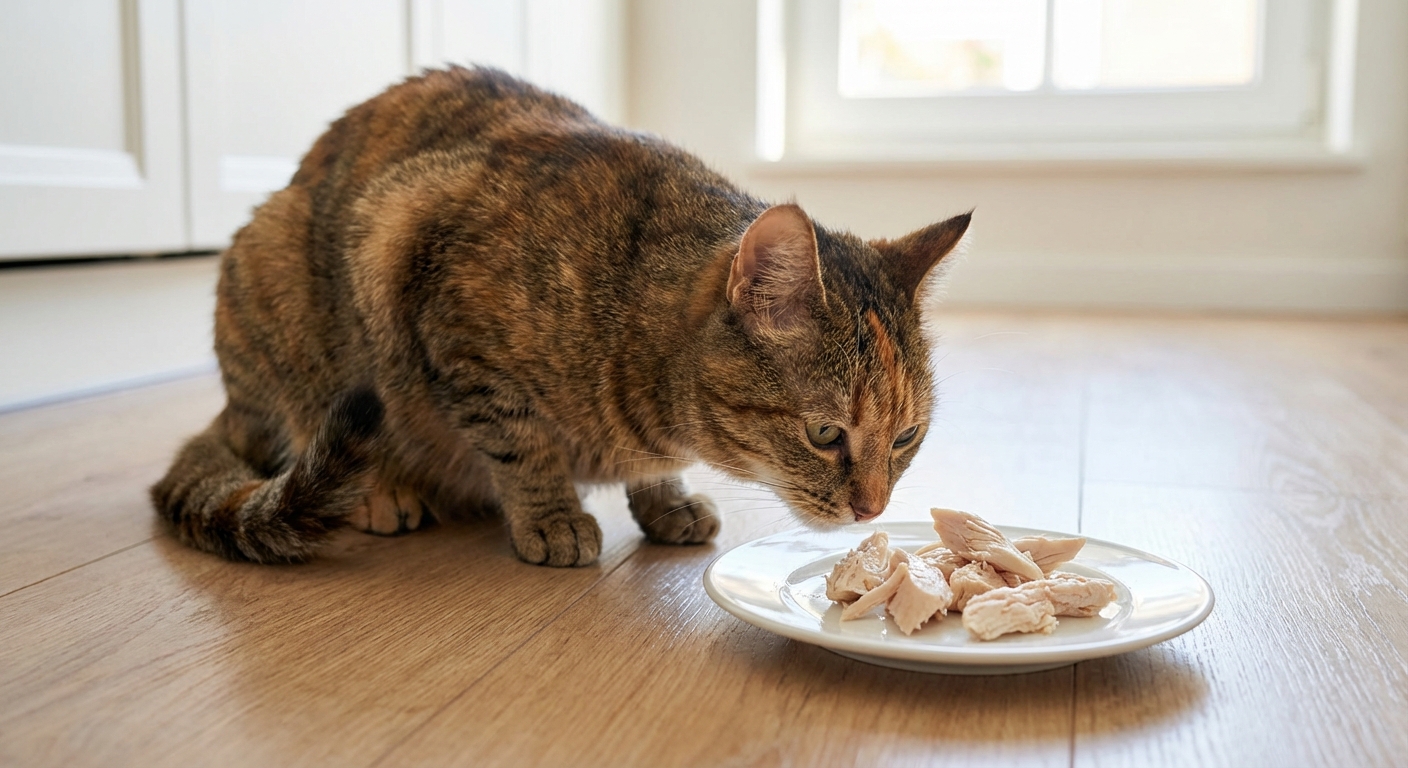
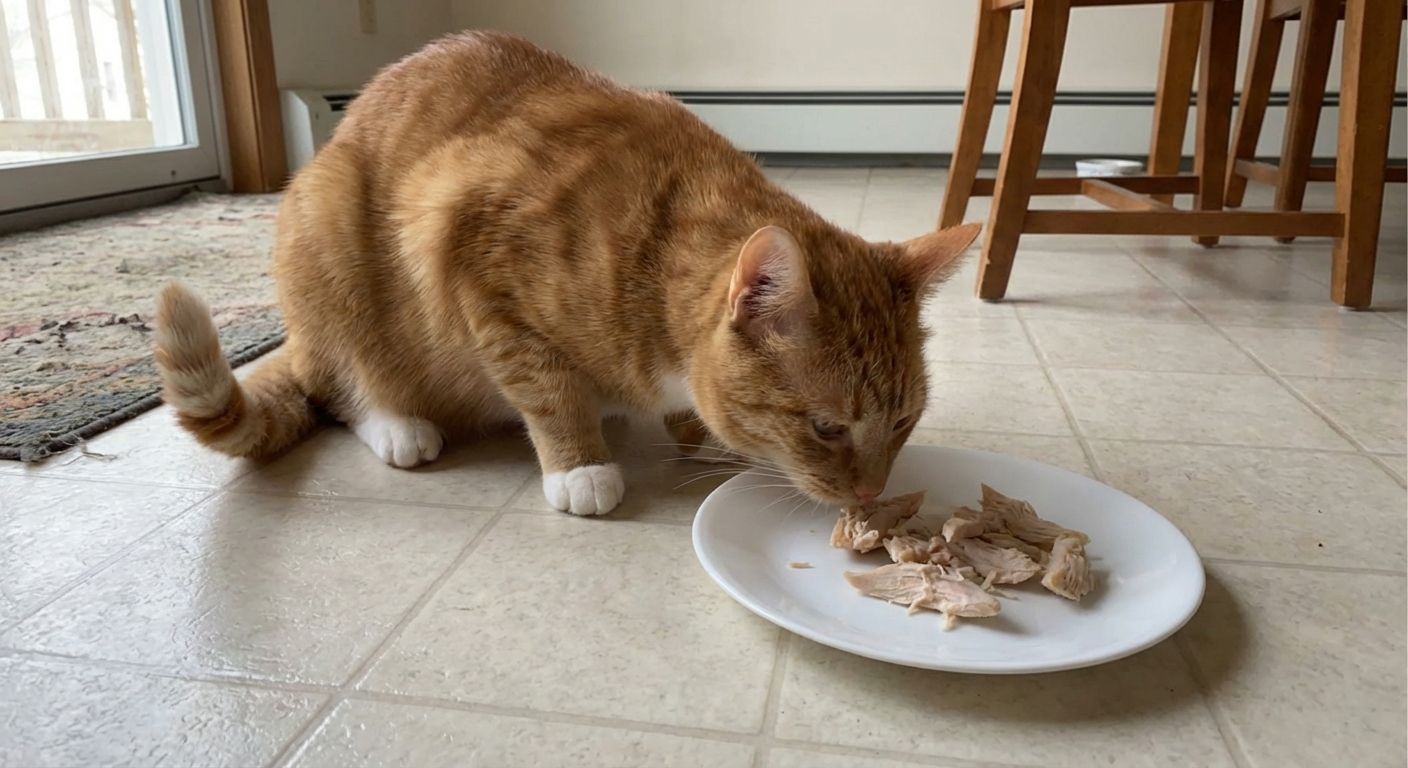
- Plain cooked meat in tiny amounts (no salt, no onion or garlic seasoning)
- Small portions of canned cat food as a “special snack”
- Cat grass for nibblers who go after houseplants
And a gentle reminder: treats should stay a small part of the diet. If you are seeing frequent begging, sometimes the best fix is scheduled meals, puzzle feeders, or a nutrition check with your vet.
Printable quick checklist
Here is a simple list you can screenshot or print for your fridge:
- Onion, garlic, chives, leeks, shallots (all forms)
- Chocolate and cocoa
- Coffee, tea, caffeine products
- Alcohol
- Raw yeast dough
- Grapes and raisins (high-risk, call for guidance)
- Xylitol and sugar-free products (high-risk, call for guidance)
- Macadamia nuts (avoid)
- Raw meat, raw eggs, raw fish (risk)
- Cooked bones (especially poultry)
- Greasy, high-fat foods (risk)
- Very salty foods (risk)
- Green potatoes and potato sprouts (risk)
- Wild mushrooms
- True lilies and daylilies (extreme risk)
- Antifreeze and other chemicals (extreme risk)
If you would like, I can also create a cat-safe kitchen list tailored to your home and your cat’s habits. The best prevention is always the simple stuff: awareness, storage, and a plan for what to do if an accident happens.