Vet-informed guide to a short-term bland diet for dogs: chicken and rice 1:2 ratio, daily cup ranges by weight, how many meals to split into, and red flags t...
Article
•
Designer Mixes
Food for Dog Upset Stomach

Shari Shidate
Designer Mixes contributor
When your dog has an upset stomach, it can feel urgent and stressful. I get it. As a veterinary assistant here in Frisco, Texas, I have seen how quickly mild tummy trouble can turn into dehydration or a bigger issue if we miss the warning signs.
This quick guide walks you through what to feed (and what to skip), when to call your vet, and how to gently get your dog back to their normal diet with confidence.
When an upset stomach is an emergency
Food can help mild stomach upset, but some situations need veterinary care right away. Contact your vet or an emergency clinic if you notice any of the following:
- Multiple vomiting episodes in a day, vomiting that will not stop, or your dog cannot keep water down
- Any vomiting in a puppy, toy breed, senior dog, or a dog with other health conditions
- Vomiting with blood, or dark material that looks like coffee grounds
- Diarrhea with blood or black, tarry stool
- Swollen or painful belly, pacing, or a praying posture (front end down, rear end up)
- Retching without bringing anything up (possible bloat risk)
- Extreme lethargy, collapse, pale gums, or weakness
- Signs of dehydration: tacky gums (sticky or dry), sunken eyes, very low energy
- Puppies, seniors, or dogs with diabetes, kidney disease, Addison’s disease, heart disease, or pancreatitis
- Possible toxin exposure, foreign object chewing, or sudden symptoms after scavenging
If your dog seems uncomfortable but stable, the goal is simple: rest the gut, keep hydration up, and use bland, easy-to-digest foods while you monitor closely.
The best foods for a dog’s upset stomach
In most uncomplicated cases, the go-to tummy-soothing plan is a short bland diet paired with smart hydration. These foods are gentle, low fat, and easy for many dogs to digest.
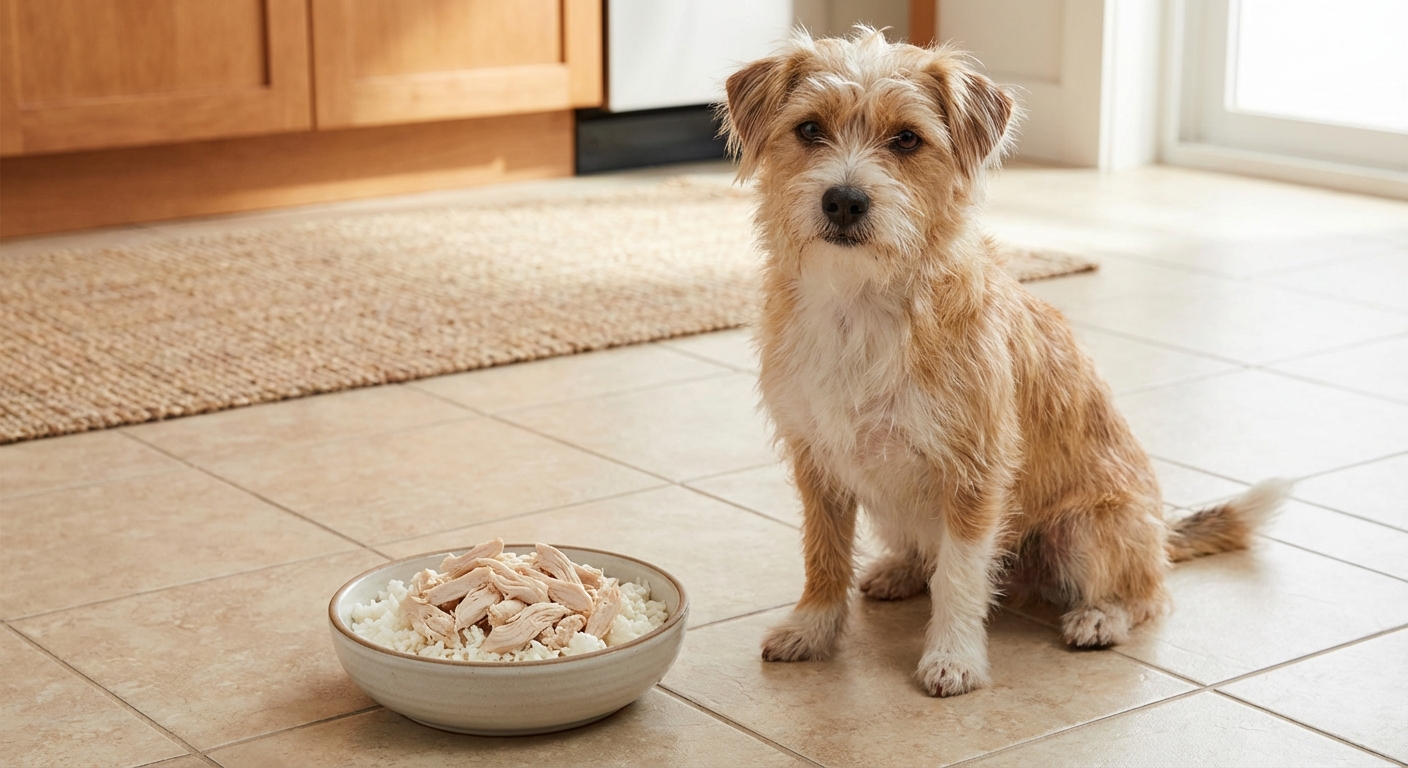
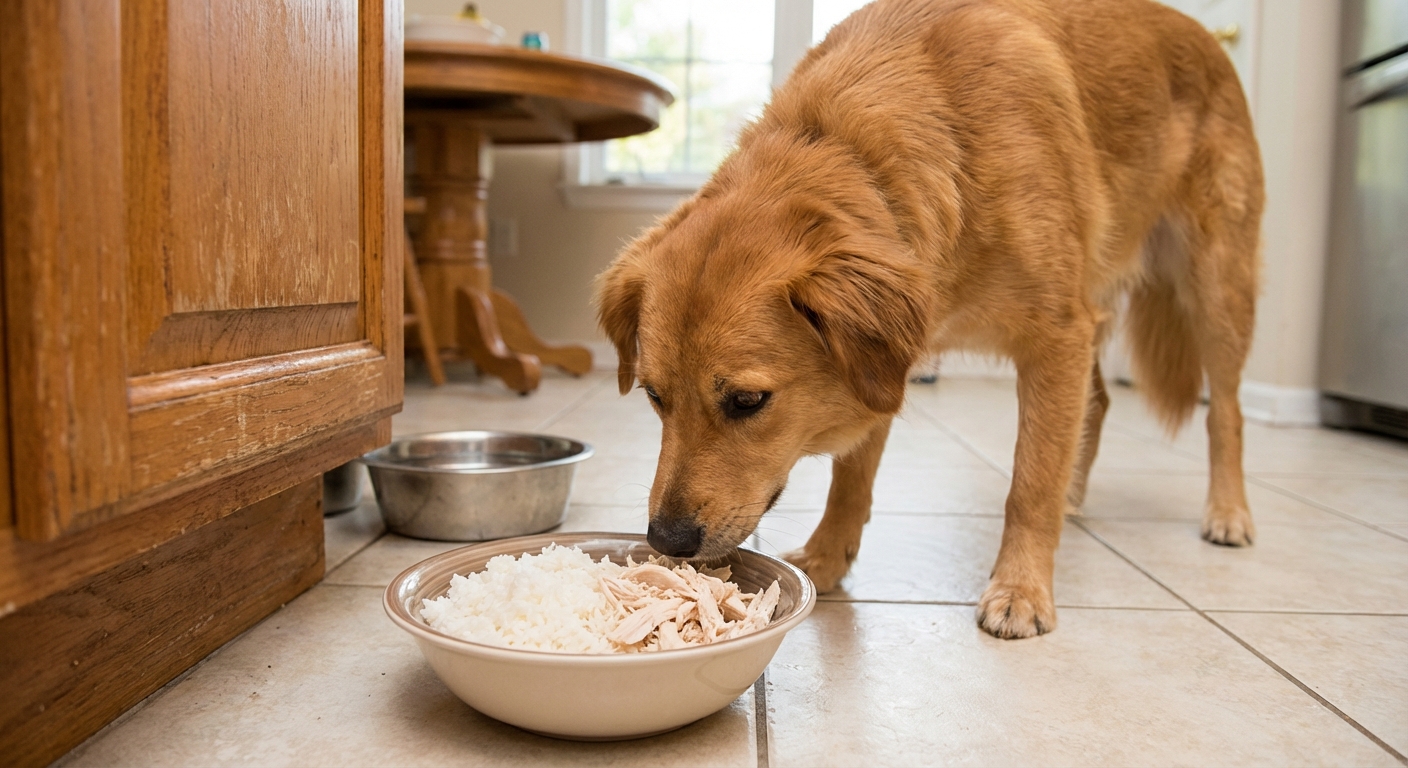
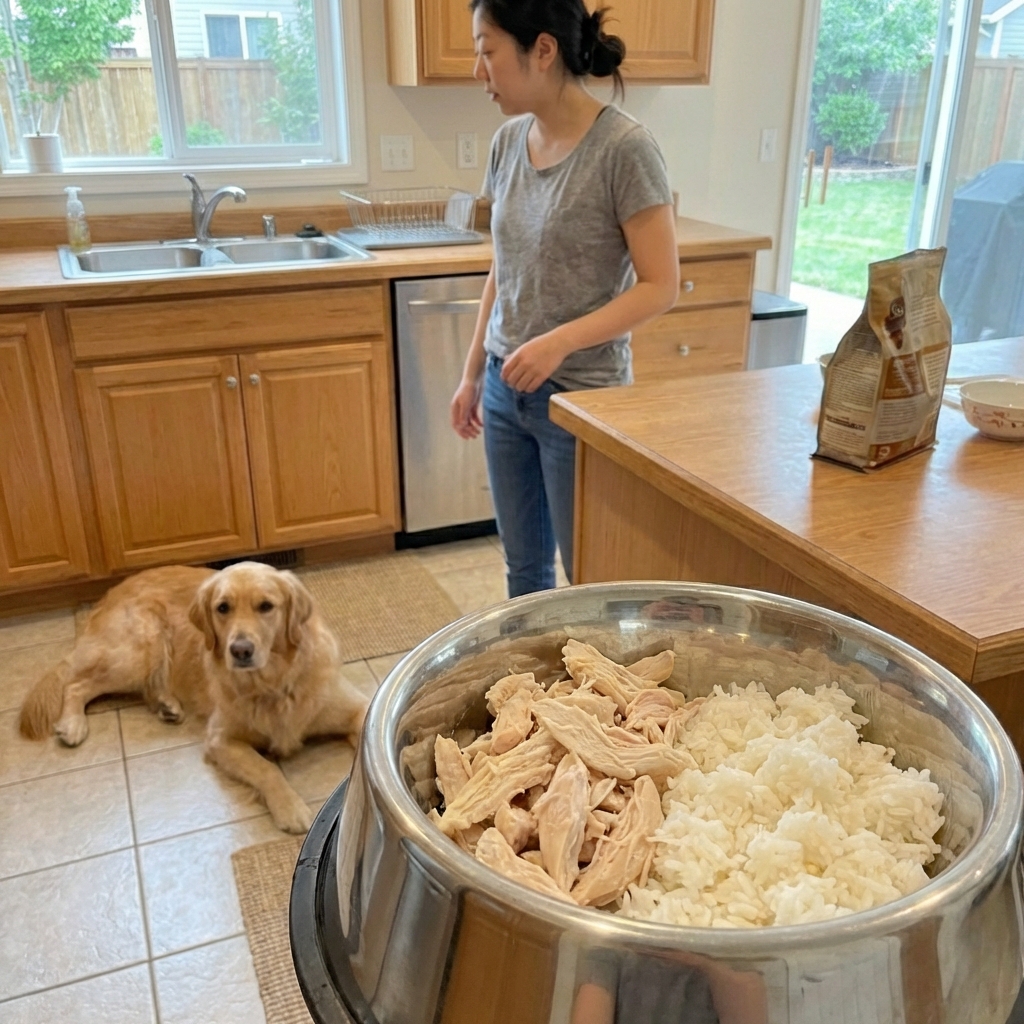
1) Boiled chicken (or turkey) and white rice
This is the classic for a reason. Use skinless, boneless chicken breast or lean turkey, boiled and shredded, with plain white rice.
- Why it helps: low fat, mild protein, easy on inflamed GI tracts
- Skip: seasoning, butter, oil, garlic, onion, and rich broth
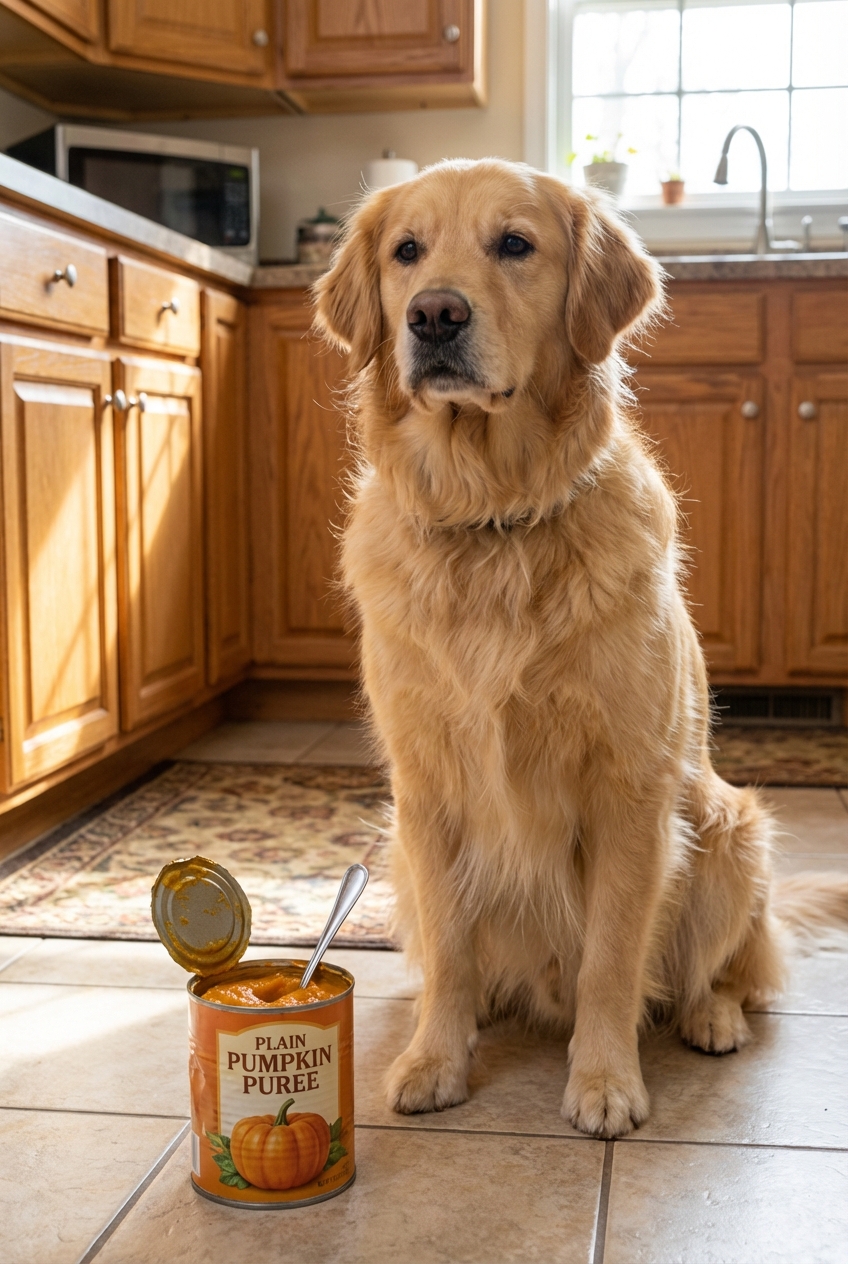
2) Plain canned pumpkin (not pie filling)
Pumpkin can help with both loose stool and mild constipation because of its soluble fiber. Like any fiber, it does not agree with every dog, so stop if stool worsens or your dog seems gassier or more uncomfortable.
- Typical amount: 1 to 2 teaspoons for small dogs, 1 to 2 tablespoons for medium to large dogs
- Choose: 100% pumpkin with no sugar or spices
3) Boiled sweet potato (small amounts)
Soft, cooked sweet potato can be soothing and provides gentle fiber. Keep portions modest since too much can loosen stool.
4) Plain scrambled egg (no butter or milk)
Egg is a highly digestible protein for many dogs. Make it plain and fully cooked.
5) Prescription or veterinary GI diets
If your dog gets recurring stomach upset, your veterinarian may recommend a therapeutic diet designed for GI sensitivity. These diets are formulated to be highly digestible and nutritionally complete, which matters if the bland phase lasts longer than a day or two.
Hydration matters
Dehydration is one of the biggest risks with vomiting and diarrhea. Offer frequent small sips of water. If your dog gulps and then vomits, reduce the amount and offer more often.
- Ice chips: helpful for dogs who cannot keep a bowl of water down
- Unflavored pediatric electrolyte solution: sometimes used short term, but ask your vet first for dosing and whether it is safe for your dog. Avoid or use extra caution in dogs with kidney disease, heart disease, diabetes, or those on a sodium-restricted plan.
- Do not force water if your dog is actively vomiting. Call your vet.
Feeding plan for the next 48 hours
Step 1: When to pause food
For many healthy adult dogs, some vets may suggest a very short break from food. Many vets now prefer skipping fasting and starting tiny bland meals once vomiting has stopped for a stretch of time (often 6 to 8 hours), especially if nausea is mild. Follow your vet’s guidance. Puppies and tiny dogs can become hypoglycemic, so do not fast them without veterinary direction.
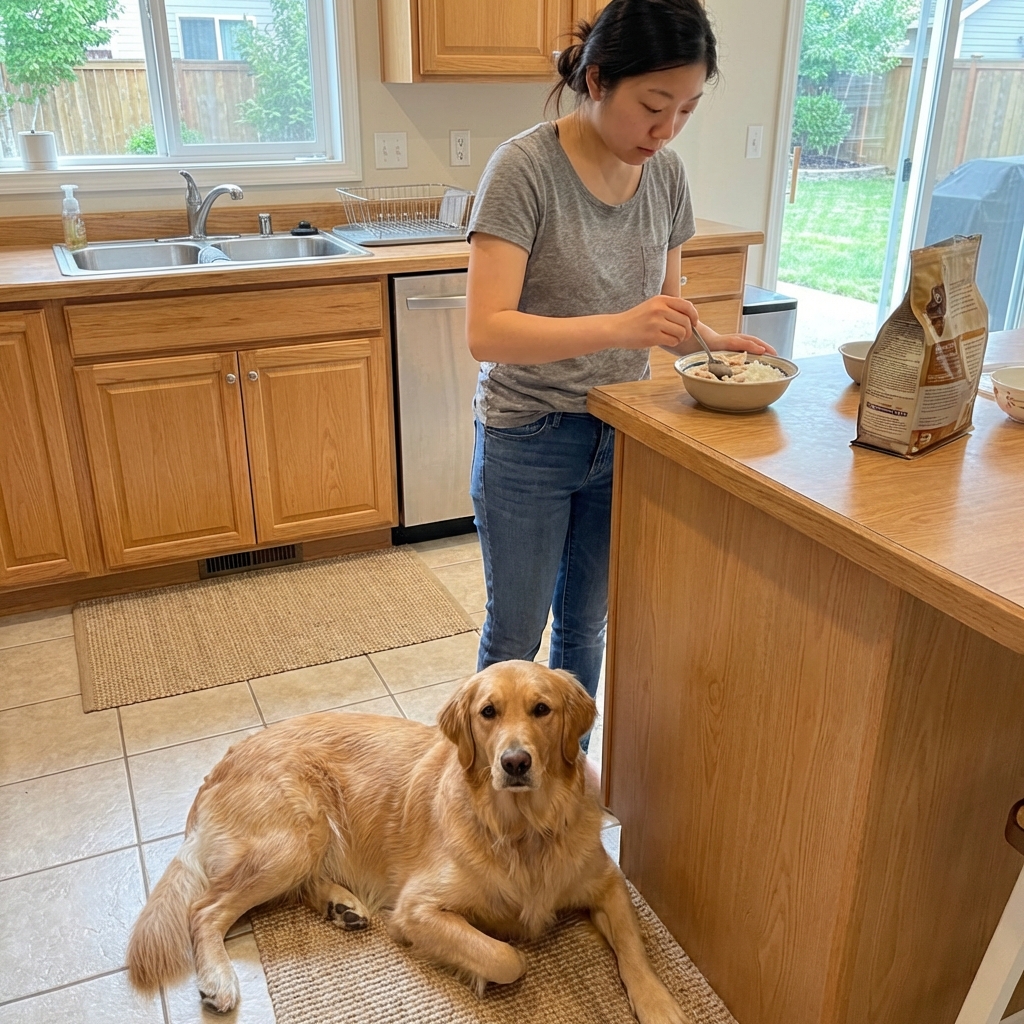
Step 2: Start bland, small, and frequent
Once vomiting settles, feed small meals every 4 to 6 hours. A common starting ratio is:
- 2 parts cooked white rice
- 1 part boiled lean chicken or turkey
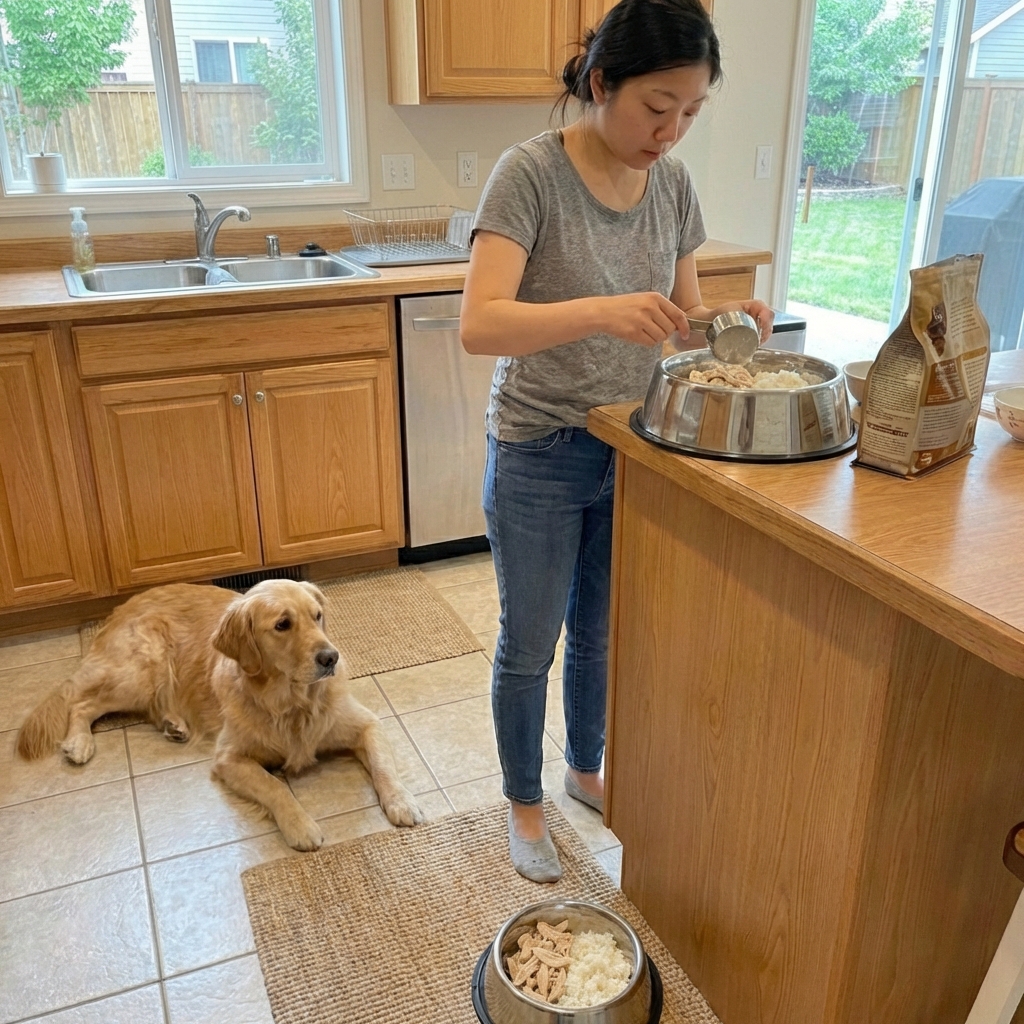
Portion starting point: begin with about 1/4 of your dog’s usual meal size. If you prefer a visual guide, start roughly here per meal and adjust based on your dog’s size and your veterinarian’s advice:
- Small dogs: 1 to 2 tablespoons
- Medium dogs: 1/4 to 1/2 cup
- Large dogs: 1/2 to 1 cup
If stools improve and there is no vomiting, gradually increase meal size over 1 to 2 days. Avoid adding treats or new chews during recovery.
Step 3: Transition back slowly
After your dog has been improving and vomit-free for at least 24 hours, mix your dog’s regular food back in gradually over 3 to 5 days:
- Day 1: 75% bland, 25% regular
- Day 2: 50% bland, 50% regular
- Day 3: 25% bland, 75% regular
- Day 4 to 5: 100% regular if stools stay normal
Foods to avoid
These are common triggers that can prolong nausea, worsen diarrhea, or raise the risk of pancreatitis:
- Fatty foods: bacon, sausage, fried foods, greasy leftovers
- Dairy for most dogs: milk, cheese, ice cream
- Rich treats or new chews
- Spicy or seasoned foods
- Broths made with onion or garlic
- High-fiber or gas-producing veggies in the acute phase (like large amounts of broccoli or beans)
OTC meds to avoid
Many people want to help by reaching for human medications. Please do not give over-the-counter meds unless your veterinarian tells you to.
- Never give ibuprofen, naproxen, or acetaminophen
- Do not give bismuth products (like Pepto-Bismol) unless your vet specifically recommends it, since it can be risky in some dogs and can complicate assessment (and it can darken stool)
Should you use probiotics?
Many dogs benefit from a dog-specific probiotic during mild diarrhea or after a diet change. Some evidence supports specific strains used in veterinary products, such as Enterococcus faecium SF68. Some vets also use yeast-based options like Saccharomyces boulardii for certain cases. Product quality matters, and not every dog is a good candidate. If your dog is on antibiotics, is immune compromised, or has recurrent GI issues, ask your veterinarian which probiotic is best and how to use it.
Simple bland recipe
Chicken and rice comfort bowl
- 1 cup cooked white rice
- 1/2 cup boiled, shredded skinless chicken breast
- 1 to 2 teaspoons plain canned pumpkin (optional)
Mix and serve in small portions. Refrigerate leftovers promptly and use within 2 to 3 days, or freeze in meal-sized containers.
Important: This is a short-term stomach-soothing plan, not a complete long-term diet. If your dog needs bland food longer than a couple of days, talk with your vet about balancing nutrients.
How to tell it is working
These are encouraging signs your dog is improving:
- Vomiting stops
- Stool becomes formed and less frequent
- Energy improves and your dog seems comfortable
- Normal thirst returns without gulping or vomiting
If symptoms are not improving within 24 to 48 hours, or they return as soon as you transition back to normal food, it is time to check in with your veterinarian. Recurrent upset stomach can be linked to parasites, food sensitivity, pancreatitis, GI inflammation, stress colitis, or something your dog ate that is not passing. Your vet may recommend a fecal test, lab work, or imaging depending on symptoms.
Final reminder
You do not have to figure this out alone. A mild upset stomach is common, but persistent vomiting or diarrhea is not something to wait out. Trust your instincts, especially if your dog is acting unlike themselves. And when it is mild, keep it simple: bland food, small meals, hydration, and a slow transition back.