Is your cat itchy, getting chronic ear infections, or vomiting on and off? Learn the most common food triggers, key symptoms, common look-alikes, and the vet...
Article
•
Designer Mixes
Food Allergies in Cats

Shari Shidate
Designer Mixes contributor
As a veterinary assistant here in Frisco, Texas, I hear this all the time: “My cat is itchy, licking constantly, or having tummy trouble. Could it be the food?” Sometimes, yes. But food allergies in cats can look a lot like fleas , environmental allergies, infections, or even stress. The good news is that with a step-by-step plan and your veterinarian’s guidance, you can usually get to answers and real relief.
What a cat food allergy is
A true food allergy is an immune system reaction to a specific ingredient, most often a protein. The immune system mistakenly treats that ingredient as a threat and triggers inflammation. This is different from food intolerance, which is a non-immune reaction, such as sensitivity to a rich food that causes vomiting or diarrhea.
In cats, the ingredients most often implicated are proteins they have eaten repeatedly over time. In many clinics and studies, chicken, beef, fish, and dairy show up often, but any protein can be a problem for an individual cat.
Common signs in cats
Many people expect digestive upset, but cats frequently show food allergies through their skin.
Skin and coat signs
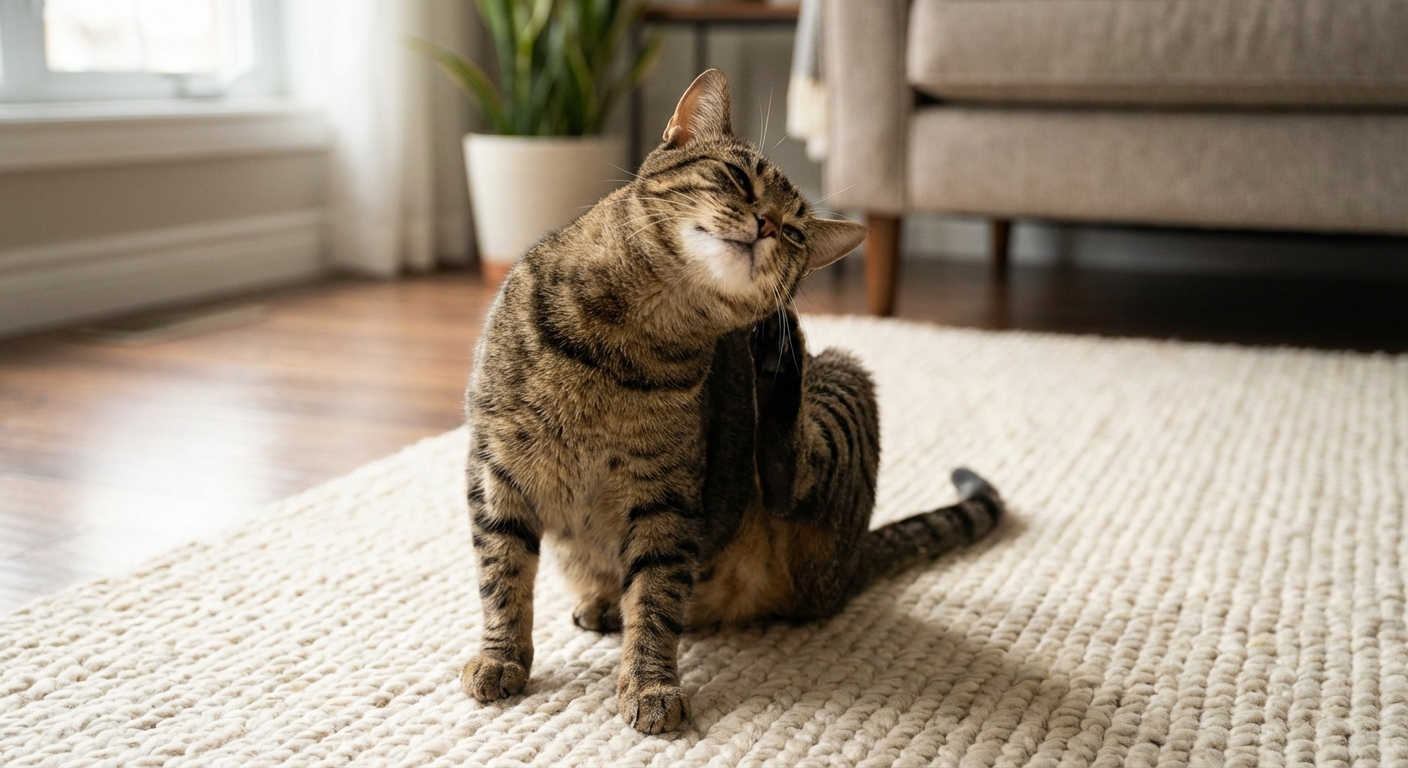
- Itching, especially around the head, face, ears, and neck
- Overgrooming that breaks hair off (sometimes called barbering), which looks like thinning hair or bald patches
- Scabs or crusts, often along the back or neck (miliary dermatitis)
- Recurring ear infections or dark wax and debris (this can have multiple causes)
- Redness or sores on the lips, chin, or paws
Digestive signs
- Vomiting
- Frequent hairball vomiting that can sometimes reflect underlying GI irritation
- Diarrhea or soft stools
- Gas, abdominal discomfort, or noisy digestion
- Reduced appetite or finicky eating that worsens over time
Some cats have both skin and gastrointestinal symptoms. Others show only one category, which is why food allergies can be tricky to spot.
Food allergy or something else
Before you assume it is food, it helps to rule out the most common look-alikes. In practice, these are frequent culprits:
- Fleas: in flea-allergic cats, even one or two bites can cause dramatic itching
- Environmental allergies: pollen, dust mites, molds
- Skin infections: bacterial or yeast overgrowth secondary to scratching
- Parasites: mites, intestinal parasites
- Ringworm: can cause hair loss and crusting
- Stress-related overgrooming: a behavioral pattern that can mimic allergy
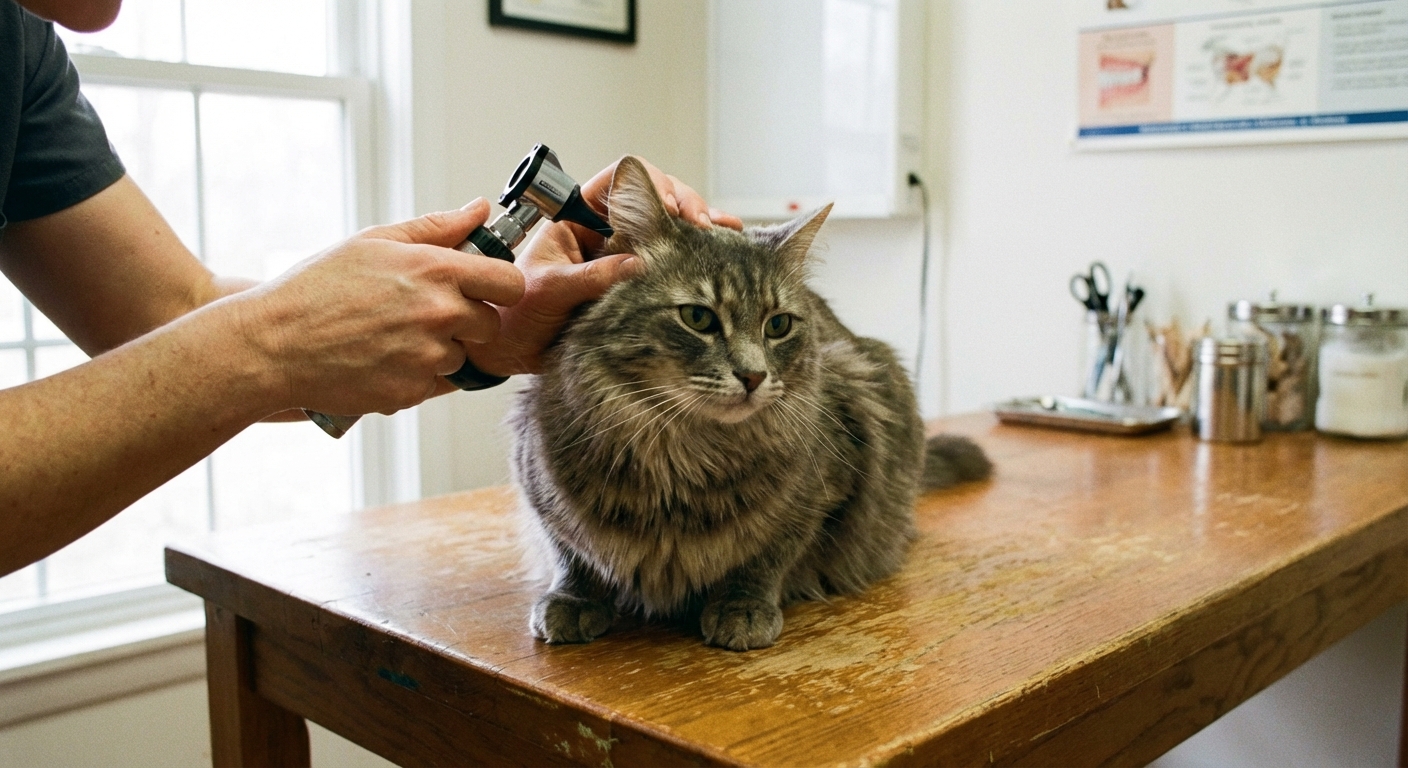
Your vet may recommend a skin check, flea control trial, ear cytology, fecal testing, or other diagnostics before focusing on food. That is not “extra.” It is how we avoid missing something treatable. In clinic, we see a lot of “food allergy” cases turn into “surprise fleas” or “quiet ear infection” once we do the basics first.
How vets diagnose it
The gold standard for diagnosing a food allergy in cats is an elimination diet trial . Blood tests and saliva tests marketed for pet food sensitivities are not reliable enough to diagnose feline food allergies on their own.
What a diet trial looks like
For a set period, your cat eats a very controlled diet with ingredients they have not been exposed to before, or a prescription hydrolyzed diet where proteins are broken down to reduce immune recognition.
- Typical trial length: 8 to 12 weeks for skin signs, and sometimes longer depending on severity. Some GI signs may improve in 2 to 4 weeks, but full trials are still recommended for a clear answer.
- Rule: no treats, no flavored medications, no table food, no lickable supplements unless your vet approves
- Goal: clear improvement on the trial diet, followed by a planned re-challenge to confirm the trigger
If symptoms improve during the trial, that is encouraging, but the re-challenge is what confirms a true food allergy. If signs return after reintroducing the old food or a specific ingredient, that strongly supports the diagnosis.
Little detail that matters: many cats “fail” food trials because of tiny exposures, like a flavored toothpaste, fish-flavored pill pocket, or a roommate who sneaks treats. Consistency is everything.
Choosing a trial diet
Your vet will help you choose a trial diet based on your cat’s history, health conditions, and what they have eaten before. The two most common approaches are:
Novel protein diets
These use a protein your cat has not previously eaten (for example rabbit or venison) with a limited ingredient list. This approach can work well, but it depends on a truly “novel” protein and good quality control.
Hydrolyzed prescription diets
These diets use proteins broken into smaller pieces to make immune reactions less likely. They can be especially helpful for cats with complex histories or multiple prior diets.
Many over-the-counter “limited ingredient” foods are not ideal for diagnosis because cross-contact with other proteins can happen in manufacturing. That does not make them bad foods, it just makes them less reliable for a strict medical trial.
Common myths to skip
Grain-free does not mean hypoallergenic
Most true food allergies in cats are triggered by proteins, not grains. Some cats do have sensitivities to certain ingredients, but switching to grain-free alone is not a reliable way to diagnose or solve a food allergy.
Action plan at home
1) Use flea control, even if you do not see fleas
This is one of the biggest game-changers for itchy cats. Ask your vet which flea prevention is safest and most effective for your cat’s age and lifestyle. Many cats with “food allergy symptoms” feel better simply because fleas were the hidden trigger.
2) Track symptoms like a detective
Write down itching level, vomiting episodes, stool quality, ear debris, and hair loss locations. Take weekly photos of problem areas. Small improvements matter and are easy to miss day-to-day.
3) Do the diet trial exactly as prescribed
- Feed only the trial diet, measured consistently
- Use the same diet for all meals and snacks
- Ask about safe treat options from the same diet line, if needed
- Talk to your vet about flavored medications or supplements
4) Make it work in real life
- Multi-cat homes: feed separately, pick up bowls after meals, and do not let cats “trade” food
- Treat policing: ask visitors and kids to help by not offering snacks
- Use what you already have: in many cases, you can use a portion of the canned trial diet as “treats” (check with your vet)
5) Switch diets carefully
If your vet says it is safe to transition gradually, do a slow change over 5 to 10 days to reduce stomach upset, especially for GI-sensitive cats. If your cat has severe symptoms, your veterinarian may recommend a different approach, so follow their plan.
6) Reintroduce foods only with your vet’s guidance
Once your cat improves, the next step is often controlled re-challenges, one ingredient at a time, to identify the true trigger. This helps you build a long-term diet that is both safe and enjoyable.
Managing flare-ups
Diet is the long-term solution, but cats often need short-term support while the skin calms down and the gut heals. Your vet may recommend:
- Medication to reduce itching and inflammation
- Treatment for ear infections or skin infections
- Omega-3 fatty acids, which may help some cats
- Probiotics for digestive support in select cases (evidence varies by product and problem)
Never give human allergy meds to cats unless your veterinarian specifically instructs you. Cats metabolize medications differently, and common drugs can be dangerous at the wrong dose.
When to go in urgently
Food allergies are usually not an emergency, but certain signs should be checked right away:
- Repeated vomiting or inability to keep water down
- Lethargy, weakness, or hiding more than usual
- Blood in stool or black, tarry stool
- Rapidly worsening skin sores, swelling, or oozing lesions
- Weight loss, or poor appetite that lasts more than 24 to 48 hours (especially in overweight cats, due to fatty liver risk)
Living well long-term
If your cat truly has a food allergy, the goal is not perfection. The goal is comfort. Once you identify the trigger ingredients, most cats do wonderfully on a consistent diet with a simple routine. You may notice a softer coat, fewer vomiting episodes, calmer skin, and better litter box habits over time.
If you are feeling overwhelmed, you are not alone. Take it one step at a time, partner closely with your vet, and remember that small, steady changes are often the ones that stick. In clinic, the biggest wins usually come from the boring stuff done consistently.