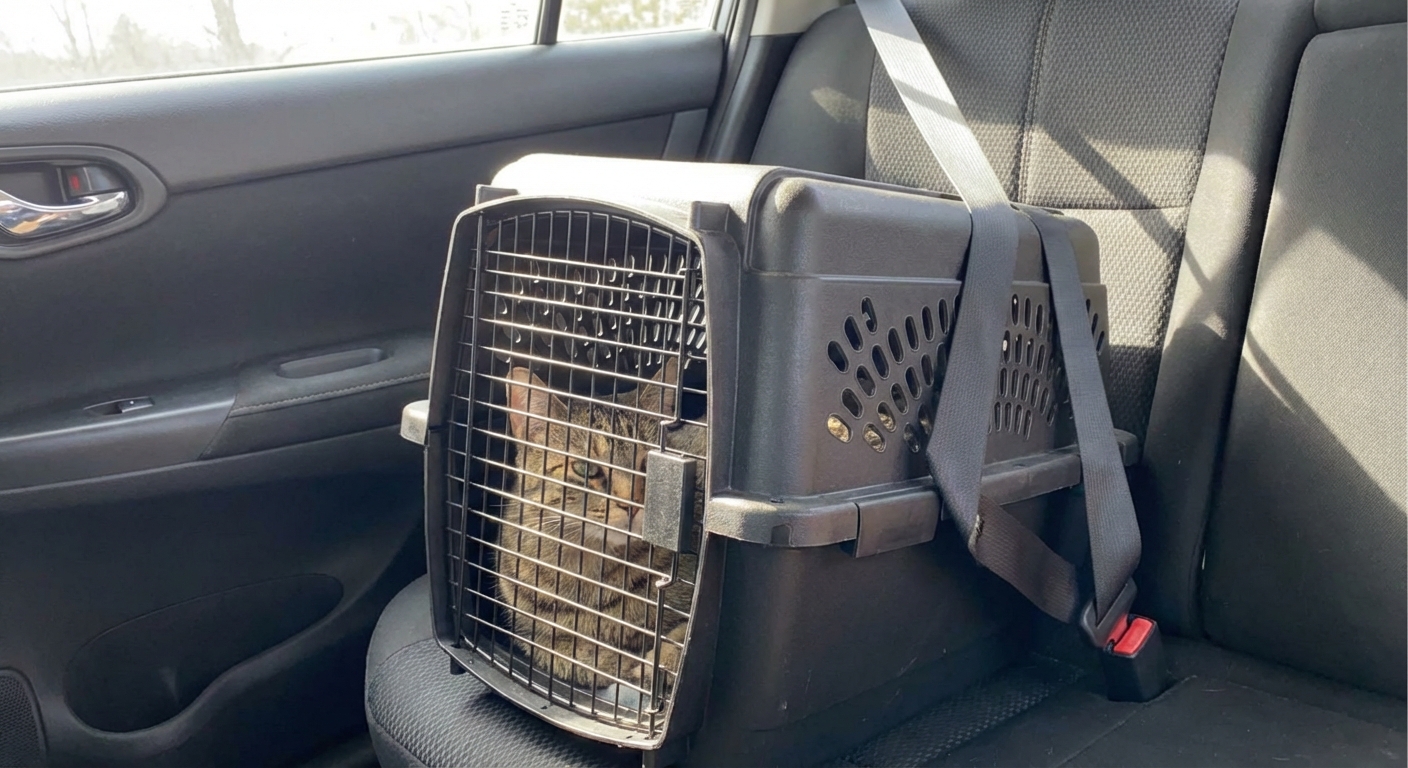
Make car rides easier for your cat with a secure carrier, simple training, stress-reducing setup, and a practical packing checklist. Includes safety and esca...
Article
•
Designer Mixes
Flying With Cats: Facts and Tips

Shari Shidate
Designer Mixes contributor
Flying with a cat can feel intimidating, especially if you are picturing a stressed kitty and a hectic airport. The good news is that many healthy cats can travel safely by air when you plan ahead, choose the right carrier, and understand airline rules. That said, every cat’s tolerance is different, and even healthy cats can struggle with stress if the setup is not right. As a veterinary assistant in Frisco, Texas, I have seen the difference preparation makes. Calm, organized pet parents tend to have calmer cats.
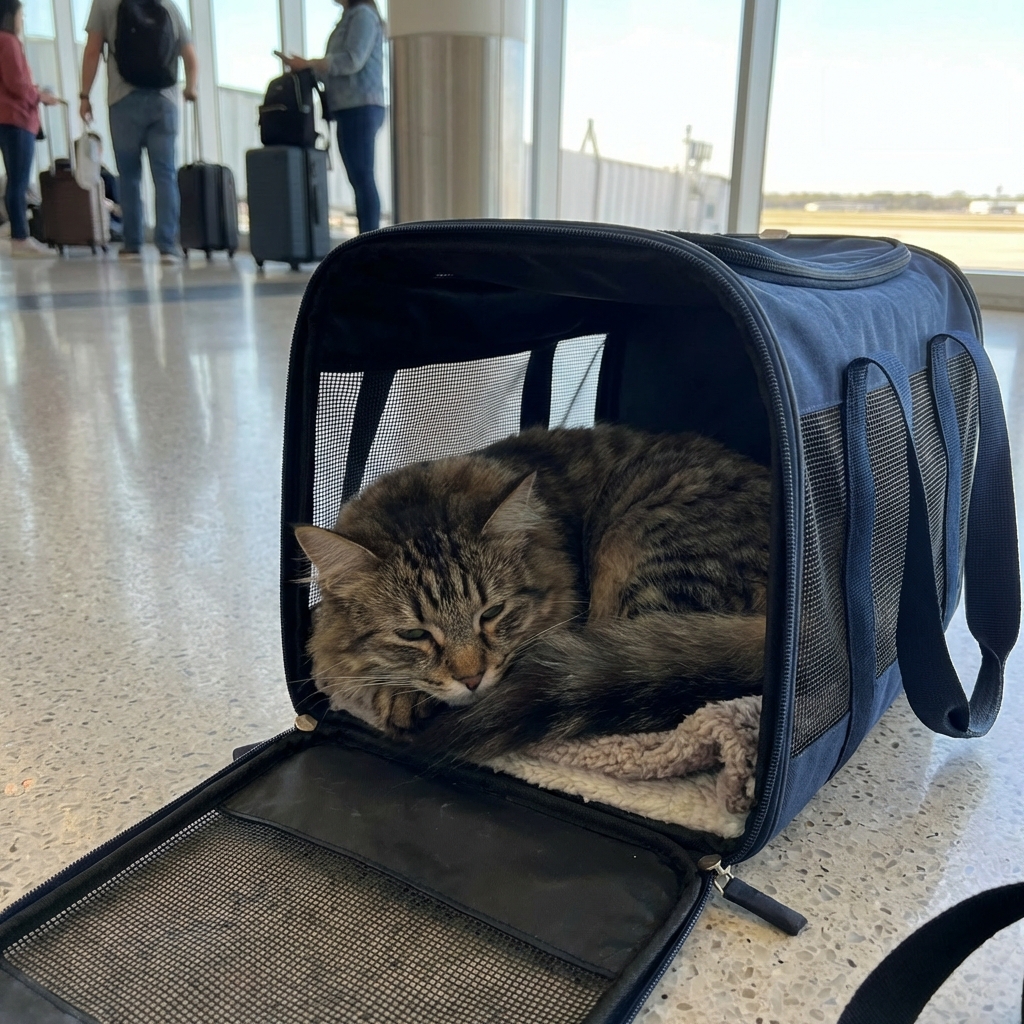
This article focuses on evidence-based basics and practical insights so you can travel with confidence, whether you are flying for a move, a family visit, or a much-needed getaway.
Is flying safe for cats?
For many cats, air travel is safe, but it is not one-size-fits-all. The biggest factors are your cat’s health, temperament, route length, and the travel setup (in-cabin vs. cargo).
- Healthy adult cats often do best when they travel in the cabin with you, under the seat, in an approved carrier.
- Senior cats or cats with heart disease, respiratory disease, chronic kidney disease, uncontrolled hyperthyroidism, or significant anxiety may need extra planning or may be better served by alternate travel arrangements.
- Flat-faced breeds (brachycephalic), such as Persians and Himalayans, can be at higher risk for breathing difficulty during stressful travel. Discuss flight plans with your veterinarian early.
My practical rule: if you have any doubt, schedule a pre-travel vet visit. It is much easier to adjust your plan before you are at the gate.
In-cabin vs. cargo
Whenever possible, choose in-cabin travel. It keeps your cat in a more stable environment, lets you monitor them closely, and avoids many of the temperature and handling variables associated with the cargo process.
In-cabin travel
- Cat stays with you and is easier to supervise.
- Less exposure to extreme temperatures, though you still want to plan for hot jet bridges and long taxi times.
- Typically requires a carrier that fits under the seat (soft-sided is often easiest, but some airlines allow hard-sided carriers too).
Cargo travel
- May be required for some international routes or when in-cabin pet spots are full.
- Risk can be higher due to temperature exposure during loading, delays, and louder, busier handling areas.
- Policies vary widely. Some airlines have dedicated live-animal programs and strict procedures, while others have seasonal embargoes or restrictions on certain breeds.
If you must consider cargo, call the airline and ask specifically about temperature policies, pressurization, live-animal procedures, and hold times on the tarmac. Also ask whether pets travel as checked baggage or as manifest cargo, since procedures and safeguards can differ.
Airline rules to confirm
Airline pet rules are not standardized, and they change. Before you purchase tickets, confirm these details directly with the airline:
- In-cabin pet limit per flight (spots can sell out quickly).
- Carrier size limits (length, width, height) and whether soft-sided or hard-sided carriers are allowed.
- Pet fee and how you pay it.
- Health certificate requirements for your route and destination.
- Route restrictions (some aircraft types or destinations do not allow pets).
- Seat restrictions (often no bulkhead seating because there is no under-seat space).
- Age or health restrictions (minimum age for kittens varies, and pregnancy can be restricted).
Tip: Book your cat’s reservation as early as possible, then choose your seat based on under-seat space.
Vet visit and paperwork
For many domestic flights, airlines may not require a health certificate, but that does not mean your cat should skip a pre-travel check. A vet visit is a chance to confirm your cat is stable for travel and to talk through anxiety, motion sickness, and chronic conditions.
Also remember that rules can differ by destination. For example, certain states and U.S. territories (such as Hawaii) have additional requirements and timelines. If you are unsure, confirm requirements with both the airline and the destination’s official animal import site.
Common travel health prep
- Microchip (highly recommended even for indoor-only cats) plus a collar with an ID tag.
- Vaccines kept up to date, especially rabies. International travel often has strict timing rules.
- Parasite prevention as advised by your vet.
- Medical records stored on your phone and printed as backup.
International travel can require a health certificate, specific rabies documentation, and country-specific steps that may take weeks or months. Some destinations require rabies titers, waiting periods, and an accredited veterinarian endorsement (for U.S. departures, this is often handled through USDA APHIS). If you are flying abroad, start early and check the destination country’s official pet import rules.
Choosing the right carrier
The carrier is not just a container. It is your cat’s “safe room” for the entire trip. A good carrier should be secure, comfortable, and airline-compliant.
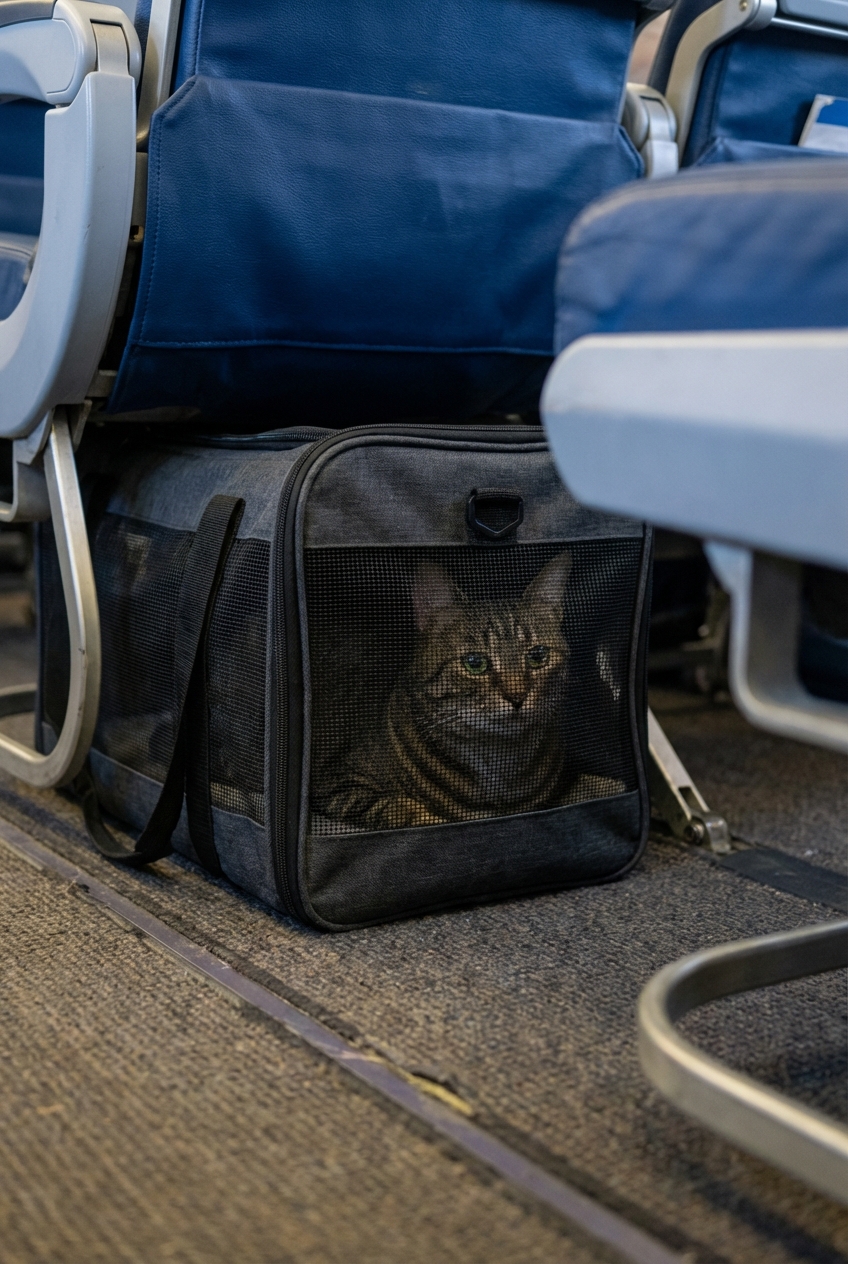
- Soft-sided carriers are often easiest for in-cabin because they flex to fit under the seat.
- Some airlines allow hard-sided carriers as well, as long as they fit under the seat and meet ventilation requirements.
- Look for strong zippers, secure seams, and mesh ventilation on multiple sides.
- Choose a carrier with a stable base so your cat is not sliding around.
- Add an absorbent pee pad under a familiar blanket or towel.
Carrier training is everything: Leave the carrier out at home with treats, a cozy blanket, and occasional meals near it. Your goal is for your cat to think, “Oh, that’s my spot,” not “That’s the thing that only appears before scary events.”
Calming your cat
Many cats do best with a combination of environment prep, practice, and calming aids.
What helps most
- Practice sessions: short carrier time, then short car rides, gradually increasing duration.
- Pheromone support: feline pheromone sprays can be used on bedding or inside the carrier (follow label directions and let it dry before your cat goes in).
- Familiar scent: a T-shirt that smells like you can be comforting.
- Covering the carrier: a light, breathable cover can reduce visual stress in noisy areas.
About medications
Do not give human medications. Also, sedation is not automatically the “best” solution, and some airlines discourage routine sedation because it can affect blood pressure, temperature regulation, and balance. Still, some cats truly benefit from veterinarian-prescribed anti-anxiety medication or anti-nausea support. If medication might help, talk to your veterinarian about a trial dose at home well before travel day so you know how your cat responds.
Food, water, and litter
One of the most common worries I hear is, “What if my cat has to go?” Cats are surprisingly good at holding it for a reasonable travel window, often several hours, especially if you plan smart. Individual cats vary, and long itineraries need more planning.
- Food: A light meal is often better than a large one before travel. For cats prone to vomiting, ask your vet about timing and whether anti-nausea medication is appropriate. Avoid a big meal right before boarding.
- Water: Offer water as normal the night before and the morning of travel. Do not restrict water excessively. Bring a collapsible bowl, and consider a small syringe or dropper to offer a few sips during layovers if your cat is willing.
- Litter: Let your cat use the box right before you leave. For longer travel days, consider a disposable travel litter tray for a family restroom during a layover.
Always pack cleanup supplies in your carry-on: extra pee pads, unscented wipes, a few paper towels, and a zip bag.
Airport and TSA
In the United States, TSA screening typically requires the cat to come out of the carrier while the carrier goes through the X-ray. Your cat will go through the metal detector with you. Procedures can vary by airport and officer, and agents may offer alternative screening methods in some situations.
How to reduce risk
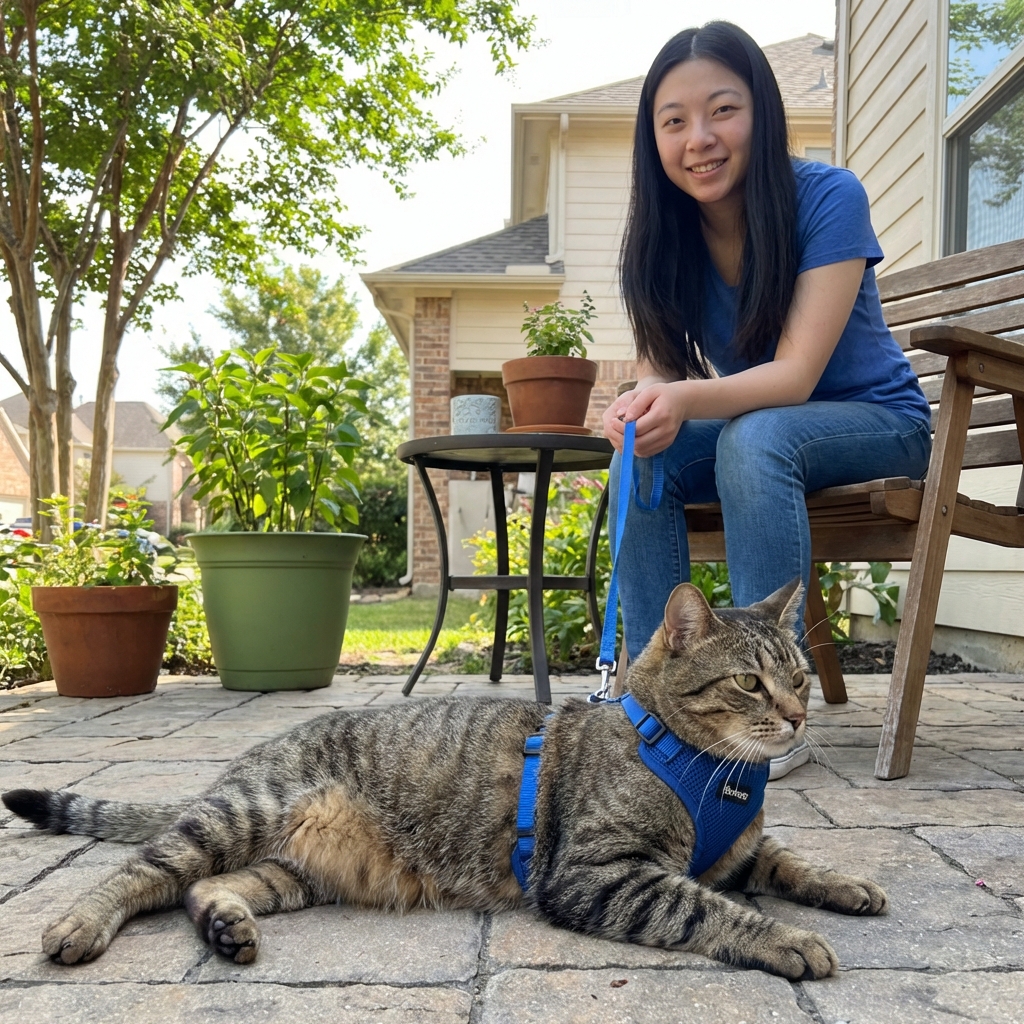
- Use a secure harness and leash on your cat before you enter the airport.
- Ask for a private screening room if your cat is fearful or squirmy.
- Keep your voice calm and movements slow. Cats read our energy beautifully.
Important: Never put a live animal through an X-ray machine.
On the plane
Once you board, your job is to keep your cat safe, quiet, and as comfortable as possible.
- Keep the carrier under the seat in front of you unless the crew instructs otherwise. Many airlines require pets to remain fully enclosed for the entire flight.
- Do not open the carrier mid-flight. Even calm cats can bolt when startled.
- Speak softly and avoid constant “checking” that may rev up anxiety.
- If your cat vocalizes, try a breathable cover over the carrier and gentle reassurance.
Most cats settle once the plane is in the air and the environment becomes more consistent.
Travel day planning
A smooth cat flight usually starts with a realistic itinerary. When you can, keep things simple.
- Choose nonstop flights if possible to reduce handling and delays.
- Build in buffer time. Arrive early so you are not rushing through check-in and screening.
- Avoid tight connections, and plan for what you will do if a flight is delayed.
- Think seasonally. Heat and cold can matter even if your cat is in the cabin, especially during long waits on jet bridges or extended taxi times.
When not to fly
Delay travel and contact your veterinarian if your cat has:
- Labored breathing, open-mouth breathing, or persistent coughing
- Vomiting or diarrhea within 24 to 48 hours of departure
- Severe lethargy, weakness, or collapse
- Uncontrolled pain
- A recent surgery without veterinary clearance
And if your cat is extremely anxious despite training efforts, it may be kinder to explore alternatives like a professional pet transport service, a trusted sitter, or driving if feasible.
Packing checklist
Here is a practical list to keep you organized:
- Airline-approved carrier + absorbent pads + familiar blanket
- Harness and leash
- ID tag + microchip info + recent photos of your cat
- Medical records and any required certificates
- Small amount of food, treats, and a collapsible bowl
- Any vet-approved calming aids
- Wipes, paper towels, zip bags
- Disposable travel litter tray (for long itineraries)

If you do nothing else, do this: train with the carrier early and confirm the airline’s pet policy in writing. Those two steps prevent the majority of travel-day surprises.
Final thoughts
Pet-friendly air travel with cats is absolutely doable. The healthiest trips happen when we respect what cats need: predictability, security, and a calm environment. Start prepping early, keep your plans realistic, and lean on your veterinarian for guidance tailored to your cat.
Your cat does not need a perfect trip. They just need you to be prepared.