If your dog is chewing at the base of their tail, scratching nonstop, or suddenly developing “hot spots,” fleas are often the hidden trigger. What surprises many families is that flea allergy dermatitis (FAD) is not simply “a few fleas.” It is an allergic reaction to allergens in flea saliva, and in highly sensitive dogs, even a single bite can trigger significant itching.
As a veterinary assistant, I have seen FAD look like everything from mild dandruff and itchiness to raw, infected skin. The good news is that once you know the itch pattern and you control fleas in a complete, consistent way, most dogs feel better quickly.
What FAD is and what it is not
FAD (flea allergy dermatitis)
FAD is an allergic skin disease caused by a dog’s immune response to flea saliva. Itchy skin and inflammation can continue even after the flea has moved on. Dogs with FAD often have a history of recurring itch and hot spots, or “mystery” skin infections that improve briefly and then return.
Seasonal allergies (environmental allergies, atopy)
Seasonal allergies are commonly triggered by pollens, grasses, molds, and dust mites. Many dogs with atopy itch on the feet, face, ears, armpits, and groin. These dogs may also have recurring ear infections and lick their paws until they stain.
Mites (mange and other mite infestations)
Mites aren’t an allergy; they’re a parasite problem. Two common categories:
- Sarcoptic mange (scabies): often very itchy and contagious, frequently affects ear edges, elbows, hocks, and belly.
- Demodex (demodectic mange): often causes patchy hair loss and can be mildly itchy or very inflamed if infected; not typically contagious in healthy adult dogs.
Because these conditions overlap, many itchy dogs need a veterinarian’s exam to get to the true cause. It is also common for a dog to have more than one problem at the same time, like FAD plus seasonal allergies. And while fleas are a common culprit for tail-base itch, other issues can sometimes mimic it, including anal gland discomfort, food allergy, contact irritation, or skin infection.
Common itch patterns: where dogs with FAD itch most
One of the biggest clues with FAD is distribution, meaning where the itch and lesions show up.
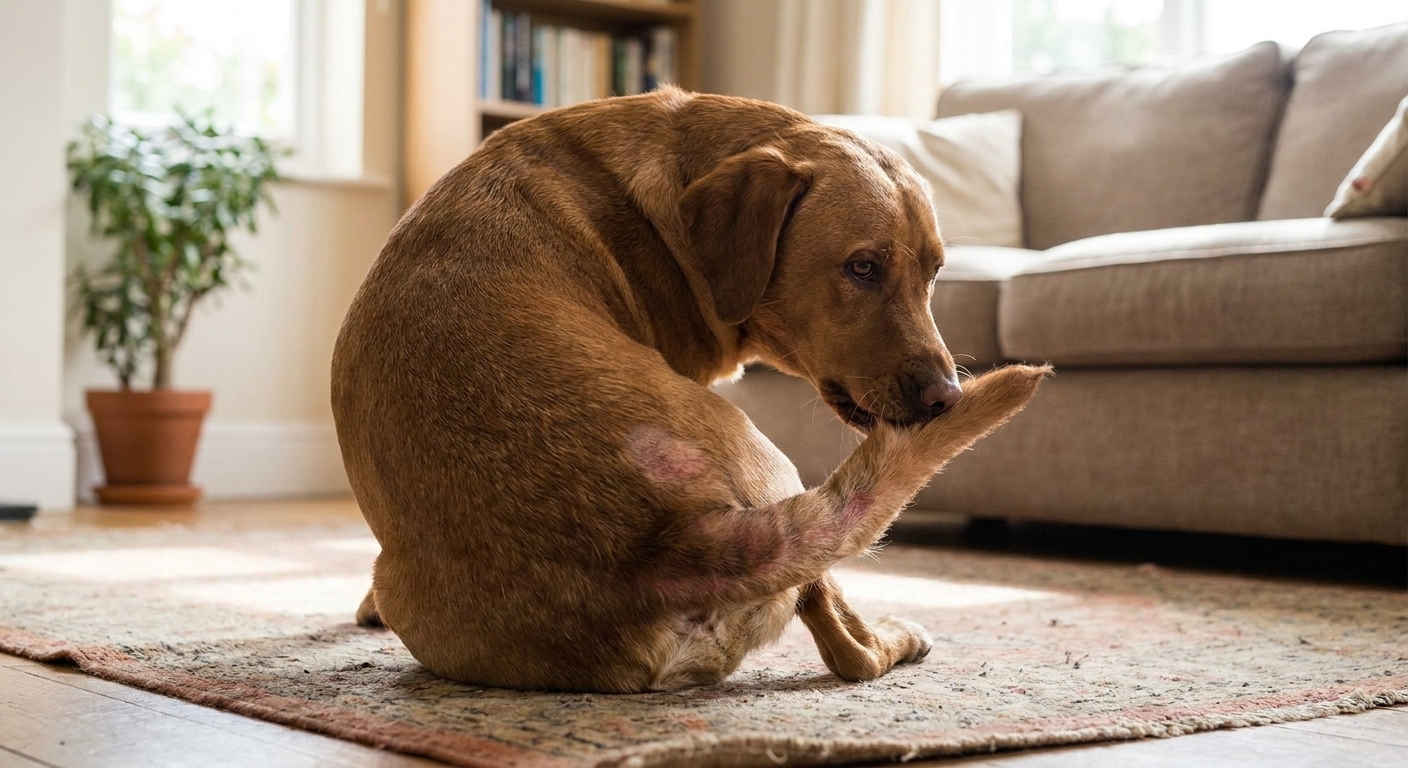
Classic FAD distribution
- Rump and base of the tail
- Lower back
- Back of the thighs
- Belly and groin (in some dogs)
- Along the back (in some dogs, lesions can extend forward beyond the rump)
You may also see:
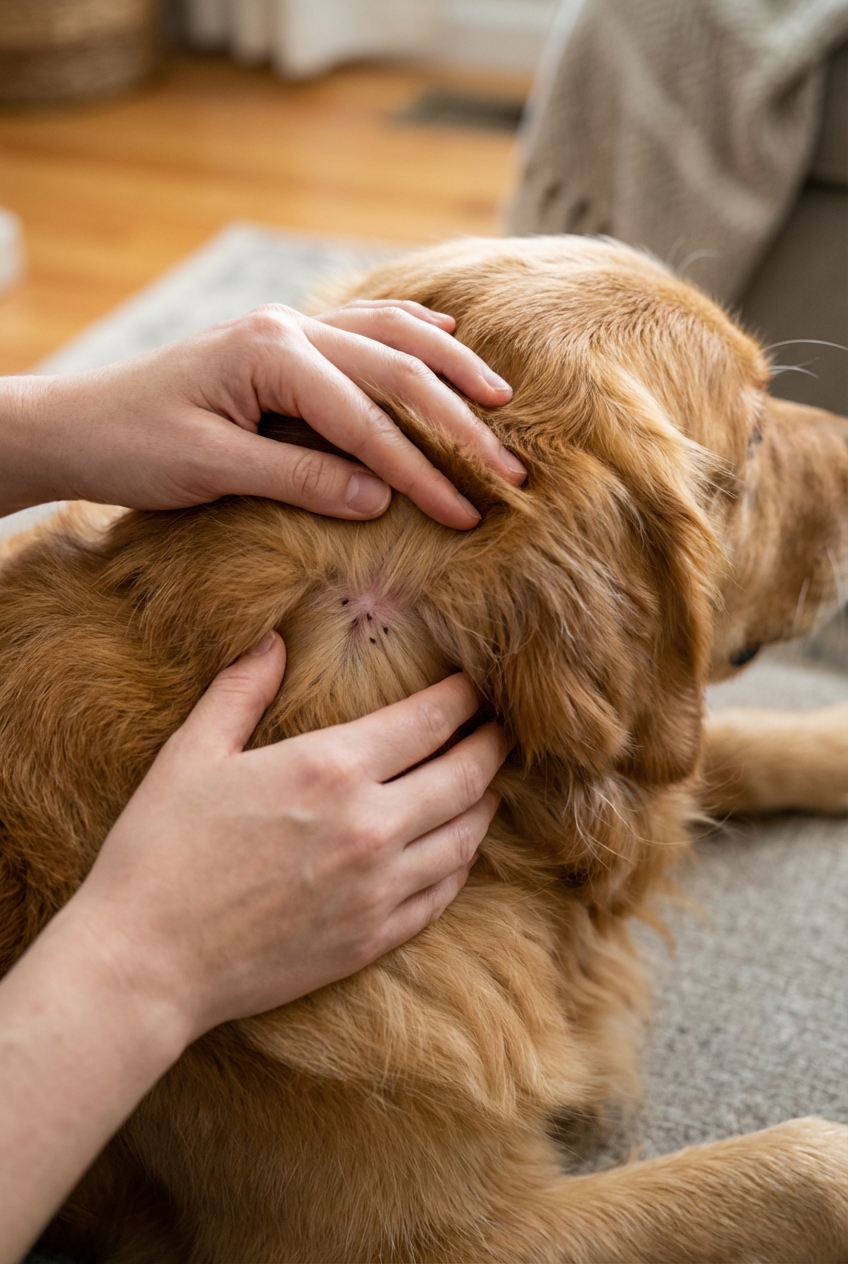
- Small scabs or crusts you can feel more than you can see
- Hair loss from chewing and rubbing
- Darkening of the skin or thickened skin over time
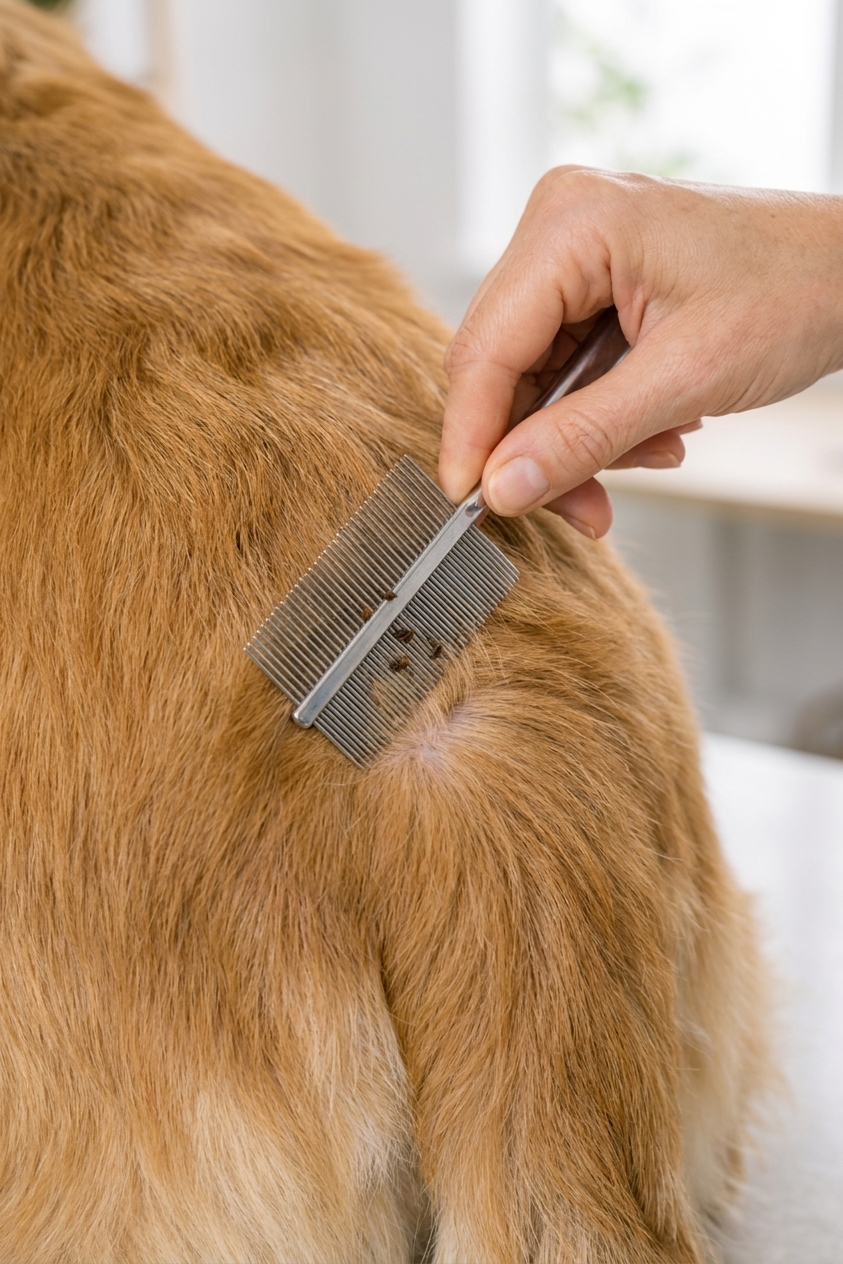
- “Flea dirt” that looks like black pepper specks, especially near the tail base
Quick tip: If you are not sure whether those specks are flea dirt, put a few on a damp white paper towel. Flea dirt often turns reddish-brown as it dissolves (because it is digested blood).
Hot spots and secondary infections: why FAD can spiral fast
FAD is itchy, and itching breaks the skin barrier. Once the skin barrier is damaged, microbes that normally live on the skin can overgrow, leading to infection.
Hot spots (acute moist dermatitis)
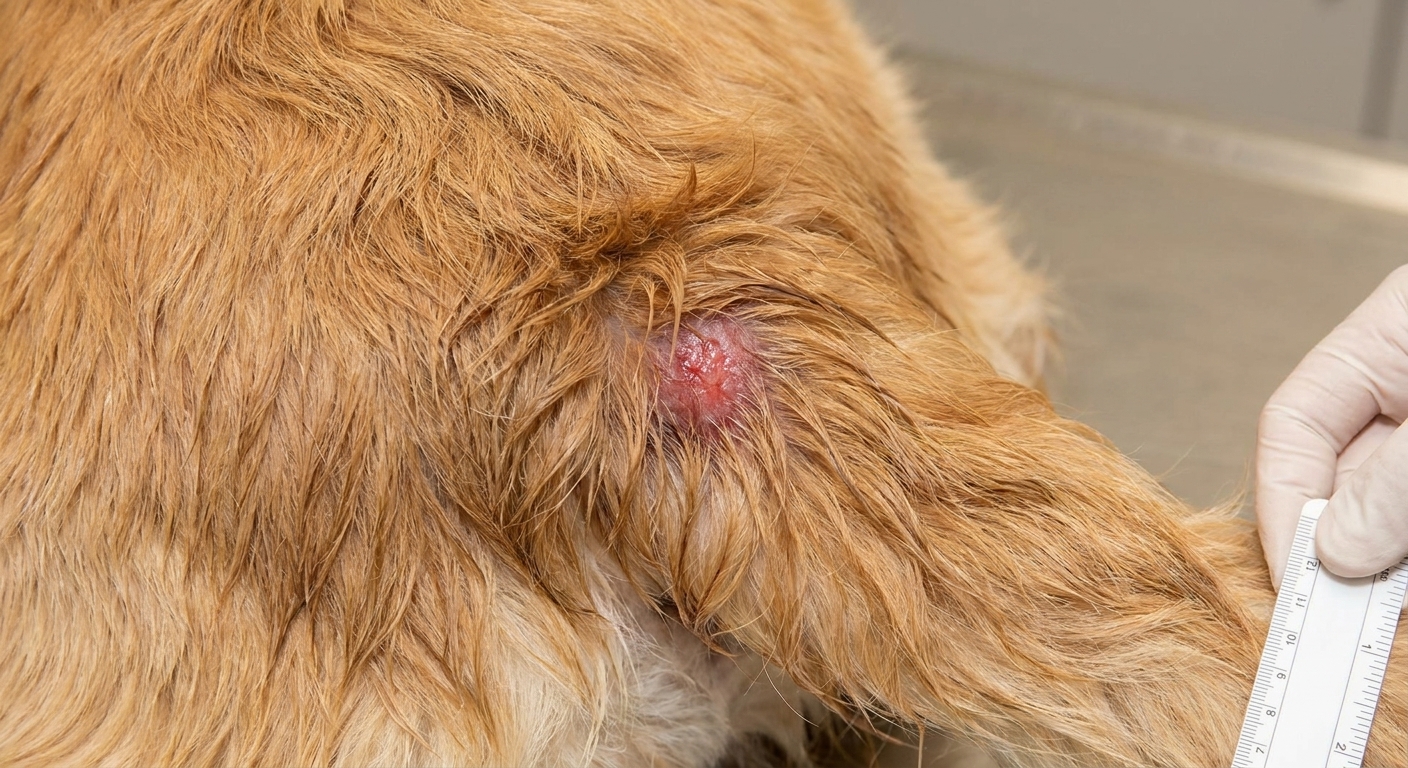
Hot spots are painful, wet, raw patches that can seem to appear overnight. They often start with itch from fleas, then escalate when the dog licks and chews.
Hot spots commonly show up on:
- The hips and rump
- The neck
- Behind the ears
Secondary bacterial and yeast infections
When infection is present, you may notice:
- Odor that seems “yeasty” or “musty”
- Greasy skin or dandruff
- Red bumps, pimples, or pustules
- Oozing, crusting, or scabbing
- Itch that feels out of proportion to what you see
If your dog’s skin looks wet, open, swollen, or painful, or if they seem miserable and cannot settle, it is time to call your vet. Infection can intensify itch and delay healing.
How veterinarians diagnose FAD (and rule out look-alikes)
FAD is often diagnosed using a combination of history, itch pattern, and response to flea control, plus tests to check for infection or other parasites.
What your vet may do
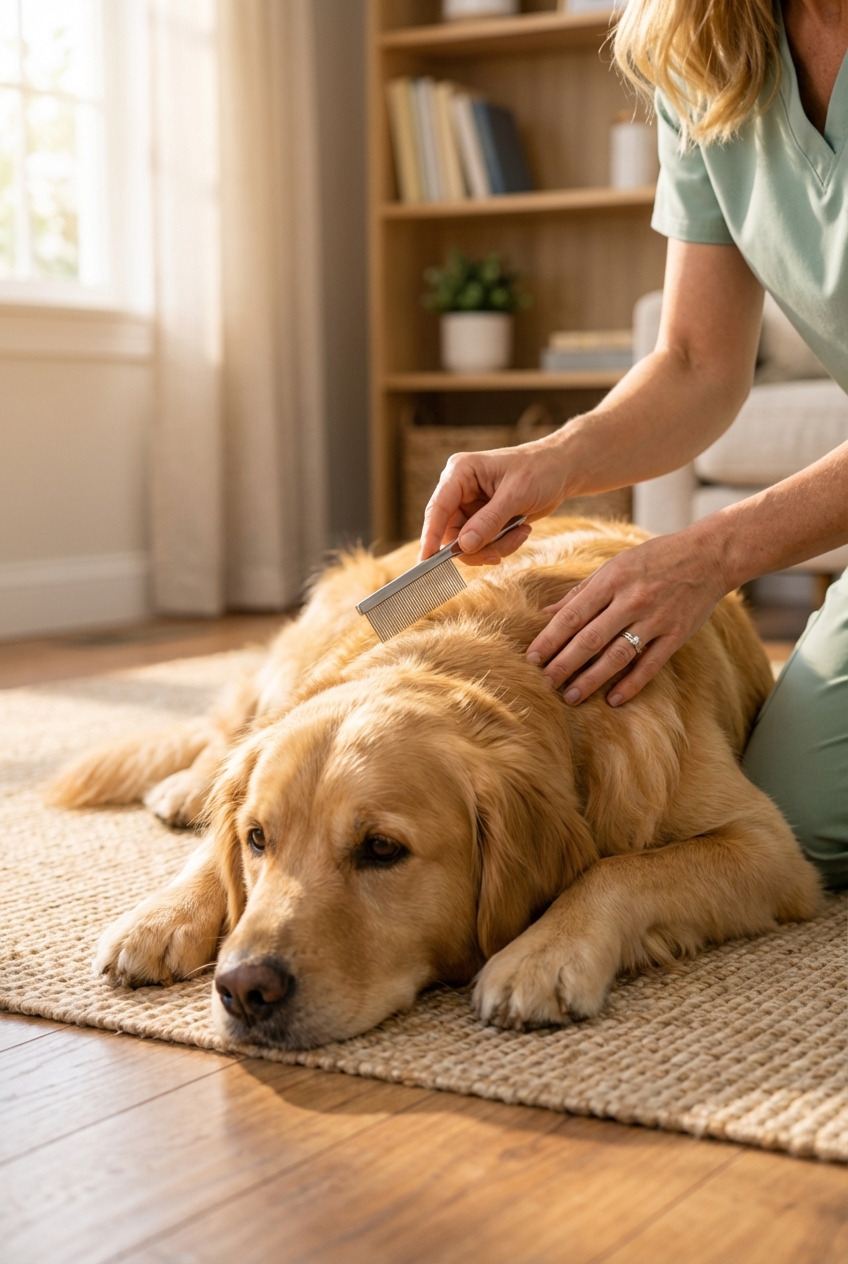
- Full skin and coat exam, including a flea comb check for fleas or flea dirt
- Skin cytology (tape prep or swab) to look for bacteria and yeast under the microscope
- Skin scraping to check for mites (especially if the pattern is not classic)
- Fungal testing if ringworm is a concern
- Allergy discussion if your dog has a long history of feet, ear, or facial itch
Why you might not see fleas
Many dogs with FAD groom and bite fleas off quickly. Also, fleas spend much of their time in the environment as eggs, larvae, and pupae. So yes, a dog can have a serious flea problem even if you only find one flea, or none at all.
Integrated control: a plan that works for most homes
For FAD, the goal is simple: prevent bites. That means protecting your dog, addressing any other pets in the home, and reducing the flea population in the environment.
1) Consistent, vet-recommended parasite prevention
With flea-allergic dogs, “sometimes” prevention usually is not enough. Ask your veterinarian which product fits your dog’s age, weight, health history, and lifestyle. The best choice is one you can use correctly and consistently.
- Treat every dog and cat in the household with an appropriate flea product. Cats are a common source of ongoing exposure, even if they seem less itchy.
- Use it year-round in most regions, especially in warm or humid climates, because fleas can persist indoors and during mild winters.
- Set reminders so doses do not drift. Correct dosing by weight matters, and not every product is safe for every age or size.
Important: Never use dog flea products on cats unless your veterinarian specifically says it is safe. Some ingredients can be dangerous for cats. Also, over-the-counter shampoos and sprays may help temporarily, but they often are not enough on their own for flea-allergic pets.
2) Home and yard support
Fleas love warm, protected places. These steps help reduce the “re-infestation loop.”
- Vacuum carpets, rugs, baseboards, and furniture frequently during an active problem. Dispose of the vacuum contents promptly.
- Wash bedding (pet beds, blankets, crate pads) in hot water and dry on high heat when possible.
- Limit wildlife access when you can, since raccoons, opossums, stray cats, and other animals can bring fleas into yards.
- Focus on shaded areas outdoors, since flea life stages tend to thrive in cooler, protected spots.

3) Treat the flare: itch relief plus skin healing
When a dog with FAD is actively flaring, flea prevention alone may not provide quick comfort. Your veterinarian may recommend a short-term plan to break the itch cycle and treat infection if present.
Depending on your dog’s needs, this can include:
- Anti-itch medication to calm inflammation and reduce self-trauma
- Antibiotics and/or antifungals if cytology shows infection
- Medicated shampoos or wipes to reduce bacteria and yeast and support the skin barrier
- E-collar (cone) or a recovery suit to prevent licking and chewing while healing
If your dog has a hot spot, do not wait too long. Hot spots often need clipping and cleaning to get air to the skin and allow treatments to work properly.
How long does it take to get FAD under control?
It depends on how severe the flare is and whether infection is present. In many dogs, you can see meaningful itch improvement within days once you stop flea bites and start appropriate flare treatment. Skin healing and hair regrowth often take weeks.
Because flea eggs and pupae can continue to emerge for several weeks (and sometimes longer depending on the environment), it is common to see “waves” of fleas early on even when you are doing everything right. Staying consistent is what wins.
When to call your veterinarian right away
Please contact your vet promptly if you notice any of the following:
- Raw, wet, painful skin or rapidly spreading hot spots
- Pus, strong odor, swelling, or significant scabbing
- Lethargy, fever, poor appetite, or behavior changes
- Itching that is severe enough to disturb sleep
- Puppies, seniors, or pets with chronic illnesses who are flaring
If your dog is scratching constantly, they are not being “dramatic.” Itch is miserable. Getting ahead of it is one of the kindest things we can do.
Practical takeaways
- FAD is an allergy to flea saliva, not “a few fleas.” Even one bite can set off intense itch in very sensitive dogs.
- Look for the classic itch pattern: tail base, rump, lower back, thighs.
- Hot spots and infections are common because itch damages the skin barrier.
- Diagnosis often includes a flea comb check plus testing for infection and mites.
- Best results come from integrated control: consistent parasite prevention for all pets, home cleaning, and vet-directed flare treatment.