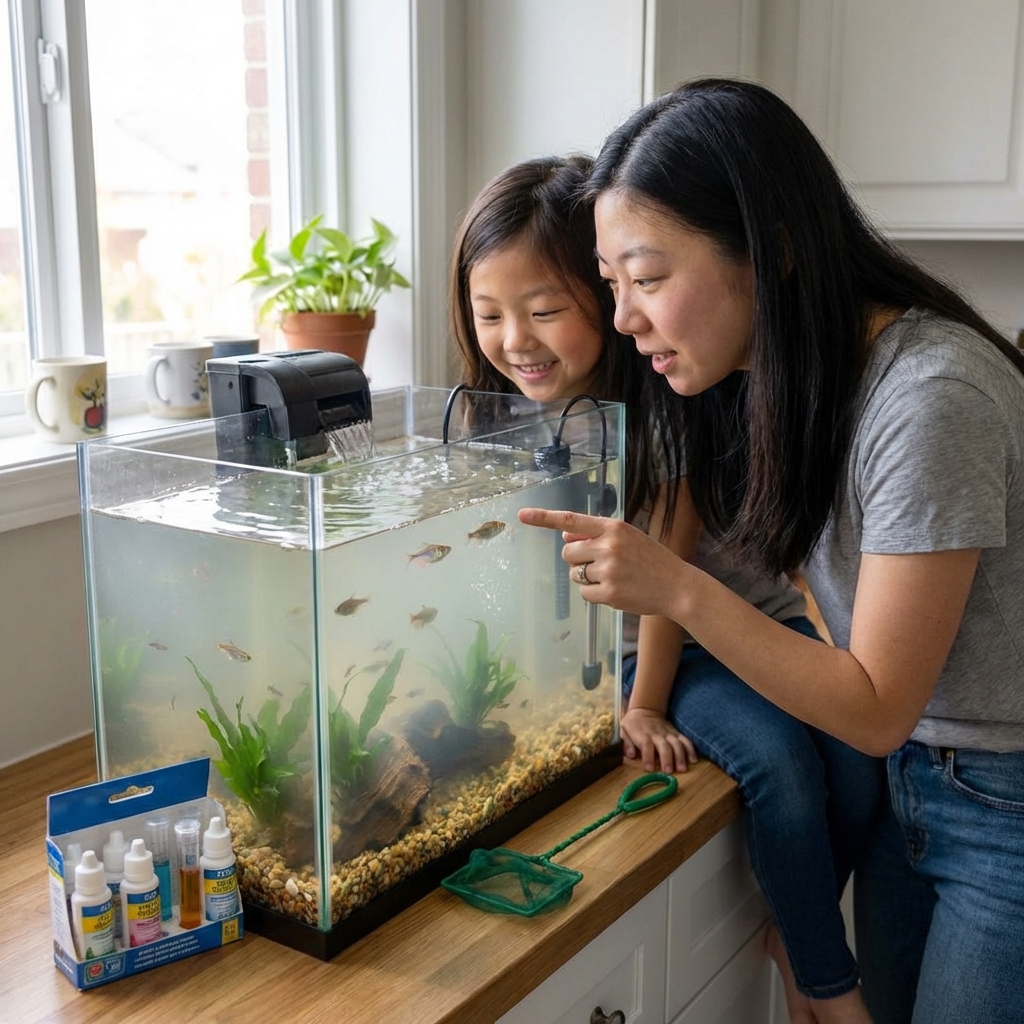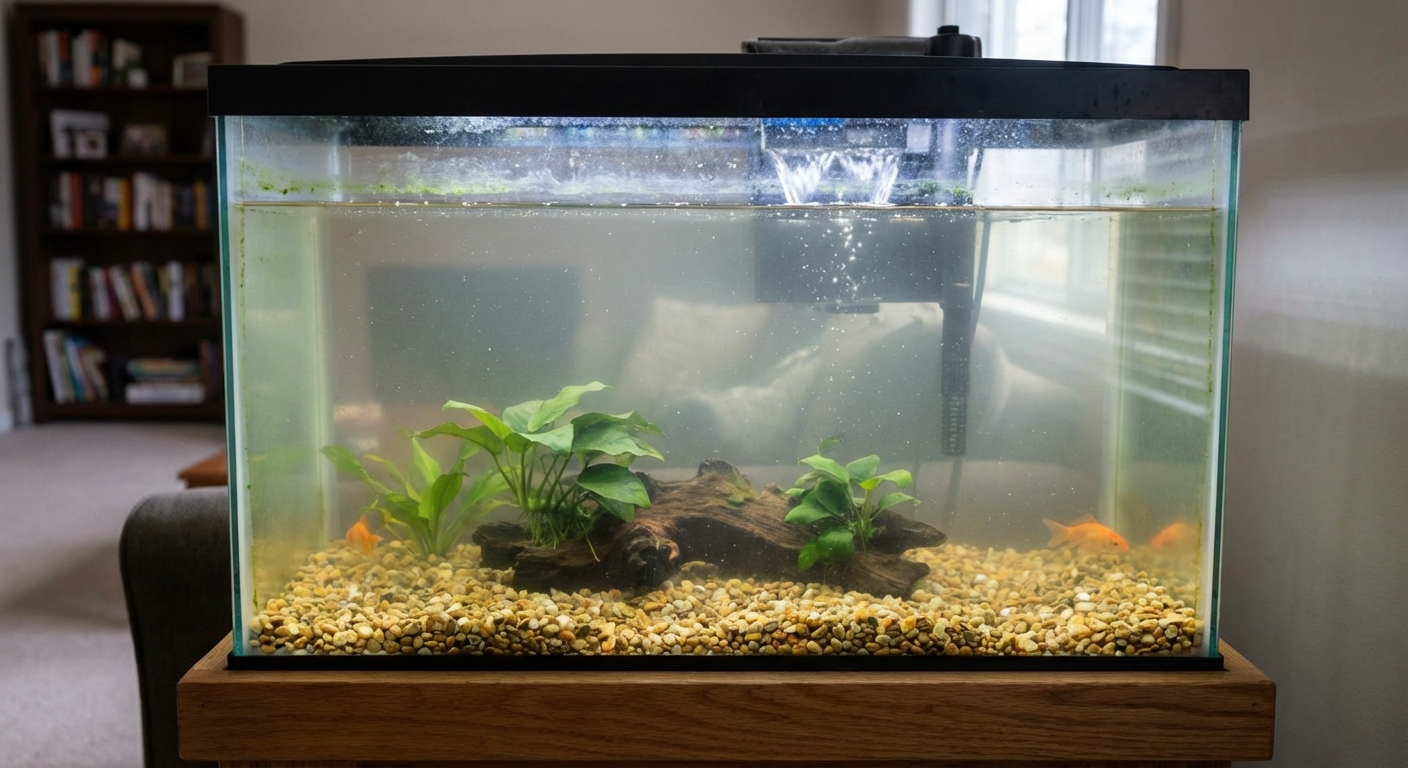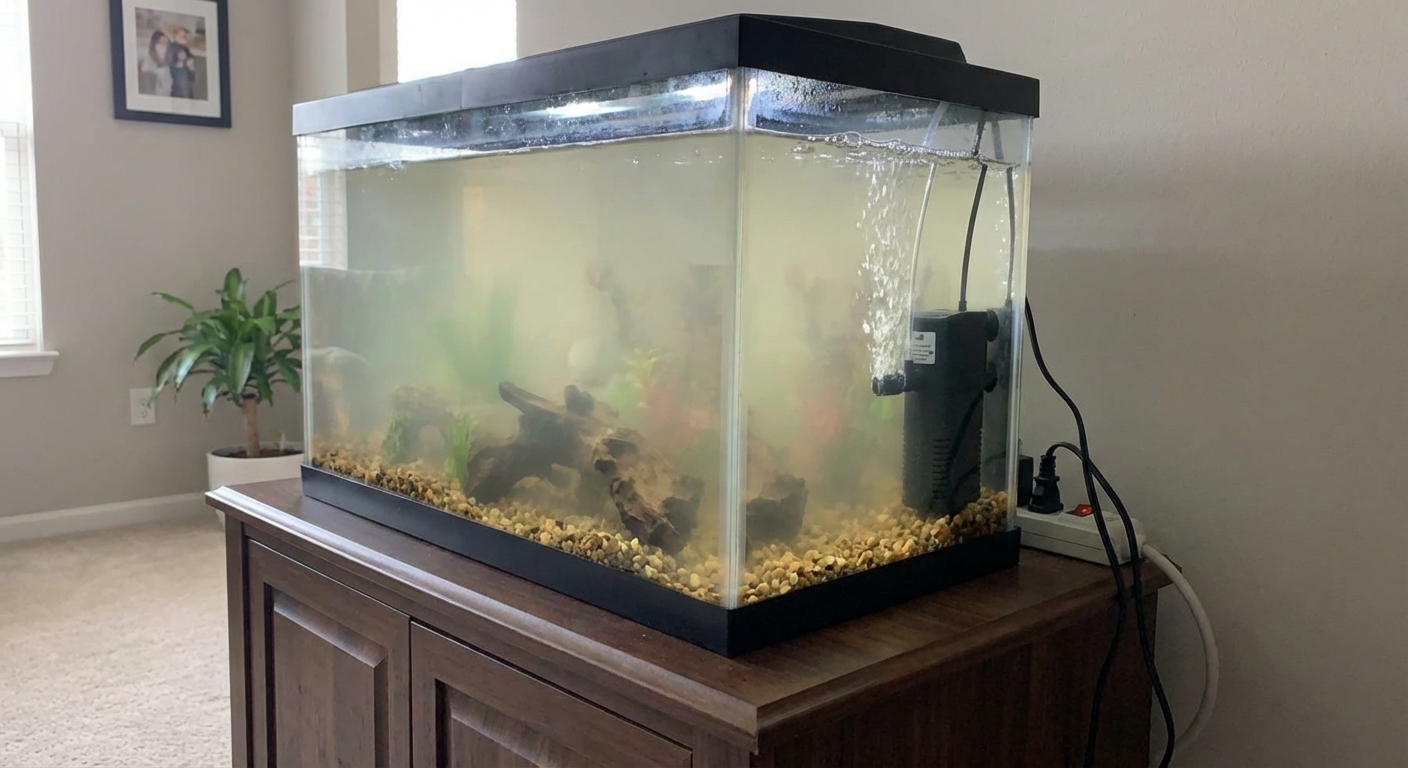
Cloudy aquarium water is usually fixable. Identify white haze, green water, tannins, or particles, then use tests, safe water changes, filter checks, and fee...
Article
•
Designer Mixes
Fish Tank Getting Cloudy Daily

Shari Shidate
Designer Mixes contributor
If your fish tank looks cloudy today, you are not alone. As a veterinary assistant in Frisco, Texas, I see the same pattern again and again: good people doing their best, then waking up to water that suddenly looks milky, dusty, or green. The comforting news is that most “cloudy tank” situations are fixable, and they usually come down to a few causes you can identify with simple checks.
This guide is written for all ages. If you are a kid helping with a family tank, you can follow the quick checklist. If you are an adult managing a new setup, you will also find the science and the safe steps to take.
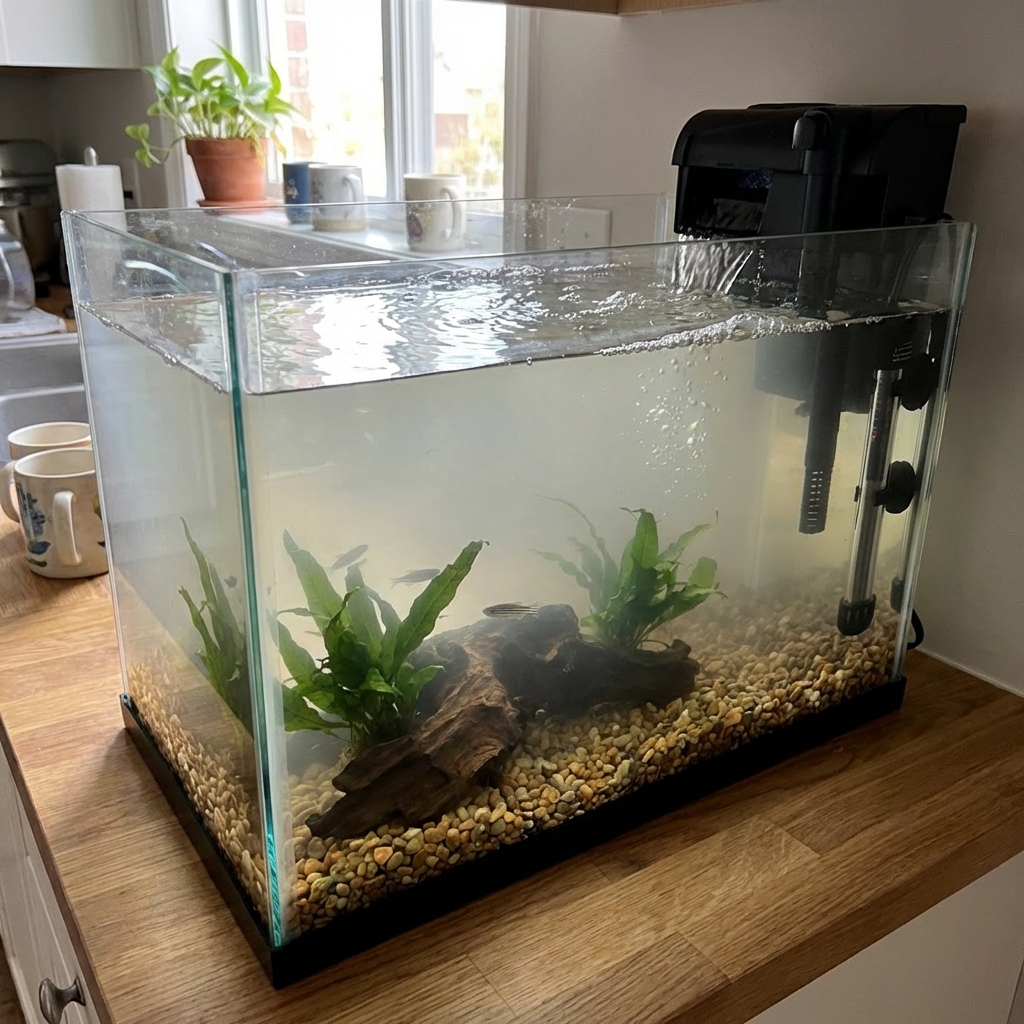
First, what kind of cloudy is it?
Cloudiness is not one single problem. The color, timing, and smell can help you narrow it down.
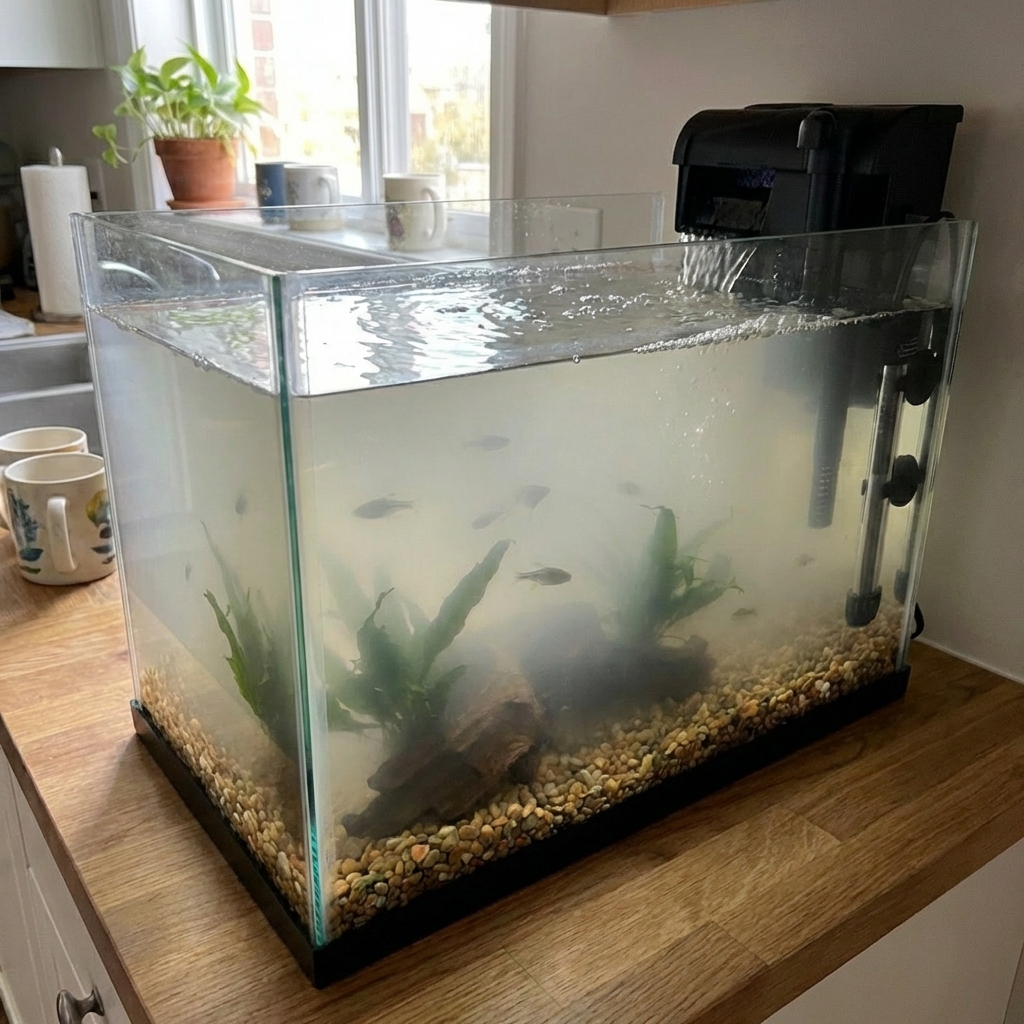
- White or milky haze (common in a new tank): often a bacterial bloom tied to the nitrogen cycle getting established, plus extra waste.
- White haze in an established tank: can happen after overcleaning the filter, a medication course, a power outage, a sudden overfeeding streak, or something decaying (like a hidden dead fish or snail).
- Dusty or sandy cloud right after setup: usually substrate dust, disturbed debris, or a filter that needs finer mechanical media.
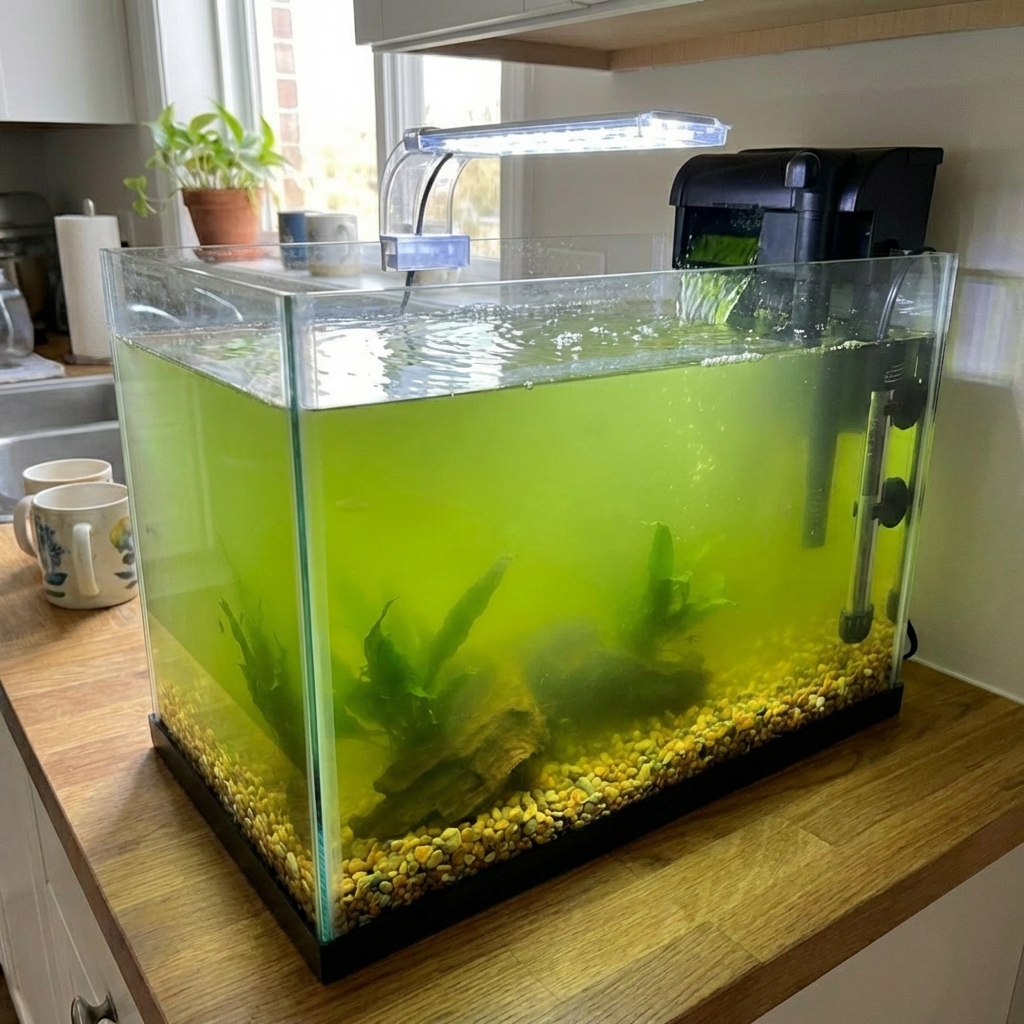
- Green water: free-floating algae, often from too much light and available nutrients.
- Gray haze with a smell: often decaying organic matter, uneaten food, dead plant leaves, or a clogged filter. A rotten or sulfur-like smell is a bigger red flag than a mild “earthy pond” smell.
The daily 5-minute cloudy-water check
When water turns cloudy, you want to avoid random fixes. Instead, do this short routine once a day until the tank clears.
1) Look at your fish first
- Are they gasping at the surface, clamping fins, or acting unusually shy or frantic?
- Are any fish rubbing on decor (flashing) or breathing fast?
If yes, treat this as urgent water quality. Move to testing and a partial water change.
2) Check temperature and equipment
- Confirm the heater is holding steady for your species.
- Make sure the filter is running with a strong, consistent flow.
- Look for clogged intake sponges or cartridges packed with brown sludge.
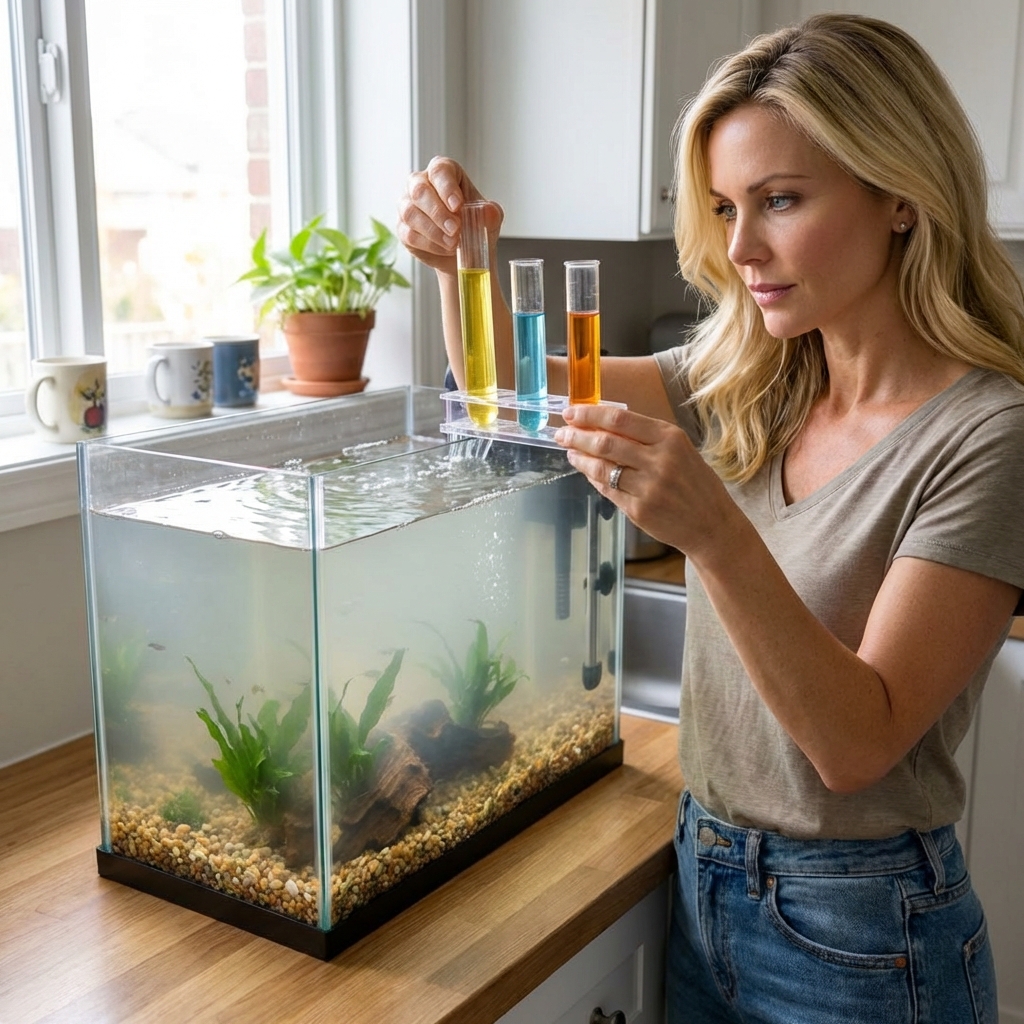
3) Test the water (what matters most)
During cloudy-water events, the most important numbers are:
- Ammonia (NH3/NH4+)
- Nitrite (NO2-)
Nitrate (NO3-) is helpful context (it tells you about longer-term waste buildup), but ammonia and nitrite are the urgent ones. If you can add one more test, check pH. Write results down. Trends matter.
4) Do a quick “food audit”
- Were fish fed more than they finish in about 1 to 2 minutes?
- Did food sink behind decor where it can rot?
Overfeeding is one of the most common reasons tanks get cloudy day after day.
5) Check the light schedule
If your tank is green or gets cloudy a few days after cleaning, check how long the lights are on. Many community tanks do best with a starting point of 6 to 8 hours/day for algae control. Planted or high-tech setups may run longer depending on plant needs and nutrient balance.
Most common causes and what to do today
Cause: Bacterial bloom (white haze)
This is extremely common in brand-new aquariums while the nitrogen cycle is establishing beneficial bacteria. It can also happen in established tanks after big disruptions like replacing too much filter media, overcleaning, a medication course, a sudden waste spike, or something dying and decomposing.
Do today:
- Test ammonia and nitrite daily until stable.
- If a liquid test kit shows any detectable ammonia or nitrite, take action. Start with a 25 to 50% water change using dechlorinated water.
- If readings are meaningfully elevated or fish look stressed, do larger or repeated water changes (for example, another 25 to 50% later the same day), and add extra aeration.
- When doing bigger changes, aim to match the new water to the tank’s temperature as closely as you can.
- Feed lightly, or skip feeding for 24 hours if fish are otherwise healthy.
- Do not replace all filter media at once. That removes beneficial bacteria.
A helpful rule: Cloudy water plus any detectable ammonia or nitrite is not “just ugly.” It is a health risk.
Cause: Overfeeding or waste buildup (white or gray haze)
Uneaten food and fish waste break down into fine particles and fuel bacterial growth.
Do today:
- Vacuum the substrate (gravel vac) during a 25% water change with dechlorinated water.
- Remove visible uneaten food with a net.
- Feed smaller portions. Many fish do well with once-daily feeding, and some tanks thrive with one “fasting day” per week.
Cause: Filter issues (persistent haze)
A filter can be running but not actually cleaning effectively. Fine particles can remain suspended, or the media can be clogged and bypassing.
Do today:
- Rinse sponges or pre-filter foam in old tank water. Avoid untreated tap water since chlorine or chloramine can harm beneficial bacteria. If tap water is your only option, treat it with dechlorinator first.
- Add fine filtration like filter floss if your filter allows it.
- Check that the cartridge or sponge fits tightly so water does not slip around it.
Cause: Substrate dust (cloudy right after setup)
New sand or gravel can cloud water for hours to days if not rinsed well.
Do today:
- Let the filter run continuously.
- Add fine filter floss to trap dust.
- Avoid stirring the bottom until it clears.
Cause: Green water (algae bloom)
Green water is usually free-floating algae. It is not always dangerous, but it can contribute to noticeable swings in oxygen and pH in some tanks. Nighttime oxygen is often the bigger concern, especially in crowded tanks.
Do today:
- Reduce lights to 6 hours/day as a starting point, or temporarily turn them off for a day or two.
- Keep the tank away from direct sunlight.
- Do a 30 to 50% water change with dechlorinated water and reduce feeding.
- Add aeration if fish seem sluggish, are hanging near the surface, or you have heavy stocking.
- If it keeps coming back, consider a UV sterilizer sized for your tank.
Quick decision tree
- Fish are gasping or acting sick? Test water now, do a 50% water change with dechlorinated, temperature-matched water, add extra aeration, and stop feeding for a day.
- Tank is new (under 4 to 6 weeks)? Suspect cycling (the nitrogen cycle establishing beneficial bacteria). Test daily and do water changes as needed.
- Established tank turned cloudy suddenly? Check for a missed dead fish or snail, rotting food, plant melt, recent overcleaning, or a filter disruption. Test ammonia and nitrite right away.
- Water is green? Cut light, reduce feeding, and consider UV if persistent.
- Cloudy right after adding new sand or decor? Mechanical filtration and patience.
- Cloudy after replacing filter media? You may have removed beneficial bacteria. Monitor ammonia and nitrite closely and be ready for repeated water changes.
What not to do
- Do not replace all filter media at once. Swap gradually to keep beneficial bacteria.
- Do not “deep clean” everything on the same day (filter, decor, substrate). This can crash your cycle.
- Do not add random chemicals to chase clarity if you have not tested ammonia and nitrite.
- Do not keep feeding normally during cloudy water. Extra food becomes extra pollution.
- Do not rely on water clarifiers as a first fix. Flocculants can clog filter media and hide the real issue. Use them only as a last step after water quality is confirmed safe.
Water clarity is great, but fish safety comes first. Clear water can still be toxic if ammonia is present.
Prevent daily cloudiness
Build a simple weekly rhythm
- Water changes: 20 to 30% weekly for many community tanks (more for messy fish or heavy stocking). Always use dechlorinator.
- Gravel vacuum: a little each week, not the whole tank every time.
- Filter care: rinse sponges in old tank water when flow slows.
- Testing: weekly nitrate checks, and any time fish behavior changes.
Feed for the tank you have
Most tanks clear up when feeding becomes smaller and more consistent. If you want one easy habit: feed what they finish quickly, and remove what they do not.
Light with intention
Set a timer. A consistent schedule helps prevent algae blooms without stressing plants and fish.
Stock slowly
Adding too many fish at once is a classic reason a tank stays cloudy. Give your biofilter time to catch up.
When to ask for help
Reach out to a local aquarium shop, an experienced hobbyist, or a veterinarian familiar with fish health if:
- Ammonia or nitrite will not return to 0 after several days of careful water changes.
- Fish are dying, gasping, or developing sores, white spots, or frayed fins.
- The tank smells strongly foul even after cleaning and water changes.
If you bring a water sample, bring your test results too. Those numbers tell the real story.