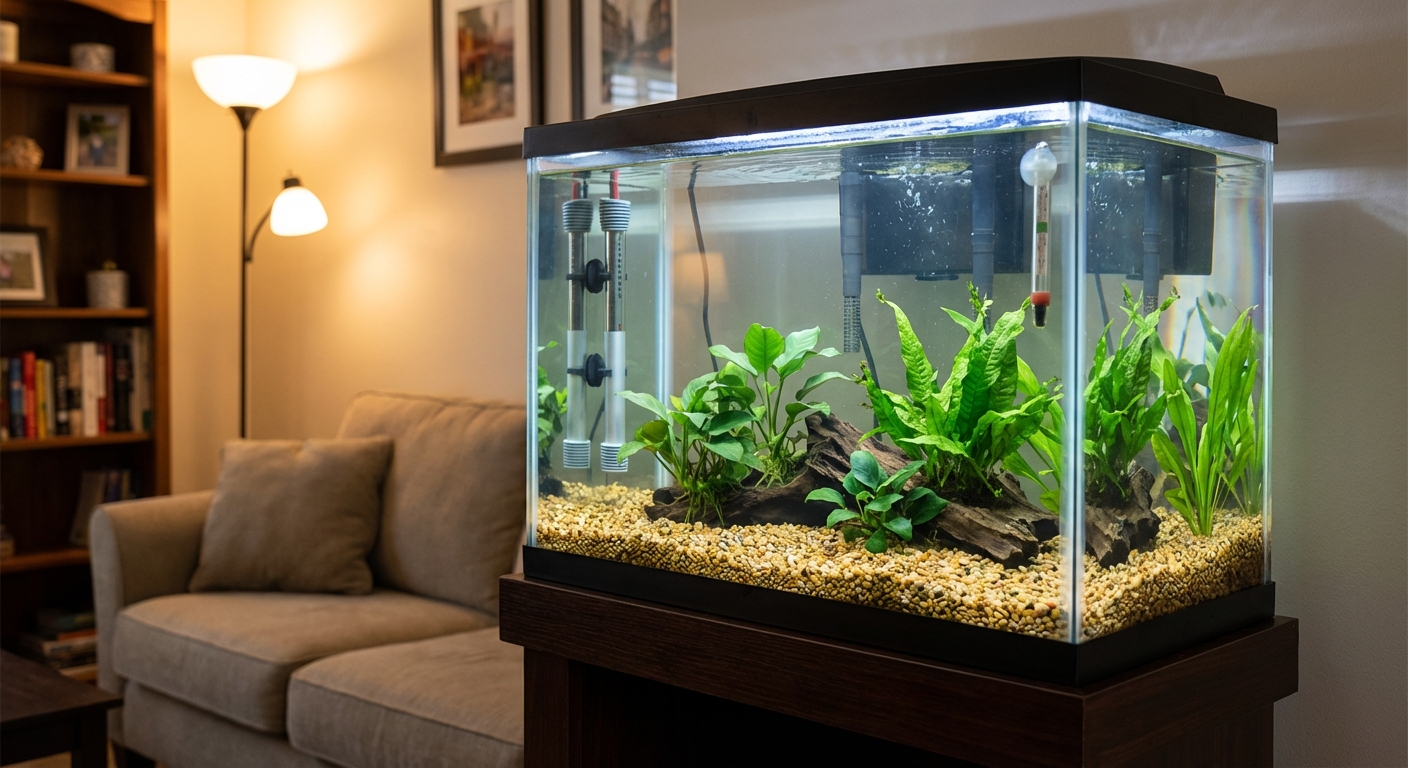
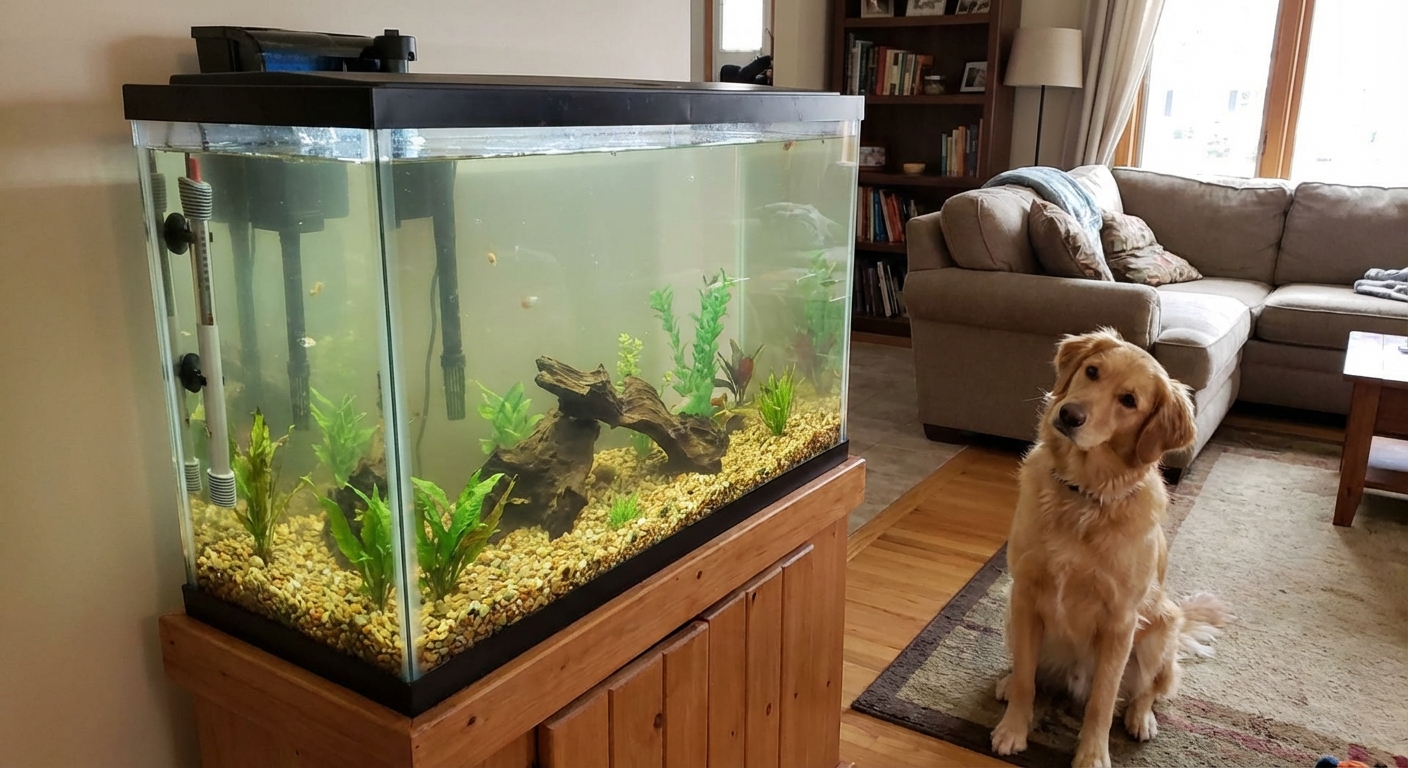
Cycle your aquarium with a calm daily routine: test ammonia, nitrite, and nitrate, dose or feed correctly, protect filter bacteria, and use water changes to ...
Article
•
Designer Mixes
Fish Tank Cycling Facts Every Owner Should Know

Shari Shidate
Designer Mixes contributor
If you are setting up a new aquarium, “cycling” is the step that makes the difference between fish that merely survive and fish that truly thrive. Cycling is not about making the water look clear. It is about building a healthy, invisible biological filter that keeps toxic waste from building up.
As a veterinary assistant, I think of cycling like establishing a stable gut microbiome. Once the helpful microbes are in place, everything runs more smoothly. In a fish tank, those helpful microbes are nitrifying bacteria.
What cycling means
Cycling is the process of establishing nitrifying bacteria that convert toxic fish waste into less harmful compounds. Fish produce ammonia directly through their gills and through waste. Left unchecked, ammonia can burn gills and stress fish quickly.
During a successful cycle, bacteria develop in your filter media, substrate, and on hard surfaces. In simple terms, beneficial bacteria convert toxic ammonia into nitrite, then into nitrate:
- Ammonia (NH3/NH4+) into nitrite (NO2-)
- Nitrite into nitrate (NO3-)
Nitrate is much safer than ammonia or nitrite, but it still matters. At higher levels, nitrate can contribute to long-term stress, poorer disease resistance, and algae problems, and some sensitive fish and invertebrates tolerate less than others. Regular water changes and good maintenance keep it in check.
Why cycling matters
New tank syndrome is what happens when a tank is not cycled and ammonia or nitrite spikes. Even if fish do not die right away, chronic exposure can cause:
- Rapid breathing, hanging near the surface, or staying near filter output
- Lethargy and poor appetite
- Inflamed gills, increased mucus production
- Higher risk of secondary infections like fin rot and opportunistic bacterial disease
Stable water chemistry reduces stress, and lower stress supports a stronger immune response. It is one of the most practical ways to prevent common aquarium illnesses.
Nitrogen cycle basics
Step 1: Ammonia shows up
Ammonia comes from fish waste, uneaten food, and decaying plant matter. In a new aquarium, there are not enough beneficial bacteria to process it.
Step 2: Nitrite rises
As the first bacterial group grows, ammonia begins to drop and nitrite begins to rise. Nitrite is also dangerous. It interferes with oxygen transport in the bloodstream, which is why you may hear it called “brown blood disease.”
Step 3: Nitrate appears
As the second bacterial group establishes, nitrite drops and nitrate rises. This is a big sign you are close. Once you have an active waste source and ammonia and nitrite consistently read zero while nitrate is present, your tank is cycled.
How long it takes
Many freshwater aquariums cycle in 2 to 6+ weeks. Sometimes it is faster with seeded media. Sometimes it is much longer, especially in colder water or when alkalinity is low. The timeline depends on:
- Temperature (beneficial bacteria grow faster in warm water, within the safe range for your species)
- pH and alkalinity (very low pH or low alkalinity can slow bacterial growth)
- Filter type and surface area for bacteria
- Whether you seed the tank with established media or bottled bacteria
- How you provide a steady ammonia source
- Oxygenation and flow (nitrifying bacteria are oxygen-hungry, so good surface agitation helps)
If you are hearing “it should only take a few days,” that is usually marketing or confusion with seeding an already established setup.
Fish-in vs fishless
Fishless cycling (best for most beginners)
Fishless cycling means you grow bacteria without putting fish at risk. You add an ammonia source and test the water until the tank can process ammonia and nitrite to zero.
Common ammonia sources include:
- Pure liquid ammonia made for aquariums
- Measured amounts of fish food allowed to break down (less precise)
A helpful rule of thumb for many community freshwater tanks is to aim for about 1 to 2 ppm of ammonia during fishless cycling. Avoid overdosing ammonia, since very high levels can stall the process and create unnecessary problems.
Fishless cycling is more humane and gives you more control over the process.
Fish-in cycling (possible, but riskier)
Fish-in cycling means fish are present while bacteria establish. It can be done, but it requires careful daily testing and frequent partial water changes to keep ammonia and nitrite as close to zero as possible.
If you choose fish-in cycling, keep stocking very light, feed sparingly, and prioritize water testing. Sensitive species and most invertebrates do poorly with this approach.
How to tell it is cycled
A tank is considered cycled when you have a real, consistent waste source (an ammonia dose in fishless cycling, or a stable, light bioload in fish-in cycling) and:
- Ammonia reads 0 ppm
- Nitrite reads 0 ppm
- Nitrate reads above 0 ppm
For fishless cycling using a known ammonia dose, many hobbyists also confirm that the tank can process a standard ammonia addition down to zero ammonia and zero nitrite within 24 hours. That is a strong sign your biofilter is ready for a gradual stocking plan.
When to add fish
Once your tank can reliably process your chosen ammonia dose (fishless) or you are keeping ammonia and nitrite at zero with a stable, light bioload (fish-in), you can begin adding fish. Add them gradually, not all at once, and keep testing for at least a couple of weeks after each new addition. Your bacteria population has to grow to match your bioload.
Testing tips
Use a liquid test kit
Test strips are convenient, but liquid drop kits often provide more reliable readings for ammonia, nitrite, and nitrate.
Know NH3 vs NH4+
Many tests report “total ammonia.” The more toxic form, NH3, increases with higher pH and higher temperature. This is why the same total ammonia number can be more dangerous in one tank than another.
Do not rely on clarity
Clear water can still contain lethal ammonia or nitrite. Your eyes cannot see the cycle. Only testing can.
Conditioners can affect readings
Always dechlorinate. Also, be aware that some detoxifying water conditioners can temporarily change how ammonia is measured or interpreted, depending on the test kit. Follow your test kit instructions, and when in doubt, focus on keeping fish safe with water changes and stable conditions.
Common mistakes
- Adding too many fish at once: even a cycled tank can be overwhelmed if the bioload jumps overnight.
- Replacing filter media during cycling: most beneficial bacteria live in your filter. Replacing cartridges too often can crash a cycle. If you must change media, do it gradually and keep old media in the filter while the new media seeds.
- Overcleaning: rinsing media under tap water can kill beneficial bacteria due to chlorine or chloramine. Rinse in removed tank water instead.
- Skipping a dechlorinator: chlorine and chloramine can damage gills and also harm your biofilter bacteria. Always condition new water.
- Overfeeding: extra food turns into extra ammonia. During cycling, less is more.
Helpful boosters
Seed with established media
If you have access to a healthy, disease-free aquarium, adding a portion of established filter media can dramatically shorten cycling time.
Bottled bacteria
Some bottled bacteria products can help, especially when paired with correct temperature, dechlorinated water, and proper testing. Their effectiveness can vary by product quality, storage, and expiration date, so treat them as a support tool, not a substitute for monitoring.
Live plants
Live plants can absorb some nitrogen waste, which may reduce nitrate buildup. They do not replace a cycled biofilter, but they can make your tank more stable and forgiving.
After the cycle
Once you are cycled, your job becomes consistency.
- Stock slowly: add fish in small groups with at least 1 to 2 weeks between additions, testing along the way.
- Do regular partial water changes: many community tanks do well with 20 to 30% weekly, adjusted based on nitrate levels and stocking. Many keepers aim to keep nitrate as low as practical, often under 20 to 40 ppm depending on livestock, planting, and maintenance. Sensitive species and many invertebrates may need lower.
- Maintain the filter gently: keep water flowing, remove debris, and avoid over-sanitizing.
- Feed with intention: offer what your fish can finish in a short window and remove excess when needed.
If you remember one thing, let it be this: cycling is not a one-time task. It is the foundation of a stable ecosystem, and stability is what your fish need most.
Quick checklist
- Have a filter running 24/7 with good surface area media
- Condition all water with a quality dechlorinator
- Provide a steady ammonia source during cycling
- Test ammonia, nitrite, nitrate regularly
- Do not add a full stock of fish at once
- Do not replace all filter media at the same time
- Confirm ammonia = 0, nitrite = 0, nitrate present before adding more fish beyond a light initial stock