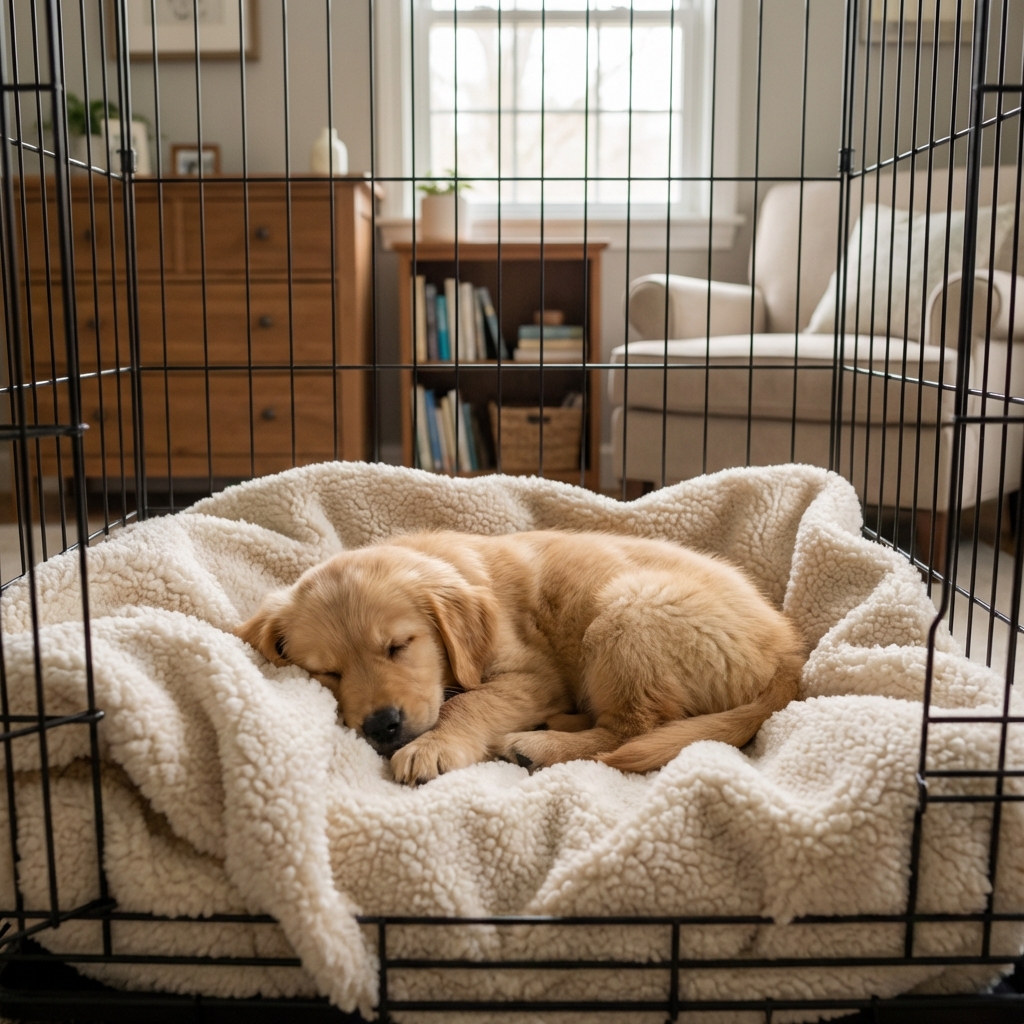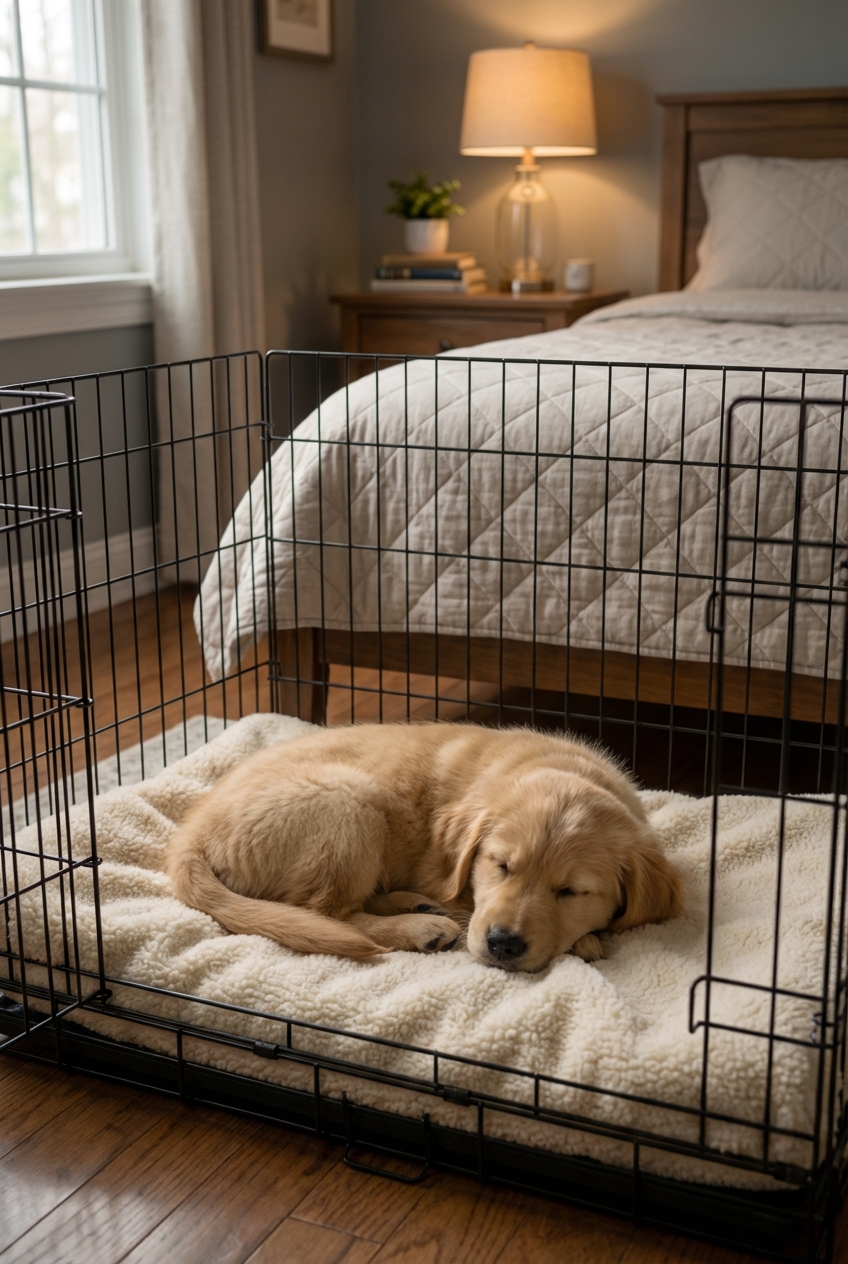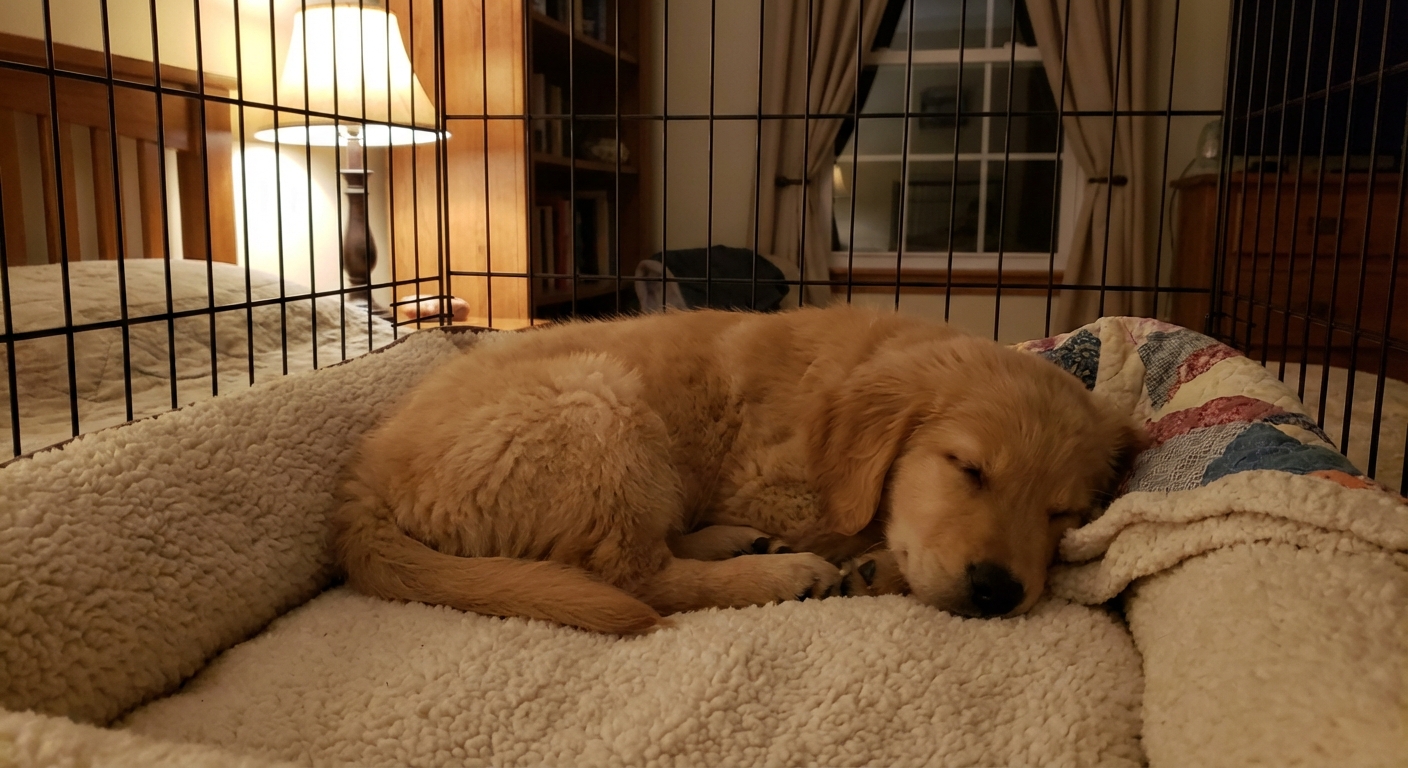
A vet-assistant-inspired guide to your puppy’s first night home: calm crate setup, first 60-minute plan, bedtime routine, age-based potty breaks, and what ...
Article
•
Designer Mixes
First Night With a Puppy Tips & Fun Facts

Shari Shidate
Designer Mixes contributor
That first night with a new puppy is a big deal for both of you. Your puppy just left their mom, littermates, familiar smells, and routines. It is completely normal if they seem needy, vocal, or restless. The goal is simple: help your puppy feel safe, prevent accidents, and start building predictable routines from night one.
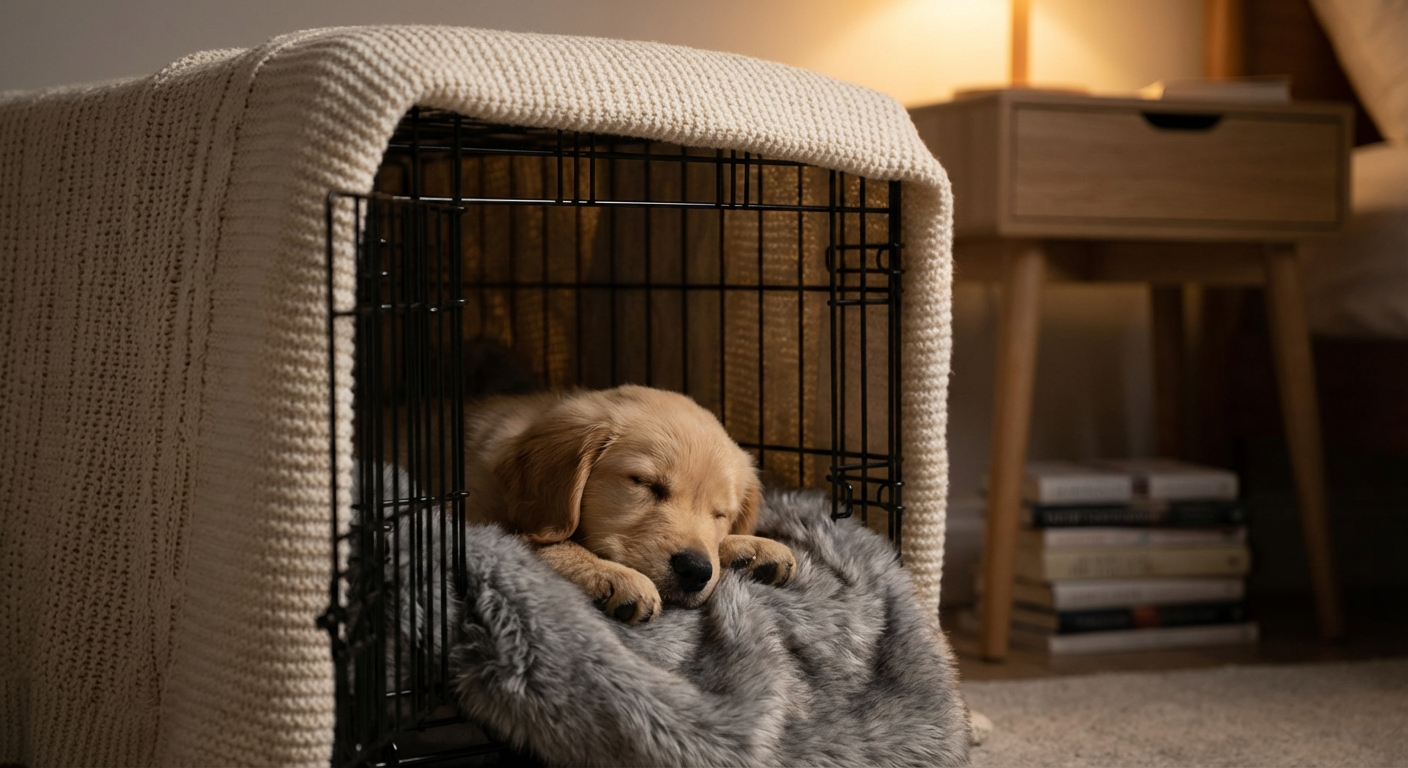
Puppy sleep facts
- Puppies sleep a lot: Many young puppies sleep around 18 to 20 hours per day, sometimes more or less depending on age and activity level. Waking up at night does not mean you are doing anything wrong.
- Night crying is usually about safety, not stubbornness: A puppy’s instincts say, “I’m alone, I might not be safe.” Comfort plus structure is the sweet spot.
- Small bladders, big learning curve: A common rule of thumb is that puppies can hold their bladder about one hour per month of age, plus a little extra. It is not a guarantee, especially overnight, and it varies by size, health, and what they were used to before coming home.
- They learn patterns quickly: If night one is steady and predictable, nights two and three often improve faster than you expect.
Next, set up the sleep space so you are not troubleshooting in the middle of the night.
Set up the sleep space
Before bedtime, decide where your puppy will sleep for the next few weeks. Switching locations every night can make it harder for some puppies to settle and can complicate house training.
Crate or pen, and why it helps
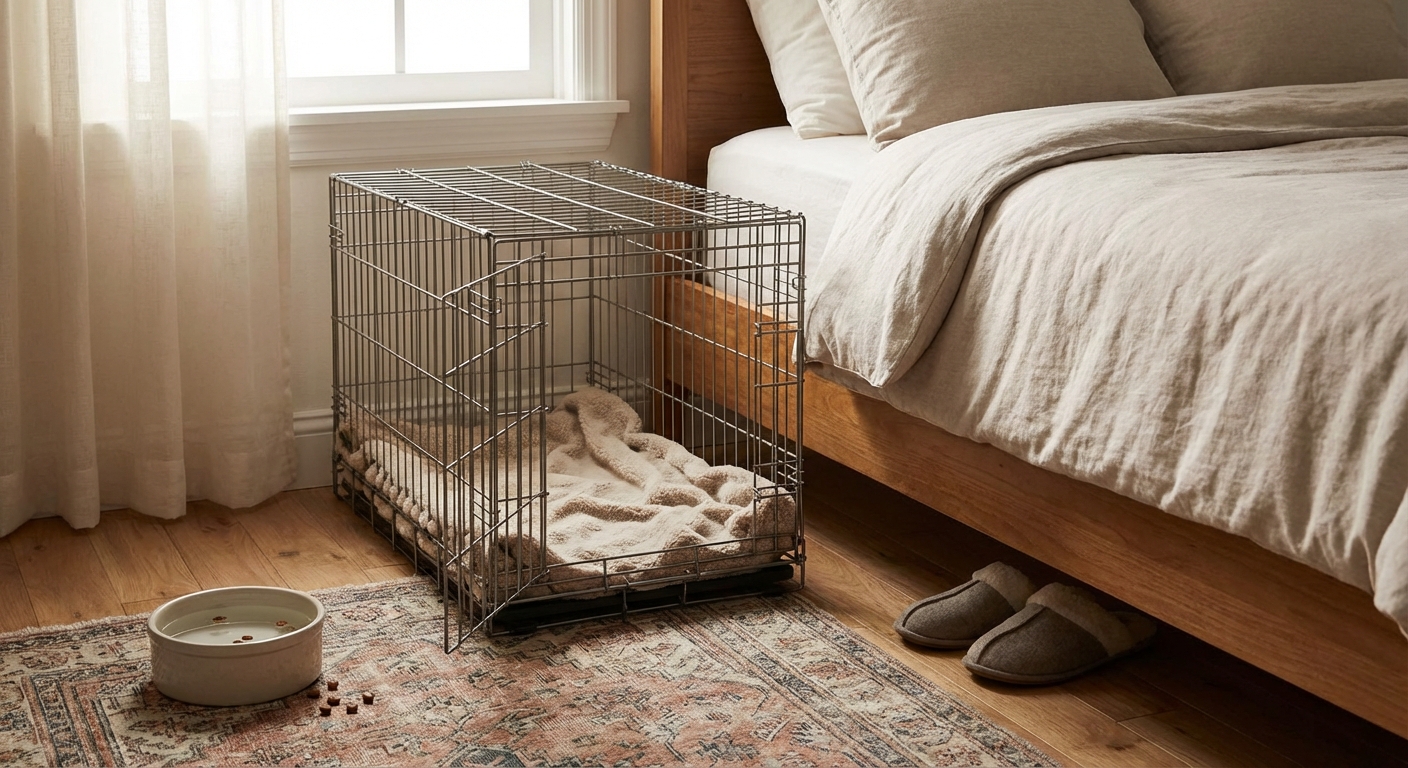
A properly sized crate supports house training because puppies naturally avoid soiling their sleeping area. It also keeps them safe from chewing cords, swallowing socks, or exploring in the dark.
- Size matters: Big enough to stand up, turn around, and lie down. Too large and they may potty in one corner.
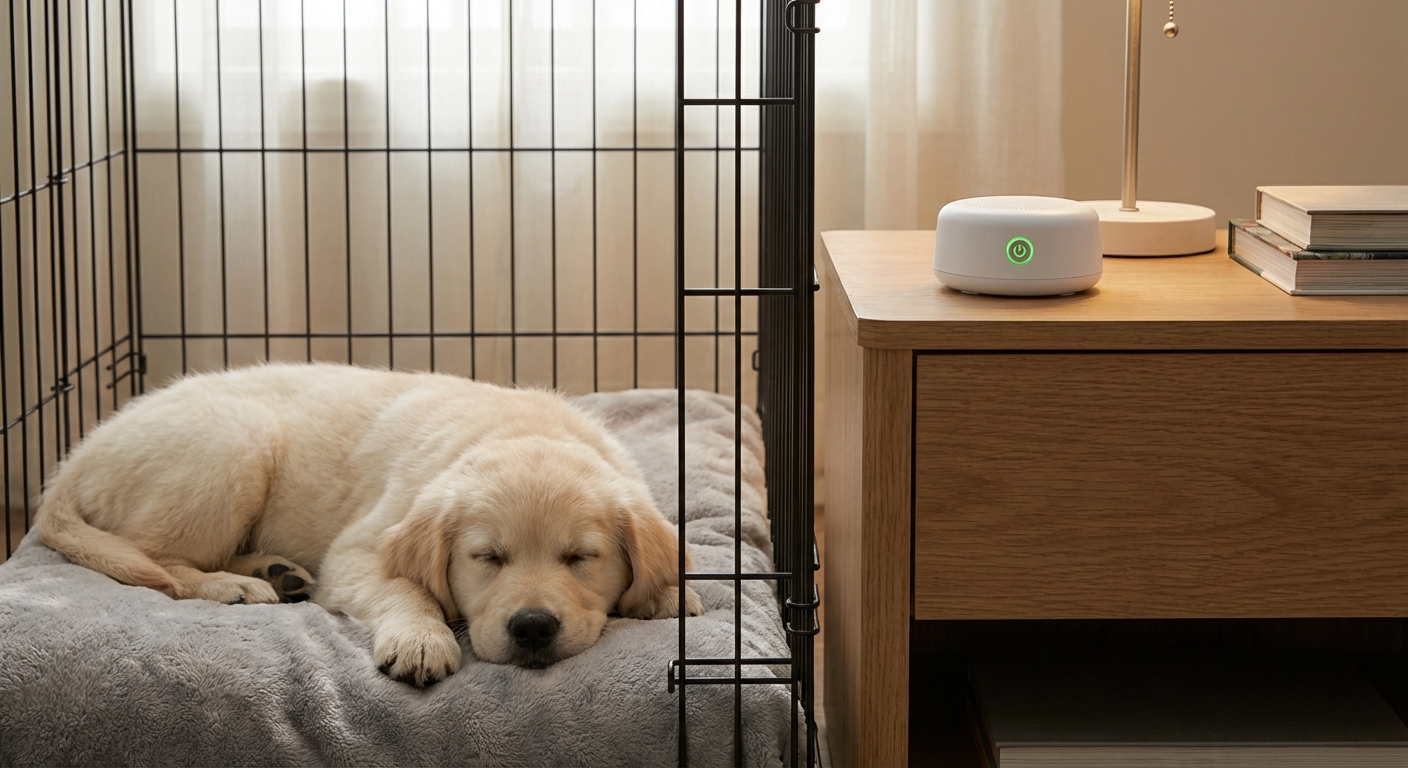
- Make it den-like: Add a soft blanket or crate pad and keep the room dim and quiet.
- Bedroom placement helps: For many pups, placing the crate near your bed reduces crying because they can hear and smell you.
- Introduce it before bed: Toss treats in, let them walk in and out, and do a few short “crate = good things” sessions before the first real bedtime. Avoid using the crate for punishment.
First-night routine
Consistency is your best friend. Here is a realistic routine that supports sleep and house training.
1) Evening wind-down
- Offer a final play session earlier in the evening, then transition to calmer activities.
- Take your puppy out to potty after play and again right before bed.
- Water tip: If your vet has not told you otherwise, offer water normally through the evening, then pick up the water bowl about 1 to 2 hours before bedtime to reduce overnight potty urgency. Do not restrict water for long periods, and be extra cautious with toy breeds or any puppy that is not eating well.
- Keep voices low and lights softer as bedtime approaches.
2) Last potty break
Make this a high priority. Take your puppy to the same potty spot, stand still, and quietly wait. When they go, praise softly and offer a tiny treat. Then straight to bed.
3) Bedtime cue
Use the same phrase each night, like “Bedtime” or “Crate.” Calmly guide them in, give a small treat, and close the door gently.
4) Plan for at least one overnight potty trip
Set an alarm rather than waiting for crying. This helps prevent accidents and keeps the night from turning into a full-blown wake party.
- Carry or leash your puppy.
- No talking, no playing, no bright lights.
- Potty, quiet praise, back to bed.
Sample schedule (adjust to your home)
- 7:00 pm dinner
- 7:30 pm potty
- 8:00 pm play and training
- 9:00 pm potty, then calm time
- 9:30 pm water bowl up (if appropriate), last potty, then crate
- 1:30 to 3:00 am quick potty trip (alarm)
- 6:00 to 7:00 am potty and start the day
Age note: An 8 to 10 week puppy often needs more overnight help than a 14 to 16 week puppy. If you are doing everything “right” and still waking up, you are not failing. You are raising a baby.
If your puppy cries
This is where many loving families accidentally teach the wrong lesson. You can be supportive while still building independence.
Try this step-by-step
- Pause and listen: Some pups fuss for a minute and then settle.
- Confirm the basics: Did they potty recently? Are they too hot or too cold? Is the crate comfortable?
- Offer comfort without rewarding screaming: Place your fingers near the crate and speak softly for a moment, then stop.
- If crying escalates: Take them out for a boring potty break. If they do not go within a few minutes, back to the crate.
Training-informed tip: Puppies do best when their needs are met consistently, but they are not accidentally trained that crying always equals playtime or freedom.
Comfort tools that can help
- White noise: A fan or white noise machine can reduce startling sounds.
- Heartbeat toy: A heartbeat plush made for puppies (like a Snuggle Puppy style toy) can be a popular, safer way to add comfort.
- Heat, used carefully: If your puppy seems chilled, consider a pet-safe microwavable warming disc designed for animals. Always follow product directions, test the temperature with your hand, and never leave any heat source in the crate if there is a chance your puppy can chew it or overheat.
- Chewing to settle, not to sleep: If chewing helps your puppy wind down, offer it before bedtime while you are supervising, then remove it once they are drowsy. Safer options are usually a durable rubber toy (like a puppy KONG) with a small amount of puppy-safe filling, rather than an edible chew left unattended overnight.
Potty training starts tonight
Night one sets the tone for house training. You are teaching your puppy where to go, how to ask, and what routines feel safe.
Quick checklist
- Take your puppy out after: eating, drinking, playing, training, and waking up.
- Use one potty spot and one cue like “Go potty.”
- Reward immediately after they finish, not after you walk back inside.
- Have a leash ready by the bed so nighttime trips stay quick and consistent.
- Clean indoor accidents with an enzymatic cleaner so the scent does not invite repeat accidents.
- If you are not intentionally pad-training, avoid introducing pee pads at night. Many puppies learn “soft things = okay to pee,” which can slow house training.
Common first-night mistakes
- Too much excitement at 2:00 am: Talking, playing, or wandering around teaches your puppy that nighttime is fun.
- Changing the sleep spot nightly: Some puppies struggle more when the routine keeps shifting.
- Crate too big: They may potty on one side and sleep on the other.
- Inconsistent responses: If one cry gets a cuddle party and the next cry is ignored, the crying often increases.
- Too much freedom too soon: Late-night roaming leads to chewing hazards and hidden potty spots.
Safety notes
- No punishment for accidents: It increases anxiety and slows learning. Clean up and tighten supervision.
- Be careful with “calming” supplements: Not all are appropriate for young puppies. Ask your vet before using any sedating or herbal products.
- Watch for stress signs: Panting, drooling, nonstop pacing, or repeated diarrhea can mean your puppy is overwhelmed. If symptoms persist or worsen, call your veterinarian.
- Tiny breeds need extra caution: Very small puppies can be more sensitive to missed meals and may need more frequent checks overnight. If your toy breed puppy seems weak, shaky, or refuses food, call your vet.
A gentle game plan
If you want one simple plan to hold onto tonight, use this:
- Predictable: potty, quiet routine, bed, brief comfort if needed.
- Boring at night: potty breaks are quick and low-key.
- Kind but consistent: meet needs, then allow your puppy to settle.
- Celebrate small wins: even a two-hour stretch of sleep is progress on night one.
From my experience as a veterinary assistant here in Frisco, Texas, most families are surprised by how quickly things improve once they commit to a steady routine. Your puppy is not trying to give you a hard time. They are having a hard time, and you are teaching them what “safe” feels like.

When to call the vet
New-home stress can cause mild stomach upset, but some signs should never be ignored. Contact your veterinarian promptly if your puppy has:
- Vomiting more than once, or vomiting plus lethargy
- Diarrhea that is watery, bloody, or lasts more than 24 hours
- Not eating at all, especially in very young or small-breed puppies
- Coughing, labored breathing, or persistent nasal discharge
- Signs of pain, bloated belly, or repeated attempts to vomit with nothing coming up