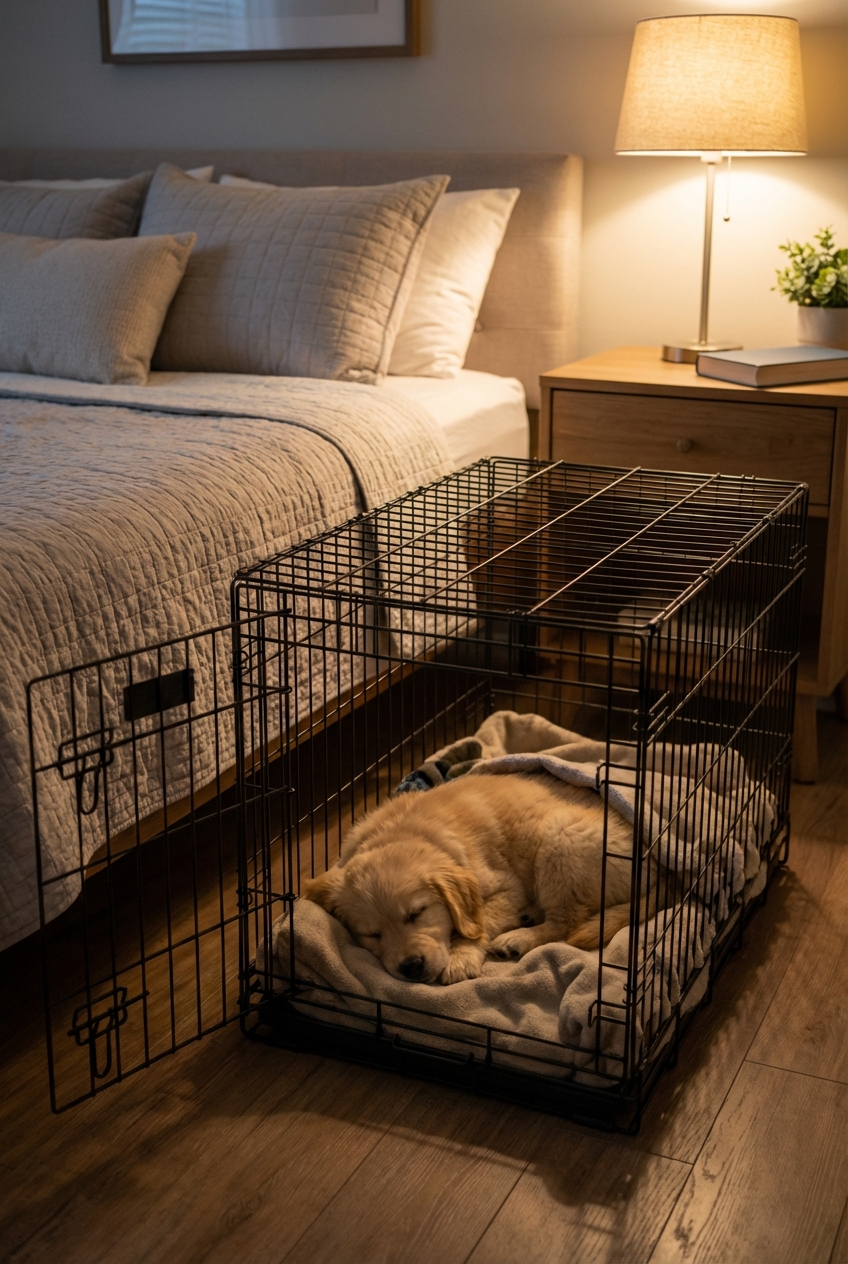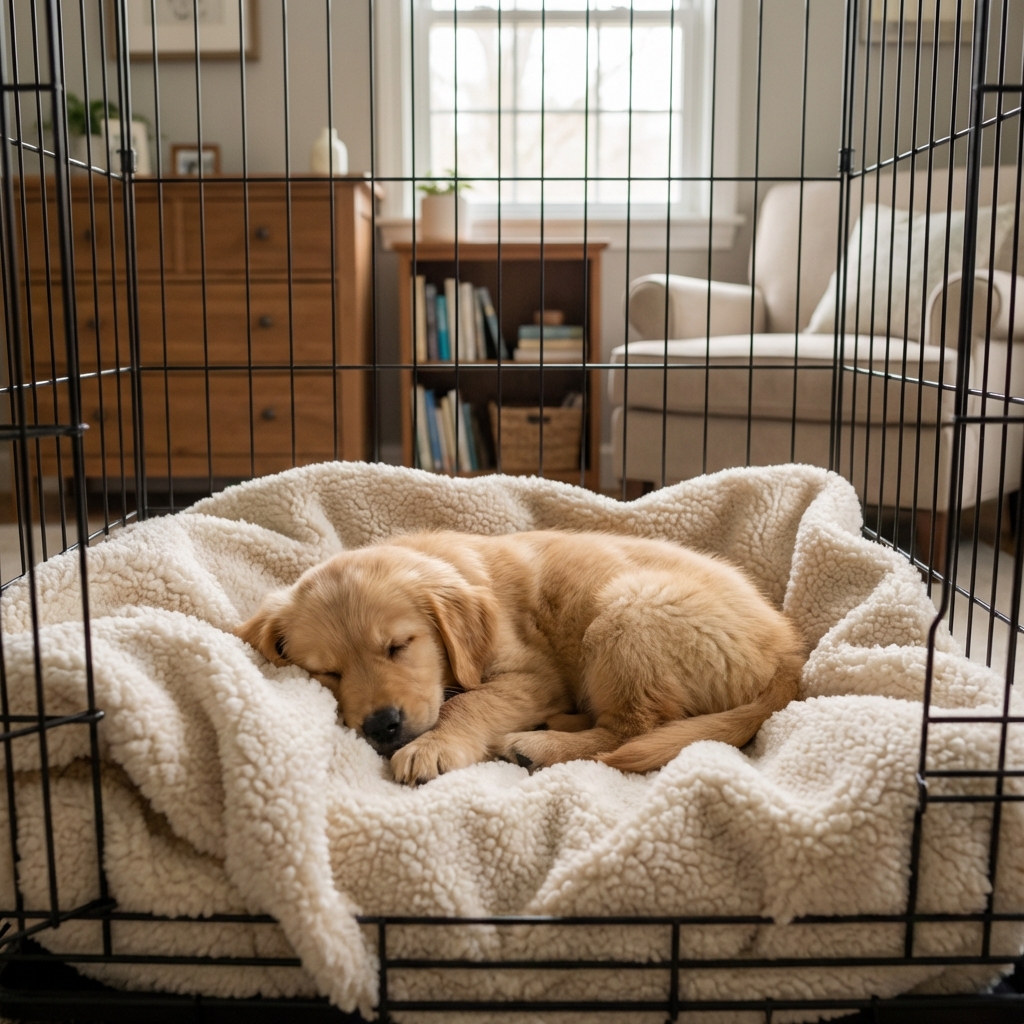
Make your puppy’s first night home smoother with a calm bedtime routine, crate setup tips, realistic potty-break timing, feeding guidance, and puppy-proofi...
Article
•
Designer Mixes
First Night With a Puppy

Shari Shidate
Designer Mixes contributor
Your puppy’s first night home is exciting, emotional, and a little bit messy. From a veterinary assistant’s perspective, the goal is simple: help your puppy feel safe, prevent accidents, and start the sleep routine you want long-term. If you do just a few things tonight, you will set the tone for weeks to come.
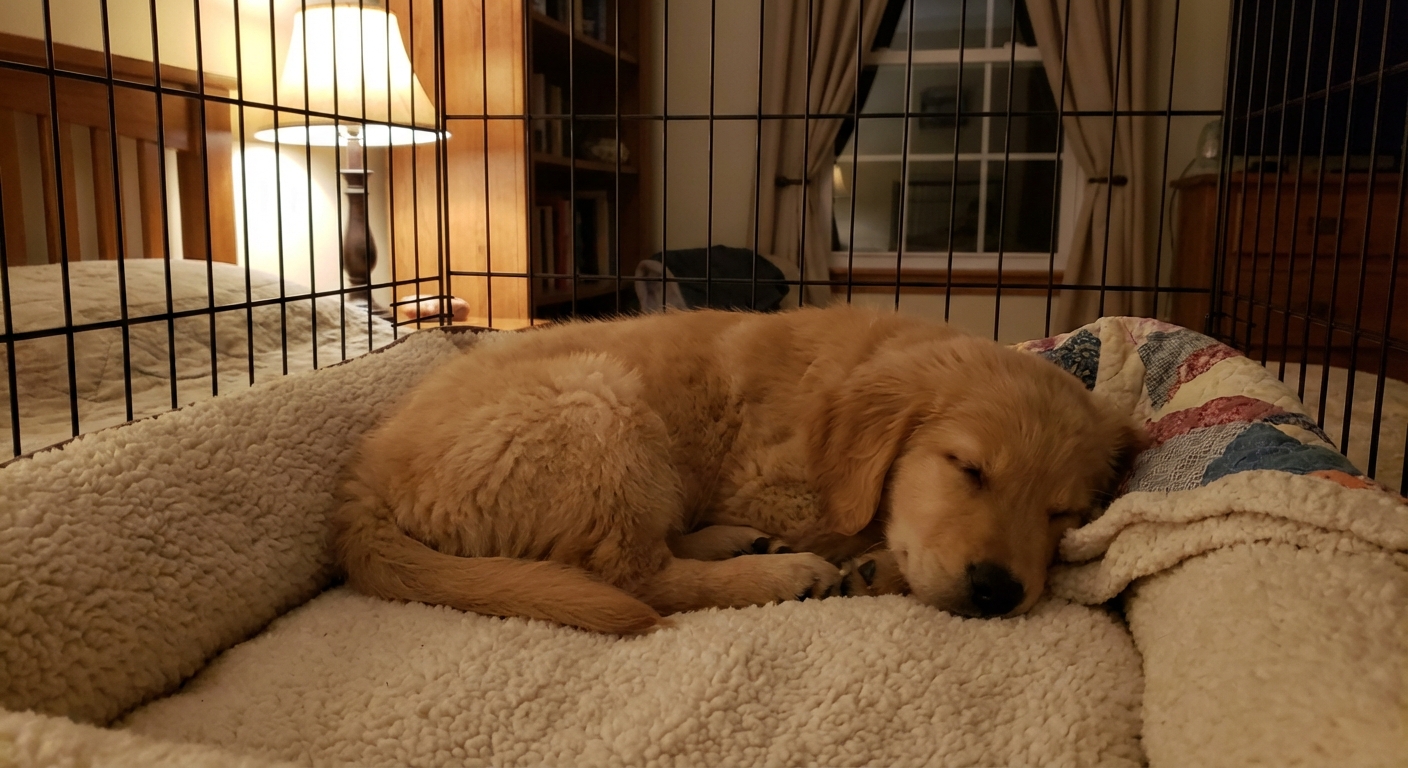
Before bed: set up a calm, safe space
Puppies do best with a predictable “den” area. It reduces stress, prevents chewing accidents, and makes house training easier. Even if you do not plan to crate long-term, a crate or exercise pen can be a temporary safety tool during the early weeks.
- Choose the sleeping spot: For night one, place the crate or pen in your bedroom or very close by. Many puppies settle more easily when they can hear and sense you nearby.
- Make it comfortable: Use a washable blanket or towel. Skip plush bedding if your puppy chews fabric.
- Add a safe comfort item: A puppy-safe chew or a soft toy is fine, but avoid anything that can be shredded and swallowed.
- Temperature comfort (safe options): If your home runs cool, a warm water bottle wrapped in a towel can help for short periods. Avoid heating pads or electric blankets unattended, since burns and overheating can happen.
- Noise support: A fan or white noise can help mask household sounds and may reduce startle wake-ups.
- Water strategy: Offer water after dinner and play, then most households stop offering water about 1 to 2 hours before bedtime to reduce overnight accidents. Do not restrict water excessively, and if your vet advised constant access due to health needs (or you have a very small breed with higher hypoglycemia risk), follow that guidance.
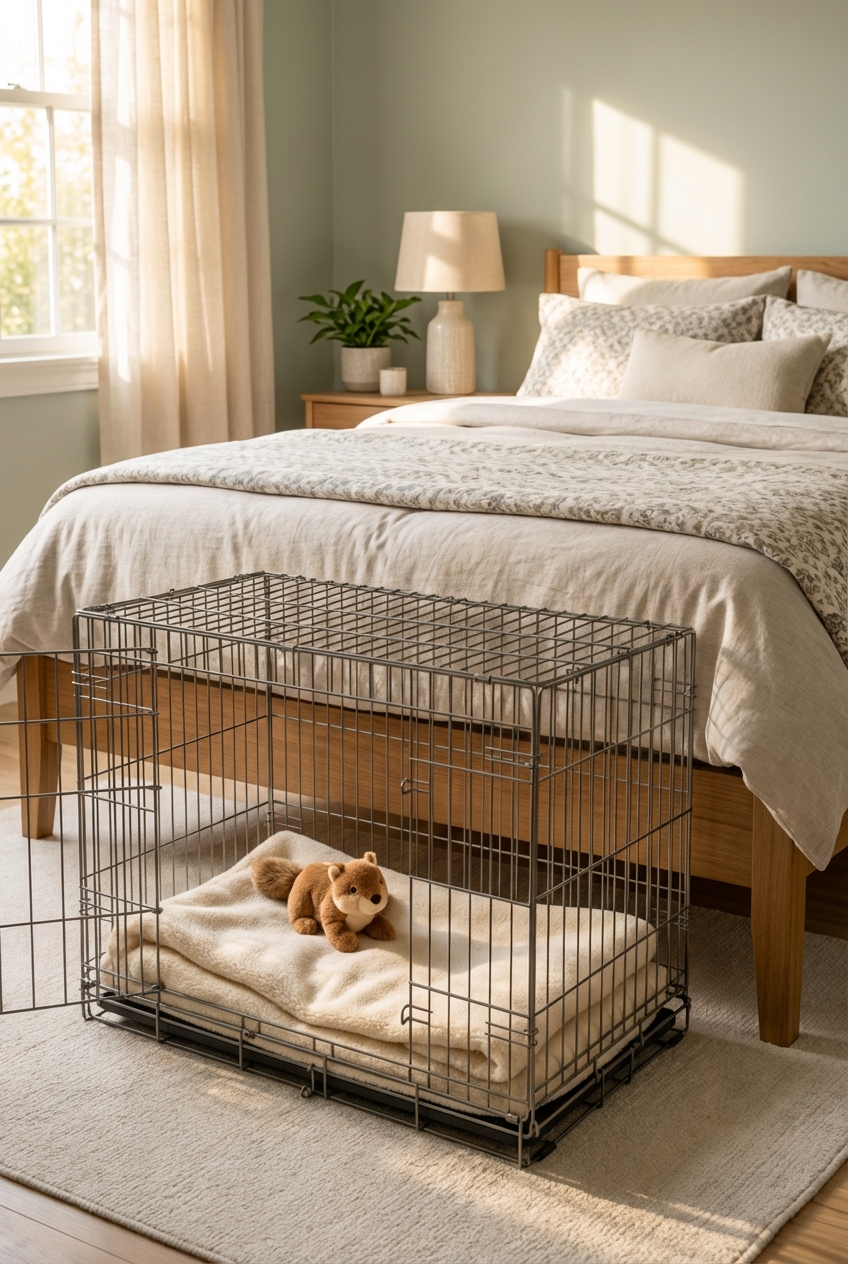
First 60 minutes at home
Many families want to celebrate with lots of hugs and introductions. Totally understandable. But puppies can get overwhelmed fast, and overstimulation is a common reason for barking, nipping, and nighttime pacing.
1) Potty break first
Go straight to the potty area before the house tour. Keep it boring and quiet. Praise gently when your puppy goes.
2) One room at a time
Start with a puppy-proofed area. Close doors, block stairs, and pick up shoes, socks, kids’ toys, and charging cords. Those are common causes of emergency vet visits.
3) Keep introductions small
- Limit visitors on night one if you can.
- Have kids sit on the floor and let the puppy approach.
- If you have other pets, do brief, calm, supervised greetings only.
A simple first-night schedule
Puppies thrive on routine. Here is a gentle schedule you can adapt to your family’s bedtime.
- Evening meal: Feed the last meal about 3 to 4 hours before bed when possible. Keep the food the same as what the breeder or shelter used for the first few days to reduce tummy upset.
- Calm play: 10 to 15 minutes of low-key play, then transition to chewing a safe toy.
- Potty break: Take your puppy out after play and again right before you go to sleep.
- Downshift time: Lights lower, voices soft, TV volume down. Puppies respond to your energy and the household noise level.
- Bedtime: Into the crate or pen with a simple cue like “Bed.” No big goodbyes.
Tip: If your puppy gets the zoomies right before bed, that often means overtired, but it can also be excitement or pent-up energy. Either way, switch to calm, predictable routines and offer a safe chew.
Where should your puppy sleep?
For most families, the smoothest option is in a crate beside your bed. It supports bonding and makes it easier to hear potty signals. If you choose an exercise pen, place it near you and keep the area small.
Make the crate a positive place
Even on night one, you can start a simple association: toss a treat in the crate, feed a few pieces of kibble near the entrance, and let your puppy walk in and out. The crate should not be used as punishment. It should feel like a safe resting spot.
If your puppy cries
Crying is common and does not mean you are doing anything wrong. Your puppy just left their mom and littermates.
- Pause and listen: Some fussing is normal and may stop within a few minutes.
- Use your voice: Soft reassurance like “You’re okay” can help without turning it into playtime.
- Do not let them out for attention: If crying leads to freedom, the crying will likely last longer tomorrow night.
- Do take them out if you suspect potty: Keep the trip quiet, leash on, no talking, no playing, straight back to bed.
Evidence-based trainers often recommend a “boring potty break” approach because it teaches the puppy that nighttime is for sleeping, not social hour.
Nighttime potty by age
Every puppy is different, but these are realistic starting points. Smaller breeds often need more frequent breaks.
- 8 to 10 weeks: Typically 1 to 2 potty breaks overnight.
- 10 to 12 weeks: Often 1 potty break overnight.
- 12 to 16 weeks: Many can sleep 6 to 8 hours, but accidents still happen.
- 16+ weeks: Many pups can sleep through the night with a consistent routine.
Helpful rule of thumb: Some puppies can hold it about their age in months plus one hour at most, but this is a rough guideline, not a guarantee. Daytime holds are usually shorter than overnight, and sleep, breed, and bladder size matter a lot. If you are seeing repeated accidents, tighten the schedule instead of blaming the puppy.
Tips for the whole family
This guide is for all ages, because the first night goes best when everyone follows the same plan.
For little kids
- Let them help fill the water bowl earlier in the evening and pick a bedtime toy.
- Teach “quiet hands” and “one finger petting” on the chest or shoulder.
- Remind them that sleeping puppies are not to be picked up.
For teens
- Assign one job: last potty break, crate setup, or morning potty break.
- Ask them to keep doors closed and floors clear of socks and earbuds.
For adults
- Set alarms for 1 overnight potty break if your puppy is under 12 weeks.
- Decide your rules tonight: couch, bed, and “free roaming” choices are hardest to change later.
What not to do
- Do not start brand-new food immediately unless directed by a veterinarian. Sudden diet changes can cause diarrhea, which makes house training harder.
- Do not give lots of new treats just to stop crying. Use comfort and routine instead.
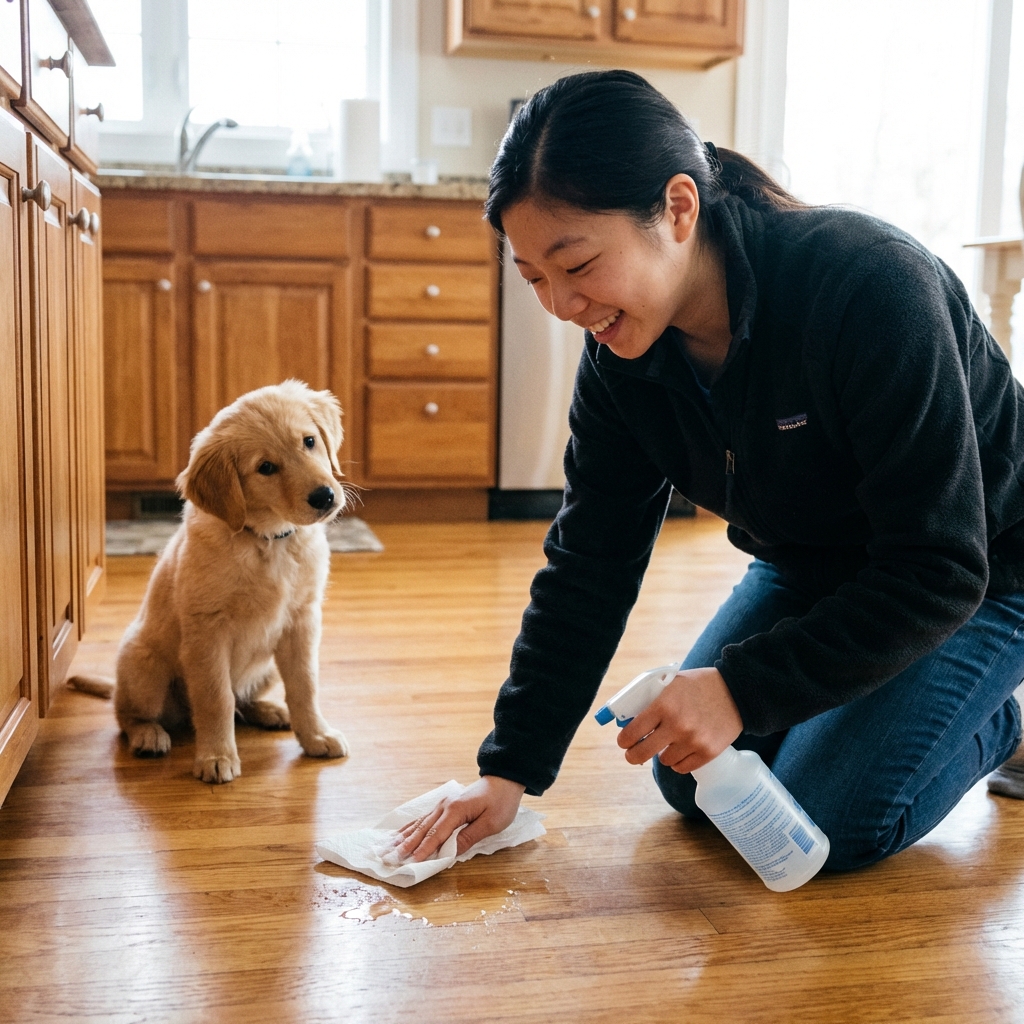
- Do not punish accidents. Clean with an enzymatic cleaner and adjust the schedule.
- Do not leave choke hazards out, including rawhide pieces, string toys, and tiny kids’ toys.
When to call a vet
Most first-night issues are normal adjustment. But a few signs should prompt a call to your veterinarian or an emergency clinic.
- Repeated vomiting or vomiting plus lethargy
- Profuse watery diarrhea or diarrhea with blood
- Continuous crying that cannot settle plus vomiting or diarrhea (especially in very young or tiny puppies)
- Swollen belly, repeated retching, or signs of pain (bloat is uncommon in young puppies, but these signs are always an emergency)
- Not eating at all for 24 hours (or sooner for tiny breeds)
- Possible toxin exposure or swallowing an object
Pro tip from the clinic: Save the breeder or shelter paperwork, vaccine dates, and deworming info in your phone. If you need urgent care at 2 a.m., you will be glad it is easy to find.
Note: This article is general guidance. Your puppy’s breed, age, and medical history matter, so follow your veterinarian’s recommendations when they differ.
First-night checklist
- Crate or pen set up near your bed
- Enzymatic cleaner ready
- Leash by the door for quick potty trips
- Chew toy approved for puppies
- Fan or white noise ready if it helps your puppy settle
- Alarm set for an overnight potty break if needed
- Morning plan: potty first, then breakfast
The first night is not about perfection. It is about safety, comfort, and starting a routine you can repeat tomorrow.