Make your puppy’s first night home smoother with a calm bedtime routine, crate setup tips, realistic potty-break timing, feeding guidance, and puppy-proofi...
Article
•
Designer Mixes
First Night With a New Puppy

Shari Shidate
Designer Mixes contributor
That first night with a new puppy is exciting, emotional, and usually a little sleep-deprived. As a veterinary assistant here in Frisco, Texas, I can tell you this is completely normal. Your puppy just left their mom and littermates, everything smells different, and they do not yet understand your routines.
The goal for night one is simple: keep your puppy safe, help them feel secure, and start the habits you want for the next 10 years. You do not need perfection. You need a plan.
Before bedtime: set up for success
Create a calm landing zone
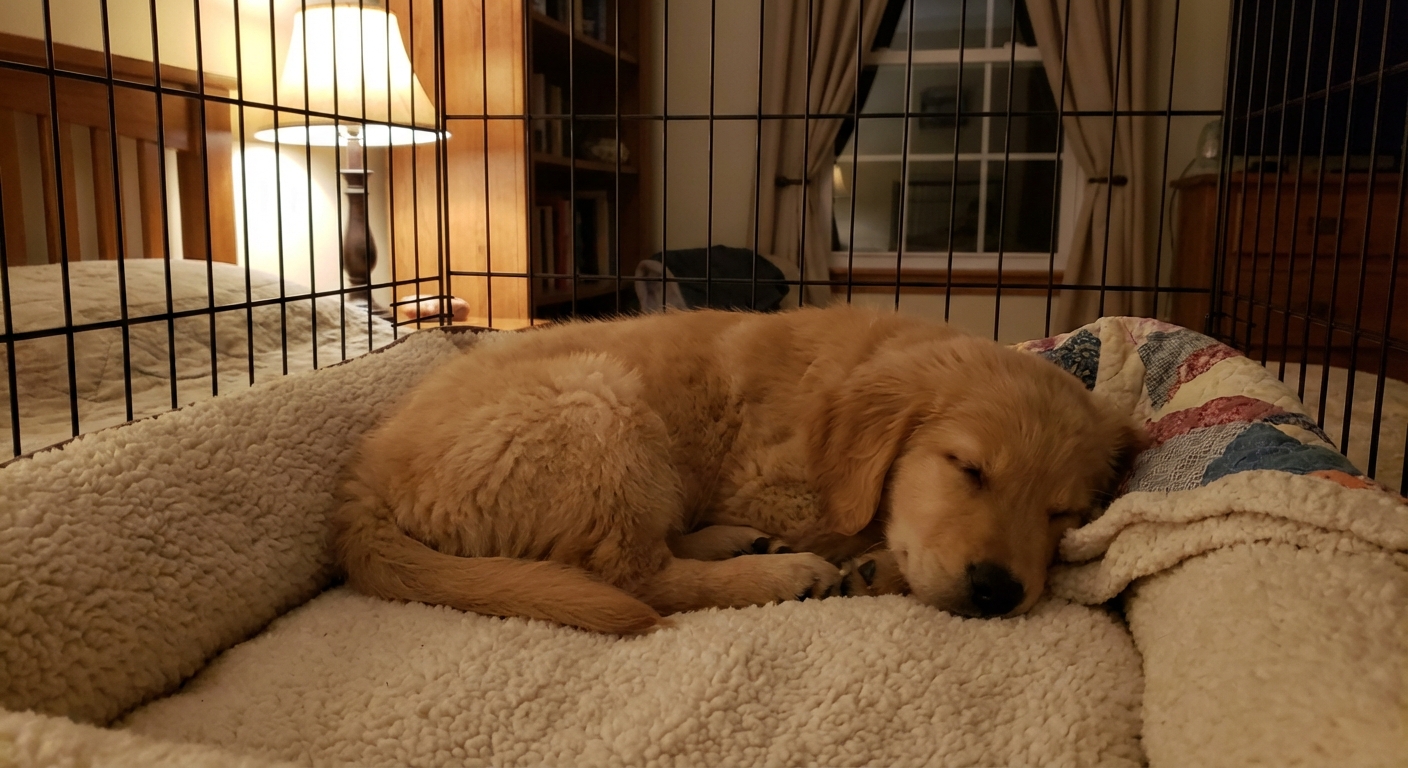
Pick one main puppy area for the evening, ideally close to you. New puppies settle best when they can hear and smell their people. A quiet corner of your bedroom is perfect for many families.
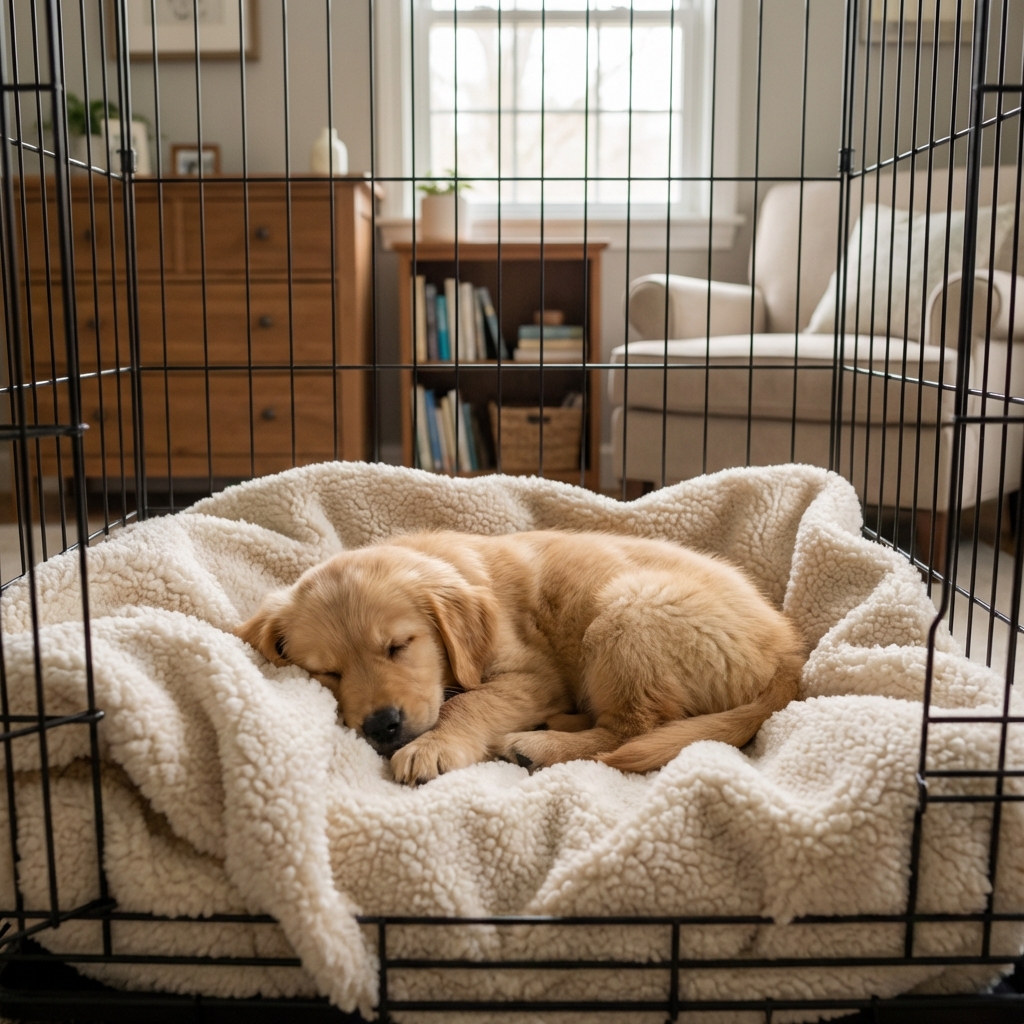
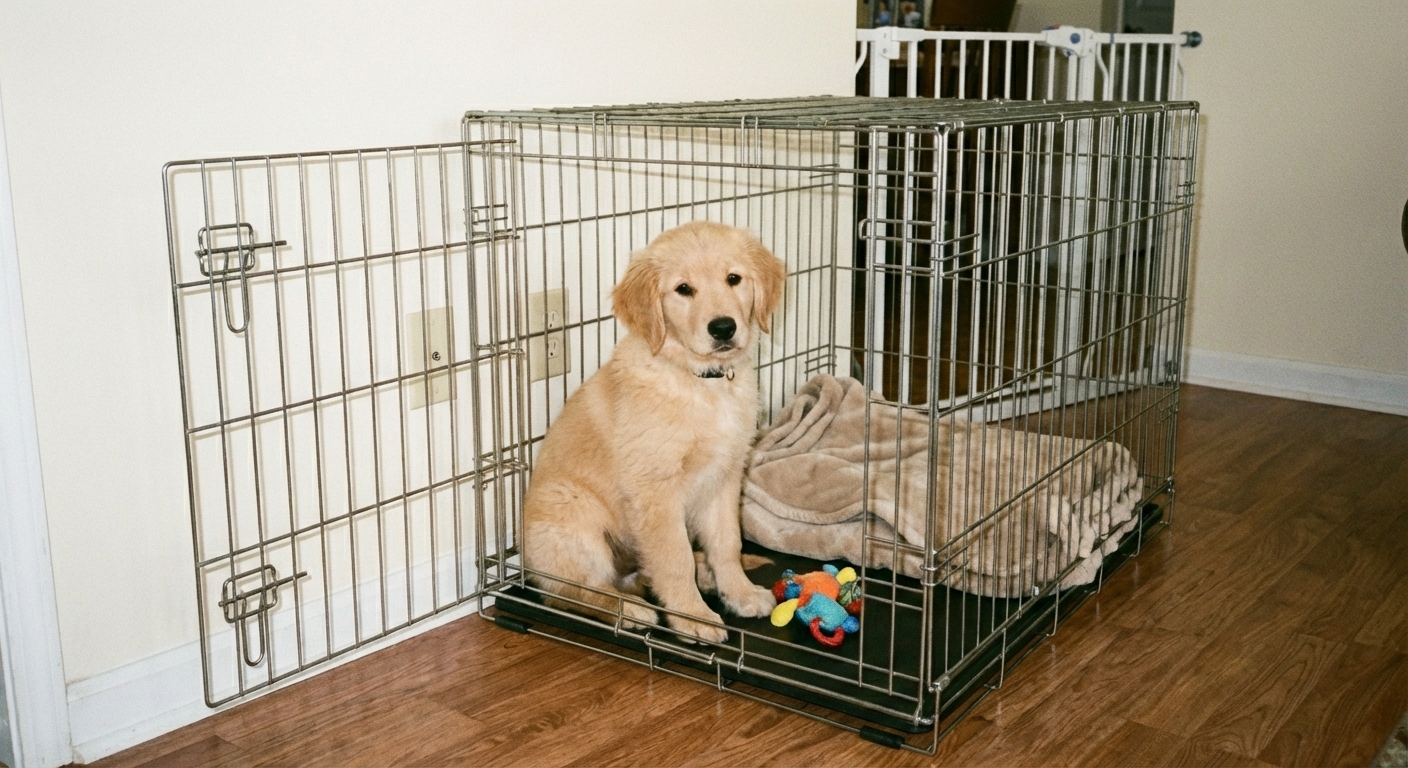
- Crate sized so puppy can stand and turn around, with a washable bed or folded towel.
- Safe chew (age-appropriate and puppy-safe) to help with self-soothing. A rubber puppy toy stuffed with a little kibble or a small smear of wet food can work well for many pups.
- Water available in the evening, then thoughtfully managed overnight as you begin potty training. Do not restrict water for long periods. If you have a very young puppy or a toy breed, ask your veterinarian what they recommend.
- Baby gates or puppy pen if you are not using a crate yet.
Puppy-proof like a toddler lives there
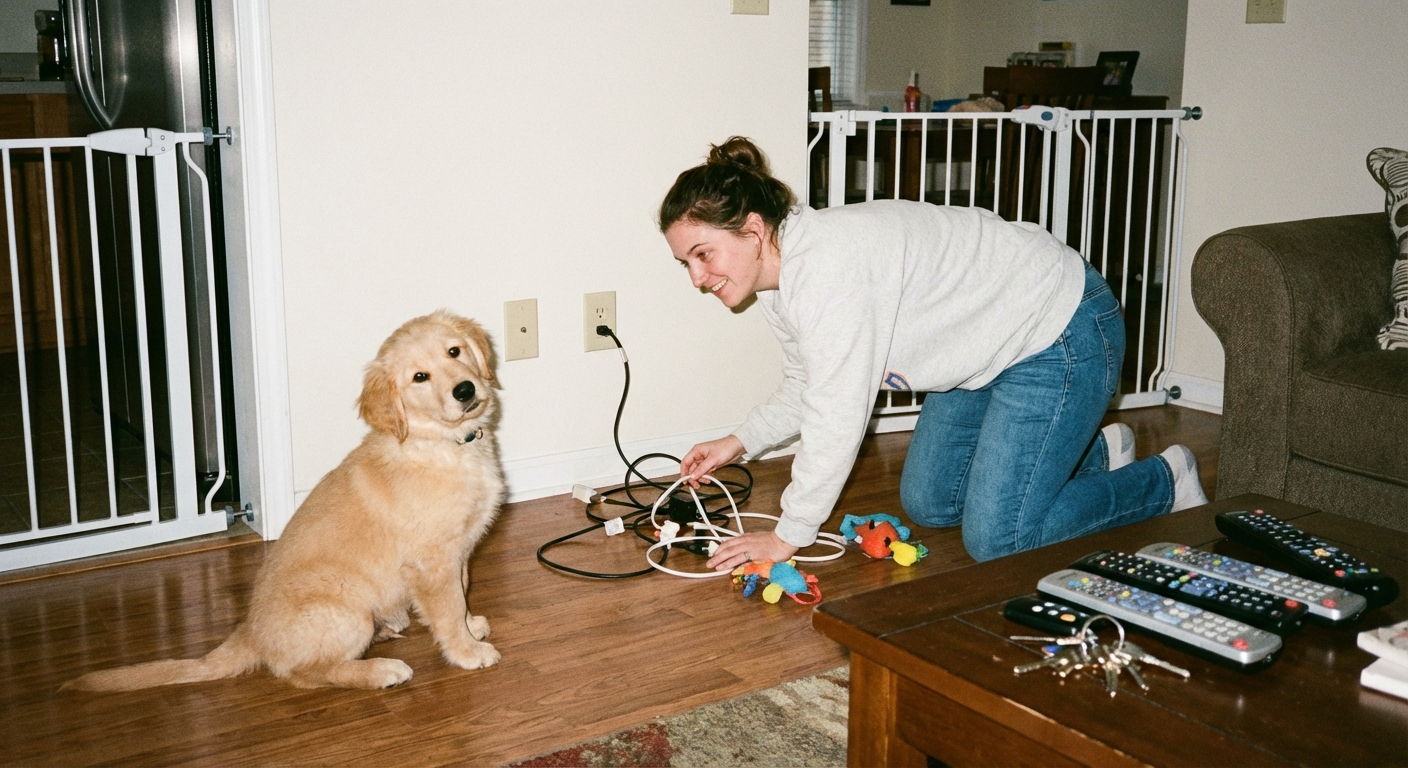
Puppies explore with their mouths. Before your puppy gets the late-night zoomies, scan the room and remove hazards.
- Electrical cords, phone chargers, batteries, small kids’ toys
- Houseplants (many are toxic to dogs)
- Shoes, socks, hair ties, and anything that can be swallowed
- Trash cans, especially bathroom trash
Evening schedule that actually works
Most first-night stress comes from an unpredictable routine. A steady rhythm helps your puppy’s body and brain settle faster.
1 to 2 hours before bed: gentle play
Keep play calm and positive. Avoid super rough wrestling games that wind puppies up right before sleep.
- Short, easy play session
- 5 minutes of simple training like “sit” for a tiny treat
- Quiet cuddle time if your puppy enjoys it
2 to 3 hours before bed: dinner and water
If dinner is late, keep it consistent for the next week. For many puppies, finishing dinner about 2 to 3 hours before bedtime can reduce overnight potty needs. Always follow your breeder or veterinarian’s guidance, especially for toy breeds that can be prone to low blood sugar and may do better with a vet-approved bedtime snack.
15 minutes before bed: final potty trip
Take your puppy out on leash to the same spot. Stand still and be boring. Then quietly praise and reward right after they go. This builds a strong habit quickly.
Tip: Use a simple phrase like “Go potty.” Say it once, then wait. Puppies learn patterns faster than speeches.
Where should your puppy sleep?
There is no one perfect answer, but there are best practices for safety and training. Many veterinarians and trainers suggest a crate or puppy pen for the first night because it prevents dangerous roaming and supports potty training.
Crate in your bedroom is an easy start
When the crate is near your bed, your puppy feels less alone and you can respond quickly if they need to potty. This can reduce panic crying and accidents.
- Place the crate where your puppy can see you.
- Use soft bedding that you can easily wash.
- Consider a covered top or three sides of the crate to make it den-like, but keep airflow.
Quick crate intro (5 minutes helps)
Before lights out, let your puppy investigate the crate while it is open. Toss in a few treats or pieces of kibble, praise calmly, and let them come back out. If your puppy is relaxed, close the door for a few seconds while you sit right there, then open it again. This helps the crate feel like a safe place, not a surprise.
Skip unsafe sleep items
For very young puppies, avoid anything that can be chewed into pieces and swallowed.
- Avoid stuffed toys that shed stuffing if your puppy is a shredder.
- Avoid loose strings, ribbons, or anything with button eyes that can come off.
- Use a chew designed for puppies, and supervise until you know your puppy’s habits. Avoid very hard chews that can crack teeth.
How to handle crying the first night
Crying is common. Your puppy is not being “bad.” They are stressed and calling for comfort. Your job is to respond in a way that is kind and also builds independence.
Start with the basics: potty, comfort, calm
- Assume potty first, especially for very young puppies (often under about 4 months), but use your judgment for your individual pup. Quietly take them out, no play, no big talk.
- Then back to bed right away. This teaches that nighttime is for sleeping.
- Use your voice. A calm “You’re okay” can help if the crate is close by.
What not to do
- Do not punish crying. It increases anxiety and can create long-term crate fear.
- Do not start a fun play session at 2 a.m. unless you want a 2 a.m. habit.
- Do not let your puppy roam the house unsupervised “to tire out.” That is when accidents and chewing injuries happen.
Comfort tools that can help
Some puppies settle faster with gentle sensory cues.
- A soft blanket that smells like the breeder or litter, if you have one
- White noise (fan or sound machine) to reduce startle sounds
- A warm, cozy sleeping spot, but avoid heating pads unless your veterinarian instructs you
Potty training on night one
The first night sets the tone. You are teaching two things: where to go, and how to ask.
How often will they need to go out?
It varies by age, size, and individual puppy. Many young puppies need 1 to 2 overnight potty trips for the first couple of weeks. Toy breeds may need more frequent breaks.
Simple overnight potty routine
- Keep a leash and treats by the bed.
- Go to the same potty spot each time.
- Reward immediately after they finish.
- Return straight to the crate or pen with minimal excitement.
Choose a safe potty spot
Until your puppy is fully protected based on your veterinarian’s vaccine plan, avoid high-dog-traffic public areas (like busy parks, apartment dog runs, and pet store potty stops). Use a low-traffic private spot at home when possible, and ask your veterinarian what is safest in your area.
If your puppy has an accident, clean it with an enzymatic cleaner. Regular cleaners often leave odor traces that tell a puppy “this is a bathroom.”
Feeding and stomach upset
Stress can affect digestion. A mild change in stool on day one can happen, especially if food is different from what the breeder used. But diarrhea, vomiting, or lethargy is not something to “wait out.”
Common first-night tummy triggers
- Switching foods too fast
- Too many new treats
- Stress and excitement
Feeding tips for the first 48 hours
- Keep the same food the breeder or rescue used, if possible, for at least several days.
- Offer smaller, more frequent meals for young puppies.
- Keep treats tiny and limited. Use part of their kibble as training rewards.
Call your veterinarian right away if your puppy is vomiting repeatedly, has watery diarrhea, seems weak, or will not eat. Puppies can dehydrate quickly.
Safety and health checks tonight
You do not need to do a full medical exam at home, but a quick check can catch issues early.
- Energy: a little tired is normal, but extreme lethargy is not.
- Breathing: sleep breathing can be a little irregular, but you should not see persistent coughing, wheezing, or obvious effort to breathe.
- Gums: should be moist, not tacky or dry.
- Parasites: look for fleas, “flea dirt,” or a pot-bellied look that can suggest worms (not diagnostic). Bring a fresh stool sample to your vet.
Plan the vet visit now
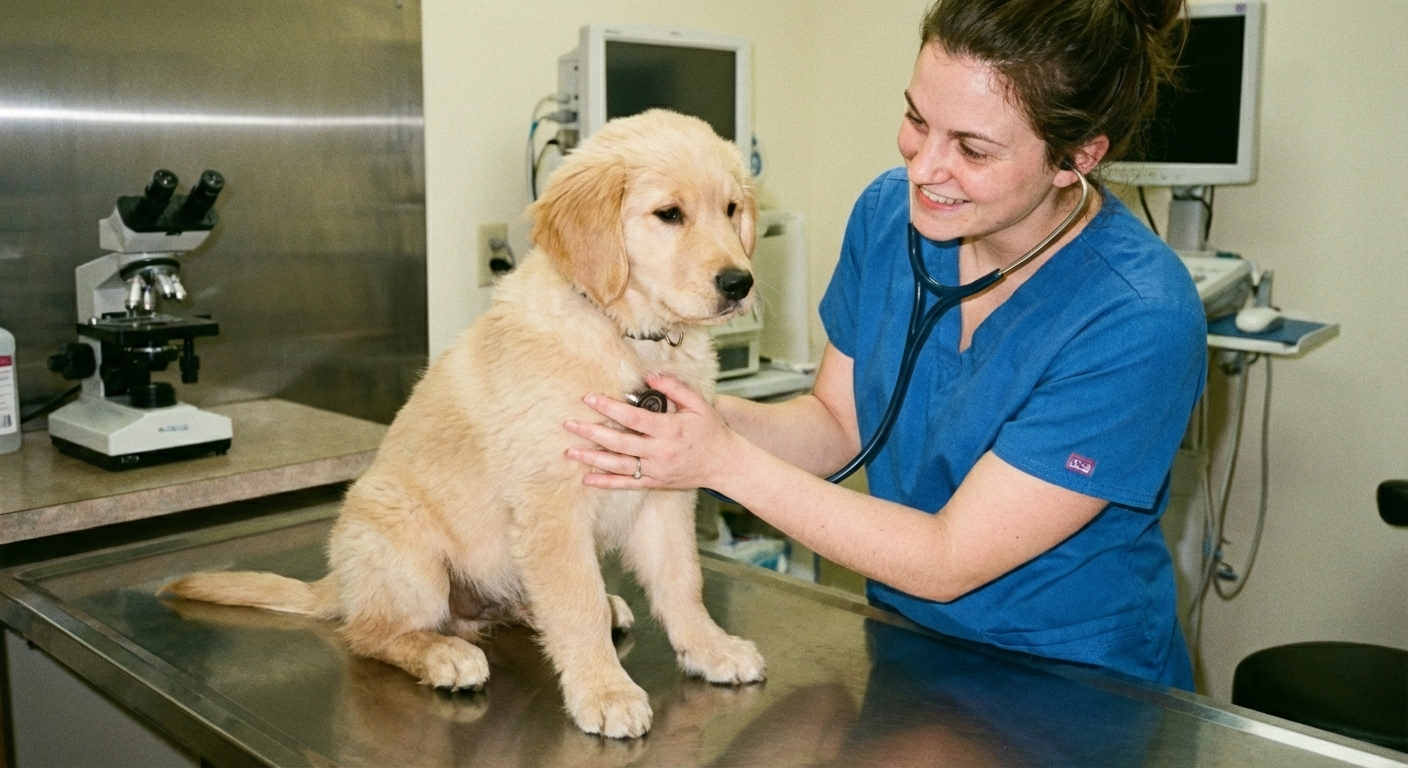
Schedule your new puppy exam within the next few days, or sooner if you did not receive records. Your veterinarian will guide vaccine timing, deworming, fecal testing, and parasite prevention based on your puppy’s age and risk.
First night checklist
- Crate or pen set up near your bed
- Puppy-proofed room with hazards removed
- Enzymatic cleaner ready
- Leash and treats by the door
- Final potty trip right before lights out
- Overnight plan for 1 to 2 potty breaks
- Vet appointment scheduled
Quick FAQs
Should I let my puppy sleep in my bed?
It depends, but from a safety and training perspective, a crate or pen is usually the better starting point. If you eventually want bed privileges, you can earn them later once potty training and chewing are reliable.
Is it okay to ignore crying?
Ignoring all crying can backfire if your puppy truly needs to potty or is panicking. Check for potty needs first, keep interactions calm, then give your puppy a chance to settle.
What if my puppy will not sleep?
Assume stress and adjustment. Keep the environment dim and quiet, reduce stimulation, and stick to a consistent routine. If you see vomiting, diarrhea, weakness, coughing, or labored breathing, call your veterinarian or an emergency clinic.
A gentle reminder
Your puppy is learning who you are tonight. Calm consistency builds trust fast. If night one is messy, that does not mean you are failing. It means you are bonding with a baby animal who needs time, structure, and reassurance.