A step-by-step puppy crate training guide: choosing the right crate, building positive associations, first-week routines, nighttime potty breaks, and solutio...
Article
•
Designer Mixes
First Night Crate Training

Shari Shidate
Designer Mixes contributor
Your puppy’s first night in a crate can feel like a big moment for the whole household. The goal is simple: help your puppy feel safe, prevent accidents, and build a sleep routine that supports confidence, not fear. As a veterinary assistant, I always remind families that crate training works best when it is calm, consistent, and paired with your puppy’s basic needs being met.
Good news: most first-night struggles are normal and fixable. Whining does not automatically mean you are “doing it wrong.” It usually means your puppy is adjusting, needs a potty break, or has not yet learned that the crate predicts comfort and sleep.
Quick note: This guide is educational and not a substitute for veterinary care. If something feels “off,” trust your instincts and call your veterinarian.
What the crate should feel like
Think of the crate as your puppy’s small, cozy bedroom. For first-night success, the crate should be:
- Appropriately sized so your puppy can stand, turn around, and lie down comfortably (too large can encourage pottying in one corner).
- Comfortable but simple with safe bedding. If your puppy chews fabric, use a tough crate mat or skip bedding temporarily for safety.
- Predictable meaning the same location, the same bedtime routine, and the same calm cues each night.
Safety note: Avoid collars and dangling tags in the crate to reduce the risk of snagging. Some veterinarians recommend breakaway collars for general wear, but inside the crate is a good time to go “naked” for safety.
Step-by-step: first night plan
Step 1: Pick the right location
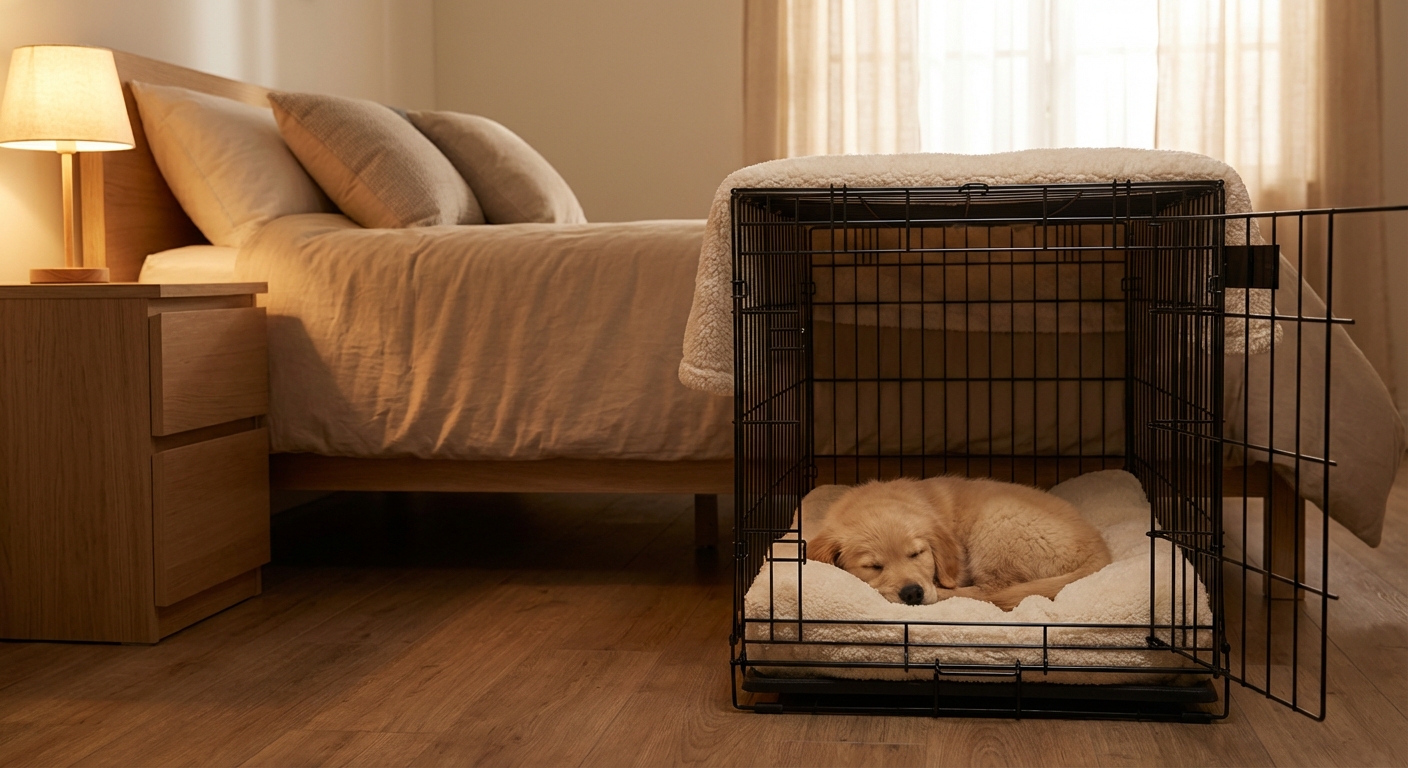
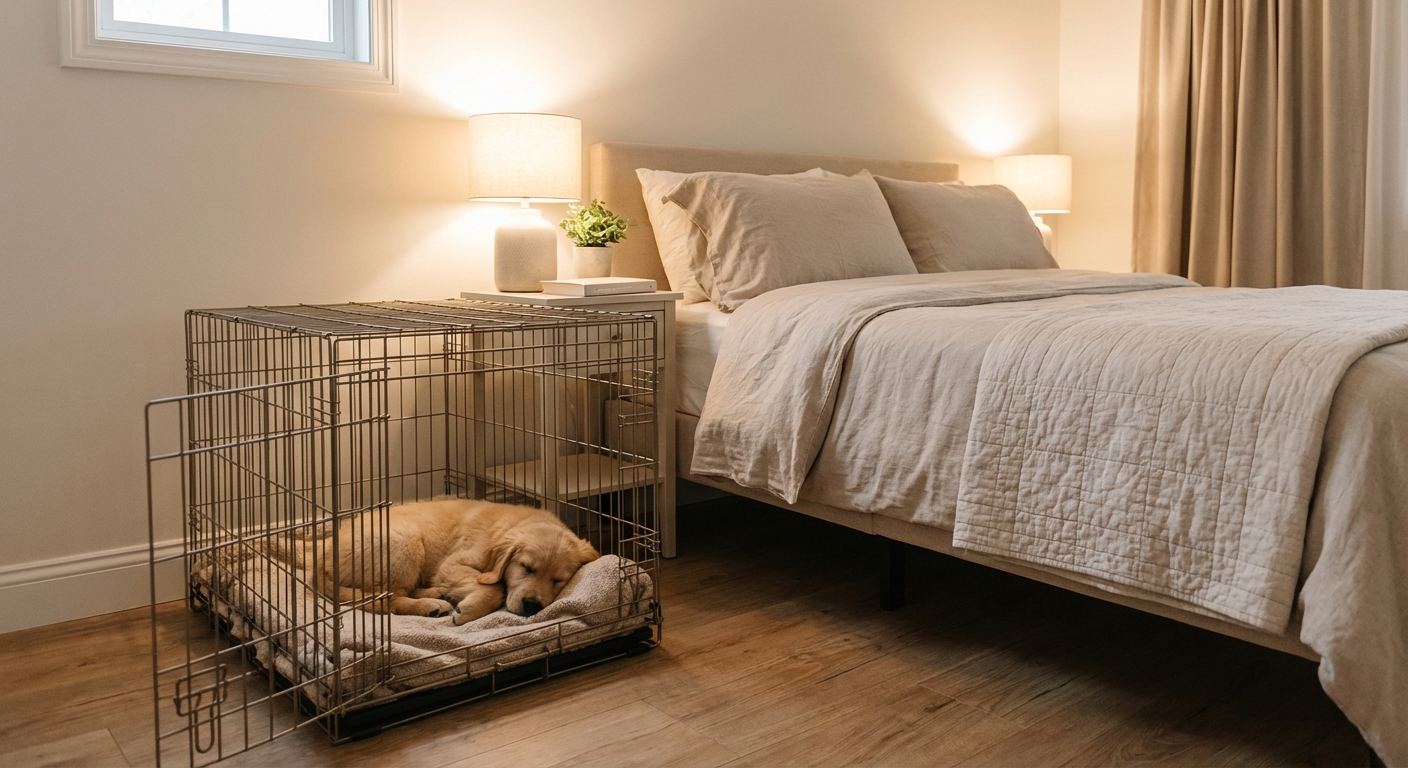
For night one, place the crate in your bedroom or just outside it. Puppies are social sleepers. When you are nearby, most settle faster and learn the routine with less distress.
Step 2: Build a bedtime rhythm (30 to 60 minutes)
Start winding down before you expect your puppy to sleep:
- Potty break
- Short, gentle play or a brief training session (sit, touch, name game)
- Offer water, then keep it normal and steady through the evening
- Final potty break right before crating
This routine matters because it reduces the two biggest reasons puppies cry in the crate: extra energy and a full bladder.
About water at night: Some families find it helpful to pick up the water bowl a little before bed while house-training, but it should be modest and never at the expense of hydration. Very young puppies, hot climates, post-exercise panting, and some medical conditions may need water available. When in doubt, follow your veterinarian’s guidance.
Step 3: Make the crate a “yes” place
Feed a few treats in the crate with the door open. Toss one in, let your puppy go in, then toss another. If your puppy is hesitant, do not push or drag them in. We want the crate to feel like a choice.
Step 4: Use a safe, calming activity
Many puppies settle better with something to lick or chew. Options that often work well:
- A small stuffed frozen food toy (size and ingredients appropriate for puppies)
- A durable chew that your veterinarian says is safe for your puppy’s age and teeth
Licking and chewing can help lower arousal. Skip anything that splinters, and avoid very hard chews for young teeth unless your veterinarian approves.
Toy safety reminder: Choose items that are the right size (too small can be a choking risk) and in good condition (no loose pieces). If your puppy destroys chews or tries to swallow chunks, stick to safer options and ask your veterinarian or trainer what is appropriate for unattended crate time.
Step 5: Close the door, stay nearby, and keep it boring
Once your puppy is sleepy, close the crate door quietly. Sit nearby for a few minutes. If your puppy fusses, keep your response calm and low-key. Soft reassurance is fine. Big emotional reactions, lots of talking, or letting them out immediately can accidentally teach: “crying makes humans do exciting things.”
How to fade your help: Over several nights, move from sitting right next to the crate, to sitting a few feet away, to sitting at the doorway, and then back in your normal sleep spot. Go at your puppy’s pace.
Step 6: Plan for potty breaks
Most puppies cannot “hold it” all night, especially in the 8 to 12 week range. A common starting point is the “about one hour per month of age” guideline, but it is oversimplified and varies a lot. Sleep holding time is often longer than awake holding time, and smaller breeds may need more frequent trips. Use it as a rough starting point, then adjust based on your puppy’s reality.
When you take your puppy out at night:
- Use a leash
- Keep the lights low
- No playtime
- Quiet praise, then straight back to the crate
This teaches nighttime is for potty and sleep, not partying.
Facts that prevent common mistakes
Whining is information, not disobedience
First-night vocalizing usually means one of four things: potty need, discomfort, fear of being alone, or too much energy. Your job is to calmly troubleshoot, not to punish.
“Cry it out” is not the only option
Some puppies escalate if ignored completely, especially on night one. A gentler approach that is widely recommended by reward-based trainers is gradual comfort with consistent boundaries: you can be nearby, keep the room quiet, and still avoid turning whining into a reward.
Overtired puppies can look “wired”
Just like toddlers, puppies can get a second wind. If your puppy is frantic in the crate, they may need a calmer evening routine and earlier bedtime, not more stimulation.
Accidents are a setup issue, not a moral failure
If your puppy has an accident in the crate, do not scold. Instead, adjust:
- Crate size (use a divider if needed)
- Potty schedule
- Evening routine (including water access)
- Veterinary check if accidents are frequent or accompanied by straining, blood, or excessive thirst
Cleaning tip: Use an enzymatic cleaner designed for pet urine to help prevent repeat soiling in the same spot.
Covering the crate can help, but watch temperature
A breathable cover can reduce visual stimulation and help some puppies settle. Make sure airflow is good, and never allow overheating.
Troubleshooting
If your puppy cries immediately
- Confirm they pottied right before crating.
- Stay close and quiet for a few minutes.
- Offer a safe lick or chew item if appropriate.
If crying turns into panic
Panic looks more intense than normal whining. You might see nonstop screaming, heavy drooling, frantic biting at the bars, repeated attempts to escape, or self-injury (bloody gums, broken nails).
- Move the crate closer to you.
- Try your hand near the crate for reassurance without opening the door.
- Make sure the crate is not too hot, too cold, or too noisy.
- If your puppy is injuring themselves or cannot settle, get professional help sooner rather than later.
If your puppy wakes every hour
- This can be normal for very young puppies.
- Double-check you are keeping nighttime potty breaks boring and brief.
- Consider whether your puppy is napping too much late evening and shift naps earlier.
If you suspect medical issues
Call your veterinarian promptly if you see vomiting, diarrhea, significant lethargy, coughing, breathing changes, repeated accidents despite frequent potty trips, or signs of pain. Behavior and health are connected, and it is always okay to ask.
What to expect after night one
Most puppies improve quickly when their routine stays consistent. Expect progress to look like:
- Night 1: frequent waking, some crying
- Nights 2 to 4: shorter settling time, fewer wake-ups
- Week 1 to 2: longer sleep stretches, calmer crating
If your puppy is still struggling after 1 to 2 weeks of consistent training, it may help to work with a certified positive reinforcement trainer. If you see extreme distress (especially panic signs or self-injury attempts), do not wait. Get help sooner. For some puppies, especially rescues with prior stress, a slower approach is the kindest and most effective.
Gentle consistency is the secret sauce: same bedtime routine, same calm response, and lots of daytime practice making the crate a happy place.
Daytime practice that helps nights
Nighttime crate training is much easier when the crate is part of normal life. During the day:
- Feed meals in the crate with the door open at first, then closed briefly.
- Practice short “crate naps” after play and potty breaks.
- Toss treats in randomly so your puppy discovers the crate is rewarding.
- Keep departures and arrivals low-key to reduce separation stress patterns.