
Final Stages of Cushing’s Disease in Dogs

As a veterinary assistant here in Frisco, Texas, I have talked with many families navigating advanced Cushing’s disease (hyperadrenocorticism). If you are searching “what are the final stages of Cushing’s disease in dogs,” you are probably seeing changes that feel scary, confusing, and honestly heartbreaking.
The good news is that you can still do a lot to keep your dog comfortable. This page will walk you through common advanced signs, what is truly urgent, and comfort care steps you can start today while you work closely with your veterinarian.
Quick note: This is general education from a veterinary assistant, not a diagnosis or a substitute for veterinary care. Your veterinarian is the best person to guide decisions for your dog’s specific case.

What “final stages” means
Cushing’s disease happens when a dog’s body is exposed to too much cortisol for too long. With treatment and monitoring, many dogs can do well for a long time, but timelines vary widely based on the cause (pituitary versus adrenal), other health conditions, and how the disease responds to therapy.
“Final stages” is not a single moment. It is a period where symptoms become more severe, infections happen more often, mobility declines, and quality of life may start to fall.
Advanced decline is commonly tied to one or more of these issues:
- Cortisol levels that are difficult to control, even with medication
- Progressive muscle wasting and weakness
- Recurrent skin, ear, or urinary infections
- High blood pressure and organ strain
- Diabetes mellitus developing alongside Cushing’s
- Blood clots (thromboembolism) in some dogs, which can be sudden and life-threatening
- Neurologic effects, especially with larger pituitary tumors (macroadenomas)
If your dog is in this stage, you are not “giving up” by focusing on comfort. You are loving them in the most practical way.
Types of Cushing’s and why it matters
Most dogs have pituitary-dependent Cushing’s (a pituitary tumor signals the adrenal glands to produce excess cortisol). A smaller number have an adrenal tumor that produces cortisol directly. In advanced pituitary-dependent cases, neurologic signs can appear if the pituitary tumor grows large.
Your veterinarian may also ask about steroid exposure. Cushing’s like signs can be iatrogenic (caused by medications like prednisone). That situation is managed differently, often by carefully tapering steroids under veterinary guidance rather than using Cushing’s medications.
Advanced signs in dogs
Every dog is different, and not every dog will have every sign. But these are patterns veterinarians see as Cushing’s progresses.
1) Severe weakness and muscle loss
Cortisol breaks down muscle over time. In advanced disease you may notice:
- Back legs slipping, wobbling, or giving out
- Trouble rising from rest
- Less interest in walks and play
- Loss of muscle along the thighs and shoulders
- A hunched posture or “pot-bellied” appearance becoming more pronounced
Some families also notice knuckling (dragging the tops of the feet). That can happen with severe weakness or a separate neurologic or orthopedic problem. If you see knuckling, new wobbliness, or sudden trouble walking, it is worth a prompt veterinary check.
This weakness can make everything harder, including getting outside to potty, climbing steps, or even standing to eat.
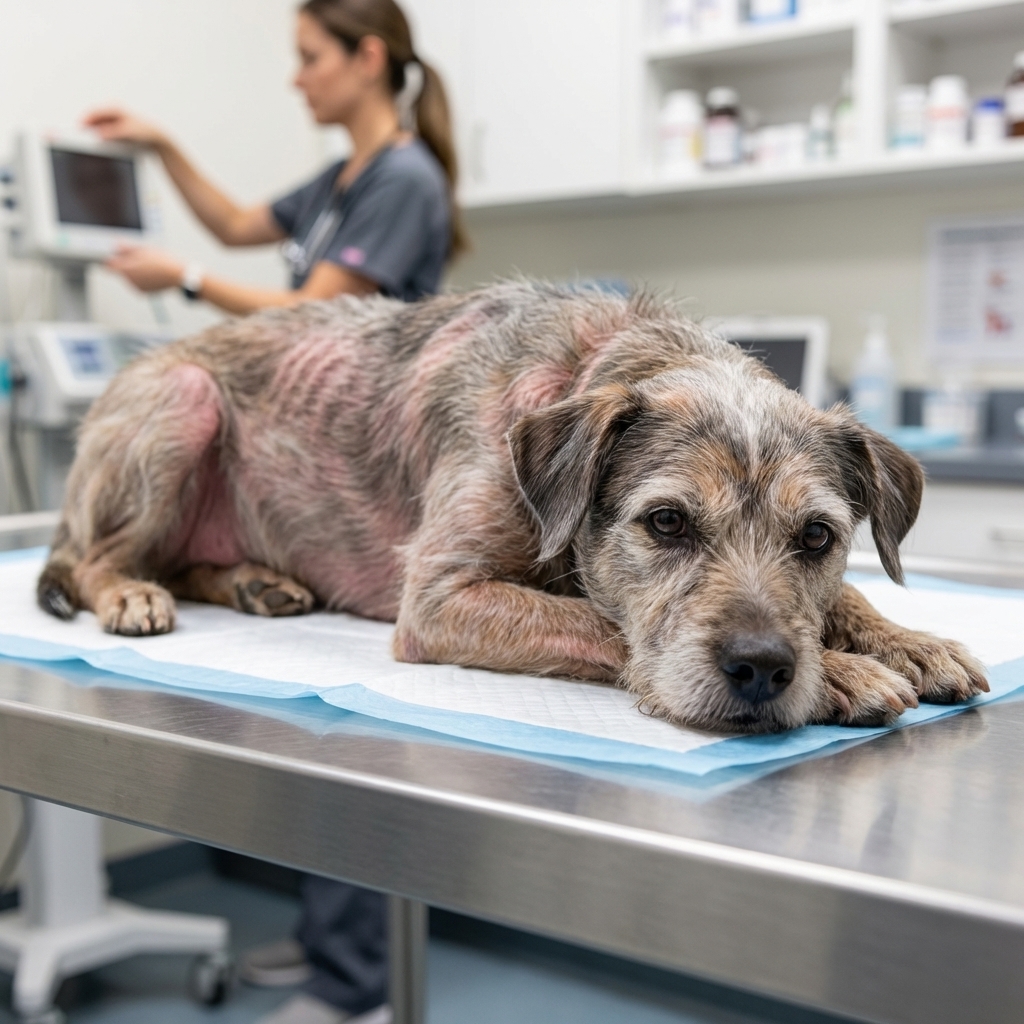
2) Skin and coat changes
Skin changes are often very visible in advanced disease and can impact comfort.
- Thin, fragile skin that tears easily
- Hair loss on the trunk and sides
- Slow wound healing
- Darkened skin (hyperpigmentation)
- Comedones (blackheads) and recurrent bacterial or yeast infections
- Calcinosis cutis in some dogs, which can look like firm plaques or crusty areas and may be painful
3) Increased thirst and urination
Increased drinking and peeing often continues, and in advanced disease it can become unmanageable at home. You might see:
- Large urine volumes
- Waking at night to urinate
- Accidents in the house despite being house-trained
- Possible UTI signs like straining, frequent squatting, blood in urine, or licking the genital area
Accidents are not your dog being “stubborn.” They are a symptom. They also raise the risk of skin irritation and infection, so management matters.
4) Higher infection risk
High cortisol suppresses the immune system. Dogs with Cushing’s are prone to recurring infections, especially:
- Skin infections (hot spots, pustules, odor, itching)
- Ear infections (head shaking, redness, debris)
- Urinary tract infections (sometimes with few outward signs)
- Dental and gum infections
One important point: some Cushing’s dogs do not show classic “sick” behavior with infections. They may still eat, but the infection is there. Routine checks with your veterinarian are valuable when the disease is advanced.
5) Panting, restlessness, and poor sleep
Many dogs pant more, pace at night, or seem unable to get comfortable. Contributing factors can include cortisol effects, enlarged liver, abdominal discomfort, anxiety, pain, or high blood pressure.
If panting is sudden, intense, or paired with collapse, weakness, or pale gums, treat it like an emergency.
Neurologic signs
Neurologic signs are most concerning in dogs with a large pituitary tumor (pituitary macroadenoma). Not every pituitary-dependent Cushing’s dog gets neurologic signs, but when they show up, they often indicate progression that needs quick veterinary guidance.
Signs to watch for include:
- New confusion or disorientation, getting stuck in corners
- Staring spells
- Circling
- Unsteady walking, stumbling, falling
- Changes in vision, bumping into objects
- Behavior changes, increased anxiety, irritability, or “not themselves”
- Seizures
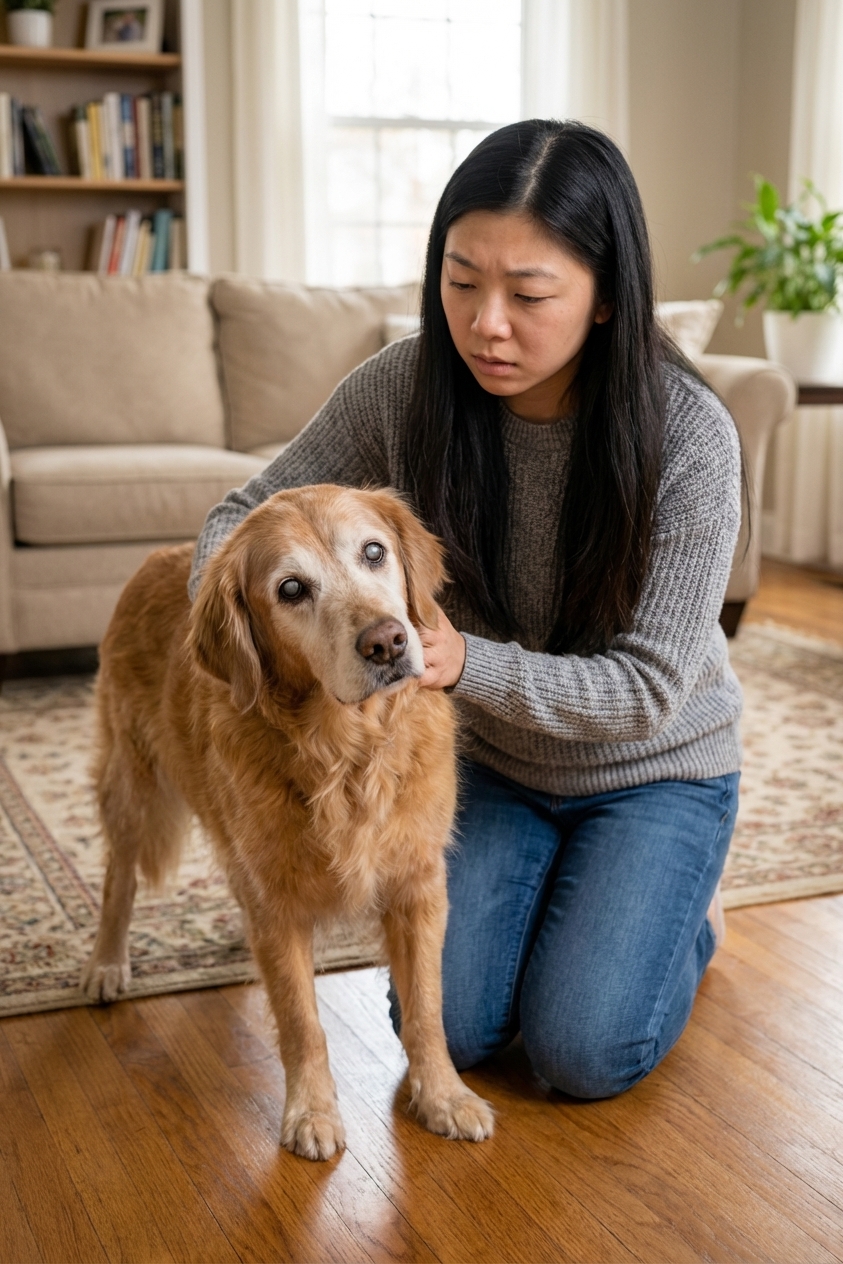
If you see seizures, sudden collapse, or severe disorientation, contact an emergency clinic right away.
Urgent vs not urgent
Go to an ER now
- Collapse or inability to stand
- Trouble breathing, blue or pale gums
- Sudden, painful hind-limb weakness or paralysis (possible clot)
- Seizures
- Uncontrolled vomiting or diarrhea, severe lethargy
- Severe weakness or collapse after a Cushing’s medication change (possible cortisol over-suppression)
Call your vet soon
- Worsening panting or restlessness
- New or worsening accidents in the house
- New skin sores, odor, ear debris, or itching
- Appetite changes, nausea, weight loss
- New wobbliness, knuckling, or frequent falls
- Possible UTI signs (or simply a sudden change in urination habits)
Quality of life
This is the part no one wants to talk about, but it matters. Advanced Cushing’s can become less about “controlling numbers” and more about whether your dog can still enjoy daily life.
Quality of life tends to decline when a dog has several of these at once:
- Cannot get comfortable or sleep through the night
- Cannot rise, walk, or potty without significant help
- Frequent infections that keep returning
- Poor appetite or nausea that persists
- Labored breathing, constant heavy panting
- Repeated accidents leading to skin sores or distress
- Confusion, pacing, or neurologic decline
- Pain that is not well controlled
If you want a simple tool to guide you, many veterinarians recommend using a quality-of-life scale at home (often focused on hurt, hunger, hydration, hygiene, happiness, mobility, and “more good days than bad”). Bring your notes to your vet. Patterns over 1 to 2 weeks can be very telling.
Comfort care at home
Comfort care is supportive care. It is not “doing nothing.” The goal is to reduce suffering, prevent crises, and protect the bond you have with your dog.
Work with your vet on medications
Depending on your dog’s situation, your vet may discuss:
- Adjusting Cushing’s medication (such as trilostane) and monitoring electrolytes and cortisol control
- Antibiotics or antifungals for infections, sometimes based on culture
- Blood pressure medication if hypertension is present
- Pain control if arthritis, calcinosis cutis, or other pain is suspected
- Anti-nausea meds or appetite support if needed
- Diabetes management if Cushing’s has triggered insulin resistance
Important safety note: Never change or stop Cushing’s medications without veterinary guidance. Over-suppression of cortisol can cause hypoadrenocorticism (an Addisonian crisis), which is an emergency.
Monitoring and rechecks
In advanced cases, rechecks can prevent problems from snowballing. Your veterinarian may recommend some combination of:
- Follow-up testing to check how well medication is controlling cortisol (the exact test and timing varies by clinic and protocol)
- Electrolytes and kidney and liver values, especially after dose changes or if appetite and energy drop
- Blood pressure checks
- Urinalysis and, when appropriate, urine culture (since UTIs can be sneaky in Cushing’s dogs)
- Diabetes screening or glucose curves if diabetic
If you ever feel like you are guessing, ask your vet: “What should we monitor next, and what change would make you want to see us sooner?”
Make eating easy
In advanced disease, maintaining steady nutrition is often more realistic than aiming for perfection. Here are practical, vet-friendly strategies:
- Offer smaller, more frequent meals to reduce nausea and stress
- Choose a diet that fits your dog’s other conditions (kidney disease, pancreatitis, diabetes, heart disease)
- Ask your vet what fat level is appropriate for your dog, especially if there is a history of pancreatitis or high lipids
- Warm food slightly to increase aroma and appetite
- Keep fresh water available at all times
If you are feeding any homemade components, make sure they are balanced or used as a topper only, unless a veterinary nutritionist has formulated the full recipe. Advanced-stage dogs are often more medically fragile, so this is not the time for experimental ingredients.
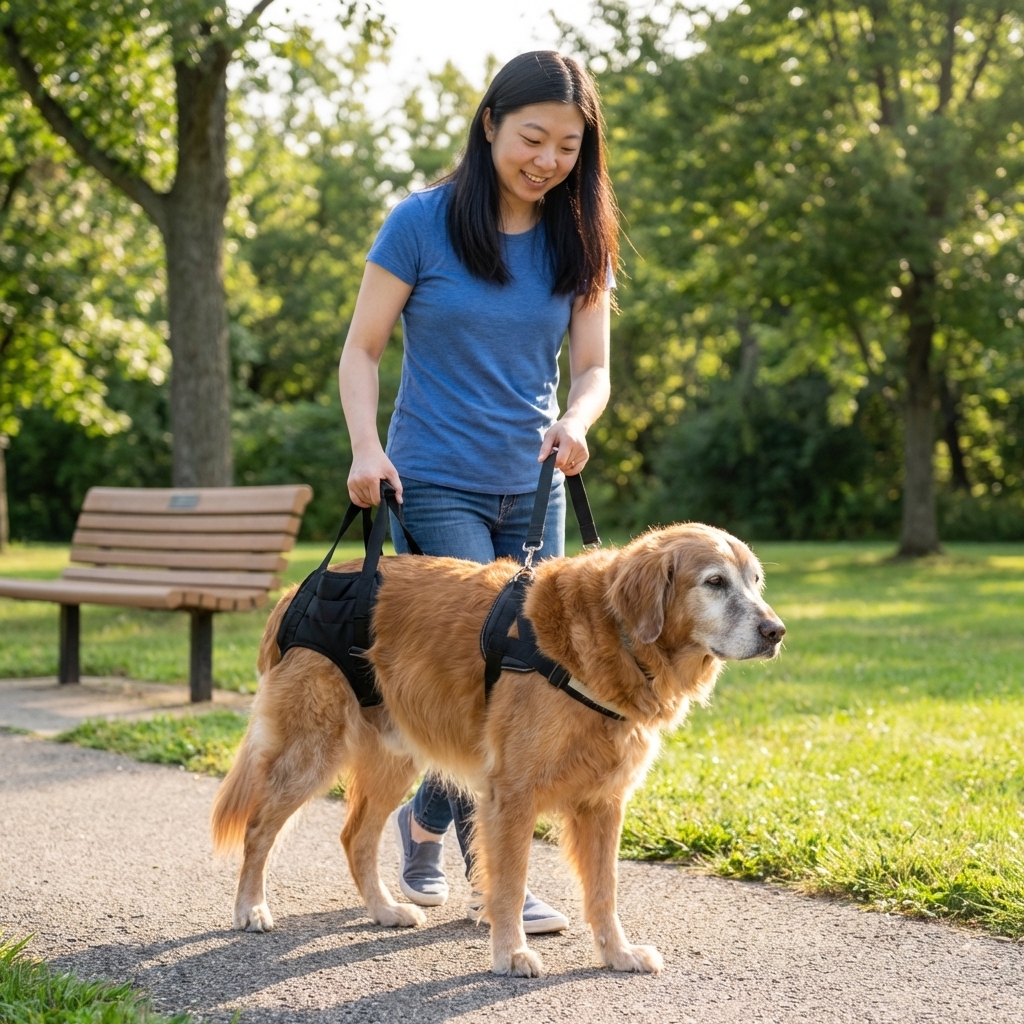
Support mobility and prevent falls
- Add non-slip rugs or yoga mats in hallways and near food and water
- Use a harness with a rear support sling for potty trips
- Keep nails and paw hair trimmed to improve traction
- Use ramps for steps and couches, if your dog still wants to be close
- Provide thick bedding to protect joints and bony areas
Skin and hygiene
Because skin is thin and infections are common, gentle handling is key.
- Wipe urine off the coat and skin promptly to prevent irritation
- Use fragrance-free pet wipes or a warm damp cloth, then pat dry
- Ask your veterinarian about medicated shampoos, mousses, or wipes if infections are recurring
- Use an e-collar or recovery collar if licking is creating sores
- Keep bedding clean and dry to reduce bacterial load
Reduce anxiety and nighttime pacing
- Keep a predictable routine, especially for dinner and bedtime
- Dim lights and reduce noise in the evening
- Try a white noise machine if your dog startles easily
- Ask your vet about safe calming options if panting and pacing are severe
Sometimes restlessness is pain, nausea, or needing to urinate more often. If it is new or escalating, it is worth a vet call.
Plan for a crisis
Advanced Cushing’s can involve sudden emergencies, especially blood clots in some dogs, severe infections, or Addisonian-type reactions if medication overshoots. Talk with your vet now about what to do if:
- Your dog collapses or cannot stand
- Breathing becomes difficult
- You see sudden, painful hind-limb weakness or paralysis
- Seizures occur
- Vomiting, diarrhea, profound lethargy, or refusal to eat happens after medication changes
Keep your nearest emergency clinic number saved and posted.
When to consider euthanasia
This is one of the hardest decisions we make for our pets, and it is also one of the kindest when suffering is outweighing joy. Many families wait because they want one clear sign. In reality, it is usually a collection of changes.
You may be nearing that decision if:
- Your dog is having more bad days than good days
- Comfort is no longer achievable even with appropriate medications
- Mobility is so limited that your dog cannot potty with dignity, even with help
- Repeated infections or complications keep returning quickly
- Neurologic decline is progressing and causing distress
If you are unsure, ask your vet for a quality-of-life consult. Bring notes about appetite, sleep, panting, accidents, mobility, and your dog’s favorite activities. A clear plan can reduce fear and guilt.
You do not have to wait for a traumatic emergency to choose a peaceful goodbye. Planning ahead can be a gift to your dog and to your family.
Quick checklist
- Schedule a vet recheck and ask if a urine culture, blood pressure check, or infection screening is appropriate
- Track daily water intake, appetite, panting, sleep, accidents, and mobility for 7 days
- Set up non-slip walking paths and a support harness plan
- Create a simple hygiene routine to protect skin
- Discuss comfort care options, including pain control and anxiety support
- Ask your vet about emergency red flags specific to your dog’s medications and recent lab work
Frequently asked questions
Do dogs with Cushing’s suffer at the end?
They can, especially if complications like infections, blood clots in some dogs, severe weakness, uncontrolled panting, or neurologic changes are present. With good veterinary guidance and supportive home care, many dogs can stay comfortable for a period of time. The key is monitoring and adjusting early rather than waiting.
What is the most common cause of death in dogs with Cushing’s?
It varies. Dogs may pass from complications such as thromboembolism (blood clots), severe infections, heart or kidney strain, uncontrolled diabetes, or progressive neurologic disease with pituitary tumors. Often it is the complications and related conditions, not the cortisol number itself, that create the crisis. Your veterinarian can help you understand which risks are most relevant to your dog.
Can I keep treating Cushing’s while focusing on comfort?
Yes. Many families do a blended approach: continuing Cushing’s medication while also prioritizing symptom relief, mobility support, skin care, and quality of life. Your vet will guide you on safe dosing and monitoring.
A gentle next step
If your dog is showing advanced signs, please do not carry this alone. Call your veterinarian, explain what you are seeing at home, and ask for a clear plan focused on comfort and quality of life. You know your dog best, and your observations matter.
And if you are in the place where you are weighing goodbye, I want you to hear this: choosing peace is not a failure. It is love with courage.