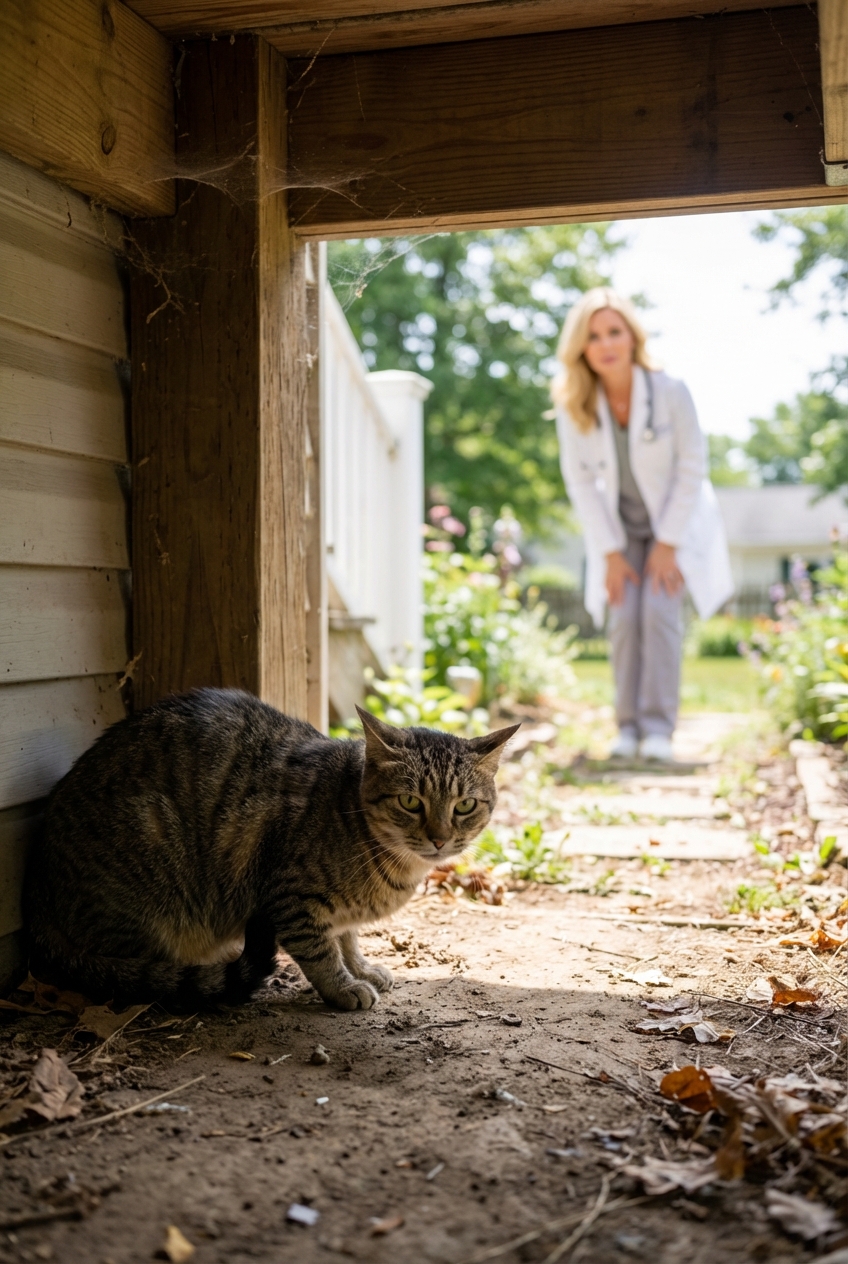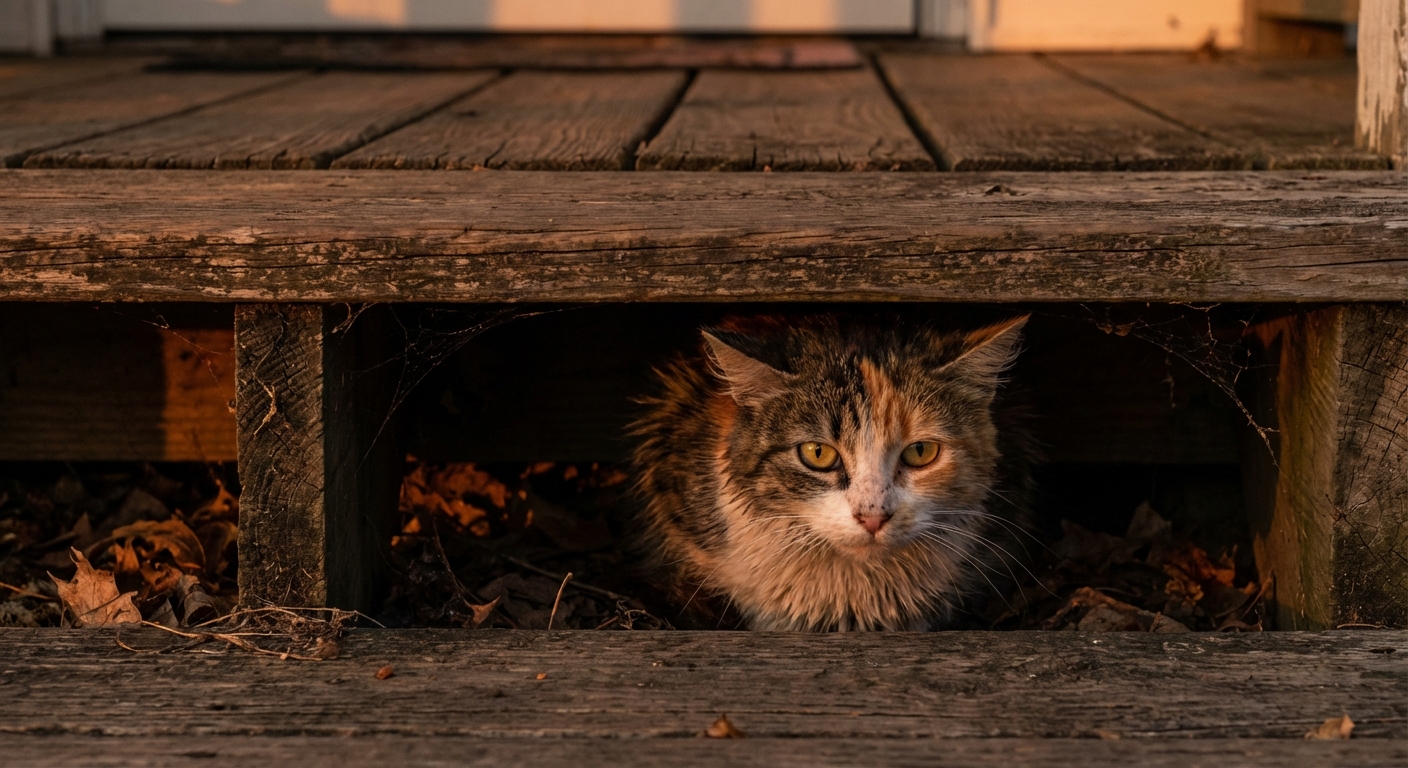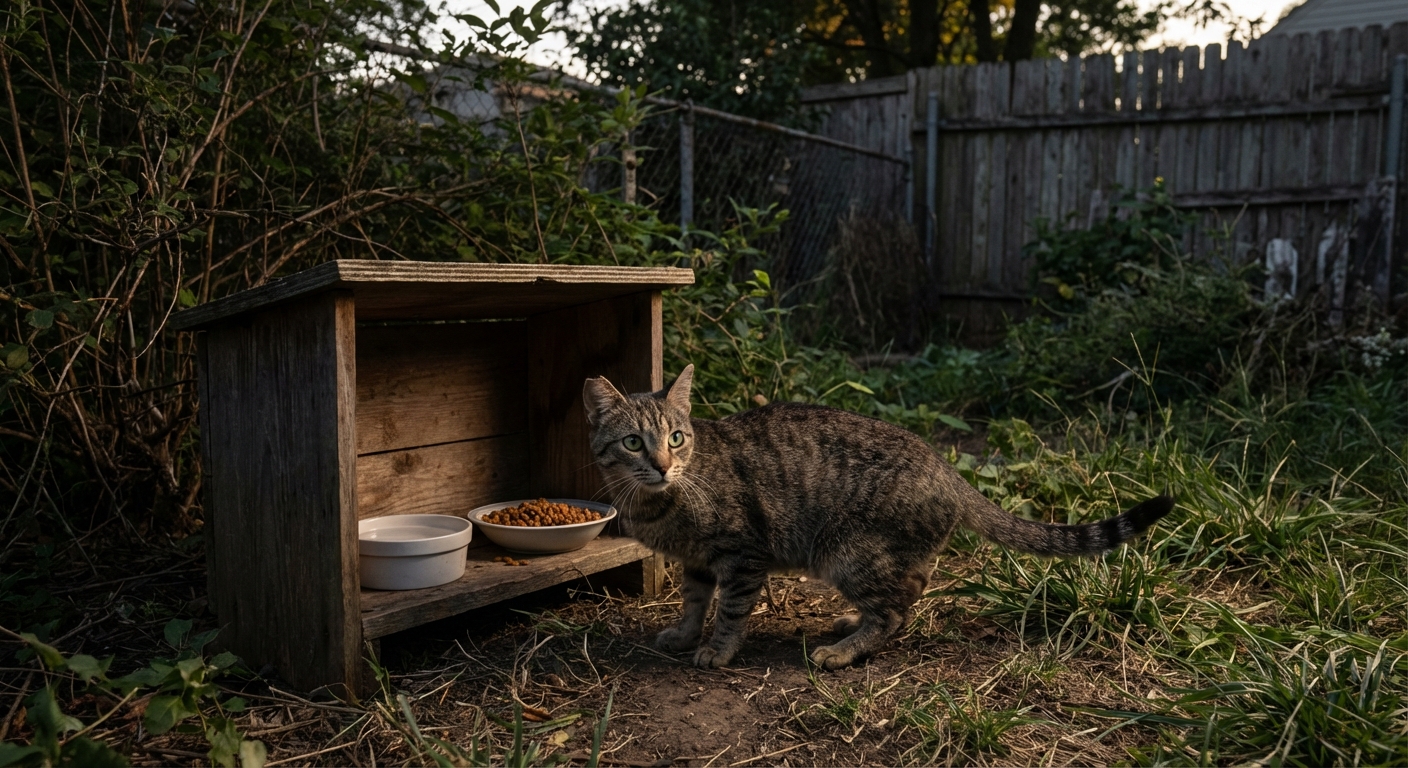
A practical, evidence-based guide to caring for feral cats: how to tell feral vs. stray, stay safe, plan TNR, trap and transport, post-op recovery, feeding, ...
Article
•
Designer Mixes
Feral Cats: Definition, Overview, and Care

Shari Shidate
Designer Mixes contributor
As a veterinary assistant here in Frisco, Texas, I meet a lot of cats with very different life stories. One of the most misunderstood groups is feral cats. People often mean well, but the right help for a feral cat is not always the same as the right help for a friendly stray.
This guide gives a clear, evidence-based definition of what “feral” means, how feral cats live, and what humane care can look like in real life.
Definition of a feral cat
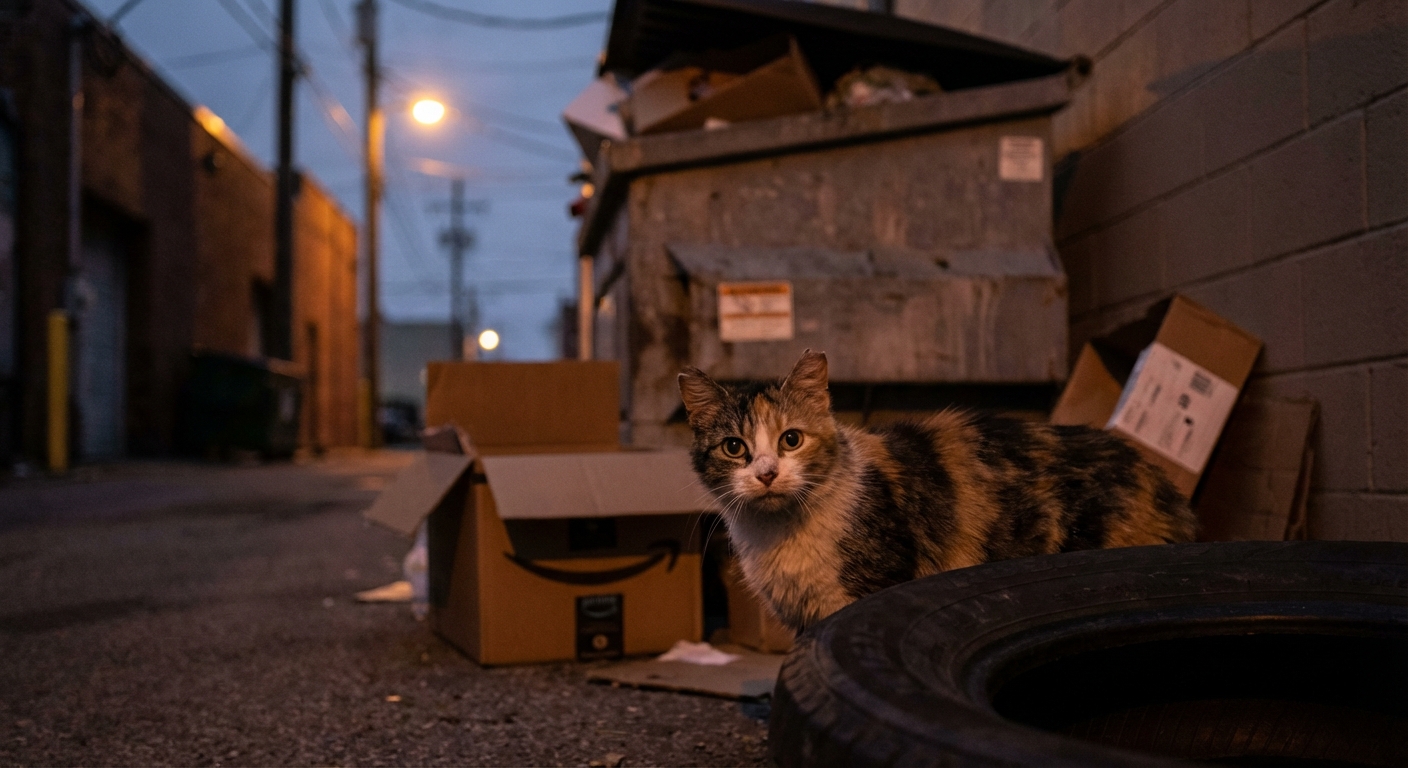
A feral cat is a domestic cat (Felis catus) that lives outdoors and is not socialized to people, meaning they are fearful of human contact and generally cannot be handled safely like a pet cat.
Feral cats are different from:
- Stray cats: previously socialized to humans, may approach people, may be able to transition back to indoor life.
- Community cats: an umbrella term for free-roaming cats, including both feral and stray cats, that may be cared for by neighbors.
In a veterinary setting, the most practical way to define “feral” is behavioral: a feral cat typically cannot be safely touched, examined, or transported without a humane trap or secure carrier, plus careful handling protocols.
Feral vs. stray: quick signs
You cannot be certain from a single interaction, but these common patterns help:
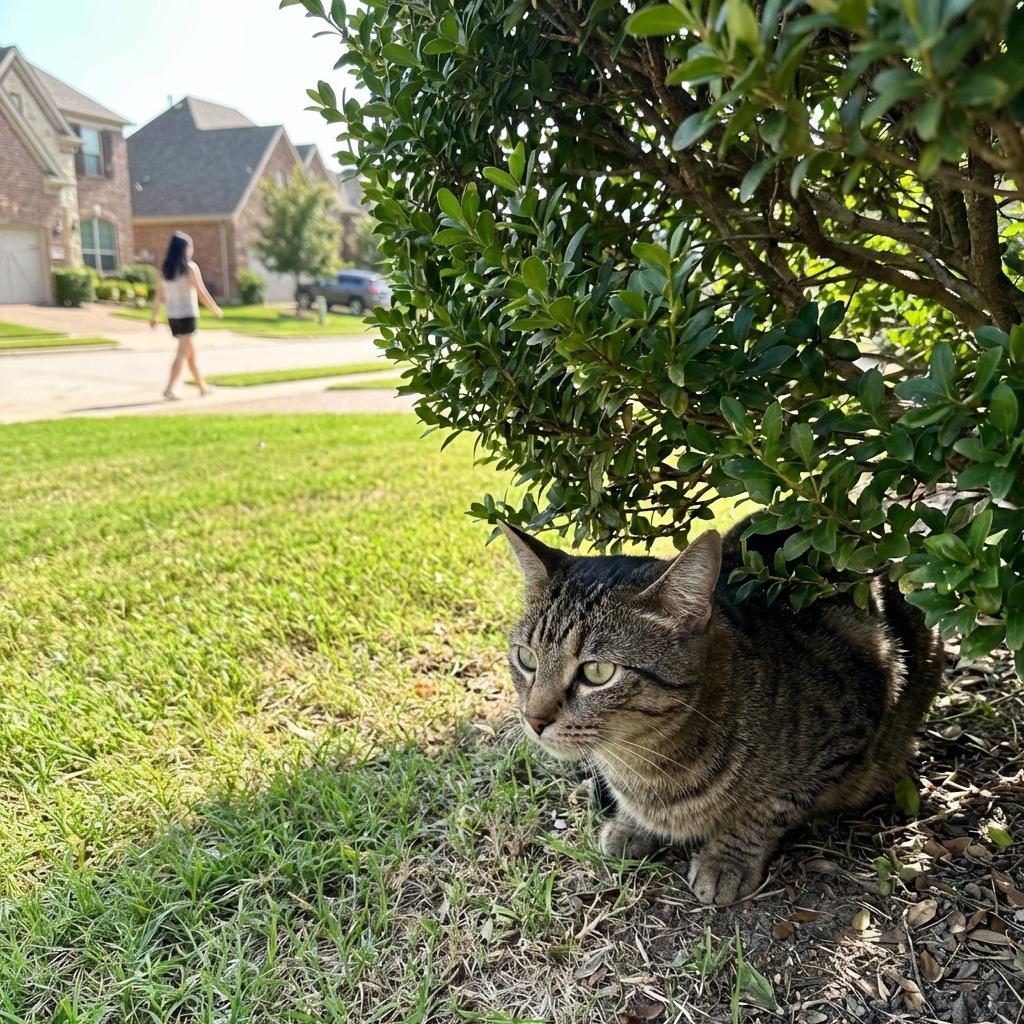
- Approach behavior: Strays may come closer for food; ferals usually keep distance and watch from cover.
- Body language: Ferals often crouch low, freeze, hiss, or bolt quickly; strays may meow, rub objects, or show curiosity.
- Time of activity: Ferals often appear at dawn, dusk, or night; strays may be out during the day near people.
- Coat condition: Not a sure sign. Some ferals look clean and healthy, especially in managed colonies.
If you are unsure, assume the cat is fearful and prioritize safety. A scared cat can bite or scratch even when you are trying to help.
How colonies work
Feral cats often live in loose social groups called colonies where food and shelter are available. Colonies are usually centered around:
- Reliable food sources (dumpsters, feeders, restaurants, well-meaning neighbors)
- Safe hiding spots (brush, sheds, crawl spaces, abandoned structures)
- Warmth (parking lots, outdoor HVAC units, barns)
Some cats are highly bonded; others keep their distance. The key point is this: outdoor life brings real, ongoing risks like parasites, injuries, infectious disease, predators, cars, and extreme weather. In well-managed colonies, some cats maintain good body condition, but the environment is still hard on them.
Why it matters for health
People worry about wildlife, public health, and neighborhood conflict. Those concerns are real, and they are exactly why thoughtful, humane management matters.
Population growth is fast
Unspayed and unneutered cats can reproduce quickly. Kittens can become pregnant as early as around 4 to 6 months. Without intervention, colonies can expand and suffering increases.
Disease risk and facts
Common concerns include rabies (rare but serious), upper respiratory infections, intestinal parasites, fleas, and feline viruses like FIV and FeLV. The most realistic community-level tools are vaccination during sterilization programs, parasite control where possible, and reducing fighting through neutering.
Two quick clarity points that help reduce fear-based assumptions:
- FIV is most commonly spread through deep bite wounds, which is one reason reducing fighting through neutering helps.
- FeLV is more associated with prolonged close contact (like mutual grooming, shared bowls in tight quarters, and mother-to-kitten transmission). Risk varies by colony and behavior.
Humane care: TNR basics
One of the most widely used, humane strategies for feral cats is Trap-Neuter-Return (TNR). It is commonly recommended by many shelter medicine programs and veterinary and community cat organizations, and it may be supported differently depending on the city, county, or facility.
In TNR, cats are:
- Humanely trapped
- Spayed or neutered by a veterinarian
- Vaccinated (often rabies, sometimes FVRCP depending on program)
- Ear-tipped (a small removal of the tip of one ear performed under anesthesia as a visible sign the cat is sterilized; most cats recover quickly)
- Returned to their outdoor home when they are not socialized and adoption is not appropriate
Why many programs prioritize TNR:
- Reduces births, which reduces suffering over time
- Decreases nuisance behaviors like yowling, spraying, and fighting
- Can help reduce the “vacuum effect” when most cats in the area are sterilized and the site is managed (consistent feeding schedule, monitoring, and discouraging abandonment)
One of the kindest things you can do for a feral cat is prevent the next litter from being born into the same hard outdoor life.
Day-to-day care
If you are caring for feral cats, consistency and cleanliness make a huge difference.
Feeding
- Feed on a schedule (same time daily). This helps with monitoring and makes trapping easier for TNR.
- Use measured portions and pick up leftovers after 30 to 60 minutes to avoid attracting wildlife.
- Provide fresh water daily. In freezing weather, use heated bowls when possible.
If wildlife is a concern, keep feeding times short, avoid feeding near creeks or natural areas, and keep the site clean.
Shelter
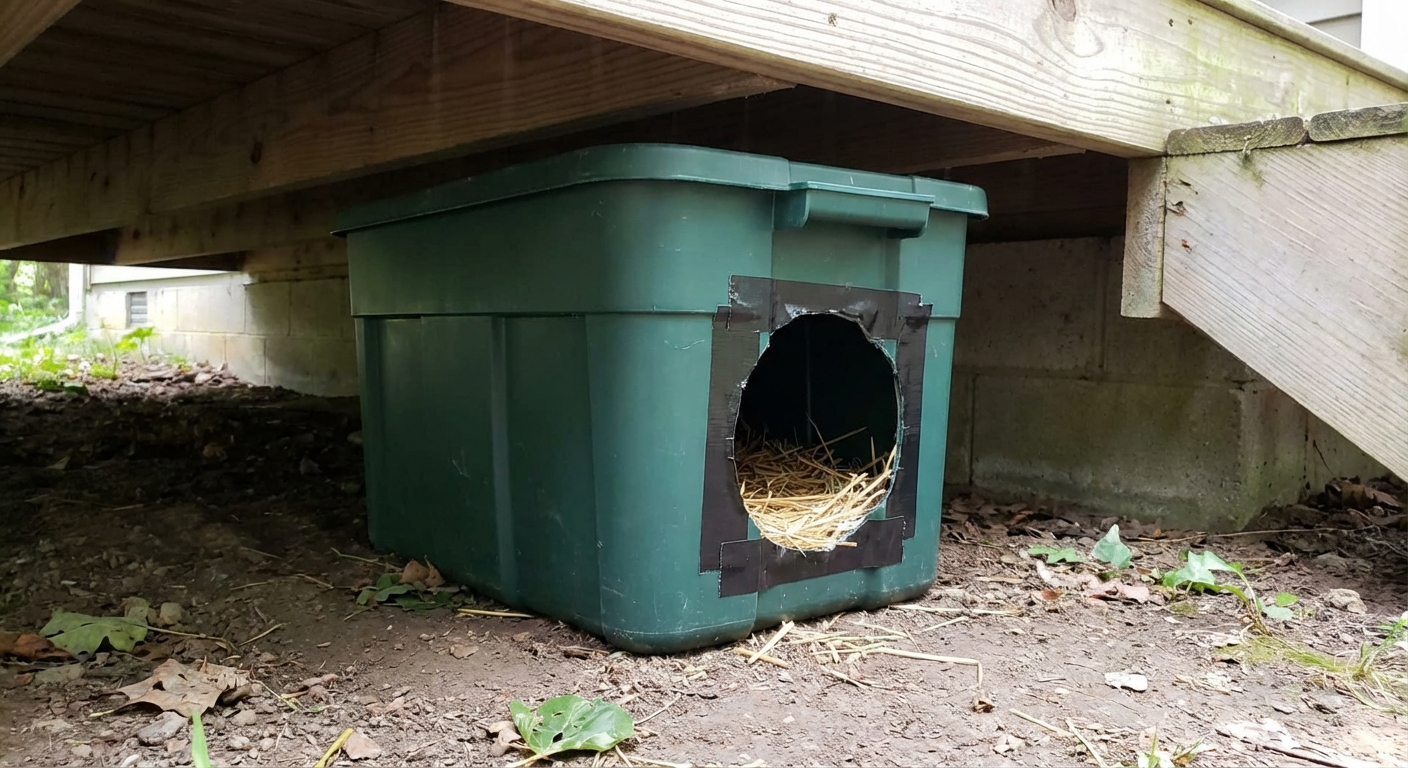
- Insulated shelters help cats survive heat and cold. Straw (not blankets) is often recommended for winter insulation because it resists moisture better.
- Place shelters discreetly, out of heavy foot traffic, with entrances facing away from wind.
In North Texas summers, shade and airflow matter as much as warmth in winter. Place shelters where they stay dry and out of direct afternoon sun.
Sanitation
- Keep feeding areas tidy.
- Use a simple ground cover or feeding station that can be rinsed.
- Wear gloves when cleaning, and wash hands afterward.
What not to do
- Do not try to grab a feral cat. This is a common cause of serious bites and scratches, and it increases the cat’s fear.
- Do not relocate unless you are working with an experienced organization. Relocation often fails because cats try to return, get injured, or the area has no stable resources.
- Do not separate kittens from mom too early. If kittens are very young, the best outcome often involves planning: assess age, involve a rescue, and use a trap plan to help the whole family.
- Do not “just feed” without a sterilization plan. Feeding alone can unintentionally increase colony size.
- Do not use poisons or harmful deterrents. They are dangerous to pets, wildlife, and people, and they can be illegal depending on the situation and product.
When vet care is needed
Some situations should trigger immediate action and professional help:
- Labored breathing, open-mouth breathing, or blue gums
- Severe limping, dragging a limb, or a visible fracture
- Large wounds, abscesses, or heavy bleeding
- Not eating for more than 24 hours (especially if also lethargic)
- Neurologic signs like circling, seizures, severe disorientation
- Eye injuries, severe squinting, or pus-like discharge
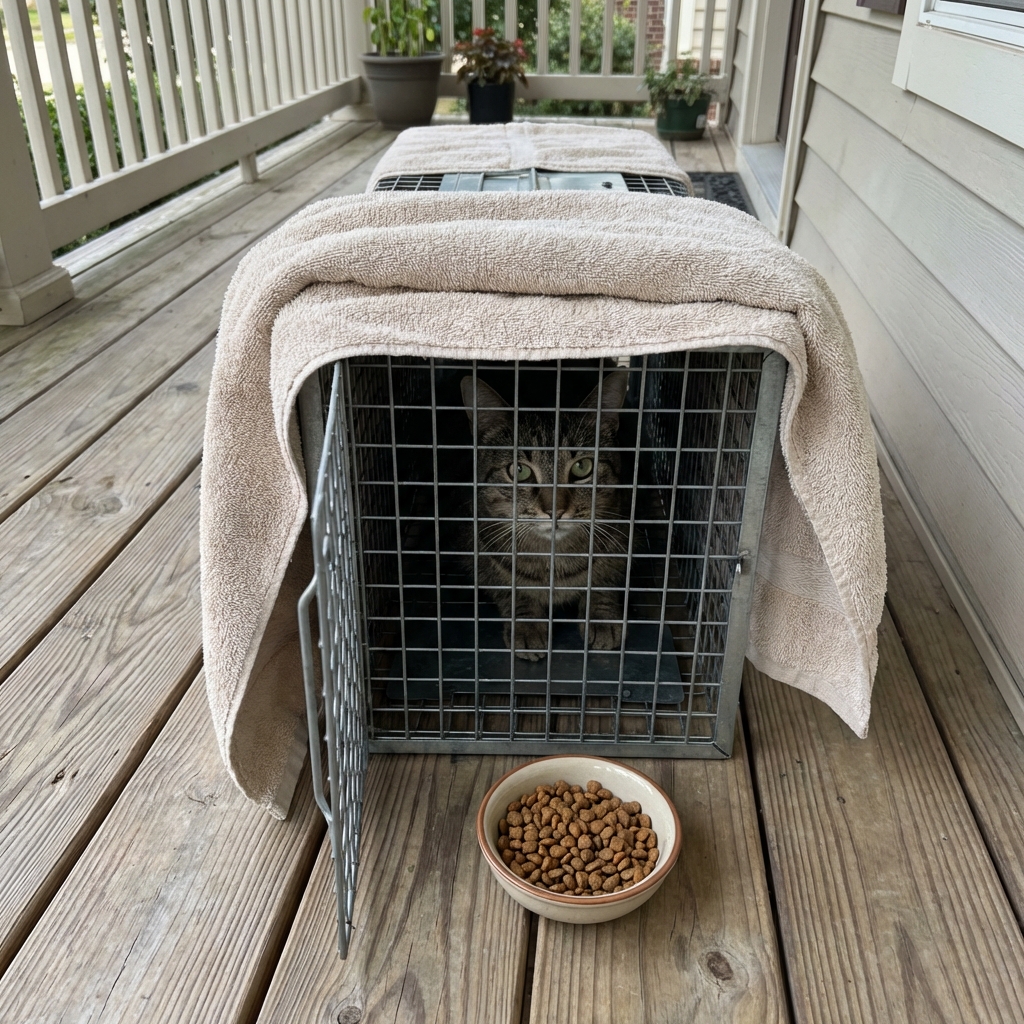
How to help safely: use a humane trap, keep it covered with a towel to reduce stress, and transport the cat in the trap to a clinic or TNR partner. Call ahead so the team is prepared. In our area, many clinics schedule community cat appointments on specific days, so planning ahead can save you a lot of stress.
Safety and legal note: if a cat is acting unusually aggressive, disoriented, or you suspect rabies exposure, contact animal control or a local rescue partner for guidance before attempting to handle or transport.
Rabies note: if you are bitten or scratched deeply, wash the wound thoroughly and contact a medical professional promptly. Report the incident as required by your local health authority.
Kittens and socialization
Kittens are often the most adoptable part of a colony, especially if they are brought into foster care early enough for gentle socialization. Older kittens can still improve with experienced handling, but it takes more time and consistency.
Some adult cats are not fully feral. They may be under-socialized or lost pets acting fearful. If an adult cat shows friendly behaviors after a quiet settling period, a rescue group may recommend a different plan than return.
Owned outdoor cats
Not every free-roaming cat is feral. Some are owned cats that are allowed outdoors. If you can do so safely and legally in your area, look for:
- A collar and ID tag (not all owned cats wear one)
- Neighborhood posts and lost pet listings
- A microchip check during trapping, through a vet, shelter, or rescue partner
If a cat is truly friendly, avoid assuming they are “abandoned” without checking. If a cat is fearful, treat them as feral for safety until proven otherwise.
After surgery: recovery basics
Always follow the specific protocol from the clinic or TNR program, but general recovery basics usually include:
- Keep the cat in the trap or an approved transfer cage for recovery. Do not open the trap to “comfort” them.
- Hold cats in a quiet, temperature-controlled area.
- Typical hold times vary by program and situation, but many clinics recommend a short monitoring period after surgery, often longer for spays than neuters.
- If something looks wrong (heavy bleeding, extreme lethargy, trouble breathing), call the clinic right away.
Harmony with neighbors
Community cat situations can get emotional fast. A calm plan helps everyone.
- Communicate: let neighbors know you are doing TNR and keeping areas clean.
- Reduce nuisance: neutering is the biggest solution. Also place feeding stations away from property lines.
- Protect gardens: use motion-activated sprinklers, physical barriers, or approved deterrents in sensitive areas.
When the colony is fixed, vaccinated, and monitored, you tend to see fewer complaints and healthier cats.
Simple action plan
- Observe from a distance for 3 to 7 days. How many cats? Any kittens? Any urgent medical issues?
- Start a feeding schedule and provide water.
- Contact a local TNR group or shelter that supports community cats. Ask about low-cost spay and neuter and trap loans.
- Plan your trapping day with clear steps: where traps go, who transports, where surgeries happen, recovery space.
- After TNR, monitor weekly for new arrivals, injuries, or illness.
If you take one thing from this article, let it be this: go slowly, stay safe, and build a plan that reduces suffering long-term.
References
- American Veterinary Medical Association (AVMA): Free-roaming cats and community cat management guidance (see AVMA policy and resources)
- UC Davis Koret Shelter Medicine Program: Community cat resources and field protocols
- Alley Cat Allies: TNR best practices, ear-tipping, colony care
- ASPCA: Community cat and TNR education resources
- CDC: Rabies exposure guidance