Turn chicken and rice into a more balanced homemade dog meal with veggies, calcium carbonate, and omega-3s. Includes gram weights, portion guidance, swaps, a...
Article
•
Designer Mixes
Fatty Tumors (Lipomas) in Dogs: Should You Worry?

Shari Shidate
Designer Mixes contributor
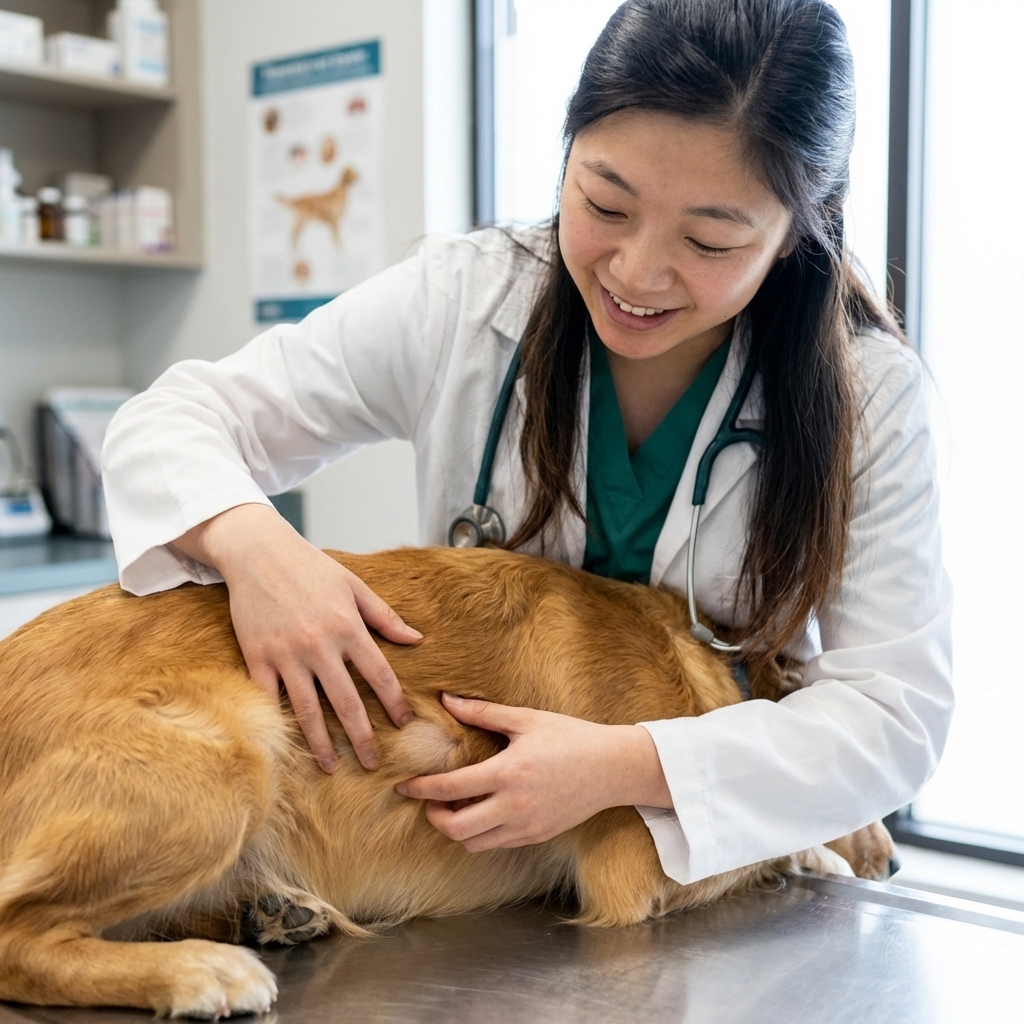
Finding a new lump on your dog can make your stomach drop. I get it. In the clinic, “Is this cancer?” is usually the first question pet parents ask. The reassuring news is that many lumps are lipomas, which are common, benign fatty tumors in dogs. But here is the important truth: you cannot confirm a lipoma just by looking or feeling. The safest plan is to have any new lump checked by your veterinarian and, in many cases, sampled with a quick needle test.
What is a lipoma?
A lipoma is a typically benign growth made up of fat cells that forms under the skin. You can think of it as a little pocket of fatty tissue that grows in a localized spot. Lipomas are especially common in middle-aged to senior dogs.
There are a few related types you may hear about:
- Simple lipoma: The most common type. Usually soft, movable, and slow-growing.
- Infiltrative lipoma: Still considered benign (it does not usually spread to distant organs), but it can grow into nearby muscle or connective tissue, making removal more complicated.
- Liposarcoma: A rare malignant tumor of fatty tissue. This is one reason we do not want to assume every “fatty lump” is harmless without testing.
How to identify a lipoma at home (and what you cannot know)
Many lipomas have a familiar feel:
- Soft or doughy under the skin
- Movable when you gently nudge it (not firmly attached)
- Painless when touched
- Slow changes over weeks to months
- Often found on the chest, belly, flanks, or upper legs
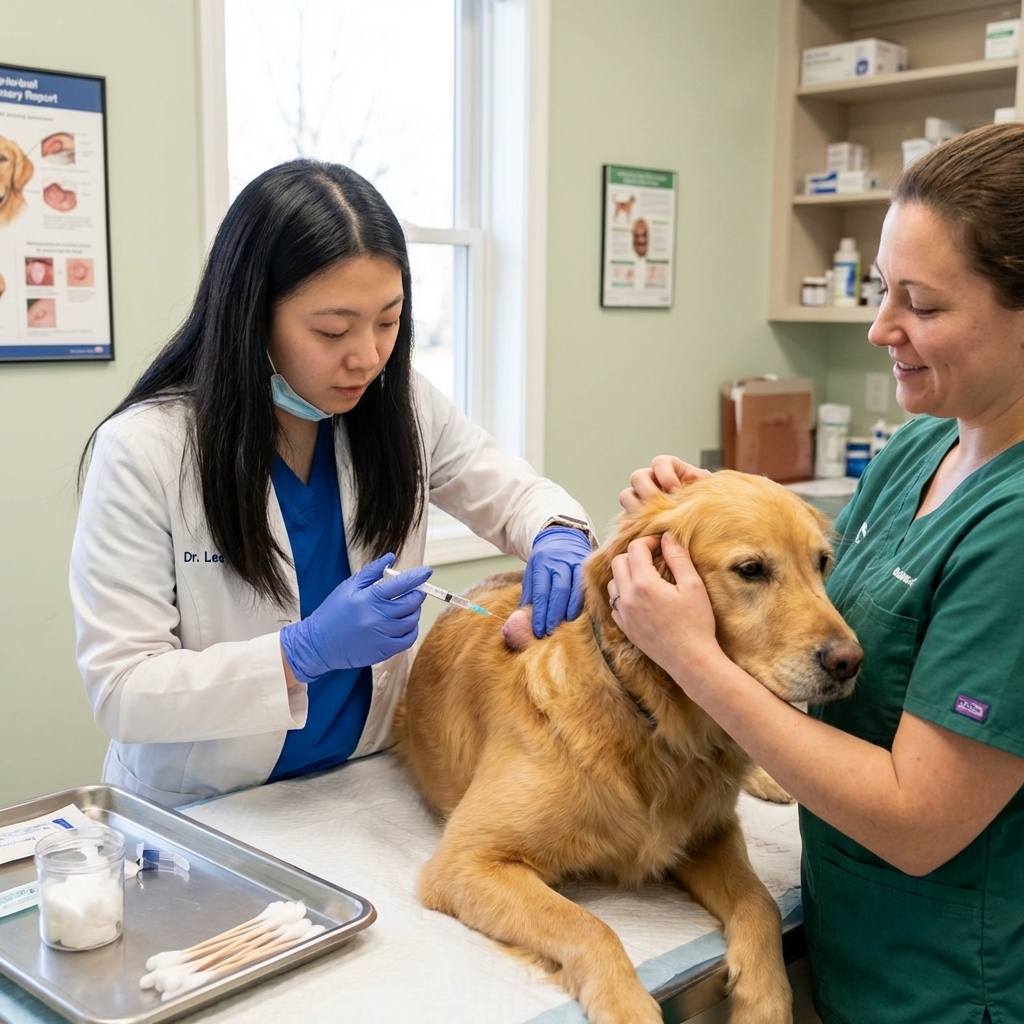
But here is the key: other tumors can feel similar, especially early on. That is why veterinarians often recommend a fine needle aspirate (FNA), which is a quick, minimally invasive way to collect cells for evaluation. It can often be done in the exam room.
Harmless vs. concerning: when to call the vet quickly
Most lipomas are not emergencies. Still, any new lump deserves a veterinary visit, and some situations deserve a faster appointment.
Usually consistent with a simple lipoma
- Soft, squishy, and freely movable
- Not bothering your dog
- Skin over it looks normal (no redness, scabbing, or oozing)
- Stable size or very gradual growth
More concerning signs (do not wait)
- Fast growth over days to weeks
- Firm, irregular, or fixed in place
- Redness, heat, pain, discharge, or ulceration on the skin
- Located where it interferes with walking (armpit, groin, inner thigh) or seems to limit movement
- New lumps popping up rapidly, or your dog seems sick (lethargy, appetite changes)
- Any lump in a dog with a history of cancer or prior malignant tumors
If you only remember one thing: Get the lump sampled. It is often quick, affordable compared to surgery, and can bring huge peace of mind.
How fast do lipomas grow?
Lipoma growth is frustratingly variable. Many grow very slowly and stay small for years. Others can enlarge steadily over time, especially in dogs that develop multiple lipomas.
General expectations:
- Slow growth is common: subtle changes over months.
- Growth spurts can happen: sometimes you notice it “suddenly,” but it may have been gradually enlarging under a thick coat.
- Rapid growth is a red flag: it does not automatically mean cancer, but it should be checked promptly.
Also keep in mind: a lipoma can feel larger as your dog gains weight, because there is more surrounding fat. That does not replace proper testing, but it can affect what you notice at home.
Monitoring a lipoma at home (simple size tracking that helps your vet)
If your veterinarian confirms a lipoma (or suspects one and recommends monitoring), tracking it is smart and empowering.
Easy at-home monitoring tips
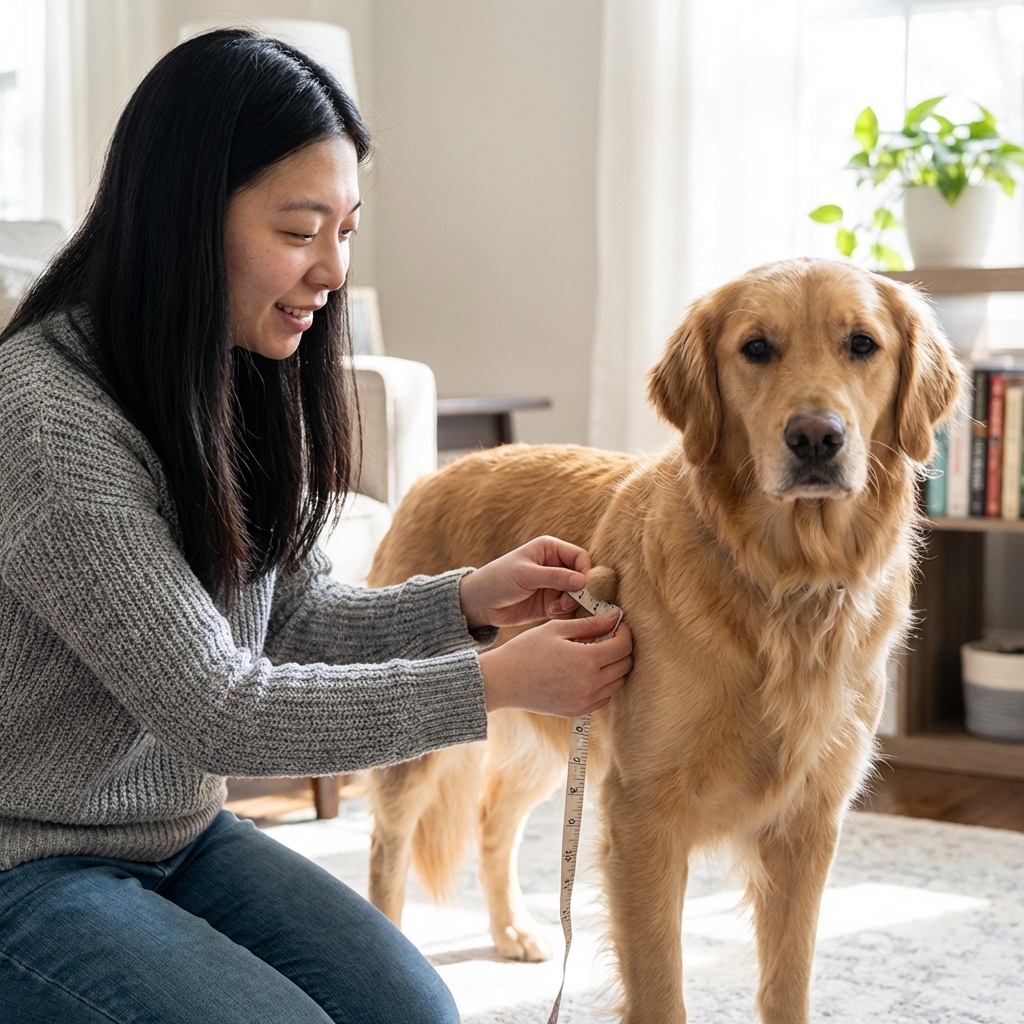
- Pick a schedule: check it every 2 to 4 weeks.
- Use a soft measuring tape or a ruler and measure the lump’s widest point in centimeters (cm).
- Take a photo from the same angle and distance each time, with your hand nearby for scale.
- Make a lump log: date, location (example: “right chest behind elbow”), and size.
- Note behavior changes: licking at it, sensitivity, limping, trouble jumping.
Call your vet if you notice:
- Noticeable growth between checks
- Change from soft to firm
- Skin changes (redness, scabs, drainage)
- Any new lumps near the original
When is surgical removal recommended?
Many lipomas can be left alone if they are confirmed as benign and not causing problems. Surgery becomes more worth discussing when a lump affects comfort, function, or future options.
Your vet may recommend removal if:
- The lump is growing steadily and likely to become harder to remove later
- It is in an awkward spot (like the armpit, groin, or near joints) and limits movement
- Your dog is chewing or licking at it
- It is suspected to be an infiltrative lipoma
- The FNA results are inconclusive or do not clearly indicate a simple lipoma
- There is concern for a different tumor type that requires biopsy
Practical note from the clinic side: if your dog is otherwise healthy, removing a smaller lump earlier can be easier than removing a very large one later, especially in high-motion areas.
Breed predispositions and risk factors
Lipomas can happen in any dog, including mixed breeds. That said, we see them more often in certain dogs, especially as they age.
Breeds commonly reported with lipomas
- Labrador Retriever
- Golden Retriever
- Dachshund
- Doberman Pinscher
- Weimaraner
- Cocker Spaniel
- Miniature Schnauzer
Age is a big factor (middle-aged and senior dogs). Being overweight is often associated with lipomas too. Weight loss does not usually make a lipoma disappear, but keeping your dog lean can help overall comfort and can make monitoring lumps easier.
Diagnosis: how vets confirm a lipoma
At your visit, your veterinarian will likely:
- Do a full physical exam and feel the lump’s size, mobility, and depth
- Recommend a fine needle aspirate (FNA) to look at cells under a microscope
- Suggest additional steps if needed: biopsy, imaging (like ultrasound), or surgical removal for definitive diagnosis
FNAs are not perfect. Some samples are non-diagnostic, especially if a lump has mixed tissue or deeper components. If results are unclear, your vet may recommend repeating the aspirate or proceeding to biopsy.
Bottom line: should you worry?
It is completely normal to worry. Many fatty tumors are benign lipomas, and many dogs live happily for years with them. The best way to trade fear for clarity is to do two things:
- Get new lumps checked and sampled when recommended.
- Monitor confirmed lipomas with simple measurements and photos.
If you are staring at a new “fatty lump” right now, take a breath and schedule the visit. You are doing the right thing for your dog.
Quick questions to ask your vet
- Should we do an FNA today, or monitor first?
- Does the lump’s location affect mobility or future removal?
- How often do you want me to measure it at home?
- At what size or change should I call you back?
- Is this consistent with a simple lipoma, or could it be infiltrative?