
Farmer’s Dog–Style Homemade Dog Food: Simple Copycat Meals

If you have been eyeing fresh, subscription-style dog food (the kind that shows up in a cooler box), you are not alone. I am a veterinary assistant in Frisco, Texas, and I talk with pet parents every week who want the benefits of fresh food without the subscription price tag.
This page is here to help you make simple, “Farmer’s Dog–style” homemade meals at home using real, recognizable ingredients. Important note: this is not The Farmer’s Dog brand, not a replica of their exact formulas, and not a substitute for a veterinarian-formulated therapeutic diet.
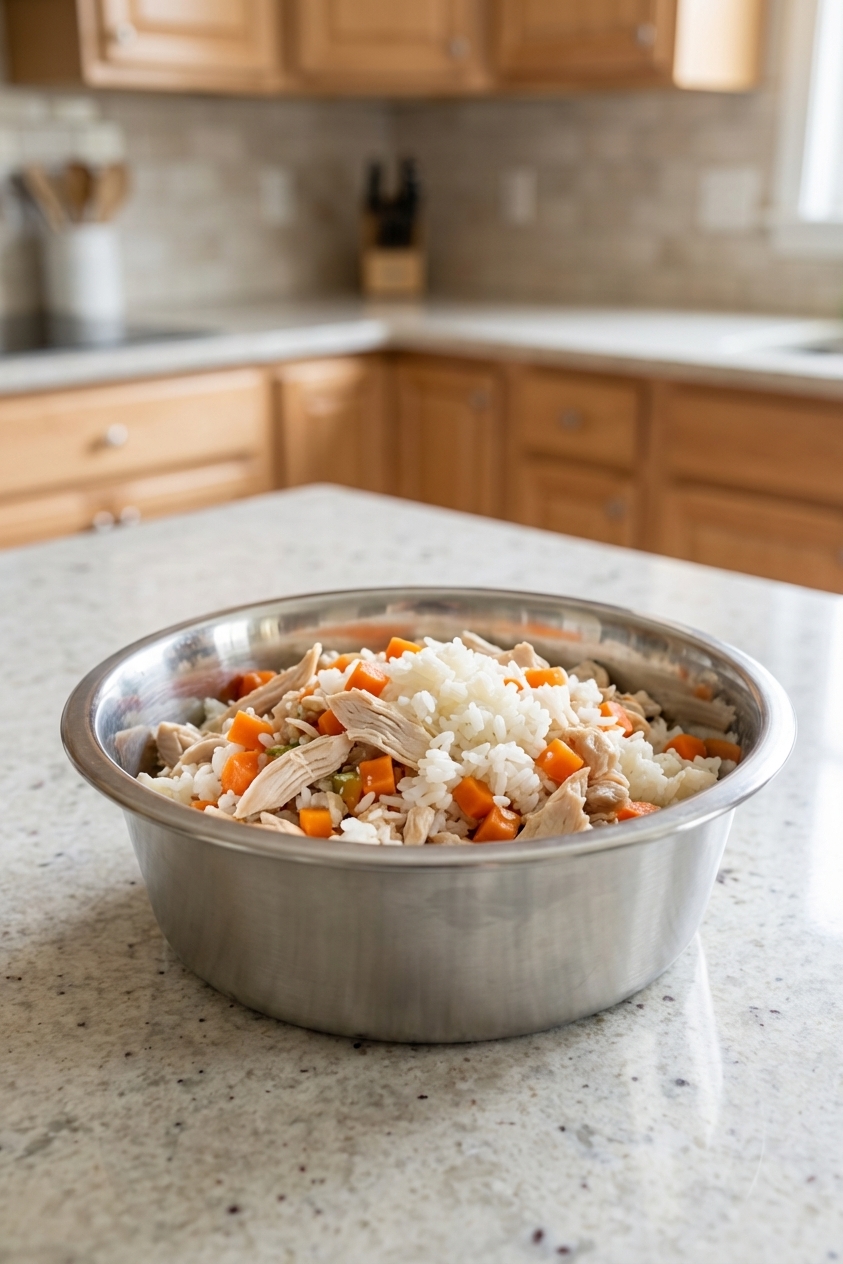
Fresh meals vs kibble: what is actually different?
Kibble can be convenient and complete when it is a well-made, AAFCO-compliant food. Fresh meals, when done correctly, can offer benefits like higher moisture and simpler ingredient lists. The difference is not just marketing. It is mainly about processing and water content.
Key differences most families notice
- Moisture: Fresh meals are typically much higher in water than kibble. That can be helpful for some dogs who do not drink much.
- Processing: Kibble is usually extruded at high heat and pressure. Fresh cooked meals are generally gently cooked and then chilled or frozen.
- Ingredient visibility: With fresh food, you can actually see the protein, vegetables, and starch. That can make it easier to avoid ingredients your dog does not tolerate.
- Palatability: Many picky eaters do better with warm, fresh-smelling food.
One important reality check
Fresh food is not automatically “balanced.” Balance comes from meeting nutrient requirements over time, especially calcium, essential fatty acids, and key vitamins and trace minerals. That is why I include a simple “balanced basics” approach below, and why I encourage a veterinary nutritionist for long-term feeding.
The balanced basics: an easy ratio you can remember
For many healthy adult dogs, a simple starting point for homemade cooked meals is:
- 50% protein (cooked meat, poultry, fish, or eggs)
- 25% vegetables (cooked and chopped small)
- 25% starch (cooked rice, oats, quinoa, sweet potato, or potato)
Plus two non-negotiables if you are feeding homemade as more than an occasional topper:
- Calcium source: Homemade diets are often calcium-deficient unless you intentionally add it. Many people use finely ground eggshell powder or a veterinary calcium supplement. Calcium needs are very individual, so this is a “talk to your vet” moment.
- Essential fats: A small amount of fish oil or a dog-appropriate omega-3 source is commonly used to help meet EPA and DHA needs. Your vet can help you choose a dose.
Quick measuring note (it matters)
When you move beyond “toppers” and start trying to build full meals, measuring ingredients by weight (grams or ounces) is much safer than measuring by cups. Volume changes a lot depending on how finely something is chopped, how tightly it is packed, and how much water it absorbed during cooking.
Another nutrition reality check
Long-term balanced homemade diets usually include organ meats (often small amounts of liver) for essential vitamins and minerals. Organ meat is powerful stuff and it is easy to overdo, which is another reason a veterinary nutritionist is the best next step before homemade becomes the main diet.
My warm-and-practical advice: If you are not ready to do supplements yet, use these meals as a topper (for example 25 to 50% of the bowl) while you learn. Balanced nutrition matters most when homemade becomes the entire diet.

Portion thinking: how much should you feed?
There is no single perfect number because calorie needs change with age, breed, activity, and whether your dog is spayed or neutered. That said, here is a reasonable way to think about portions without getting overwhelmed.
Step 1: Start with calories, then adjust
A common maintenance range for many adult dogs is roughly 25 to 35 calories per pound of body weight per day. This tends to be a decent baseline for many medium-sized dogs. Toy breeds often need more calories per pound, and giant breeds typically need fewer calories per pound than you might expect. Athletic dogs may need more, couch potatoes may need less. Puppies need a puppy-specific plan.
Step 2: Watch the “3-week feedback loop”
- Weigh your dog weekly for 3 weeks.
- Check body condition: you should be able to feel ribs with a light fat cover and see a waist from above.
- If weight is creeping up, reduce portions by about 10%. If weight is dropping and your dog seems hungry, increase by about 10%.
Step 3: Keep treats in the budget
Treats can quietly add a lot of calories. A smart rule is to keep treats at 10% or less of daily calories when possible.
4 simple “copycat” fresh meals (stove or Instant Pot)
These recipes are designed to be easy, repeatable, and gentle for most dogs. They are not therapeutic diets. If your dog has kidney disease, pancreatitis, food allergies, bladder stones, diabetes, or heart disease, skip the DIY guessing and involve your veterinarian first.
How to use these recipes: Each meal below follows the 50% protein, 25% veg, 25% starch framework. You can cook a batch, portion it, and rotate proteins week to week for variety.
Measuring tip: I list “mixing ratios” below as a simple visual. For best accuracy (especially if homemade is becoming more than a topper), measure ingredients by weight instead of cups.
Meal 1: Chicken, carrots, and rice comfort bowl
Protein: boneless skinless chicken thighs or breasts
Vegetables: carrots and green beans (both cooked)
Starch: white or brown rice
- Stovetop: Poach chicken in water until fully cooked. Steam carrots and green beans. Cook rice separately.
- Instant Pot: Cook chicken with a cup of water on high pressure (time depends on cut). Cook rice separately to keep texture predictable.
- Mixing ratio (simple visual): 2 parts chopped chicken, 1 part veggies, 1 part cooked rice.
Gentle add-ins: a spoonful of plain pumpkin for stool support, or a small drizzle of salmon oil (ask your vet for dosing).
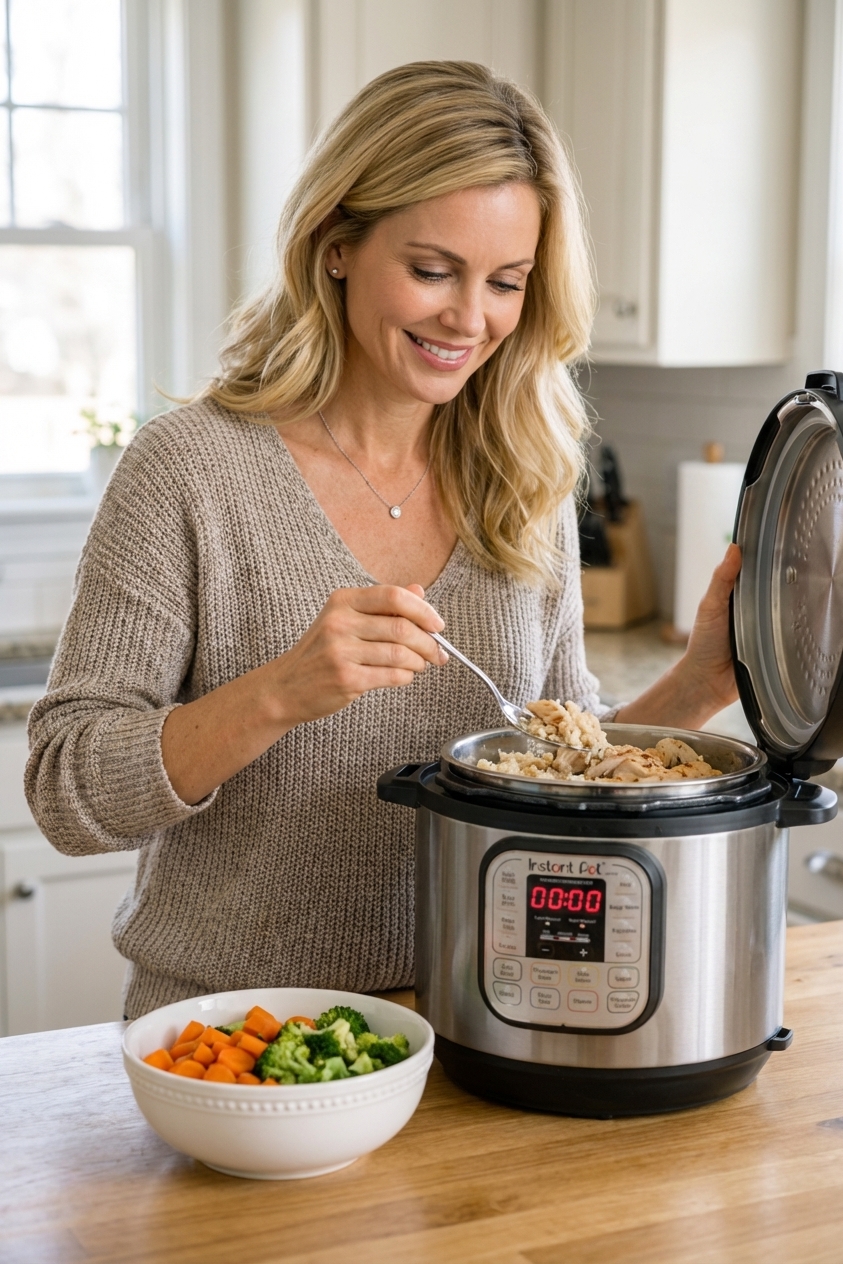
Meal 2: Turkey, spinach, and sweet potato
Protein: lean ground turkey
Vegetables: spinach (lightly cooked) and zucchini
Starch: baked or steamed sweet potato
- Stovetop: Brown turkey in a skillet, drain excess fat. Lightly saute zucchini, then wilt spinach at the end.
- Instant Pot: Pressure cook sweet potatoes whole, then mash. Cook turkey separately for better texture and food-safety control.
- Mixing ratio (simple visual): 2 parts turkey, 1 part veg, 1 part sweet potato.
Tip from my clinic life: If your dog has a sensitive stomach, keep the fat low. Choose lean turkey and avoid butter, cheese, and oily pan drippings.
Meal 3: Beef, broccoli, and oats
Protein: lean ground beef or stew meat (trim fat)
Vegetables: broccoli florets and carrots (cooked until soft)
Starch: rolled oats (cooked plain)
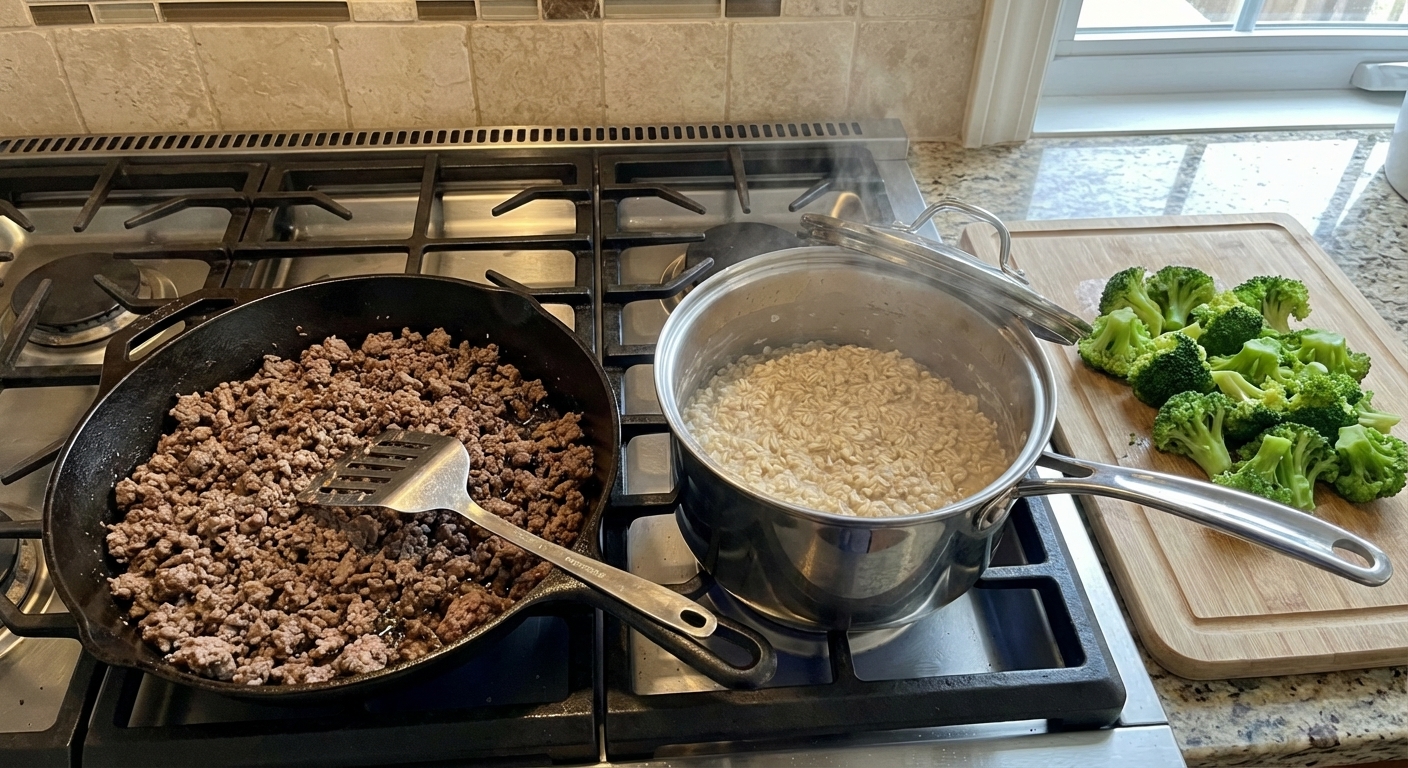
- Stovetop: Cook oats in water until soft. Brown beef and drain. Steam broccoli and carrots until you can easily mash them with a fork.
- Instant Pot: Oats can foam, so stovetop is usually easiest. Use the Instant Pot for steaming veggies if you like.
- Mixing ratio (simple visual): 2 parts beef, 1 part veg, 1 part oats.
Why oats? They are gentle, affordable, and a nice change from rice, especially for dogs that do better with a little more fiber.
Meal 4: Salmon, peas, and quinoa
Protein: salmon filet, fully cooked and flaked (no bones)
Vegetables: peas and chopped cauliflower (cooked)
Starch: quinoa
- Stovetop: Bake or pan-cook salmon until it flakes easily. Simmer quinoa in water. Steam peas and cauliflower until tender.
- Instant Pot: Quinoa cooks beautifully in the Instant Pot. Salmon is usually easiest baked for consistent doneness.
- Mixing ratio (simple visual): 2 parts salmon, 1 part veg, 1 part quinoa.
Omega-3 note: Salmon contains omega-3s, but amounts vary. If you are using fish as the main protein frequently, talk to your vet about balancing iodine, vitamin D, and overall fatty acid intake.
When to involve a veterinary nutritionist
If you want to feed homemade as your dog’s main diet long-term, a board-certified veterinary nutritionist can formulate a recipe specific to your dog’s life stage and health needs. This is especially important if your dog:
- Is a puppy or a senior
- Has kidney disease, pancreatitis, liver disease, diabetes, or a history of bladder stones
- Has multiple food sensitivities or suspected food allergies
- Needs weight loss or has trouble maintaining weight
- Is a giant breed (their mineral balance matters a lot)
Homemade can be wonderful. It just needs to be done with the same care you would want for any family member’s nutrition plan.
Storage and food-safety steps
Fresh food is perishable. These steps help protect your dog and your humans at home.
Cooking safety
- Cook animal proteins thoroughly to safe internal temperatures (for example, poultry should be fully cooked).
- Avoid feeding cooked bones. They can splinter.
- Do not use onions, chives, or large amounts of garlic. Grapes and raisins are also a hard no.
Cooling and storage
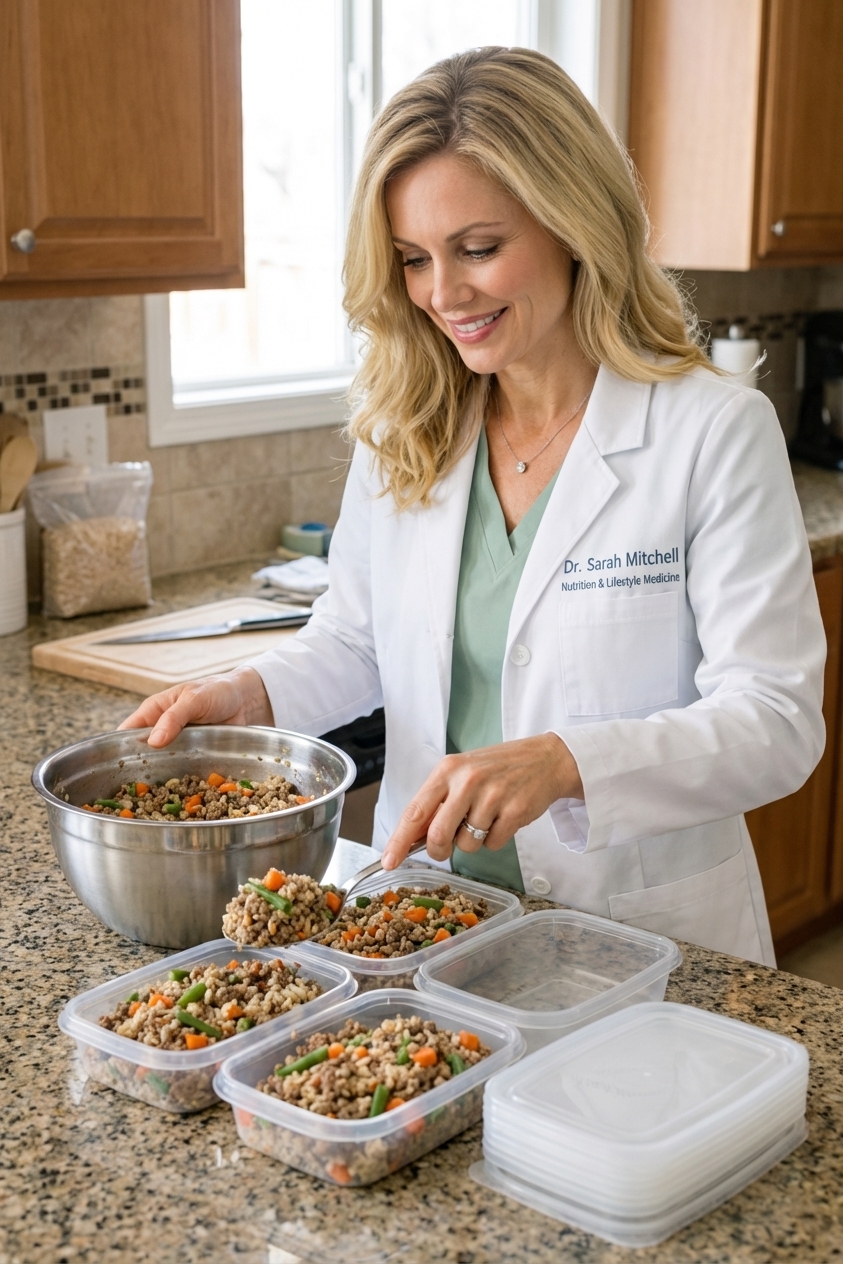
- Cool cooked food quickly. Divide into shallow containers so it chills faster.
- Refrigerate portions you will use within 3 to 4 days.
- Freeze extra portions for up to 2 to 3 months for best quality.
- Label containers with the date and protein used, especially if your dog has sensitivities.
Thawing and serving
- Thaw in the refrigerator, not on the counter.
- Warm gently if desired, but avoid hot spots. Stir well and test temperature before serving.
- Discard any food left out at room temperature for more than 2 hours (less in Texas heat).
Quick FAQs
Can I just copy a subscription recipe I found online?
You can copy the general idea, but be cautious. Many online “recipes” do not include enough calcium or key micronutrients. That is why I recommend using these as toppers unless your vet helps you balance the full diet.
Do I need grains?
Many dogs do well with grains, and they can be a helpful, affordable energy source. If your dog has a medical reason to avoid certain grains, your vet can guide you.
How do I transition from kibble to fresh food?
Go slow. A typical schedule is 25% new food for a few days, then 50%, then 75%, then 100% over 10 to 14 days. If stools loosen, slow down and give the gut time to adjust.
Bottom line
Fresh, “subscription-style” meals can be simple and realistic at home. Start with an easy ratio, keep portions sensible, rotate proteins, and make food safety a priority. If homemade is becoming your dog’s main diet, partnering with your veterinarian or a veterinary nutritionist is one of the kindest, most evidence-based steps you can take.