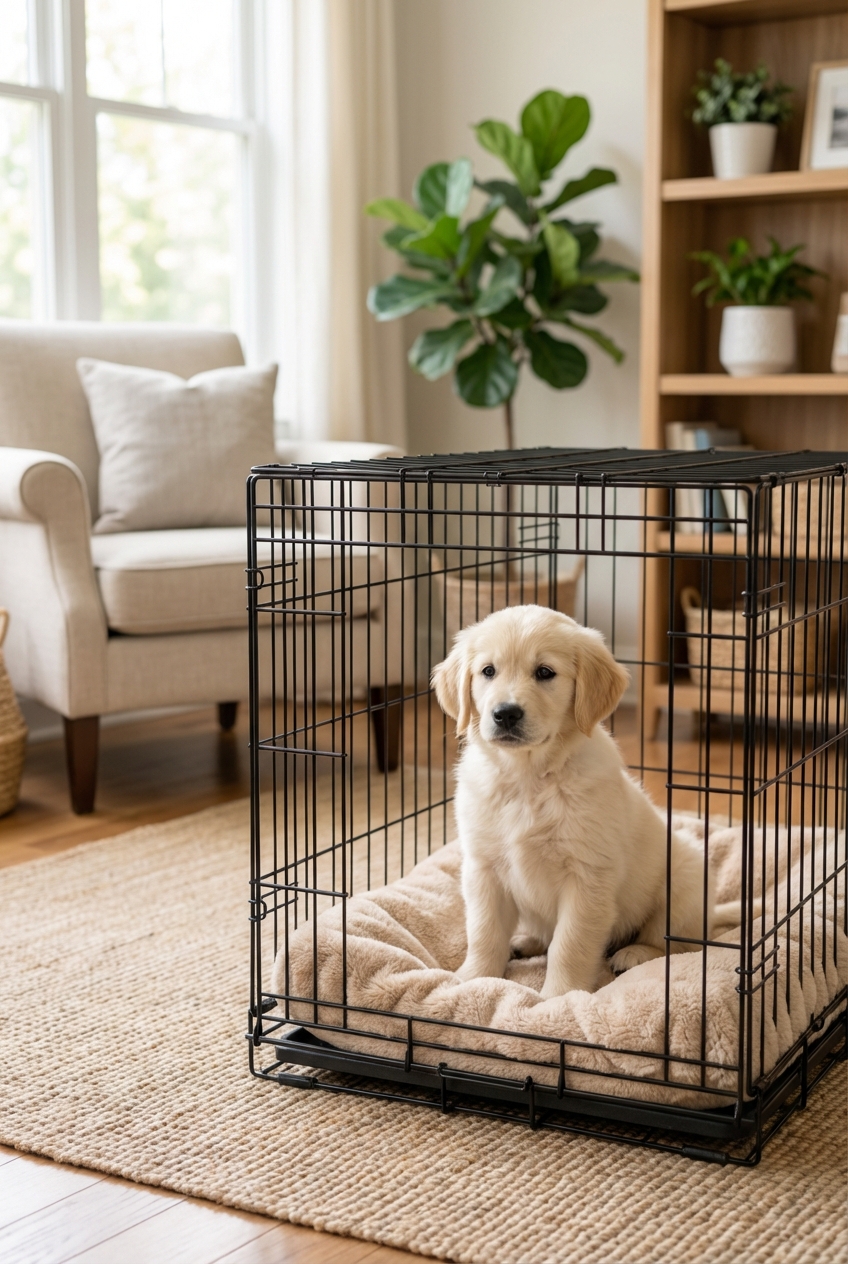
Make the crate a safe, calm “den” with step-by-step schedules for puppies (first 2 weeks) and adult dogs, plus potty timing, nap targets, and gentle fixe...
Article
•
Designer Mixes
Family-Friendly Puppy Crate Training Secrets

Shari Shidate
Designer Mixes contributor
Crate training can feel like a big emotional hurdle, especially when kids are involved and everyone wants to “save” the puppy from whining. But here is the truth I have seen again and again as a veterinary assistant in Frisco, Texas: when a crate is introduced kindly and consistently, it becomes a puppy’s safe place, not a punishment.
The “secret” is not a fancy crate or a strict schedule. It is making the crate predictable, comfortable, and rewarding, while the whole family follows the same simple rules.
Why crate training works
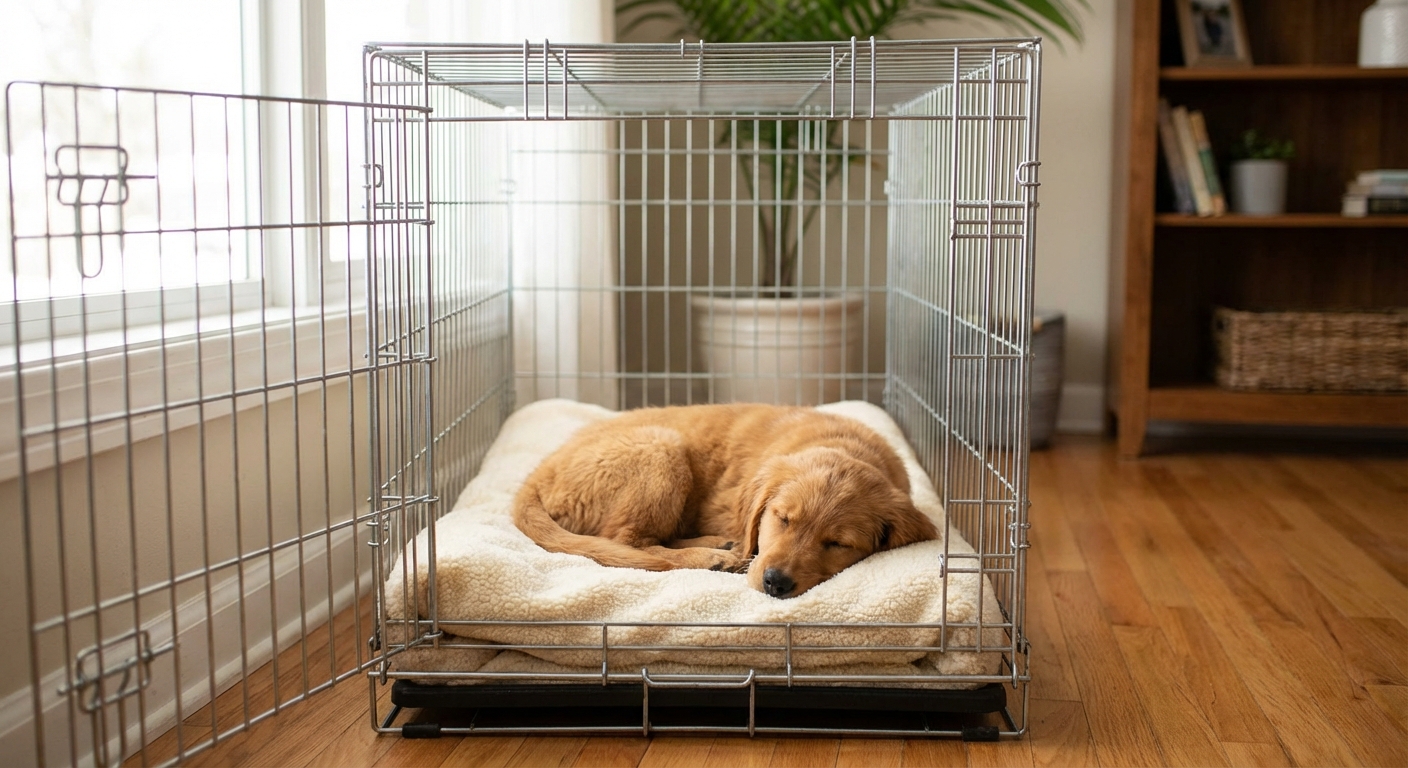
Many dogs naturally seek small, enclosed resting spots. A properly sized crate can offer a cozy, quiet area to decompress and practice settling, especially in a busy home. When crate training is done well, it often helps reduce unwanted behaviors like chewing, pacing, and barking because your puppy is resting instead of rehearsing trouble.
Crates can also support potty training because many puppies prefer not to soil where they sleep. That said, very young pups, sick pups, and puppies who came from poor living conditions may not have that instinct yet, so plan for accidents and keep it positive.
For family life, a crate is also a safety tool. It helps prevent your puppy from eating something dangerous, getting stepped on during busy moments, or practicing bad habits when you cannot supervise.
- Helps potty training: supports a consistent bathroom routine
- Protects your puppy: reduces access to cords, kids’ toys, and household hazards
- Supports calmer behavior: teaches rest, settling, and self-soothing
- Makes travel and vet visits easier: many dogs who are comfortable in a crate handle transitions better
Set up the crate for success
Choose the right size
The crate should be large enough for your puppy to stand up, turn around, and lie down comfortably, but not so large that they can potty in one corner and sleep in another. If you are using an adult-size crate, use a divider panel to adjust the space as your puppy grows.
Quick safety check: make sure the bar spacing is appropriate for your puppy’s size so a tiny pup cannot squeeze through or get stuck.
Pick a smart location
In most homes, the best spot is a quiet corner of a main living area. Your puppy gets family closeness without being in the middle of chaos. At night, many families start with the crate in the bedroom for a week or two, then gradually move it if desired.
Make it cozy, not cluttered
Use a washable mat or towel to start. Some puppies chew bedding, so keep it simple until you know your pup’s style.
Provide safe chews and rotate them to keep the crate interesting. Choose puppy-appropriate sizes, avoid anything that can splinter, and be cautious with chews or toys when your puppy is unsupervised.
Water basics
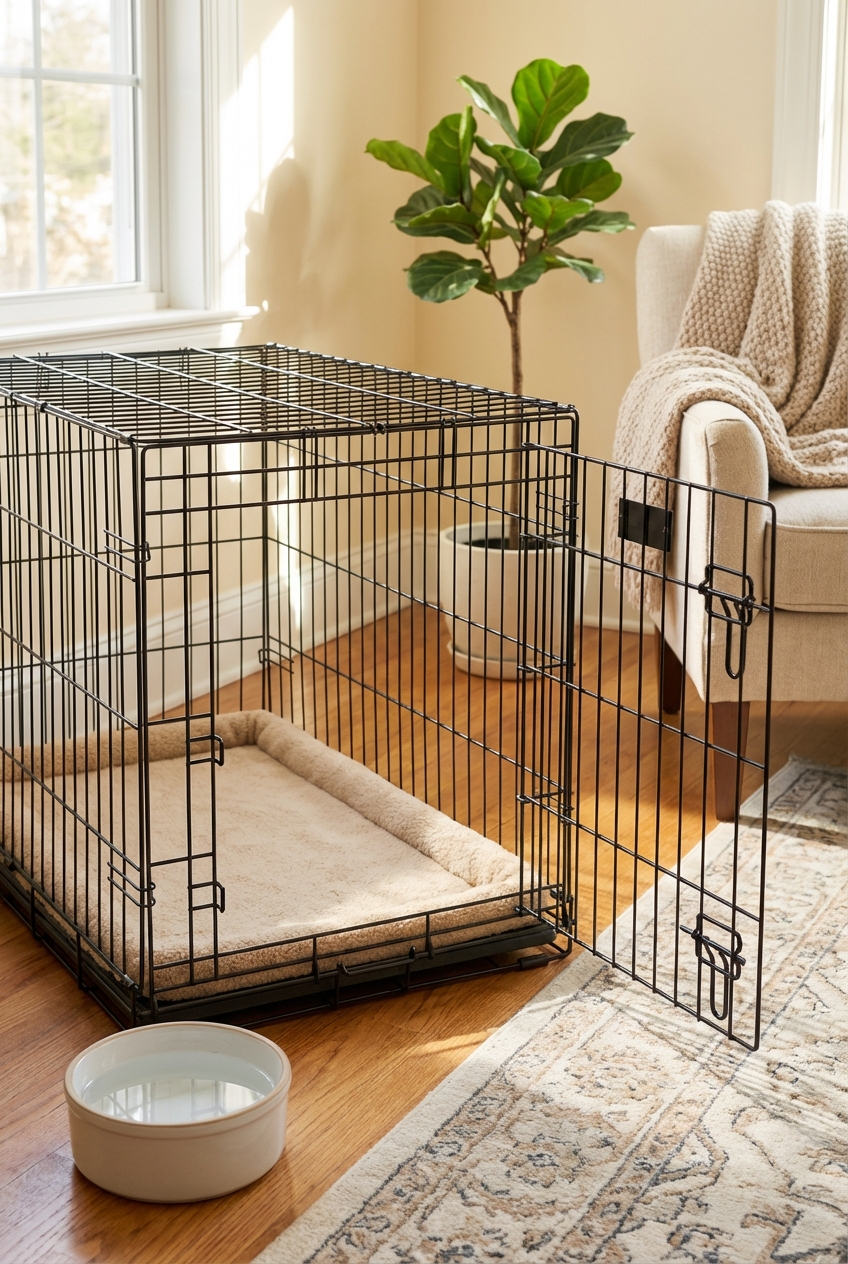
During the day, easy access to water is important. Some families place a spill-resistant bowl near the crate (outside is often easiest) and offer frequent water breaks. Overnight, many puppies do better with water picked up a bit before bedtime and a last potty trip, then water offered again first thing in the morning. If your veterinarian has advised constant water access for medical reasons, follow that plan.
Crate safety habit: remove collars and harnesses before crating to reduce the risk of snagging.
Family rules to prevent tears
This is where families either win quickly or struggle for weeks. Puppies thrive on consistency, and kids need clear expectations too.
- The crate is never used for punishment. If the puppy did something wrong, redirect and teach. Do not “send them to jail.”
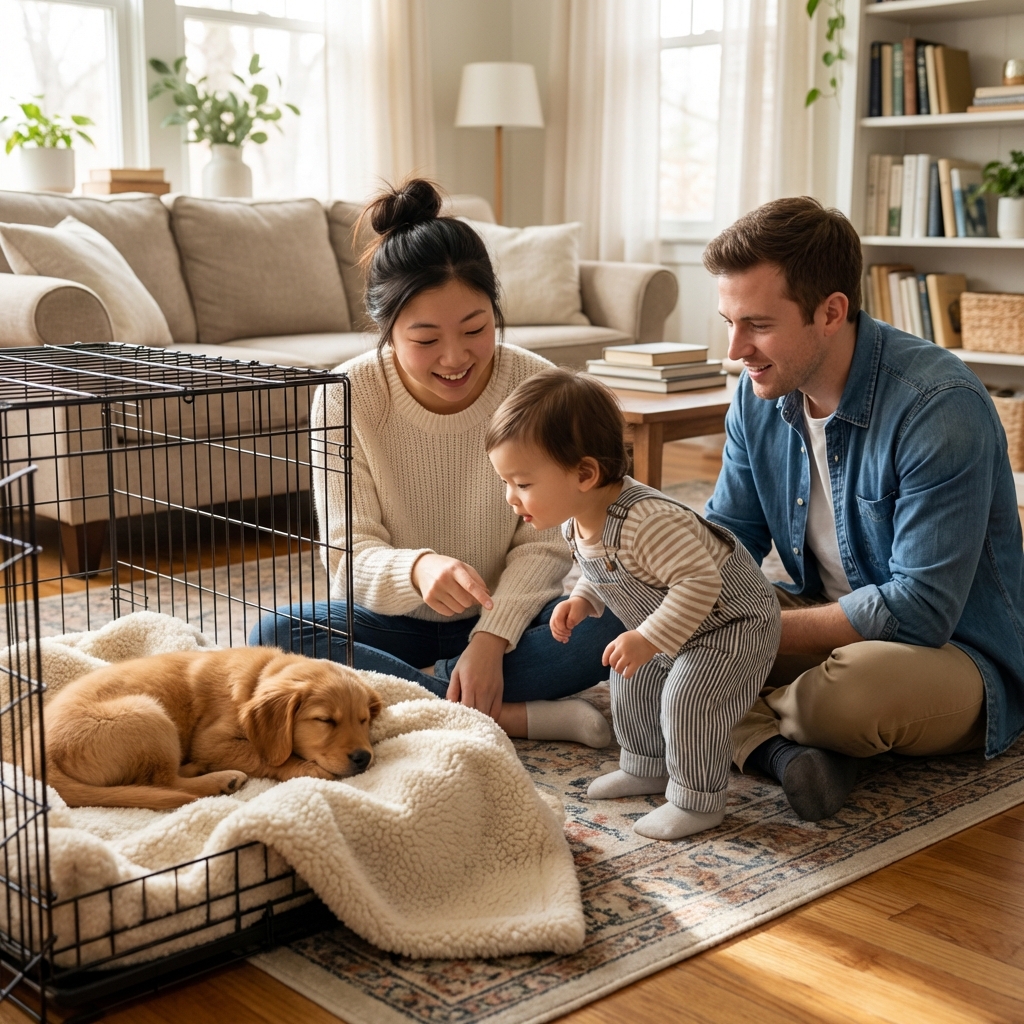
- No fingers in the crate. Kids should not poke, pull, or crowd the crate. Your puppy needs to feel safe.
- Let sleeping puppies sleep. A resting puppy is a learning puppy. Waking them up often leads to cranky biting and accidents.
- One cue, one meaning. Pick a cue like “Kennel” or “Crate,” and everyone uses the same word.
- Calm in, calm out. Keep entries and exits low-key so the crate does not become a big emotional event.
If you want a puppy who can settle in a busy household, you have to protect their rest like it matters, because it does.
Crate training steps (no rushing)
Step 1: Make the first look easy
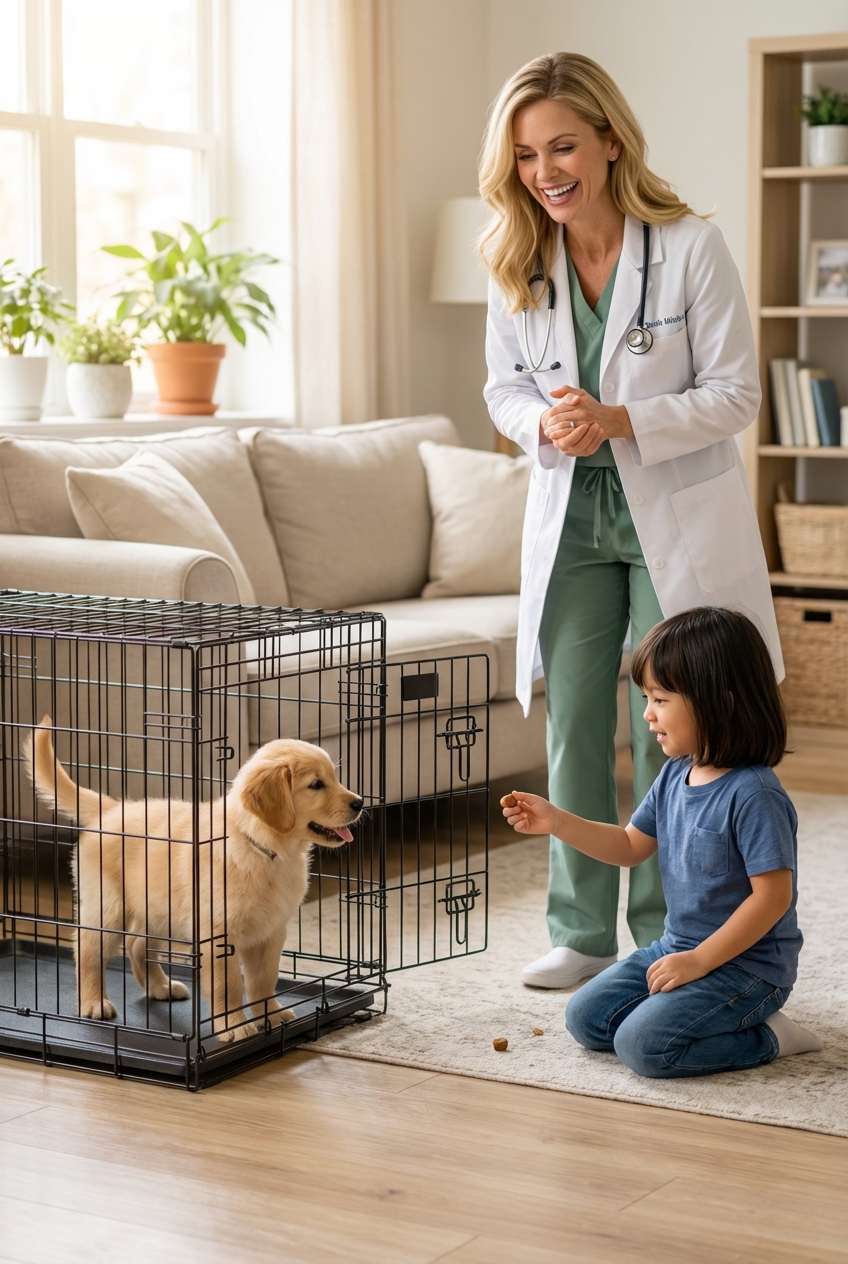
Prop the door open and let your puppy explore freely. Toss a few treats just inside, then a few farther back. Praise softly. The goal is curiosity, not confinement.
Step 2: Feed meals in the crate
Food is powerful. Place the bowl near the entrance at first, then gradually move it deeper over a few meals. This builds a strong positive association.
Step 3: Add short door-closed moments
Once your puppy is happily going in, close the door for 10 to 30 seconds while they eat a treat or lick from a stuffed toy. Open the door before they panic.
What “panic” can look like: frantic scrambling, nonstop screaming, heavy drooling, biting the bars, or throwing their body at the door.
Step 4: Build time only when relaxed
Increase crate time in small increments. Think minutes, not hours. Offer a safe chew or a stuffed food toy, then stay nearby reading or folding laundry so your puppy learns that rest happens even when you are home.
When to move up: aim for 3 to 5 sessions in a row where your puppy stays relaxed (soft body, quiet or light fussing that stops quickly, able to eat) before you add more time.
Step 5: Practice short separations
When your puppy can relax for 10 to 15 minutes with you nearby, briefly step out of sight. Return without fanfare. If they whine, wait for a short pause before opening the door so you do not accidentally teach “noise opens doors.” If whining ramps up, you likely moved too fast. Shorten the next session.
Important note: planned, gradual practice is different than “cry it out.” Mild complaining is common. True panic is not something to ignore.
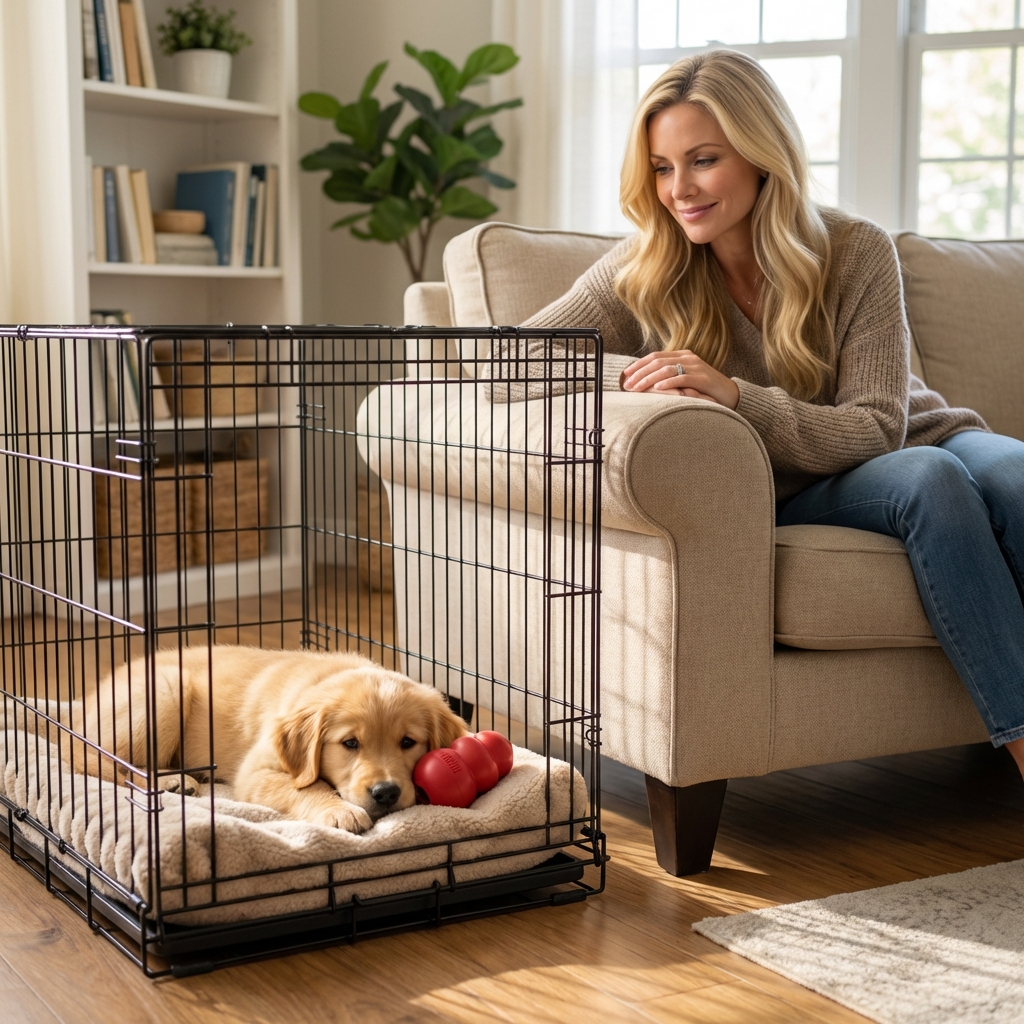
Night crate training
Nighttime is where emotions run high. Remember, your puppy is adjusting to sleeping away from littermates. The goal is reassurance without starting a pattern of attention for every squeak.
- Potty first: take your puppy out right before bed
- Routine helps: a consistent wind-down, then lights out
- Location matters: starting in the bedroom can reduce crying
- Keep potty trips boring: low lights, no play, straight back to the crate
Many puppies need a nighttime potty break at first. A rough guideline is up to about one hour per month of age when awake, but overnight sleep can be different, and small breeds often need more frequent breaks. If you suspect your puppy truly needs to go, take them out calmly and return them to the crate.
How long is too long?
Puppies have small bladders and big needs for exercise, training, and social time. A crate is a wonderful tool, but it is not a babysitter for long stretches.
These ranges are intentionally conservative. Your puppy’s size, health, and comfort matter, and daytime is usually harder than overnight sleep.
- 8 to 10 weeks: about 30 to 60 minutes at a time (often less when awake)
- 10 to 12 weeks: about 1 to 2 hours at a time
- 3 to 6 months: about 2 to 4 hours at a time
- 6+ months: about 4 to 6 hours at a time (many do best with a midday break)
If your schedule requires long hours away, consider a safe puppy pen setup (pen plus open crate is a great combo), a trusted pet sitter, a neighbor kid helper, or doggy daycare a couple days a week. Your future self will thank you.
Common mistakes (and fixes)
Mistake: Kids “visiting” the crate
Fix: Make a rule that the crate is a quiet zone. Teach kids to call the puppy out instead of climbing into their space.
Mistake: Only crating when you leave
Fix: Do short, positive crate sessions while you are home so the crate does not predict loneliness.
Mistake: Opening the door during whining
Fix: Wait for a tiny pause, then reward the quiet moment by opening the door. If the whining escalates, you likely moved too fast. Shorten the next session and rebuild confidence.
Mistake: Not enough exercise or enrichment
Fix: A puppy with unspent energy will protest rest. Add age-appropriate play, sniff walks, short training games, and food puzzles.
Mistake: Unsafe crate habits
Fix: Collar off, choose safe toys, and avoid anything that can tangle, wedge, or break into pieces when your puppy is alone.
When it is not normal
Some vocalizing is normal in the early days. But a few red flags suggest you should slow down, adjust your plan, or speak with your veterinarian or a qualified trainer.
- Heavy drooling, frantic panting, or trying to break teeth on the crate
- Self-injury attempts to escape
- Panic that does not improve with gradual training
- New diarrhea, vomiting, or sudden appetite changes during training
In some cases, puppies (and adult dogs) can experience separation-related distress. One simple difference is intensity. Normal puppy protest tends to come in waves and settles with practice. Separation panic looks desperate, escalates fast, and does not improve with “waiting it out.” Evidence-based training and professional guidance can make a huge difference, and earlier support is always easier.
A simple daily routine
You do not need perfection. You need a rhythm that your puppy can predict.
- Morning: potty, breakfast, play, short crate rest
- Midday: potty, short training session, enrichment toy in crate
- Afternoon: potty, supervised free time, gentle social exposure
- Evening: dinner, family time, calm wind-down, last potty, bedtime crate
Even if your day is hectic, keep the basics consistent: potty breaks, calm crate practice, and plenty of positive reinforcement.
The real secret
Crate training is not about control. It is about giving your puppy a peaceful place to rest in a busy human world. When your family treats the crate like a comfort zone, your puppy learns faster, your home gets calmer, and everyone sleeps more.
If you start slow and stay kind, you will be amazed how quickly your puppy begins walking into the crate like it is their own little bedroom.
Travel note: If you use a crate in the car, secure it so it cannot slide, or use a crash-tested restraint that fits your dog properly. Safety should travel with you.