Tired of constant dog hair? Learn evidence-based home steps to cut shedding: brushing routines, bath upgrades, omega-3s, better nutrition, parasite control, ...
Article
•
Designer Mixes
Family-Friendly Dog Shedding Control

Shari Shidate
Designer Mixes contributor
As a veterinary assistant here in Frisco, Texas, I hear it all the time: “We love our dog, but the hair is everywhere.” The good news is shedding is normal for most dogs, and you can absolutely reduce the fur tumbleweeds without turning your house into a constant cleaning project.
This quick guide focuses on family-friendly, vet-backed steps that make a real difference: smarter brushing, a cleaner coat, better nutrition, and a few home tweaks that keep everyone more comfortable.
Educational note: This article is for general information and is not a substitute for a veterinary exam or diagnosis.

Why dogs shed (and when to worry)
Shedding is your dog’s natural way of replacing old or damaged hair. Some breeds shed lightly year-round, while others “blow coat” seasonally (shed a large amount of undercoat over a few weeks). In North Texas, many dogs shed more as daylight and temperature shift, especially in spring and fall.
Normal shedding
- Consistent hair loss without bald spots
- Healthy skin that is not red, greasy, or flaky
- No intense itching, chewing, or strong odor
Call your veterinarian if you notice
- Sudden heavy shedding or bald patches
- Persistent itching, licking, or rubbing
- Redness, scabs, hot spots, or a yeasty smell
- Dandruff that does not improve with basic care
- Ear infections along with skin issues (often allergy-related)
Common medical causes include allergies (environmental or food-related), fleas, mites, infections, hormonal disease (like hypothyroidism), and stress. If shedding is paired with skin changes, the fastest path to relief is an exam and a plan.
A simple routine that helps
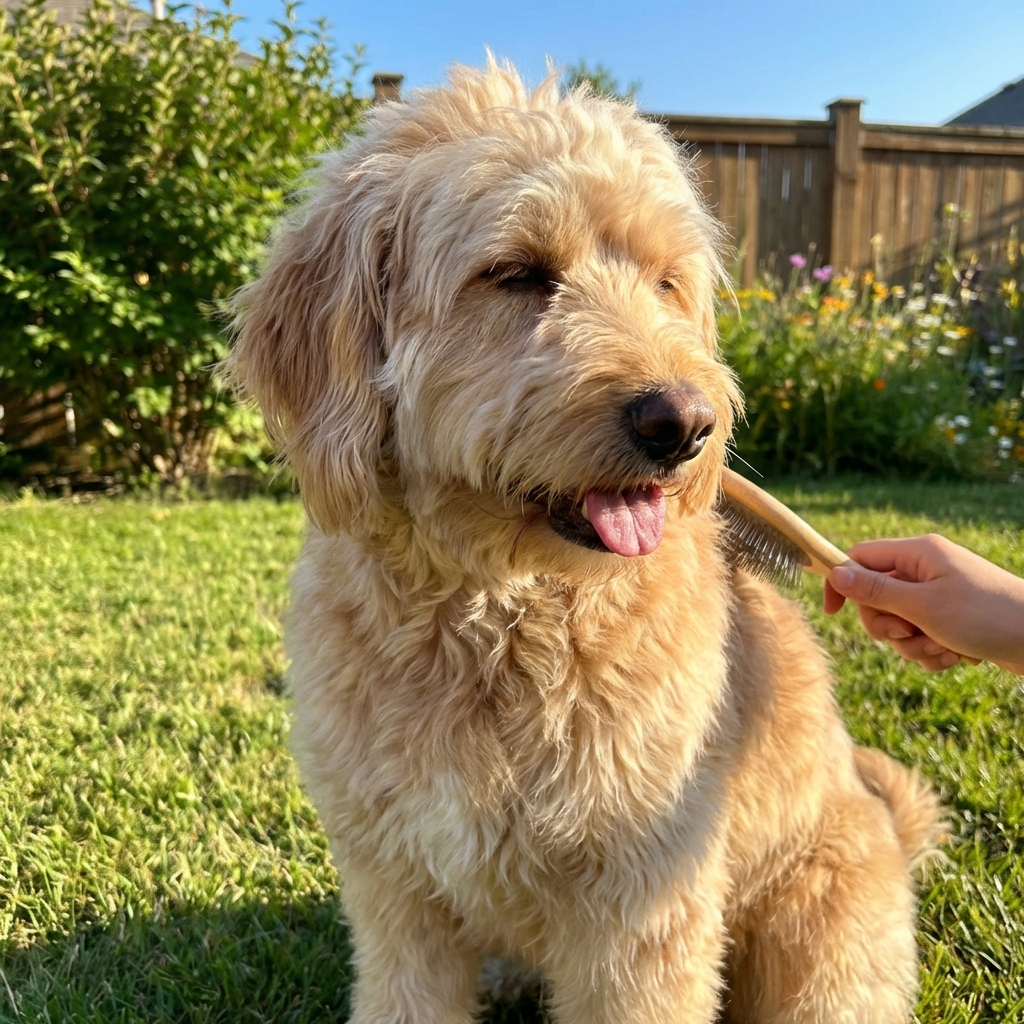
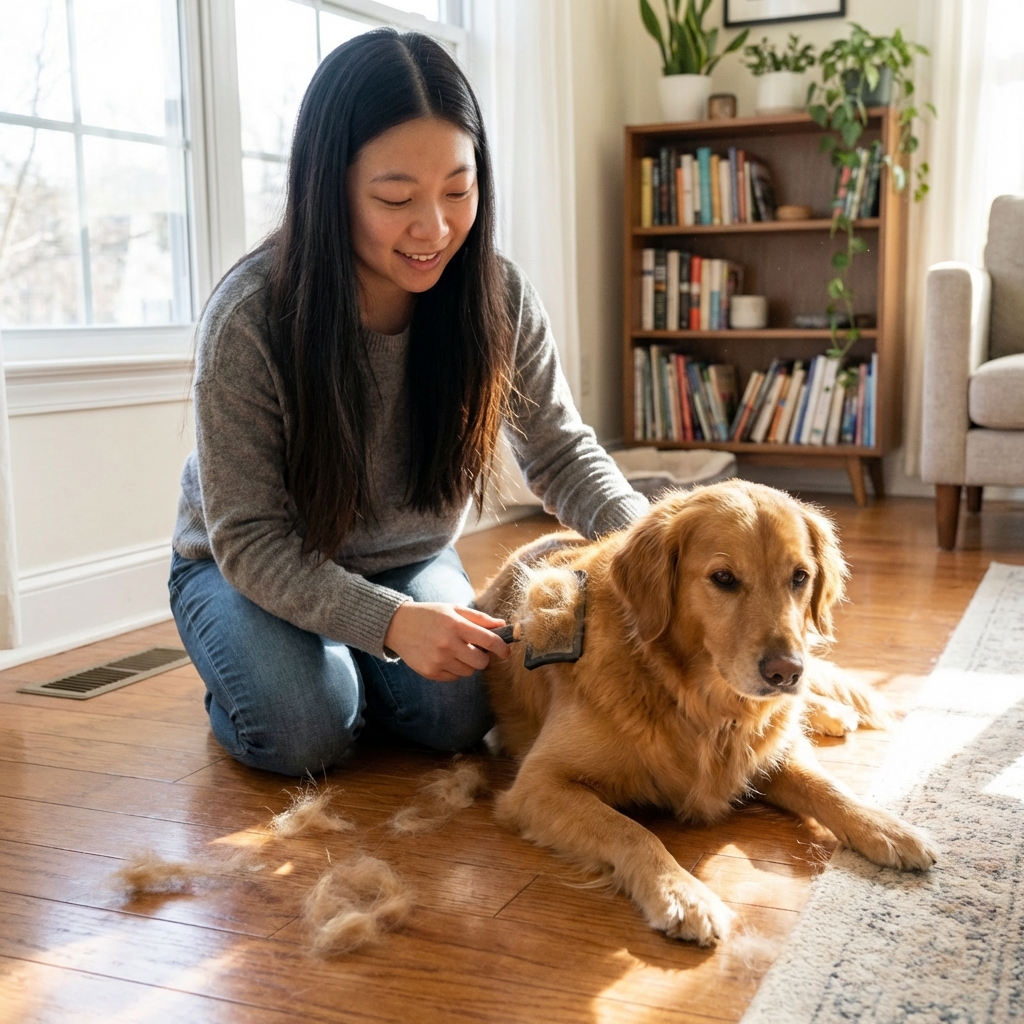
If you do only one thing, make it consistent brushing. Brushing removes loose undercoat before it lands on your couch and helps distribute natural skin oils for a healthier coat.
For many family dogs, 10 minutes once a week is a solid starting point. During spring and fall shedding, or for heavier shedders, you will usually need a bit more time or a second weekly session.
Step 1: Use the right brush
- Short coats (Boxer, Beagle, many mixes): rubber curry brush or soft bristle brush.
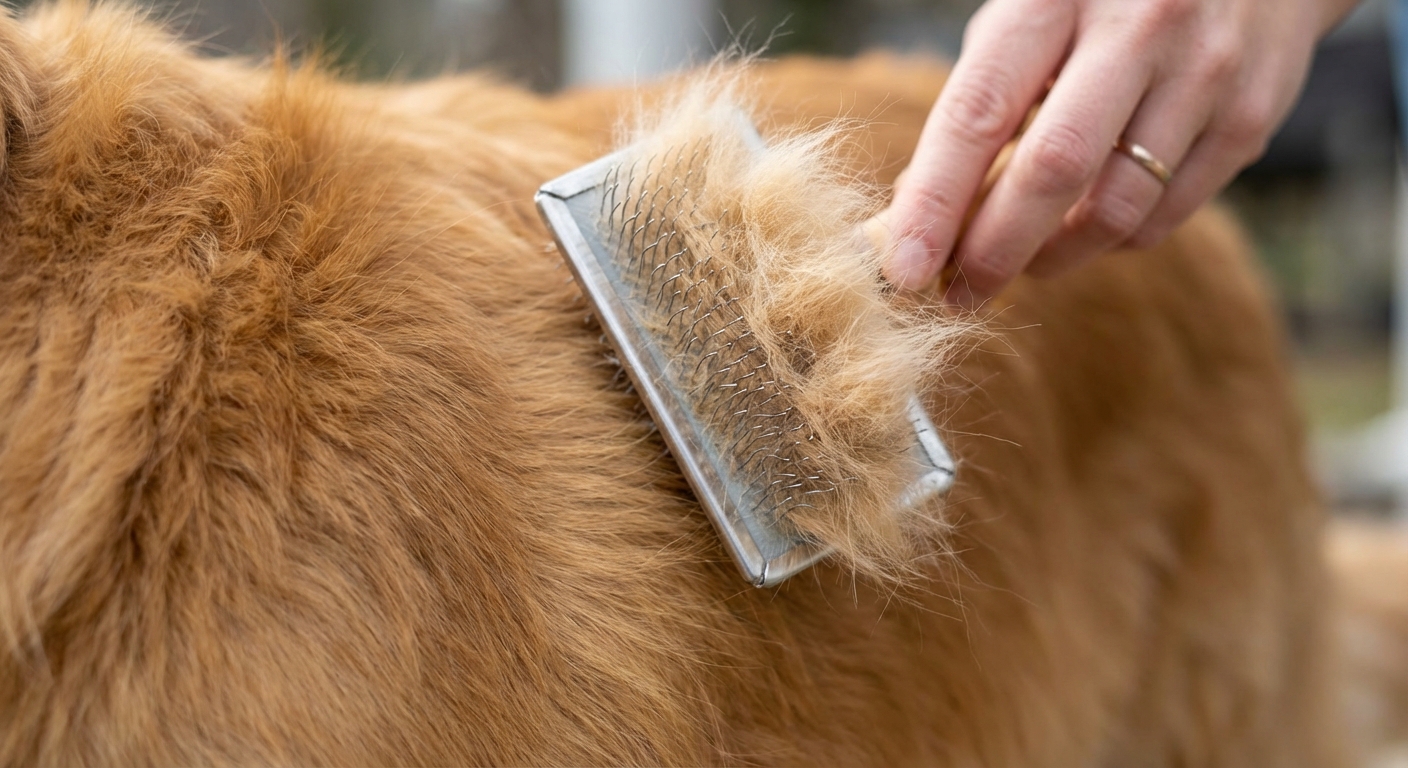
- Double coats (Husky mixes, many Shepherd mixes, many retrievers including Labs): undercoat rake plus a slicker brush.
- Curly or wavy coats (Poodle mixes): slicker brush and a metal comb to check for tangles near the skin.
- Long coats (Aussie mixes, Collie mixes): slicker brush plus a comb for feathering areas.
Tip: Deshedding tools can be helpful for double-coated dogs, but use a gentle hand and avoid overdoing it. Too much pressure or too frequent use can irritate skin or damage coat.
Step 2: Keep it calm and kid-safe
- Choose a quiet spot and keep sessions short.
- Let kids help with low-risk areas like the back, shoulders, and sides.
- Adults should handle sensitive zones: belly, armpits, groin, ears, tail, and any mats.
- Pair brushing with tiny treats so your dog learns “brushing means good things.”
Step 3: Finish with a quick wipe
A damp microfiber cloth or a pet wipe can pick up remaining loose hair and reduce dander. This is especially helpful during high-shed seasons or if someone in the family has mild allergies.
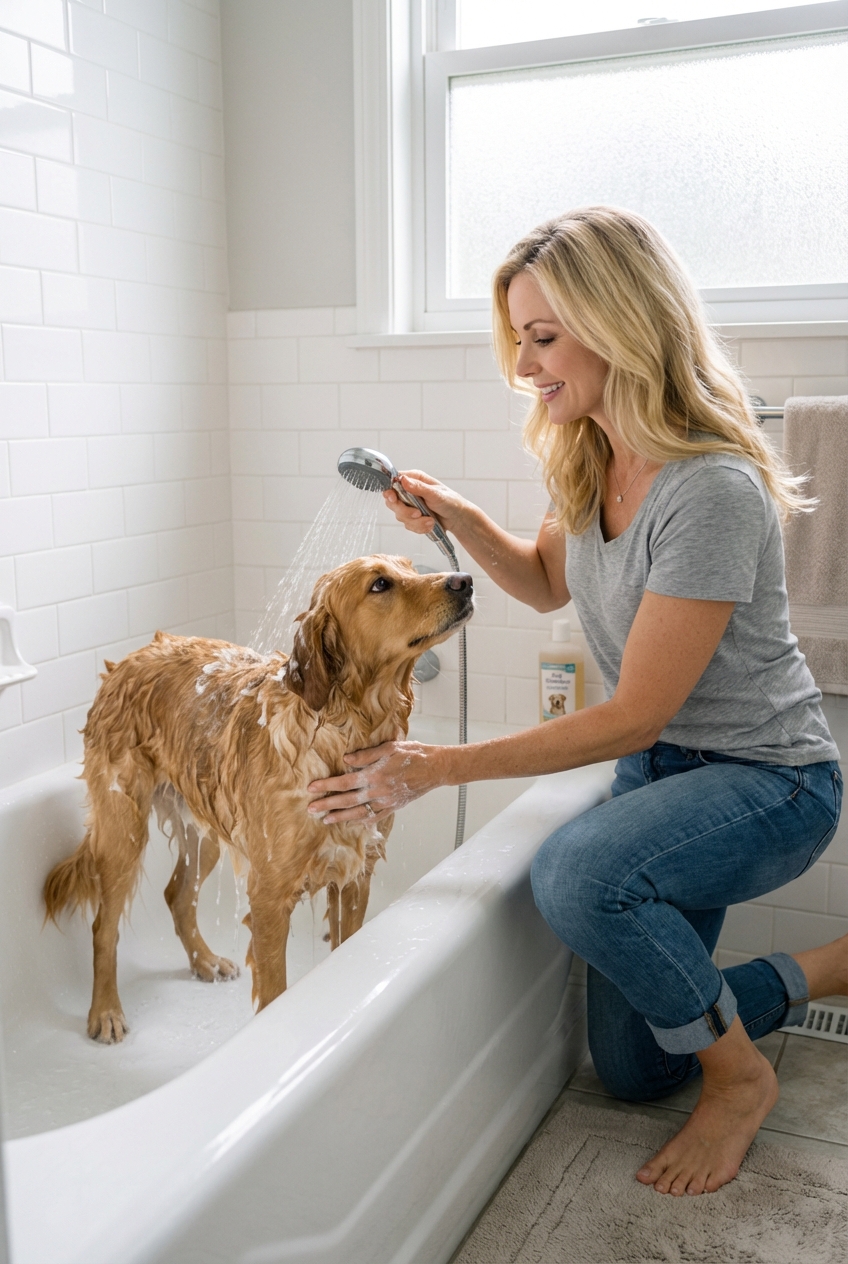
Bathing: how often?
Bathing can reduce shedding by removing loose hair and allergens, but bathing too frequently or using the wrong products can dry the skin and worsen shedding.
Family-friendly guidelines
- Many dogs: every 3 to 6 weeks is a common range.
- Dogs with allergies or frequent outdoor time: your veterinarian may recommend weekly baths with a specific medicated or hypoallergenic shampoo.
- Always: use a dog-specific shampoo. Human products often have a different pH and detergent system than canine skin and can disrupt the skin barrier.
Make the bath help shedding
- Brush before bathing to remove loose coat and tangles.
- Rinse longer than you think you need to. Leftover shampoo is a common cause of itchiness.
- Dry thoroughly, especially in skin folds and under the collar area. As a grooming best practice, a fully dry coat tends to release loose hair more easily and helps prevent that damp, itchy feeling.
Nutrition for a healthier coat
Coat quality is closely tied to nutrition. If the skin barrier is dry or inflamed, you may see more breakage, dandruff, and excess shedding. The goal is a balanced diet with quality protein, appropriate fat, and the right micronutrients.
Vet-backed nutrition tips
- Choose a complete and balanced diet that meets AAFCO standards for your dog’s life stage.
- Prioritize quality protein as a key ingredient. Hair is made primarily of protein.
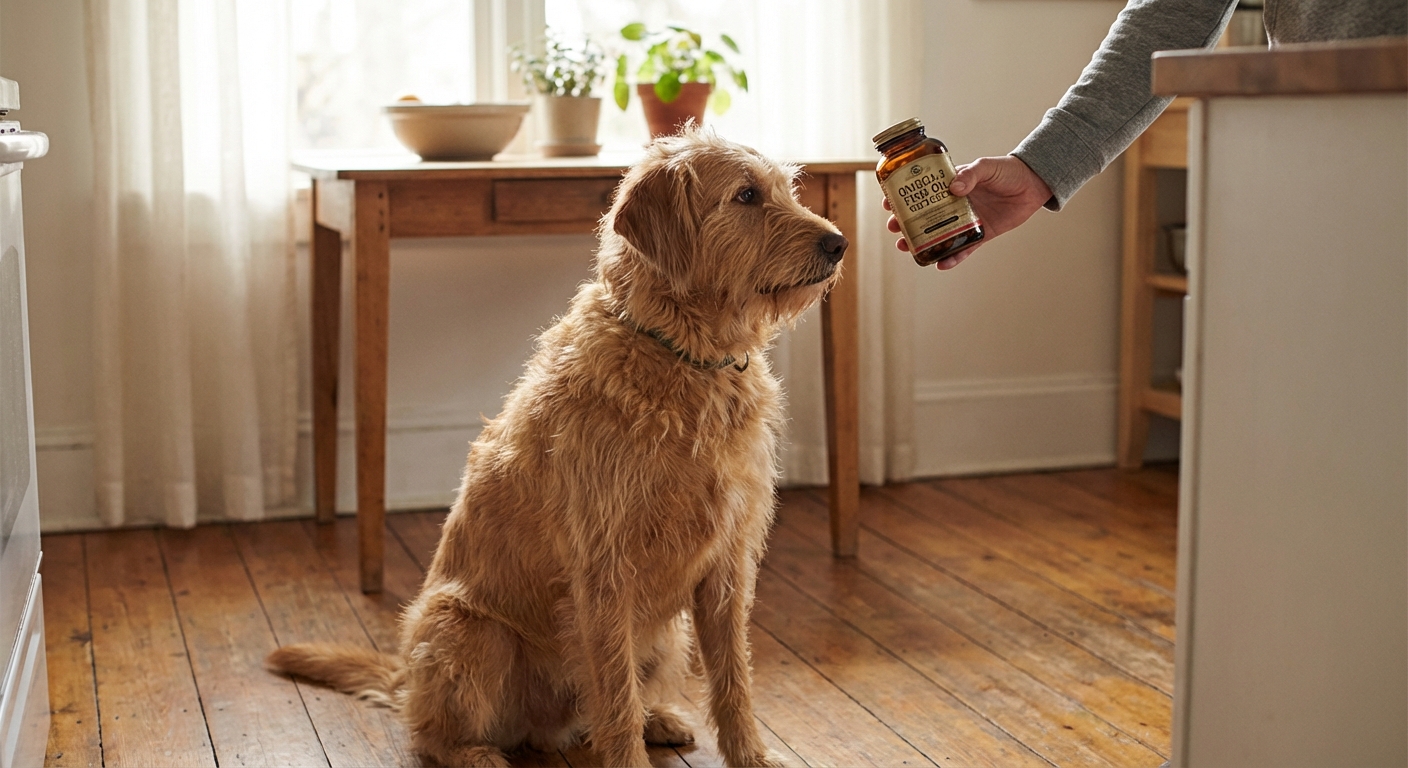
- Omega-3 fatty acids (EPA and DHA) can support skin and coat health. Fish oil is a common option, but talk with your vet for dosing, especially if your dog is on other medications.
- Watch the treats. Too many high-calorie treats can lead to weight gain, and excess weight may contribute to inflammation in the body overall.
If your dog has chronic itch, recurrent ear infections, or seasonal flare-ups, ask your vet about allergies. Sometimes controlling shedding is really about controlling inflammation.
Parasite prevention matters
Fleas are a very common trigger for itching and shedding, even when you do not see them. In our area, consistent flea prevention is often a year-round need. If you are not sure which product is right for your dog’s age, weight, and health history, your veterinary team can help you choose a safe option.
Please do not shave double coats
This comes up a lot during Texas summers. For most double-coated dogs, shaving does not “fix” shedding. It can also increase sunburn risk and may change how the coat grows back. A better approach is consistent brushing, an occasional deshedding bath, and keeping your dog cool with shade, water, and safe time outdoors.
Home setup: less hair, less stress
You do not need a perfect house, just a few smart systems that work with your family’s routine.
Small changes that help
- Create a dog zone with a washable throw blanket on your dog’s favorite couch spot.
- Use a washable bed cover and wash it weekly during heavy shedding.
- Vacuum strategy: quick high-traffic passes 2 to 3 times a week beats one long, exhausting session.
- Lint tools: keep a lint roller or reusable pet hair remover in the entryway and the car.
- Air filtration: a HEPA air purifier can reduce airborne dander and dust, which helps many families feel more comfortable.

Grooming safety for kids
Shedding control is most successful when it is consistent, and families do best when everyone can participate safely.
- Teach kids to brush gently and stop if the dog walks away.
- Never let kids cut mats. Scissors injuries happen quickly and can be severe.
- If your dog is anxious, start with 30 to 60 seconds of brushing, reward, and end on a positive note.
- For sensitive dogs, consider professional grooming for deshedding baths and blowouts, then maintain at home.
Quick troubleshooting
“We brush and there is still hair everywhere.”
Increase frequency during seasonal shedding, use an undercoat tool if appropriate, and make sure the coat is fully dry after baths. If you have a heavy shedder, adding a second short brushing session each week can make a noticeable difference.
“My dog is shedding plus itching.”
Think fleas, allergies, or infection. Schedule a vet visit before trying multiple new products. Switching shampoos repeatedly can make irritated skin worse.
“My dog hates being brushed.”
Use shorter sessions, higher-value treats, and a softer tool at first. Many dogs tolerate a rubber curry brush better than a slicker. You can slowly work up to longer sessions.
The bottom line
Most shedding is manageable with a simple routine: brush consistently, bathe thoughtfully, feed for skin health, and set your home up for easy cleanup. If shedding changes suddenly or comes with itching, odor, or bald spots, your veterinarian can help you find the underlying cause and get your dog comfortable again.
You do not need perfection. You just need a plan you can keep doing, even on busy weeks.