Learn vet-approved, low-risk home remedies for mild dog itching—oatmeal baths, cool compresses, allergen rinses, gentle shampoos, and omega-3s—plus urgen...
Article
•
Designer Mixes
Family-Friendly Dog Itchy Skin Relief

Shari Shidate
Designer Mixes contributor
When your dog is itchy, the whole household feels it. They scratch at night. They lick during dinner. Then you notice a red belly after a walk. The good news is that many itchy-skin triggers can improve with simple, family-friendly steps that support your dog’s skin barrier and calm inflammation. As a veterinary assistant here in Frisco, Texas, I’ve seen how small changes can add up fast.
Important note: This article offers general guidance and is not a substitute for a diagnosis. Itchy skin can be caused by allergies, parasites, infection, or underlying illness. If your dog has open sores, a strong odor, ear gunk, hair loss, or is miserable despite home steps, schedule a vet visit. Relief is possible, but we want to treat the right cause.
Why dogs get itchy
Itchy skin is a symptom, not a diagnosis. Most cases fall into a few common buckets:
- Environmental allergies (atopy): Pollen, grasses, dust mites, molds. Often seasonal, but can become year-round.
- Fleas and flea allergy dermatitis: One bite can trigger days of itching in sensitive dogs.
- Food sensitivities: Can present as year-round itching, recurrent ear issues, and paw licking. These signs overlap heavily with environmental allergies.
- Skin infections: Bacteria and yeast love warm, irritated skin folds and moist paws.
- Dry skin or a damaged skin barrier: Frequent bathing, harsh shampoos, indoor heating, low omega-3 intake, or underlying disease can contribute.
The goal is not one miracle product. It is a calm, consistent plan: protect the skin barrier, reduce exposure to triggers, and treat infections or parasites promptly.
Quick relief at home
1) Check for fleas, even if you do not see them
Families are often surprised by this: you can have a flea problem without spotting fleas. Look for “flea dirt” (tiny black specks) around the rump and tail base.
- Do a quick test: place the specks on a wet white paper towel or cotton ball. If they smear reddish-brown, that is digested blood.
- Use vet-recommended flea prevention consistently for every pet in the home.
- Wash bedding weekly in hot water during flare-ups.
- Vacuum rugs and couch cushions, then empty the canister outdoors.
If your dog is intensely itchy at the tail base or has scabs along the back, flea control is often one of the fastest wins.
2) Rinse the “allergy layer” off after outdoor time
For many dogs, pollen and grass allergens sit on the coat and skin. A full bath every day is usually too much, but a quick rinse is gentle and effective.
- After walks, rinse paws and belly with lukewarm water.
- Use fragrance-free pet wipes on paws, groin, and underarms.
- Pat dry thoroughly, especially between toes.
3) Cool compress for hot, irritated spots
If a patch is red and warm, a cool compress (clean cloth dampened with cool water) for 5 to 10 minutes can help reduce inflammation. Keep your dog from licking afterward so the skin can settle.
If you see moist, oozing skin or rapidly spreading redness, that can be a hot spot that often needs veterinary treatment. An e-collar can be a big help while you are arranging care.
4) Use a gentle bathing routine
Bathing helps when you do it right, and backfires when you do it too often or with harsh products.
- For many dogs: bathing every 1 to 2 weeks during allergy season can be helpful, but it is very individual. Follow your vet’s guidance, especially if you are using a medicated shampoo.
- Use a dog-specific, fragrance-free shampoo designed for sensitive skin.
- Let shampoo sit for 5 to 10 minutes before rinsing so it can work.
- Rinse extremely well. Leftover product can itch.
If your dog has recurrent yeast or bacterial infections, your veterinarian may recommend a medicated shampoo. Those formulas matter, and timing matters.
Itch clues by location
These patterns are not diagnostic, but they can help you decide what to tackle first and what to tell your vet.
- Tail base and back: fleas are a common culprit.
- Face, feet, and ears: allergies are common, and infections may follow.
- More generalized itch with flaky skin: could be dry skin, allergies, or sometimes an underlying medical issue. If it is persistent, it is worth a vet visit.
Ears and paws matter
If your dog’s itching seems focused on ears and feet, allergies are often involved, and secondary infection is common. Many dogs start with allergies, then develop yeast or bacterial overgrowth from licking and moisture.
This is a great point to pause and reassess. If home steps are not helping within a few days, or if you are seeing odor and debris, a vet exam can save you weeks of trial and error.
Signs the ears need help
- Head shaking, ear scratching
- Odor, waxy buildup, dark debris
- Redness or pain when touched
Do not put random home remedies into ears. Eardrums can be damaged, and the wrong product can hurt. A vet exam is the safest path.
Paw care families can stick with
- Dry paws after baths and rainy walks, especially between toes.
- Trim hair between pads if it traps moisture.
- Ask your vet about an antiseptic paw rinse if your dog gets recurrent infections.
Food and supplements
Skin is a living organ with real nutrient needs. For many itchy dogs, nutrition is not the only answer, but it can be part of the solution.
Omega-3s: the best-studied add-on
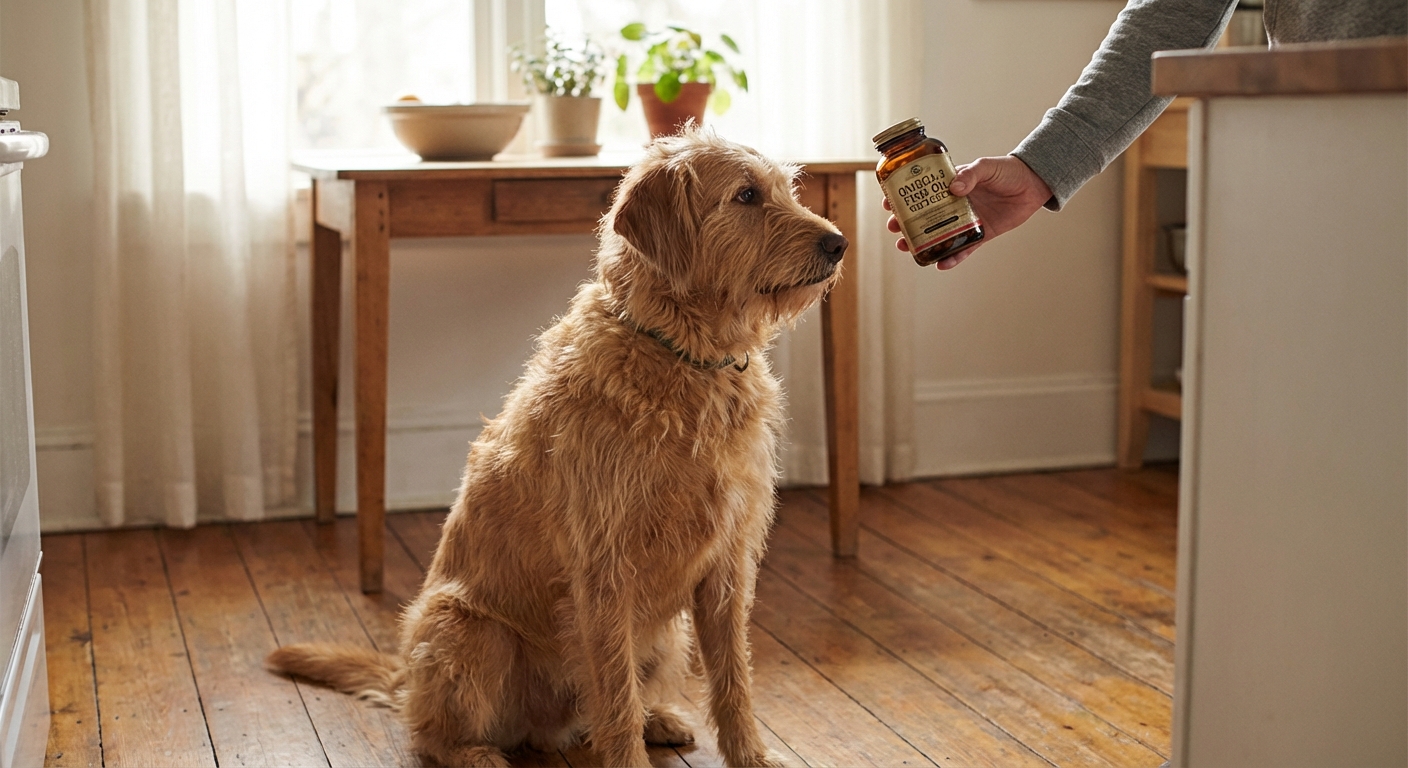
Omega-3 fatty acids (EPA and DHA) support the skin barrier and may help reduce inflammatory itching for some dogs. Think of fish oil as an adjunct, not a replacement for flea control or prescription allergy treatment when those are needed.
- Choose a pet-specific fish oil with a clear EPA and DHA listing.
- Introduce slowly to avoid loose stools.
- Store properly (dark, cool) to help prevent rancidity.
Always check dosing with your veterinarian, especially if your dog is on anti-inflammatories, has a pancreatitis history, or has clotting issues.
Could it be food allergy?
True food allergies are less common than environmental allergies, but they do happen. Clues include year-round itching, recurring ear infections, and no clear seasonal pattern. That said, environmental allergies can look identical.
The most reliable way to diagnose food allergy is a veterinary elimination diet trial for 8 to 12 weeks. Treats, flavored medications, and table scraps can ruin the test, so your whole family has to be on the same page.
Family tip: Put a “Yes List” on the fridge with the only approved foods and treats during a diet trial. It keeps kids and guests from accidentally feeding the wrong snack.
Homemade diets and itchy skin
Some families notice improvement when they change diets, especially if their current food simply is not agreeing with them or their dog has multiple sensitivities. If you want to explore homemade, do it thoughtfully:
- Make changes slowly over 10 to 14 days.
- Keep recipes balanced for calcium, essential fatty acids, and micronutrients.
- Work with your veterinarian or a board-certified veterinary nutritionist if you plan to go fully homemade.
Unbalanced homemade diets are a common problem we see in clinics, even when the ingredients are high quality. If you are going to do it, do it with a plan.
Home tips that help
You do not need a sterile house. You just want to reduce the irritants that keep the itch cycle going.
Simple changes
- Wash dog bedding weekly with fragrance-free detergent.
- HEPA filter in the main living area if seasonal allergies are intense.
- Vacuum frequently, especially in shedding season.
- Skip heavy fragrances like plug-ins and strong sprays near your dog.
- Humidity check: very dry indoor air can worsen flaky skin.

Skip these common mistakes
When you are desperate for relief, it is tempting to try whatever is in the pantry. A few popular DIY options can make things worse.
- Human shampoo: can be too harsh and drying for canine skin.
- Essential oils: can irritate skin and some are toxic to pets, especially if licked.
- Apple cider vinegar or peroxide on raw skin: can sting, inflame tissue, and delay healing.
- Random creams, especially steroid creams: can worsen infections and are risky if your dog licks them. Use only with veterinary direction.
- Shaving or applying heavy ointments to a hot spot: can aggravate already angry skin. The safest move is to prevent licking with an e-collar and get guidance from your vet.
When to see the vet
Please do not wait it out if you see any of these:
- Open sores, scabs that keep spreading, or bleeding from scratching
- Strong odor, greasy coat, or thickened skin texture
- Hair loss in patches
- Ear pain, head tilt, or intense head shaking
- Itching that disrupts sleep or daily life
Your veterinarian can check for parasites, do skin cytology to identify bacteria or yeast, and tailor a plan. Many itchy dogs need a combination approach: parasite prevention, infection treatment, allergy control, and skin-barrier support.
What treatment may look like
Depending on the cause, your vet may recommend cytology-guided antimicrobials, prescription allergy medications (such as oclacitinib or lokivetmab), targeted ear medications, and sometimes allergy testing with immunotherapy for long-term control. Antihistamines can help some dogs, but results are mixed, so your vet can tell you if it is worth a try for your dog.
A simple 2-week plan
If you are overwhelmed, start with this realistic routine for two weeks:
- Daily: quick paw and belly rinse after outdoor time, then dry well.
- Weekly: wash bedding, vacuum common spots, check ears and paws.
- Consistent: vet-recommended flea prevention for every pet.
- Support: ask your vet about adding omega-3s as an add-on.
Take a few photos of problem areas every 3 to 4 days. It is a surprisingly helpful way to see improvement, and it gives your veterinarian better information if you need a visit.
Your dog does not need perfection. They need steady support. With the right plan, that constant scratching can calm down, and your whole home can sleep easier again.