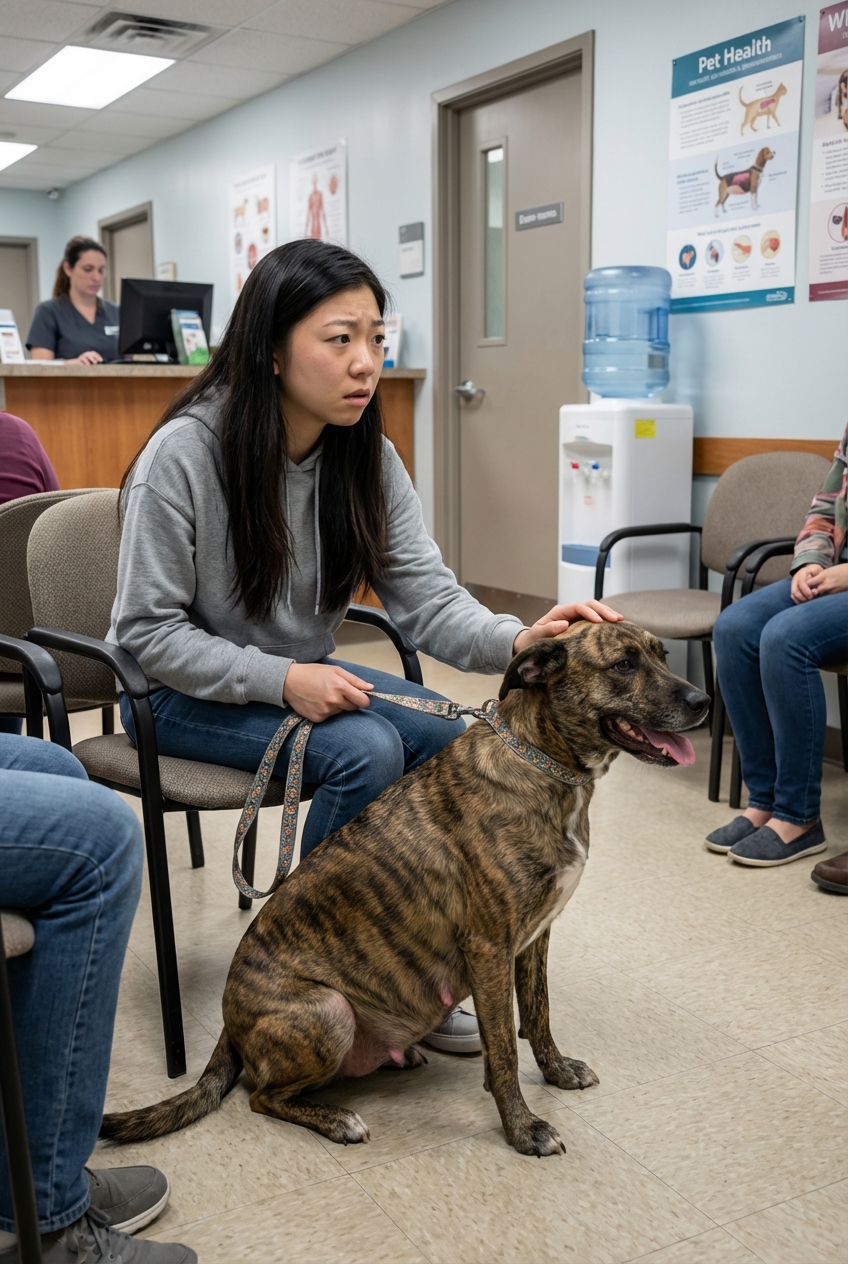
Not sure if your dog is pregnant or just gaining weight? Learn week-by-week signs, how to spot false pregnancy, and when vets confirm with relaxin tests, ult...
Article
•
Designer Mixes
False Pregnancy in Dogs: Signs, Duration, and What to Do

Shari Shidate
Designer Mixes contributor
If your unspayed female dog is nesting, carrying toys around like puppies, or suddenly has swollen mammary glands, it can be scary. Many pet parents worry their dog is pregnant or seriously ill. The good news is that in many cases, these behaviors point to false pregnancy, also called pseudopregnancy, which is common and usually temporary.
As a veterinary assistant, I have seen how convincing pseudopregnancy can look. Let’s walk through what it is, what signs to watch for, how long it tends to last, and when you should loop in your veterinarian.
What is false pregnancy in dogs?
False pregnancy is a hormonally driven condition that can happen after a dog goes into heat (estrus). Even if she did not mate, her body can behave as if she is pregnant due to normal post-heat hormone shifts during diestrus.
After heat, progesterone stays elevated for a while and then falls. That hormonal shift can change prolactin levels. Prolactin is involved in maternal behavior and milk production. In some dogs, this combination triggers very real physical and behavioral mothering signs.
Timing note: Signs often show up about 4 to 9 weeks after a heat cycle. In some dogs, signs can show up later than that, especially if cycles are hard to track or symptoms are mild at first.
Key point: False pregnancy is not your dog being “dramatic” or “acting weird.” It is a real physiologic response.
Common signs
Signs can range from mild to intense. Some dogs only have behavior changes, while others have obvious body changes too.
Behavior
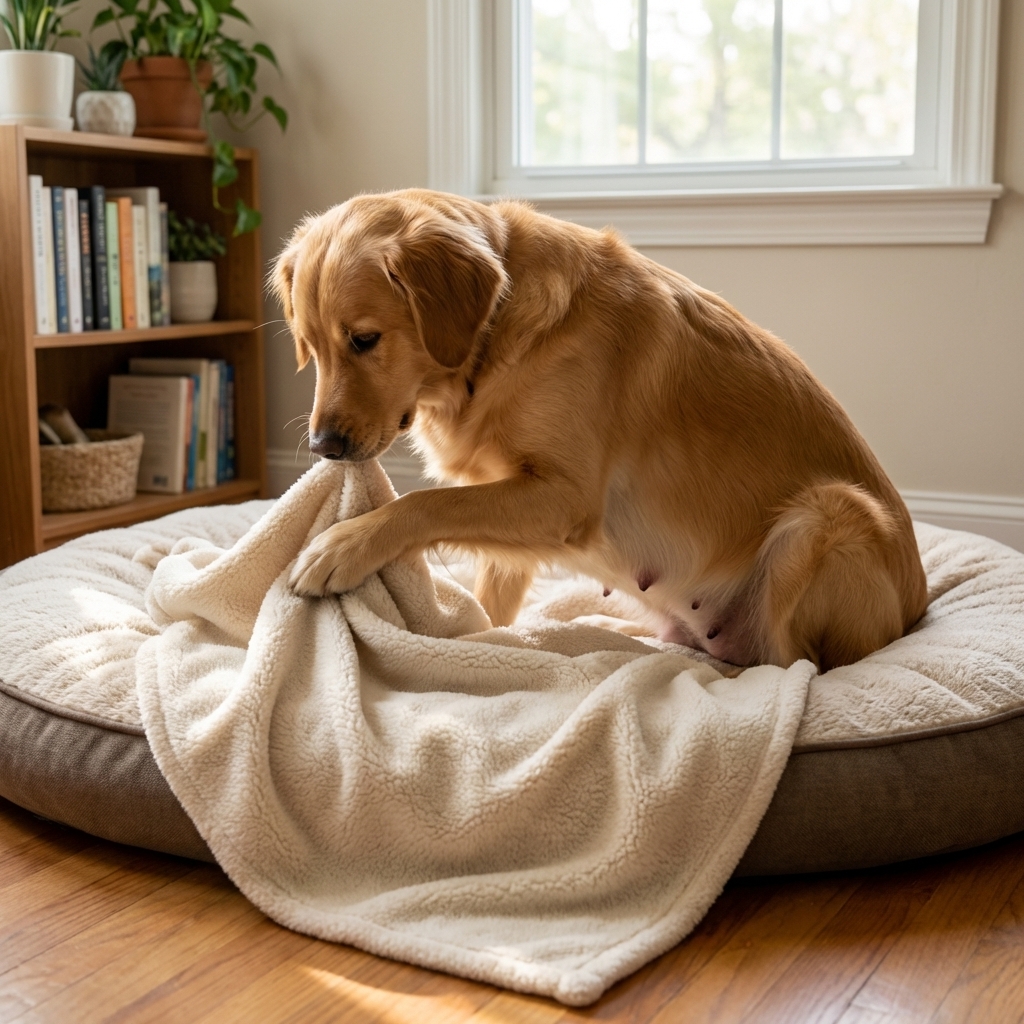
- Nesting (digging in bedding, rearranging blankets, hiding in closets)
- Mothering toys (carrying stuffed animals around, guarding them, whining if you take them)
- Restlessness or pacing
- Clinginess or, less commonly, irritability
- Reduced appetite or picky eating
- Increased vocalizing (whining, crying)
Physical
- Swollen mammary glands
- Milk production or nipple discharge
- Mild belly changes (often slight weight gain or bloating)
- Vomiting or mild lethargy in some dogs
- Increased licking of mammary glands
Some dogs also act protective of a “nest” area. If you have kids or other pets at home, supervise interactions during this time.
Important: a rapidly enlarging abdomen, obvious pain, or significant lethargy warrants a veterinarian visit. Those signs are not something to assume is pseudopregnancy.

How long does it last?
Most false pregnancy episodes resolve on their own.
- Often: about 2 to 4 weeks
- Sometimes: signs can last 6 to 8 weeks, especially if milk production is being stimulated by licking or frequent rubbing of the nipples against toys or bedding
- Occasionally: it can last longer in heavy milk producers or dogs who keep stimulating the glands
In many dogs, you will see the intensity peak and then gradually fade.
False pregnancy vs real pregnancy
At home, it can be hard to tell the difference because the signs overlap. If there is any chance your dog had access to an intact male, treat it as possible pregnancy until proven otherwise.
When to book a veterinarian visit
- You are unsure whether mating occurred
- Her abdomen is clearly enlarging
- You see persistent vomiting, marked lethargy, or she seems painful
- You notice foul-smelling vaginal discharge
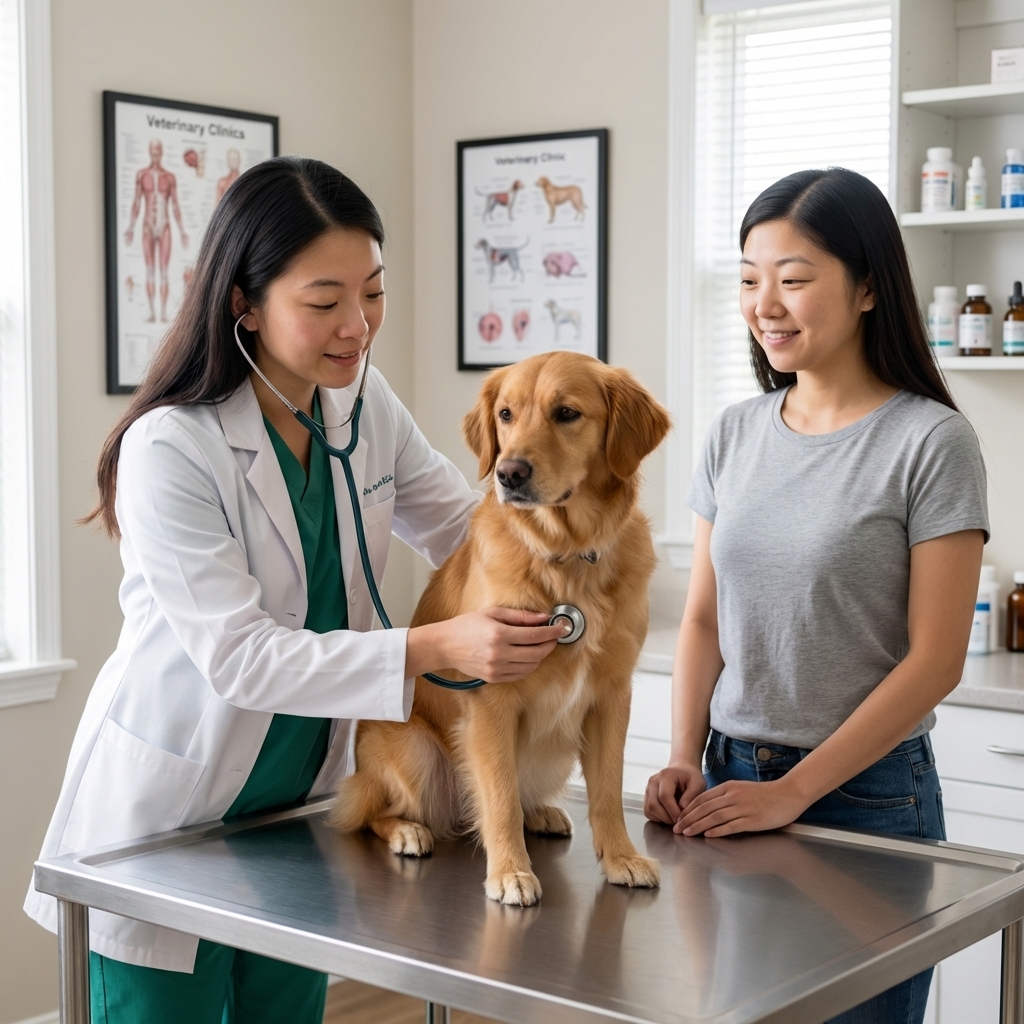
Your veterinarian can confirm pregnancy or rule it out using an exam and, depending on timing, ultrasound or other diagnostics. This is also important because some serious conditions, like pyometra (uterine infection), can happen after a heat cycle and may look similar early on.
How veterinarians confirm it
If you come into the clinic, your veterinarian may use a combination of history, physical exam, and testing. Which test is best depends on timing.
- Physical exam: helpful, but palpation alone is not always reliable
- Ultrasound: often useful by about day 25 to 30 after breeding (timing varies) and can also help assess uterine health
- Pregnancy testing: relaxin testing is typically most reliable closer to about 28 days after breeding or later. Early tests can be negative, so repeat testing may be recommended if breeding is possible
- X-rays: used later in pregnancy to count fetuses, not early on
If pyometra is a concern, your veterinarian may recommend bloodwork and imaging sooner rather than later.
When it resolves vs needs treatment
Often manageable at home
Many dogs only need comfort measures and gentle management if:
- She is bright, alert, and otherwise acting normal
- Appetite is mostly normal or only slightly reduced
- Mammary swelling is mild
- There is no fever, vomiting, or significant pain
Call your veterinarian promptly
- Hot, painful, red mammary glands (possible mastitis)
- Green, yellow, bloody, or foul-smelling vaginal discharge
- Fever, shaking, significant lethargy, or collapse
- Not eating for more than 24 hours, or repeated vomiting
- Excessive milk production that does not taper
- Behavior that becomes extreme, such as guarding or snapping when approached
Veterinary treatment can include medications to reduce discomfort, and in some cases medication to lower prolactin and stop lactation (for example, cabergoline). Antibiotics are not routine for pseudopregnancy itself, but they may be used if an infection is present (such as mastitis or pyometra).
If anxiety, guarding, or agitation is severe, ask your veterinarian about veterinarian-guided behavior support alongside medical care.
How to comfort your dog
Comfort is about reducing stress, preventing milk stimulation, and gently redirecting maternal behaviors without punishing your dog.
1) Limit triggers
- Remove or rotate favored toys she is treating like puppies, especially if she is obsessing or guarding them.
- If removing toys upsets her, start with short toy-free periods during walks, meals, or training, then slowly extend that time.
2) Prevent milk stimulation
- Discourage licking of mammary glands. Licking encourages more milk production.
- If needed, ask your veterinarian about using an e-collar temporarily.
- Do not express milk unless your veterinarian specifically instructs you to. Expressing milk typically signals the body to produce more.
If the glands become very engorged, painful, or your dog seems uncomfortable, call your veterinarian for guidance. Avoid home remedies (including compresses or over-the-counter pain medications) unless your veterinarian has told you exactly what to use and how.
3) Add healthy distractions
- Add an extra walk or two each day.
- Use food puzzles, snuffle mats, and short training sessions.
- If you use a lick mat, keep it focused on mental enrichment and make sure it is not increasing licking of her mammary glands.
4) Keep a calm routine
- Keep feeding, potty breaks, and bedtime consistent.
- Provide a quiet resting area away from household bustle.
5) Watch appetite and stool
A mild dip in appetite can happen. Focus on hydration and offer a balanced diet. If your dog skips meals, vomits, or has diarrhea that persists, check in with your veterinarian.
What not to do
- Do not punish or scold nesting, whining, or toy-guarding. Redirect and manage instead.
- Do not restrict water.
- Do not express milk unless your veterinarian tells you to.
Gentle reminder: your dog is not choosing this. She is responding to hormones. Calm management works far better than scolding.
Can it happen again?
Yes. Some dogs experience pseudopregnancy after multiple heat cycles. For dogs who have recurrent or intense episodes, the long-term solution is often spaying once your veterinarian says the timing is appropriate.
Spaying helps prevent future false pregnancies and also dramatically reduces the risk of pyometra, a life-threatening uterine infection. Timing matters. Many veterinarians prefer to spay after false pregnancy signs have fully resolved, since spaying during diestrus or while symptoms are active can sometimes worsen or prolong lactation and maternal behaviors. Ask your veterinarian what timing is best for your dog based on her last heat cycle and current symptoms.
Rare note: pseudopregnancy-like signs can occur even in a spayed dog if ovarian tissue remains (ovarian remnant syndrome). It is uncommon, but worth mentioning to your veterinarian if a spayed dog shows recurring heat-cycle type signs.
Quick checklist
- Think back to her last heat cycle. Signs often appear weeks later, commonly around 4 to 9 weeks.
- Remove mothered toys if she is obsessing or guarding.
- Prevent licking of mammary glands.
- Increase exercise and enrichment to lower stress.
- Call your veterinarian if there is pain, fever, discharge, vomiting, a rapidly enlarging abdomen, or you are unsure pregnancy is possible.
If you are feeling worried, trust that instinct and reach out to your clinic. False pregnancy is common, but you never want to miss something more serious that can happen after a heat cycle.