
Fading Puppy Syndrome: The First 72 Hours

The first three days of a puppy’s life are intense, even when everything goes perfectly. Newborns are meant to eat, sleep, and gain weight. But a puppy that is fading is not simply “the quiet one.” They are in trouble, and the window to turn things around can be measured in hours.
As a veterinary assistant here in Frisco, Texas, I have seen how quickly weak puppies can slip from “a little behind” to a true emergency. The good news is that many common contributors to fading are treatable when caught early, especially chilling (hypothermia), low blood sugar (hypoglycemia), dehydration, and poor nursing.
Quick note: This article is not a substitute for veterinary care. It is a safety-forward, vet-friendly plan for what to watch and what to do while you are calling your veterinarian or heading in.
This guide will help you tell normal sleepy newborn behavior from danger signs, and it will give you a practical plan for the first 72 hours: warmth, humidity, feeding support, hygiene, weighing, and clear thresholds for when to go in immediately.

What is fading puppy syndrome?
“Fading puppy syndrome” is a broad term, not a single disease. It describes newborn puppies who progressively weaken and decline, often during the first week of life, and in many litters the risk is highest in the first 72 hours.
Common underlying problems include:
- Hypothermia (chilling): Newborns cannot regulate body temperature well.
- Hypoglycemia (low blood sugar): Often secondary to poor nursing, chilling, infection, or low milk intake.
- Dehydration: From not nursing, diarrhea, overheating, or dry air.
- Inadequate milk intake: Poor latch, low milk production, or competition in large litters.
- Infection: Umbilical infections, bacterial overgrowth, or viral causes.
- Congenital issues: Cleft palate, heart defects, and other internal problems.
- Parasites: Possible even in very young puppies depending on region and the dam’s history, though severity in the first days can vary.
- Maternal factors: Poor mothering, mastitis, metritis, low milk, or accidental trauma.
Because the causes overlap, your first job is not to “diagnose” at home. Your job is to stabilize safely and get veterinary guidance early, especially when a puppy is weak, cool, or not nursing.
Normal vs not normal
Newborn puppies sleep a lot. That part is normal. What matters is responsiveness, warmth, nursing, and weight gain.
What is usually normal
- Sleepiness between meals and brief waking periods.
- Quiet resting while warm and nestled with littermates.
- Wiggling and rooting when handled or when hungry.
- Strong latch when placed on a nipple.
- Steady daily weight gain after the first day.
Red flags
- Cool to the touch, especially mouth and paws.
- Weak suckle or repeatedly falls off the nipple.
- Separated from the pile or unable to crawl toward warmth.
- Constant crying (pain, hunger, cold) or unusual silence (too weak to protest).
- Limpness, tremors, or seizures.
- Pale, gray, or bluish gums (emergency).
- Milk coming from the nose (possible cleft palate or aspiration risk).
- Labored breathing, noisy breathing, coughing, or gasping.
- No weight gain for 24 hours, or weight loss beyond the first day.
- Not urinating or stooling (or mom is not stimulating them) plus weakness or bloating.
If a puppy is weak and cool, treat it as urgent. Hypothermia slows gut function and weakens coordination. Trying to force food or liquids into a weak or cold puppy can increase aspiration risk.
Why the first 72 hours matter
In the first days of life, puppies have very limited “backup systems.” They have small energy stores, poor temperature control, and an immature immune system. When one piece falls out of place, the rest can follow quickly.
Here is the cascade we worry about:
- Chilling leads to weak nursing.
- Weak nursing leads to low blood sugar and dehydration.
- Low blood sugar causes weakness, making nursing even harder.
- Meanwhile, the gut slows down and immunity weakens, increasing infection risk.
This is why breeders and first-time puppy owners do best with a simple routine: consistent warmth, appropriate humidity, daily weight checks, and early intervention when a puppy drops behind.
Whelping box targets
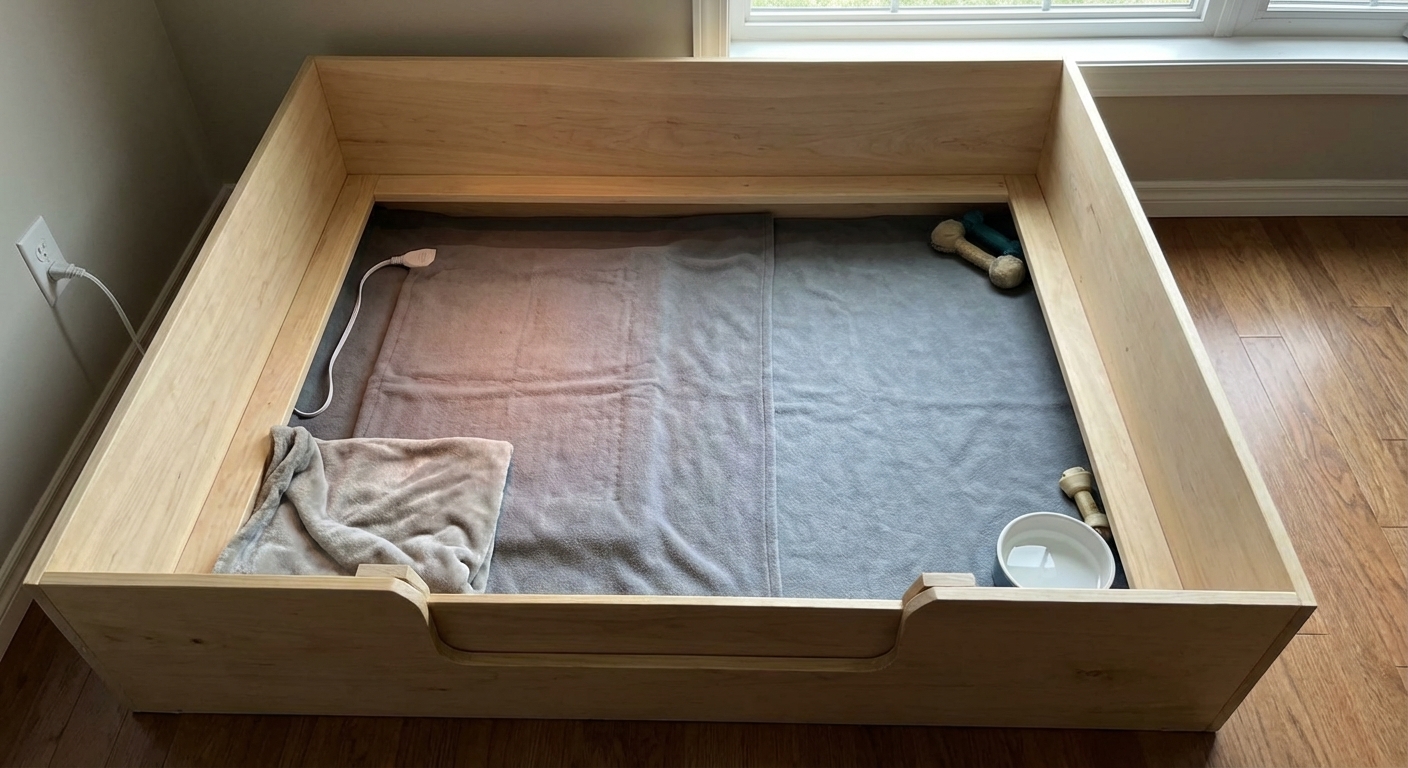
You do not need fancy equipment, but you do need a predictable environment. A warm box with air that is too dry can dehydrate neonates faster than many people realize.
Temperature (ambient)
- Week 1: aim for about 85 to 90°F (29 to 32°C) in the warm zone.
- Week 2: about 80 to 85°F (27 to 29°C).
- Week 3: about 75 to 80°F (24 to 27°C).
Create a warm zone and a cooler zone so puppies can crawl away if they get too warm.
Humidity
- A practical target for many setups is roughly 55 to 65% humidity.
- If your home air is dry (common with heaters), consider a cool-mist humidifier near the whelping area.
- If you do not have a humidifier, a damp sponge or towel placed safely away from the heat source can help, but it must be changed frequently to stay clean and to avoid chilling.
Puppy temperature (rectal)
If you have a small digital rectal thermometer, it can help you and your vet make faster decisions. General neonatal ranges vary by age, but as a safety guideline:
- Below about 95°F (35°C) is concerning and warrants urgent vet guidance.
- Below about 94°F (34.4°C) is an emergency, especially if the puppy is weak or not nursing.
If you are not comfortable taking a rectal temperature, focus on behavior, warmth to touch, and weight trends, and call your vet early.
Hypoglycemia (low blood sugar)
Hypoglycemia is a common and often treatable contributor to fading, but it is easy to miss early. Newborn puppies do not have much stored glucose, so even a short period of poor nursing can cause trouble.
Common signs
- Weakness, “floppy” body tone
- Reduced suckling reflex
- Sleepiness that feels “too deep”
- Tremors, twitching
- Seizures, collapse (late sign)
Why it happens
- Not nursing enough (competition, poor latch, low milk supply)
- Chilling (cold puppies cannot nurse well)
- Infection
- Diarrhea or vomiting
Important: Many home guides jump straight to giving sugar. In real practice, the safest order is usually warm first, then feed, unless your veterinarian directs otherwise. A cold puppy has slowed gut function and is often too weak to swallow well.
Emergency first aid (vet-directed when possible)
If a puppy is crashing (non-responsive, collapsing) or seizing and you are actively heading to the vet, many veterinarians will recommend a common first-aid step: rub a tiny amount of corn syrup (Karo) on the gums to provide quick sugar absorption.
- Use only a smear, not a squirt, to reduce choking risk.
- Do not pour liquid into the mouth of a weak puppy.
- This is not a replacement for warming, feeding support, or veterinary care. It is a bridge while you are getting help.
Stabilize: warm first, then nutrition
If you suspect a puppy is fading, call your veterinarian or an emergency clinic right away and begin safe, gentle warming while you arrange care. The goal at home is to stabilize, not to experiment.
Step 1: Warm safely
- Move to a draft-free area with clean, dry bedding.
- Use gentle external heat: a heating pad on low under half the box, a warm water bottle wrapped in a towel, or a microwavable heat disk wrapped well.
- Keep space to crawl away from the heat source to avoid overheating.
- Warm gradually over about 20 to 30 minutes, checking often. Your goal is a comfortably warm puppy that becomes more responsive.
Safety note: Never place a puppy directly on a hot surface. Burns happen fast in neonates.
Step 2: Feeding support (after warming)
Once the puppy is warmer and more responsive, ask your veterinarian what they recommend for supplemental feeding. Depending on the puppy’s condition and your setup, your vet may advise:
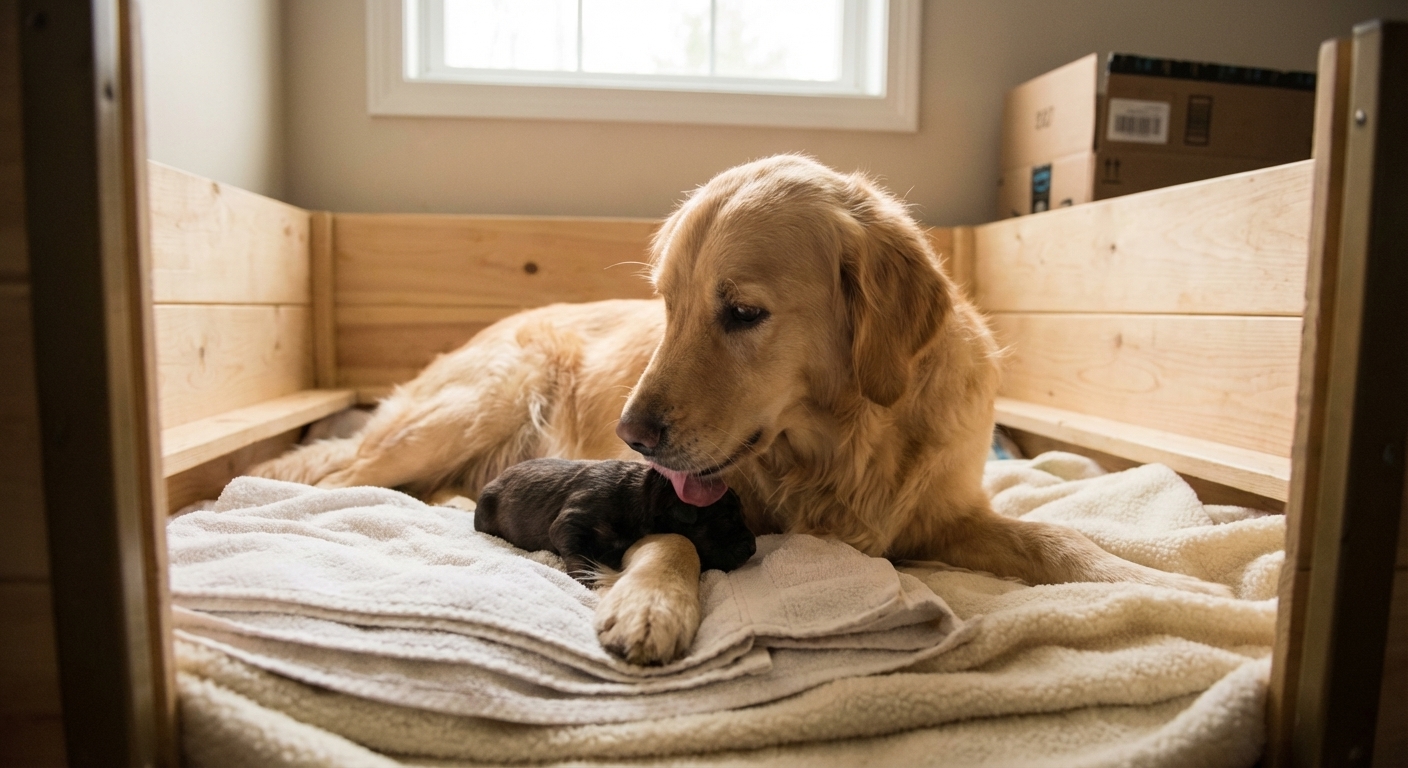
- Return to mom with supervised nursing and ensuring the puppy gets a productive nipple.
- Supplement with a commercial puppy milk replacer (not cow’s milk).
- Small, frequent feedings rather than large volumes.
- Glucose support in specific situations, with your vet’s dosing guidance.
Safer feeding basics: Keep puppies belly-down (sternal), never on their back. Use slow, controlled delivery. Stop immediately if there is coughing, gagging, milk from the nose, or noisy breathing.
Many vets will caution against giving liquids to a puppy that cannot swallow well. Aspiration pneumonia is a serious risk when a puppy is too weak to coordinate sucking and swallowing.
Tube feeding and training
Tube feeding can save lives in the right hands, but it is not a casual skill. If you are breeding or fostering neonatal puppies, ask your veterinarian before an emergency to teach you proper tube feeding technique, measuring, placement checks, and safe volumes.
Tube feeding may be indicated when a puppy is warm but too weak to nurse effectively, and your veterinarian confirms it is appropriate.
Do not attempt tube feeding without training. Incorrect placement can put formula into the lungs. That can be fatal.
Go in now
- Gasping, coughing, milk from nose, or noisy breathing
- Blue, gray, or very pale gums
- Seizures or collapse
- Rectal temperature below 94°F (34.4°C), or the puppy stays cool despite proper external heat
- Repeated refusal to nurse, especially with weight loss
Weighing: early warning system
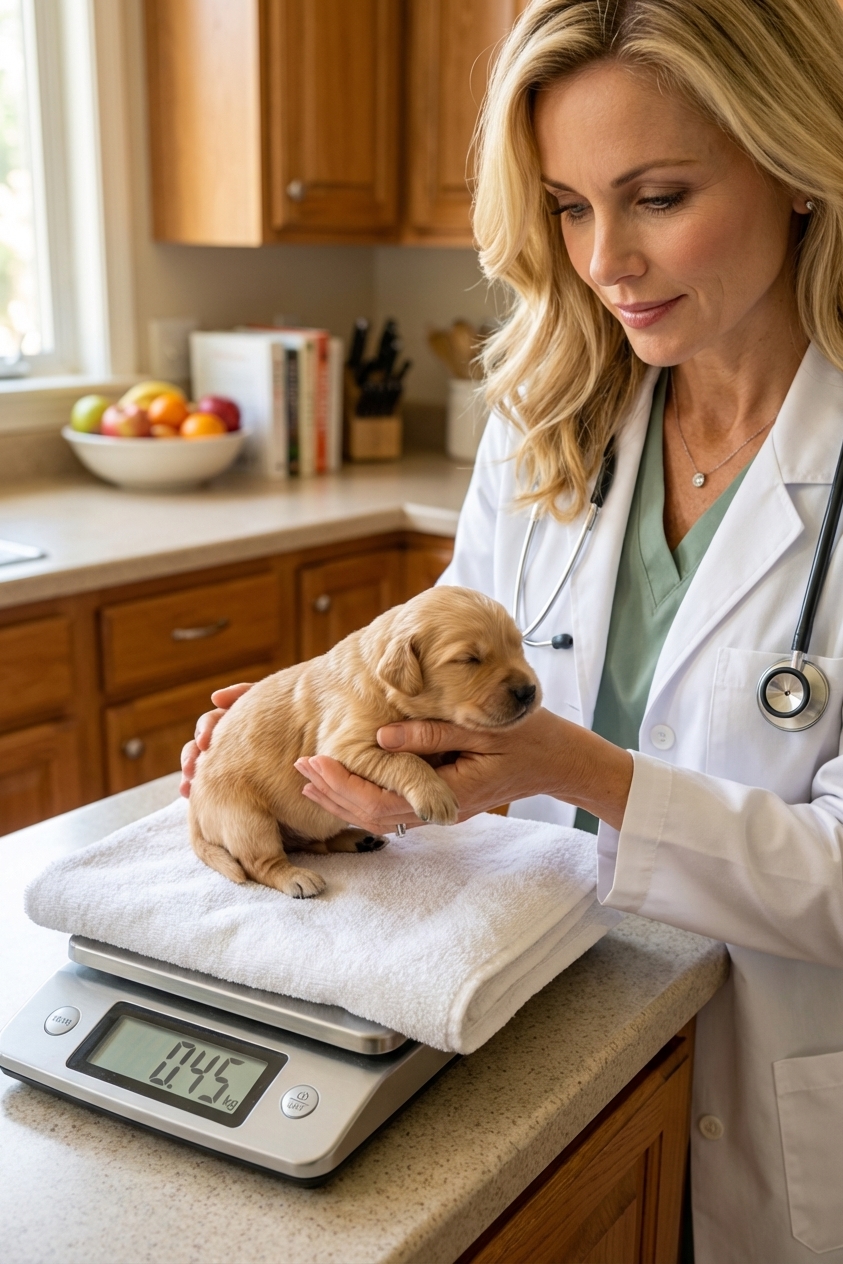
If I could give new breeders and first-litter families just one habit, it would be this: weigh every puppy daily, starting at birth. Weight trends catch problems earlier than eyeballing ever will.
How to weigh
- Use a digital kitchen scale that reads in grams.
- Weigh at the same time each day.
- Use a clean bowl or small box lined with a towel.
- Record the number in a notebook or spreadsheet.
What you are looking for
- Consistent gain is the goal.
- No gain for 24 hours is a reason to increase monitoring and call your vet for advice.
- Weight loss after the first day, especially paired with weakness or poor nursing, is a red flag.
If a puppy is already struggling, your veterinarian may recommend more frequent weights (for example, every 12 hours) until things stabilize.
Your veterinarian can help you interpret the numbers for your breed and litter size, since “normal” growth rates vary widely.
Dehydration basics
Dehydration can show up fast in neonates, and common “adult dog” checks are not very reliable in newborns.
Signs that raise concern
- Weight loss or flat weight plus weakness
- Dry mouth or tacky gums (sometimes subtle)
- Coolness, low energy, weak suckle
- Fewer wet spots in bedding (hard to track, but useful context)
Do not give oral fluids to a puppy that is weak, cold, or not swallowing well. Subcutaneous fluids and specific rehydration plans should be vet-directed in neonates.
Hygiene and infection prevention
Newborn puppies are vulnerable to bacteria. Good hygiene does not need to be complicated, but it does need to be consistent.
Daily basics
- Change soiled bedding promptly. Damp bedding chills puppies quickly.
- Wash hands before handling, especially after touching other pets.
- Keep the area warm, dry, and not overly dry. Avoid strong fragrances or harsh cleaners around neonates.
- Trim and file sharp nails on puppies if they are scratching mom’s mammary tissue, which can increase mastitis risk.
Umbilical watch-outs
- Swelling, pus, foul odor, or redness around the umbilicus needs veterinary attention.
- Any puppy with a painful belly, weakness, or low temperature could be septic and needs urgent care.
Quick check twice a day
This routine helps you catch fading early without spiraling into constant worry:
- Warmth: feels warm against your skin, not cool
- Latch: can attach and suckle when placed
- Energy: wiggly resistance when gently picked up
- Belly: rounded after nursing, not tucked
- Elimination: urine and stool output seem normal for age, and mom is stimulating (or you have been instructed how to help)
- Weight: check daily at the same time (more often only if your vet advises)
If one puppy consistently fails two or more items, call your veterinarian and start supportive warming while you get instructions.
When it is not hypoglycemia
Low blood sugar is common, but it is not the only cause of fading. A puppy can look weak because of:
- Cleft palate (often milk from the nose, poor weight gain)
- Pneumonia (labored breathing, poor nursing)
- Congenital heart disease (poor stamina, failure to thrive)
- Parasites (depending on region and dam history and deworming)
- Maternal illness (mom not producing milk, mastitis, fever, painful nursing)
This is why a veterinary exam matters. Stabilizing at home is helpful, but diagnosing and treating the cause is what saves the litter.
Call the vet: have this ready
If you call your veterinarian or an emergency clinic, having clear information speeds up care. Keep these notes handy:
- Puppy age in hours or days
- Current weight and birth weight
- Trend over the last 24 to 48 hours (up, flat, down)
- Is the puppy warm or cool to touch? If available, rectal temperature
- Nursing behavior: latching, staying on, refusing
- Any diarrhea, bloating, milk from nose, coughing, or unusual breathing
- Elimination: has the puppy urinated and passed stool? Is mom stimulating?
- Whelping details: litter size, prolonged labor, any puppies delivered distressed
- Mom’s status: eating, drinking, fever, painful mammary glands, discharge
You are not “overreacting” when you call early for a fading puppy. Early calls are the ones that most often end with a puppy that turns around.
Bottom line
Normal newborn puppies are sleepy, warm, and steadily gaining. Fading puppies are often cool, weak, and falling behind. In the first 72 hours, small changes matter.
Your best tools are simple and powerful: warmth with a safe temperature gradient, adequate humidity, daily weight tracking, clean bedding, and fast veterinary guidance. If a puppy is cool, weak, refusing to nurse, losing weight, has milk from the nose, shows breathing changes, has neurologic signs, or has a rectal temperature below about 95°F, treat it as urgent and get help right away.