
Expressing a Cat’s Anal Glands at Home

As a veterinary assistant, I have to start with the most important truth: most cats do not need routine anal gland expression at home. When they do, it is usually because something is off, like inflammation, infection, allergies, diarrhea, obesity, or an anatomic issue. That is why this topic needs a careful, safety-first approach.
Quick disclaimer: This guide is educational and not a substitute for veterinary care. If your cat seems very painful, has swelling, is acting sick, or you suspect a urinary problem, seek veterinary care right away.
If your cat is uncomfortable and you cannot get to a vet right away, gentle external expression can sometimes provide short-term relief. But there are clear times to stop and get professional help. I will walk you through the tools, positioning, steps, aftercare, and the red flags that mean it is time to call your veterinarian.
Quick anatomy
Cats have two small scent glands, also called anal sacs, sitting just inside the anus at roughly the 4 o’clock and 8 o’clock positions (this can vary a bit by individual). They normally empty a small amount of strong-smelling fluid when a cat defecates, and sometimes during stress or excitement.
Problems happen when the sacs do not empty properly. The fluid thickens, the sacs become overfull, and your cat may feel itchy or painful. If bacteria overgrow, the sacs can become infected, and if pressure builds, an abscess can form and rupture through the skin near the anus.
Signs of an anal gland issue
- Scooting or dragging the rear on the floor
- Excessive licking under the tail
- Fishy, musky, or foul odor coming from the rear end
- Sudden irritability when you touch the back end or tail base
- Straining or vocalizing during defecation
- Swelling, redness, or a lump near the anus
- Blood, pus, or discharge from the anus or nearby skin
One important note: scooting is also common with fleas, tapeworm segments, constipation, diarrhea, skin allergies, and irritation around the anus. Also, straining can be urinary, not just stool related.
Emergency note: If your cat is repeatedly getting into the litter box, straining, crying, and producing little or no urine (or licking the genitals), treat this as an emergency, especially in male cats.
Do not do this at home
Home expression is not appropriate in many situations. Please skip the DIY and call your veterinarian (or an urgent care clinic if needed) if you see any of the following:
- Visible swelling, heat, or a firm lump beside the anus
- Open wound, draining tract, or hole near the anus
- Pus, thick cottage-cheese discharge, or a foul infected smell
- Blood in the discharge or in the litter box
- Severe pain, growling, yowling, or trying to bite when you lift the tail
- Lethargy, fever, hiding, not eating, or vomiting
- Constipation or inability to pass stool
- Repeated straining with little or no urine (possible urinary blockage, emergency)
- History of abscess or recurrent anal sac infections
These can indicate infection, abscessation, urinary disease, or other conditions that need medication, flushing, pain relief, and sometimes sedation. Trying to squeeze an infected sac can worsen pain, spread infection, or rupture tissue.
Important: Cats are harder to express safely than dogs. If you are unsure you are feeling the sacs, or your cat is tense or reactive, stop and let your veterinary team handle it.
External vs internal expression
External expression
This is the only method I would even consider for a cat at home. You apply gentle pressure from the outside of the anus to encourage the sacs to empty. It is less effective for thick, pasty material, but it is safer than internal expression for most households.
Internal expression
Internal expression uses a gloved, lubricated finger inserted into the rectum to “milk” the sacs from the inside. This is often more effective, but it carries higher risk and is not something I recommend attempting at home. Cats can move suddenly, and internal expression can cause tears, significant pain, and a negative association with rear-end handling. In some cats, painful rear-end experiences can contribute to litter box avoidance.
Tools to use (and skip)
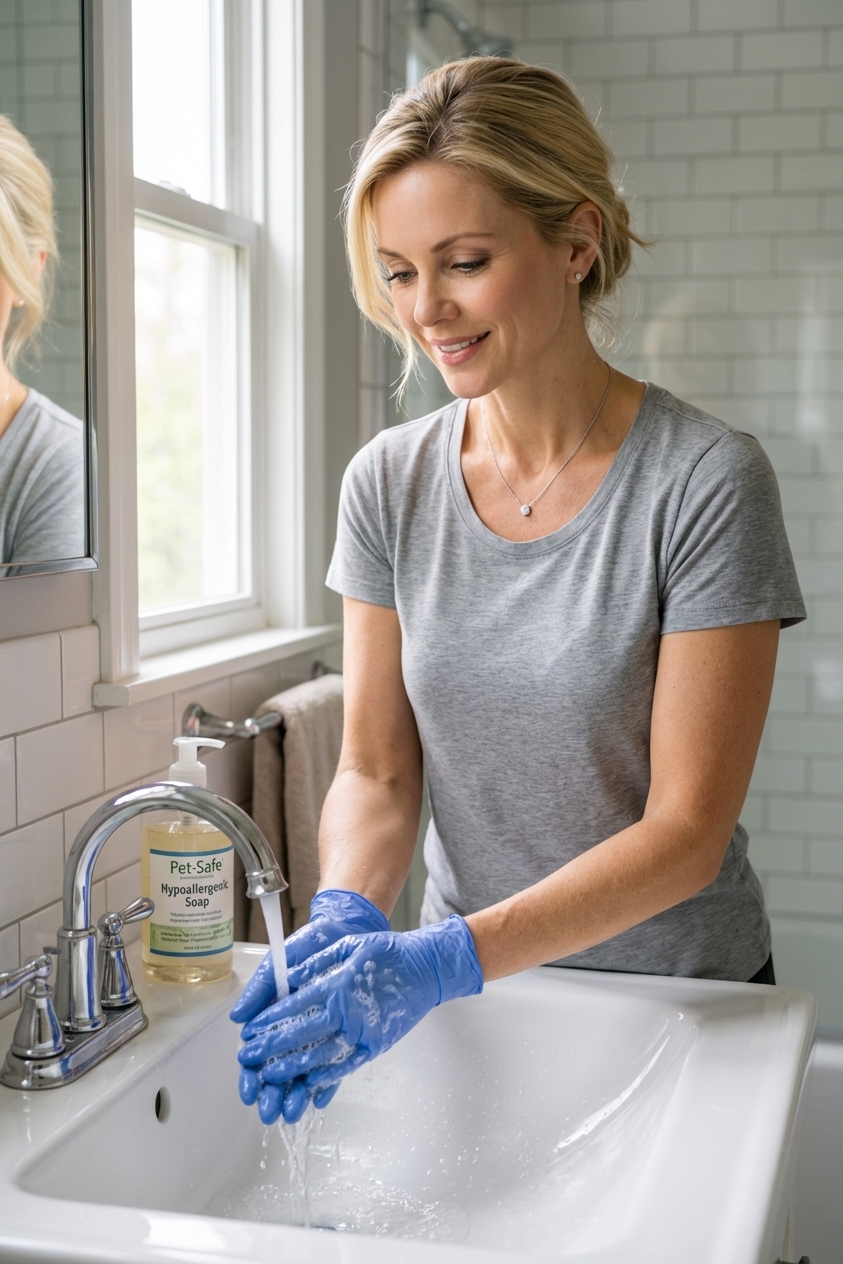
- Nitrile gloves (several pairs)
- Unscented baby wipes or soft paper towels
- Warm water and mild soap for cleanup
- Pet-safe antiseptic wipe (optional) for the surrounding fur, not inside the anus
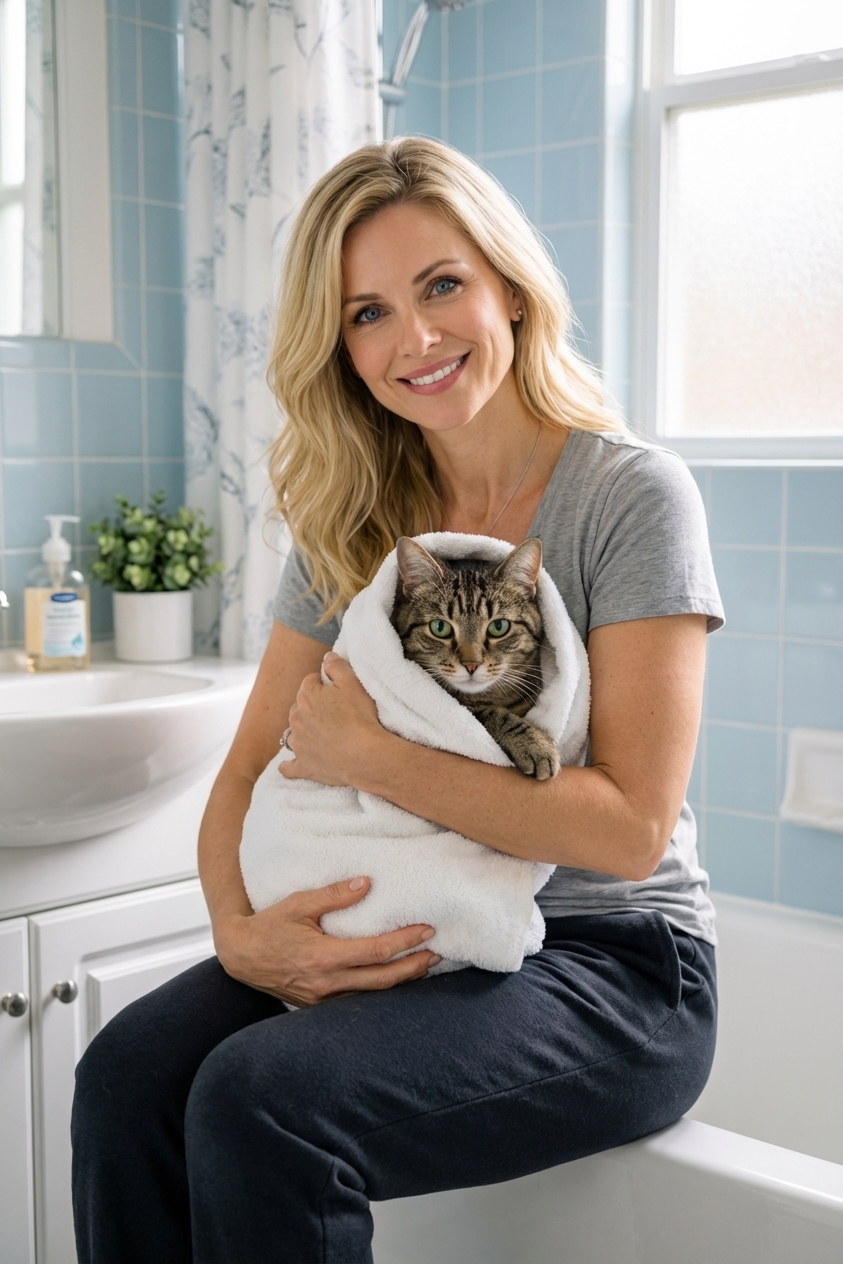
- A large towel for a “kitty burrito” wrap
- Gauze squares or paper towels to catch fluid
- A helper if possible
- Elizabethan collar (cone) if your cat is licking obsessively afterward
Skip alcohol, hydrogen peroxide, essential oils, heavily scented wipes, or any attempt to flush the sacs at home. Also skip doing this on carpet or upholstery. Choose an easy-clean spot like a bathtub.
Set up
Pick the right moment
If your cat is already upset or defensive, stop and schedule a vet visit. Anal gland expression should never turn into a wrestling match. Stress and pain make the risk of injury much higher.
Choose your location
A bathtub or shower stall works well because cleanup is easy and there is less chance of fluid spraying onto fabrics.
Wrap your cat
Use a towel wrap to keep paws contained. Many cats tolerate a snug wrap better than being held tightly.
Have your helper stabilize
Your helper’s job is to hold the wrapped cat against their body with the head facing away from you, keeping the back end accessible.
How to do external expression
Goal: apply gentle, steady pressure toward the anus. You are not “popping” anything. If nothing comes out quickly, do not escalate force.
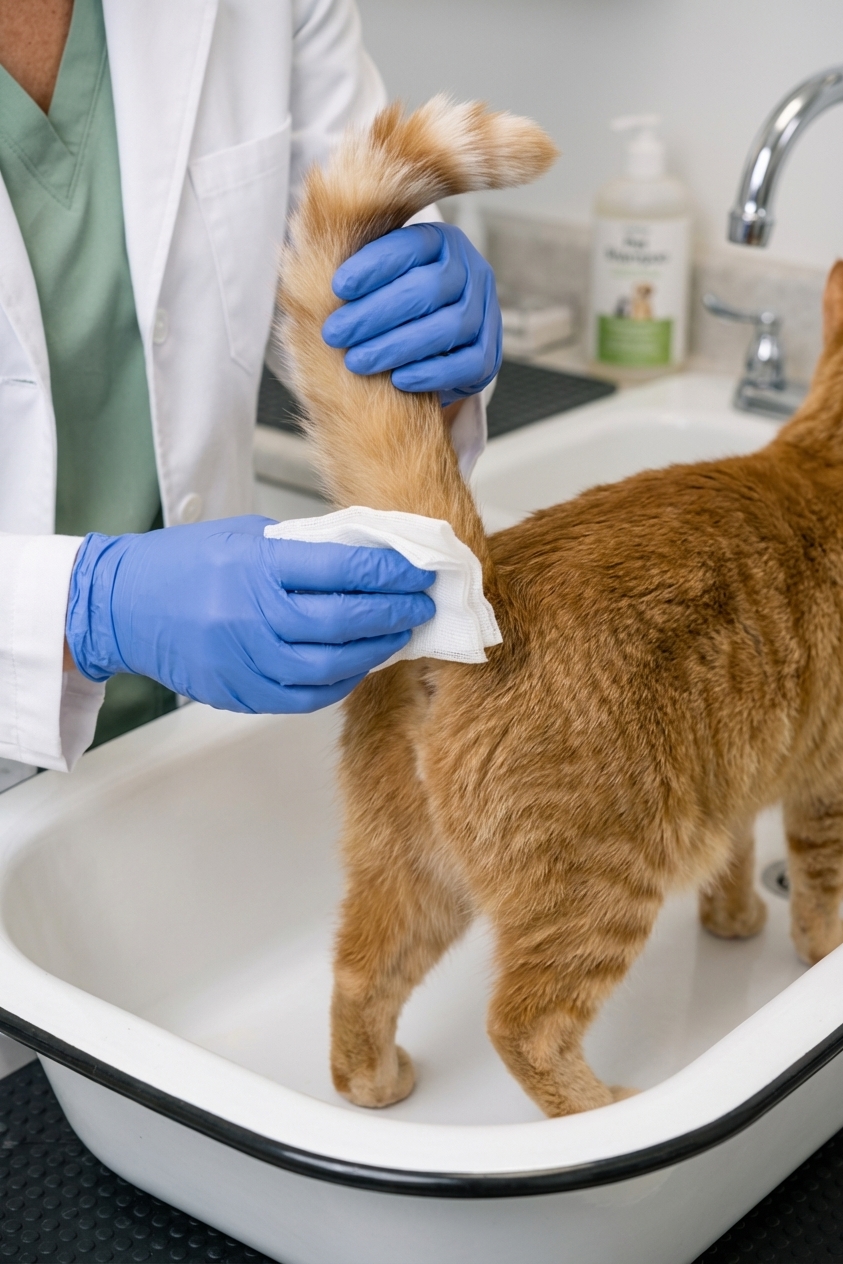
- Glove up and place folded gauze or a paper towel behind the anus to catch fluid.
- Lift the tail gently upward and slightly forward to expose the anus.
- Find the sacs by placing your thumb and index finger at about the 4 o’clock and 8 o’clock positions just outside the anus. They may feel like small peas or a soft swelling.
- Press inward and upward with gentle, even pressure. Think “in toward the center, then up toward the opening.”
- Watch for discharge. Normal fluid may be thin to slightly thicker, tan to brown, and very smelly. Small amounts are typical.
- Stop after 1 to 2 attempts. If you do not get results quickly, do not keep squeezing. Repeated pressure increases inflammation and pain.
- Wipe the area with a damp paper towel or unscented wipe. Trim soiled fur later if needed, but do not shave close to irritated skin.
If discharge sprays, that is common. Aim the gauze directly over the opening as you apply pressure to reduce mess.
What is normal vs not
Often normal
- Strong odor
- Small volume of tan, brown, or grayish fluid
- Your cat seems relieved afterward and stops scooting
Not normal and needs a vet
- Blood or pink-tinged fluid
- Pus, thick chunky discharge, or greenish-yellow material
- No fluid and your cat is still painful
- Marked swelling near the anus
- Sudden worsening of licking, pain, hiding, or appetite loss afterward
Aftercare
- Clean gently and keep the area dry.
- Discourage licking if your cat is obsessing. Excess licking can inflame the skin and introduce bacteria.
- Offer water and a calm space. Stress can make GI issues worse.
- Monitor the litter box for straining, blood, diarrhea, constipation, or reduced urine output for the next 24 to 48 hours.
If your cat seems comfortable and symptoms improve within a day, that is a good sign. If symptoms return quickly, plan a vet visit. Repeat problems almost always mean there is an underlying cause that needs addressing, not just more expressing.
Stop and call the vet
- Your cat cries out, pants, or tries to bite
- You feel a firm mass that does not “give” with gentle pressure
- You see blood, pus, or a sudden gush of fluid
- There is visible swelling or a hot lump next to the anus
- Your cat is trembling, hiding, or acting unwell
- Your cat is straining and producing little or no urine (emergency)
Safety rule: if you are tempted to squeeze harder, that is your cue to stop and call your veterinarian.
Complications
Impaction
Thickened material blocks the duct. This can be uncomfortable and may require professional expression, flushing, or a medication plan.
Infection (anal sacculitis)
Infected sacs are painful and can require antibiotics, anti-inflammatories, and sometimes culture.
Abscess and rupture
An abscess can burst through the skin near the anus. This looks like a draining wound and needs veterinary care, often with pain control and antibiotics.
Anal gland tumors (rare, but serious)
Masses around the anus, persistent swelling on one side, weight loss, or changes in stool shape warrant prompt evaluation.
How to reduce recurrence
Anal gland trouble is often a symptom, not the root problem. Long-term prevention depends on what is driving the inflammation.
- Address diarrhea: chronic soft stool is a big reason sacs do not empty normally.
- Support healthy weight: overweight cats may have reduced muscle tone and less effective emptying.
- Talk to your vet about diet and fiber: some cats benefit from a careful fiber adjustment, but too much or the wrong kind can worsen stool in others.
- Manage allergies: food allergies and environmental allergies can cause chronic inflammation around the rear end.
- Parasite control: keep fleas and intestinal parasites under control, since irritation can mimic anal gland issues.
If your cat needs expression more than occasionally, ask your veterinarian to create a plan. Repeated home expression can actually increase irritation for some cats.
FAQs
How often should I express my cat’s anal glands?
Ideally, not on a schedule at all unless your veterinarian recommends it for your individual cat. Many cats never need it. If it becomes frequent, it is time to investigate the cause.
Is the smell always that bad?
Yes. Anal sac fluid is notoriously strong-smelling, even when everything is “normal.” If it smells rotten or you see pus, that is different and should be checked.
Can grooming salons do this?
Some groomers will offer external expression, but policies and scope-of-practice rules vary by location. If you are considering this, ask what method they use and confirm what is allowed locally. Because cats can become stressed quickly, many vets prefer this be handled in a clinic where pain, infection, and anatomy can be assessed at the same time.
My final word
I completely understand wanting to help your cat right away, especially when you see scooting or constant licking. But with anal glands, gentle and minimal is safer than aggressive and repeated. If you try external expression and it is not easy, that is your answer. Stop and let your veterinary team take it from there.
If you are unsure, call your vet and describe what you are seeing. A quick conversation can save your cat a lot of pain, and save you from turning a small issue into a bigger one.