Scooting, licking, fishy odor? Learn what anal glands do, common behavior signs, how to try safe external expression at home, prevention tips, and urgent red...
Article
•
Designer Mixes
Express Dog Anal Glands at Home

Shari Shidate
Designer Mixes contributor
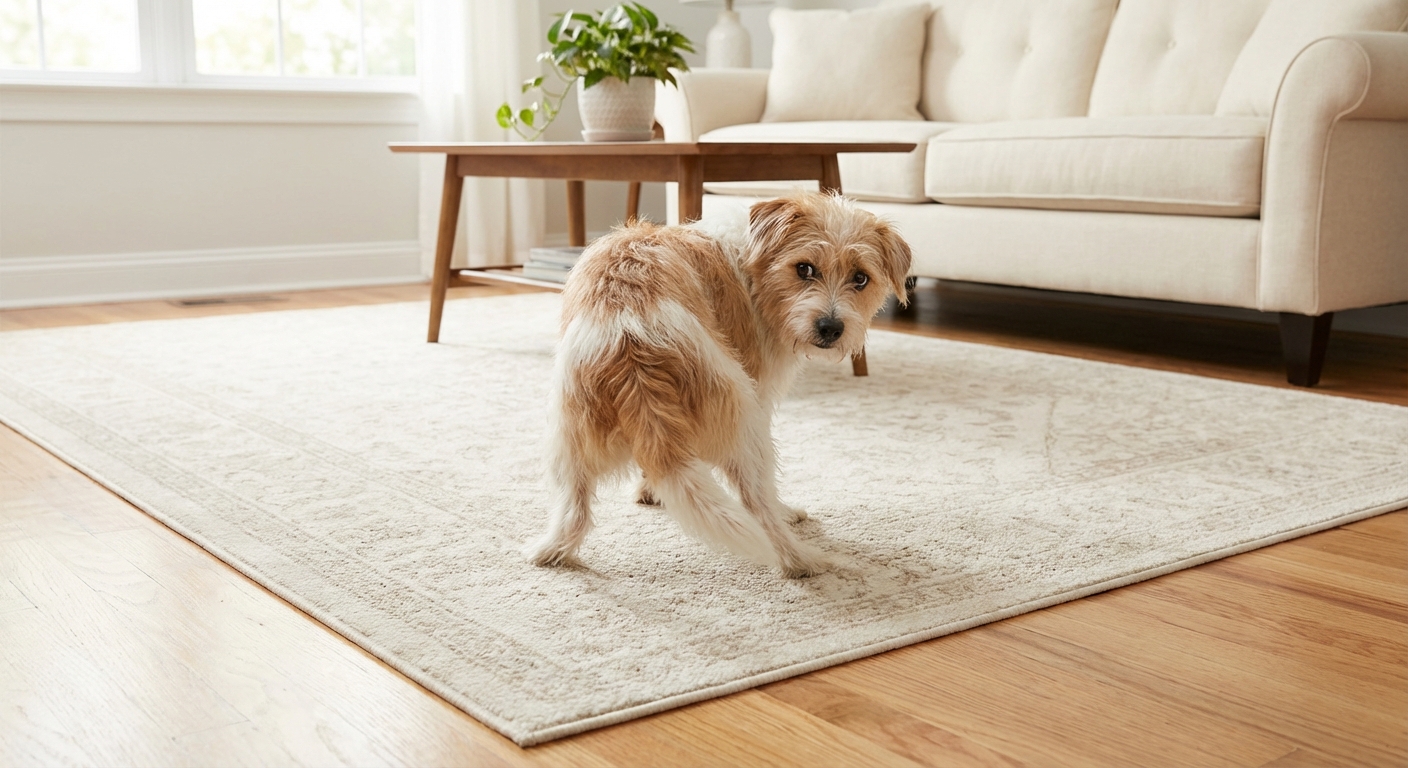
If your dog is scooting , licking under the tail, or leaving a strong fishy smell behind, their anal glands may be too full. As a veterinary assistant, I want you to know two things can be true at once: many dogs never need help with their glands, and anal gland issues can be more common in some dogs (often small breeds and dogs with consistently soft stools). Any dog can have gland trouble, though.
This article walks you through a safe, step-by-step way to express anal glands at home only when it is appropriate, and it will also help you recognize when you should stop and call your veterinarian. You do not get bonus points for muscling through a painful problem. Comfort and safety come first.
Scope note: This is general education and not a substitute for veterinary advice. If you are unsure, or your dog is in pain, skip the DIY and call your clinic.
What anal glands are
Dogs have two small scent sacs (anal glands) just inside the anus at about the 4 o'clock and 8 o'clock positions. Normally, a firm bowel movement puts gentle pressure on the sacs and expresses a tiny amount of fluid. That fluid is part of your dog’s natural scent communication.
Problems start when the sacs do not empty well. The fluid thickens, the glands become overfull, and dogs may feel itchy, uncomfortable, or even painful.
Signs glands may be full
- Scooting (dragging the rear end on carpet or grass)
- Licking or chewing under the tail
- Sudden foul, fishy odor
- Straining, frequent attempts to poop, or small stools
- Discomfort sitting down
- Swelling near the anus
Important: Scooting can also be caused by allergies , fleas, tapeworms , skin infection, or irritated tissue. If this is new for your dog or it keeps happening, it is worth a veterinary exam rather than repeated home expressing.
Tapeworm tip: Tapeworm segments can look like little grains of rice around the anus or in bedding. If you see that, call your vet and bring a fresh stool sample if you can.
When not to DIY
Home expression is not a good idea if there are signs of infection, injury, or a high bite risk. Please call your veterinarian if you notice any of the following:
- Blood, pus, or thick yellow-green discharge
- A firm lump, open sore, or draining hole near the anus (possible abscess)
- Significant swelling, heat, or redness
- Extreme pain, yelping, snapping, or your dog cannot settle
- Fever, lethargy, not eating
- Your dog has never had glands expressed before and you are unsure what “normal” looks or smells like
- Your dog may bite, even with gentle handling
These situations can require antibiotics, pain relief, flushing, or deeper evaluation. Expressing infected glands can be very painful and can worsen inflammation.
Safety first: If you have any concern about getting bitten, do not attempt this at home. A muzzle can prevent injury in some situations, but if your dog is painful or stressed, it is usually better to stop and have your veterinary team handle it.
Before you start
- Your dog is acting normal otherwise (eating, drinking, energy).
- No visible swelling, open sores, bleeding, or draining tracts near the anus.
- You can safely keep your dog still with minimal stress (ideally with a helper).
- You are prepared for odor and possible spray, and you can clean the area well.
What you need
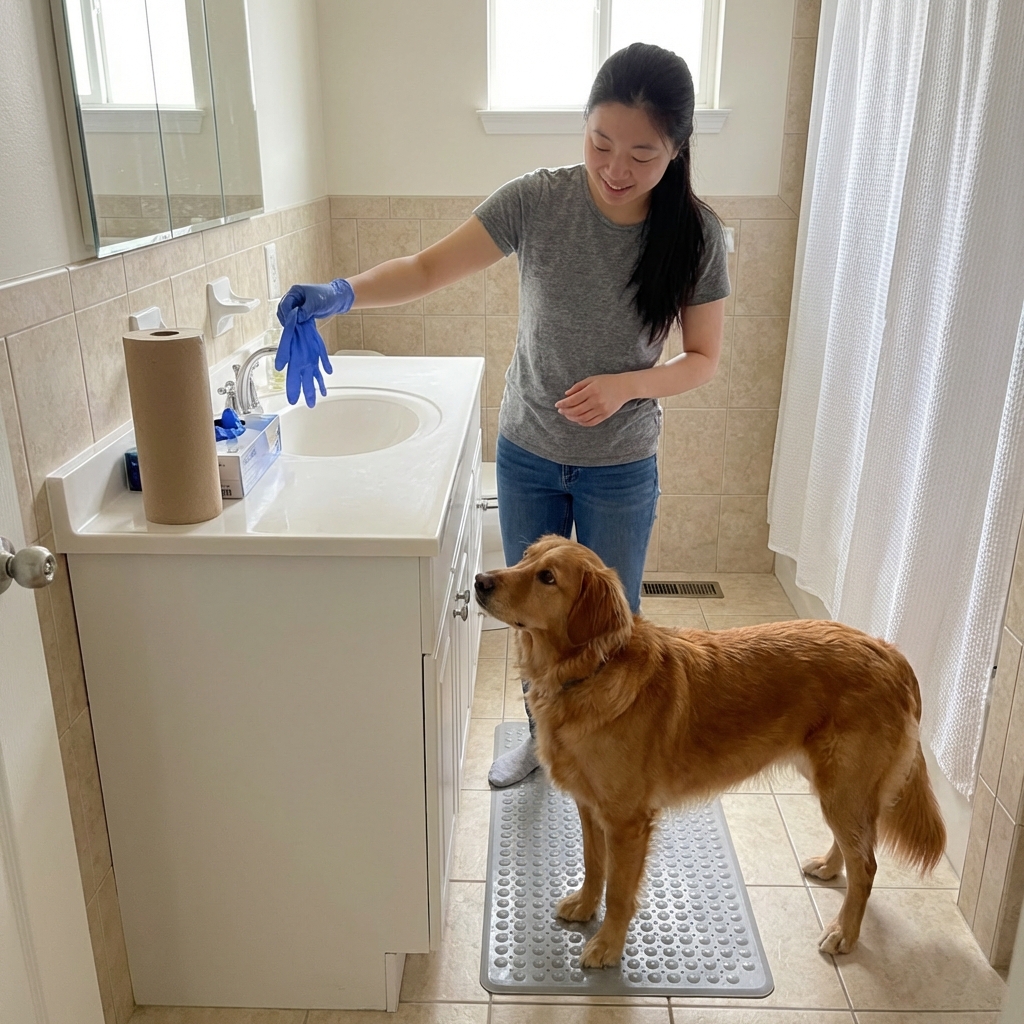
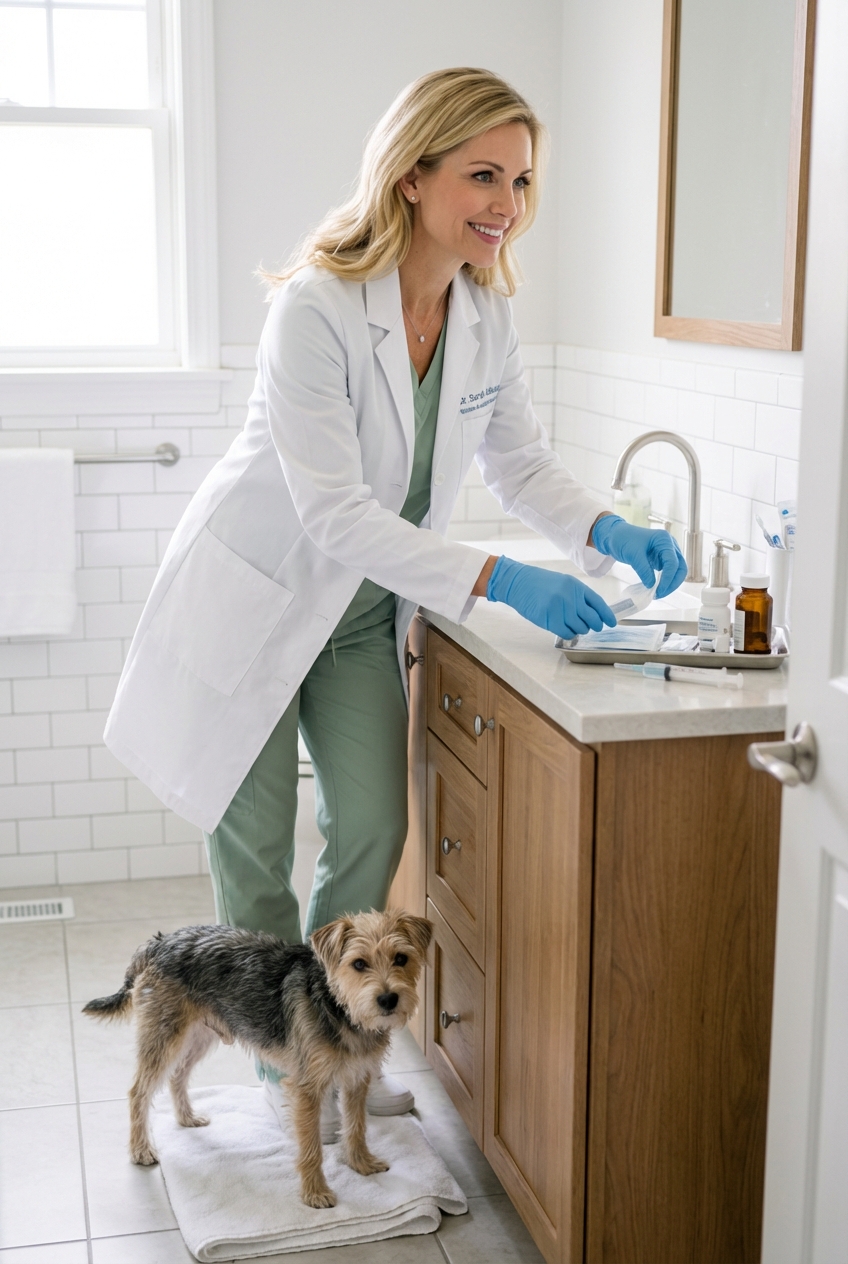
Anal gland fluid can spray and it can stain, so your environment matters. I recommend doing this in a bathtub, shower, or an easy-to-clean bathroom.
- Disposable gloves (nitrile or latex)
- Paper towels or gauze
- Unscented baby wipes or a damp washcloth
- A towel to stand your dog on
- Optional: petroleum jelly or water-based lubricant (helps reduce friction)
- Optional: a second person to gently hold and reassure your dog
- High-value treats for after (and during if your helper can treat)
External expression
This is the safest first approach for at-home care. It may not work for every dog, especially if the fluid is thick or the glands are chronically impacted. If you do not get results with gentle pressure, stop and schedule a veterinary visit.
1) Keep your dog calm
Place a towel on the floor of the bathroom or in the tub for traction. Have your helper stand at your dog’s head and offer calm support. Speak softly and move slowly.
2) Lift the tail gently
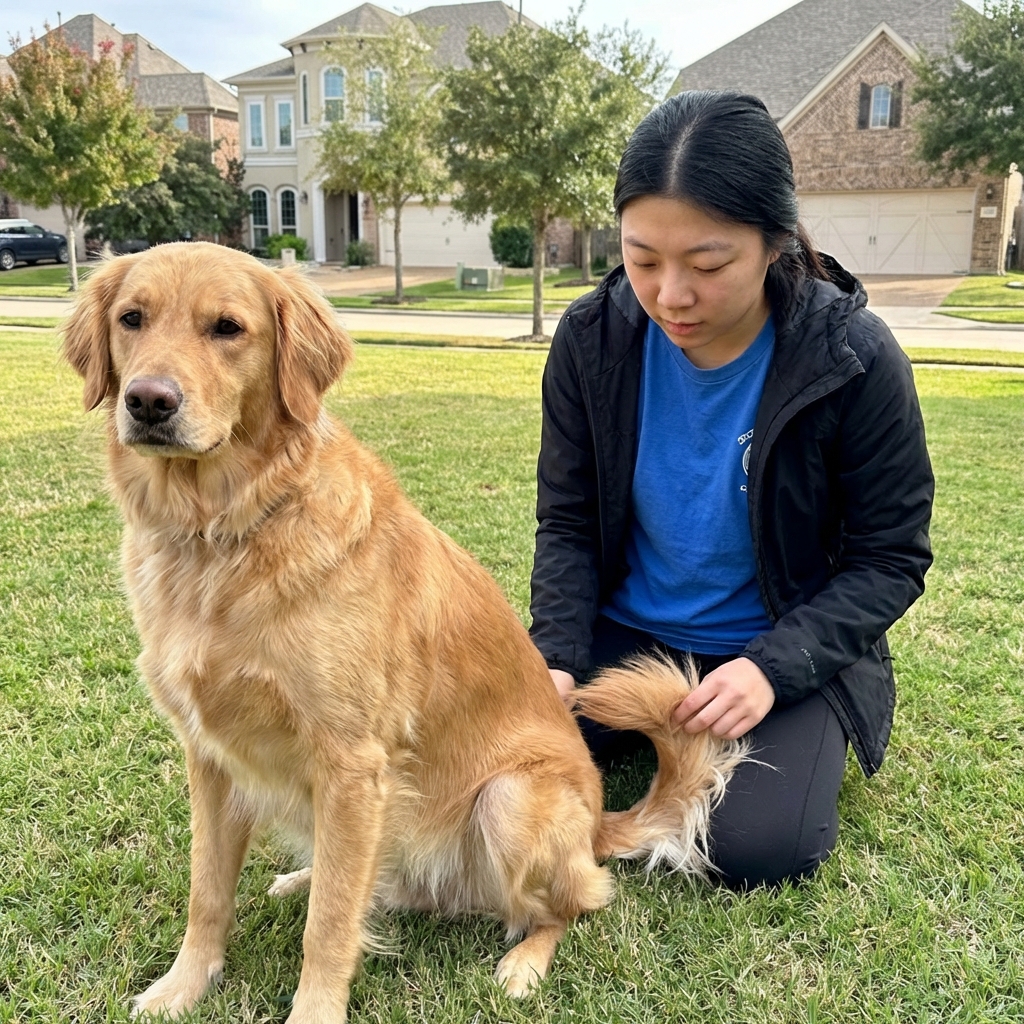
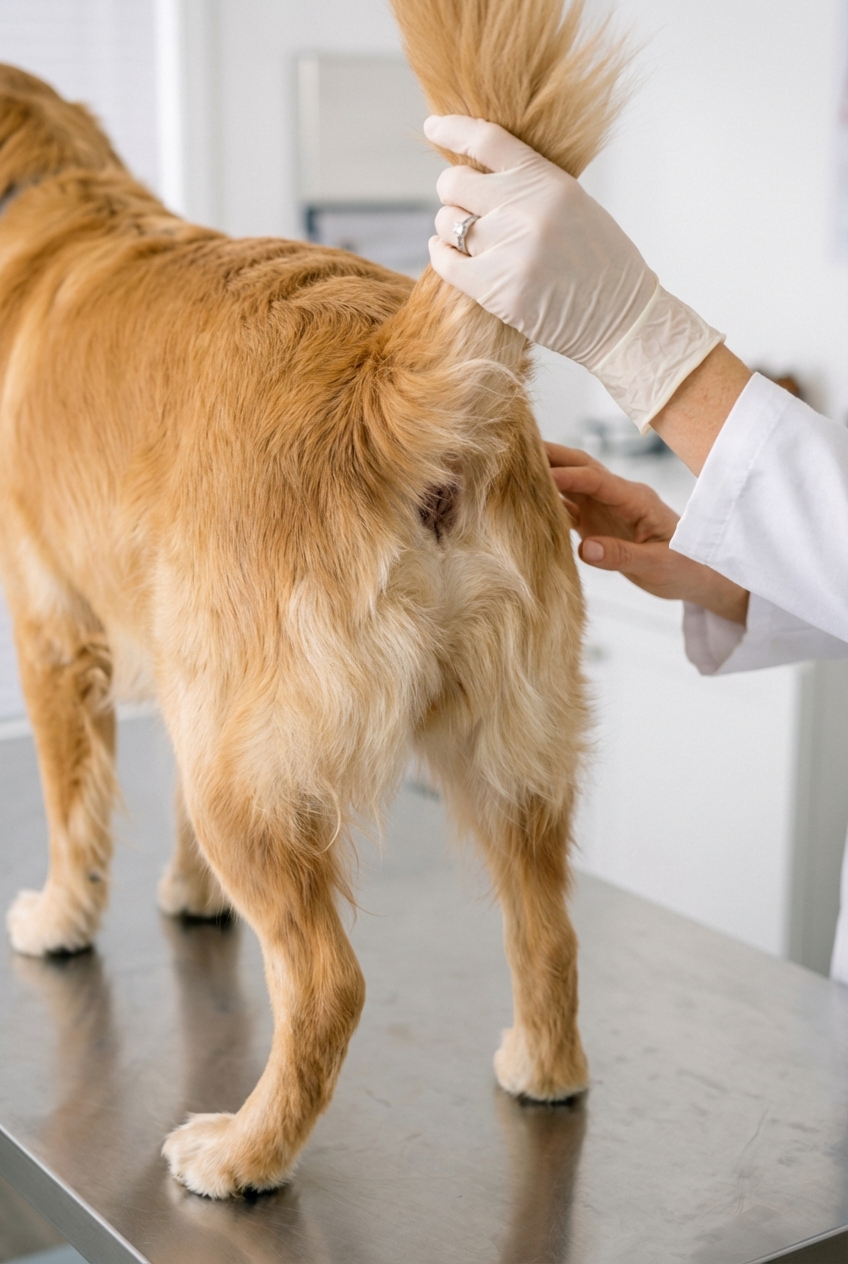
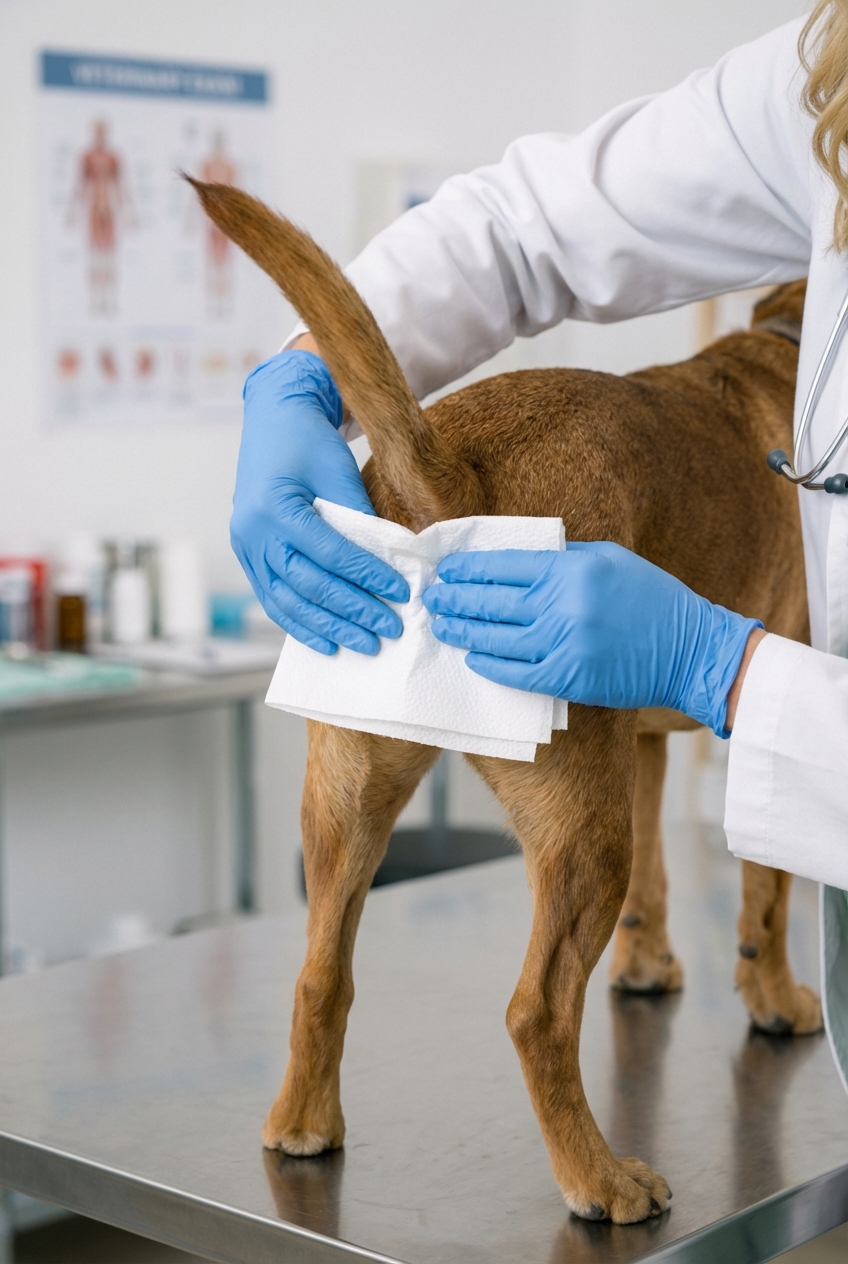
With one gloved hand, lift your dog’s tail gently up and slightly forward. With the other hand, place folded paper towel or gauze over the anus. This helps catch fluid and protects you from spray. Keep your face and clothing back.
3) Find the glands
The glands sit to the lower left and right, just under the skin at about 4 o'clock and 8 o'clock. You may feel two small firm bumps. Size varies by dog and how full the sacs are, so do not worry if they do not feel identical.
4) Use gentle pressure inward and upward
Using your thumb and forefinger, press gently inward (toward the center) and slightly upward (toward the anus), like you are guiding the contents toward the opening. Aim any fluid into the paper towel or gauze.
If the glands express, you may see brown, tan, gray, or slightly yellow fluid on the paper towel. Normal fluid is often thin and very smelly, and there is some natural variation.
Not normal: thick toothpaste-like material, chunky debris, blood, or pus-like discharge. If you see those, stop and call your veterinarian.
5) Wipe and reward
Clean the area with an unscented wipe or damp cloth. Praise your dog and offer a treat. Many dogs feel immediate relief when the glands were simply overfull.
6) Wash up
Dispose of gloves and paper towels in a sealed bag. Clean the tub or floor with a pet-safe cleaner. That odor is persistent, so ventilate the room if you can.
If you have to squeeze hard, stop. Anal glands are small and delicate. Firm force can cause bruising, irritation, or make your dog fearful of handling.
Internal expression
Veterinary teams often express anal glands internally, with a lubricated gloved finger inside the rectum and the thumb outside. This technique can be more effective for impacted glands, but it is also easier to hurt your dog or yourself if you are not trained.
If the external method does not work, or if your dog needs frequent expression, please schedule a vet or groomer visit. Some groomers offer external expression only, and clinic approaches vary. Many clinics prefer to examine frequent cases because recurring gland issues can be tied to stool quality, allergies , parasites , or chronic inflammation.
How often is too often
Some dogs need help every few months, and some never need it at all. If you find yourself expressing glands more than about once a month, that often warrants a veterinary workup to look for the root cause rather than continuing the cycle.
Also, repeated expressing can irritate the ducts in some dogs, especially if it involves pressure that is too firm or too frequent. If it is becoming a routine, it is time to talk with your vet about a better long-term plan.
Prevention
Support firm stools
The number one natural “anal gland helper” is a well-formed stool. If stool is consistently soft, the glands may not get enough pressure to empty.
- Talk with your veterinarian about adding fiber if stools are soft. Some dogs do well with a small amount of plain canned pumpkin or a veterinarian-recommended fiber supplement.
- Introduce any dietary change slowly over 5 to 7 days.
- Make sure fresh water is always available.
Address allergies and skin irritation
Dogs with environmental or food allergies often lick the rear end more and have inflamed skin. That inflammation can affect the anal gland ducts too. If your dog has chronic ear infections, itchy feet, or seasonal flare-ups, ask your vet about an allergy plan.
Maintain a healthy weight
Overweight dogs can have reduced muscle tone and more difficulty expressing glands naturally. A healthy body condition can make a real difference.
Troubleshooting
- Nothing comes out: The glands may be empty, the fluid may be too thick, or your hand placement may be off. Stop if you are unsure and schedule a visit.
- Thin brown fluid with strong odor: Often normal gland fluid.
- Thick toothpaste-like material: Can indicate impaction. A clinic visit is best.
- Blood or pus: Stop and call your veterinarian.
- Your dog is painful: Stop. Pain is a red flag.
When to call the vet
Call your veterinarian even if you got some fluid out if:
- Symptoms return within 1 to 2 weeks
- Your dog has recurring diarrhea or soft stools
- There is a lump near the anus
- You notice a strong odor plus swelling, redness, or heat
- Your dog is scooting frequently despite regular expression
In clinic, we can check for infection, abscess, tumors, parasites , or allergy-related inflammation. We can also discuss diet, stool quality, and whether a fiber plan makes sense for your dog.
Safety checklist
- Use gentle pressure only
- Start with external expression
- Keep your face and clothing back, and use gauze or a paper towel as a shield
- Stop if there is pain, blood, pus, swelling, or a bite risk
- Do it in a bathroom or tub, with paper towels ready
- If it becomes frequent, investigate the cause with your veterinarian
With the right setup and a calm approach, some pet parents can handle occasional overfull glands. And if you read this and think, “Nope, not for me,” that is completely okay. Your veterinary team has done this many times and can help your dog comfortably and safely.