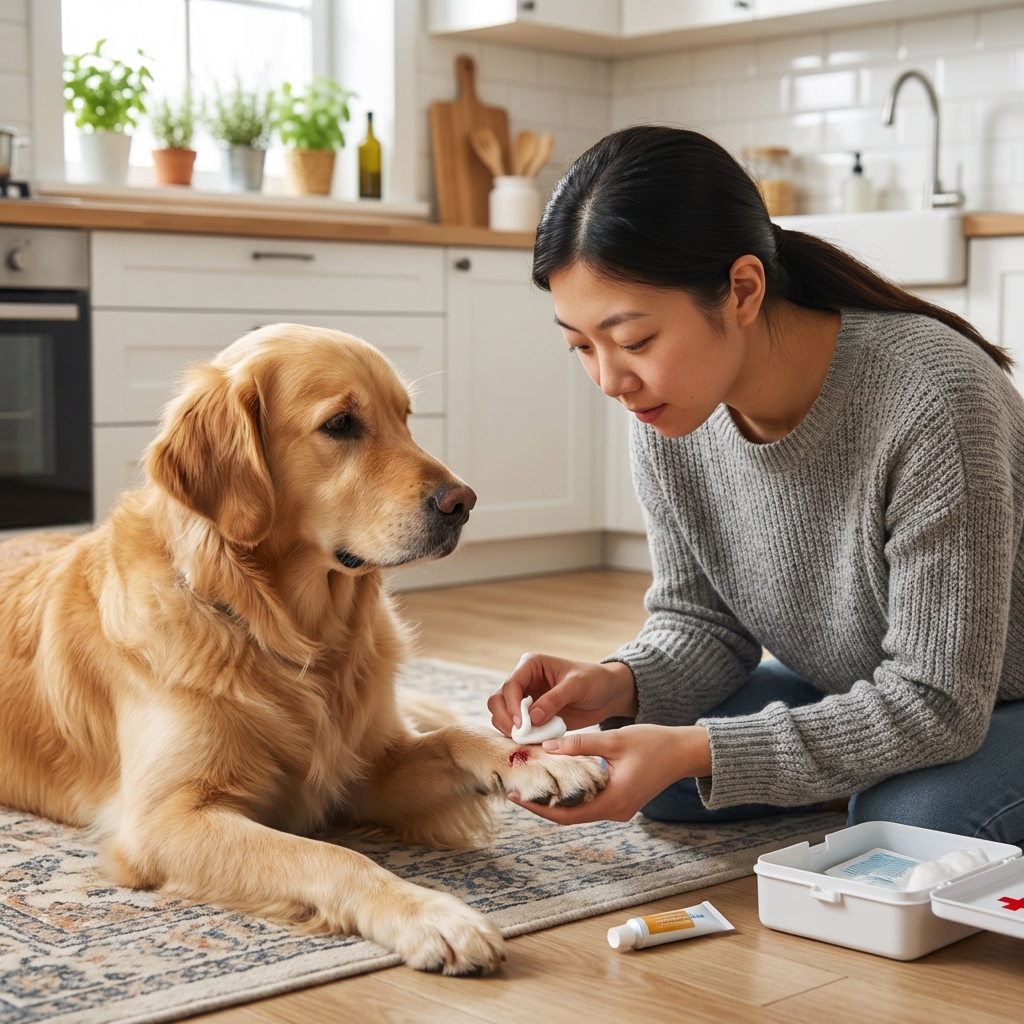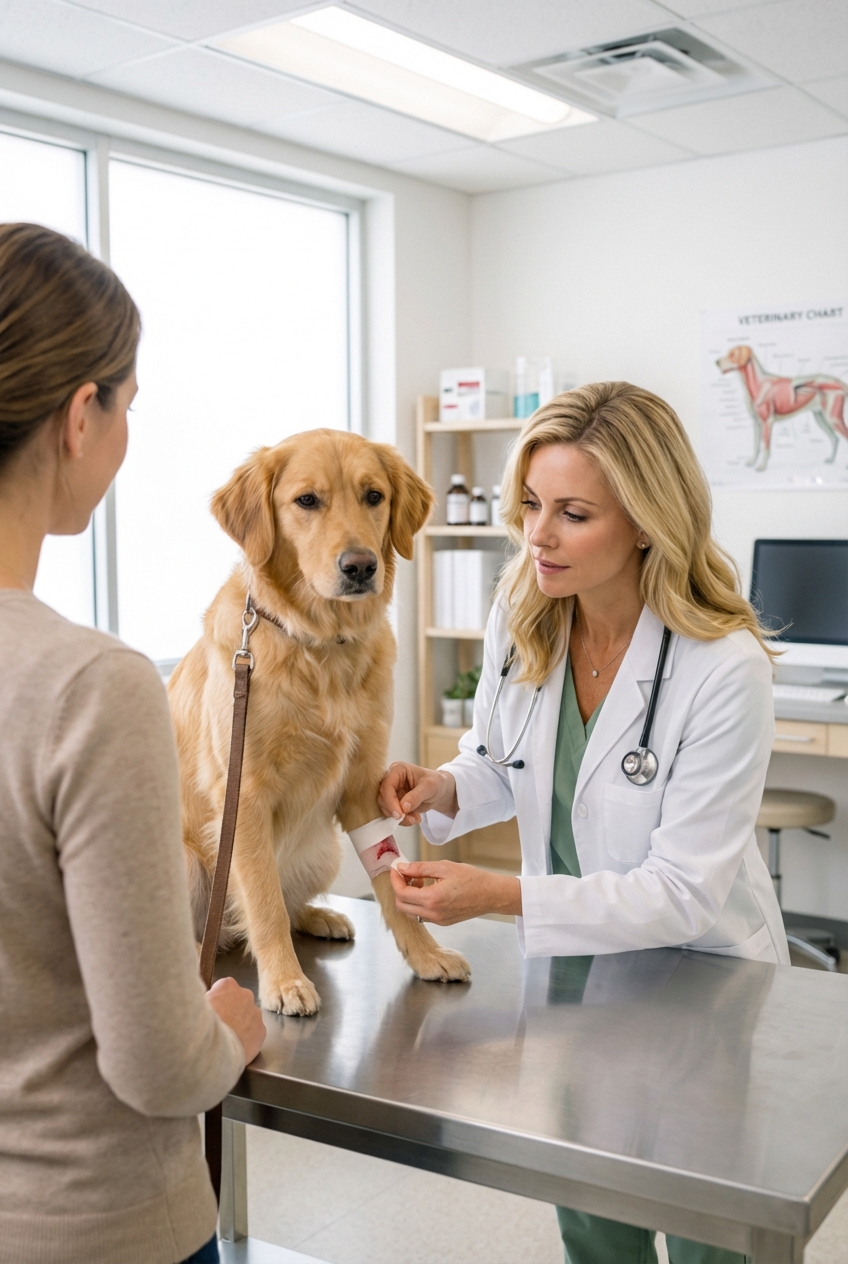
Learn veterinarian-aligned steps for treating an open wound on your dog: stop bleeding, prevent licking, clean and flush safely, bandage correctly, and recog...
Article
•
Designer Mixes
Expert Dog Wound Care Advice

Shari Shidate
Designer Mixes contributor
Seeing a wound on your dog can stop you in your tracks. As a veterinary assistant here in Frisco, Texas, I want you to know two things: most minor wounds can be safely managed at home, and a surprising number of “small” wounds actually need a veterinarian fast. The goal is simple: protect the tissue, prevent infection, control pain, and know when it is time to go in.
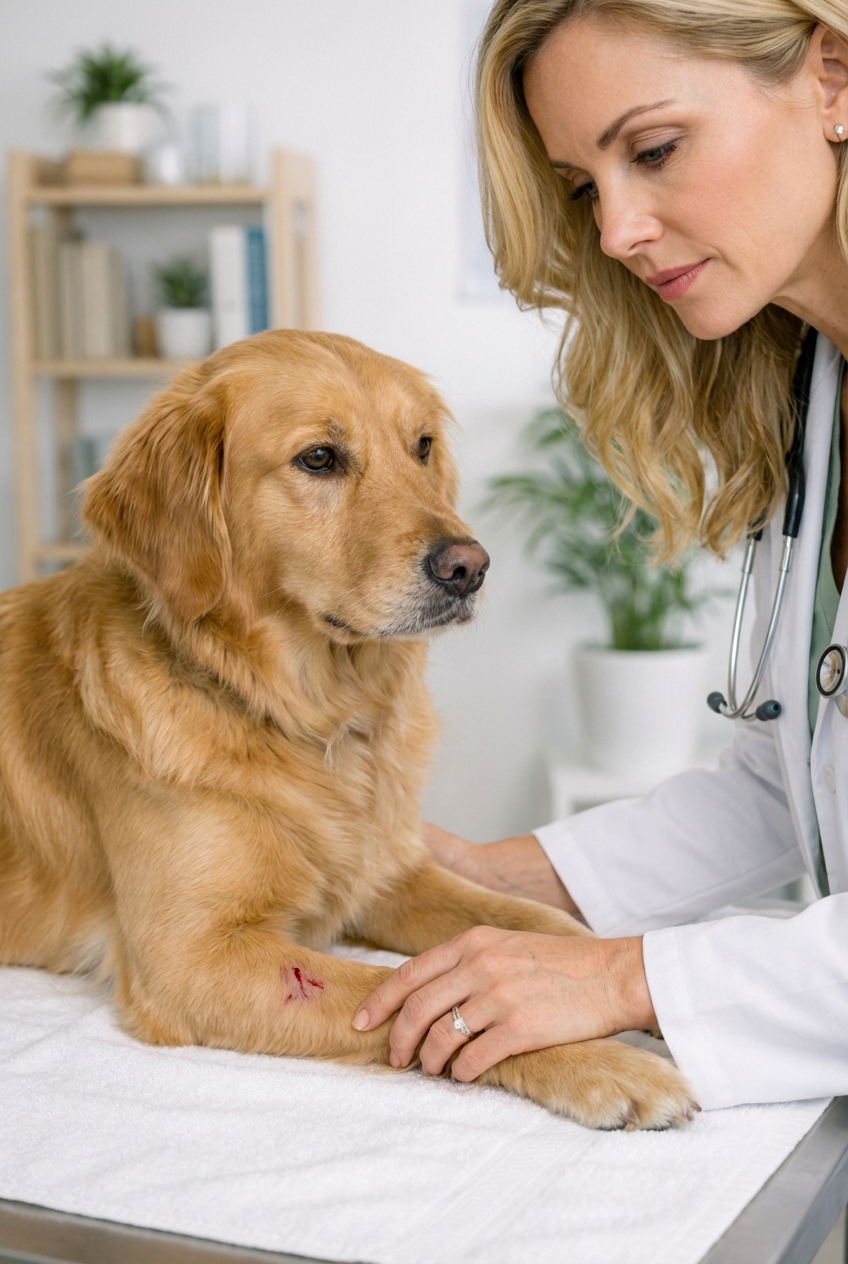
This guide walks you through what to do first, what to use (and what to avoid), and the red flags that mean it is time for professional care.
Quick step-by-step
If you are stressed and need a simple sequence, use this:
- Contain and protect yourself (leash, towel wrap, muzzle if needed)
- Check for emergency signs (breathing, gums, severe bleeding, collapse)
- Stop bleeding with firm, steady direct pressure
- Flush and clean (saline is best)
- Prevent licking (cone is best)
- Decide home care vs vet using the red flags below
Check safety and seriousness
Before you focus on the wound itself, take 30 seconds to check the big picture. Wounds sometimes look minor while the dog is quietly going into shock or has deeper damage.
Quick safety check
- Stay safe. Even sweet dogs may bite when hurt. Use a muzzle if needed (or a loop of gauze, leash, or a soft cloth) and keep your face away from the mouth.
- Check breathing and gums. Pale or white gums, rapid breathing, weakness, or collapse are emergency signs.
- Look for heavy bleeding. Steady dripping, pooling blood, or blood soaking through towels quickly needs immediate pressure and usually urgent vet care.
- Find the source. Part the fur. Punctures often hide under a small scab while deeper tissue is damaged underneath.
Go now
- Bleeding that does not slow after 10 minutes of firm, continuous pressure
- A deep cut, gaping edges, or anything you can see “inside” (fat, muscle, tendon)
- Puncture wounds (bite wounds, sticks, thorns), especially on the chest, abdomen, face, paws, or near joints
- Wounds on the eye, eyelid, mouth, genitals, anus, or over a joint
- Chest or belly wounds, or any wound plus trouble breathing
- Suspected broken bone, severe limping, or a limb that looks unstable
- Rapidly expanding swelling (possible bleeding under the skin), or swelling above or below a wrap
- Large tissue injuries (skin flaps, “degloving,” significant road rash)
- Signs of infection: increasing redness, heat, pain, pus, odor, fever, lethargy, decreased appetite
- Your dog is a puppy, senior, immune-compromised, or has conditions like diabetes or Cushing’s disease
- You suspect a foreign body (splinter, foxtail, glass) is still inside
Clinical note: Dog bites and punctures frequently create tiny surface openings that seal quickly and trap bacteria inside. They often look fine on day one, then become painful, swollen, and infected within 24 to 72 hours. These are classic “do not wait” wounds.
What counts as minor
Home care is usually reasonable when the wound is a superficial scrape or small cut, the edges are not gaping, there is no puncture, bleeding stops quickly with pressure, and your dog is acting normal (normal energy, eating, and breathing).
If you are on the fence, call your veterinarian. A quick triage conversation can save you a lot of stress.
Stop bleeding
Bleeding control is about steady, uninterrupted pressure and patience.
- Apply firm direct pressure with clean gauze or a clean cloth.
- Hold continuously for 5 to 10 minutes. Do not peek every 30 seconds. When you lift, you tear away early clotting.
- If blood soaks through, add more layers on top. Do not remove the original layer.
- If a limb is bleeding and your dog tolerates it, you can elevate the limb slightly while keeping pressure.
Avoid tourniquets unless you are trained. They can cause serious tissue damage when used incorrectly.
Clean the wound
For superficial cuts and scrapes, good cleaning is one of the biggest infection-prevention steps you can take at home.
What to do
- Trim or part the fur around the area if you can safely do so. Fur holds bacteria and traps moisture.
- Rinse with sterile saline if available. In a pinch, use clean running water.
- Flush, do not scrub. Use gentle pressure from a syringe (without a needle) if you have one. Scrubbing can damage healthy tissue.
- Pat dry around the wound with clean gauze.
What to use and what to skip
- Best home option: Sterile saline wound wash or plain sterile saline.
- Okay when diluted properly: Chlorhexidine diluted to about 0.05%, or povidone-iodine diluted to a light tea color. If you are using a common 2% chlorhexidine product, this typically means 1 part chlorhexidine to 39 parts water (for example, 5 mL of 2% chlorhexidine in 195 mL of water). If you are not confident in mixing, stick with saline and ask your vet.
- Skip: Hydrogen peroxide for routine wound cleaning (it can damage new cells and slow healing), rubbing alcohol (painful and damaging), essential oils, and powdered “wound” products that cake into tissue.
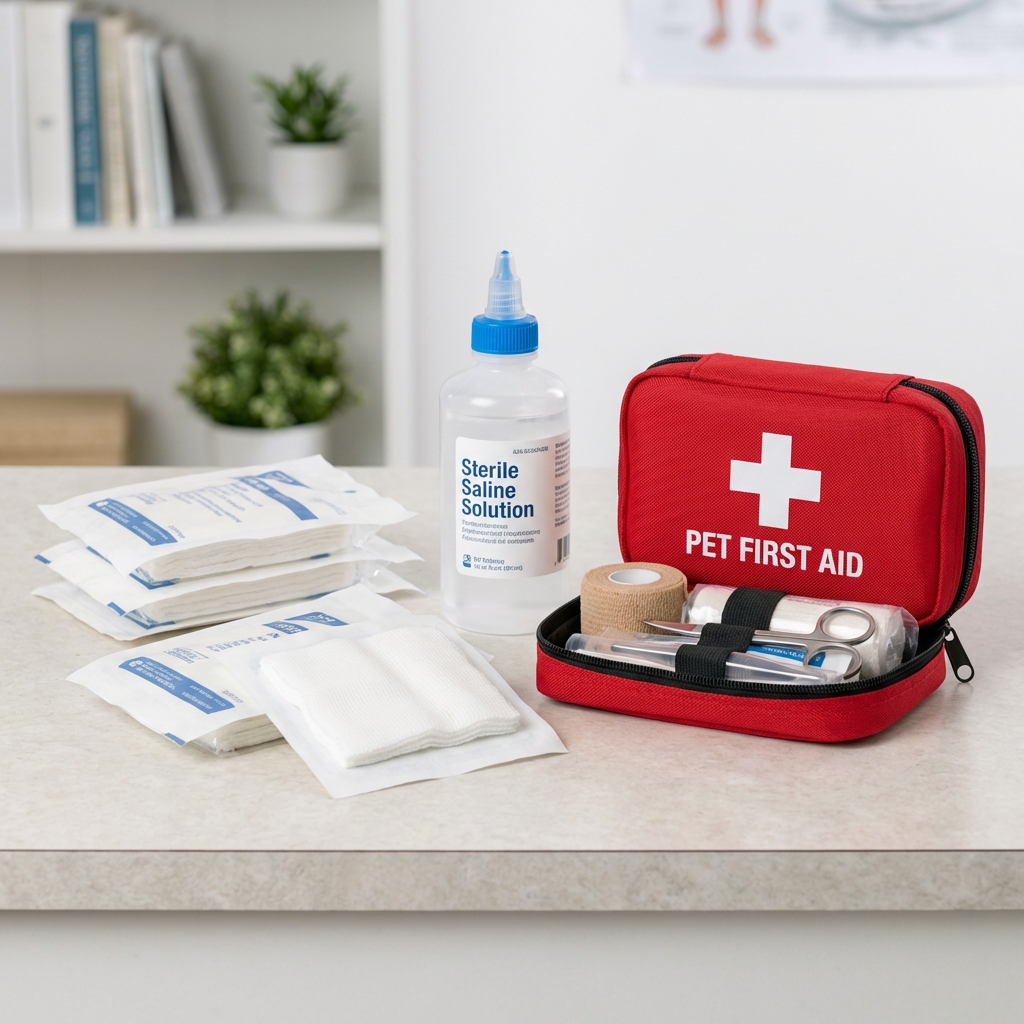
If you are unsure about a product, keep it simple and stick to saline until your veterinarian advises otherwise.
Covering and bandages
Many wounds heal best in a clean, slightly moist environment, but not every wound should be wrapped.
When a light cover helps
- Small abrasions that rub on the ground
- Wounds in areas your dog keeps licking
- Minor paw pad scrapes when walking outdoors
When to avoid wrapping at home
- Deep punctures or draining wounds (these often need to stay open and be managed by a vet)
- Significant swelling (a wrap can become too tight quickly)
- If you cannot monitor the toes for swelling and temperature changes
Bandage basics: If you do cover a wound, use a non-stick pad against the wound, then light padding, then a self-adhering wrap. Keep it clean and dry, and plan to change it at least daily (or sooner if wet or dirty).
Wrap safety tip: A wrap that is too tight or that slips and bunches can cause painful pressure sores within hours. If you wrap a limb, check toes every few hours. Swelling, cool toes, discoloration, rubbing, or swelling above or below the bandage means remove the wrap and contact your veterinarian.
Stop licking and chewing
Licking feels “natural,” but it is one of the fastest ways to turn a minor wound into a major infection or hot spot.
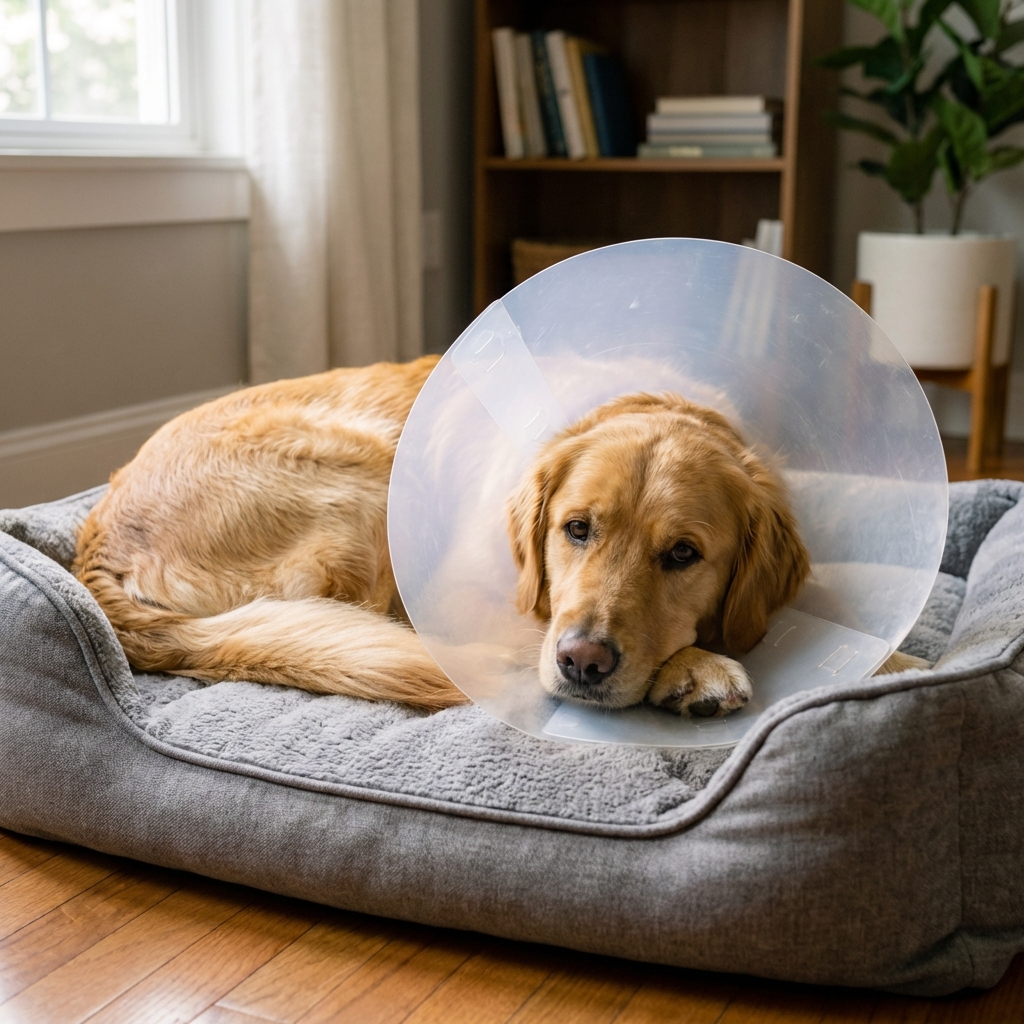
- E-collar (cone) is the gold standard for preventing access.
- Inflatable collars can work for body wounds, but many dogs can still reach feet and legs.
- Recovery suits or T-shirts may help on the torso if they stay clean and dry.
When in doubt, use the cone. Healing is usually faster, and everyone sleeps better.
Watch healing
Wounds change day by day. Knowing what is normal helps you catch trouble quickly.
Normal early signs
- Mild redness at the edges for the first couple of days
- Minimal clear or slightly pink fluid early on
- Gradual scabbing or a smooth sealed surface
Concerning signs
- Redness that is spreading or getting brighter
- Increasing swelling, heat, or pain
- Yellow, green, or thick discharge
- Foul odor
- New limp, reluctance to be touched, or behavior changes
- The wound looks worse after day two instead of better
Cleaning frequency: For a minor, open scrape, gentle flushing once or twice daily for the first couple of days is usually plenty. Once it looks clean and is sealing over, less is more. Over-cleaning can irritate new tissue.
Rule of thumb: If you cannot say “this looks a little better today than yesterday,” call your vet.
Common problem wounds
Some wound types are so common they deserve their own callouts.
Paw pad cuts
- Rinse well, remove visible debris, and keep the area clean.
- Limit activity. Pavement and rough ground reopen wounds.
- Use a bootie or light bandage only if you can keep it dry and change it daily.
Nail injuries
- These can bleed a lot and are very painful.
- Apply gentle pressure. If the nail is split to the quick, your dog usually needs veterinary trimming and pain control.
Hot spots
- These are infected, inflamed skin patches often triggered by licking, allergies, or moisture.
- They spread fast. Early clipping and proper topical therapy often require a veterinary visit.
First-aid kit
You do not need an expensive kit. A few basics cover most situations.
- Sterile saline wound wash
- Gauze pads and non-stick dressings
- Self-adhering bandage wrap (and medical tape)
- Blunt-tip scissors and tweezers
- Disposable gloves
- Digital thermometer and lubricant
- E-collar (correct size for your dog)
Keep your vet’s number and the nearest emergency clinic number in the same drawer as your supplies.
What not to do
- Do not give human pain medication unless your veterinarian specifically instructs you. Common human meds like ibuprofen, naproxen, aspirin, and acetaminophen can be dangerous for dogs without proper dosing and medical guidance.
- Do not use topical numbing creams or sprays (like lidocaine or benzocaine) unless your vet approves. They can be risky if licked, and they may delay you from getting needed care.
- Do not seal a dirty wound with glue, tape, or tight bandaging. Trapped bacteria love low-oxygen pockets.
- Do not remove deeply embedded objects if they are large or impaled. Stabilize and go to an emergency clinic.
- Do not wait it out on punctures, bites, chest or belly wounds, or rapidly swelling areas.
Rabies and bite risks
If your dog was bitten by an unknown dog or any wildlife (especially raccoons, skunks, bats, foxes, or coyotes), contact your veterinarian right away. Rabies exposure risk is handled with specific veterinary and public health guidance. Also, tetanus is not the routine concern in dogs that it is in humans, so your vet will focus more on infection control, tissue damage, and bite wound management.
What your vet may do
Veterinary wound care is not just about stitches. Your vet may recommend:
- Clipping and deep cleaning under sedation for painful wounds
- Antibiotics when infection risk is high (bites, deep punctures, contaminated wounds)
- Pain relief tailored to your dog’s health history
- Bandaging with proper padding and scheduled rechecks
- Drains for bite wounds or pockets of infection
- Imaging if a foreign body or bone involvement is suspected
Getting help early often means faster healing, lower cost, and far less discomfort for your dog.
If you are unsure whether a wound is “minor,” that is your sign to call your veterinarian. A quick phone triage can save you days of stress.