
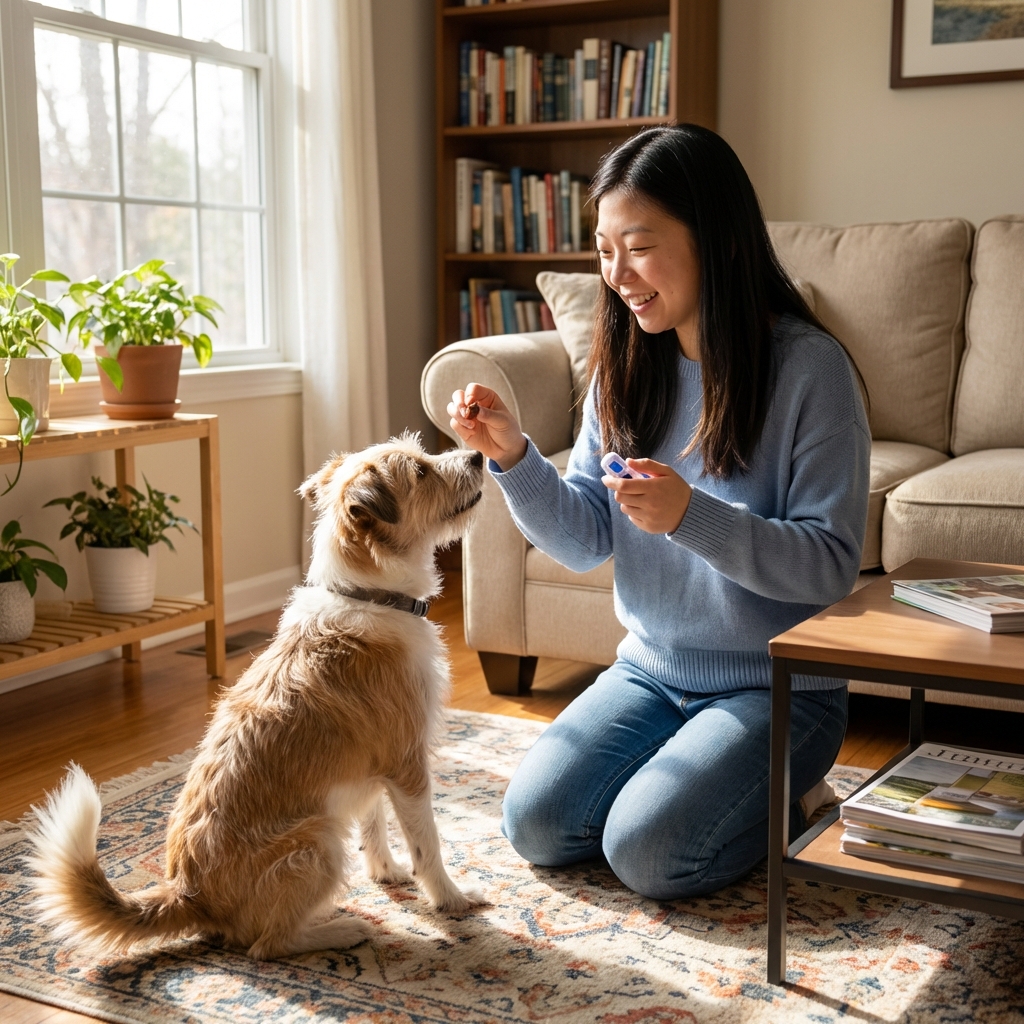
Get clear, reward-based answers to common clicker training questions: charging the clicker, perfect timing, treat choices, session length, adding cues, and s...
Article
•
Designer Mixes
Expert Clicker Training Answers

Shari Shidate
Designer Mixes contributor
Clicker training is one of my favorite ways to teach dogs because it is clear, kind, and backed by learning science. The click is not “magic” on its own. It is a precise marker that tells your dog, Yes, that exact moment was right, and it is followed by a reward that makes your dog want to repeat the behavior.
If you are new to clickers, you are in the perfect place. Below are expert, practical answers to the questions I hear most often in clinics, training classes, and from pet parents at home.
What clicker training is
The basics in one sentence
Clicker training uses a short, consistent sound (the click) to mark a correct behavior, then immediately reinforces it with something your dog values, usually a treat.
Why the click works
- Timing: The click happens instantly, so it can mark the behavior more precisely than treat delivery.
- Clarity: The click is always the same, unlike “good dog,” which can vary in tone.
- Confidence: Dogs learn faster when they get clear feedback and predictable rewards.
Think of the click like taking a snapshot of the exact right behavior. The treat is the paycheck that makes it worth repeating.
How to start
1) Charge the clicker
Before you ask for any behaviors, teach your dog what the click means.
- Click once.
- Immediately give a treat.
- Repeat 10 to 20 times in a quiet room.
After a few sessions, many dogs will perk up at the sound because it predicts something good. That is exactly what you want.
2) Set up your hands
Make it easy on yourself so your timing stays clean.
- Clicker hand: hold only the clicker (or clicker plus leash if needed).
- Treat hand: hold treats and deliver quickly after the click.
- Keep treats in a pouch or cup so you are not digging through pockets mid-rep.
3) Choose easy rewards
Use pea-sized, soft treats your dog can eat quickly. For some dogs, toys, tug, or sniffing time can also work. The key is that the reward has to be truly reinforcing to your dog, not just something we wish they liked.
4) Keep sessions short
For most dogs, 3 to 5 minutes is plenty. Several short sessions a day beat one long, frustrating one.
One quick safety note: a clicker is not for scolding or interrupting. Keep the click meaning “you got it right,” and you will protect its value.
Expert Q&A
Do I click and treat every time?
At the beginning, yes. When a behavior is brand new, aim for click then treat every correct repetition. This builds understanding quickly.
Once your dog is reliably offering the behavior, you can gradually move to variable reinforcement for some skills. That usually means you do not click every repetition and you do not always pay with food. You might click and treat on the best reps, and on other reps simply praise, play, or use a life reward (like opening the door for a walk) without clicking.
Rule of thumb: if you click, you pay (treat). If you are only praising or using a life reward, do not click for that repetition. Also, many behaviors stay strongest with intermittent food rather than replacing treats entirely, especially around distractions.
What exactly should I click?
Click the instant your dog does the thing you want. The click marks the moment of success, not the moment after they finish the behavior or return to you.
- Sit: click the moment the rear touches the floor.
- Down: click when elbows hit the ground.
- Look at me: click the moment your dog’s eyes meet yours.
What if I click by accident?
It happens to everyone. If you click, you should treat so the click stays trustworthy. One mistake will not ruin your training, but consistency is what keeps the marker powerful. Treat, reset, take a breath, and try again.
Should I say the cue before or after the dog does it?
When you are teaching a new behavior, it is often easier to lure or capture the behavior first, then add the cue once your dog is doing it predictably.
Rule of thumb: add the cue when you can correctly predict your dog will do the behavior at least 8 out of 10 times.
My dog is scared of the click. What can I do?
Some dogs find the click sound sharp. You have options:
- Use a softer clicker or wrap the clicker in a cloth to muffle the sound.
- Try a marker word like “yes” instead of a click.
- Condition the sound slowly: click softly, treat, and keep sessions calm and short.
Fear is information. If your dog startles, lower intensity and rebuild trust.
Can I use a clicker for puppies?
Yes, and it is wonderful for puppies because it helps them learn without force. Use tiny treats, gentle handling, and extra short sessions. Puppies also benefit from “click for calm,” where you click and treat for relaxed behaviors like sitting quietly or choosing a toy.
Can clicker training help with barking, jumping, or pulling?
Yes, but you will get the best results by focusing on what you want your dog to do instead.
- Jumping: click for four paws on the floor, then reward. Teach a sit for greetings.
- Pulling: click and treat for walking with a loose leash near you. Start indoors or in a quiet driveway first.
- Barking: reward quiet on purpose. Start by clicking and treating for a tiny moment of quiet, then gradually build duration so you are not accidentally paying for the “pause between barks.” Pair this with management and addressing triggers, like blocking window access or adding distance from what your dog is reacting to.
If barking is sudden, intense, or paired with anxiety, consider a vet check. Pain, cognitive changes, and other medical issues can contribute.
Do I need to carry the clicker forever?
No. The clicker is a teaching tool. Once the behavior is learned and put on cue, many people switch to a marker word or reserve the clicker for new skills and tricky distractions.
How do I switch from a clicker to “yes”?
Pick your verbal marker (like “yes”). For a few sessions, say “yes” and then click, then treat. After your dog perks up at “yes” the way they perk up at the click, you can begin using “yes” alone and saving the clicker for when you want extra precision.
What is the difference between luring, capturing, and shaping?
- Luring: you use a treat to guide your dog into position (great for beginners).
- Capturing: you click behaviors your dog offers naturally (like sitting).
- Shaping: you reward small steps toward a behavior (excellent for advanced skills and confidence building).
Simple clicker exercises
Exercise 1: Name game
Say your dog’s name once. When they look at you, click and treat. Repeat in different rooms. This is one of the most helpful life skills for dogs with busy brains or high distraction sensitivity.
Exercise 2: Hand target
Present an open hand a few inches from your dog’s nose. When they investigate and touch it, click and treat. Hand targeting is fantastic for recall practice, grooming cooperation, and polite greetings.
Exercise 3: Settle on a mat
Put a blanket or mat on the floor. Click and treat when your dog steps on it, then when they sit, then when they lie down. This becomes your go-to tool for calm behavior during meals, guests, or TV time.
Common mistakes
- Clicking too late: practice your timing by clicking when a ball hits the floor or when a video dog sits.
- Long pauses between click and treat: keep treats ready in a pouch so delivery is fast.
- Repeating cues: say “sit” once. If it does not happen, reset and make it easier.
- Training with distractions too soon: build skills indoors first, then slowly move outside.
- Skipping breaks: if your dog disengages, you are not failing. You are getting feedback. Shorten the session and increase reward value.
Safety and wellness notes
Training should support your dog’s health, not stress their body. If your dog suddenly resists sitting, jumping, stairs, or moving in a way they used to do easily, consider underlying pain. Arthritis, hip issues, back pain, and other discomfort can all show up as “stubbornness.” Even oral pain can reduce a dog’s willingness to engage, especially if they are reluctant to take treats or play. A quick veterinary exam can save weeks of frustration.
Also watch treat calories. You can use part of your dog’s daily kibble as training rewards, or choose lean treats and keep them tiny. The goal is repetition, not a full snack each click.
Quick checklist
- Train when your dog is not over-tired or over-hungry.
- Use pea-sized treats and a treat pouch.
- Click the exact moment the behavior happens.
- Always follow a click with a reward.
- Keep sessions to 3 to 5 minutes.
- End on a win, even a small one.
If you stick with those basics, you will be amazed how quickly your dog starts offering good choices on their own. That is when training becomes less of a chore and more of a conversation.